


Relationship between transarterial chemoembolization treatment frequency and prognosis in hepatocellular carcinoma patients
 0
0 Abstract
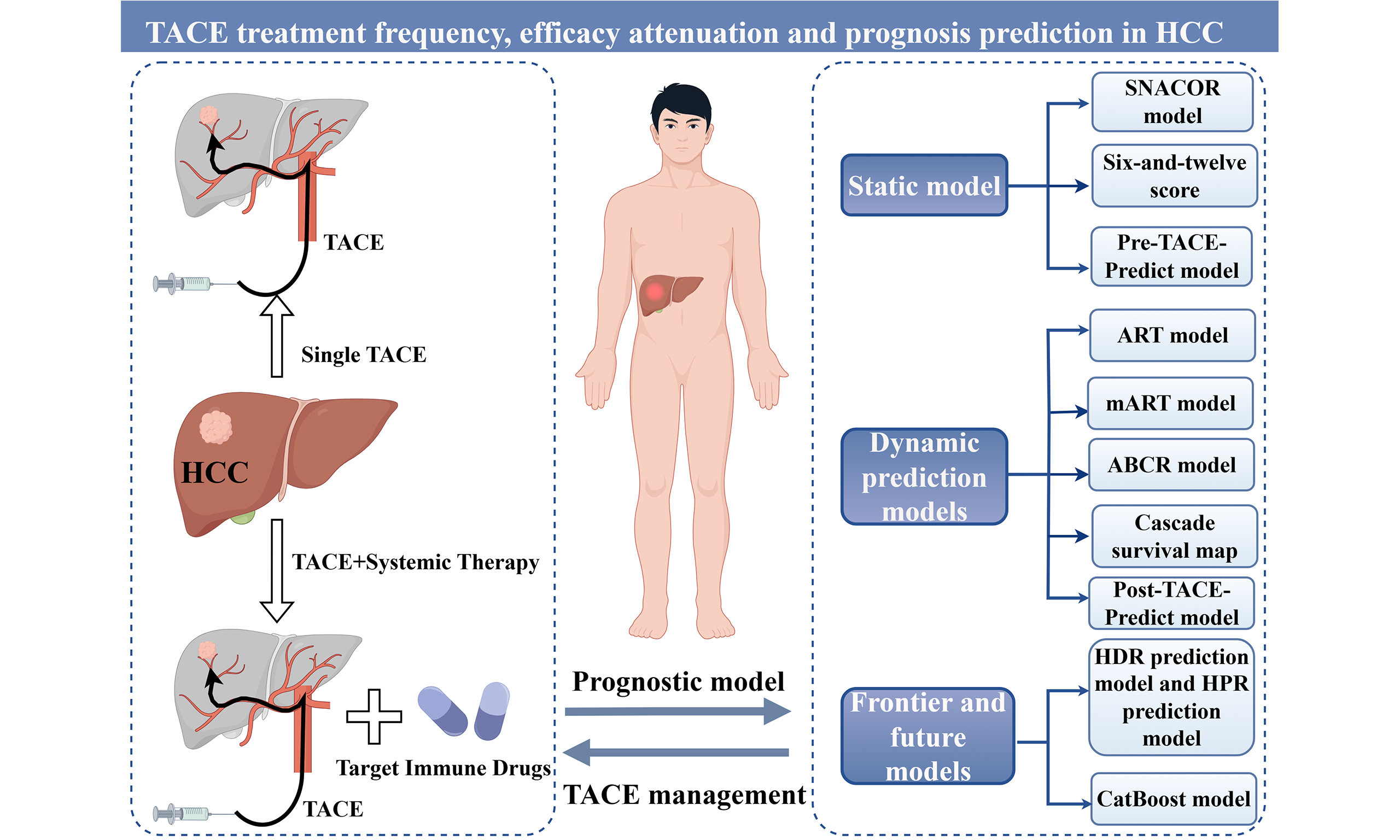
Transarterial chemoembolization (TACE) is an important treatment for intermediate-stage hepatocellular carcinoma (HCC) that often needs to be repeated. However, the optimal number of treatments remains unclear, and the relationship between repeated TACE and patient prognosis is complex and needs to be systematically investigated. Evidence shows that the initial efficacy of TACE is significant; however, with an increase in the number of treatments, the objective response rate of the tumor decreases, and TACE-related liver injury accumulates, which becomes a key factor restricting the long-term survival of patients with HCC. In recent years, the new paradigm of TACE combined with targeted therapy plus immunotherapy has shown significant advantages, improving the tumor remission rate, reducing the number of TACE required, and protecting liver function. In terms of prognosis prediction, the model is evolving from a static model based on baseline characteristics to a dynamic model that integrates treatment response. Frontier research has further explored prognostic prediction models based on genomics, radiomics, and machine learning, providing a direction for achieving higher accuracy of individualized prognostic prediction. This narrative review aims to synthesize the current evidence, explore the relationship between the number of TACE treatments and the prognosis of HCC patients, compare TACE alone versus TACE combined with systemic therapy, and review the methodological progress of prognosis-prediction models.
Keywords
INTRODUCTION
Hepatocellular carcinoma (HCC) is the third leading cause of cancer-related deaths worldwide. China has the largest number of HCC cases worldwide, accounting for nearly half of the new cases and deaths worldwide every year[1]. HCC has a concealed onset and often has no obvious symptoms in the early stages. Approximately 64% of Chinese patients with HCC are in the intermediate and advanced stages at the time of initial diagnosis and are no longer suitable for surgical resection[2,3]. Transarterial chemoembolization (TACE) is commonly used and preferred local treatment for unresectable hepatocellular carcinoma (uHCC)[4]. It achieves the purpose of tumor ischemia and necrosis by embolizing the tumor blood supply artery and combining with local chemotherapy drugs[5]. HCC has the biological characteristics of easy recurrence and metastasis; therefore, in clinical practice, TACE usually needs to be repeated to remove residual cancer cells and control the formation of new lesions. With an increase in the number of TACE treatments, the tumor remission rate showed an upward trend in the short term. However, as the tumor continues to progress, the effective rate of TACE treatment gradually declines[6]. At the same time, the side effects related to TACE treatment also gradually appear, especially liver function injury, which is closely related to the prognosis of patients[7]. Although the guidelines[8-11] have principled recommendations on the use of TACE, there is a lack of evidence-based medical evidence to clarify the optimal treatment frequency interval, which brings great uncertainty to clinical decision-making.
In recent years, TACE combined with targeted therapy plus immunotherapy has become the core treatment strategy for advanced HCC[12]. At present, a number of clinical studies have found that the number of TACE in the “TACE + targeted therapy plus immunotherapy” group was significantly reduced compared with that in the simple TACE group, and the prognosis of patients was significantly improved. Combination therapy has shown good efficacy in both clinical trials and real-world studies. It not only enhanced the tumor response but also overcame the decline in efficacy and deterioration of liver function caused by repeated TACE[13-16].
Simultaneously, methodological progress of prediction models provides a new way to optimize the treatment of patients with HCC. Traditional staging systems stage patients at the time of disease diagnosis, but this staging does not change with disease progression and treatment response. This means that by the late stage of the disease, the initial diagnosis stage of patients has been unable to effectively distinguish their prognosis. In recent years, dynamic prediction models integrating circulating biomarkers, imaging omics features, and machine learning have made methodological breakthroughs, providing the possibility of more accurate and individualized prognosis prediction for HCC patients. This emphasizes the need for a methodological shift from static to dynamic approaches to support more precise and individualized treatment decisions.
This narrative review systematically combs through the current evidence on the impact of the number of TACE on the clinical outcomes of HCC patients, focusing on differences between TACE monotherapy and TACE combined with targeted therapy plus immunotherapy. Simultaneously, we explored the methodological evolution of the prediction models.
Literature review methodology
This article is a narrative review. A comprehensive literature search was conducted in PubMed, Web of Science, and CNKI for articles published up to May 2026. Search terms included combinations of “hepatocellular carcinoma”, “transarterial chemoembolization”, “TACE refractoriness”, “combination therapy”, “prognostic model”, and “machine learning”. We prioritized clinical trials, cohort studies, and high-quality retrospective analyses. Given the narrative nature, formal quality assessment or meta-analysis was not performed.
THE BASIC PRINCIPLE AND EFFICACY EVALUATION OF TACE
In 2002, two studies[17,18] in Japan found that the median overall survival (mOS) of the TACE group was significantly longer than that of the best supportive care (BSC) group (20.4 months vs. 15.9 months). The 3-year survival rate of patients significantly improved (26% vs. 3%). For the first time, high-level evidence supports that TACE can significantly delay tumor progression, thereby significantly improving the survival of patients with advanced HCC.
The Barcelona Clinic Liver Cancer (BCLC) 2022[4] regards TACE as the standard treatment for patients with BCLC stage B. The newly proposed BCLC 2026[10] clearly defines stage B, replacing “multifocality” with “> 3 nodules, or ≤ 3 nodules but at least one > 3 cm”. Simultaneously, for the treatment of patients with BCLC stage B, BCLC 2025 proposes that patients will no longer be limited to the initial stage but will be incorporated into a dynamic decision-making model based on treatment response. Through the decision node, patients in this stage were divided into three subgroups; patients with a clear tumor boundary, good portal vein blood flow, and selective access to the tumor feeding artery still recommended TACE as the standard local treatment. Most Chinese HCC patients have a background of hepatitis B and liver cirrhosis; therefore, the China Liver Cancer Staging (CNLC) staging system developed in China is more suitable for Chinese HCC patients. According to the guidelines for the diagnosis and treatment of HCC (2024 Edition)[19], TACE is suitable for patients with stage CNLC Ib-IIIb, of which stages IIb and IIIa are preferred.
TACE MONOTHERAPY
Benefit reduction due to the increase in the number of times
Because HCC is prone to recurrence and metastasis, TACE is usually performed multiple times. A body of research has established that with an increase in the number of TACE sessions, the tumor objective response rate (ORR) showed a trend of first increasing and then decreasing. In 2021, a retrospective study[6] explored the treatment strategy for patients with intermediate-stage HCC after initial failure to respond to conventional transarterial chemoembolization (cTACE). The study pointed out that the third cTACE was a key turning point; about 50% of patients who failed to respond to the first two treatments responded at this time, and the 5-year survival rate of responders (9.1%) was significantly higher than that of non-responders (3.2%). However, the response rate decreased to less than 10% after the fourth cTACE, and the long-term survival rate was 0% whether they responded or not, indicating that continuing the fourth cTACE could not achieve a survival benefit. While the third TACE may represent a potential turning point, the decision to repeat or stop TACE should be individualized rather than based solely on the number of previous sessions. A number of key factors, such as tumor response, TACE selectivity, and hepatic reserve, should all be integrated into clinical decision-making.
TACE refractoriness
TACE refractoriness [Table 1] refers to the poor or ineffective response of HCC patients to TACE treatment. In 2010, the Japan Society of Hepatology (JSH) proposed “TACE refractoriness” and its preliminary concept. Subsequently, Korean and European scholars also elaborated different concepts of “TACE refractoriness”. Among them, the definition of “TACE refractoriness” proposed by the Japan Society of Hepatology-Liver Cancer Study Group of Japan (JSH-LCSGJ) in 2014 is the most widely used in clinical practice and scientific research[20-22]. However, the above definitions of “TACE refractoriness”, especially the JSH-LCSGJ 2014 definition, differ significantly from clinical practice in China, and these definitions also lack sufficient evidence-based medical evidence support. In fact, the JSH only recommends the JSH-LCSGJ 2014 definition as “weak recommendation”[21]. Therefore, the Chinese College of Interventionalists (CCI) proposed the concept of “TACE refractoriness” according to the characteristics of Chinese HCC patients, the existing evidence-based medicine evidence, the results of the questionnaire survey, and the opinions of domestic experts, after three or more consecutive standardized and refined TACE treatments, the target lesions in the liver are still in a state of progressive disease (PD) compared with those before the first TACE treatment, which should be evaluated based on Modified Response Evaluation Criteria in Solid Tumors (mRECIST) criteria within 1-3 months after the last TACE treatment. If the target lesions are still in the state of PD, it is judged as “TACE refractoriness”. This provides an authoritative basis for stopping the blind increase in the number of TACE sessions[23] [Figure 1]. A real-world study[24] indicated that the mOS of patients with early TACE refractoriness was significantly shorter than that of patients without TACE refractoriness (21 months vs. 34 months, P = 0.002).
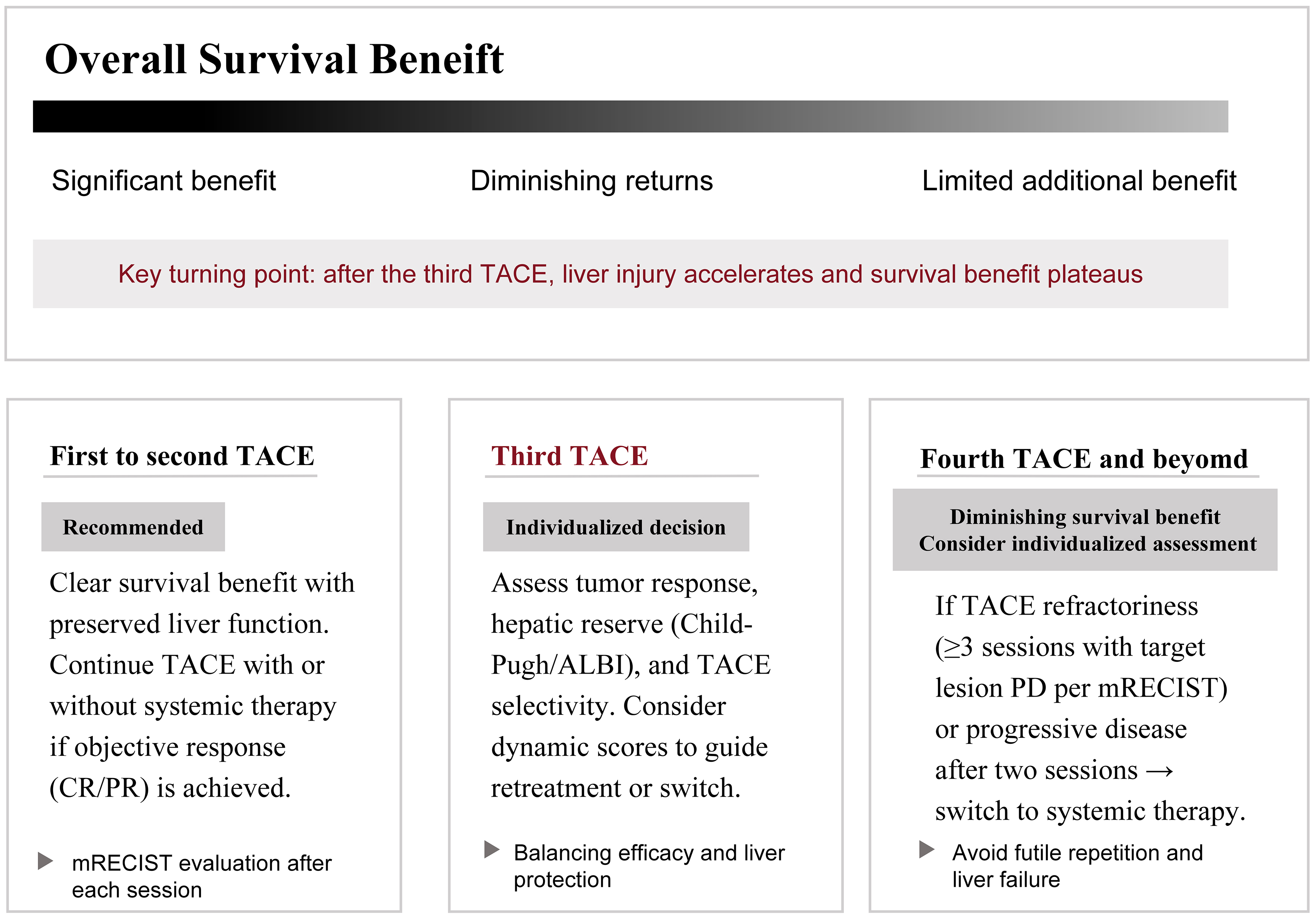
Figure 1. The relationship between treatment sessions, liver function, and survival benefit. This schematic illustrates the relationship between repeated TACE sessions, tumor response, liver function reserve, and survival benefit. The grayscale gradient bar represents how survival benefit evolves with increasing TACE frequency. The third TACE is highlighted as a potential turning point, after which the risk of liver function deterioration increases substantially (ALBI grade worsening, OR = 3.22 for three sessions) and additional survival benefit becomes limited. Clinical decisions should be individualized based on tumor response (mRECIST), hepatic reserve (Child-Pugh/ALBI), performance status, and dynamic scores. TACE refractoriness is defined according to the CCI criteria. TACE: Transarterial chemoembolization; CR: complete response; PR: partial response; OR: odds ratio; PD: progressive disease; ALBI: albumin-bilirubin grade; CCI: Chinese College of Interventionalists; mRECIST: Modified Response Evaluation Criteria in Solid tumors.
Comparison of three definitions of TACE refractoriness
| JSH (Japan, 2014 Update)[21] | European consensus[20] | CCI (China)[23] | |
| Key criteria | ≥ 2 consecutive insufficient responses of treated tumor (viable lesion > 50%) despite change of chemotherapeutic agents or feeding artery reanalysis ≥ 2 consecutive intrahepatic progressions (increase in tumor number) Continuous elevation of tumor markers after TACE Appearance of vascular invasion Appearance of extrahepatic spread | Untreatable tumor progression: massive liver involvement, extrahepatic spread, vascular invasion Impaired liver function (Child-Pugh)/performance status ART score ≥ 2.5 (no benefit from further TACE) Stable disease or progression after two TACE sessions is considered insufficient | After ≥ 3 consecutive standardized and precision TACE sessions, target tumor(s) still PD by mRECIST New intrahepatic lesion(s) post-TACE are not considered TACE refractoriness Macrovascular invasion or extrahepatic metastasis alone does not define refractoriness Emphasizes “TACE unsuitable” |
| Strengths | Clear, quantifiable imaging and tumor marker criteria Based on superselective lipiodol TACE Early switch after consecutive failures to preserve liver function High expert agreement in Japan (84%-96%) | 1. Incorporates liver function and performance status 2. Uses ART score for objectivity 3. Fits Western patients with more advanced disease at presentation 4. Clear concept of “untreatable progression” | 1. Tailored to Chinese patients with a high tumor burden and HBV background 2. New lesions do not trigger refractoriness, avoiding premature TACE withdrawal 3. The “six-and-twelve” score was introduced for better stratification in China 4. Supports combination with systemic therapies or brachytherapy |
| Limitations | Best suited for patients with low tumor burden (common in Japan) “Continuous elevation” of tumor markers not precisely defined Does not fully incorporate dynamic liver function changes Limited validation in Western or Chinese populations | The ART score performs poorly in low-tumor-burden populations (e.g., Japan) No unified timing for imaging assessment Controversy over whether stable disease should be considered refractoriness No clear guidance on new intrahepatic nodules | Refractoriness requires ≥ 3 TACE sessions before defining, which may delay treatment switch However, it has not yet been validated in large multicenter prospective studies No clear cutoff for tumor markers 4. Not internationally accepted outside China |
| Validation status | Best suited for patients with low tumor burden (common in Japan) “Continuous elevation” of tumor markers not precisely defined Does not fully incorporate dynamic liver function changes Limited validation in Western or Chinese populations | ART score validated in European cohorts Not validated in Japanese or Chinese populations No direct RCT validation for the definition itself | Based on a 2020 survey of 257 Chinese physicians Consensus agreed by 31 senior experts (2021 CCI annual congress) No large prospective validation yet Considered suitable for Chinese high-tumor-burden HCC, lacking international validation |
TACE is not only related to clinical treatment response but also involves complex tumor biological adaptive changes. Previous reviews[25] have concluded that a variety of molecular mechanisms jointly drive the formation of TACE refractoriness, mainly involving tumor microenvironment remodeling, cell state regulation, and metabolic reorganization. First, the hypoxic microenvironment is the most direct change observed after TACE. It activates the Hypoxia-Inducible Factor-1α/Hypoxia-Inducible Factor-2α signaling pathway and promotes angiogenesis, glycolysis, epithelial-mesenchymal transition, and anti-apoptosis, thereby enhancing tumor survival. Mitochondria adapt to hypoxia through division, autophagy, and metabolic reprogramming, further consolidating the resistance phenotype. Reactive oxygen species (ROS) accumulation further stabilizes hypoxia-inducible factor (HIF) and activates pathways such as Nuclear Factor Kappa B, enhancing DNA repair and chemoresistance. Second, some tumor cells may enter a dormant state after TACE and be reactivated through cell cycle restart and epigenetic remodeling after microenvironment improvement, leading to tumor recurrence and progression. In addition, TACE can also aggravate the acidification of the tumor microenvironment, inhibit T cell function, promote the infiltration of immunosuppressive cells, and directly reduce treatment efficiency by efflux of chemotherapy drugs through proton pumps. Finally, excessive activation of autophagy mediates treatment resistance by clearing damaged mitochondria, inhibiting apoptosis, secreting immunosuppressive exosomes, maintaining tumor cell survival, promoting immune escape, and forming a fibrotic microenvironment. Together, these mechanisms constitute the biological basis for TACE resistance.
Therefore, patients with TACE refractoriness should be treated promptly. Previous studies[26] have summarized the follow-up treatment of TACE refractoriness, which mainly includes the following categories: (1) local regional therapy: hepatic arterial infusion chemotherapy (HAIC), drug-eluting beads TACE, radioembolization, ablation, etc.; (2) molecular targeted therapy: sorafenib, lenvatinib, apatinib, etc.; (3) immunotherapy and its combination strategy: immune checkpoint inhibitors; (4) TACE combined with systemic therapy. If the patient has good liver function (Child-Pugh A/B), local treatment combined with systemic treatment can be considered. If the liver function is poor (Child-Pugh C), systemic treatment will be given priority. New intrahepatic lesions can be treated with TACE or combination therapies. Patients with vascular invasion or extrahepatic metastasis should be prioritized for systemic treatment.
The curative effect of TACE depends on the treatment strategy and the number of times it is performed, and is closely related to the embolization material and the form of chemotherapy drug preparation used. A research published in 2025[27] compared the efficacy of an anhydrous cisplatin suspension with lipiodol as a carrier with that of a conventional aqueous cisplatin emulsion in TACE. The study showed that the use of anhydrous cisplatin suspension could significantly improve the complete response rate (CRR) (90% vs. 47%), prolong the median progression free survival (mPFS) (21.1 months vs. 10.4 months) and mOS (53.3 months vs. 36.0 months), and there was no significant difference in the incidence of serious adverse events. In addition to optimizing the dosage form of chemotherapy drugs, the development of new embolic materials has also brought new possibilities for improving TACE efficacy. For example, thermosensitive hydrogels, as liquid embolic agents, change phase into a solid at body temperature, which can embolize tumor terminal vessels more accurately. A study[28] has shown that using thermosensitive hydrogel-loaded epirubicin for TACE treatment, the ORR of patients was 80.0%, 63.6%, and 38.9% at 1, 3, and 6 months, respectively; the disease control rate (DCR) was 92.0%, 86.4%, and 72.3%, respectively; the mOS was 13 months, and the postoperative pain and other adverse reactions were reduced compared with traditional particle embolization.
From the initial recommendation of sorafenib as the first choice for subsequent treatment after TACE refractory based on the evidence of two retrospective studies conducted in Japan[29,30]. Numerous randomized controlled trials have demonstrated that TACE combined with targeted therapy plus immunotherapy can significantly improve the prognosis and survival of patients. The treatment of patients with advanced HCC has entered a new stage. The recently updated BCLC 2026 guidelines propose that once TACE is confirmed to be refractory, the first and clear recommendation is to switch to systemic therapy[10].
Precision TACE
In recent years, the concept of precision TACE has garnered increasing attention. Precision TACE emphasizes super-selective catheterization of tumor-feeding arteries using a microcatheter, typically guided by cone-beam Computed Tomography (CT) or C-arm CT, to achieve targeted delivery of embolic materials and chemotherapeutic agents while minimizing exposure to non-tumorous liver parenchyma[11]. Accumulating evidence[31,32] suggests that precision TACE offers several advantages over conventional non-selective or lobar TACE. First, by limiting ischemic and cytotoxic injury to non-tumorous liver tissue, precision TACE helps better preserve post-procedural liver function, as reflected by smaller increases in albumin-bilirubin (ALBI) or Child-Pugh scores. Second, the higher intensity of local tumor necrosis achieved through super-selective embolization may improve objective response rates and prolong time to progression. Third, by maximizing the efficacy of each session, precision TACE may reduce the total number of TACE procedures required to achieve adequate tumor control, thereby lowering the cumulative risk of treatment-related liver injury and TACE refractoriness. The CCI has incorporated refined TACE techniques as a core component of standardized TACE practice in China. Future prospective studies are warranted to further quantify the impact of precision TACE on the optimal number of treatment sessions and long-term survival.
TACE COMBINED WITH SYSTEMIC THERAPY
Optimization strategy of TACE treatment times in combination regimens
TACE combined with targeted therapy plus immunotherapy has been supported by increasing evidence. Some key clinical studies on TACE combined with systemic therapy are summarized [Table 2]. The study showed that the mPFS/mOS of the combined treatment group was significantly longer than that of the single TACE group, and that the combined treatment could significantly improve patient prognosis. The optimization of the number of TACE procedures in the combination therapy group can be verified from the following perspectives:
Summary of key clinical studies on TACE combined with systemic therapy for HCC
| Study | Disease stage (BCLC) | Liver function (Child-Pugh grade) | Treatment regimen | Median TACE sessions | ORR (mRECIST) | mPFS (months) | mOS (months) | Grade ≥ 3 AE rate |
| CHANCE001[15] | B 34.2%, C 65.8% | A 86%, B 14% | TACE + PD-(L)1 inhibitors + MTTs | 2 | 60.1% | 9.5 | 19.2 | 15.8% |
| LAUNCH[34] | C | A | TACE + lenvatinib | 3 | 54.1% | 10.6 | 17.8 | 45% |
| EMERALD-1[13] | A 25%, B 57%, C 17% | A 98%, B 2% | TACE + durvalumab + bevacizumab | NR* | NR* | 15.0 | NR§ | 45% |
| LEAP-012[14] | A (34%), B (57%), C (9%) | A | TACE + lenvatinib + pembrolizumab | NR* | 71% | 14.6 | NR# | 71% |
| CHANCE2201[16] | C | A 81.8%, B 18.2% | TACE + ICIs + anti-VEGF antibody/TKIs | 2 | 47.3% | 9.9 | 22.6 | 21.9% |
| Wang et al.[33] | B | A5 (73%), A6 (27%) | TACE + atezolizumab + bevacizumab | 2 | 67% | 17.9 | 33.0 | 44% |
| Wang et al.[35] | B (44.6%), C (55.4%) | A5/B8 | TACE + HAIC + MTTs + ICIs | NR* | NR* | 9.77 | 23.9 | NR* |
1. Number stratification based on staging:
Intermediate HCC (BCLC stage B): A triple scheme study by Wang et al. showed that the median number of TACE was 2 times, and sequential immunotherapy could increase the mOS to exceed 33 months[33]. More than three TACE sessions did not significantly improve the curative effect but increased the risk of liver injury.
Advanced HCC (BCLC stage C): 1,244 patients were included in the CHANCE2201 study[16]. The mOS of 2-3 times of TACE combined with targeted therapy plus immunotherapy was 22.6 months, which was significantly better than that of the simple targeted therapy plus immunotherapy group (15.9 months); however, the overall survival (OS) of more than four times of treatment was not significantly improved (23.1 months vs. 22.6 months, P = 0.38).
2. Dynamic adjustment based on efficacy response:
Patients with complete response/partial response (CR/PR): after TACE combined with targeted therapy plus immunotherapy reaches CR/PR of mRECIST criteria, TACE can be suspended, and only targeted therapy plus immunotherapy can be performed. In the LAUNCH study[34], the median number of TACE was 2, and the 1-year recurrence-free survival rate was 68.7%.
Patients with stable disease/progressive disease (SD/PD): If they are evaluated as having SD after the first TACE combination therapy, it is recommended to add one additional TACE within 2 months. In the case of PD, the tumor blood supply needs to be re-evaluated. If the arterial blood supply is still present, the third TACE can be attempted; otherwise, it will be converted to systemic treatment. Subgroup analysis of the CHANCE001 study[15] showed that such adjustment strategies improved the DCR of patients with PD from 32% to 57%.
3. Differences in the number of different joint modes:
Quadruple scheme (TACE + HAIC + targeted therapy + immunotherapy): Li et al. found no significant difference in OS between the quadruple and triple schemes (23.9 months vs. 21.7 months, P = 0.43)[35]. However, the average number of TACE sessions decreased by one (1.8 vs. 2.7) because HAIC can enhance the drug concentration through local perfusion and reduce dependence on multiple embolizations.
Mechanism of efficacy decline after multiple TACE
The reasons for the decrease in response rate caused by the increase in the number of TACE may include the following: (1) vascular endothelial cell damage and neovascularization caused by multiple treatments lead to a decline in the embolization effect, hence the microenvironment of the tumor changes, adaptive remodeling of the vascular system occurs, and collateral circulation is formed[36]; (2) the heterogeneity of tumor cells and the enhancement of drug resistance will make drug-resistant tumor cell clones gradually become dominant groups, resulting in a decline in the response rate[37,38]; (3) liver damage and deterioration of the systemic state[39]; (4) both marginal effects and residual lesions make it difficult to achieve complete embolization with TACE, thus affecting the therapeutic effect[36].
Patients with advanced HCC exhibit varying degrees of liver dysfunction. In the early stages after TACE, many cells are necrotic, and bioactive substances are released to produce a stress response, which can exacerbate the deterioration of liver function. Findings[40] have shown that TACE can also cause intestinal flora disturbance, especially a significant reduction of Limosilactobacillus reuteri and its metabolite indole-3-lactic acid (ILA), which makes the inflammatory response of liver macrophages out of control, releases a large number of pro-inflammatory factors, and aggravates postoperative liver inflammation and injury. In patients with hypertension and diabetes mellitus, TACE may aggravate comorbidities, leading to deterioration of the general condition, hepatic coma, and death. The deterioration of liver function caused by repeated TACE is an important reason for the poor prognosis of patients. Compared with the first treatment, with each additional embolization, the liver tissue experienced a double hit of “ischemia-reperfusion + chemotherapy drugs”, and the cumulative injury was finally manifested as a decline in the liver reserve fraction. Previous studies have shown that with an increase in the number of TACE sessions, the ALBI grade continues to deteriorate. This study compared the changes in ALBI grade after one, two, and three TACE treatments. Compared with single TACE, two procedures increased the degree of deterioration by 78% [odds ratio (OR) =1.78, 95%CI: 1.11-2.85, P = 0.02], while three procedures showed a 222% increase in risk (OR = 3.22, 95%CI: 1.96-5.29, P < 0.01). This result also proved that there was a significant association between the increase in TACE frequency and the deterioration of liver function[7,41,42].
CONSTRUCTION OF HCC PROGNOSIS PREDICTION MODEL
The 5-year OS rate of HCC patients worldwide is about 5%-30%, while the rate for Chinese patients is approximately 12.1%, and the 5-year survival rate of advanced patients is less than 10%[43,44]. The prognosis of patients with HCC varies greatly; therefore, early diagnosis, standardized treatment, and comprehensive management are key to improving prognosis. Many previous studies have built prediction models to predict prognosis by identifying characteristic indicators in the course of HCC and guiding follow-up treatment of patients by identifying important nodes. With research in statistics, artificial intelligence, and machine learning, new, dynamic, and individual prediction models are being explored and studied. This review aims to synthesize and evaluate prognostic models for HCC patients by examining the following three key aspects [Table 3].
Summary of prognostic prediction models for HCC patients
| Model | Publication time | Use parameters | Construction methods | Model characteristics | Key settings | Prediction contents | |
| Static model | SNACOR model[45] | 2016 | Tumor size, tumor number, baseline AFP level, Child-Pugh grade, tumor response | Univariate analysis, multivariate Cox regression | The “treatment response” was introduced as a prognostic variable for the first time | Combining tumor burden, liver function, and imaging response after the first TACE, early identify patients with poor prognosis and guide subsequent treatment strategies | OS |
| Six-and-twelve score[46] | 2019 | Largest tumor diameter, tumor number | Univariate analysis, multivariate Cox regression (stepwise regression), restricted cubic splines | Extremely simple, tumor burden-only, pre-treatment, categorical stratification | Stratify recommended TACE candidates before initial treatment based solely on tumor burden (score = size + number) | OS | |
| Pre-TACE-predict model[48] | 2020 | tumor number, tumor size, AFP, albumin, bilirubin, vascular invasion, aetiology | Univariate analysis, multivariate Cox regression (backward elimination) with cluster-robust standard errors | Continuous, pre-treatment, includes liver function and etiology, accounts for center clustering, online calculator available | Evaluate patient prognosis before the first TACE using seven baseline variables to identify those unlikely to benefit from TACE and facilitate early alternative treatment decisions | OS | |
| Six-and-twelve score 2.0[47] | 2025 | Largest tumor diameter, tumor number, Baseline AFP level | Univariate analysis, multivariate Cox regression (stepwise regression), restricted cubic splines | Continuous, pre-treatment, integrates tumor burden and biology, AFP-dependent flexible cut-offs, online calculator available | Stratify recommended TACE candidates before initial treatment using tumor burden and baseline AFP with AFP-dependent cut-offs, providing individualized pre-treatment survival prediction via an online calculator | OS | |
| Dynamic prediction model | ART score[49] | 2013 | AST increase > 25%, Child-Pugh grade increase, tumor response | Univariate analysis, multivariate Cox regression (backward elimination) | The dynamic changes of liver function after the first TACE were first introduced as the basis for retreatment decisions | Evaluate whether patients are suitable for continuing TACE, focusing on the dynamic changes of liver function deterioration and tumor response | OS |
| ABCR score[53] | 2015 | Baseline AFP level, BCLC stage, Child-Pugh grade increase, tumor response | Univariate analysis, multivariate Cox regression (backward elimination) | Retreatment decision score combining baseline characteristics and treatment response | Used for prognostic evaluation before the second TACE to identify patients who are not suitable for continuing TACE | OS | |
| mART score[51] | 2016 | Child-Pugh grade increase, BCLC stage, tumor response | Univariate analysis, multivariate Cox regression (forward selection) | Based on the ART score, it was optimized for Chinese patients with HBV background, deleted “elevated AST,” and added “BCLC stage” | To guide the decision-making of TACE retreatment in Chinese HCC patients and improve the accuracy of prognosis prediction | OS | |
| Cascade survival map[54] | 2018 | Baseline AFP level, Child-Pugh grade, diameter of main lesion, number and size of hepatic lesions, vascular invasion, distant metastasis, vascular invasion/N1/M1, change of lesions, performance status (all the variables were dichotomized) | Time series data slicing, Cox-based feature selection (backward elimination) | Incorporating time series data and simplifying survival trajectories to guide subsequent treatment | The time-series clinical data were transformed into a visual tree survival path to achieve dynamic prognosis tracking and treatment node identification | Dynamic OS and treatment nodes | |
| Post-TACE-predict model[48] | 2020 | tumor number, tumor size, AFP, Bilirubin, vascular invasion, mRECIST response | Univariate analysis, multivariate Cox regression (backward elimination) with cluster-robust standard errors | Treatment response (assessed by mRECIST after the first TACE) was introduced as a prognostic variable for the first time | Evaluate whether patients are suitable for continuing TACE, focusing on the dynamic changes of tumor response (mRECIST after first TACE), while also incorporating baseline tumor burden, AFP, bilirubin, and vascular invasion | OS | |
| Frontier and future models | HDR prediction model and HPR prediction model[55] | 2025 | The number of mtDNA mutations, mtDNA copy number, HPP score | Whole-genome sequencing, Capture-based mtDNA sequencing, Cox proportional hazards model | Integrating the multidimensional molecular characteristics of plasma-free mitochondrial DNA provides a highly sensitive, real-time, and noninvasive prognostic monitoring tool for liquid biopsy | To integrate the copy number, mutation, and fragment omics characteristics of plasma-free mitochondrial DNA for real-time monitoring of TACE efficacy and prognosis | OS and PFS |
| CatBoost model[56] | 2025 | Intratumoral artery, Corona enhancement, DCP, fat in mass, INR, Neu, tumor number, ALT, BMI, necrosis or severe ischemia, AFP | Recursive feature elimination, ensemble learning (gradient boosting), SHAP | Excellent classification feature processing ability and strong anti-overfitting performance can effectively integrate multi-source clinical and image data | The key variables are selected through recursive feature elimination, and the interpretability of model prediction is realized by using SHAP, which ultimately serves the risk stratification of patients | ASP |
Static model: prediction based on “starting point”
Due to different conditions and physical conditions, different patients have different responses to TACE treatment. At the same time, TACE treatment technology itself will also bring risks to patients, such as bleeding, side effects of chemotherapy drugs, and liver function damage. Therefore, it is important to evaluate patients before treatment and determine whether they should undergo TACE. This type of model is based on the basic condition of patients before treatment to carry out one-time risk stratification and predict survival after the first TACE.
SNACOR model
The SNACOR model is an easy-to-use prediction tool constructed by Kim et al., which is based on the baseline characteristics of HCC patients before treatment and the imaging response after treatment[45]. The model combines five predictors significantly related to OS: tumor size (≥ 5 cm vs. < 5 cm), tumor number (≥ 4 vs. < 4), baseline alpha-fetoprotein level (≥ 400 ng/mL vs. < 400 ng/mL), Child-Pugh grade (B vs. A), and objective imaging response after the first TACE (mRECIST criteria: CR/PR vs. SD/PD), and constructs a score system of 0-10 points. Patients were divided into three groups: low-risk group (0-2 points), moderate-risk group (3-6 points), and high-risk group (7-10 points), with median survival times of 49.8, 30.7, and 12.4 months, respectively. The SNACOR model was the first to introduce treatment response, which combines the three elements of tumor burden, liver function, and imaging response. It provides a simple and intuitive risk stratification tool that helps identify patients with poor prognosis early after the first TACE to adjust the follow-up treatment strategy. The limitations of this score include the development solely on cTACE patients without validation in other therapies [e.g., drug-eluting bead transarterial chemoembolization (DEB-TACE)]; a high initial CR rate limiting generalizability to patients with more severe disease; and the absence of emerging prognostic factors, such as biomarkers.
Six-and-twelve score
The original 6-and-12 model, developed by Wang et al., is an easy-to-use prognostic tool based solely on baseline characteristics, incorporating the largest tumor diameter (cm) and tumor number as the sum (score = size + number)[46]. Using cut-offs of 6 and 12, patients were stratified into three risk groups: low (≤ 6), intermediate (6-12), and high (> 12), with mOS of 49.1, 32.0, and 15.8 months, respectively. As the first model specifically developed for ideal TACE candidates (BCLC A unsuitable for curative therapies and BCLC B), it demonstrated that tumor burden alone effectively stratifies outcomes. However, its limitations include derivation from a predominantly Chinese HBV cohort with limited generalizability, and the absence of post-treatment response or alpha-fetoprotein (AFP), limiting dynamic risk assessment.
To address these limitations, they proposed the 6-and-12 model 2.0[47], which incorporates baseline AFP as a continuous variable: size + number + 1.5 × log10 (AFP). Using AFP-dependent cut-offs (e.g., 6/12 for AFP 400-2,000 ng/mL), patients were stratified into three risk strata. In a multi-ethnic validation, the 2.0 model showed improved discrimination and calibration compared with the original version and other existing models, with mOS of 45.0, 30.0, and 15.8 months in the training cohort. Limitations include retrospective design, lack of dynamic post-treatment variables, and the need for prospective validation in the current era of targeted therapy plus immunotherapy.
Pre-TACE-Predict model
Pre-TACE-Predict[48] is a multinational, multicentre prognostic model developed from 4,621 patients with HCC treated with TACE across 19 centers in 11 countries. The model predicts overall survival using seven baseline variables: tumor number, tumor size (log10), AFP (log10), albumin, bilirubin (log10), vascular invasion, and etiology. Based on the linear predictor, patients were stratified into four risk categories (using the 16th, 50th, and 84th percentiles as cut-offs), with mOS as follows: risk category 1 (lowest risk) approximately 41 months (range 35-47 months across cohorts), risk category 2 approximately 26-34 months, risk category 3 approximately 17-18 months, and risk category 4 (highest risk) approximately 8-9 months. A free online calculator (TACE-Predict) is available to generate individualized survival probabilities. As a well-validated pre-treatment tool, Pre-TACE-Predict helps identify high-risk patients unlikely to benefit from TACE, facilitating early alternative treatment decisions.
Dynamic prediction model: prediction based on “response”
Although the static model plays an important role in HCC treatment, its inherent “static” attribute also brings inevitable defects. Clinicians and researchers have gradually realized that HCC treatment is a long management process, and the prognosis of patients is not determined at the beginning of treatment but largely depends on the effect of treatment itself and the body’s response to treatment. Dynamic prediction models incorporate the most important dynamic variable, “treatment response”, into the core, providing crucial decision support for the entire process management of TACE. The dynamic prediction model dynamically adjusts the prognosis according to the patient’s response to pre-treatment to guide subsequent treatment.
Assessment for Retreatment with TACE/Modified Assessment for Retreatment with TACE score
The Assessment for Retreatment with TACE (ART) score[49] is the first externally validated scoring system for TACE retreatment decisions. The construction of this system was based on the following three independent prognostic factors: aspartate aminotransferase (AST) increase > 25% (+4 points), Child-Pugh score increase (+1.5 points if the score increases by 1 point, +3 points if the score increases by ≥ 2 points), and no imaging tumor response (+1 point). According to the total score, patients were divided into two groups: 0-1.5 points (median survival time was 23.7 months), and the second TACE was recommended ≥ 2.5 points (the median survival time was 6.6 months), and the second TACE was not recommended. In a study exploring the feasibility of sequential evaluation of the ART score in the treatment of multiple TACE[50], it was proven that this score can still evaluate the prognosis and survival of patients before the third and fourth TACE, and it is also helpful in identifying patients who may no longer benefit from multiple TACE. Since most Chinese HCC patients have a history of HBV infection, to evaluate the prognosis of these patients after TACE retreatment, Chen et al. constructed the Modified Assessment for Retreatment with TACE (mART) score based on the ART score[51]. This score includes three independent prognostic factors: elevated Child-Pugh score (score increased by 1 point: 0.5 points; score increase is greater than or equal to 2 points: 4.5 points), BCLC stage B (2 points), and no imaging tumor response (2 points). The patients were divided into two groups according to the mART score system, with a median survival time of 22.9 months. The survival time in the group with a score ≥ 2.5 was 8.9 months, and there was a significant difference in the survival rate between the two groups. The C-index of mART was 0.82, which was significantly higher than that of ART (0.64), indicating that the mART score has a better predictive ability for Chinese patients. The ART score is a pioneering prediction tool that establishes the core principle of “dynamic changes after treatment to guide retreatment”. The mART score is an important localization optimization tool for this principle. It provides a more accurate initial prognosis prediction for Chinese HCC patients by incorporating baseline staging and adjusting the weights. However, several limitations exist: (1) The ART score heavily weights AST elevation > 25% despite limited evidence for AST/alanine aminotransferase (ALT) as independent HCC prognostic factors; (2) Its discriminative ability declines in end-stage liver disease; patients with Child-Pugh ≥ B8 have poor prognosis regardless of ART score after TACE-3; (3) The mART score ignores the prognostic role of AFP and C-reactive protein (CRP); (4) It also omits HBV DNA monitoring and antiviral therapy, with no subgroup analysis.
Previous studies[52] combined the STATE score with the ART score and proposed a START strategy: If the STATE score is greater than or equal to 18 points and the ART score is between 0-1.5 points, it is suitable to continue TACE. If the STATE score is less than 18 points or the ART score is greater than or equal to 2.5 points, it is not recommended to continue TACE. The START strategy can be used to optimize patient selection for multiple TACE treatments, systematically guide initial and re-treatment decisions of TACE, and maximize benefits for patients.
Alpha-fetoprotein, BCLC, Child-Pugh and Response score
The Alpha-fetoprotein, BCLC, Child-Pugh and Response (ABCR) score[53] is a new prognostic score based on the limitations of the ART/mART score. It is used to evaluate the prognosis of patients before the second TACE to help clinicians decide whether to continue TACE treatment. The core variables of the ABCR score include 4: serum AFP level at baseline (≥ 200 ng/mL, +1 point), BCLC stage (stage B: +2 points, stage C: +3 points), the difference between the Child-Pugh grade before the second operation and the baseline Child-Pugh grade (score increase ≥ 2 points: +2 points), tumor reactivity (no response: -3 points, response: 0 points). The patients were divided into three groups according to the total score: ABCR score ≤ 0 (median survival > 34 months), ABCR score 1-3 (median survival of approximately 12-17 months), and ABCR score ≥ 4 (median survival < 8 months). The results suggest that patients with ABCR ≥ 4 have a very poor prognosis and may no longer be suitable for continuing TACE. The ABCR score is a simple and reproducible prognostic tool suitable for decision-making before second TACE. The score combines baseline characteristics (BCLC and AFP) and treatment response (imaging and liver function), making it more clinically relevant. However, this score also has limitations. The included BCLC stage C patients were restricted to those with segmental portal vein tumor thrombus (PVTT) and arterial enhancement on imaging. Thus, the score is not applicable to all BCLC stage C patients, particularly those with main PVTT, extrahepatic metastasis, or poorer performance status.
Cascade survival map
The cascade survival path map was developed by Shen et al. based on time series to dynamically predict the prognosis of HCC patients receiving comprehensive treatment[54]. The model includes BCLC stage B patients from multiple centers, converts clinical data at multiple time points during follow-up into time slices with a 3-month interval, and selects the most prognostic variables for path bifurcation through Cox regression at each time slice to construct a visual survival path map. Finally, 13 different survival paths were constructed in the derivation cohort using recursive segmentation. The results showed that the model showed better or equal prognostic discrimination ability (C-index 0.733-0.830) than the BCLC, American Joint Committee on Cancer (AJCC) staging system, and ART score in time slices 3 to 9. In the test cohorts, its advantage in predicting survival was validated in the early time slices. This model can not only dynamically predict survival but also identify “opportunity nodes”. Active treatment at this time point can greatly improve survival. The survival path system model is an innovative dynamic prognostic tool, which systematically converts time-series data into a dynamic path map. It shows great potential in dealing with clinical time series big data and provides a new idea for the development of cancer prognostic models. However, this model has limitations: (1) Predictive ability declines in later stages due to reduced sample size, diminishing the dynamic advantage; (2) Fixed time slices and variable dichotomization lead to loss of precise data; (3) Generalizability requires further validation; (4) Machine learning could be introduced to optimize feature selection.
Post-TACE-predict model
Post-TACE-Predict[48] is an extension of Pre-TACE-Predict that incorporates imaging response after the first TACE (assessed by mRECIST) to provide dynamic prognostic reassessment. The model includes six variables: tumor number, tumor size (log10), AFP (log10), bilirubin (log10), vascular invasion, and mRECIST response (CR as reference). Based on the linear predictor, patients are stratified into four risk categories using the 16th, 50th, and 84th percentiles as cut-offs, with mOS as follows: low-risk approximately 51-56 months, medium-low risk approximately 27-34 months, medium-high risk approximately 18-22 months, and high-risk approximately 7-10 months. A free online calculator (TACE-Predict) is available; users input baseline parameters plus mRECIST response to obtain updated prognostic predictions. The core value of Post-TACE-Predict lies in its dynamic prognostic evaluation, recalibrating patient prognosis based on objective response to the first TACE. Limitations include survival calculated from response assessment date rather than treatment date, introducing timing variability; accuracy dependent on mRECIST with inter-observer variation; and no incorporation of subsequent TACE sessions.
Frontier and future models: towards comprehensive and individualized prediction
Currently, to achieve accurate and individualized prognosis prediction, the model will be developed towards higher-dimensional data integration, smarter time series analysis, and more forward-looking decision simulation, aiming to build a smarter and more forward-looking prognosis prediction system.
HCC death risk prediction model and HCC progression risk prediction model
The HCC death risk (HDR) prediction model and HCC progression risk (HPR) prediction model were constructed by Dang et al., who collected plasma samples from 30 HCC patients before and 4-6 weeks after TACE and performed whole-genome sequencing and capture-based mitochondrial DNA (mtDNA) sequencing[55]. The core input variables of the two models were the same: the three characteristics of cell-free mitochondrial DNA (cf-mtDNA): mtDNA copy number, number of mtDNA mutations, and HCC Prognosis Prediction (HPP) score (a prognostic prediction score that integrates mtDNA fragment omics characteristics). Patients were divided into two groups according to the median risk score of the patient cohort: high-risk group (risk score > median) and low-risk group (risk score ≤ median). The results showed that the progression free survival (PFS) and OS of patients in the high-risk group before and after TACE treatment were significantly shorter (mPFS before treatment: HR = 0.37, P < 0.01; mOS before treatment: HR = 0.30, P < 0.01; mPFS after treatment: HR = 0.28, P < 0.01; mOS after treatment: HR = 0.28, P < 0.01), that is, the risk of disease progression and death in the high-risk group increased significantly. The study also monitored the change trend of the three characteristics before and after treatment to make a dynamic prediction. If any two of the three characteristics were elevated after treatment, the patient was classified as a high-risk group; otherwise, it was a low-risk group. The OS and PFS of the high-risk group were significantly worse than those of the low-risk group. This study proved that cf-mtDNA multi-feature analysis is a powerful tool with excellent performance, consistent with the gold standard, and superior to existing liquid biopsy methods (CNV load) in predicting the efficacy and prognosis of TACE in HCC patients. However, this study also has limitations: (1) small sample size; (2) lack of external validation and multicenter data; (3) unclear mechanism of cf-mtDNA release, requiring further investigation into its biological basis.
CatBoost model
The CatBoost model is a prediction model based on machine learning developed and validated by Wei et al. based on preoperative clinical and CT image characteristics[56]. It was used to predict the risk of advanced-stage progression (ASP) in patients with intermediate HCC after TACE and to evaluate whether it could guide the choice of postoperative systemic treatment. A total of 34 preoperative clinical and CT imaging variables were included in this model, and 11 key variables were finally selected for modeling. This study compared six machine learning algorithms (CatBoost, XGBoost, GBDT, LGBM, RF, and LR). CatBoost performed best on the three datasets, and the C-index and time-dependent area under the curve (AUC) of the CatBoost model were significantly better than those of all existing staging systems (all P < 0.01). Using the predicted probability of the model output, an optimal risk threshold (66.27 points) was determined by X-tile software, and the patients were divided into the “high-risk group” and “low-risk group”. The results showed that systemic therapy after TACE in the high-risk group significantly improved PFS and OS (P < 0.01), whereas the low-risk group showed no significant benefit, indicating that the model can effectively identify patients who may benefit from postoperative adjuvant therapy. However, this model has limitations: (1) The multicenter retrospective design introduces heterogeneity and a large time span, while the low ASP incidence (6.7%-8.4%) leads to class imbalance; (2) The study population was highly specific (mostly Chinese patients with HBV-related HCC), and pathological or genetic factors were not included; (3) Exclusion of patients who received systemic therapy before or after TACE limits model generalizability.
Critical appraisal of prognostic models: from derivation to clinical utility
While the models described above represent significant methodological advancements, their readiness for routine clinical practice varies considerably. A critical assessment requires examining four key aspects: (1) external validation (has the model’s performance been confirmed in independent, diverse populations?); (2) calibration (does the predicted survival probability match the observed outcome?); (3) discrimination (how well does the model separate high-risk from low-risk patients, often measured by C-index/AUC?); (4) clinical utility (does using the model lead to better patient decisions and outcomes?). The ART, mART, ABCR, and 6-and-12 models have undergone external validation in multiple cohorts and demonstrate acceptable discrimination (C-index typically 0.65-0.75). Their simplicity is a key strength, enabling point-of-care calculation. However, calibration is rarely reported, and prospective studies demonstrating improved clinical outcomes (e.g., decision curve analysis) are largely lacking. In contrast, frontier models based on cf-mtDNA or radiomics with machine learning (CatBoost) are highly promising but remain at an investigational stage. Their limitations include the following: (1) lack of prospective, multicenter external validation; (2) potential for overfitting; (3) need for specialized technologies; (4) unclear cost-effectiveness.
CONCLUSIONS AND FUTURE PROSPECTS
This review summarizes the complex relationship between the number of TACE treatments and the prognosis of patients with HCC. Existing evidence suggests that although TACE is an important local treatment for uHCC, its efficacy tends to first increase and then decrease with an increasing number of treatment sessions. The third TACE is often regarded as a potential key node. Research indicates that, for many patients, the incremental benefit of TACE may diminish after the third session, and a fourth session is unlikely to confer a significant survival advantage in certain patient subgroups. Additionally, repeated TACE is associated with an increased risk of liver function deterioration and the development of TACE refractoriness. Therefore, while TACE remains an effective treatment, blindly increasing the number of sessions without clear objective response cannot improve survival and may accelerate liver failure. The decision to repeat TACE beyond the third session must be highly individualized, requiring comprehensive assessment based on multiple indicators, including tumor response, preserved hepatic reserve, and performance status. Figure 2 presents a clinical decision algorithm for repeated TACE in HCC, integrating tumor response assessment, liver function reserve, and treatment response to guide the decision to continue or switch to systemic therapy.

Figure 2. Clinical decision algorithm for repeated TACE in HCC. TACE: Transarterial chemoembolization; HCC: hepatocellular carcinoma; mRECIST: modified Response Evaluation Criteria in Solid Tumors; ALBI: albumin-bilirubin grade; CP: Child-Pugh score; CR: complete response; PR: partial response; SD: stable disease; PD: progressive disease.
TACE combined with targeted therapy plus immunotherapy has significantly changed the treatment patterns of advanced HCC. Combination therapy not only improved the objective remission rate of the tumor but also significantly reduced the number of TACE sessions required, achieving the goal of maximum protection of liver function while controlling the tumor. Many trials and real-world data support the advantages of combined strategies in prolonging OS and PFS.
In terms of prognosis prediction, the traditional static model provides a basic tool for pre-treatment risk stratification; however, its “static” attribute is difficult to adapt to the dynamic evolution of HCC. The dynamic prediction model realizes closed-loop management of “treatment evaluation adjustment” by integrating the treatment response, which greatly promotes individualized treatment. Nowadays, cutting-edge models based on cf-mtDNA, machine learning, and multimodal imaging omics show the potential to achieve accurate, dynamic, and prospective prognosis prediction in a higher dimension.
In the future, TACE treatment of HCC will pay more attention to the following three principles: (1) equal emphasis on curative effect and liver function: The cumulative risk of liver function deterioration increases with each TACE session. Therefore, treatment decisions should prioritize both tumor response and the protection of hepatic reserve, avoiding futile repeated embolization that may accelerate liver failure without survival benefit; (2) local and systemic synergy: TACE serves as a locoregional modality, while targeted therapy plus immunotherapy act systemically. Their combination not only enhances tumor remission rates but also reduces the required number of TACE procedures, thereby mitigating cumulative liver injury and overcoming TACE refractoriness; (3) Static to individual evolution: Traditional staging systems evaluate patients at a single time point and do not adapt to disease progression or treatment response. Future management should incorporate dynamic prediction models that integrate treatment response, longitudinal biomarker changes, and real-time clinical data to guide individualized decisions on whether to continue, switch, or discontinue TACE. The development of novel embolic materials, such as Zein-based systems[57] and magnesium microsphere embolic agents[58], is expected to enable more precise and durable vascular occlusion while alleviating post-embolization hypoxia and hepatic function impairment. Moreover, the integration of TACE with systemic therapies (such as “TACE + camrelizumab + apatinib”, “TACE + durvalumab + tremelimumab”) may further enhance tumor response and reduce the need for repeated TACE sessions, thereby preserving liver function and improving survival outcomes. Beyond radiomics and circulating biomarkers, pathomics, the high-throughput extraction of quantitative features from digitized pathological images, has emerged as a promising avenue for prognosis prediction in HCC patients receiving TACE[59]. Pathomics enables the characterization of tumor morphology, cellular architecture, and spatial heterogeneity at the histopathological level, complementing the information obtained from medical imaging and liquid biopsy[60]. Recent studies have demonstrated that pathomics features, particularly those related to tumor-infiltrating lymphocytes and stromal organization, are associated with treatment response and survival outcomes in HCC[61]. Furthermore, the integration of pathomics with transcriptomic data (e.g., transcription factor signatures) has shown potential for predicting TACE refractoriness and characterizing the tumor microenvironment. However, it should be noted that pathomics research specifically focused on TACE-treated HCC patients remains limited compared with radiomics and genomics. Future studies are warranted to establish standardized pathomics workflows and validate their incremental value when combined with clinical, radiomic, and circulating biomarker-based models. This multi-dimensional integration, encompassing pathomics, radiomics, genomics, and clinical parameters, represents a promising direction toward truly individualized prognosis prediction for HCC patients undergoing TACE[59]. Correspondingly, the future prediction model is no longer a single calculation formula but an intelligent system integrating multidimensional data, continuous learning, and dynamic updating. We look forward to more prospective multicenter studies to verify the clinical applicability of the new prediction model. At the same time, with the transformation of BCLC and other staging systems to the “treatment path” mode, and the deep integration of artificial intelligence and real-world data, TACE treatment of HCC is bound to enter a new era of more precision, individualization, and dynamic optimization.
DECLARATIONS
Acknowledgments
The Graphical Abstract was created with figdraw.com [Created in figdraw. Ma, Y. (2025) ID: AOOOWb4be4].
Authors’ contributions
Writing the manuscript, visualization, conceptualization: Ma YY, Chen L, Zhu HD
Creating and revising the tables and figures: Ma YY, Li CH
Conceptualization, supervision, project administration, funding acquisition, writing-review and editing: Zhu HD, Li YY, Li GJ, Chen L
All authors read and approved the final manuscript.
Availability of data and materials
Not applicable.
AI and AI-assisted tools statement
During the preparation of this manuscript, the AI tool DeepSeek (DeepSeek-V3, released 2025-12-26) was used solely for language editing and grammar refinement. The tool did not influence the study design, data collection, analysis, interpretation, or the scientific content of the work. All authors take full responsibility for the accuracy, integrity, and final content of the manuscript.
Financial support and sponsorship
This work was supported by National Key R&D Program of China (No. 2023YFC2413500), National Natural Science Foundation of China (82130060, 82072039, 82372067), Jiangsu Provincial Basic Research Program Natural Science Foundation-Frontier Leading Technology Basic Research Project (BK20232008), Jiangsu Provincial Medical Innovation Center (CXZX202219), the Natural Science Foundation of Jiangsu Province (BG2024007), New Round of Xuzhou “Pengcheng Talent Program” - High-level Healthcare Talent Recruitment and Development Project (Project Number: 2025TD09), the Nanjing Municipal Special Fund for Health Science and Technology Development (YKK23268), the Nanjing Postdoctoral Research Funding Project (FTJ-bh-10). The funding sources had no role in the writing of the report or in the decision to submit the paper for publication.
Conflicts of interest
All authors declared that there are no conflicts of interest.
Ethical approval and consent to participate
Not applicable.
Consent for publication
Not applicable.
Copyright
© The Author(s) 2026.
REFERENCES
1. Bray F, Laversanne M, Sung H, et al. Global cancer statistics 2022: GLOBOCAN estimates of incidence and mortality worldwide for 36 cancers in 185 countries. CA Cancer J Clin. 2024;74:229-63.
2. Zheng RS, Chen R, Han BF, et al. [Cancer incidence and mortality in China, 2022]. Zhonghua Zhong Liu Za Zhi. 2024;46:221-31.
3. Rumgay H, Ferlay J, de Martel C, et al. Global, regional and national burden of primary liver cancer by subtype. Eur J Cancer. 2022;161:108-18.
4. Reig M, Forner A, Rimola J, et al. BCLC strategy for prognosis prediction and treatment recommendation: the 2022 update. J Hepatol. 2022;76:681-93.
5. Lanza C, Ascenti V, Amato GV, et al. All you need to know about TACE: a comprehensive review of indications, techniques, efficacy, limits, and technical advancement. J Clin Med. 2025;14:314.
6. Chen S, Peng Z, Zhang Y, et al. Lack of response to transarterial chemoembolization for intermediate-stage hepatocellular carcinoma: abandon or repeat? Radiology 2021;298:680-92.
7. Sun X, Wei T, Kang T, Zhang Y, Huang G. Meta-analysis of the value of albumin-bilirubin grading on changes in liver function and its prognostic assessment in patients with hepatocellular carcinoma treated with transhepatic arterial chemoembolization. World J Surg Oncol. 2025;23:361.
8. Zhou J, Sun H, Wang Z, et al. China liver cancer guidelines for the diagnosis and treatment of hepatocellular carcinoma (2024 Edition). Liver Cancer. 2025;14:779-835.
9. Vogel A, Chan SL, Dawson LA, et al. ; ESMO Guidelines Committee. Electronic address: [email protected]. Hepatocellular carcinoma: ESMO Clinical Practice Guideline for diagnosis, treatment and follow-up. Ann Oncol. 2025;36:491-506.
10. Reig M, Sanduzzi-Zamparelli M, Forner A, et al. BCLC strategy for prognosis prediction and treatment recommendations: The 2026 update. J Hepatol. 2026;84:631-54.
11. Zhu H, Liu R, Jia Z, et al. Transarterial chemoembolization for hepatocellular carcinoma: Treatment algorithm proposed by Chinese College of Interventionalists (CCI). EngMedicine. 2024;1:100037.
12. Zhong BY, Fan W, Guan JJ, et al. Combination locoregional and systemic therapies in hepatocellular carcinoma. Lancet Gastroenterol Hepatol. 2025;10:369-86.
13. Sangro B, Kudo M, Erinjeri JP, et al. ; EMERALD-1 Investigators. Durvalumab with or without bevacizumab with transarterial chemoembolisation in hepatocellular carcinoma (EMERALD-1): a multiregional, randomised, double-blind, placebo-controlled, phase 3 study. Lancet. 2025;405:216-32.
14. Kudo M, Ren Z, Guo Y, et al. ; LEAP-012 investigators. Transarterial chemoembolisation combined with lenvatinib plus pembrolizumab versus dual placebo for unresectable, non-metastatic hepatocellular carcinoma (LEAP-012): a multicentre, randomised, double-blind, phase 3 study. Lancet. 2025;405:203-15.
15. Zhu HD, Li HL, Huang MS, et al. ; CHANCE001 Investigators. Transarterial chemoembolization with PD-(L)1 inhibitors plus molecular targeted therapies for hepatocellular carcinoma (CHANCE001). Signal Transduct Target Ther. 2023;8:58.
16. Jin ZC, Chen JJ, Zhu XL, et al. ; CHANCE2201 Investigators. Immune checkpoint inhibitors and anti-vascular endothelial growth factor antibody/tyrosine kinase inhibitors with or without transarterial chemoembolization as first-line treatment for advanced hepatocellular carcinoma (CHANCE2201): a target trial emulation study. EClinicalMedicine. 2024;72:102622.
17. Lo CM, Ngan H, Tso WK, et al. Randomized controlled trial of transarterial lipiodol chemoembolization for unresectable hepatocellular carcinoma. Hepatology. 2002;35:1164-71.
18. Llovet JM, Real MI, Montaña X, et al. ; Barcelona Liver Cancer Group. Arterial embolisation or chemoembolisation versus symptomatic treatment in patients with unresectable hepatocellular carcinoma: a randomised controlled trial. Lancet. 2002;359:1734-9.
19. China NHCotPsRo. Guideline for the diagnosis and treatment of primary liver cancer (2024 edition). J Multidiscip Cancer Manag 2024;10:17-68. (in Chinese) Available from https://www.nhc.gov.cn/yzygj/c100068/202404/b12cab9adae7424493cd2d387f018367.shtml [accessed 29 July 2026].
20. Raoul JL, Gilabert M, Piana G. How to define transarterial chemoembolization failure or refractoriness: a European perspective. Liver Cancer. 2014;3:119-24.
21. Kudo M, Matsui O, Izumi N, et al. ; Liver Cancer Study Group of Japan. Transarterial chemoembolization failure/refractoriness: JSH-LCSGJ criteria 2014 update. Oncology. 2014;87:22-31.
22. Cheng AL, Amarapurkar D, Chao Y, et al. Re-evaluating transarterial chemoembolization for the treatment of hepatocellular carcinoma: consensus recommendations and review by an International Expert Panel. Liver Int. 2014;34:174-83.
23. Zhong B, Zhang S, Zhu H, Wang W, Ni C. ; Clinical Guidelines Committee of Chinese College of Interventionalists. Transarterial chemoembolization refractoriness in hepatocellular carcinoma: Chinese College of Interventionalists definition and consensus statement. Chin Med J 2024;137:2040-2.
24. Yang C, Luo YG, Yang HC, Yao ZH, Li X. Effects of early TACE refractoriness on survival in patients with hepatocellular carcinoma: a real-world study. J Hepatocell Carcinoma. 2022;9:621-31.
25. Li BR, Zhang LO. Research progresses in molecular mechanisms of TACE resistance of hepatocellular carcinoma. Chin J Interv Imaging Ther. 2025;22:425-8. (in Chinese).
26. Zhang S, Wang WS, Zhong BY, Ni CF. Subsequent treatment after transarterial chemoembolization failure/refractoriness: a review based on published evidence. J Clin Transl Hepatol. 2022;10:740-7.
27. Yu SCH, Chan L, Lee KF, et al. Ethiodized oil-based transarterial chemoembolization for hepatocellular carcinoma: randomized clinical trial of anhydrous cisplatin suspension versus cisplatin emulsion. Radiology. 2025;317:e242982.
28. Shang JN, Zhao ZW, Zheng X, et al. Clinical efficacy and safety of thermosensitive hydrogel in transcatheter arterial chemoembolization for the treatmentof primary liver cancer. J Med Imaging 2025;35:83-6. (in Chinese).
29. Ogasawara S, Chiba T, Ooka Y, et al. Efficacy of sorafenib in intermediate-stage hepatocellular carcinoma patients refractory to transarterial chemoembolization. Oncology. 2014;87:330-41.
30. Arizumi T, Ueshima K, Minami T, et al. Effectiveness of sorafenib in patients with transcatheter arterial chemoembolization (TACE) refractory and intermediate-stage hepatocellular carcinoma. Liver Cancer. 2015;4:253-62.
31. Alharbi SR. Selective angiographic roadmap analysis (SARA) of hepatocellular carcinoma feeding arteries for transarterial chemoembolization. Diagnostics. 2025;15:2533.
32. Clinical Guidelines Committee of Chinese College of Interventionalists. [Chinese clinical practice guidelines for transarterial interventions of hepatocellular carcinoma (2026 edition)]. Zhonghua Yi Xue Za Zhi. 2026;106:1998-2021.
33. Wang K, Feng J, Yu H, et al. Transarterial chemoembolization plus atezolizumab and bevacizumab in patients with intermediate hepatocellular carcinoma: a single-arm, phase 2 trial. Signal Transduct Target Ther. 2025;10:328.
34. Peng Z, Fan W, Zhu B, et al. Lenvatinib combined with transarterial chemoembolization as first-line treatment for advanced hepatocellular carcinoma: a phase III, randomized clinical trial (LAUNCH). J Clin Oncol. 2023;41:117-27.
35. Li W, Lu M, Yuan G, et al. Comparison of the efficacy and safety of TACE-HAIC-MTTs-ICIs and TACE-MTTs-ICIs in the hepatocellular carcinoma: a prognostic analysis based on the dynamic changes of serum AFP. Int J Surg. 2025;111:7041-52.
36. Zhang S, Zhong BY, Zhang L, Wang WS, Ni CF. Transarterial chemoembolization failure/refractoriness: a scientific concept or pseudo-proposition. World J Gastrointest Surg. 2022;14:528-37.
37. Gao X, Sun Y, Huang J, Xu L, Huang H, Yang Z. Adrenomedullin orchestrates treatment resistance in hepatocellular carcinoma via immune microenvironment remodeling. Front Genet. 2025;16:1721263.
38. Li J, Liu Y, Zheng R, Qu C, Li J. Molecular mechanisms of TACE refractoriness: directions for improvement of the TACE procedure. Life Sci. 2024;342:122540.
39. Liu CY, Wang MF, Xu XY, et al. Liver function dynamics in advanced hepatocellular carcinoma receiving immune checkpoint inhibitors and anti-vascular endothelial growth factor antibody/tyrosine kinase inhibitors with or without transarterial chemoembolization. Ther Adv Med Oncol. 2025;17:17588359251347363.
40. Li R, Liu J, Ye F, et al. Microbial metabolism dysfunction induced by transarterial chemoembolization aggravates postprocedural liver injury in HCC. J Hepatol. 2026;84:808-22.
41. Saito N, Tanaka T, Nishiohuku H, et al. Transarterial- chemoembolization remains an effective therapy for intermediate-stage hepatocellular carcinoma with preserved liver function. Hepatol Res. 2020;50:1176-85.
42. Hiraoka A, Kumada T, Kudo M, et al. ; Real-life Practice Experts for HCC (RELPEC) Study Group and HCC 48 Group (hepatocellular carcinoma experts from 48 clinics). Hepatic function during repeated TACE procedures and prognosis after introducing sorafenib in patients with unresectable hepatocellular carcinoma: multicenter analysis. Dig Dis. 2017;35:602-10.
43. Chan SL, Sun HC, Xu Y, et al. The Lancet Commission on addressing the global hepatocellular carcinoma burden: comprehensive strategies from prevention to treatment. Lancet. 2025;406:731-78.
44. Lim RY, Koh B, Ng CH, et al. ; Liver Cancer Research Network. Hepatocellular carcinoma surveillance and survival in a contemporary Asia-Pacific cohort. JAMA Netw Open. 2025;8:e2520294.
45. Kim BK, Shim JH, Kim SU, et al. Risk prediction for patients with hepatocellular carcinoma undergoing chemoembolization: development of a prediction model. Liver Int. 2016;36:92-9.
46. Wang Q, Xia D, Bai W, et al. ; China HCC-TACE Study Group. Development of a prognostic score for recommended TACE candidates with hepatocellular carcinoma: a multicentre observational study. J Hepatol. 2019;70:893-903.
47. Xia D, Bai W, Wang Q, et al. ; China HCC-TACE study group. Tumor burden with AFP improves survival prediction for TACE-treated patients with HCC: an international observational study☆. JHEP Rep. 2025;7:101216.
48. Han G, Berhane S, Toyoda H, et al. Prediction of survival among patients receiving transarterial chemoembolization for hepatocellular carcinoma: a response-based approach. Hepatology. 2020;72:198-212.
49. Sieghart W, Hucke F, Pinter M, et al. The ART of decision making: retreatment with transarterial chemoembolization in patients with hepatocellular carcinoma. Hepatology. 2013;57:2261-73.
50. Hucke F, Sieghart W, Pinter M, et al. The ART-strategy: sequential assessment of the ART score predicts outcome of patients with hepatocellular carcinoma re-treated with TACE. J Hepatol. 2014;60:118-26.
51. Chen L, Ni CF, Chen SX, et al. A modified model for assessment for retreatment with transarterial chemoembolization in Chinese Hepatocellular Carcinoma Patients. J Vasc Interv Radiol. 2016;27:1288-97.
52. Hucke F, Pinter M, Graziadei I, et al. How to STATE suitability and START transarterial chemoembolization in patients with intermediate stage hepatocellular carcinoma. J Hepatol. 2014;61:1287-96.
53. Adhoute X, Penaranda G, Naude S, et al. Retreatment with TACE: the ABCR SCORE, an aid to the decision-making process. J Hepatol. 2015;62:855-62.
54. Shen L, Zeng Q, Guo P, et al. Dynamically prognosticating patients with hepatocellular carcinoma through survival paths mapping based on time-series data. Nat Commun. 2018;9:2230.
55. Dang M, Wang S, Peng F, et al. Multiple features of cell-free mtDNA for predicting transarterial chemoembolization response in hepatocellular carcinoma. Hepatol Commun. 2025;9:e0652.
56. Wei R, Liu Z, Ju L, et al. Using machine learning to predict advanced-stage progression of intermediate-stage hepatocellular carcinoma after transarterial chemoembolization. Radiol Imaging Cancer. 2025;7:e250034.
57. Song L, Zhu C, Shi Q, et al. Gelation embolism agents suppress clinical TACE-incited pro-metastatic microenvironment against hepatocellular carcinoma progression. EBioMedicine. 2024;109:105436.
58. Gong F, Zheng L, Xu J, et al. Magnesium microspheres for enhanced transarterial chemoembolization therapy of hepatocellular carcinoma: from animal models to a pilot clinical study. Sci Adv. 2025;11:eadv0885.
59. Wu Z, Ouyang S, Gao J, et al. Role of radiomics-based multiomics panel in the microenvironment and prognosis of hepatocellular carcinoma. Acad Radiol. 2025;32:1961-70.
60. Wang G, Ding F, Chen K, et al. CT-based radiomics nomogram to predict proliferative hepatocellular carcinoma and explore the tumor microenvironment. J Transl Med. 2024;22:683.
Cite This Article
 Open Access
How to Cite
Download Citation
Export Citation File:
Type of Import
Tips on Downloading Citation
Citation Manager File Format
Type of Import
Direct Import: When the Direct Import option is selected (the default state), a dialogue box will give you the option to Save or Open the downloaded citation data. Choosing Open will either launch your citation manager or give you a choice of applications with which to use the metadata. The Save option saves the file locally for later use.
Indirect Import: When the Indirect Import option is selected, the metadata is displayed and may be copied and pasted as needed.
About This Article
Special Topic
Copyright

Data & Comments
Data
0










Comments
Comments must be written in English. Spam, offensive content, impersonation, and private information will not be permitted. If any comment is reported and identified as inappropriate content by OAE staff, the comment will be removed without notice. If you have any queries or need any help, please contact us at [email protected].