
Time
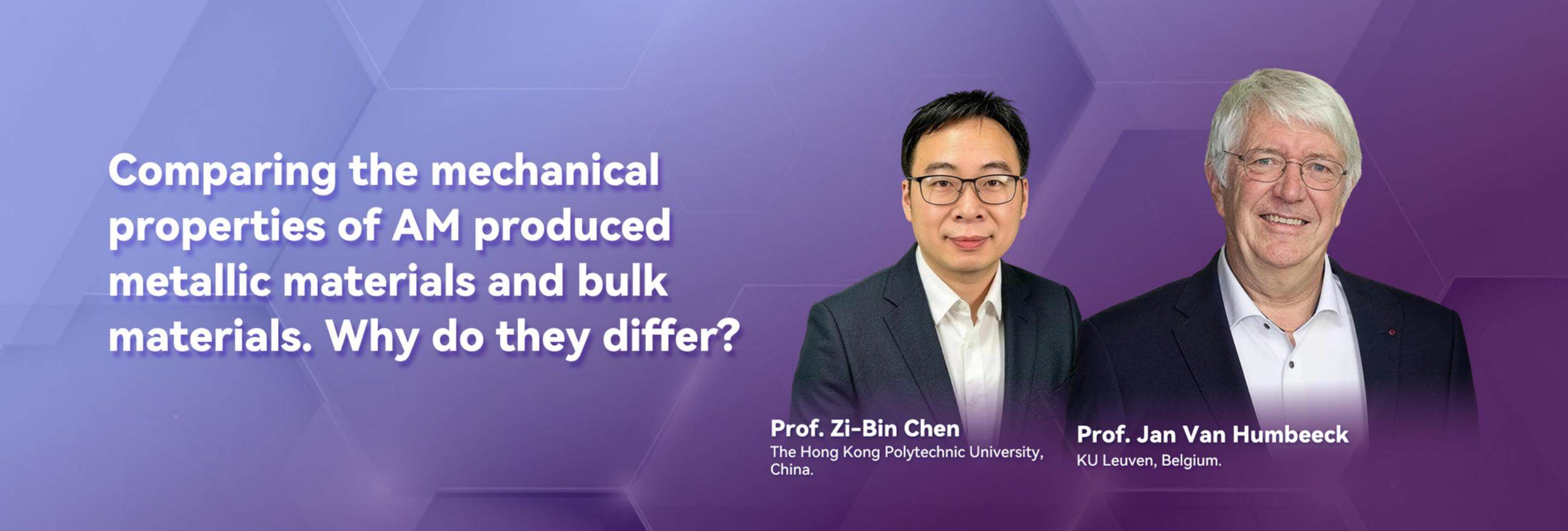
5:00 PM, 11 November 2026 (Beijing, China)
10:00 AM, 11 November 2026 (Brussels, Belgium)
10:00 AM, 11 November 2026 (Brussels, Belgium)
Join the Forum
Platform: Zoom Meeting (with live streaming available)
ZOOM Meeting ID: 851 5002 5683
Link: https://us06web.zoom.us/j/85150025683
ZOOM Meeting ID: 851 5002 5683
Link: https://us06web.zoom.us/j/85150025683
Host
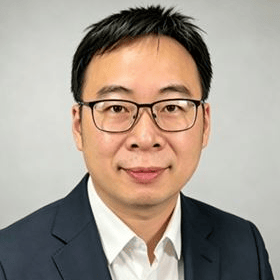
Prof. Zi-Bin Chen
Department of Industrial and Systems Engineering, The Hong Kong Polytechnic University, Hong Kong, China.
Prof. Zi-Bin Chen conducted his MPhil and PhD research in the field of material science and engineering at the University of Sydney and received his PhD degree in 2017. After his PhD, he worked at the University of Sydney as a research fellow, working on developing high-performance functional and additively manufactured structural materials. He joined The Hong Kong Polytechnic University in 2021.
Prof. Zi-Bin Chen has published many high-quality papers in top journals, including Nature, Science, Nature Materials, Nature Communications, Science Advances, Physical Review Letters, Advanced Materials, Materials Today, and Acta Materialia.
Prof. Chen's primary research goal is to design sustainable materials that provide superior structural, functional and service properties, and to address practical engineering challenges across different material systems. His work on developing low-alloy, low-cost, and high-performance sustainable metal alloys, as well as record-breaking ferroelectric materials for energy storage and piezoelectric applications, has attracted considerable attention worldwide.
In recent years, he has secured over HK$10 million in external funding from various sources, including the Hong Kong Research Grant Council, the National Science Foundation of China, the Shenzhen Municipal Science and Technology Innovation Commission, and the Department of Science and Technology of Guangdong Province.
He is a junior executive editor for an international peer-reviewed journal, 'Microstructures' and a guest editor-in-chief for the journal 'Rare Metals'. Based on his achievements, he has received several awards, including the Future AM Breakthrough Award (2026), the Best Youth Scholar Award (2025), the Young Innovative Research Award (2022), and the Ross Coffin Purdy Award (2020).
Prof. Zi-Bin Chen has published many high-quality papers in top journals, including Nature, Science, Nature Materials, Nature Communications, Science Advances, Physical Review Letters, Advanced Materials, Materials Today, and Acta Materialia.
Prof. Chen's primary research goal is to design sustainable materials that provide superior structural, functional and service properties, and to address practical engineering challenges across different material systems. His work on developing low-alloy, low-cost, and high-performance sustainable metal alloys, as well as record-breaking ferroelectric materials for energy storage and piezoelectric applications, has attracted considerable attention worldwide.
In recent years, he has secured over HK$10 million in external funding from various sources, including the Hong Kong Research Grant Council, the National Science Foundation of China, the Shenzhen Municipal Science and Technology Innovation Commission, and the Department of Science and Technology of Guangdong Province.
He is a junior executive editor for an international peer-reviewed journal, 'Microstructures' and a guest editor-in-chief for the journal 'Rare Metals'. Based on his achievements, he has received several awards, including the Future AM Breakthrough Award (2026), the Best Youth Scholar Award (2025), the Young Innovative Research Award (2022), and the Ross Coffin Purdy Award (2020).
Speaker

Prof. Jan Van Humbeeck
Department of Materials Engineering, KU Leuven, Leuven, Flemish Brabant, Belgium.
Em. prof. dr. ir.Jan Van Humbeeck obtained his master degree of Materials Engineering in 1976 and his PhD in 1983 at KU Leuven (Belgium), Engineering Faculty, department of Materials engineering. Since October 1 2017, he is prof. emeritus with assignment at KU Leuven.
His main research topic was related to the development and optimization of structural and functional properties of Shape Memory Alloys (Cu- ,Fe-, NiTi-based). Since about 15 years he devoted a large part of his time also to microstructural analysis and optimization of the functional and mechanical properties of parts produced by Additive Manufacturing. The focus was on SLM (Selective Laser Melting) of specific Titanium-, Aluminum-, Steel and NiTi-alloys.
Jan Van Humbeeck published more than 720 papers in peer reviewed journals, conference proceedings and chapters in books and gave more than 100 invited and keynote lectures and seminars. His h-index is 102 and has more than 47000 citations (according to google scholar). He was visiting professor at research institutes and universities in Argentina, France, India, Japan, Spain and Switzerland. He assisted in more than 180 Ph.D. juries, at home and abroad.
On Tuesday 15 September, at the international conference on "Additive Manufacturing of Smart Materials (Enschede, Nl)" Jan Van Humbeeck received a "Lifetime Achievement Award" for his research work on Sape Memory Alloys and on Additive Manufacturing.
His main research topic was related to the development and optimization of structural and functional properties of Shape Memory Alloys (Cu- ,Fe-, NiTi-based). Since about 15 years he devoted a large part of his time also to microstructural analysis and optimization of the functional and mechanical properties of parts produced by Additive Manufacturing. The focus was on SLM (Selective Laser Melting) of specific Titanium-, Aluminum-, Steel and NiTi-alloys.
Jan Van Humbeeck published more than 720 papers in peer reviewed journals, conference proceedings and chapters in books and gave more than 100 invited and keynote lectures and seminars. His h-index is 102 and has more than 47000 citations (according to google scholar). He was visiting professor at research institutes and universities in Argentina, France, India, Japan, Spain and Switzerland. He assisted in more than 180 Ph.D. juries, at home and abroad.
On Tuesday 15 September, at the international conference on "Additive Manufacturing of Smart Materials (Enschede, Nl)" Jan Van Humbeeck received a "Lifetime Achievement Award" for his research work on Sape Memory Alloys and on Additive Manufacturing.
Abstract
Extreme high cooling rates, high thermal gradients, heat affected zones, consequences of the special production technology of AM leads to metallographic microstructures that are significantly different from those of as-produced bulk materials. Even after standardized heat-treatments the microstructures remain different. As there is a clear link between microstructures and mechanical properties, processing parameters or/and after heat treatments need to be adapted for obtaining the envisaged mechanical properties. Moreover in some cases it looks even more interesting to adapt the composition of the alloy, developed for bulk processing towards a composition leading to better material properties after AM.
In this lecture examples will be given on how specific heat treatments developed for AM lead to better properties than after the normalized heat treatments. Other examples will show that changing slightly the composition by in situ alloying or powder mixing can solve problems of inferior mechanical properties or even cracking.
Keywords: Additive manufacturing, microstructure, post treatments
In this lecture examples will be given on how specific heat treatments developed for AM lead to better properties than after the normalized heat treatments. Other examples will show that changing slightly the composition by in situ alloying or powder mixing can solve problems of inferior mechanical properties or even cracking.
Keywords: Additive manufacturing, microstructure, post treatments