
Time
Tuesday, 1 December 2026
1:00-2:00 PM GMT (UK)
2:00-3:00 PM CET (Germany)
21:00-22:00 CST (China)
1:00-2:00 PM GMT (UK)
2:00-3:00 PM CET (Germany)
21:00-22:00 CST (China)
Join the Roundtable
Call for Papers! We welcome the submission of high-quality papers for this symposium.
Online submission: https://www.oaecenter.com/login?JournalId=evcna
Moderator
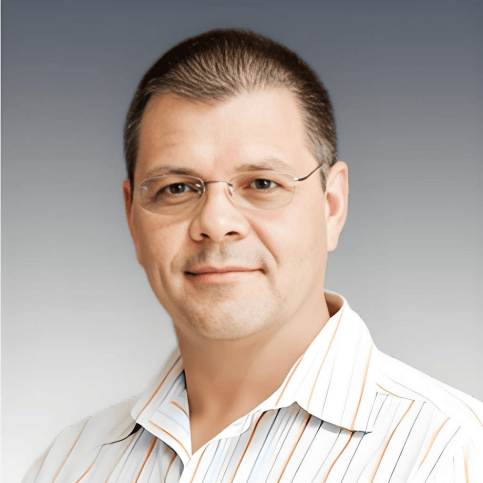
Michael W. Pfaffl
Professor, Division of Animal Physiology and Immunology, School of Life Sciences Weihenstephan, Technical University of Munich, Freising, Germany
Prof. Pfaffl's field of research is the molecular physiology of animals and humans. Using modern biochemical and molecular biology techniques, experimental research focuses on foundations and innovations in the endocrine and paracrine regulation of human health and animal health & welfare. Besides the traditional signal transmission, the extracellular vesicle biology represents a key aspect of his research. The focus is on the development of nucleic acid-based signatures as biomarkers for non-physiological or pathological conditions.
Prof. Pfaffl started in 1986 to study 'Agriculture & Animal Science' and 'Biotechnology' at the Technical University of Munich (TUM). In 1997, he obtained his PhD in the field of molecular muscle and growth physiology at the Chair of Physiology. In June 2003 he completed his Venia Legendi (Dr. habil.) in 'Physiology' at the Center of Life and Food Sciences Weihenstephan. Early 2010 he became Professor of 'Molecular Physiology' at the TUM School of Life Sciences in Freising Weihenstephan.
Prof. Pfaffl started in 1986 to study 'Agriculture & Animal Science' and 'Biotechnology' at the Technical University of Munich (TUM). In 1997, he obtained his PhD in the field of molecular muscle and growth physiology at the Chair of Physiology. In June 2003 he completed his Venia Legendi (Dr. habil.) in 'Physiology' at the Center of Life and Food Sciences Weihenstephan. Early 2010 he became Professor of 'Molecular Physiology' at the TUM School of Life Sciences in Freising Weihenstephan.
Speaker

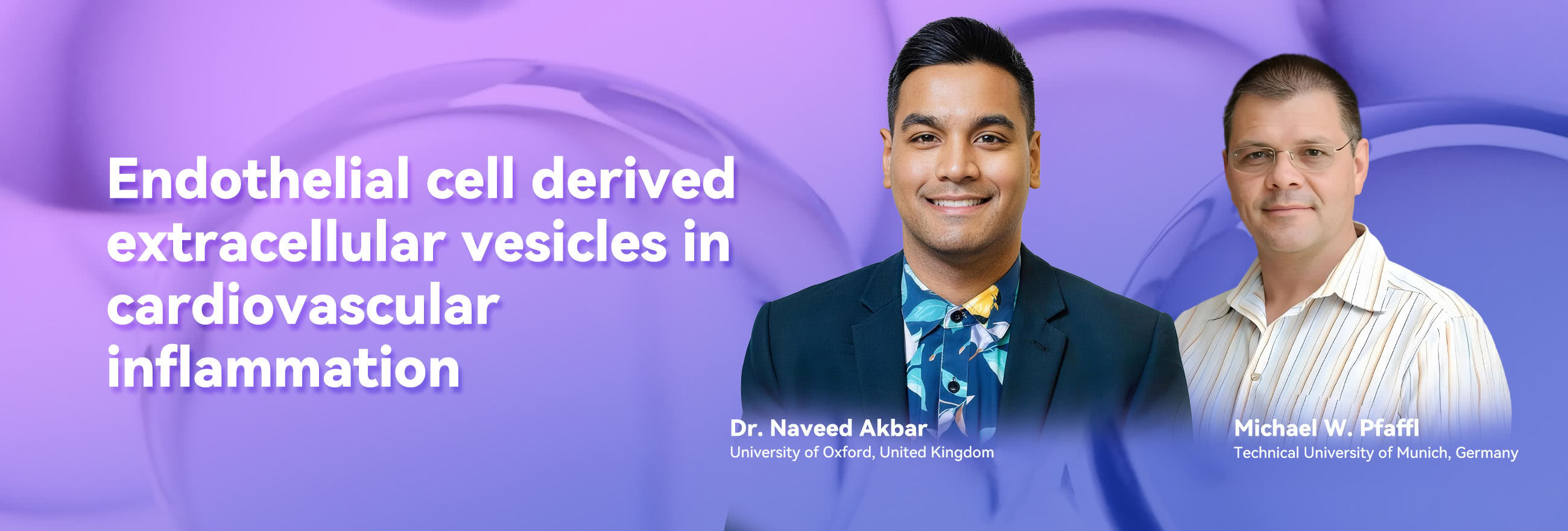
Dr. Naveed Akbar
Associate Professor, Division of Cardiovascular Medicine, Radcliffe Department of Medicine, University of Oxford, Oxford, United Kingdom
Naveed Akbar is an Associate Professor of Cardiovascular Science at the University of Oxford and a British Heart Foundation Intermediate Fellow in Basic Science. His research investigates how extracellular vesicles regulate vascular inflammation and immune responses following cardiovascular injury, with a particular focus on myocardial infarction and cardiometabolic disease. His laboratory combines mechanistic vascular and immune biology with extracellular vesicle profiling, multi-omics and patient cohorts to understand how EV-mediated intercellular and inter-organ communication contributes to disease, and how these pathways might be exploited for diagnostic and therapeutic applications. He is also a member of the Executive Board of the International Society for Extracellular Vesicles (ISEV), where he chairs the Meetings and Programs Committee.
Overview:
- 1. How cardiovascular injury changes the abundance, molecular composition and biological activity of circulating extracellular vesicles.
- 2. The emergence of endothelial-derived EVs as active regulators of inflammatory and immune responses following myocardial infarction.
- 3. How EVs can reshape immune-cell transcriptional programmes and contribute to systemic communication following cardiovascular injury.
- 4. Developing mechanistic approaches to understand how inflammatory endothelial EV populations are generated and targeted to recipient cells.
- 5. Opportunities and challenges in translating cardiovascular EV biology into biomarkers and therapeutic strategies.