


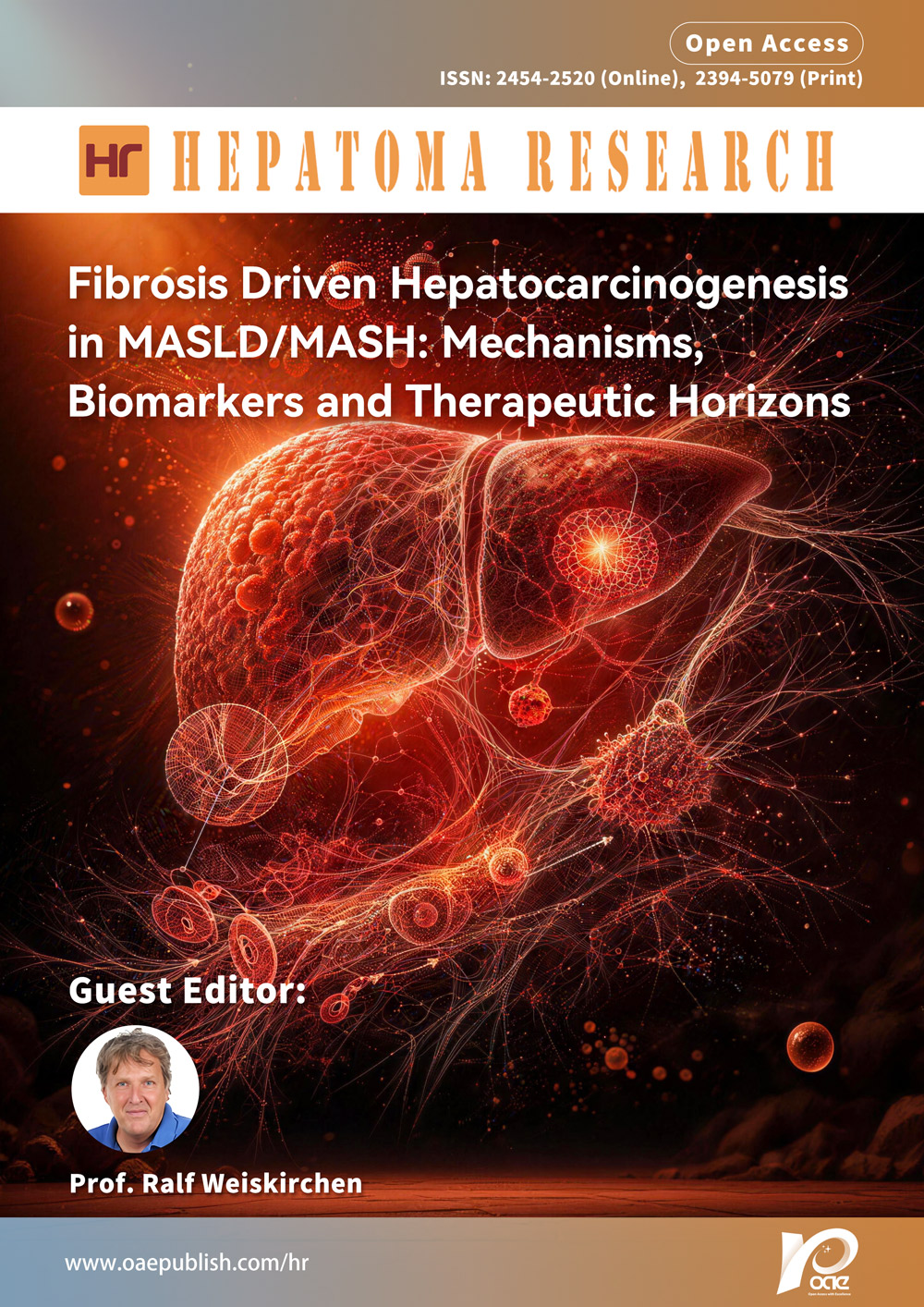
Topic: Fibrosis Driven Hepatocarcinogenesis in MASLD/MASH: Mechanisms, Biomarkers and Therapeutic Horizons
A Special Topic of Hepatoma Research
ISSN 2454-2520 (Online) 2394-5079 (Print)
Submission deadline: 31 Aug 2026
Guest Editor
Special Topic Introduction
Metabolic dysfunction-associated steatotic liver disease (MASLD) and its progressive inflammatory form, metabolic dysfunction-associated steatohepatitis (MASH), have emerged as leading causes of chronic liver disease and hepatocellular carcinoma (HCC) worldwide. A growing body of evidence highlights liver fibrosis not only as a consequence of chronic liver injury but as a central driver of hepatocarcinogenesis. The fibrotic microenvironment, characterized by activated stellate cells, extracellular matrix remodeling, chronic inflammation, and altered cellular signaling, creates conditions that promote malignant transformation and tumor progression.
Despite substantial advances in our understanding of MASLD/MASH pathophysiology, critical questions remain regarding the molecular and cellular mechanisms linking fibrosis to liver cancer development. Furthermore, there is an urgent need to identify reliable biomarkers for early detection and risk stratification, as well as to develop effective therapeutic strategies that target fibrosis-driven oncogenic pathways.
This Special Issue of Hepatoma Research aims to bring together cutting-edge research and comprehensive reviews that explore the mechanisms, biomarkers, and therapeutic opportunities associated with fibrosis-driven hepatocarcinogenesis in MASLD/MASH. We welcome submissions that address fundamental, translational, and clinical aspects of this rapidly evolving field.
Recommended topics include, but are not limited to:
· Molecular and cellular mechanisms linking liver fibrosis to hepatocarcinogenesis;
· Role of hepatic stellate cells, immune cells, and the fibrotic microenvironment in tumor initiation;
· Extracellular matrix remodeling and mechanotransduction in HCC development;
· Genetic, epigenetic, and metabolic drivers of MASLD/MASH-associated HCC;
· Biomarkers for fibrosis progression and early HCC detection;
· Imaging, liquid biopsy, and multi-omics approaches for risk stratification;
· Preclinical models of fibrosis-driven hepatocarcinogenesis;
· Novel antifibrotic and anticancer therapeutic strategies;
· Clinical implications and translational perspectives.
We invite original research articles, reviews, and perspectives that advance the understanding of fibrosis-driven liver cancer in the context of MASLD/MASH and help pave the way for improved diagnostic and therapeutic strategies.
Submission Deadline
Submission Information
For Author Instructions, please refer to https://www.oaepublish.com/hr/author_instructions
For Online Submission, please login at https://www.oaecenter.com/login?JournalId=hr&IssueId=hr26042910448
Submission Deadline: 31 Aug 2026
Contacts: Vivienne Yan, Science Editor, [email protected]