


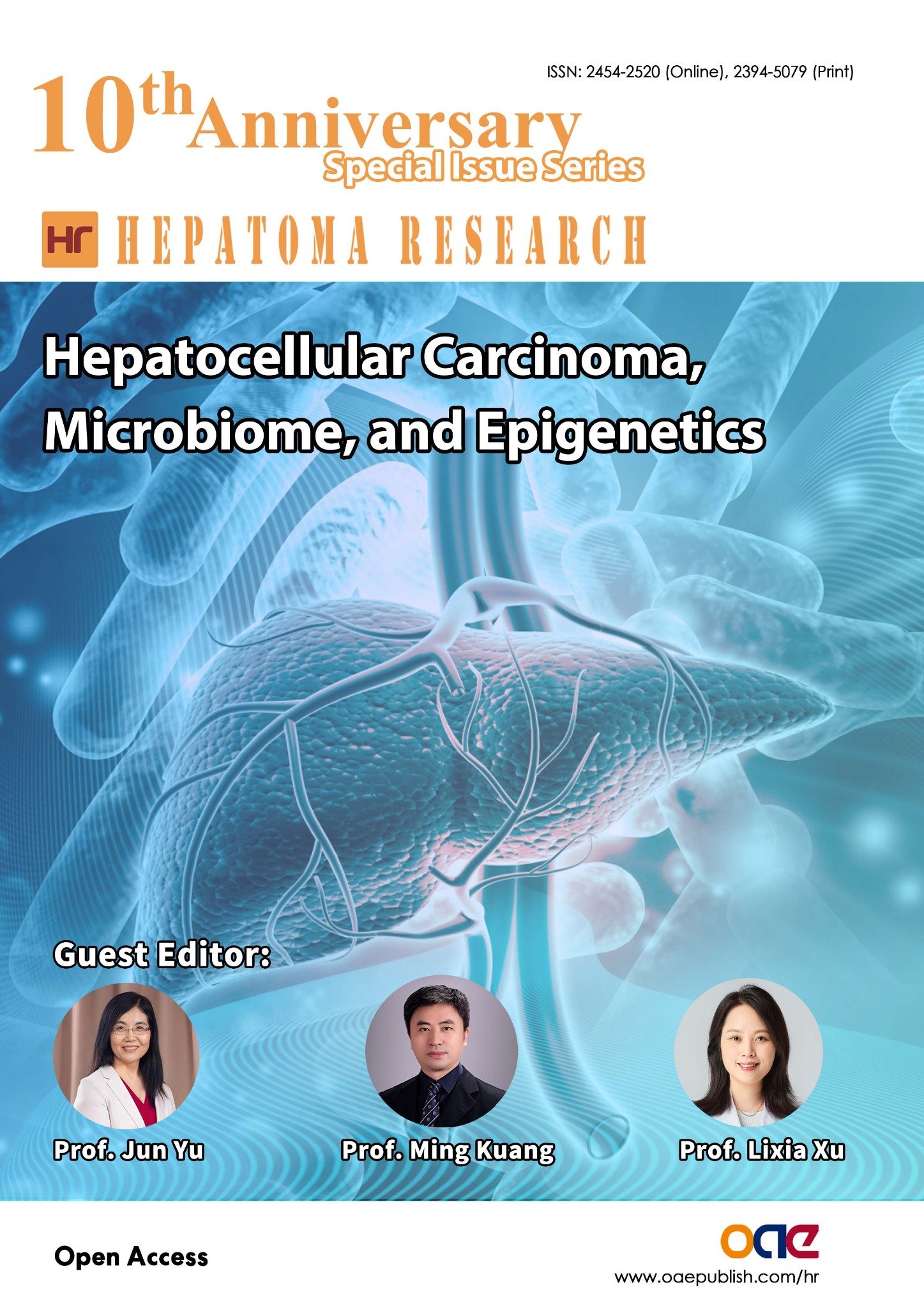
Topic: Hepatocellular Carcinoma, Microbiome, and Epigenetics
A Special Topic of Hepatoma Research
ISSN 2454-2520 (Online) 2394-5079 (Print)
Submission deadline: 31 May 2026
Guest Editors
Special Topic Introduction
Hepatocellular carcinoma (HCC) is a malignancy with a high global incidence and mortality burden. Its pathogenesis is exceptionally complex and multifactorial, involving the interplay of genetic, environmental, metabolic, and immunological factors. To achieve a more comprehensive understanding of the mechanisms underlying HCC initiation and progression, research in this field continues to expand in both depth and scope. This Special Issue aims to systematically highlight two rapidly advancing and complementary dimensions of HCC research, together outlining an integrated and coherent framework for understanding this disease.
On the one hand, microbiome research has revealed the profound influence of human symbiotic microorganisms as key "environmental factors" in HCC development. The gut microbiota regulates systemic immune and metabolic homeostasis via the gut-liver axis, while local microbial communities colonizing tumor tissues can directly shape the tumor immune microenvironment. Accumulating evidence now positions the microbiota as an integral component of HCC pathogenesis. Current research efforts focus on dissecting how specific microbial species and the overall microbial ecosystem function as "regulatory switches" that modulate HCC tumorigenesis, progression, and therapeutic response.
On the other hand, epigenetic research delves into the reprogramming of gene regulatory networks within host cells, elucidating the "software-level" alterations that drive HCC. Epigenetic mechanisms such as DNA methylation, histone modifications, chromatin remodeling, and non-coding RNAs dynamically and precisely control the expression of oncogenes and a spectrum of genes related to metabolism and signaling pathways. These epigenetic alterations are not only hallmark events in early hepatocarcinogenesis but also persist throughout tumor evolution, contributing to intratumoral heterogeneity, metastatic potential, and therapeutic resistance. As such, epigenetic dysregulation provides a fundamental basis for understanding the progressive "identity shift" of tumor cells.
Currently, both the microbiome and epigenetics fields have established robust research frameworks and yielded substantial advances. This Special Issue, therefore, welcomes high-quality original research articles and reviews focusing on either of these research directions to further consolidate our understanding of HCC. Importantly, we also encourage forward-looking studies that explore the potential interconnections between these two domains—whether through microbiota- and microbiota-derived metabolite-mediated regulation of host epigenetic states, or through the influence of host epigenetic programs on the microbial ecological niche. Discoveries in these intersecting areas may reveal the most intricate and pivotal nodes within the systemic regulatory network of HCC.
Recommended topics include, but are not limited to:
1. Differences of microbiome among HCC with various etiologies;
2. Alterations of microbiome during the development of HCC;
3. Explorations of diet–microbiome interaction on HCC development;
4. Investigations of microbial characteristics at the strain level in HCC;
5. The role of microbial gut-liver axis in HCC development;
6. The microbiota-immune crosstalk in HCC progression;
7. The role of microbial metabolites in HCC progression;
8. Mechanisms of pathogenic and probiotic bacteria in HCC pathogenesis and treatment;
9. Epigenetic heterogeneity in HCC revealed by multi-omics sequencing;
10. Regulatory mechanisms and targeting potential of novel histone modifications;
11. Application of epigenetic biomarkers in HCC diagnosis;
12. Role and application of RNA epigenetic modifications in HCC pathogenesis;
13. Epigenetic-metabolic-microbiome cross-regulatory networks;
14. Mechanisms and applications of epigenetic regulation in shaping the HCC tumor immune microenvironment;
15. Exploration of epigenetic interventions in reversing HCC therapy resistance and in combination therapy strategies;
16. Non-catalytic functions of epigenetic modifying enzymes in HCC.
Submission Deadline
Submission Information
For Author Instructions, please refer to https://www.oaepublish.com/hr/author_instructions
For Online Submission, please login at https://www.oaecenter.com/login?JournalId=hr&IssueId=hr26011510349
Submission Deadline: 31 May 2026
Contacts: Vivienne Yan, Science Editor, [email protected]