


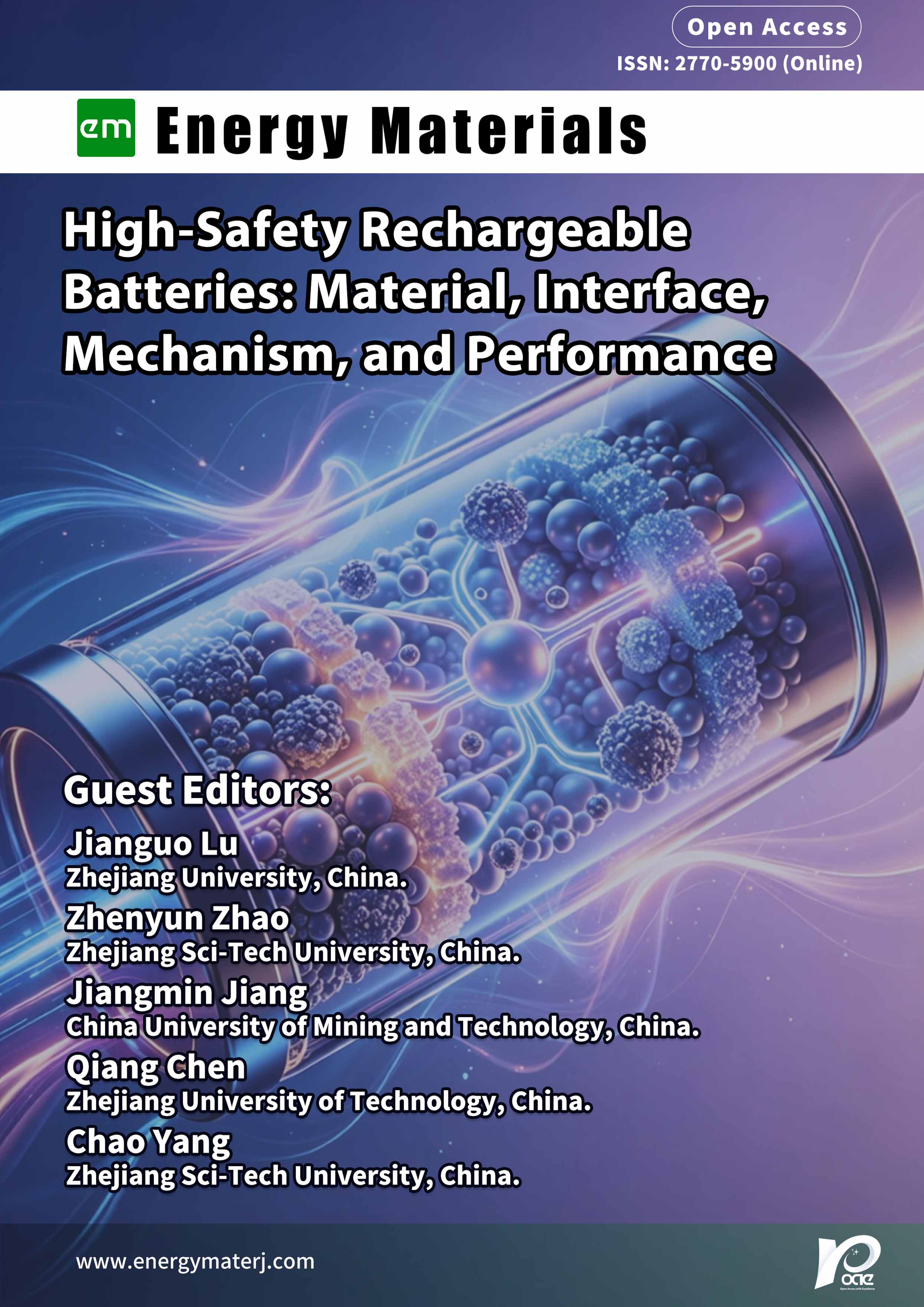
Topic: High-Safety Rechargeable Batteries: Material, Interface, Mechanism, and Performance
Guest Editors
Special Topic Introduction
The large-scale deployment of energy storage systems (ESSs) is a cornerstone of the global transition toward renewable energy integration, grid stabilization, and efficient power distribution. However, the significant issue of current mainstream lithium-ion batteries remains their susceptibility to thermal runaway due to the volatile and flammable nature of organic electrolytes and high activity of lithium, often culminating in fire and explosion incidents. As the power demand continues to climb, the urgency to prioritize high-safety design paradigms has never been more paramount. Meanwhile, it is essential to further improve cycle stability and energy density under the high-safety premise.
This Special Issue aims to collect high-quality research focused on the material and engineering strategies to enhance the safety of rechargeable batteries. The scope encompasses both intrinsically safe systems (e.g., aqueous batteries) and safety-reinforced systems (e.g., commercial sodium-/lithium-ion batteries). We welcome submissions that address safety challenges through high-performance electrode/electrolyte materials, robust electrode/electrolyte interfaces, thermo-response battery materials, flame-retardant engineering, solid-state electrolytes, fundamental mechanism insights, and other new-type high-safety rechargeable batteries.
Scope and Topics
This Special Issue invites original research, reviews, minireviews, communications, and perspectives in the broad domain of high-safety rechargeable batteries. Topics include, but are not limited to:
● Intrinsically safe aqueous batteries: zinc-ion, ammonium-ion, and proton batteries; other aqueous metal-ion batteries;
● Safety-reinforced sodium-/lithium-ion batteries: thermo-response battery materials, flame-retardant electrolytes/binders/separators, etc.;
● Advanced electrode materials: design strategies for improving cycle stability at fast charge/discharge conditions or across extreme temperature ranges, new-type high-performance electrodes, etc.;
● Advanced electrolyte materials: wide-temperature, thermo-response, and solid-state electrolytes; functional electrolyte additives;
● Electrode/electrolyte interfaces: interface regulation strategies and technologies on solid electrolyte interphases (SEI), cathode electrolyte interphases (CEI), etc.;
● Failure and suppression mechanisms: evolution mechanisms of side reactions, gas evolution, and metal dendrite; interfacial failure mechanisms; corresponding suppresion strategies and mechanisms.
Keywords
Safety enhancement, aqueous batteries, sodium-/lithium-ion batteries, advanced electrode/electrolyte materials, electrode/electrolyte interfaces, failure and suppression mechanisms
Submission Deadline
Submission Information
For Author Instructions, please refer to https://www.oaepublish.com/energymater/author_instructions
For Online Submission, please login at https://www.oaecenter.com/login?JournalId=energymater&IssueId=energymater26051310461
Submission Deadline: 31 Jan 2027
Contacts: Vicky, Assistant Editor, [email protected]