


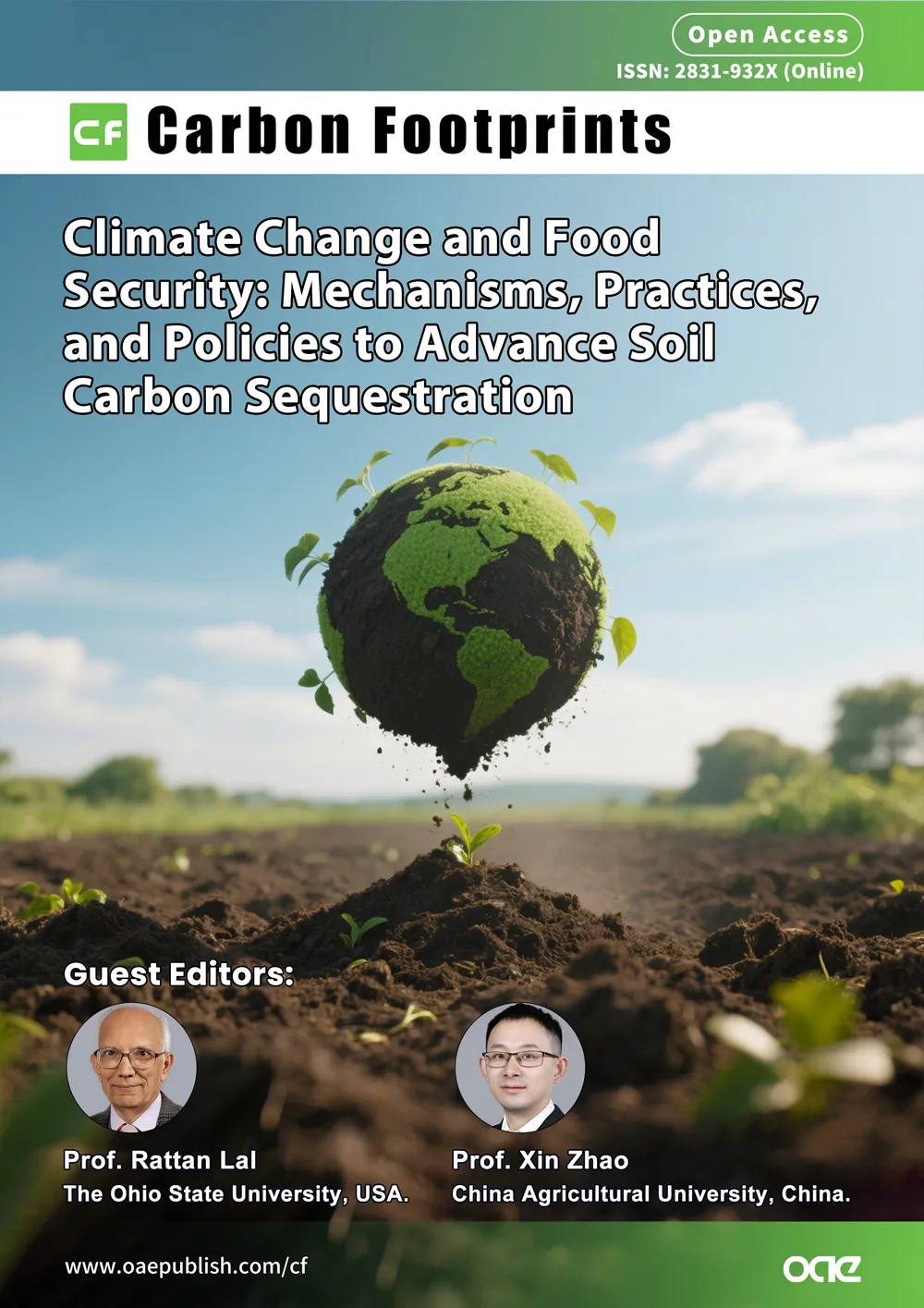
Topic: Climate Change and Food Security: Mechanisms, Practices, and Policies to Advance Soil Carbon Sequestration
Guest Editors
Prof. Rattan Lal
Carbon Management and Sequestration Center, The Ohio State University, Columbus, United States.
Special Issue Introduction
Climate change - manifested through global warming, droughts, and extreme weather events - has become a significant threat to global food production and human livelihoods. Reports from the Intergovernmental Panel on Climate Change (IPCC) warn that, due to rising carbon emissions, the ambitious goal of limiting global warming to 1.5°C is on the verge of being unattainable. At the same time, to sustain the world's growing population, food production is projected to double by the 2050s. Notably, agricultural activities themselves contribute approximately 13% of global carbon emissions. These interconnected challenges have sparked extensive discussions on how to meet climate targets under uncertain conditions, how to balance food production with carbon emission reductions, and how to offset carbon emissions to effectively mitigate climate change.
Since the signing of the Paris Agreement at the 2015 United Nations Climate Change Conference (COP21), soil carbon sequestration has been recognized as a potential solution to address these complex issues. The “4 per Thousand” initiative was proposed, calling for global efforts to enhance soil carbon sequestration. In theory, enhancing the capacity of soils to store atmospheric carbon can significantly reduce carbon concentrations in the atmosphere, thereby helping to mitigate climate change. Additionally, boosting soil carbon levels - both as organic carbon (humus) and inorganic carbon (secondary carbonates) - is crucial for maintaining and even improving soil quality, which in turn supports higher and more nutritious crop yields. Greater soil carbon content can also enhance the resilience of agroecosystems, helping to buffer the adverse effects of climate variability. Ensuring stable and productive agricultural systems is essential for achieving long-term food and nutritional security. This Special Issue aims to publish research studies, innovative practices, case analyses, and policy discussions that focus on reducing carbon emissions, increasing soil carbon storage, and ultimately safeguarding global food security while addressing the climate crisis.
Proposed topics include, but are not limited to:
1. Soil carbon dynamics and the influence of human activities in cereal and other food production systems;
2. Soil carbon storage and stabilization across different systems and practices;
3. Carbon footprint assessments and strategies to reduce emissions in food production;
4. Evaluation of the carbon footprint of food production at farm, regional, national or global scales;
5. Greenhouse gas emissions from agriculture and mitigation practices;
6. Carbon budgets and net carbon sequestration in cereal and other food production systems;
7. Climate-smart agricultural practices and their impact on soil carbon, greenhouse gas emissions, and crop yields;
8. Carbon tax policies and their implications for global food production and trade;
9. Emerging technologies for reducing carbon footprint, improving food production, and enhancing income through carbon farming;
10. Policies supporting negative emission technologies in food production at various scales.
Since the signing of the Paris Agreement at the 2015 United Nations Climate Change Conference (COP21), soil carbon sequestration has been recognized as a potential solution to address these complex issues. The “4 per Thousand” initiative was proposed, calling for global efforts to enhance soil carbon sequestration. In theory, enhancing the capacity of soils to store atmospheric carbon can significantly reduce carbon concentrations in the atmosphere, thereby helping to mitigate climate change. Additionally, boosting soil carbon levels - both as organic carbon (humus) and inorganic carbon (secondary carbonates) - is crucial for maintaining and even improving soil quality, which in turn supports higher and more nutritious crop yields. Greater soil carbon content can also enhance the resilience of agroecosystems, helping to buffer the adverse effects of climate variability. Ensuring stable and productive agricultural systems is essential for achieving long-term food and nutritional security. This Special Issue aims to publish research studies, innovative practices, case analyses, and policy discussions that focus on reducing carbon emissions, increasing soil carbon storage, and ultimately safeguarding global food security while addressing the climate crisis.
Proposed topics include, but are not limited to:
1. Soil carbon dynamics and the influence of human activities in cereal and other food production systems;
2. Soil carbon storage and stabilization across different systems and practices;
3. Carbon footprint assessments and strategies to reduce emissions in food production;
4. Evaluation of the carbon footprint of food production at farm, regional, national or global scales;
5. Greenhouse gas emissions from agriculture and mitigation practices;
6. Carbon budgets and net carbon sequestration in cereal and other food production systems;
7. Climate-smart agricultural practices and their impact on soil carbon, greenhouse gas emissions, and crop yields;
8. Carbon tax policies and their implications for global food production and trade;
9. Emerging technologies for reducing carbon footprint, improving food production, and enhancing income through carbon farming;
10. Policies supporting negative emission technologies in food production at various scales.
Keywords
Soil carbon, food production; carbon emission, soil productivity, low-carbon agriculture, carbon farming, policy discussion, climate change mitigation, food security
Submission Deadline
31 Oct 2025
Submission Information
For Author Instructions, please refer to https://www.oaepublish.com/cf/author_instructions
For Online Submission, please login at https://www.oaecenter.com/login?JournalId=cf&IssueId=cf2510312414
Submission Deadline: 31 Oct 2025
Contacts: Leah Zhang, Assistant Editor, [email protected]