Intelligent Control Systems Webinar Series Highlights Advances in Nonlinear Intelligent Control for Robotics and Autonomous Systems
A global online event brings together leading experts to discuss autonomous vehicle control, nonlinear systems, and intelligent automation
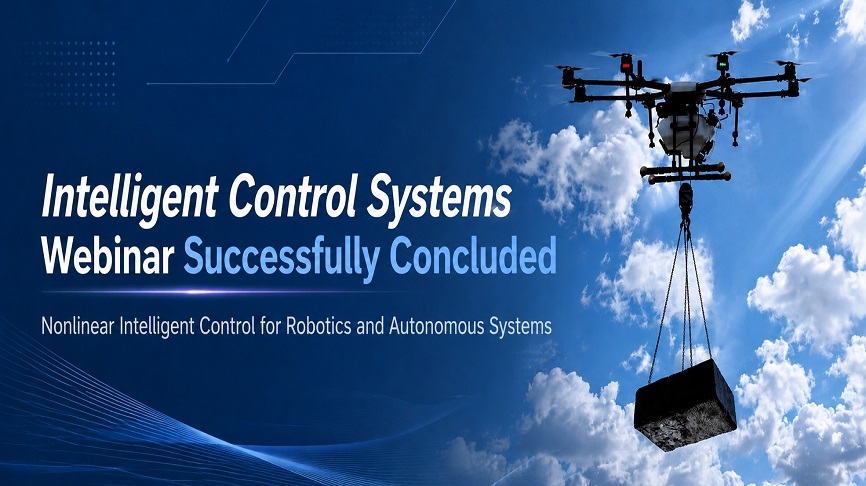
On June 24, 2026, Intelligent Control Systems (ICS) successfully held the inaugural webinar in its new series, bringing together internationally recognized researchers to discuss recent advances in nonlinear intelligent control for robotics and autonomous systems. The inaugural event attracted more than 10,000 online participants worldwide.
Webinar Overview
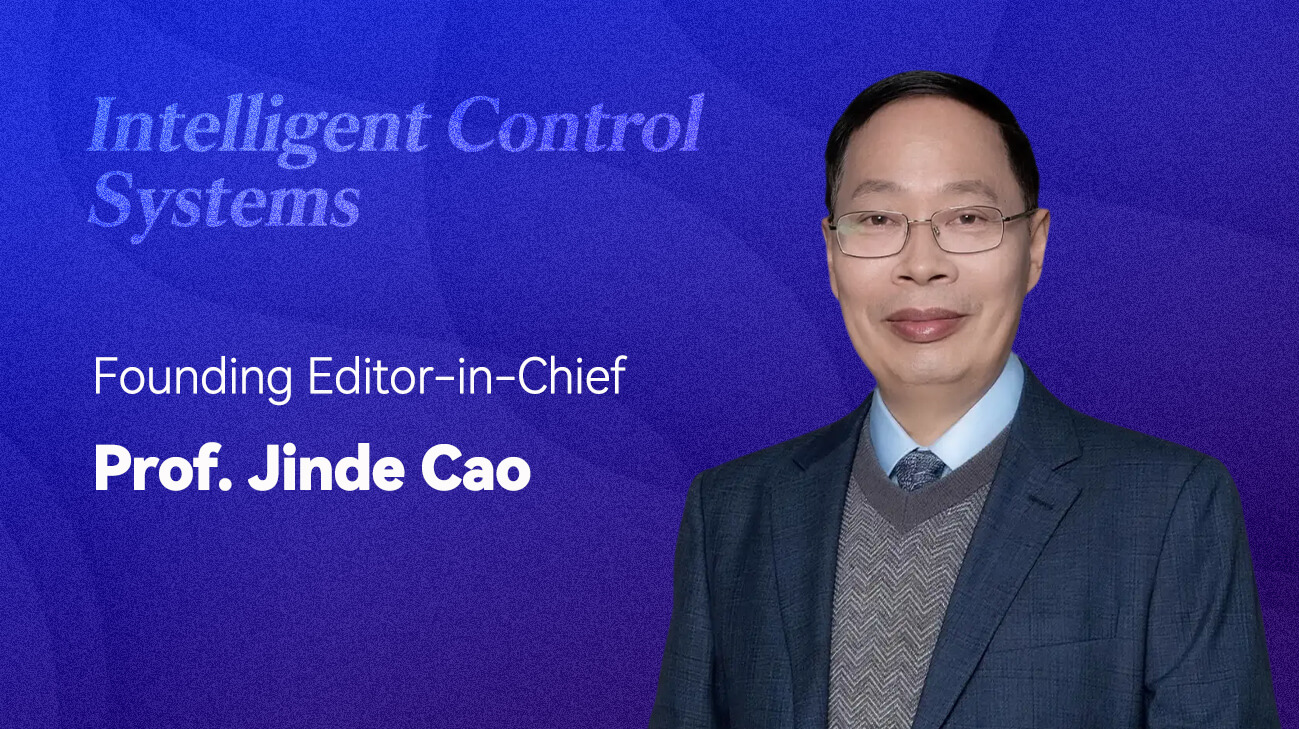
The webinar was chaired by Prof. Jinde Cao, Editor-in-Chief of Intelligent Control Systems and Endowed Chair Professor at Southeast University, China. Prof. Cao is a member of the Academia Europaea, the Russian Academy of Sciences, and a fellow of multiple prestigious academies worldwide. His research contributions have significantly advanced the fields of nonlinear systems, complex networks, and networked collective intelligence.
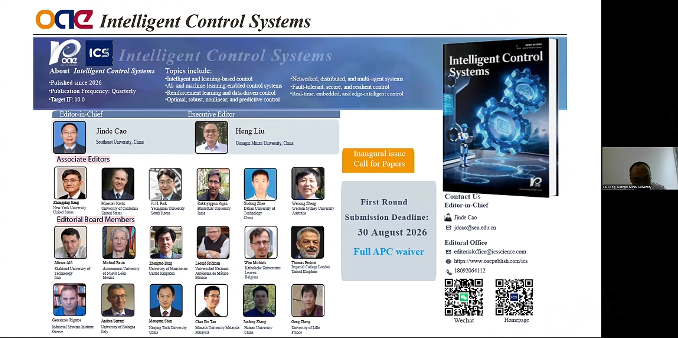
The session was hosted by Prof. Heng Liu, Dean of the School of Mathematical Sciences at Guangxi Minzu University, China. Prof. Liu opened the webinar by introducing the journal and welcoming the invited speakers.
Featured Presentation
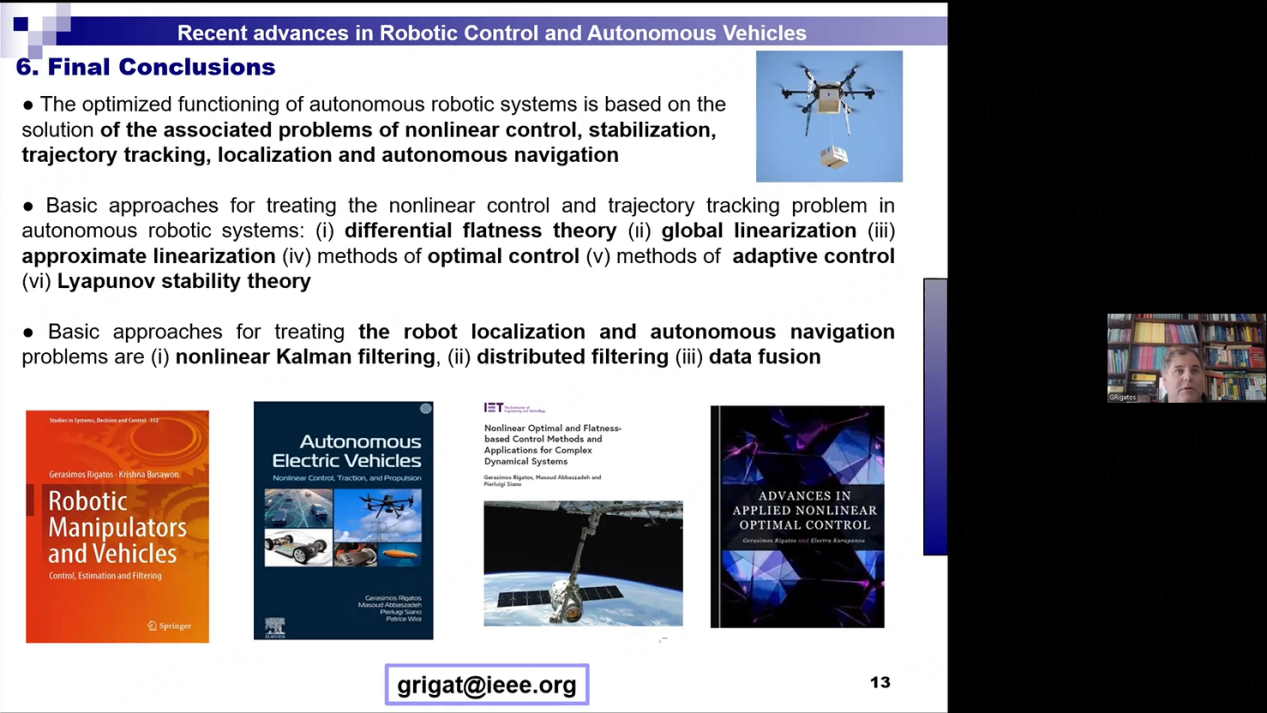
The keynote presentation was delivered by Dr. Gerasimos Rigatos, Research Director at the Unit of Industrial Automation, Industrial Systems Institute (ISI), Greece. Dr. Rigatos is a senior member of the Institute of Electrical and Electronics Engineers (IEEE) and a Chartered Engineer of the Institution of Engineering and Technology. His presentation, titled "Recent Advances in Robotic Control and Autonomous Vehicles," explored emerging methodologies and challenges in intelligent robotic systems.
Dr. Rigatos highlighted that advanced robotic systems rely on effective solutions to key challenges, including nonlinear control, system stabilization, trajectory tracking, localization, and autonomous navigation. He introduced several advanced approaches, including differential flatness theory, optimal control, adaptive control, nonlinear Kalman filtering, distributed filtering, and multi-sensor fusion.
His research covers a broad spectrum of autonomous and robotic platforms, including:
- Robotic manipulators, including industrial, parallel, cable-driven, and flexible-link robots
- Unmanned ground vehicles (UGVs), including unicycle models, omnidirectional robots, and truck-trailer systems
- Unmanned surface vessels (USVs) and autonomous underwater vehicles (AUVs)
- Unmanned aerial vehicles (UAVs), including quadcopters, octocopters, and tilt-rotor aircraft
- Space vehicles, including satellites, reentry vehicles, and guided missiles
With more than 400 journal articles, 12 research monographs, and a Google Scholar h-index of 40, Dr. Rigatos has made substantial contributions to nonlinear control and autonomous systems. He has also served as a visiting professor at institutions including Université Paris XI, the University of Northumbria, the University of Salerno, and École Centrale de Nantes.
Interactive Q&A Session
The webinar concluded with an engaging Q&A session moderated by Prof. Heng Liu. Dr. Rigatos responded to questions from participants regarding stability verification and energy-efficient autonomous vehicle control.
Q1: What formal verification methods can guarantee the stability and safety of learning-based nonlinear vehicle controllers?
Dr. Rigatos explained that Lyapunov stability theory provides a fundamental framework for analyzing the stability of nonlinear control systems. For robotic applications, controllability analysis often established through differential flatness properties is an important prerequisite.
For integrated control and state estimation problems, he introduced two major approaches:
- using linearized state-space representations and the separation principle to separately verify controller stability and observer convergence; or
- applying nonlinear stability analysis directly by constructing extended Lyapunov functions that incorporate observer dynamics.
He emphasized that rigorous stability analysis is essential to ensure reliable, robust control performance under changing operational conditions.
Q2: How can energy optimization be integrated into vehicle motion control to reduce power consumption in electric autonomous vehicles?
Dr. Rigatos noted that energy efficiency is naturally embedded in nonlinear optimal control frameworks, in which optimization objectives typically account for both trajectory-tracking performance and control effort.
By minimizing state deviations and control input variations simultaneously, optimal control strategies can reduce unnecessary actuator energy consumption. For electric vehicles, nonlinear optimal control can further support efficient energy management by optimizing power distribution and reducing losses in energy conversion processes.
For non-optimal control approaches, he highlighted the importance of carefully tuning feedback gains to avoid excessive control actions and maintain efficient energy usage.
About Intelligent Control Systems
ICS is an international, peer-reviewed, gold open-access journal dedicated to advancing fundamental and applied research in intelligent control and autonomous systems. The journal focuses on the deep integration of control theory with artificial intelligence, machine learning, computational intelligence, and data-driven methodologies. It covers a broad range of topics, including intelligent decision-making, adaptive and autonomous systems, networked control systems, cyber-physical systems, intelligent robotic control systems, and complex systems.
The Editor-in-Chief is Prof. Jinde Cao, and the journal has established an international editorial board comprising distinguished scholars from multiple countries and regions.
Call for Papers
The journal welcomes high-quality submissions from researchers worldwide. A full article processing charge (APC) waiver is available for all accepted papers submitted before the end of 2028. Manuscripts can be submitted online at: https://www.oaecenter.com/login?JournalId=ics
Editor: Jingya Wei
Language Editor: Amir Khan
Production Editor: Ting Xu
Respectfully submitted by the Editorial Office of Intelligent Control Systems