
Interview with Professor Rika Kobayashi, Associate Editor of JMI’s
We recently had an inspiring conversation with Prof. Rika Kobayashi, Associate Editor of JMI, whose work connects computational chemistry with materials data infrastructure. In the interview, Prof. Kobayashi shared valuable insights into the development, challenges, and future directions of materials informatics, while highlighting the importance of using AI/machine learning (ML) in a sensible and responsible manner.
Click to watch the video and explore Prof. Kobayashi's thoughtful perspectives on AI/ML-driven materials research and community building in materials informatics.
Interview Questions:
00:10 Question 1: Your work bridges quantum chemistry, high-performance computing, machine learning, and materials data infrastructure. Could you briefly introduce your research journey and how this interdisciplinary background has shaped your view of materials informatics?
01:53 Question 2: In recent years, machine learning interatomic potentials have become increasingly important in materials simulation. In your view, what is the most critical unresolved challenge in this field?
02:31 Question 3: The DCTMD workshop report published in JMI discussed several fast-moving topics: ML interatomic potentials, AI-ready data, autonomous laboratories, large language models (LLMs), and computing infrastructure. Which of these directions do you think will have the greatest impact on materials informatics in the next five to ten years?
03:39 Question 4: As an Associate Editor of JMI, what suggestions would you offer for strengthening the journal’s visibility and community engagement? In your view, what types of activities or hot topics should JMI prioritize for building an active materials informatics community around the journal?
Interviewee Introduction:
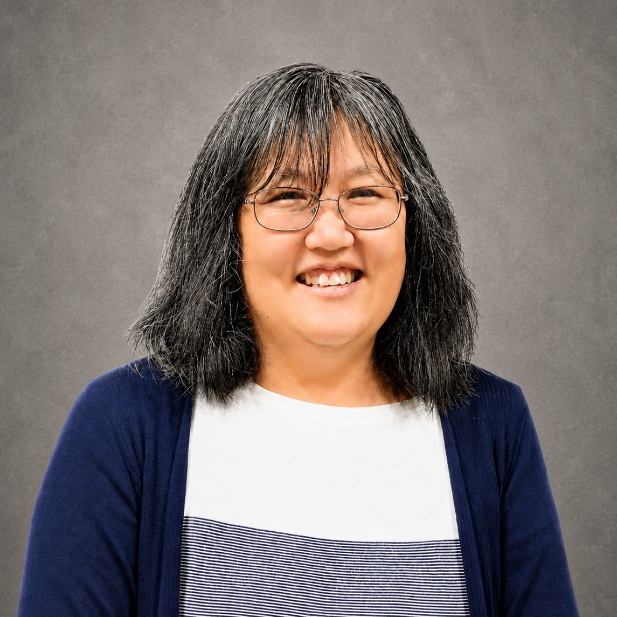
Rika Kobayashi is a High-Performance Computational Chemist and Machine Learning specialist at the NCI supercomputer facility based at the Australian National University. Her background is in ab initio quantum chemistry having derived and implemented a coupled cluster gradient for her PhD from the University of Cambridge. Since then she has mostly been implementing novel quantum chemistry methodology, such as CCSD(T) into NWChem and CAM-B3LYP into the Gaussian suite of programs for supercomputers. In her previous role at NCI she was responsible for installing, maintaining and providing expert support for chemistry application software to Australian researchers and their international collaborators, especially in technical HPC matters. Since 2018 she has also been exploring issues of Big Data in chemistry and materials science, particularly regarding setting standards for interoperability and sustainability of databases and tools.
Editor: Ning Yao
Language Editor: Amir Khan
Production Editor: Xingyue Luo
Respectfully Submitted by the Editorial Office of Journal of Materials Informatics