

Interview with JMI’s Editorial Board Member-Professor Ankit Agrawal
Recently, we had an inspiring conversation with Prof. Ankit Agrawal, a distinguished expert in materials informatics, one of our editorial board members, who shared his insightful perspectives on AI for Materials. Discover how Prof. Agrawal envisions AI reshaping materials discovery and design - from property prediction and inverse modeling to AI-ready data and future self-driving laboratories - no researcher will want to miss.
Click to watch the video and explore thought-provoking insights from Prof. Agrawal.
Interview Questions:
00:05 Question 1: Your pioneering work has significantly advanced the integration of artificial intelligence, high-performance data mining, and materials informatics. From your perspective, how can materials informatics move beyond simply predicting individual material properties and help researchers better understand the links between processing parameters, microstructural evolution, and final material properties or performance?
02:18 Question 2: In your recent work on Hybrid-LLM-GNN models and inverse semiconductor design demonstrates how AI can support different stages of materials discovery, from materials representation and property prediction to candidate generation, screening, and validation. In your view, what are the major challenges you see in using AI for developing forward models of materials property prediction and inverse models of materials discovery and design? At the same time, what is the key challenge in making AI-generated material candidates not only computationally plausible, but also physically valid and scientifically reliable?
10:31 Question 3: Materials informatics increasingly relies on experimental and characterization, and simulation data, which are often fragmented, heterogeneous, and difficult to standardize. Given your work in microstructure prediction, automated image analysis, and AI-accelerated deformation modelling, what do you think are the key steps toward building more high-quality, AI-ready materials datasets?
13:41 Question 4: In addition to materials informatics, your work spans multiple informatics-driven fields, including materials informatics, healthcare informatics, bioinformatics, and social media analytics. Based on this broad interdisciplinary background, how do you view the role of informatics in transforming different scientific fields? More specifically, what lessons from other informatics domains could be valuable for advancing materials informatics?
17:00 Question 5: Looking ahead, what research directions do you believe will be most influential for the future development of materials informatics over the next five to ten years? As an Editorial Board Member of Journal of Materials Informatics, what suggestions would you offer for JMI to further strengthen its international visibility, build an active scholarly community, and promote high-impact topics in this rapidly evolving field?
Interviewee Introduction:
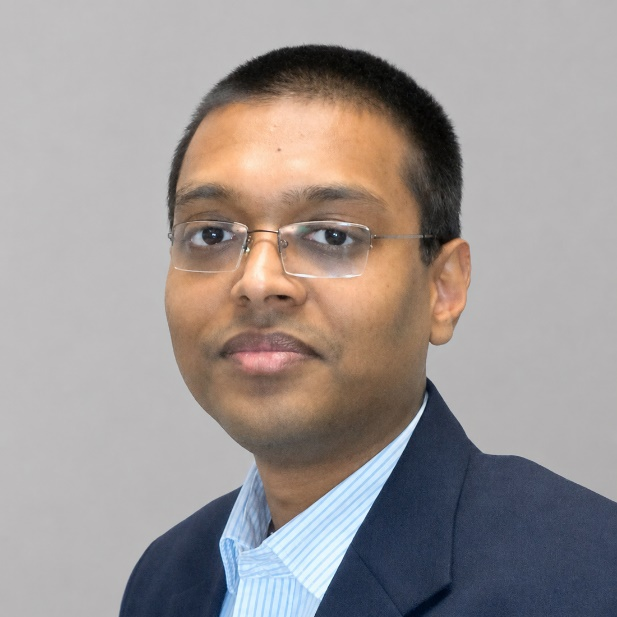
Dr. Ankit Agrawal is a Professor in the Department of Electrical and Computer Engineering at Northwestern University, USA, with affiliations at Northwestern International Institute for Nanotechnology and Northwestern Paula M. Trienens Institute for Sustainability. He is also an honorary professor at Amity University, India. His research focuses on interdisciplinary artificial intelligence (AI), machine learning (ML), and deep learning (DL) via high-performance data mining, with broad applications in materials science, healthcare, bioinformatics, and other data-intensive fields. As a pioneer in materials informatics, he has co-authored over 200 peer-reviewed publications with more than 18,000 citations and has contributed to numerous software tools, invited talks, and research projects supported by various US federal agencies and industry partners. He is the Editor-in-Chief of Computers, Materials & Continua and Specialty Chief Editor of the HPC Applications section of Frontiers in HPC, and has been featured in Stanford/Elsevier's list of top 2% scientists, as well as named a ScholarGPS Top Scholar for being in the top 0.5% of scholars worldwide in the fields of machine learning, deep learning, and informatics.
Editor: Ning Yao
Language Editor: Amir Khan
Production Editor: Ting Xu
Respectfully Submitted by the Editorial Office of Journal of Materials Informatics