

Special Interview with Prof. Dr. Roland Kallenborn
On March 24, 2026, the Editorial Office of Journal of Environmental Exposure Assessment (JEEA) conducted an interview with Prof. Dr. Roland Kallenborn, a leading expert in Arctic environmental chemistry and persistent organic pollutants (POPs) research at the Norwegian University of Science and Technology (NTNU), Norway.
Prof. Dr. Kallenborn specializes in organic micropollutants and chemicals of emerging concern, with a particular focus on polar environmental exposure assessment. His research reveals that highly persistent chemicals, such as per- and polyfluoroalkyl substances (PFAS), exhibit enhanced environmental stability in Arctic regions, where low temperatures drastically slow down degradation and transformation processes. Notably, his team has identified airports as significant local contamination sources in remote Arctic regions, largely due to the historical and ongoing use of PFAS-containing firefighting foams.
By integrating advanced analytical chemistry, climate modeling, and exposome-based approaches, Prof. Dr. Kallenborn and his team investigate the environmental fate, transport mechanisms, and human health impacts of POPs and emerging contaminants in the Arctic. His work highlights that climate change-driven environmental shifts (e.g., sea ice loss, species replacement from Arctic Cod to North Atlantic herring) can alter pollutant bioaccumulation patterns in food webs, thereby increasing exposure risks for Indigenous populations. He also addresses the "regrettable replacement" of PFAS with alternatives such as Gen X, which may carry comparable or even higher toxicity, and underscores the analytical challenges of monitoring short-chain PFAS that threaten drinking water safety.
During the interview, Prof. Dr. Kallenborn emphasized the need for machine learning and artificial intelligence (AI) technologies to manage the growing complexity of Arctic contaminants—now numbering nearly 1,000, up from roughly 20 three decades ago—within the exposome framework. Looking ahead, his team will expand long-term biomonitoring efforts, explore AI-driven causal inference, and develop nutritional interventions to mitigate environmental health risks associated with contaminant exposure in Arctic populations.
Watch the video for Prof. Dr. Roland Kallenborn's expert insights:
About Prof. Dr. Roland Kallenborn:
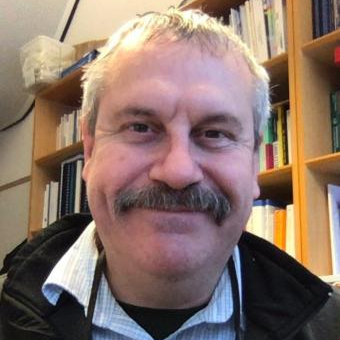
Prof. Dr. Roland Kallenborn is a Professor of Environmental Chemistry at the Norwegian University of Science and Technology (NTNU), Norway, and a leading researcher in Arctic contaminant science. His work focuses on the occurrence, environmental fate, and health impacts of micropollutants in polar ecosystems, with particular emphasis on PFAS, climate change interactions, and exposure assessment in Indigenous communities. He collaborates extensively with Norwegian universities and international monitoring programs, including the Arctic Monitoring and Assessment Programme (AMAP), contributing to the development of global chemical safety policies. In 2025, he was recognized among the World's Top 2% Scientists.
Editor: Smart Zhang
Language Editor: Catherine Yang
Production Editor: Ting Xu
Respectfully Submitted by the Editorial Office of Journal of Environmental Exposure Assessment