


Special Interview with Dr. Peng Gao
On January 15, 2026, the Editorial Office of Journal of Environmental Exposure Assessment (JEEA) hosted a special interview with Dr. Peng Gao, Assistant Professor of Environmental Health and Exposomics, Harvard T.H. Chan School of Public Health, Boston, Massachusetts, USA. Dr. Gao is a leading researcher in exposomics and the environmental etiology of human disease. The interview was conducted by Dr. Yifan Xu, Postdoctoral Researcher at the College of Environmental Sciences and Engineering, Peking University, Beijing, China.
In the interview, Dr. Gao introduced his research program, which centers on exposomics and multi-omics integration to investigate how complex environmental exposures influence chronic disease risk and progression. His work combines advanced exposure characterization, high-resolution mass spectrometry, sequencing technologies, and computational modeling to systematically link external environmental exposures with internal biological responses across multiple molecular layers. A key feature of Dr. Gao's work is the shift away from traditional single-chemical paradigms toward data-driven analyses of real-world exposure mixtures. His current research focuses on diseases such as lung cancer, asthma, and Alzheimer's disease, with the goal of elucidating mechanistic pathways that connect environmental exposures to disease development.
Dr. Gao also discussed methodological innovations and translational applications of exposomics, including mixture modeling, exposure-wide association studies, and the application of exposomics in environmental emergency response and community health protection. Looking ahead to the next five years, he highlighted several emerging research priorities, including airborne and indoor exposomes, emerging and replacement chemicals, micro- and nanoplastics, climate-related exposures, and the development of scalable analytical and computational tools to support precision environmental health and evidence-based risk assessment.
Watch the video below for Dr. Peng Gao's expert insights:
Interview Questions:
1. Could you please briefly introduce the research work of your research group?
2. Your lab at the Harvard T.H. Chan School of Public Health focuses on exposomics and environmental etiology. What inspired you to pursue exposomics as a central research theme, and how does this perspective differ from traditional environmental health approaches?
3. Your research emphasizes complex environmental mixtures and their interactions with biological systems. How do you disentangle the health effects of multiple simultaneous exposures, and what insights has this provided into disease mechanisms?
4. Integrating exposomics with internal multi‑omics data is a major thrust of your lab. How does this integration enhance our understanding of exposure‑related disease etiology, and what novel insights have emerged so far?
5. Your team has conducted research in real‑world scenarios such as the East Palestine chemical exposure event. How can exposome profiling and risk assessment inform public health responses and policy decisions in such cases, and what lessons have you learned about translating exposomics into action?
6. Looking ahead, which emerging environmental exposures or technological developments do you consider most important for exposomics research, and what key questions does your lab aim to address in the next five years?
Interviewee Profile:
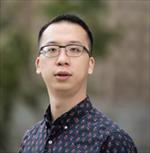
Dr. Peng Gao, Assistant Professor of Environmental Health and Exposomics at Harvard T.H. Chan School of Public Health, Boston, Massachusetts, USA.
Dr. Gao leads research on exposomics and environmental health focused on understanding how complex environmental exposures across the life course contribute to human disease risk, combining environmental measurements with molecular and population-level data.
Dr. Gao's research integrates advanced analytical chemistry, high-resolution mass spectrometry, sequencing technologies, and multi-omics approaches to characterize exposure mixtures from air, water, diet, and biological samples. His studies aim to link external environmental exposures with internal biological responses, with applications in chronic diseases such as respiratory and neurodegenerative disorders, as well as environmental risk assessment and public health protection.
Interviewer Profile:

Dr. Yifan Xu is a Postdoctoral Researcher at the College of Environmental Sciences and Engineering, Peking University, Beijing, China, mentored by Prof. Tong Zhu, Academician of the Chinese Academy of Sciences. Dr. Xu's research focuses on the health effects and underlying mechanisms of extreme environmental exposures (e.g., extreme temperatures, high-altitude hypoxia, and air pollution). Notably, he participated as a young scientist in the "Earth Summit Mission 2022: Scientific Expedition and Research on Mount Qomolangma." He has published in leading journals such as National Science Review, Environmental Science & Technology, and Environment International, with studies covering human adaptation to high altitude, extreme temperature-related cardiovascular risk, and lipidomic mechanisms of pollutant-induced cardiometabolic effects.
Editor: Tracy Sun
Language Editor: Catherine Yang
Production Editor: Ting Xu
Respectfully Submitted by the Editorial Office of Journal of Environmental Exposure Assessment