


Special Interview with Prof. Steve Horvath
On March 16, 2026, the Editorial Office of The Journal of Cardiovascular Aging conducted an interview with Prof. Steve Horvath, Principal Investigator at the Altos Labs Cambridge Institute of Science, UK. The interview was hosted by Prof. Roger Foo Sik Yin from the Yong Loo Lin School of Medicine, National University of Singapore, Singapore.
In this interview, Prof. Steve Horvath shared insights on the development and application of epigenetic clocks as precise biomarkers of aging. He traced their evolution from the first human DNA methylation clocks to second-generation GrimAge and PhenoAge, highlighting their use in clinical trials and interventions targeting aging. He also discussed how these clocks integrate multiple biological processes and their potential for cardiovascular risk stratification. Looking ahead, Prof. Horvath emphasized emerging directions, including single-cell and multi-omics approaches and artificial intelligence (AI)-based aging clocks.
Watch the full interview between Prof. Steve Horvath and Prof. Roger Foo Sik Yin:
Interview Questions:
Q1. Could you please briefly introduce the research work of your research group?
Q2. People have varying interpretations of "longevity". How do you define it?
Q3. Looking back on your research journey, which discovery or decision has most profoundly influenced your understanding of aging?
Q4. Epigenetic clocks have been widely used, but some issues remain underexplored. What areas do you hope researchers will focus on?
Q5. What do you foresee as potential breakthroughs or new directions in aging biomarker research?
About Prof. Steve Horvath:
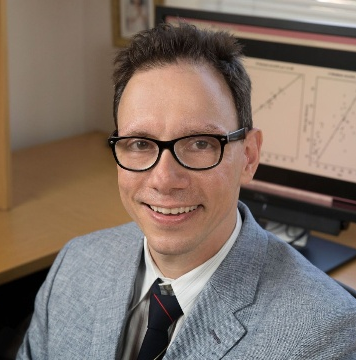
Prof. Steve Horvath is a Principal Investigator at the Altos Labs Cambridge Institute of Science, UK. He is an aging researcher and bioinformatician specializing in genomic biomarkers of aging, including the highly accurate multi-tissue epigenetic clock. His work encompasses systemic biologic approaches such as weighted gene co-expression network analysis, as well as methods for analyzing and integrating data from gene expression, DNA methylation, microRNA, genetic markers, and complex phenotypes. Prof. Horvath's research applies these methods to diverse fields including aging, cancer, cardiovascular disease, HIV, Huntington's disease, and neurodegenerative disorders. The epigenetic clock, a key achievement of his work, is notable for its high accuracy and broad applicability across tissues and cell types. Prof. Horvath has published extensively in leading journals, significantly advancing the measurement and understanding of biological aging.
About Prof. Roger Foo Sik Yin:

Prof. Roger Foo Sik Yin is a Professor of Medicine at the Yong Loo Lin School of Medicine, National University of Singapore, Singapore. He serves as Vice-Dean (Research) and Director of the Cardiovascular Research Institute and is a senior clinician at the National University Heart Centre, Singapore. Prof. Foo is an internationally recognized cardiologist-scientist whose research focuses on cardiac genomics, epigenetics, and heart failure. His work integrates cutting-edge technologies - including genomics, CRISPR, induced pluripotent stem cells (iPSCs), and single-cell sequencing - to uncover molecular mechanisms underlying cardiac disease and identify novel therapeutic targets. He has made seminal contributions to the field, including generating one of the first DNA methylation maps of the human heart and advancing understanding of cardiac gene regulation and chromatin architecture in disease. Prof. Foo has published extensively in leading journals including Nature, Circulation, and Nature Medicine.
Editor: Alex Wang
Language Editor: Catherine Yang
Production Editor: Ting Xu
Respectfully Submitted by the Editorial Office of The Journal of Cardiovascular Aging