

fig1
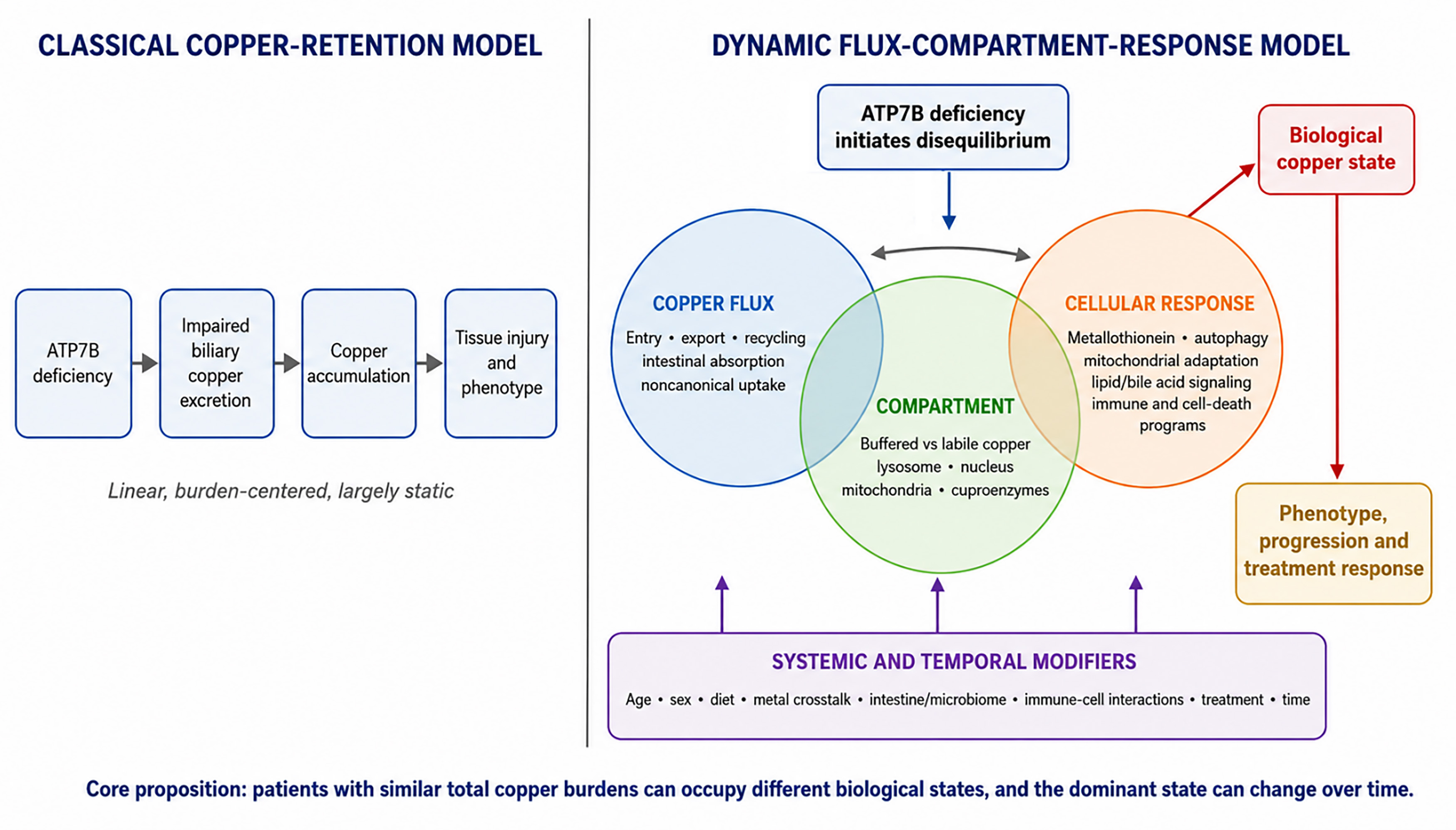
Figure 1. Classical copper-retention model versus the dynamic flux-compartment-response framework. The classical model links ATP7B deficiency linearly to impaired biliary excretion, copper accumulation, and injury. The proposed framework retains this initiating sequence but adds three interacting, time-dependent dimensions - copper flux, intracellular compartmentalization, and cellular/tissue response - together with systemic and temporal modifiers. Their interaction defines a biological copper state that may better explain phenotype, progression, and treatment response.