

fig2
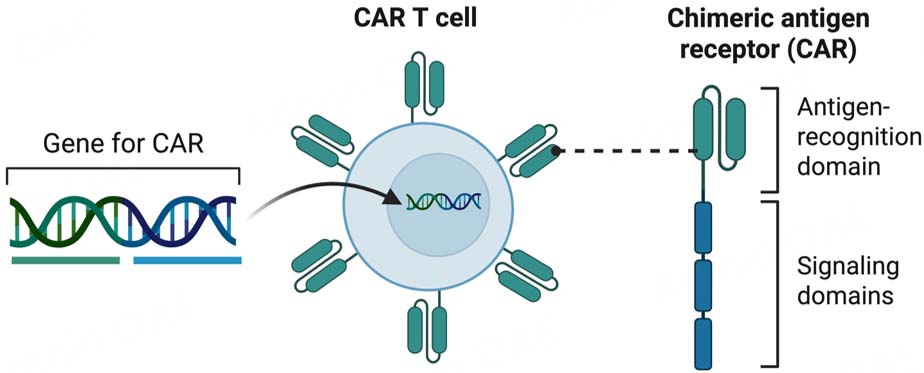
Figure 2. Chimeric Antigen Receptor (CAR) T Cells T cells are harvested from the patient, activated in vitro and then transduced with a lenti- or retro-virus containing DNA that encodes the CAR construct. The construct integrates into the T cells’ DNA, and is subsequently transcribed, translated and expressed on the surface of the T cell. CARs consist of an extracellular antigen recognition domain often made up of a single chain variable fragment (scFv) comprised of the variable heavy and variable light domains of an antibody. The antigen-recognition portion is linked to a hinge and transmembrane domain followed by a co-stimulatory domain (such as CD28 or 4-1BB), and an intracellular signaling domain which is usually the CD3 chain. Upon antigen engagement, CAR signaling domains are phosphorylated and lead to downstream signaling and effector T cell activation, with similar effects to the endogenous T cell receptor. The CAR T cells recognize antigen in an MHC-independent manner and as the CAR construct is integrated into the cellular DNA, daughter cells will also express the CAR. Created in BioRender. Edmunds, G. (2026) https://BioRender.com/atc495e.