

fig4
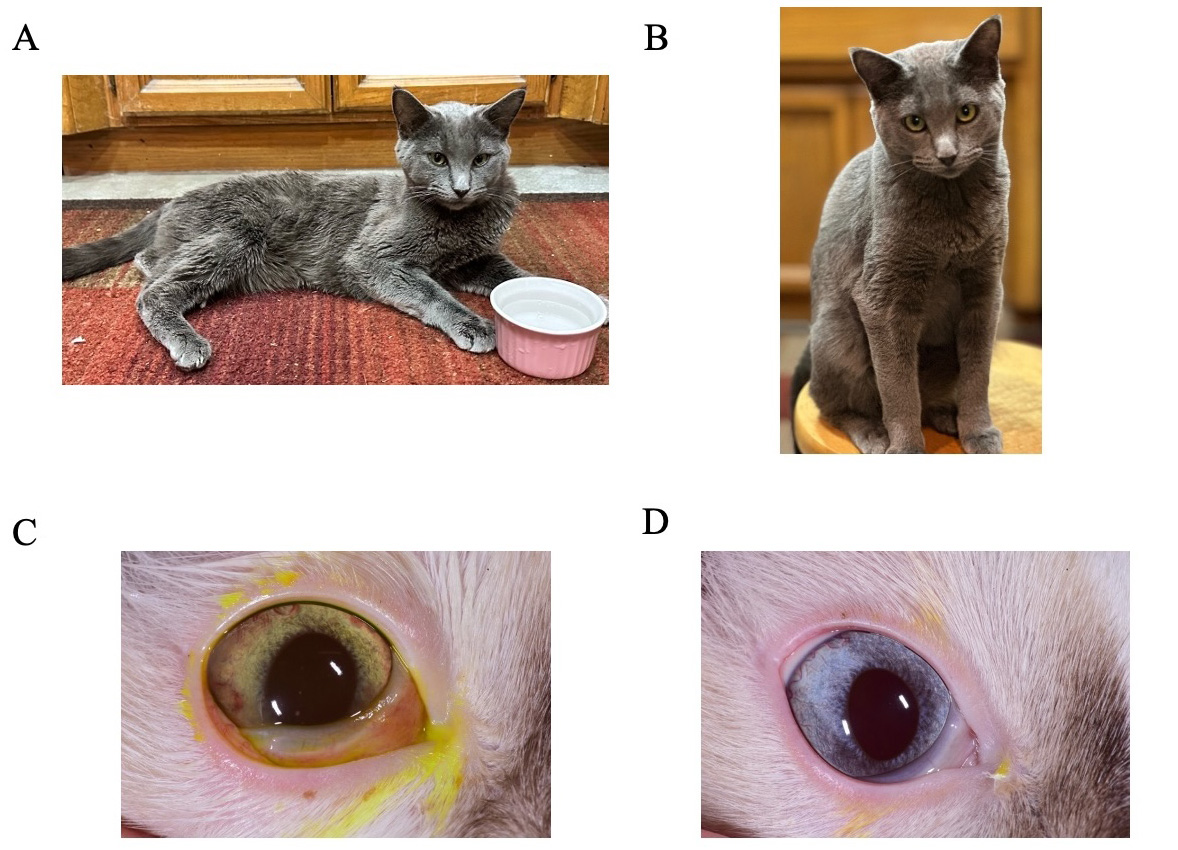
Figure 4. Cats with feline infectious peritonitis. This figure depicts the physical features of cats diagnosed with feline infectious peritonitis at the time of diagnosis (A and C) and after successful antiviral treatment (B and D). The first cat (A) presented with poor body condition, mesenteric lymphadenomegaly on abdominal palpation, and fever. Upon completion of treatment with 84 days of GS-441524 (B), the cat gained weight, had an improved hair coat, and mesenteric lymph nodes decreased in size. The right eye of the second cat is shown (C) at presentation and diagnosis of FIP with panuveitis. The same cat is imaged again (D) after treatment with antivirals, showing complete resolution of clinical signs and return of normal iris color. Photos courtesy of Dr. Reagan KL (A and B) and Dr. Cerna P and the Colorado State University Ophthalmology Service (C and D). Photos used with client permission. FIP: Feline infectious peritonitis.