

fig9
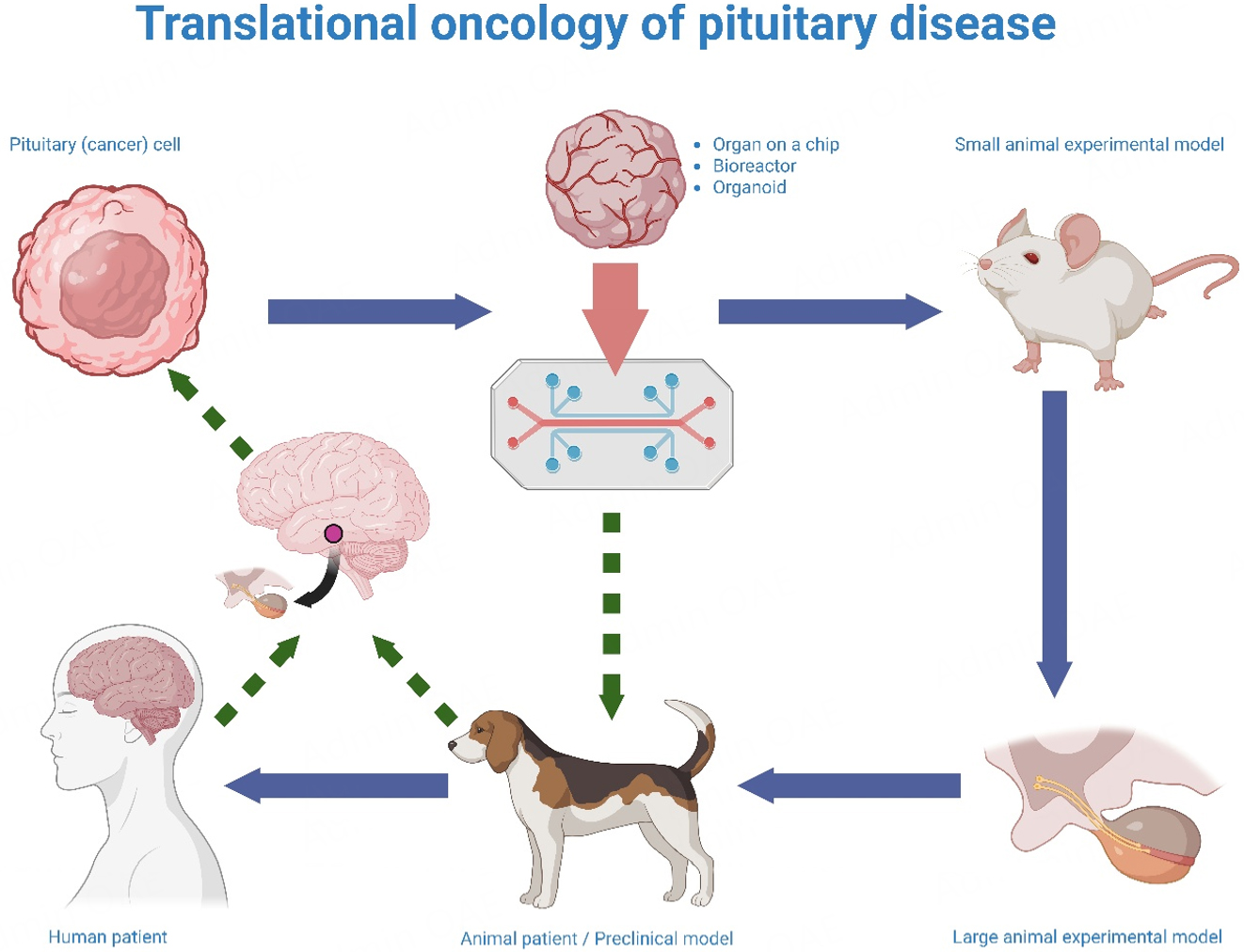
Figure 9. Translational modeling of pituitary neoplasia using patient-derived systems. Tumor tissue or single cells obtained from donor animals or patients (e.g., dogs or humans) with pituitary neoplasia can be used to generate organoids, organ-on-a-chip platforms, or bioreactor models. These systems enable investigation of novel therapeutic modalities in patient-derived tumor populations within controlled microenvironments that more closely recapitulate in vivo tumor behavior and treatment response, while reducing reliance on laboratory animals in accordance with the 3Rs (Replacement, Reduction, Refinement). Comparative animal patients with naturally occurring disease analogous to human pathology may be incorporated at later translational stages. Dogs, cats, and horses develop spontaneous pituitary neoplasms that often resemble human disease, supporting their role in comparative and translational research. (Created in BioRender. van Stee L. (2026) https://BioRender.com/i5zja56).