

fig2
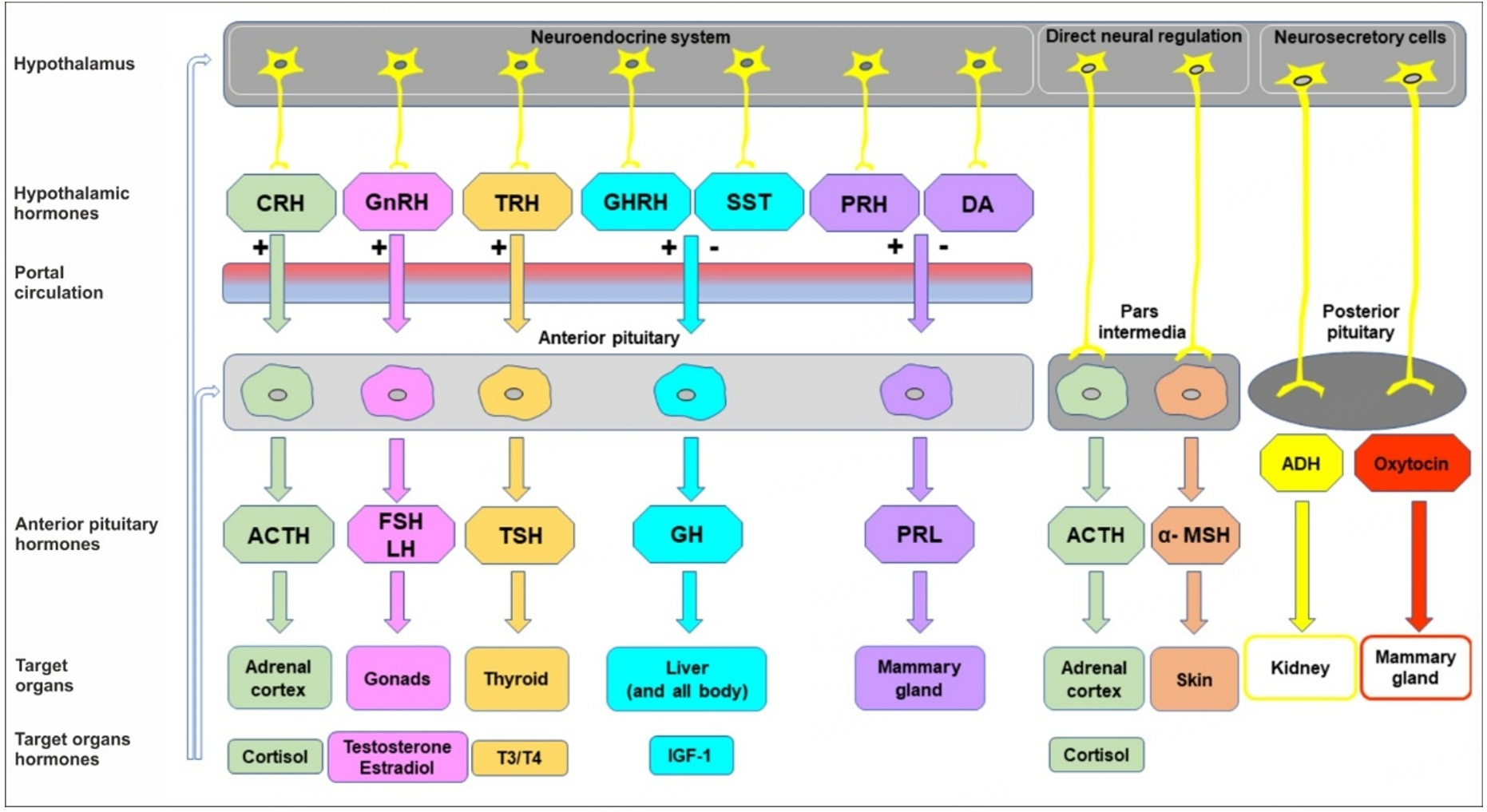
Figure 2. A simplified diagram of the three mechanisms (neuroendocrine system in the anterior pituitary, direct neuronal regulation of the pars intermedia, and neurosecretory cells in the posterior lobe) that regulate the secretion of the hormones in the pituitary gland. Adrenocorticotropic hormone (ACTH), antidiuretic hormone (ADH) or vasopressin, corticotropin-releasing factor (CRH), dopamine (DA), follicle-stimulating hormone (FSH), growth hormone (GH), growth hormone-releasing hormone (GHRH), gonadotropin-releasing hormone (GnRH), insulin-like growth factor 1 (IGF-1), luteinizing hormone (LH), alpha-melanocyte-stimulating hormone (α-MSH), prolactin (PRL), somatostatin (SST), thyrotropin-releasing hormone (TRH), thyroid-stimulating hormone (TSH), tri-iodothyronine (T3), tetraiodothyronine (T4), stimulation (+), inhibition (-). [Adapted from Rijnberk and Kooistra, 2010[2]. Written permission for use and adaptation of copyrighted material was obtained from the copyright holder. Figures were prepared using Microsoft Paint (version 11; Microsoft Corporation, Redmond, WA, USA)].