

fig1
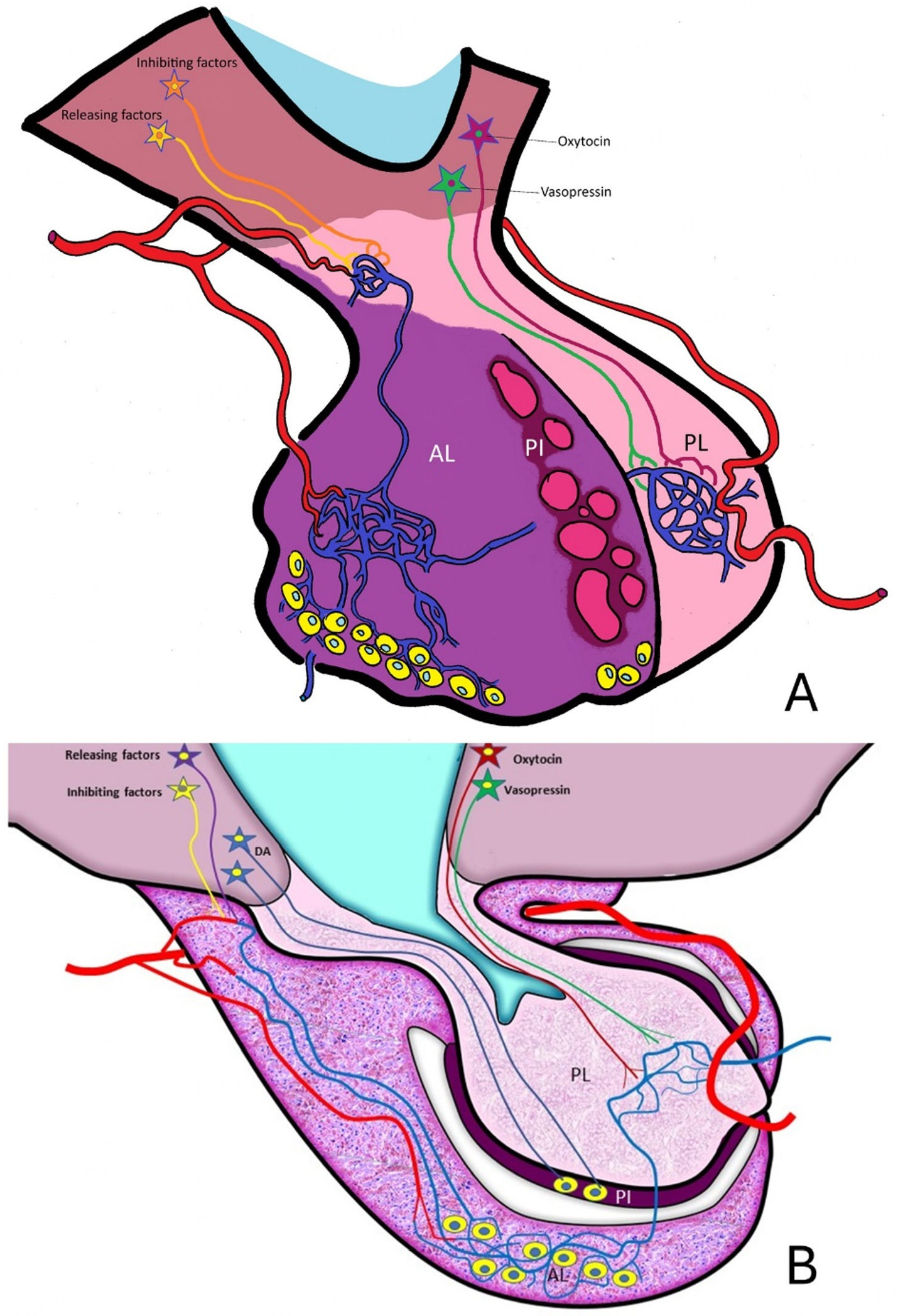
Figure 1. The pituitary gland of the human (A) and the dog (B). A schematic interpretation of the differences in anatomy between the human and the dog. The hypothalamus indirectly communicates with the anterior lobe (AL) through releasing and inhibiting factors that reach the anterior lobe through the capillary pituitary portal system. The posterior lobe (PL) is a downward projection of the ventral hypothalamus. Neurohypophyseal hormones (oxytocin and vasopressin) are produced within supraoptic and paraventricular nuclei in the hypothalamus from which axons extend through the pituitary stalk to the posterior pituitary lobe. The pars intermedia (PI) is under direct neurotransmitter control in the dog and cat, but is mostly inactive in humans, with its original cells dispersed throughout the anterior lobe. (Adapted from Rijnberk and Kooistra, 2010[2]. Written permission for use and adaptation of copyrighted material was obtained from the copyright holder. Figures were prepared using Microsoft Paint (version 11; Microsoft Corporation, Redmond, WA, USA)).