

fig1
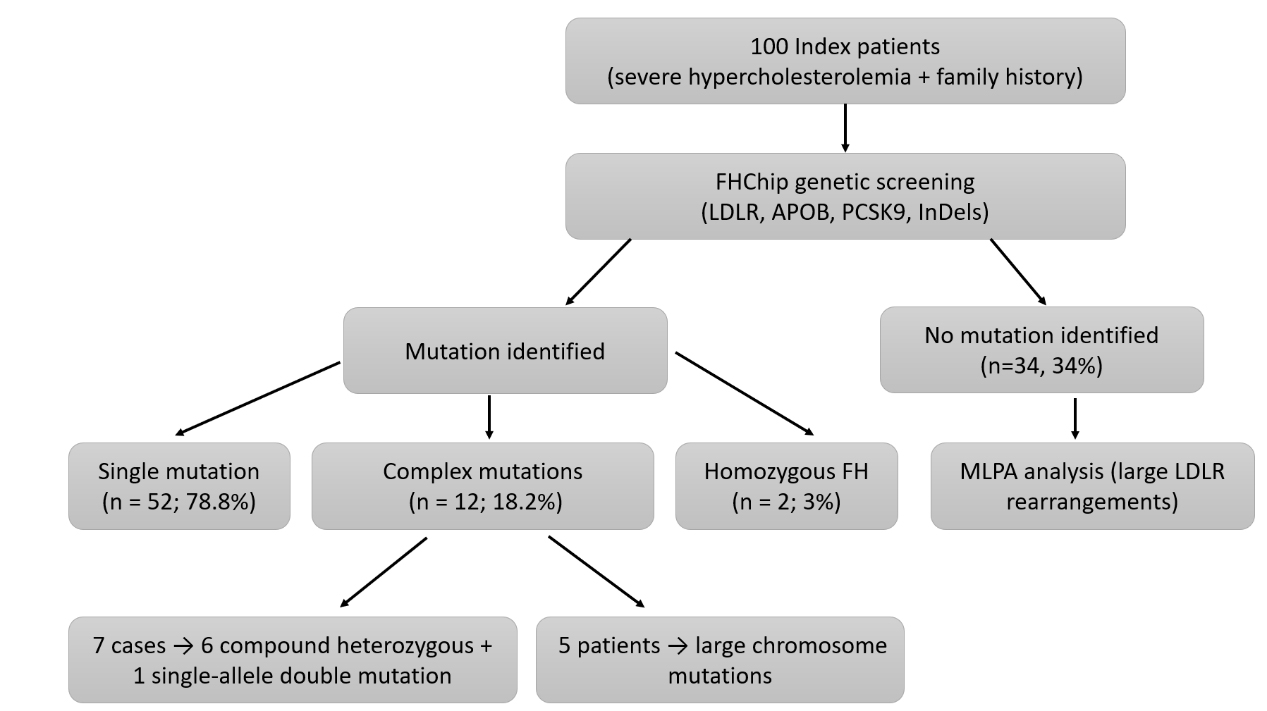
Figure 1. Flow diagram of patient recruitment and genetic testing. A total of 100 index patients with severe hypercholesterolemia were enrolled. All patients underwent initial screening using FHChip targeting LDLR, APOB, PCSK9, and InDel mutations. Cases with negative FHChip results were subsequently analyzed using multiplex ligation-dependent probe amplification (MLPA) to detect large LDLR rearrangements. Pathogenic or likely pathogenic LDLR variants were identified in 66 patients (66%), including 52 with single mutations, 12 with complex mutations, and 2 with homozygous FH. The remaining 34 patients (34%) had no mutation identified after FHChip and MLPA analyses. LDLR: Low-density lipoprotein receptor; APOB: apolipoprotein B; PCSK9: proprotein convertase subtilisin/kexin type 9; InDels: insertions and deletions; FHChip: Familial hypercholesterolemia resequencing microarray; FH: familial hypercholesterolemia. MLPA: multiplex ligation-dependent probe amplification.