

fig4
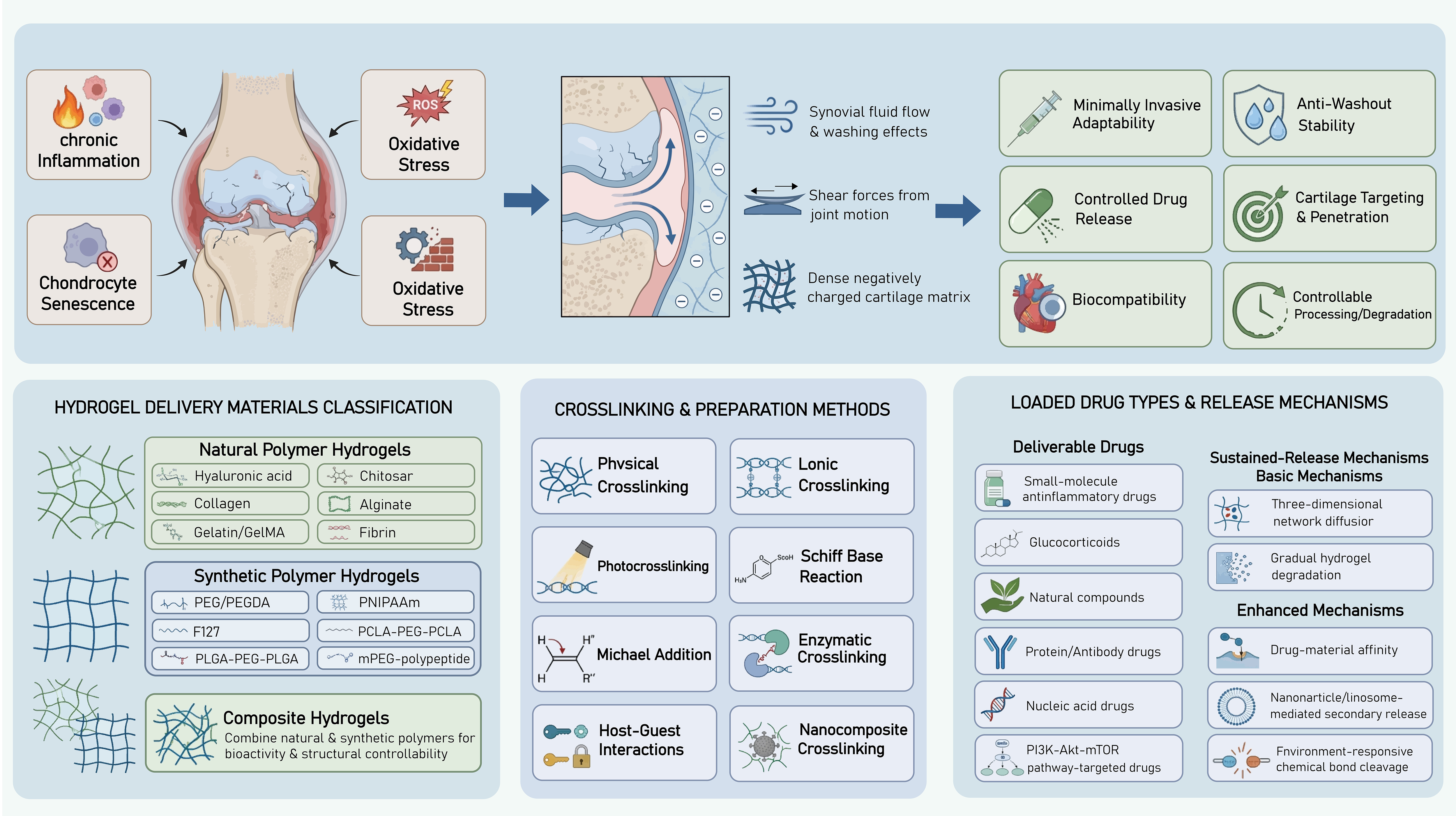
Figure 4. Overview of design requirements, material systems, and drug release mechanisms of intra-articular injectable hydrogel delivery systems for age-related OA. The left panel illustrates the pathological triggers in OA joints, including chronic inflammation, oxidative stress, and chondrocyte senescence. The central panel depicts the joint microenvironment and the advantages of hydrogel platforms, such as resistance to synovial fluid washout, shear force adaptation, and dense negatively charged matrices for sustained retention. The right panel summarizes the favorable properties of hydrogels: minimally invasive adaptability, controlled drug release, cartilage targeting and penetration, biocompatibility, and controllable processing/degradation. The lower sections further classify hydrogel delivery materials (natural polymer, synthetic polymer, and composite hydrogels), outline common crosslinking and preparation methods, and summarize loaded drug categories and their sustained-release mechanisms. PCLA-PEG-PCLA: Poly(ε-caprolactone-co-lactide)-block-poly(ethylene glycol)-block-poly(ε-caprolactone-co-lactide); PEG: poly(ethylene glycol); PEGDA: poly(ethylene glycol) diacrylate; PLGA-PEG-PLGA: poly(lactide-co-glycolide)-block-poly(ethylene glycol)-block-poly(lactide-co-glycolide); PNIPAAm: poly(N-isopropylacrylamide); mPEG: methoxy polyethylene glycol.

