




Sintering aids engineering for high-performance energy storage in tungsten bronze ceramics
 0
0 
Abstract
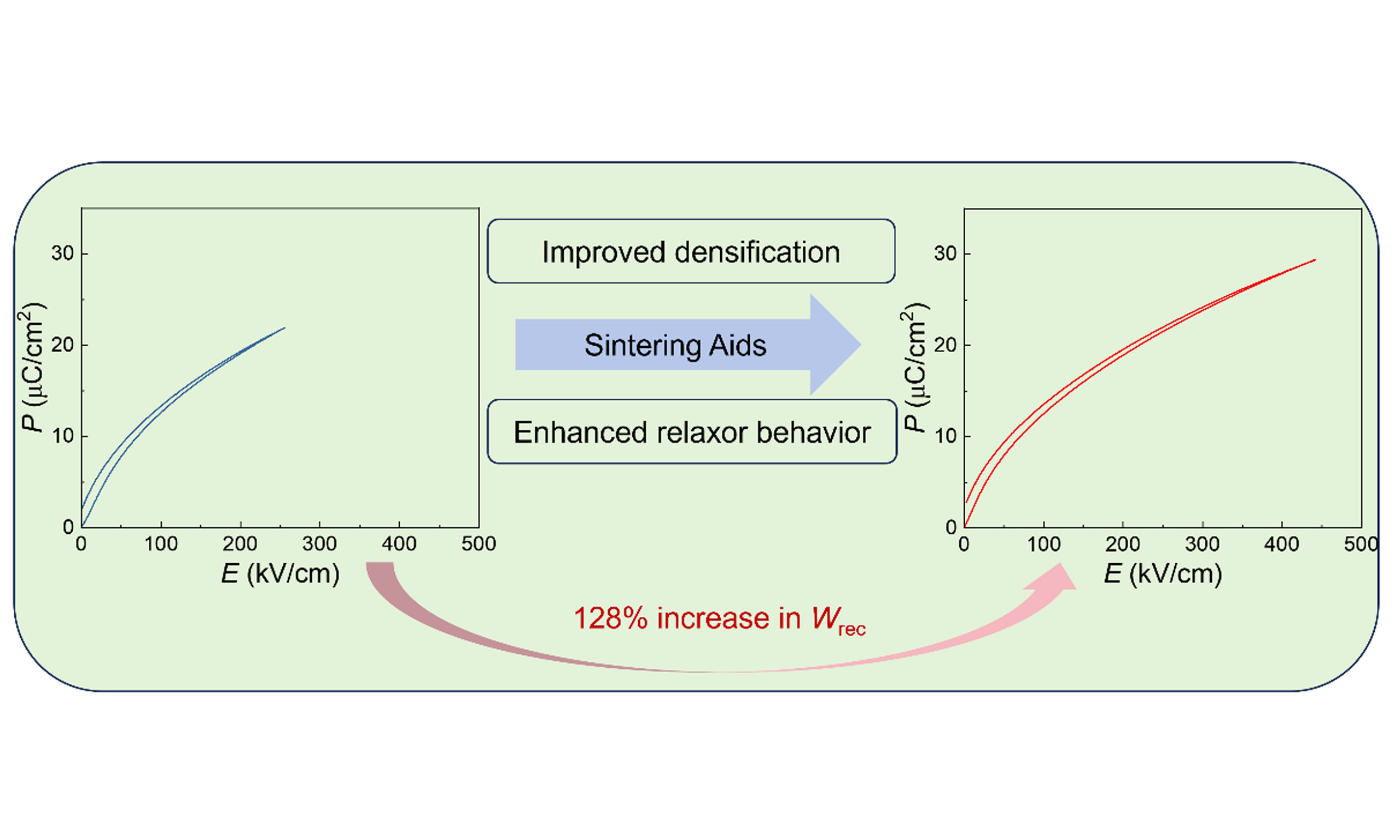
Dielectric ceramics are critical for pulsed power applications owing to their high-power density and rapid charge-discharge capabilities. Among them, tetragonal tungsten bronze (TTB)-type ceramics have attracted attention as potential energy-storage materials due to their non-volatile compositions and structural adaptability. However, previous studies have primarily focused on regulating energy storage performance through multi-element doping, with relatively little attention paid to optimizing the sintering process to enhance the inherent performance of ceramics. In this work, we demonstrate an alternative and effective strategy to improve the intrinsic energy-storage performance in TTB-structured Sr0.6Ba0.4Nb2O6 (SBN) ceramics through the incorporation of sintering aids, including MnO2, CuO, and Li2CO3, rather than complex compositional doping. The influence of these additives on the microstructure, dielectric behavior, and energy-storage characteristics is systematically investigated. Results show that CuO-modified SBN ceramics achieve a high recoverable energy density of 4.41 J/cm3, representing a 128% enhancement compared to pristine SBN ceramic, along with an efficiency of 93.4%. This superior performance is attributed to the synergistic effects of enhanced densification and strengthened relaxor characteristics. Moreover, the ceramic presents excellent thermal
Keywords
INTRODUCTION
Dielectric ceramics are critical components in advanced pulse-power systems, benefiting from their high power density, rapid charge-discharge capability, and excellent reliability[1,2]. However, their energy storage density and efficiency still require substantial improvement to meet the growing demands of device miniaturization. The key figures of merit for energy storage, including total energy density (Wt), recoverable energy density (Wrec), and efficiency (η), are expressed as follows[3-5],
where Pm and Pr denote the maximum and remnant polarization, respectively, and E represents the applied electric field. Therefore, to achieve high Wrec and η, it is essential to maximize ΔP (Pm - Pr) and enhance the breakdown electric field (Eb).
Dielectric materials are commonly classified into linear dielectrics, ferroelectrics, relaxor ferroelectrics, and antiferroelectrics[6]. Linear dielectrics exhibit low ΔP due to the absence of switchable dipoles[7-9]. Conventional ferroelectrics typically suffer from inferior energy storage performance because their microdomains lead to early polarization saturation under low electric fields[10], resulting in high Pr and low Eb. In contrast, relaxor ferroelectrics have attracted considerable interest for energy storage applications owing to their prominent ΔP and superior Eb[4,11,12]. These advantages stem from their characteristic nanodomain structure, which responds more quickly to external electric fields compared to the microdomains in normal ferroelectrics, thereby enabling higher Wrec and η.
In the past decade, research on relaxor ferroelectrics for energy storage applications has largely focused on perovskite-structured systems, such as Bi0.5Na0.5TiO3[13,14], BaTiO3[15,16], and K0.5Na0.5Nb0.5[17,18] ceramics. Recently, tetragonal tungsten bronze (TTB)-structured dielectric ceramics, with the general chemical formula (A1)2(A2)4C4(B1)2(B2)8O30, have emerged as promising candidates for energy storage due to their structural versatility[19-21]. TTB compounds can be classified into three structural subtypes according to cation occupancy at the interstitial sites: the fully filled type (all A1, A2, and C sites occupied), the filled type (A1 and A2 fully occupied, C vacant), and the unfilled type (A1 and A2 partially occupied, C vacant). Among them, strontium barium niobate (SrxBa1-xNb2O6), an example of an unfilled tungsten bronze structure, has attracted much attention in the field of dielectric energy storage materials due to its non-volatile compositions and tunable relaxor behavior[22].
Recent advances in SrxBa1-xNb2O6-based ceramics have mainly relied on multi-element doping to tailor relaxor properties. For instance, Tang et al. achieved Wrec of 5.22 J/cm3 and an η of 83.4% in Sr0.475Ba0.475La0.1Hf0.1Ti0.1Sb0.2Ta0.3Nb1.3O6 based on the high-entropy strategy and bandgap engineering[23]. The addition of perovskite-type BiAlO3 into Sr0.6Ba0.4Nb2O6 was reported to induce remarkable incommensurate modulation and facilitate polar nanoregions (PNRs) formation, thereby optimizing energy storage properties[24]. Furthermore, a high-entropy TTB ceramic, (Sr0.2Ba0.2Pb0.2La0.2Na0.2)Nb2O6 was designed via equimolar multi-cation substitution, attaining a high Wrec of 11.0 J/cm3 and an η of 81.9% under the electric field of 753 kV/cm, which was attributed to enhanced compositional heterogeneity and lattice distortion that reduce polarization hysteresis and improve breakdown strength[25]. Similarly, Duan et al. fabricated high-entropy TTB ceramics with the composition Sr0.35Ba0.35Na0.1Ca0.1Bi0.1Nb1.8Ta0.2O6. The introduction of multiple cations promotes the formation of PNRs, which effectively lowers domain-switching energy barriers and weakens interdomain coupling. This synergistic effect thereby delays polarization saturation and leads to enhanced energy-storage performance[26]. While the aforementioned studies have successfully enhanced the energy-storage performance of SrxBa1-xNb2O6 ceramics through various elemental doping strategies, it should not be overlooked that the sintering aids also play an important role in determining energy-storage performance.
Sr0.6Ba0.4Nb2O6 ceramics exhibit typical relaxor ferroelectric characteristics, with a broad phase transition temperature around 50 °C[24], providing a promising basis for achieving high energy-storage performance. Here, we propose a feasible and practical strategy to further enhance the energy-storage performance of Sr0.6Ba0.4Nb2O6 ceramics through the selective use of sintering aids, including MnO2, CuO, and Li2CO3. The effects of these additives on microstructure, dielectric response, and energy-storage performance and related mechanisms are illustrated. The results reveal that the outstanding performance of the CuO-modified ceramics correlates with enhanced densification and a widened band gap, which collectively improve the Eb. Moreover, the significantly enhanced relaxor degree is beneficial for reducing polarization loss. This combination of enhanced Eb and reduced polarization loss ultimately leads to an improved energy storage density. This work provides a viable method for enhancing the intrinsic energy-storage performance of Sr0.6Ba0.4Nb2O6 (SBN)-based ceramics.
MATERIALS AND METHODS
The SBN (defined as S0) ceramic and its variants modified with sintering aids (MnO2, CuO, and Li2CO3, designated as S1, S2, and S3, respectively) were synthesized using a conventional solid-state reaction method. High-purity starting materials in this work were supplied by Aladdin Reagent Co., LTD (China). Firstly, BaCO3 (99%), SrCO3 (99%), and Nb2O5 (99.9%) were weighed according to the target stoichiometry. These powders were mixed via ball milling in an alcohol medium for 12 h. The blended slurry was then dried and calcined at 1,150 °C for 2 h to form the desired crystalline phase. Next, the different sintering aids, including MnO2 (99.9%), CuO (99.0%), and Li2CO3 (99.0%), were added in a proportion of 0.2 wt%. The concentration of 0.2 wt% was selected based on a previous study[27], which reported that this amount is effective for tungsten bronze-structured relaxor ceramics. The mixed powders were again milled to improve homogeneity. Following this, the fine powders were granulated and compacted to form uniform green bodies. Finally, densification was achieved by sintering the compacts at 1,250-1,350 °C for 2 h in air to yield the final ceramics.
The crystalline phase structure of the sintered pellets was characterized by X-ray diffraction (XRD, Shimadzu XRD-6100, Japan) over a 2θ range of 10°-120° at a scan rate of 2 °/min. Surface morphology was examined using a field-emission scanning electron microscope (FE-SEM, TESCAN MAIA3 LMH, Czech Republic). Raman spectroscopy was conducted on a Horiba Jobin Yvon LabRAM HR Evolution spectrometer with a 532.3 nm excitation source. For dielectric measurements, the samples were polished to a thickness of 0.8 mm and coated with silver paste on both surfaces, and then were evaluated using an Inductance-Capacitance-Resistance (LCR) meter (Agilent E4980A, USA) at an applied voltage of 1 V. For ferroelectric hysteresis loop measurements, all specimens were polished to 0.10-0.15 mm and sputtered with Pt circular electrodes 2 mm in diameter, characterized by a ferroelectric working station (Precision Premier II, Radiant Company). Ultraviolet-visible (UV-vis) absorption spectra were obtained by a UV-vis Spectrometer (PerkinElmer Lambda 950, China). X-ray photoelectron spectroscopy (XPS, Thermo Scientific ESCALAB 250Xi, USA) was used to observe the existence of oxygen vacancies. Local crystallographic structure and selected area electron diffraction (SAED) were investigated by bright-field transmission electron microscopy (BF-TEM, JEOL JEM-F200, Japan).
RESULTS AND DISCUSSION
Energy storage performance of sintering aids-modulated SBN ceramics
To investigate the effects of various sintering aids on energy storage performance, unipolar polarization-electric field (P-E) hysteresis loops were measured for all samples at their respective Eb, as presented in Figure 1A. All loops exhibit similar trends under the applied electric field and consistently show low Pr, an intrinsic characteristic of SBN ceramics. Figure 1B illustrates the dependence of Pm, Pr, and ΔP on the sintering aids. The incorporation of sintering aids systematically enhances Pm while maintaining an almost constant Pr. As a result, a significant improvement in ΔP is achieved, underscoring the effectiveness of sintering aids in optimizing polarization behavior. Specifically, the measured Pm values are 21.89, 24.47, 29.38, and
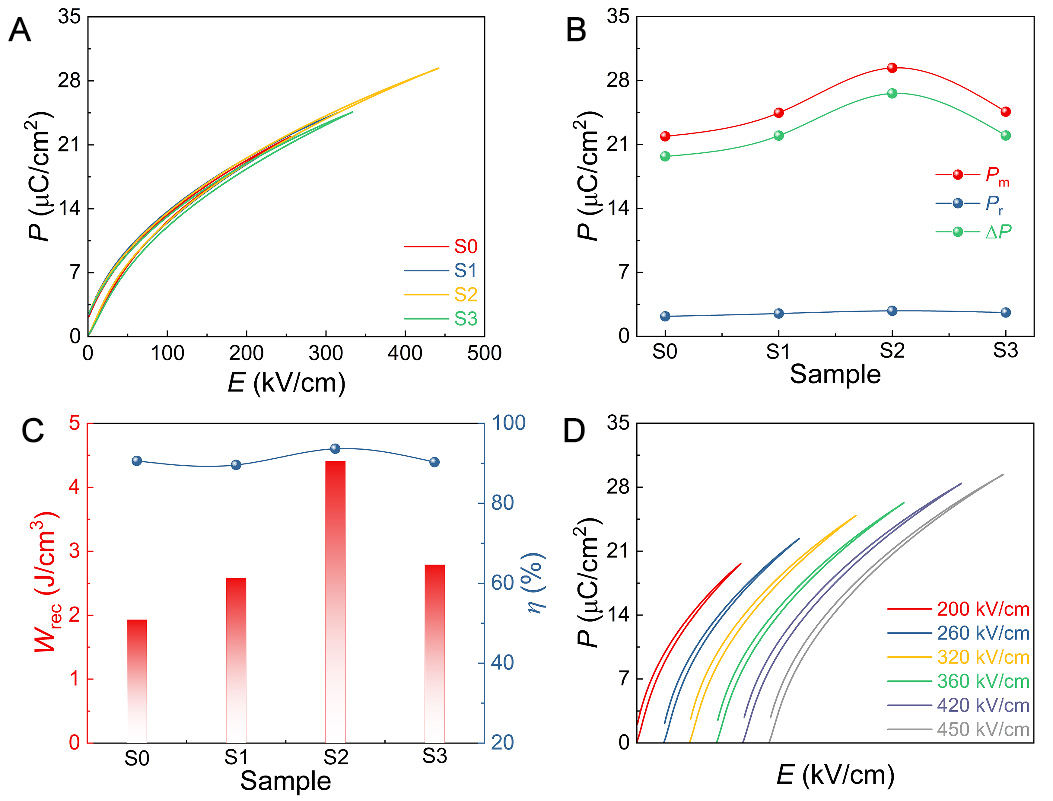
Figure 1. (A) P-E hysteresis loops, (B) Pm, Pr and ΔP, (C) Wrec and η, and (D) Electric field-dependent P-E hysteresis loops for S2
Microstructural origin of enhancement in energy storage performance
Figure 2A visualizes a schematic of the SBN lattice structure projected along the [001] axis. In this structure, the C site remains vacant, while the A and B sites are partially occupied: only 5/6 of the A positions are filled, with the remaining 1/6 left empty[28]. Notably, due to its larger ionic radius (1.61 Å), Ba2+ tends to occupy the larger A2 site, whereas the smaller Sr2+ (1.44 Å) occupies both the A1 site and the remaining A2 positions. Raman spectroscopy was performed in the range of 150-1,000 cm-1, with the spectra shown in Figure 2B. The observed features match those previously reported for TTB-type ceramics, confirming the characteristic vibrational modes of the TTB structure. The v5 mode near 250 cm-1 is assigned to O-B-O bending vibrations, and the v2 mode around 630 cm-1 is corresponding to B-O stretching vibrations[29]. No discernible changes in these modes were observed following the addition of sintering aids, suggesting that the sintering aids themselves do not alter the local structure. XRD patterns of all samples are presented in Figure 2C. They show good agreement with the standard reference (JCPDS No. 88-0785) and no detectable secondary phases, indicating that the addition of sintering aids does not induce phase separation. Rietveld refinement of the XRD data was performed, with the results presented in Supplementary Figure 1 and the detailed lattice parameters summarized in Supplementary Table 2. All samples were indexed to the pure P4bm space group. Notably, the introduction of sintering aids results in varying degrees of change in the lattice parameters, indicating that these additives can partially enter the crystal lattice of the matrix. To evaluate the effect of sintering aids on densification, the measured and relative density of the ceramics are summarized in Figure 2D. Ceramics modified with sintering aids exhibit relative densities exceeding 98%, higher than the 96.7% achieved for the unmodified SBN ceramic.
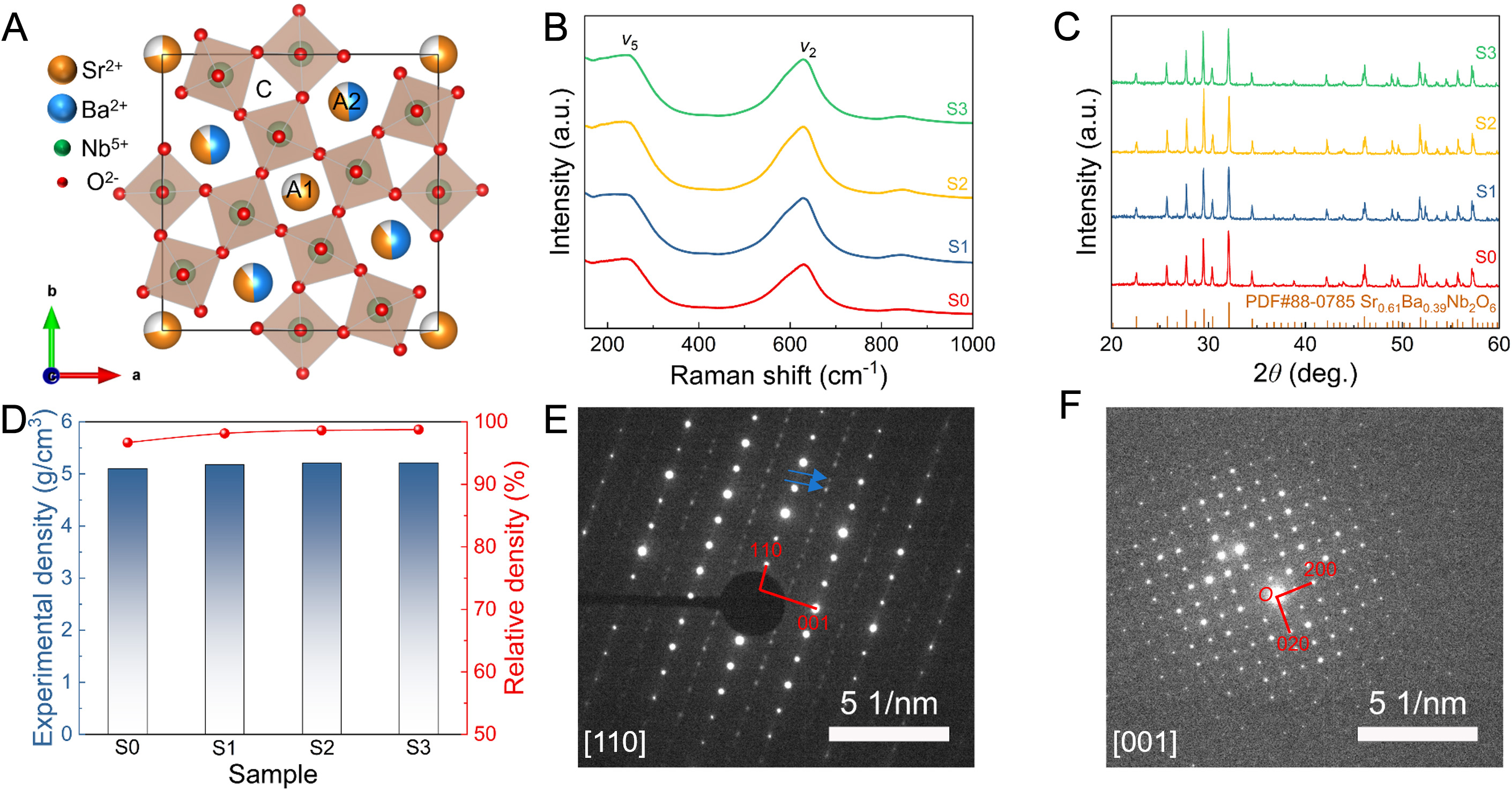
Figure 2. (A) Schematic of the SBN lattice structure projected along the [001] axis; (B) Raman spectra, (C) XRD patterns, and (D) measured actual density along with relative density of all SBN ceramics; SAED patterns of S2 ceramic projected along the (E) [110] axis and (F) [001] axis. SBN: Sr0.6Ba0.4Nb2O6; XRD: X-ray diffraction; SAED: selected-area electron diffraction.
The phase structures of the S2 ceramic were further characterized using transmission electron microscopy (TEM), as shown in Figure 2E-F. Along the [110] and [001] zone axes, the basic SAED patterns can be indexed to a standard TTB structure. Notably, superlattice spots are observed along the [110] zone axis, which can be attributed to A-site cation distortion, consistent with previous reports[30]. Specifically, the A-site cation distortion, as evidenced by these superlattice spots, introduces local random fields that disrupt the long-range ferroelectric order. This disruption promotes the formation of PNRs, which are widely recognized as the hallmark of relaxor ferroelectrics.
Figure 3A-D present the surface SEM images of all SBN ceramics, with their corresponding grain size distributions displayed in Figure 3E. All compositions exhibit a microstructure consisting of a mixture of equiaxed and pillar-type grains. Notably, the unmodified S0 ceramic exhibits a few residual pores, whereas the addition of sintering aids reduced porosity and resulted in a marked improvement in densification. This enhanced densification directly contributes to superior breakdown resistance. On one hand, fewer pores reduce local electric field concentration, delaying breakdown initiation. On the other hand, a more compact microstructure effectively hinders the propagation of breakdown pathways. Based on Gaussian fitting, the average grain sizes are determined to be 1.47, 2.09, 1.92, and 1.74 µm, indicating that the sintering aids promote grain growth to a certain degree. This enhanced densification and grain coarsening can be attributed to the effects of the MnO2/CuO/Li2CO3 sintering additives. During the sintering process, a liquid phase forms, facilitating mass transport and thereby promoting grain growth and densification[27,31,32]. As illustrated in Supplementary Figures 2-5, the homogeneous distribution of Mn and Cu with no observable segregation confirms that these ions have been incorporated uniformly into the SBN lattice. The improved densification and uniform elemental distribution are favorable for the optimization of the electrical properties.
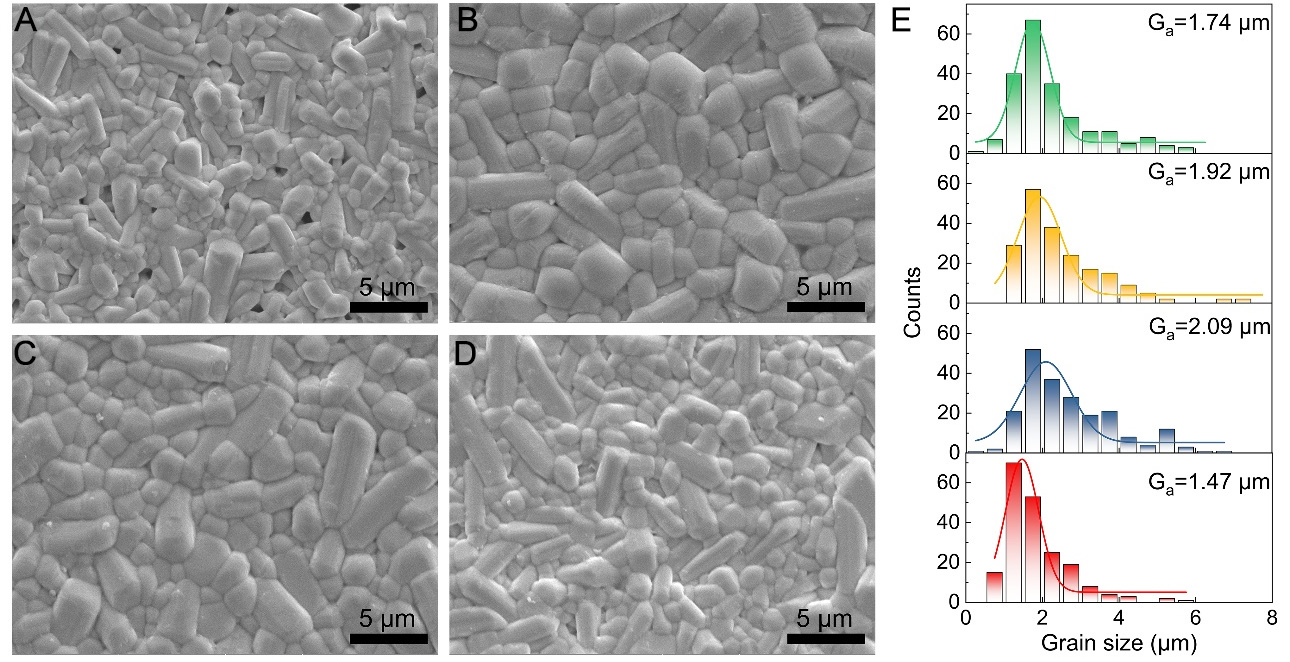
Figure 3. SEM images of (A) S0, (B) S1, (C) S2, (D) S3 samples; (E) grain size distribution of the SBN ceramics. SBN: Sr0.6Ba0.4Nb2O6; SEM: scanning electron microscope.
In this work, the introduction of sintering aids (MnO2, CuO, and Li2CO3) enables the incorporation of Mn4+, Li+, and Cu2+ ions into B sites of the lattice, where they substitute for Nb5+. This aliovalent substitution necessitates charge compensation, leading to the formation of oxygen vacancies (
Taken together, these structural analyses demonstrate that the incorporation of sintering aids effectively promotes densification while preserving the single-phase TTB structure of SBN. These microstructural advantages underpin the enhanced energy storage performance observed in the corresponding samples.
Electrical properties origin of enhancement in energy storage performance
To explore the origin of the electrical properties and the enhancement in energy storage performance, temperature-dependent dielectric permittivity (εr) and dielectric loss (tanδ) for all SBN ceramics are depicted in Figure 4A-D. All samples exhibit frequency dispersion with a broad phase transition temperature (Tm), indicative of typical relaxor behavior. Figure 4E compares the temperature-dependent εr across compositions, while the maximum permittivity (εm) and the corresponding Tm measured at 1 kHz are summarized in Figure 4F. The incorporation of sintering additives moderately influences the dielectric properties. Notably, the εr values of S1, S2, and S3 at room temperature are higher than those of S0. This increase in εr, accompanied by consistently low tanδ, is attributed to improved domain wall mobility and facilitated polarization rotation. Moreover, the addition of sintering aids leads to a decrease in Tm, which can be explained by the enhanced random fields introduced by the additives.
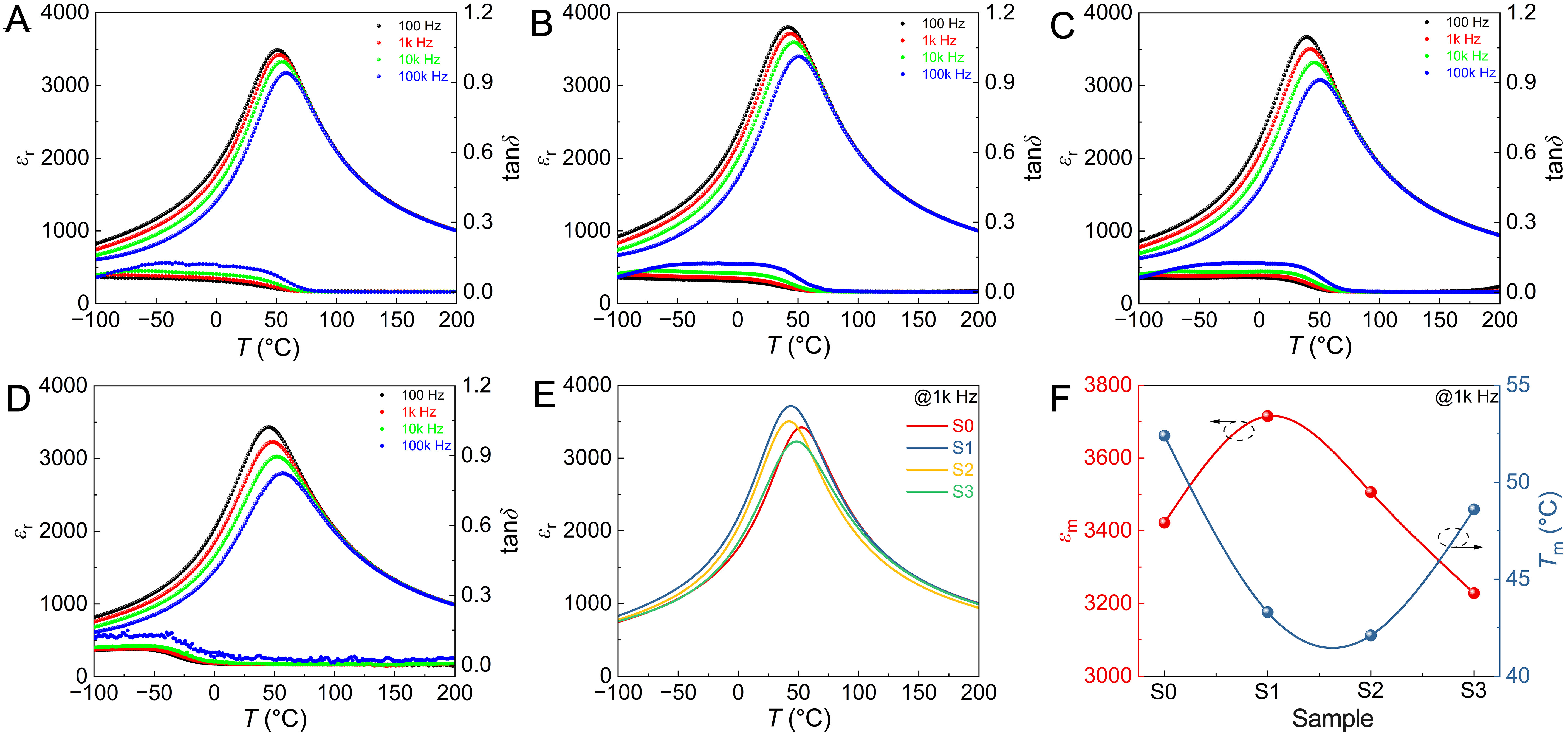
Figure 4. Temperature-dependent dielectric properties of (A) S0, (B) S1, (C) S2, (D) S3 samples; (E) Comparison of temperature-dependent εr for all samples measured at 1 kHz; (F) εm and corresponding Tm for all samples at 1 kHz.
As a typical relaxor ferroelectric, SBN exhibits characteristic relaxor dispersion. Figure 5A presents the relaxation temperature span ΔTrelax (defined as Tm at 100 kHz minus Tm at 100 Hz) for each sample. ΔTrelax progressively increases from 7.4 °C for S0 to 9.1 °C for S1, 11.6 °C for S2, and finally to 12.4 °C for S3. Furthermore, a modified Curie-Weiss law is used to evaluate the relaxor degree[36,37]:
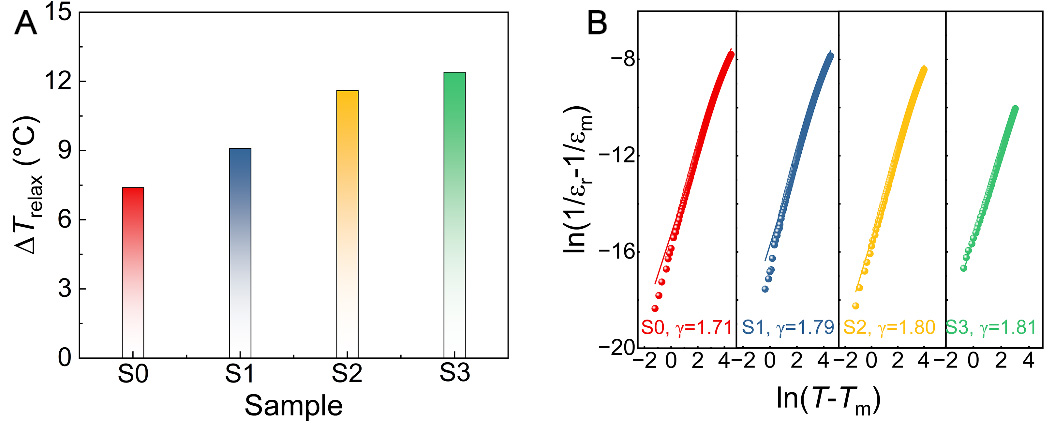
Figure 5. (A) Comparison of ΔTrelax for all samples; (B) Plot of ln(1/ε-1/εm) versus ln(T-Tm) at 1 kHz.
A value of γ = 1 corresponds to normal ferroelectric behavior, whereas γ = 2 indicates ideal relaxor characteristics. The fitted γ values for S0-S3 are 1.71, 1.79, 1.80, and 1.81, respectively [Figure 5B]. These results provide powerful evidence that the addition of sintering additives effectively enhance the relaxor nature of the SBN ceramics, which originates from the formation of random fields and compositional disorder within the lattice.
To evaluate the influence of the additive on the band gap, UV-vis absorption spectra [Figure 6A] were measured and analyzed using the Tauc plot method, expressed as[38,39]:
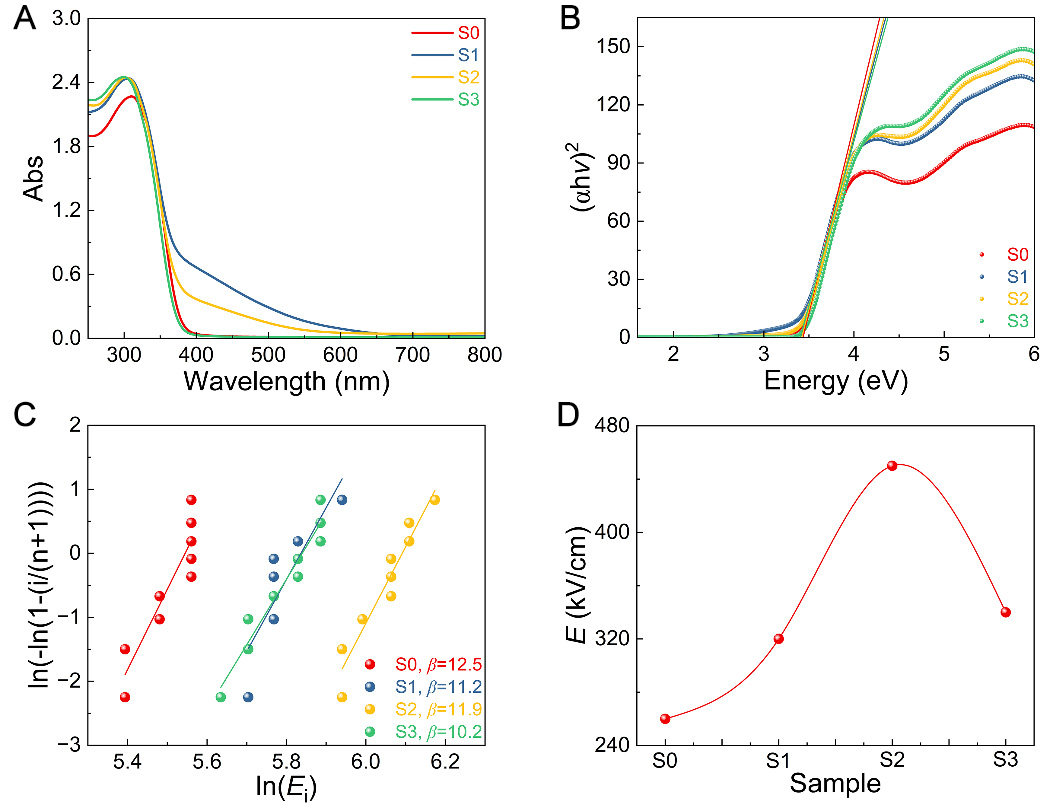
Figure 6. (A) UV-vis absorption spectra, (B) Tauc plots, (C) Weibull distributions of the applied electric fields, and (D) Eb values for all SBN ceramics. UV-vis: Ultraviolet-visible; SBN: Sr0.6Ba0.4Nb2O6.
where α, h, v, Eg denote the absorption coefficient, Planck’s constant, frequency, and band gap. A is a constant, and n is an index taken as 1/2 for dielectric ceramics. The calculated Eg values for all samples are 3.31, 3.28, 3.29, and 3.26 eV [Figure 6B], indicating good insulating properties. While the band gap width is generally considered to influence the intrinsic breakdown strength of dielectric materials, the variation in Eg among the samples is relatively small and cannot solely account for the significant differences observed in Eb. The substantial enhancement of Eb following the introduction of sintering aids is therefore primarily attributed to enhanced densification. The breakdown behavior was further assessed using Weibull statistics. Figure 6C displays the Weibull distributions fitted with the equation[40,41]:
where E is the applied electric field, P(E) presents the cumulative probability at E, Eb is the characteristic breakdown strength [P(E) = 63.2%], and β is the shape parameter that reflects data reliability (higher indicates better reliability). The fitted Eb values are 255.9, 342.6, 442.3, and 343.7 kV/cm, as shown in Figure 6D. The highest Eb achieved in S2 is consistent with its superior energy storage performance shown in Figure 1C.
In conclusion, the addition of sintering aids plays a crucial dual role in optimizing the ceramic’s energy storage performance. Firstly, it enhances densification, which effectively suppresses premature failure under high electric fields, thereby improving the breakdown strength. Secondly, it strengthens the relaxor characteristics, which minimizes hysteresis losses during charge-discharge cycles. The combination of a higher breakdown strength and lower polarization loss ultimately yields a markedly improved overall energy storage performance.
Thermal and frequency stability
Furthermore, the thermal and frequency stability of the S2 ceramic was evaluated under an applied electric field of 320 kV/cm, as shown in Figure 7. Within the temperature range of 25-125 °C, the Wrec consistently exceeds 2.75 J/cm3, with variation below 10%, while the η remains above 91%. Notably, both Wrec and η also exhibit outstanding frequency stability, with variations of less than 2% across the measured frequency range. The excellent thermal stability can be attributed to the relaxor behavior and uniform microstructure promoted by the CuO sintering aid, which suppresses polarization degradation and loss increase at elevated temperatures. Overall, the CuO-modified SBN ceramics show remarkable stability in both temperature and frequency, underscoring their great potential for use in advanced pulse power devices.
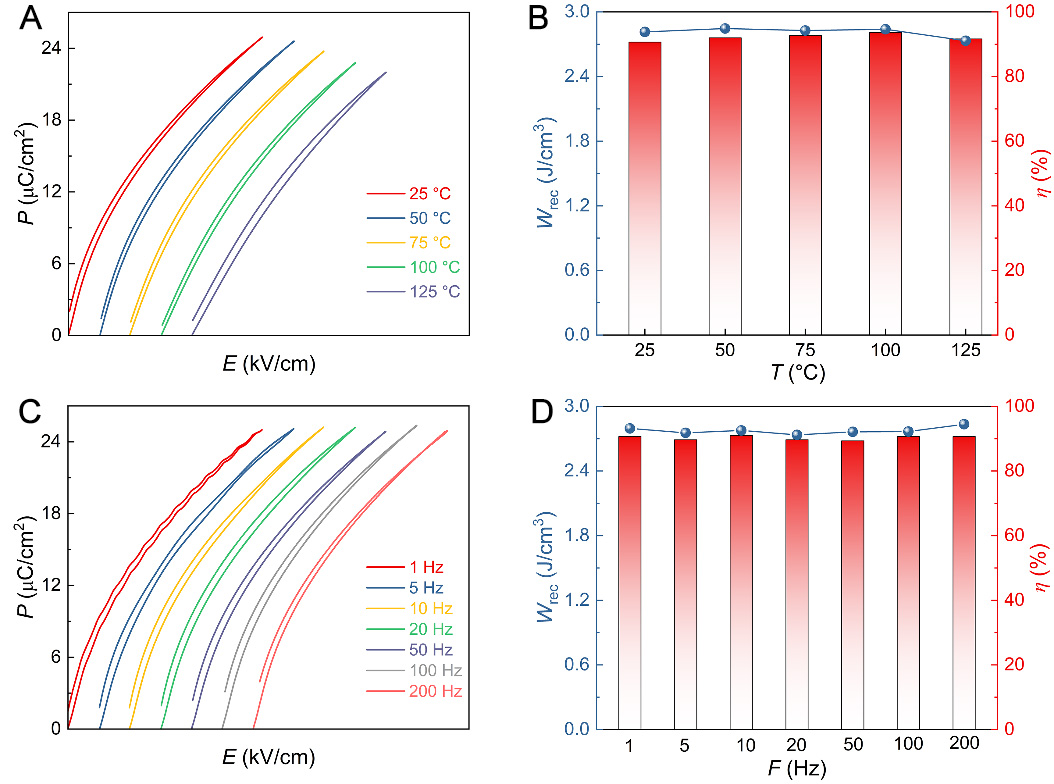
Figure 7. (A) P-E hysteresis loops; (B) Wrec and η for S2 sample within the temperature range of 25-125 °C under 320 kV/cm; (C) P-E hysteresis loops; (D) Wrec and η for S2 sample within the frequency range of 1-200 Hz under 320 kV/cm. P-E: Polarization-electric field.
CONCLUSIONS
In summary, different sintering aids (MnO2, CuO, and Li2CO3)-modified tetragonal tungsten bronze SBN ceramics were prepared via the traditional solid-state sintering process. Comprehensive structural characterizations including XRD, SEM, Raman spectra, and TEM demonstrate that the incorporation of sintering additives effectively promotes densification and strengthens relaxor character. Finally, we obtained a high Wrec of 4.41 J/cm3 and an η of 93.4% in CuO-modified SBN ceramics. The ceramic also exhibits excellent thermal and frequency stability, maintaining a Wrec above 2.75 J/cm3 with less than 10% variation under varying conditions. These results clarify the role of sintering aids in enhancing energy storage performance and provide guidance in tailoring SBN energy-storage ceramics.
DECLARATIONS
Acknowledgments
We would like to thank Chao Feng at the Instrument Analysis Center of Xi’an Jiaotong University for the assistance with UV-vis absorption spectra characterization. Also, we thank the Public Research Platform at the State Key Laboratory of Electrical Insulation and Power Equipment.
Authors’ contributions
Investigation, conceptualization, methodology, validation, writing - original draft, writing - review & editing, funding acquisition: Kang, R.
Investigation, formal analysis, data curation: Hu, H.
Formal analysis, methodology: Xu, J.
Validation, funding acquisition: Yang, B.
Formal analysis, funding acquisition: Zhao, Y.
Validation, data curation, writing - review & editing, funding acquisition: Gao, Y.
Supervision: Shao, J.
Resources, writing - review & editing, supervision, funding acquisition: Lou, X.
Availability of data and materials
The data that support the findings of this study are available from the corresponding author upon reasonable request.
AI and AI-assisted tools statement
During the preparation of this manuscript, the AI tool ChatGPT (version 5.5, released 2026-04-23) was used solely for language editing. The tool did not influence the study design, data collection, analysis, interpretation, or the scientific content of the work. All authors take full responsibility for the accuracy, integrity, and final content of the manuscript.
Financial support and sponsorship
This work was supported by the National Natural Science Foundation of China (Nos. 52572141, 52572262, 52502153 and 52302155), Natural Science Basic Research Program of Shaanxi Province (2025JC-YBQN-579), Postdoctoral Fellowship Program of CPSF (GZC20250353), China Postdoctoral Science Foundation (2024M762584), Science and Technology Plan Project of Xi’an Beilin District of Shaanxi Province (GX2432) and Fundamental Research Funds for the Central Universities (Nos. xzy012025104 and xzd012025006).
Conflicts of interest
All authors declared that there are no conflicts of interest.
Ethical approval and consent to participate
Not applicable.
Consent for publication
Not applicable.
Copyright
© The Author(s) 2026.
Supplementary Materials
REFERENCES
1. Jayakrishnan, A.; Silva, J.; Kamakshi, K.; et al. Are lead-free relaxor ferroelectric materials the most promising candidates for energy storage capacitors? Prog. Mater. Sci. 2023, 132, 101046.
2. Zhang, L.; Jing, R.; Zhang, S.; Jin, L. Multiscale microstructure design for high-performance dielectric energy storage materials. Microstructures 2026, 6, 2026002.
3. Cao, W.; Wu, Y.; Yang, X.; et al. Breaking polarization-breakdown strength paradox for ultrahigh energy storage density in NBT-based ceramics. Nat. Commun. 2025, 16, 6228.
4. Yan, F.; Wang, S.; Qian, J.; et al. Tape-casting lead-free dielectrics permit superior capacitive energy storage performance. Adv. Energy. Mater. 2025, 15, 2403535.
5. Dan, Y.; Tang, L.; Ning, W.; Hu, C.; Liu, L.; Fang, L. Enhancing energy storage performance in tungsten bronze ceramics utilizing site engineering. Microstructures 2025, 5, 2025050.
6. Wang, G.; Lu, Z.; Li, Y.; et al. Electroceramics for high-energy density capacitors: current status and future perspectives. Chem. Rev. 2021, 121, 6124-72.
7. Luo, B.; Wang, X.; Tian, E.; Song, H.; Wang, H.; Li, L. Enhanced energy-storage density and high efficiency of lead-free CaTiO3-BiScO3 linear dielectric ceramics. ACS. Appl. Mater. Interfaces. 2017, 9, 19963-72.
8. Guo, X.; Pu, Y.; Wang, W.; et al. Ultrahigh energy storage performance and fast charge-discharge capability in Dy- modified SrTiO3 linear ceramics with high optical transmissivity by defect and interface engineering. Ceram. Int. 2020, 46, 21719-27.
9. Wang, W.; Pu, Y.; Guo, X.; Shi, R.; Yang, M.; Li, J. Combining high energy efficiency and fast charge-discharge capability in calcium strontium titanate-based linear dielectric ceramic for energy-storage. Ceram. Int. 2020, 46, 11484-91.
10. Yang, Z.; Du, H.; Jin, L.; Poelman, D. High-performance lead-free bulk ceramics for electrical energy storage applications: design strategies and challenges. J. Mater. Chem. A. 2021, 9, 18026-85.
11. Yang, Y.; Li, Y.; Song, Y.; et al. Lead-free trirelaxor ferroelectrics: high energy storage capacity in the paraelectric state and broad operating temperature range. Adv. Mater. 2026, 38, e09323.
12. Cao, W.; Li, T.; Li, K.; et al. Unleashed remarkable energy storage performance in Bi0.5K0.5TiO3-based relaxor ferroelectrics by local structural fluctuation. Angew. Chem. Int. Ed. 2025, 64, e202416291.
13. Zhao, W.; Xu, D.; Li, D.; et al. Broad-high operating temperature range and enhanced energy storage performances in lead-free ferroelectrics. Nat. Commun. 2023, 14, 5725.
14. Li, J.; Shen, Z.; Chen, X.; et al. Grain-orientation-engineered multilayer ceramic capacitors for energy storage applications. Nat. Mater. 2020, 19, 999-1005.
15. Chen, L.; Hu, T.; Shi, X.; et al. Near-zero energy consumption capacitors by controlling inhomogeneous polarization configuration. Adv. Mater. 2024, 36, e2313285.
16. Chen, L.; Wang, N.; Zhang, Z.; et al. Local diverse polarization optimized comprehensive energy-storage performance in lead-free superparaelectrics. Adv. Mater. 2022, 34, e2205787.
17. Li, D.; Zhou, D.; Wang, D.; Zhao, W.; Guo, Y.; Shi, Z. Improved energy storage properties achieved in (K, Na)NbO3‑based relaxor ferroelectric ceramics via a combinatorial optimization strategy. Adv. Funct. Mater. 2022, 32, 2111776.
18. Zhang, M.; Yang, H.; Lin, Y.; Yuan, Q.; Du, H. Significant increase in comprehensive energy storage performance of potassium sodium niobate-based ceramics via synergistic optimization strategy. Energy. Storage. Mater. 2022, 45, 861-8.
19. Cao, L.; Yuan, Y.; Meng, X.; Li, E.; Tang, B. Ferroelectric-relaxor crossover and energy storage properties in Sr(2)NaNb(5)O(15)-based tungsten bronze ceramics. ACS. Appl. Mater. Interfaces. 2022, 14, 9318-29.
20. Xu, S.; Tian, M.; Yu, P.; et al. A novel multifunctional SANNS-based tungsten bronze ceramic with excellent energy storage and photoluminescence capabilities. J. Alloy. Compd. 2025, 1036, 182069.
21. Duan, J.; Wei, K.; Qi, H.; et al. Sr0.6Ba0.4NbO6 superparaelectrics with simple composition and high-efficiency capacitive energy storage. Chem. Eng. J. 2025, 516, 164009.
22. Alhazmi, M.; Ali, A. I.; Choi, D.; et al. Superior energy storage properties of (Ba0.4Ca0.3Sr0.3)Nb2O6 bronze structure based Nd3+/Sb5+ ions via entropy and interfacial polarization strategies. J. Alloy. Compd. 2025, 1041, 183771.
23. Tang, L.; Ning, W.; Wu, S.; et al. Energy storage performance of high-entropy SBN-based tungsten bronze-structure ceramic. J. Alloy. Compd. 2025, 1015, 178902.
24. Feng, J.; Zheng, P.; Wang, T.; et al. Realizing high energy storage performances in Sr0.6Ba0.4Nb2O6-based tungsten bronze-perovskite heterogeneous solid solution ceramics. Mater. Today. Energy. 2025, 54, 102082.
25. Peng, H.; Wu, T.; Liu, Z.; et al. High-entropy relaxor ferroelectric ceramics for ultrahigh energy storage. Nat. Commun. 2024, 15, 5232.
26. Duan, J.; Wei, K.; Du, Q.; Ma, L.; Qi, H.; Li, H. High-entropy tungsten bronze ceramics for large capacitive energy storage with near-zero losses. Adv. Funct. Mater. 2024, 34, 2409446.
27. Zhang, X.; Zheng, P.; Li, L.; et al. High energy storage performance in tungsten bronze-based relaxor ceramic via doping with CuO. Scr. Mater. 2022, 211, 114514.
28. Li, C.; Zhang, Y.; Liu, J.; Graetsch, H. A. Long-range and local structure of SrxBa1-xNb2O6 (x= 0.33 and 0.67) across the ferroelectric-relaxor transition. Chem. Mater. 2020, 32, 1844-53.
29. Peng, H.; Liu, Z.; Fu, Z.; et al. Superior energy density achieved in unfilled tungsten bronze ferroelectrics via multiscale regulation strategy. Adv. Sci. 2023, 10, e2300227.
30. Kang, R.; Wang, Z.; Gao, Y.; Yuan, W.; Shao, J.; Lou, X. High energy storage in tetragonal tungsten bronze ceramics engineered via superparaelectric state. Appl. Phys. Lett. 2026, 128, 152903.
31. Zhong, X.; Shui, A.; Fang, Y.; Yu, H. Improved relaxor behavior and insulation in BaTiO3-based ceramics for high-performance energy storage via trace MnO2 doping. Ceram. Int. 2025, 51, 66103-12.
32. Zhao, L.; Zhang, B.; Zhou, P.; Zhao, X.; Zhu, L.; Damjanovic, D. Phase structure and property evaluation of (Ba,Ca)(Ti,Sn)O3 sintered with Li2CO3 addition at low temperature. J. Am. Ceram. Soc. 2014, 97, 2164-9.
33. Ren, X. Large electric-field-induced strain in ferroelectric crystals by point-defect-mediated reversible domain switching. Nat. Mater. 2004, 3, 91-4.
34. Hu, W.; Liu, Y.; Withers, R. L.; et al. Electron-pinned defect-dipoles for high-performance colossal permittivity materials. Nat. Mater. 2013, 12, 821-6.
35. Dong, Q.; Zhang, Y.; Pan, Y.; et al. Defect-engineered core-shell structured NaNbO3-based energy storage ceramics. J. Materiomics. 2026, 12, 101097.
36. Zhang, M.; Lan, S.; Yang, B. B.; et al. Ultrahigh energy storage in high-entropy ceramic capacitors with polymorphic relaxor phase. Science 2024, 384, 185-9.
37. Dan, Y.; Tang, L.; Ning, W.; et al. Achieving enhanced energy storage performance and ultra-fast discharge time in tungsten-bronze ceramic. J. Adv. Ceram. 2024, 13, 1349-58.
38. Liu, P.; Ren, X.; Qian, J.; et al. Polymorphic superparaelectric engineering boosting energy storage capacity in BaTiO3-based ceramics. Adv. Sci. 2026, , e24252.
39. Ye, H.; Yang, F.; Pan, Z.; et al. Significantly improvement of comprehensive energy storage performances with lead-free relaxor ferroelectric ceramics for high-temperature capacitors applications. Acta. Mater. 2021, 203, 116484.
40. Wang, S.; Qian, J.; Ge, G.; et al. Embedding plate-like pyrochlore in perovskite phase to enhance energy storage performance of BNT-based ceramic capacitors. Adv. Energy. Mater. 2025, 15, 2403926.
Cite This Article
 Open Access
How to Cite
Download Citation
Export Citation File:
Type of Import
Tips on Downloading Citation
Citation Manager File Format
Type of Import
Direct Import: When the Direct Import option is selected (the default state), a dialogue box will give you the option to Save or Open the downloaded citation data. Choosing Open will either launch your citation manager or give you a choice of applications with which to use the metadata. The Save option saves the file locally for later use.
Indirect Import: When the Indirect Import option is selected, the metadata is displayed and may be copied and pasted as needed.
About This Article
Copyright

Data & Comments
Data
0










Comments
Comments must be written in English. Spam, offensive content, impersonation, and private information will not be permitted. If any comment is reported and identified as inappropriate content by OAE staff, the comment will be removed without notice. If you have any queries or need any help, please contact us at [email protected].