




Phase programming: microstructural design in rechargeable battery materials
 0
0 
Abstract
Single-phase optimization is increasingly insufficient to simultaneously satisfy the demands of rechargeable batteries for high energy density, fast rate capability, and long-term cycling stability. Growing evidence indicates that electrochemical performance is governed not only by chemical composition, but also by the spatial organization and dynamic evolution of multiple coexisting phases. Inspired by gene editing, this review introduces the concept of phase programming, in which crystalline phases, defect-ordered states, and interfacial phases are regarded as editable functional modules. By deliberately inserting, suppressing, reorganizing and spatially reprogramming these phases, electrode properties can be tuned in a programmable manner. Using energy density, rate performance, and cycling stability as guiding metrics, we reinterpret the interactions among functional modules under different modification strategies and their impacts on electrochemical behavior. On this basis, a phase programming design map is constructed, unifying gradient, core-shell, and multiphase architectures within a common physical framework. This framework establishes phase programming as a potentially transferable materials design language for next-generation battery electrodes.
Keywords
INTRODUCTION
With the rapid development of renewable energy and electric transportation, rechargeable batteries are facing unprecedented demands for integrated performance, including energy density, power density, cycling life, and safety[1]. For mature systems like lithium-ion batteries, over two decades of compositional optimization and processing refinement have pushed the theoretical capacity, voltage window, and accessible structural space of single-phase electrode materials to their limits[2-5]. It is increasingly insufficient to rely solely on chemical substitution or finetuning of particle size, morphology, and crystallographic orientation within a single crystal phase. These approaches can hardly satisfy multiple constraints at once, such as high energy density with long cycle life, or high-rate capability with enhanced safety. In contrast, recent studies show that microstructures governed by multiphase coexistence, phase coupling, and complex phase interfaces play a far more critical role in practical electrodes than idealized single-phase models[6-9]. Representative examples include “twin-domain” structures in Li-rich layered cathodes[10], surface-reconstructed phases in high-nickel materials[11-13], P2/O3 stacking coexistence in sodium-ion electrodes[14,15], as well as various core-shell and gradient architectures[16-18]. These observations consistently indicate that the type, fraction, and spatial distribution of phases are among the key determinants of the overall electrochemical performance. Consequently, the deliberate design and spatiotemporal reorganization of different phases are emerging as a central focus in next-generation electrode material design.
In the life sciences, gene editing technologies allow researchers to precisely excise, insert, and rearrange specific DNA segments. This enables selective regulation of gene expression and biological function[19,20]. The essence of these technologies is not simply altering individual nucleotides. Instead, it lies in identifying and manipulating functional gene segments, then recombining them to generate new functions. The acquisition, enhancement, or suppression of biological functions arises from the precise spatiotemporal configuration and regulation of these segments. When this perspective is transferred from biological macromolecules to inorganic solids, the different crystalline phases, defect-ordered states, and interface-induced phases in electrode materials can likewise be regarded as structural units that carry distinct functions. Typical examples include high-capacity yet structurally fragile host phases, conductive phases that facilitate electron or ion transport, and interfacial protection phases that suppress parasitic reactions[21-24]. The spatial arrangement of these functional phases within and between grains, as well as their dynamic evolution during electrochemical cycling, collectively determine the macroscopic performance of electrode materials [Figure 1]. From this viewpoint, materials design is no longer limited to synthesizing a single-phase compound, but instead resembles the selection, tailoring, and recombination of a set of functional phases. Certain phase contributions can be preserved or enhanced, new functional phases can be introduced, and detrimental phases can be suppressed or isolated. This strategy closely parallels gene editing operations that manipulate functional segments to achieve targeted phenotypes. It should be noted that the gene editing analogy is intended as a conceptual and heuristic framework, rather than a literal correspondence between biological and crystalline systems.
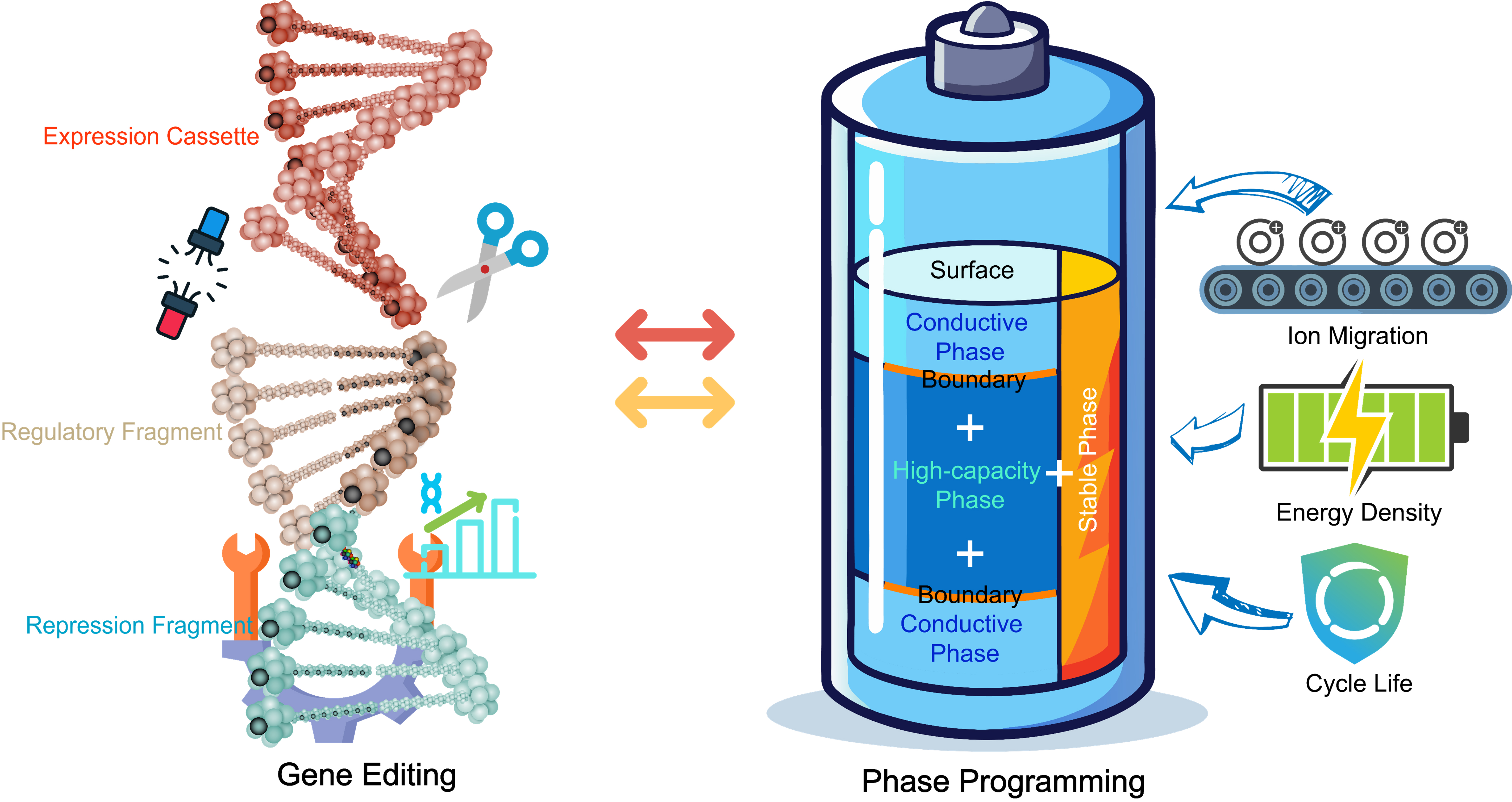
Figure 1. Conceptual illustration of phase programming in rechargeable battery electrode materials.
Based on this analogy, this review proposes the concept of phase programming. It describes a class of strategies for the deliberate and directional design and regulation of phase types, fractions, spatial distributions, interfacial properties, and defect-ordered states in rechargeable battery electrode materials. The goal is to achieve programmable improvements in electrochemical performance. Using key performance metrics as guiding principles, we survey existing phase-design approaches in lithium- and sodium-based battery systems. These include phase structure engineering for high energy density, high-rate capability, long cycle life, and safety, as well as phase programming practices from point defects to defect-ordered phases. By reinterpreting these studies within a unified phase programming framework, we distill a set of performance-oriented design principles. This provides a more holistic and programmable strategy for the microstructural design of next-generation electrode materials.
PHASE PROGRAMMING TOWARD HIGH ENERGY DENSITY
In cathode materials for rechargeable batteries, enhancing energy density typically relies on the introduction of high-capacity phases, such as high-nickel layered oxides, Li-rich layered structures, and high-voltage systems[12,21,25-29]. However, these high-capacity phases are often thermodynamically or kinetically metastable[30]. Under high-voltage operation, deep charge–discharge conditions, or prolonged cycling, they are prone to structural instabilities including phase transitions, oxygen release, lattice collapse, and surface reconstruction, which ultimately lead to rapid capacity decay and safety concerns[31-35]. As a result, the limits of optimizing a single high-capacity phase have become increasingly apparent. The design paradigm for high-energy-density materials is shifting from single-phase optimization toward multiphase cooperation.
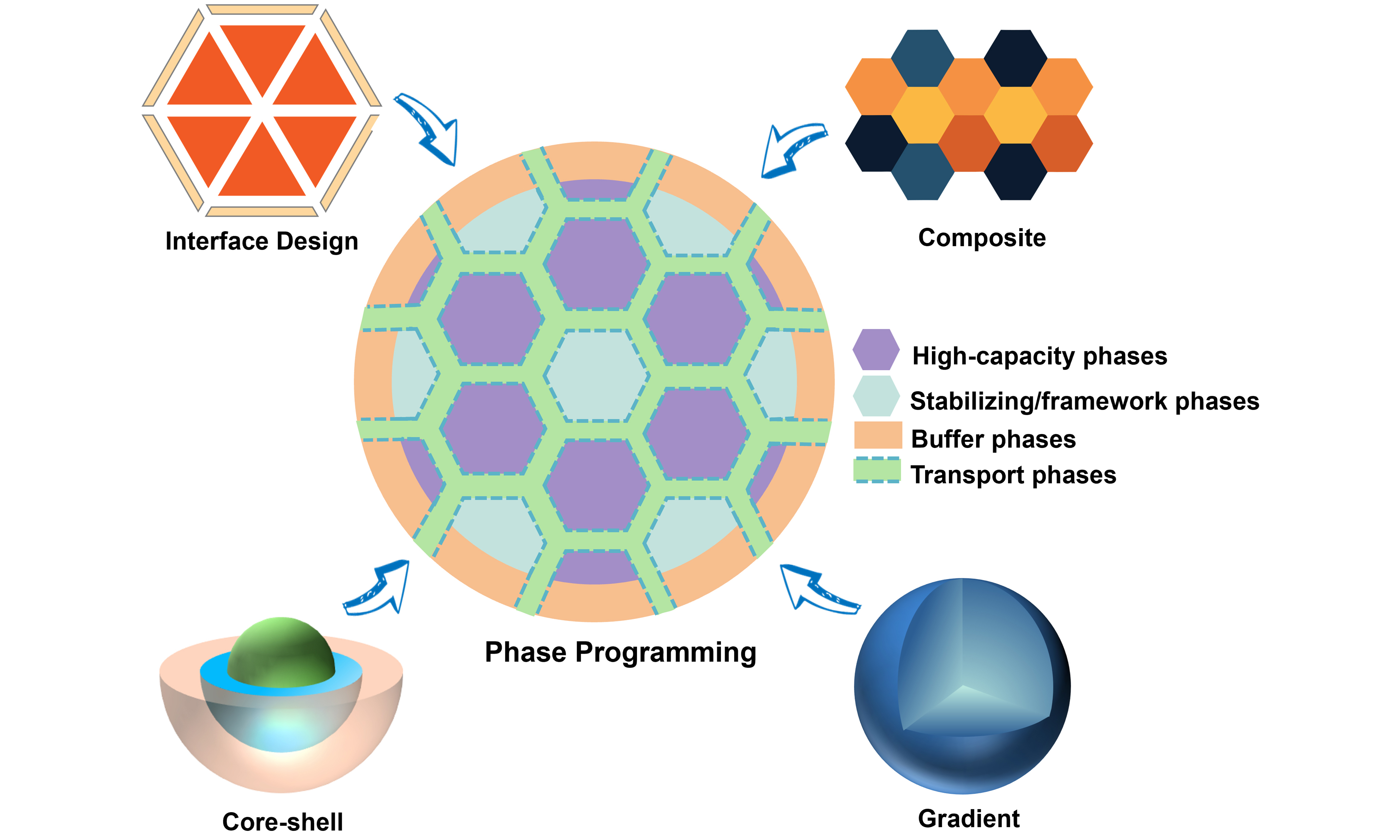
In this context, phase programming provides a new conceptual framework. The central challenge is not merely how to introduce high-capacity phases, but how to achieve stable high-capacity release while suppressing their structural and electrochemical instabilities. From a phase programming perspective, these designs modulate the spatial scale, hierarchy and interface of high-capacity and stabilizing phases to confine high-capacity reactions in a controlled structural system. By deliberately introducing stabilizing phases and spatially integrating them with high-capacity phases in a well-defined manner, synergistic enhancement of energy density and structural stability can be achieved. Typical strategies include incorporating rock-salt or spinel phases into layered high-capacity hosts as structural supports, or applying surface-stabilizing phase coatings to suppress interfacial side reactions at high voltages[36,37]. These stabilizing phases usually serve functions such as structural confinement, stress buffering, or chemical passivation. Meanwhile, the primary high-capacity phases are responsible for reversible lithium (or sodium) storage. Together, they form composite phase architectures characterized by functional separation yet structural coupling [Figure 2A].
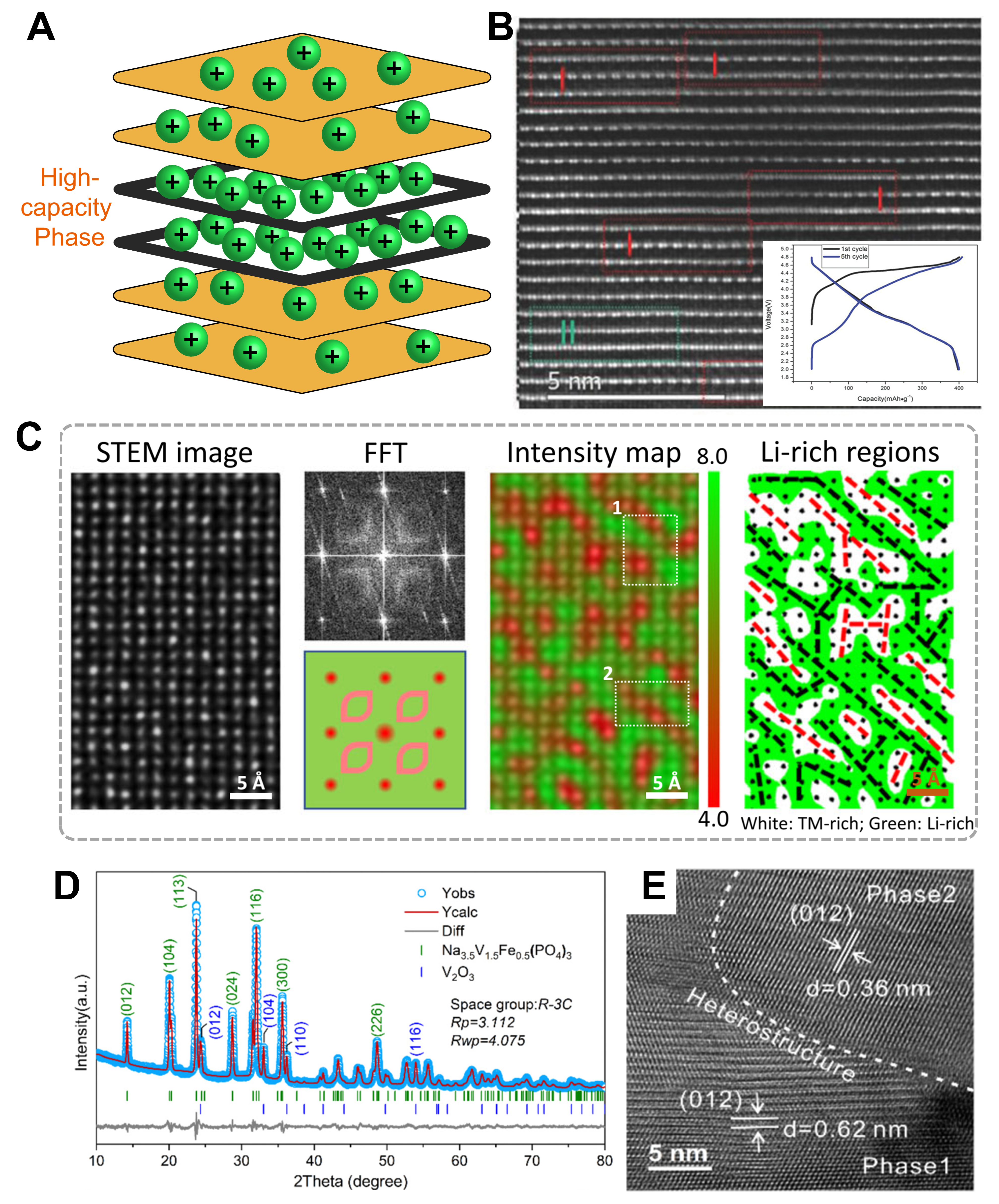
Figure 2. Phase programming strategies toward high energy density cathodes. (A) Schematic illustration of phase programming for high-energy-density cathode materials; (B) Scanning transmission electron microscope (STEM) image showing single-layer Li2MnO3 superstructures embedded in an O2-type structure[40]. Reprinted with permission from Ref.[40] Copyright © 2018 Wiley; (C) STEM image of disordered rock-salt material, corresponding FFT, and intensity color maps showing the distributions of both Li-rich (green) and transition metal-rich (red) nanoregions, as well as Li-rich regions alone[41]. Reprinted with permission from Ref.[41] Copyright © 2023 Springer Nature; (D) X-ray Rietveld refinement of layered V2O3 and polyanionic host phases; (E) High-resolution transmission electron microscope image of a heterostructure between two phases[42]. Figure D and E reprinted with permission from Ref.[42] Copyright © 2025 Royal Society of Chemistry. FFT: Fast Fourier transform.
Such phase cooperation is far from a simple physical mixture. Instead, it relies critically on strain regulation, charge redistribution, and reconstruction of local chemical environments at phase interfaces. For example, in high-nickel layered cathodes, the introduction of a small fraction of rock-salt phases can suppress interlayer gliding and cation mixing through interfacial stress pinning effects[38]. In Li-rich layered systems, the presence of stabilizing phases helps regulate anionic redox processes and mitigate irreversible structural evolution[39]. These observations collectively indicate that the key to high energy density does not lie in maximizing the capacity of a single phase, but rather in achieving optimal spatial and functional configurations of different phases through phase programming.
A representative example is provided by Zuo et al., who proposed an atomic-scale phase programming strategy in O2-type Li-rich layered cathodes by transforming the traditionally nanoscale-domain Li2MnO3 high-capacity phase into a single-layer superstructure uniformly embedded within the layered host lattice [Figure 2B][40]. This design significantly reduces the local dimensionality and continuity of the high-capacity phase, thereby weakening the driving forces for O-O dimerization and layered-to-spinel/rock-salt phase transitions. As a result, ultrahigh specific capacity is retained while excellent structural and voltage stability are simultaneously achieved. This work demonstrates that high-capacity phases do not necessarily need to exist as continuous domains; spatial dilution itself can serve as an effective phase programming strategy. Li et al. edited the distribution of Li-rich and transition-metal-rich regions in disordered rock-salt structures through annealing treatments[41]. The annealed Li1.2Ti0.4Mn0.4O2.0 materials exhibited improved connectivity of Li-rich regions, forming effective lithium-ion percolation networks [Figure 2C]. In contrast, F-doped Li1.2Ti0.2Mn0.6O1.8F0.2 showed enhanced local ordering but resulted in isolated “cage-like” Li-rich regions, which impeded long-range lithium-ion transport and suppressed capacity utilization[41]. In another example, Zou et al. introduced layered V2O3 oxides as a new functional module into a polyanionic host matrix [Figure 2D][42]. Through in situ synthesis, a heterostructure with coherent growth of the two phases was constructed, enabling atomic-scale interfacial coupling [Figure 2E]. The built-in electric fields at the heterointerfaces, together with the activation and amorphization of the V2O3 phase, fundamentally “reprogrammed” charge transport, reaction pathways, and mechanical responses. Within the phase programming framework, stabilizing phases in such systems can be regarded as “structural editors” for high-capacity phases. Beyond their static structural roles, these stabilizing phases also critically regulate the dynamic evolution pathways of high-capacity phases during electrochemical cycling. In particular, spatial confinement and reduced dimensionality of high-capacity domains can effectively suppress long-range phase separation and mitigate the propagation of irreversible phase transitions. This strategy constrains the phase evolution trajectory within a kinetically accessible and reversible regime. It avoids uncontrolled transformation toward thermodynamic equilibrium.
In summary, the specific material systems and structural implementations in the studies discussed above vary considerably. However, when viewed from the phase programming perspective, they share a highly consistent physical essence. High energy density does not arise from maximizing a single high-capacity phase, but rather from the judicious programming of high-capacity phases in terms of spatial scale, hierarchical organization, and interfacial environment. This understanding provides a clear methodological guideline for the rational design of multiphase cathode materials.
PHASE PROGRAMMING TOWARD HIGH-RATE PERFORMANCE
In electrode materials designed for high-rate capability, the performance bottleneck is often the limited transport of ions and electrons within complex microstructures[43,44]. Conventional strategies typically improve rate performance by reducing particle size or enhancing intrinsic diffusion coefficients. However, under high current densities or low-temperature conditions, severe polarization remains difficult to avoid. The key to high-rate performance does not lie in the diffusion properties of a single crystal phase. Rather, it depends on two factors. First, whether defect phases and interfacial phases can be deliberately and orderly edited to construct continuous, low-energy-barrier fast ion transport networks. Second, whether these networks can be spatially coordinated with electron transport pathways [Figure 3A].
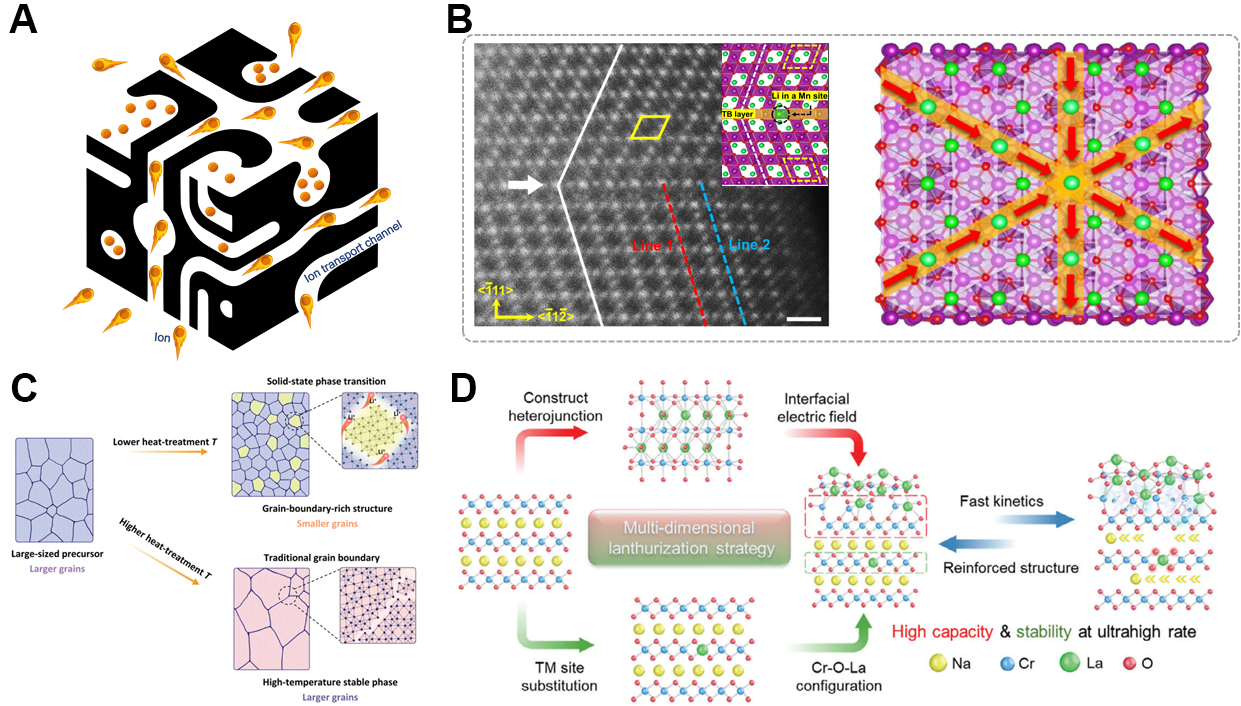
Figure 3. Phase programming strategies toward high-rate performance. (A) Schematic illustration of fast ion transport channels; (B) STEM image and structural model showing twin boundary induced fast ion transport channels in a spinel cathode[45]. Reprinted with permission from Ref.[45] Copyright © 2021 Springer Nature; (C) Schematic illustration of grain-boundary-rich cathodes formed through controlled heat treatment, enabling enhanced ion transport kinetics[46]. Reprinted with permission from Ref.[46] Copyright © 2025 The Royal Society of Chemistry; (D) Schematic diagram illustrating the mechanism of interfacial electric field and site doping for fast kinetics and stable structure[47]. Reprinted with permission from Ref.[47] Copyright © 2025 Wiley. STEM: Scanning transmission electron microscope.
This concept is clearly illustrated by twin boundary engineering in spinel cathode systems. Wang et al. deliberately introduced a high density of twin boundaries into spinel materials, leading to markedly enhanced lithium-ion diffusion kinetics [Figure 3B][45]. Twin boundaries were traditionally regarded as crystallographic defects. However, within the phase programming framework, they can be redefined as defect-ordered phases embedded in the parent spinel phase. These twin-boundary regions exhibit local symmetry and energy landscapes that differ from the bulk lattice. They significantly reduce lithium-ion migration barriers and form quasi-continuous fast diffusion channels within the crystal. This strategy effectively transforms defect phases into functional fast-transport phases through controlled programming of their density and spatial distribution. Extending this concept beyond a single defect type, Meng et al. constructed polycrystalline cathodes with a high density of grain boundaries, achieving excellent ion diffusion kinetics under low-temperature and high-rate conditions [Figure 3C][46]. The system is systematically edited into an interconnected interfacial phase network spanning both intra- and interparticle regions. This interfacial network substantially shortens effective diffusion lengths and spatially reprograms the connectivity of ion transport pathways, thereby overcoming the intrinsic diffusion limitations imposed by the bulk phase. In addition, these fast ion transport networks are not strictly static. Under high-rate operation, local structural rearrangements, defect migration, and interfacial reconstruction may continuously modify the connectivity of these pathways. Therefore, the design of defect and interfacial phases should therefore consider not only the initial formation of fast transport channels, but also their dynamic stability under nonequilibrium conditions. Ensuring the persistence of percolating ion-conduction networks during cycling represents a key aspect of spatiotemporal phase programming.
Beyond lithium-ion systems, similar phase programming principles are equally applicable to sodium-ion cathode materials. Zhang et al. achieved stable high-ra te performance in layered sodium-ion cathodes through configuration design and interface reconstruction[47]. This work reduced the energy barriers for sodium-ion migration across different local structural units by tailoring interfacial characteristics [Figure 3D]. This strategy can be interpreted as the cooperative programming of multiphase interfaces, whereby interfacial phases are functionalized as fast ion transport channels connecting distinct structural units, thereby unlocking the high-rate potential of the overall system.
In summary, although these studies involve different material systems and specific structural implementations, they share a highly consistent design logic when viewed through the lens of phase programming. Defect and interfacial phases are orderly programmed into functional fast-transport phases, and continuous ion transport networks are constructed in space. As a result, high-rate performance emerges from the cooperation of multiple functional phases and their interfaces, not from the diffusion properties of any single crystal phase. This understanding provides a unified physical framework for the rational design of high-power electrode materials for rechargeable batteries.
PHASE PROGRAMMING TOWARD CYCLING STABILITY
In electrode material design targeting cycling stability, performance degradation typically originates from the accumulation of anisotropic strain, irreversible phase transformations, and persistent interfacial side reactions during repeated charge-discharge cycles[48]. Conventional strategies such as surface coatings or compositional doping can retard degradation to some extent. However, they often fail to simultaneously suppress multiscale structural evolution occurring in both the bulk and interfacial regions[49,50]. From a phase programming perspective, cycling stability is not governed by the intrinsic durability of a single phase. Instead, it depends on whether the structural evolution pathways of the material during long-term operation can be effectively constrained. This constraint is achieved through the cooperative programming of buffer phases, framework phases, and interfacial phases [Figure 4A].
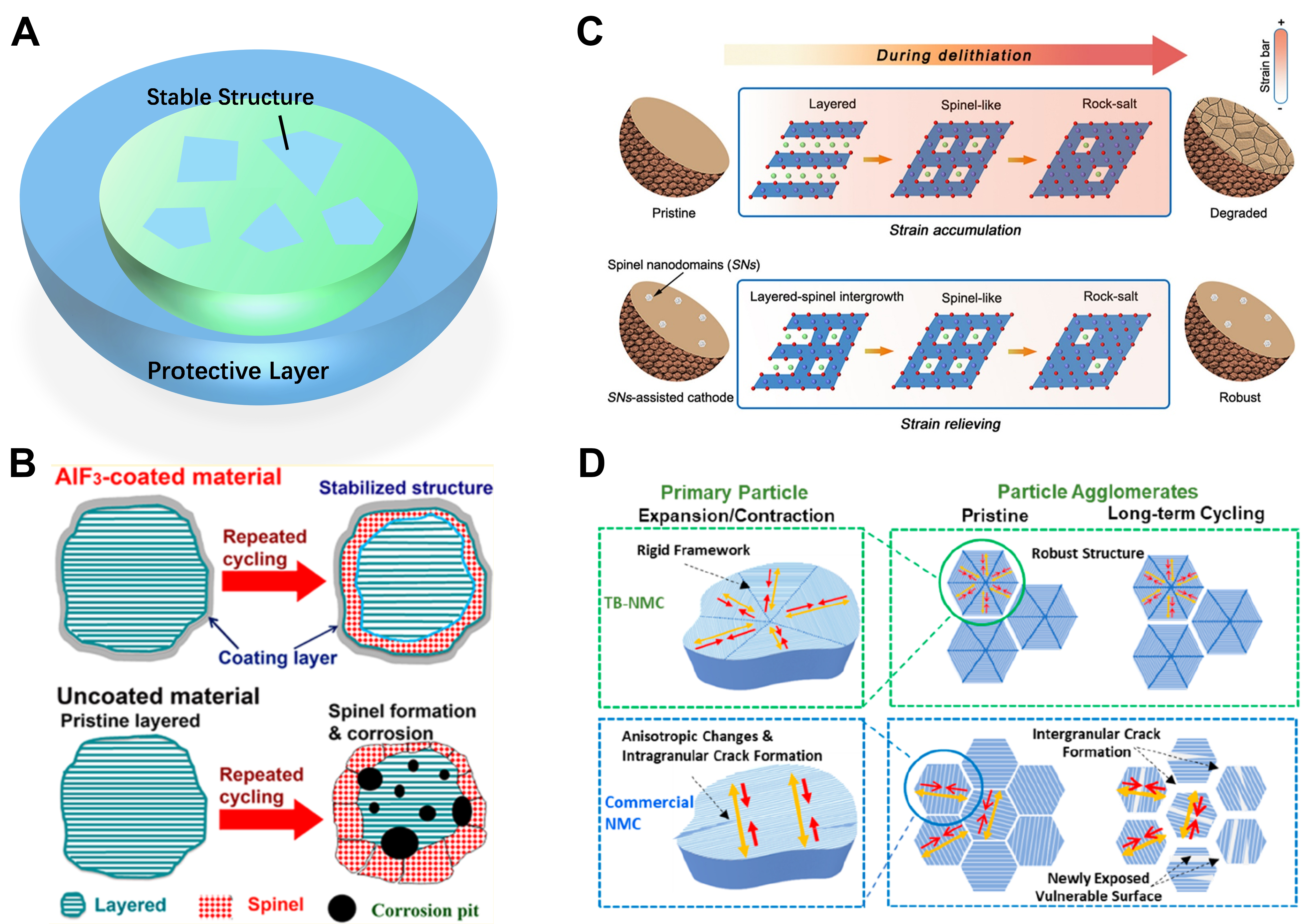
Figure 4. Phase programming strategies toward enhanced cycling stability. (A) Schematic illustration of phase programming concepts for improving cycling stability; (B) Schematic diagram comparing the changes in materials with and without AlF3 coating after cycling[51]. Reprinted with permission from Ref.[51] Copyright © 2014 American Chemical Society; (C) Phase programming strategy using spinel nanodomains to relieve strain accumulation and suppress structural degradation[52]. Reprinted with permission from Ref.[52] Copyright © 2025 Elsevier; D) (Schematic illustration of twin boundaries mitigating lattice evolution and crack formation of ternary (NMC) materials during cycling[53]. Reprinted with permission from Ref.[53] Copyright © 2022 American Chemical Society.
This concept is first manifested in the functionalization of interfacial phases. Zheng et al. systematically investigated the stabilization mechanism of AlF3 coatings in Li-rich cathodes[51]. Traditionally, such coatings are regarded as simple physical or chemical barriers. However, the AlF3 layer can be redefined as an intentionally introduced interfacial phase [Figure 4B]. The surface of the layered cathode is often the most prone to structural degradation, with transition metals migrating to the Li layer or dissolving into the electrolyte. During cycling, this interfacial phase suppresses parasitic reactions between the electrolyte and highly reactive cathode surface. Meanwhile, it alleviates oxygen release and structural degradation of Li-rich cathodes via regulating the interfacial local chemical environment and stress transfer pathways. These results indicate that interfacial phases are not passive protective layers, but rather active functional units that participate directly in regulating cycling stability. Beyond interfacial phases, introducing buffering secondary phases within the bulk also represents an effective strategy. Wang et al. constructed nanoscale spinel phase domains in ultrahigh-nickel, cobalt-free layered cathodes [Figure 4C][52]. These spinel nanophases contribute negligibly to capacity. Instead, they function as buffer phases embedded within the layered host, effectively absorbing and redistributing the anisotropic strain induced by deep lithium deintercalation during cycling. Meanwhile, the presence of the spinel phase stabilizes the chemical environment of lattice oxygen, suppressing oxygen involvement in irreversible reactions. This work clearly demonstrates that phase programming through the introduction of internal buffering units can substantially improve cycling life without sacrificing energy density[52]. Furthermore, precise regulation of defect-ordered phases can also serve as an effective strategy. Chung et al. successfully mitigated the anisotropic lattice evolution of conventional layered cathodes by controllably introducing twin boundary defects [Figure 4D][53]. These twin boundaries can be redefined as defect phases with structural regulation functionality. Their ordered distribution within the crystal effectively reconstructs stress-transfer pathways, suppressing interlayer slip and the nucleation of microcracks, thereby significantly extending the cycling lifetime. This result highlights that defect phases in cycling stability design are not inevitable by-products, but can instead be deliberately edited into functional modules that stabilize structural evolution. In addition, gradient structures represent a paradigmatic example of spatial phase programming. By continuously and precisely programming the distribution of composition, crystal phase, or valence state along radial or lateral directions within particles, gradient architectures enable functional gradation within the material. This spatial reprogramming strategy actively guides stress distribution, suppresses phase transitions, and markedly enhances structural stability and cycling durability. Gradient structures thus extend phase programming from local chemical order to mesoscale performance integration[17,18,25].
Collectively, these studies reveal that interfacial phases, nanoscale buffer phases, and defect-ordered phases share a common characteristic. By regulating structural strain, phase transition degrees of freedom, and interfacial reaction pathways, they impose effective constraints on the long-term evolution of highly active host phases[54]. More importantly, these strategies can be reinterpreted as actively guiding the phase evolution pathways during long-term cycling. Buffer phases, interfacial phases, and defect-ordered phases collectively reshape the kinetic landscape of structural evolution. In this sense, cycling stability is achieved not by eliminating phase evolution, but by programming its trajectory in a controlled manner. This unified perspective provides a clear structure property logic for the rational design of electrode materials that combine high performance with long service life.
CONCLUSION
Phase programming is a performance-oriented and predictive design paradigm. Traditional multiphase strategies typically focus on the coexistence of different phases or interfaces, without explicitly defining their functional roles, spatial hierarchy, or evolution pathways. In contrast, phase programming introduces three essential criteria that elevate it beyond existing approaches. First, it requires functional modularization. Each phase is explicitly assigned a dominant role, such as energy storage, transport, buffering, or stabilization. This enables a clear mapping between phase identity and electrochemical function. Second, it demands spatial programmability. This means deliberate control over the distribution, connectivity, and characteristic length scale of each phase, rather than relying on random or emergent microstructures. Third, it enforces evolution pathway regulation. In this criterion, phase interactions are designed to constrain structural and chemical evolution during operation, guiding the system along reversible and low-degradation trajectories.
Figure 5 further emphasizes the programmability of spatial distributions, characteristic length scales, and mutual relationships among different functional phases. Notably, high-capacity phases and stabilizing phases do not follow a unique organizational motif. They can coexist in a highly homogeneous and interpenetrating manner within the bulk, where spatial confinement and mutual pinning suppress the long-range, continuous evolution of high-capacity phases[22,55]. Alternatively, they can be deliberately edited into radial or axial gradient architectures, enabling stabilizing phases to progressively enrich regions experiencing high stress or high electrochemical reactivity, thereby directionally constraining structural evolution pathways[17,18]. In addition, the characteristic size of high-capacity phases and the phase relationships between different phases, including orientation relationships as well as coherent or semi-coherent interfaces, constitute critical parameters in phase programming. These factors directly govern interfacial strain accumulation, phase transition driving forces, and stress-relief mechanisms, thereby exerting a profound influence on material reversibility and service lifetime[21,56,57].
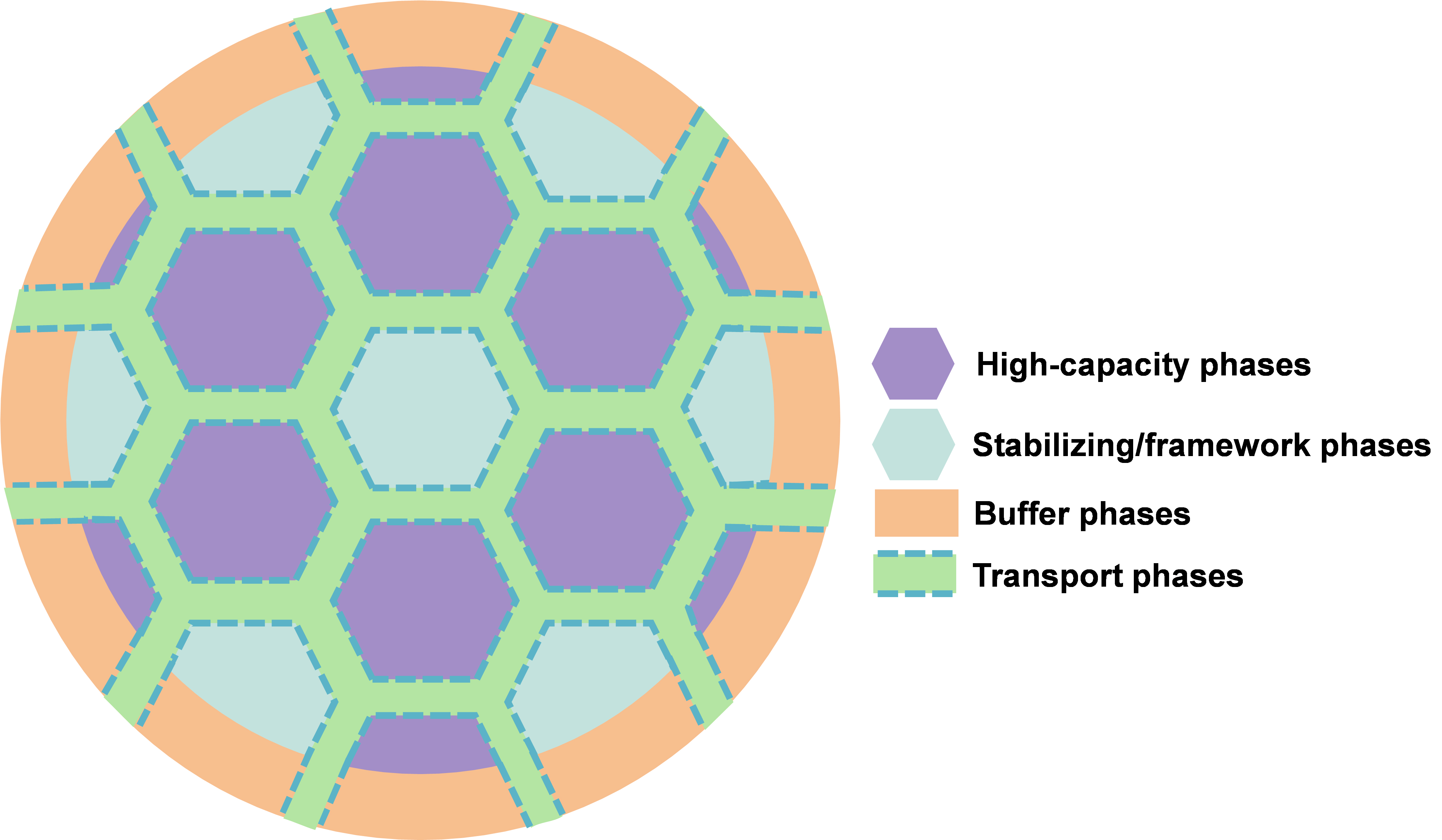
Figure 5. Principles of phase programming in rechargeable battery electrodes.
Interfacial phases play more diverse and switchable functional roles within phase-edited systems. In certain designs, they are edited into fast iontransport channels. This is achieved by reducing migration energy barriers and reconstructing local coordination environments[23,45]. In other cases, interfacial phases primarily serve structural-stabilization and chemical-regulation functions by modulating charge distribution, buffering stress concentration, and suppressing detrimental phase transformations[53]. However, introducing interfacial phases is not without cost. Their thickness, continuity, and interfacial compatibility must be precisely controlled. Otherwise, excessive interfacial stress, structural mismatch, or local transport blockage may emerge as new performance limiting factors.
Buffer phases are typically edited to be enriched at particle surfaces or near surface regions, forming a functional transition layer between electrode materials and the electrolyte[16,58]. Their primary role is to suppress parasitic interfacial reactions, delay surface reconstruction and inward propagation of phase transformations, and maintain the structural integrity of the host material under high-voltage operation or prolonged cycling. Designing buffer phases requires more than precise control over thickness and coverage. This control is needed to avoid excessive sacrifices in energy density. In addition, careful consideration must be given to their interfacial characteristics with the bulk phase. It is also important to ensure that continuous ion-transport pathways can be sustained. The goal is to achieve a balance between chemical stability and kinetic accessibility.
Despite the conceptual advantages of integrating multiple functional phases, the practical realization of such phase programmed systems remains highly challenging. A key difficulty lies in achieving coherent and well coupled heterointerface. To address this, several rational synthesis strategies have been developed. For example, gradient design enables the continuous variation of composition and phase distribution, thereby avoiding abrupt interfaces and reducing structural mismatch[17,18]. In situ growth strategies allow different phases to nucleate and evolve simultaneously within a shared lattice framework, facilitating coherent or semi-coherent interfaces[59]. Additionally, controlled nonequilibrium processes, such as rapid quenching or kinetically regulated annealing, can stabilize metastable multiphase configurations and prevent phase segregation[60].
Overall, the phase programming concept seeks to construct a multiphase system capable of adaptive evolution during operation. It achieves this through the cooperative programming of high-capacity phases, stabilizing phases, interfacial phases, and buffer phases. The programming involves their spatial positioning, length scale hierarchy, and interphase interactions. Electrochemical performance arises from the ordered functional division and dynamic cooperation of multiple phases in three-dimensional space. This constitutes the core essence of phase programming as a new paradigm for materials design.
Starting from performance requirements, this work systematically reviews and reframes the design strategies of multiphase architectures in secondary battery electrode materials, and proposes “phase programming” as a unified materials design framework. Phase programming treats crystalline phases, defect-ordered phases, and interfacial phases as function-specific, editable building blocks. By deliberately inserting, suppressing, recombining, and spatially reprogramming these phases, electrode performance can be tailored on demand. Through this perspective, structure optimization strategies previously scattered across different material systems can be incorporated into a single physical picture, thereby establishing a clear structure property relationship [Figure 6].
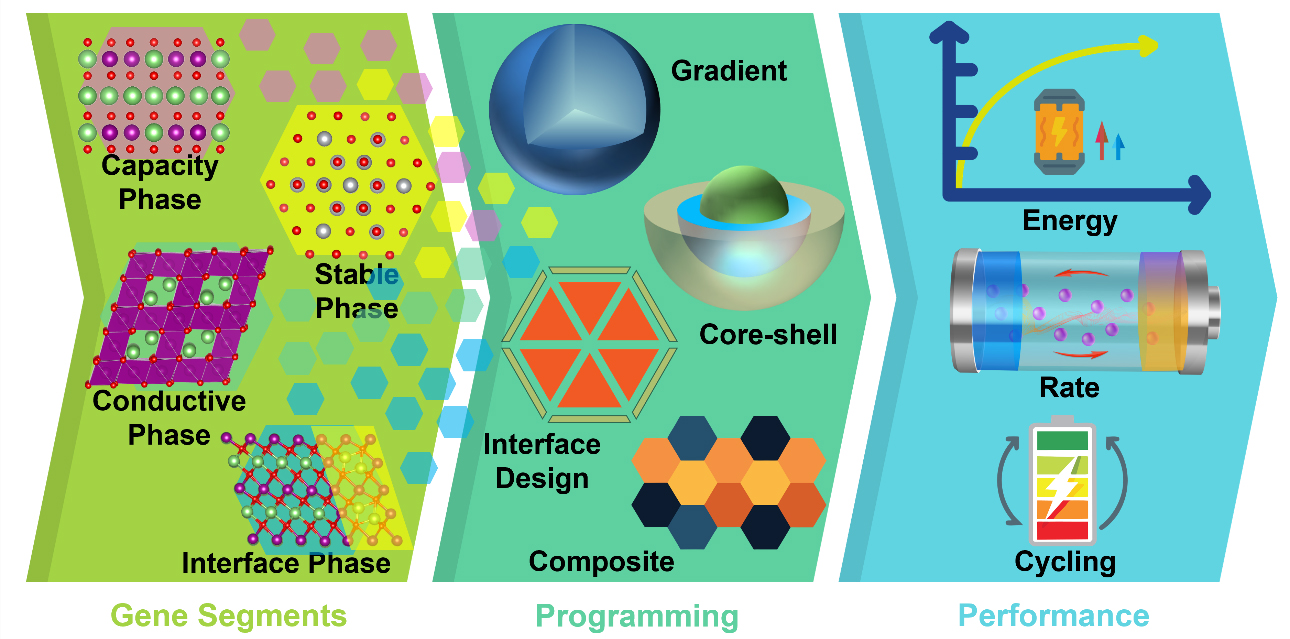
Figure 6. Phase programming enables programmable performance optimization through functional phase coordination.
We focus on three key performance metrics, including energy density, rate capability, and cycling stability, and further summarize representative implementation pathways of phase programming under different performance objectives. High energy density relies on the hierarchical and spatially coordinated integration of high-capacity phases with stabilizing phases. High-rate capability originates from the ordered coupling of fast-ion-conduction phases with electronically conductive phases and interfacial phases. Long-term cycling stability is achieved by constraining structural evolution pathways through the cooperative programming of buffering phases, framework phases, and defect-related phases. These design principles emphasize that electrode performance emerges from the synergistic interplay of multiple functional phases within three-dimensional space.
The development of phase programming is expected to advance along several directions. At the theoretical prediction level, AI-assisted inverse design will push the material space beyond current human knowledge, discover entirely new material systems, and explore the limits of physical science[61-63]. At the structural implementation level, advances in synthesis strategies and in situ/ex situ multiscale characterization techniques will enable precise phase programming at the unit-cell, interface, and defect scales[64]. In terms of system expansion, the phase programming framework is expected to extend beyond lithiumion batteries to sodium-ion, potassium-ion, solid-state batteries, and other energy storage and conversion materials, evolving into a broadly applicable materials design language.
Despite its advantages, phase programming faces several practical challenges, particularly in terms of synthesis complexity. The precise control of phase distribution, interfaces, and hierarchical structures often requires sophisticated and multistep fabrication processes, which may limit reproducibility and scalability. In addition, maintaining stable and compatible interfaces between different phases during long-term cycling remains a critical issue.
Overall, phase programming introduces a new paradigm for the rational design of complex multiphase electrode materials. It modularly combines and reprograms functional phases in three-dimensional space. In this way, systematic optimization of material performance can be achieved. With continued progress in theoretical tools and experimental techniques, this paradigm is poised to play an increasingly important role in the design and discovery of next-generation battery materials.
DECLARATIONS
Authors’ contributions
Made substantial contributions to conception and design of the study and performed data analysis and interpretation: Wang, B.; Bocharova, V. A.; Gu, L.
Data collection: Wang, J.; Wang, Z.
Provided administrative, technical, and material support: Gu, L.
Availability of data and materials
Not applicable.
AI and AI-assisted tools statement
Not applicable.
Financial support and sponsorship
This work was supported by National Key R&D Program of China (Grant No. 2022YFB2404400), National Natural Science Foundation of China (Grant No. 22509104, 5202502 and 52250402), the Science Fund for Creative Research Groups of the National Natural Science Foundation of China (Grant No. 5242100), Tsinghua University Initiative Scientific Research Program (2024Z05HF1001).
Conflicts of interest
Gu, L. is an Associate Editor of Microstructures but was not involved in any stage of the editorial process for this manuscript. Wang, J. and Wang, Z. are affiliated with Phylion Battery Co., Ltd. All other authors declare no conflicts of interest.
Ethical approval and consent to participate
Not applicable.
Consent for publication
Not applicable.
Copyright
© The Author(s) 2026.
REFERENCES
2. Ouyang, C.; Shi, S.; Lei, M. Jahn-Teller distortion and electronic structure of LiMn2O4. J. Alloys. Compd. 2009, 474, 370-4.
3. Zhang, Y.; Huo, Q.; Du, P.; et al. Advances in new cathode material LiFePO4 for lithium-ion batteries. Synth. Met. 2012, 162, 1315-26.
4. Lyu, Y.; Wu, X.; Wang, K.; et al. An overview on the advances of LiCoO2 cathodes for lithium-ion batteries. Adv. Energy. Mater. 2020, 11, 2000982.
5. Chen, S.; Ye, S.; Xu, X.; et al. Recent advances in conversion-type iron-based materials for sodium-ion batteries. Microstructures 2025, 5, 2025084.
6. Johnson, C.; Kim, J.; Lefief, C.; Li, N.; Vaughey, J.; Thackeray, M. The significance of the Li2MnO3 component in ‘composite’ xLi2MnO3·(1-x)LiMn0.5Ni0.5O2 electrodes. Electrochem. Commun. 2004, 6, 1085-91.
7. Kuwahara, A.; Suzuki, S.; Miyayama, M. High-rate properties of LiFePO4/carbon composites as cathode materials for lithium-ion batteries. Ceram. Int. 2008, 34, 863-6.
8. Guo, S.; Liu, P.; Yu, H.; et al. A layered P2‐ and O3‐type composite as a high-energy cathode for rechargeable sodium-ion batteries. Angew. Chem. Int. Ed. 2015, 54, 5894-9.
9. Kim, S. Y.; Cha, H.; Kostecki, R.; Chen, G. Composite cathode design for high-energy all-solid-state lithium batteries with long cycle life. ACS. Energy. Lett. 2022, 8, 521-8.
11. Wang, R.; Qian, G.; Liu, T.; et al. Tuning Li-enrichment in high-Ni layered oxide cathodes to optimize electrochemical performance for Li-ion battery. Nano. Energy. 2019, 62, 709-17.
12. Zhang, J.; Yang, Z.; Gao, R.; Gu, L.; Hu, Z.; Liu, X. Suppressing the structure deterioration of Ni-rich LiNi0.8Co0.1Mn0.1O2 through atom-scale interfacial integration of self-forming hierarchical spinel layer with Ni gradient concentration. ACS. Appl. Mater. Interfaces. 2017, 9, 29794-803.
13. Zhang, X.; Wang, M.; Guo, Z.; Chen, C.; Cheng, Y.; Xia, Y. In situ inducing spinel/rock salt phases to stabilize Ni-Rich cathode via sucrose heat treatment. Energy. Mater. Adv. 2023, 4, 0034.
14. Yu, L.; Cheng, Z.; Xu, K.; et al. Interlocking biphasic chemistry for high-voltage P2/O3 sodium layered oxide cathode. Energy. Storage. Mater. 2022, 50, 730-9.
15. Liu, Z.; Zhou, C.; Liu, J.; Yang, L.; Liu, J.; Zhu, M. Phase tuning of P2/O3-type layered oxide cathode for sodium ion batteries via a simple Li/F co-doping route. Chem. Eng. J. 2022, 431, 134273.
16. Wang, J.; Teng, Y.; Su, G.; Bao, S.; Lu, J. A dual-modification strategy for P2-type layered oxide via bulk Mg/Ti co-substitution and MgO surface coating for sodium ion batteries. J. Colloid. Interface. Sci. 2022, 608, 3013-21.
17. Wu, T.; Liu, X.; Zhang, X.; et al. Full concentration gradient-tailored Li-rich layered oxides for high-energy lithium-ion batteries. Adv. Mater. 2020, 33, 2001358.
18. Zhu, Z.; Yu, D.; Yang, Y.; et al. Gradient Li-rich oxide cathode particles immunized against oxygen release by a molten salt treatment. Nat. Energy. 2019, 4, 1049-58.
19. Ran, F. A.; Hsu, P. D.; Wright, J.; Agarwala, V.; Scott, D. A.; Zhang, F. Genome engineering using the CRISPR-Cas9 system. Nat. Protoc. 2013, 8, 2281-308.
20. Huang, S.; Yan, Y.; Su, F.; et al. Research progress in gene editing technology. Front. Biosci. (Landmark. Ed). 2021, 26, 916.
21. Wu, Z.; Zhang, C.; Yuan, F.; et al. Ni-rich cathode materials for stable high-energy lithium-ion batteries. Nano. Energy. 2024, 126, 109620.
22. Zhou, X.; Yang, C.; Liu, X.; et al. Inhibiting inter-layer gliding in transition metal layered oxides through interphase engineering for sodium-ion batteries. Nat. Commun. 2025, 16, 6691.
23. Zhang, Q.; Wang, J.; Chu, Y.; et al. Intralattice-bonded phase-engineered ultrahigh-Ni single-crystalline cathodes suppress strain evolution. Nat. Energy. 2025, 10, 1001-12.
24. Ding, F.; Ji, P.; Han, Z.; et al. Tailoring planar strain for robust structural stability in high-entropy layered sodium oxide cathode materials. Nat. Energy. 2024, 9, 1529-39.
25. Kong, D.; Hu, J.; Chen, Z.; et al. Ti‐gradient doping to stabilize layered surface structure for high performance high‐Ni oxide cathode of Li‐ion battery. Adv. Energy. Mater. 2019, 9, 1901756.
26. Li, X.; Qiao, Y.; Guo, S.; et al. Direct visualization of the reversible O2-/O- redox process in Li‐rich cathode materials. Adv. Mater. 2018, 30, 1705197.
27. Hong, J.; Gent, W. E.; Xiao, P.; et al. Metal-oxygen decoordination stabilizes anion redox in Li-rich oxides. Nat. Mater. 2019, 18, 256-65.
28. Zhang, B.; Zhang, B.; Wang, L.; et al. Li and Ti Co-doping to stabilize slabs of high-voltage P2-type Na0.560[Li0.041Mn0.642Ni0.221Ti0.095]O2. J. Alloys. Compd. 2020, 824, 153938.
29. Zhu, X.; Schulli, T.; Wang, L. Stabilizing high-voltage cathode materials for next-generation Li-ion batteries. Chem. Res. Chin. Univ. 2020, 36, 24-32.
30. Zhuo, Z.; Dai, K.; Qiao, R.; et al. Cycling mechanism of Li2MnO3: Li-CO2 batteries and commonality on oxygen redox in cathode materials. Joule 2021, 5, 975-97.
31. Biecher, Y.; Baux, A.; Fauth, F.; Delmas, C.; Goward, G. R.; Carlier, D. Structure and electronic structure evolution of P2-NaxCoO2 phases from X-ray diffraction and 23Na magic angle spinning nuclear magnetic resonance. Chem. Mater. 2022, 34, 6431-9.
32. Zhang, H.; Liu, H.; Piper, L. F. J.; Whittingham, M. S.; Zhou, G. Oxygen loss in layered oxide cathodes for Li-ion batteries: mechanisms, effects, and mitigation. Chem. Rev. 2022, 122, 5641-81.
33. He, W.; Guo, W.; Wu, H.; et al. Challenges and recent advances in high capacity Li‐rich cathode materials for high energy density lithium-ion batteries. Adv. Mater. 2021, 33, 2005937.
34. Li, L.; Lun, Z.; Chen, D.; et al. Fluorination-enhanced surface stability of cation-disordered rocksalt cathodes for Li‐ion batteries. Adv. Funct. Mater. 2021, 31, 2101888.
35. Li, X.; Wang, Q.; Guo, H.; Artrith, N.; Urban, A. Understanding the onset of surface degradation in LiNiO2 cathodes. ACS. Appl. Energy. Mater. 2022, 5, 5730-41.
36. Wang, E.; Zhao, Y.; Xiao, D.; et al. Composite nanostructure construction on the grain surface of Li‐rich layered oxides. Adv. Mater. 2020, 32, 1906070.
37. Pan, H.; Zhang, S.; Chen, J.; et al. Li- and Mn-rich layered oxide cathode materials for lithium-ion batteries: a review from fundamentals to research progress and applications. Mol. Syst. Des. Eng. 2018, 3, 748-803.
38. Zheng, J.; Ye, Y.; Liu, T.; et al. Ni/Li disordering in layered transition metal oxide: electrochemical impact, origin, and control. Acc. Chem. Res. 2019, 52, 2201-9.
39. Zhang, K.; Li, B.; Zuo, Y.; et al. Voltage decay in layered Li-rich Mn-based cathode materials. Electrochem. Energ. Rev. 2019, 2, 606-23.
40. Zuo, Y.; Li, B.; Jiang, N.; et al. A high‐capacity O2‐type Li‐rich cathode material with a single-layer Li2MnO3 superstructure. Adv. Mater. 2018, 30, 1707255.
41. Li, L.; Ouyang, B.; Lun, Z.; et al. Atomic-scale probing of short-range order and its impact on electrochemical properties in cation-disordered oxide cathodes. Nat. Commun. 2023, 14, 7448.
42. Zou, Z.; Mu, Y.; Han, M.; et al. Integrated polyanion-layered oxide cathodes enabling 100 000 cycle life for sodium-ion batteries. Energy. Environ. Sci. 2025, 18, 2216-30.
43. Liu, X.; Zhong, G.; Xiao, Z.; et al. Al and Fe-containing Mn-based layered cathode with controlled vacancies for high-rate sodium ion batteries. Nano. Energy. 2020, 76, 104997.
44. Darbar, D.; Muralidharan, N.; Hermann, R. P.; Nanda, J.; Bhattacharya, I. Evaluation of electrochemical performance and redox activity of Fe in Ti doped layered P2-Na0.67Mn0.5Fe0.5O2 cathode for sodium ion batteries. Electrochim. Acta. 2021, 380, 138156.
45. Wang, R.; Chen, X.; Huang, Z.; et al. Twin boundary defect engineering improves lithium-ion diffusion for fast-charging spinel cathode materials. Nat. Commun. 2021, 12, 3085.
46. Meng, F.; Li, Y.; Wang, S.; et al. Grain-boundary-rich cathode enabling fast ion diffusion kinetics for low-temperature and high-rate lithium-ion batteries. Energy. Environ. Sci. 2025, 18, 4775-86.
47. Zhang, J.; Yu, Z.; Zhu, Y.; et al. Configuration design and interface reconstruction to realize the superior high-rate performance for sodium layered oxide cathodes. Adv. Energy. Mater. 2025, 15, 2405951.
48. Yang, C.; Rousse, G.; Louise Svane, K.; et al. Cation insertion to break the activity/stability relationship for highly active oxygen evolution reaction catalyst. Nat. Commun. 2020, 11, 1378.
49. Wu, F.; Zhang, X.; Zhao, T.; Li, L.; Xie, M.; Chen, R. Multifunctional AlPO4 coating for improving electrochemical properties of low-cost Li[Li0.2Fe0.1Ni0.15Mn0.55]O2 cathode materials for lithium-ion batteries. ACS. Appl. Mater. Interfaces. 2015, 7, 3773-81.
50. Zhang, X. D.; Shi, J. L.; Liang, J. Y.; et al. Suppressing surface lattice oxygen release of Li‐rich cathode materials via heterostructured spinel Li4Mn5O12 coating. Adv. Mater. 2018, 30, 1801751.
51. Zheng, J.; Gu, M.; Xiao, J.; et al. Functioning mechanism of AlF3 coating on the Li- and Mn-rich cathode materials. Chem. Mater. 2014, 26, 6320-7.
52. Wang, B.; Wang, K.; Ren, H.; et al. Spinel nanodomains relieve strain and stabilize lattice oxygen in ultrahigh-nickel zero-cobalt cathodes. eScience 2026, 6, 100509.
53. Chung, H.; Li, Y.; Zhang, M.; et al. Mitigating anisotropic changes in classical layered oxide materials by controlled twin boundary defects for long cycle life Li-ion batteries. Chem. Mater. 2022, 34, 7302-12.
54. Zuo, P.; Abraham, D. P.; Wang, C. Origin of electrochemical activation leading to enhanced cycling stability of Li‐ and Mn‐rich cathodes. Angew. Chem. Int. Ed. 2026, 65, e8818196.
55. Han, S.; Park, G.; Kim, D.; Seo, M.; Park, N.; Sun, Y. Introducing Co nanoshells onto Ni-rich cathode materials for high-rate long-life Li-ion batteries. ACS. Energy. Lett. 2024, 9, 5859-68.
56. Xu, G.; Liu, X.; Zhou, X.; et al. Native lattice strain induced structural earthquake in sodium layered oxide cathodes. Nat. Commun. 2022, 13, 436.
57. Zhou, Y.; Zhang, Y.; Huang, J.; et al. Impact of grain boundary segregation on piezoelectric performance of CaBi2Nb2O9 high-temperature piezoceramics. Microstructures 2026, 6, 2026029.
58. Sun, H. H.; Ryu, H.; Kim, U.; et al. Beyond doping and coating: prospective strategies for stable high-capacity layered Ni-rich cathodes. ACS. Energy. Lett. 2020, 5, 1136-46.
59. Zubair, M.; Wang, L.; Wang, Y.; et al. High-temperature electrochemical performance enhancement of lithium-rich layered oxides by surface modification. ACS. Appl. Energy. Mater. 2020, 3, 4888-95.
60. Yang, W.; Zuo, Y.; Chen, Q.; Zhang, Y. Synthesis of high-performance LiNi0.6Co0.2Mn0.2O2 cathode material for lithium-ion batteries by using a four times liquid nitrogen quenching method and an Al2O3 coating method. Materials 2019, 12, 3666.
61. Yu, W.; Deng, N.; Feng, Y.; et al. Understanding multi-scale ion-transport in solid-state lithium batteries. eScience 2025, 5, 100278.
62. Madika, B.; Saha, A.; Kang, C.; et al. Artificial intelligence for materials discovery, development, and optimization. ACS. Nano. 2025, 19, 27116-58.
63. Cheng, M.; Fu, C.; Okabe, R.; et al. Artificial intelligence-driven approaches for materials design and discovery. Nat. Mater. 2026, 25, 174-90.
Cite This Article
 Open Access
How to Cite
Download Citation
Export Citation File:
Type of Import
Tips on Downloading Citation
Citation Manager File Format
Type of Import
Direct Import: When the Direct Import option is selected (the default state), a dialogue box will give you the option to Save or Open the downloaded citation data. Choosing Open will either launch your citation manager or give you a choice of applications with which to use the metadata. The Save option saves the file locally for later use.
Indirect Import: When the Indirect Import option is selected, the metadata is displayed and may be copied and pasted as needed.
About This Article
Copyright

Data & Comments
Data
0










Comments
Comments must be written in English. Spam, offensive content, impersonation, and private information will not be permitted. If any comment is reported and identified as inappropriate content by OAE staff, the comment will be removed without notice. If you have any queries or need any help, please contact us at [email protected].