

Memory generalization: neural mechanisms and implications for trauma-related accounts in forensic psychiatry
 0

Graphical Abstract
Abstract
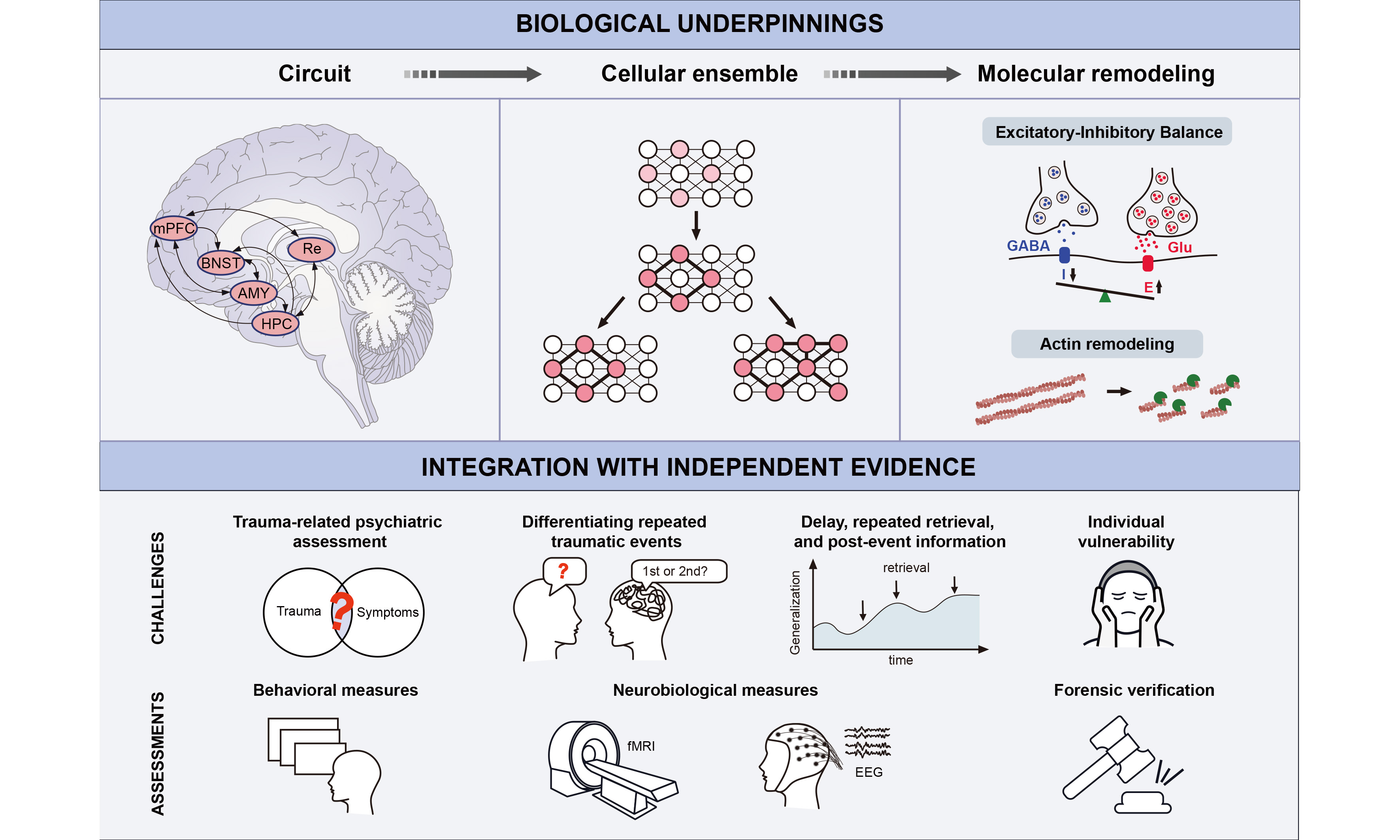
Trauma-related accounts may convey the emotional significance and central meaning of an experience while lacking specific details about when, where, and how individual events occurred. This review draws on memory generalization to provide a neurocognitive framework for interpreting this variability in forensic psychiatric assessment. We integrate evidence on hippocampal pattern separation and completion, prefrontal interactions with the amygdala and bed nucleus of the stria terminalis, and cellular and molecular processes that shape overlap between memory ensembles and responses to threat. We then consider how trauma-related psychopathology, repeated experiences, delay and repeated retrieval, and post-event information may affect autobiographical specificity, episode differentiation, and source attribution. Behavioral paradigms assessing autobiographical retrieval, mnemonic discrimination, fear generalization, and source memory offer complementary ways to study these processes. Functional neuroimaging, electrophysiology, and molecular measures may provide further insight into the underlying mechanisms. However, these approaches assess distinct phenomena, and group-level findings alone cannot establish the accuracy of an individual account or identify a unique mechanism. Applying these approaches to forensic practice requires reliable tasks, normative data, known error rates, and validation in relevant populations. Memory generalization can therefore inform hypotheses about patterns of recall, but these hypotheses must be evaluated alongside other independent evidence.
Keywords


 Download PDF
INTRODUCTION
Trauma-related accounts are frequently encountered in forensic psychiatric assessment. Individuals undergoing forensic evaluation, including complainants and defendants, may be asked to describe violence, abuse, accidents, or other highly stressful experiences after substantial delays and during repeated interviews. Such accounts may inform assessments of trauma-related psychiatric impairment, legally relevant capacities, or possible malingering, and are considered alongside clinical findings, contemporaneous records, and collateral evidence. Interpreting variations in the specificity and consistency of these accounts can be challenging. Incomplete or generalized accounts, or changes across accounts, may reflect memory processes, psychopathology, retrieval conditions, or motivational factors.
Episodic remembering is reconstructive rather than a literal replay of a fixed record. Recall reflects the original experience as modified by subsequent information and the conditions under which it is retrieved[1]. Following trauma, a person may retain the central meaning or emotional significance of an event while having difficulty recalling details about when, where, and how a particular episode occurred[2-4]. This uneven retention is particularly relevant when traumatic experiences are similar or repeated. Reduced specificity does not, by itself, indicate inaccuracy or fabrication; conversely, consistency, confidence, or emotional intensity cannot independently establish accuracy. These features must be interpreted within the broader clinical and evidential context[5,6].
Memory generalization provides a neurocognitive framework for examining how information acquired in one experience is extended to or integrated with related experiences[7,8]. Within this framework, we consider four related but distinct domains. Autobiographical memory specificity concerns retrieval of a particular event situated in time and place rather than a general description of a category of events[9-11]. Episode discrimination concerns the ability to distinguish individual occurrences of similar or repeated events[12]. Source monitoring concerns the process of attributing remembered details to their origins, such as the original event, another episode, or information encountered later[13-16]. Fear generalization concerns the spread of a learned threat response to similar cues or contexts; measures of this process assess threat responding rather than recall accuracy[17-19]. These domains may interact when experiences share features or their memories are repeatedly retrieved. Shared features may remain accessible even as details needed to distinguish individual episodes or identify the sources of remembered information become less clear. However, these domains are not interchangeable, and their relationships should be tested rather than assumed. Generalized threat responses may coexist with detailed recall, and source attribution errors may occur without fear generalization. The framework therefore accommodates distinct processes without assuming a common deficit or their necessary co-occurrence.
Memory generalization may help explain why trauma-related accounts preserve emotional or thematic meaning while providing limited detail about individual episodes. Delay, repeated retrieval, and post-event information may further affect contextual specificity, suggestibility, and source attribution[13-15,20,21]. Recent neurobiological studies have begun to identify the processes relevant to memory generalization, including hippocampal pattern separation and completion, amygdala-prefrontal interactions in fear generalization, and experience-dependent remodeling of memory engrams. This review integrates molecular, cellular, circuit, and clinical evidence to examine how related memories are represented, distinguished, and retrieved. It considers how these findings may inform hypotheses about trauma-related accounts in forensic psychiatric assessment and support the development of behavioral and neurobiological indicators for forensic research.
BIOLOGICAL UNDERPINNINGS OF MEMORY GENERALIZATION
In experimental paradigms, memory generalization is typically observed when a response learned in one situation is elicited by a similar stimulus or context. At the neurobiological level, this raises a central question: how does the brain preserve event-specific representations while extracting information shared across related experiences? The following sections address this question at the circuit, cellular, and molecular levels.
Circuit mechanisms of memory generalization
The hippocampus supports episodic memory by binding sensory, spatial, and temporal information into event representations[22,23]. Pattern separation and pattern completion are complementary computations within this system. Pattern separation reduces interference between similar inputs, whereas pattern completion permits an incomplete cue to reactivate a stored representation[24-26]. Although these computations are not equivalent to memory generalization, they help explain how memories of similar people, settings, or repeated events may remain distinct or become confused.
Evidence for these computations initially came from computational models and animal studies. Sparse coding in the dentate gyrus (DG) reduces overlap between representations of similar inputs, whereas recurrent connections in Cornu Ammonis 3 (CA3) support retrieval from incomplete cues[25,27]. CA3 may contribute to either separation or completion depending on input similarity and network state[26,28]. CA1 is proposed to compare retrieved representations from CA3 with incoming information from the entorhinal cortex[26]. Disruption of DG N-methyl-D-aspartic acid (NMDA) receptor signaling impairs rapid contextual discrimination, while changes in granule cell recruitment or inhibitory control can alter contextual generalization[29-31].
Functional magnetic resonance imaging (fMRI) subsequently provided evidence consistent with analogous computations in humans. Bakker et al. showed that DG/CA3 responses to perceptually similar lure items more closely resembled responses to novel items than to repeated items, consistent with pattern separation[32]. Subsequent mnemonic-similarity studies further demonstrated that DG/CA3 and CA1 responses vary with input similarity[33,34]. Using an overlapping-event learning task, Molitor et al. found that reactivation of prior memories during new learning was associated with differentiation of related representations in DG/CA2,3 and integration in CA1[35]. Together, these findings link hippocampal computations to the differentiation and integration of related memories and inform discussions of false recognition and eyewitness memory[1].
The hippocampus operates within a broader network linking episodic context to emotional and behavioral responses. Anatomical studies in rodents have demonstrated direct projections from CA1 and the subiculum to the medial prefrontal cortex (mPFC)[36,37]. Hippocampal-prefrontal communication is also coordinated through the nucleus reuniens (Re), which is reciprocally connected with the mPFC and hippocampal formation[38]. Manipulation of the mPFC-Re pathway alters memory generalization, while Re function is required for precise hippocampus-dependent contextual memory[39-41]. Other prefrontal projections, including pathways to the periaqueductal gray, regulate contextual fear discrimination and the expression of fear responses[42]. Together, these findings support a role for hippocampal-prefrontal communication in contextual memory generalization.
The mPFC also interacts with the amygdala and extended amygdala to regulate fear expression[43]. In rodent and primate conditioning paradigms, basolateral amygdala (BLA) responses to a conditioned stimulus can generalize to similar cues, with response strength varying according to cue similarity. Negative valence may broaden this generalization gradient by enhancing amygdala responses to stimuli that partially resemble the conditioned stimuli[44,45]. Prefrontal circuits can regulate this process by integrating environmental information with safety signals and current behavioral demands[43,46]. The bed nucleus of the stria terminalis (BNST), a component of the extended amygdala, is particularly involved in sustained responses to uncertain or diffuse threats[47,48]. In a repeated-trauma mouse model, activity in the mPFC-to-BNST projection promoted fear memory generalization and subsequent distress-related behavior[49].
These observations suggest two complementary dimensions of generalization. Hippocampal-prefrontal networks regulate the differentiation of contextual representations, whereas prefrontal interactions with the amygdala and BNST influence the range of cues and contexts that elicit fear responses. These findings suggest a possible basis for the coexistence of persistent emotional salience and reduced contextual precision in trauma-related recall.
Cellular mechanisms: ensemble overlap and network balance
At the cellular level, memory generalization can be examined through neuronal ensemble organization. A memory engram involves neurons recruited during encoding and can be reactivated during retrieval[50,51]. Related experiences may engage partially overlapping ensembles, allowing new information to be linked with prior knowledge[51-56]. Excessive overlap, however, may increase the likelihood that a cue associated with one event will coactivate elements of another representation[57-59].
Animal studies show that both stress and the temporal proximity of experiences can alter ensemble overlap. Contextual memories formed within a limited time window can recruit overlapping hippocampal ensembles and become behaviorally linked[52]. Loss of ensemble segregation in the DG accompanies the transition from context-specific to generalized fear[53]. Recent work further shows that time-dependent reorganization of hippocampal engram circuits allows previously recruited neurons to support responding in related contexts, contributing to the emergence of generalized memories[60]. Glucocorticoid exposure also enlarges the DG engram population and promotes fear in contexts not originally associated with threat[57]. In the lateral amygdala, stress-induced endocannabinoid signaling disrupts parvalbumin-positive (PV+) interneuron-mediated inhibition, leading to denser threat-memory ensembles and generalized responding[61]. Together, these findings indicate that changes in ensemble recruitment, overlap, and reactivation can contribute to generalized responding.
The ensemble boundaries can be shaped, at least in part, by the balance between excitation and inhibition. Feedforward and feedback inhibition limit the number of neurons incorporated into an engram and suppress competing representations during retrieval[58,62,63]. Strengthening hippocampal feedforward inhibition improves memory precision, whereas reduced γ-aminobutyric acid (GABA)-mediated inhibition (GABAergic) control in hippocampal and amygdala circuits promotes the generalization of conditioned fear[30,31,64-66]. The effects of inhibition nevertheless depend on cell type, circuit location, and phase of memory processing[67,68]. Ensemble overlap and inhibitory regulation therefore provide complementary cellular mechanisms through which related experiences may influence subsequent memory retrieval and generalized responding.
Molecular mechanisms of memory trace remodeling
Memory ensembles are stabilized and modified through synaptic plasticity[69,70]. NMDA receptor activation, calcium-dependent signaling, α-amino-3-hydroxy-5-methyl-4-isoxazole-propionicacid (AMPA) receptor trafficking, de novo gene transcription and translation contribute to the strengthening of synaptic connections among coactivated neurons during encoding[71-73]. Retrieval can render a memory trace transiently labile, allowing it to be updated before restabilization[74-76]. Reactivation during new learning may promote the integration of semantic features across related memories[12,77].
Molecular regulation of inhibition represents one route through which memory generalization may arise. GABA synthesis, presynaptic inhibition, and GABA receptor signaling constrain activity across hippocampal, prefrontal, and amygdala networks[64,78]. Disruption of these processes can promote the generalization of conditioned fear, whereas molecular changes that enhance inhibitory interneuron recruitment can improve memory precision[30,64,78]. Plexin-A1 has also been proposed to regulate fear memory generalization through its effects on excitatory-inhibitory balance in the mPFC[79]. Collectively, these findings identify inhibitory regulation as an important molecular mechanism regulating memory generalization.
Actin remodeling provides an additional mechanism. Actin polymerization and depolymerization regulate dendritic-spine morphology, receptor anchoring, and synaptic stabilization[80]. In the repeated-trauma mouse model, fear memory generalization was associated with actin depolymerization in mPFC neurons projecting to the BNST. Projection-specific manipulation of gelsolin and chromophore-assisted light inactivation provided causal evidence linking cytoskeletal remodeling to memory generalization and later distress-related behaviors[49]. Actin remodeling may therefore enable structural reorganization of memory ensembles, thereby altering memory generalization.
In summary, current evidence supports a testable, multilevel hypothesis: hippocampal computations influence whether related experiences remain differentiated; prefrontal-limbic circuits regulate how broadly their emotional significance is expressed; and ensemble allocation, inhibitory control, and synaptic remodeling provide cellular and molecular substrates for these processes. Stress and repeated experience may increase overlap between memory representations and broaden threat responses. These changes could contribute to the persistence of emotional or schematic information alongside reduced event-specific precision. However, much of the causal evidence comes from experimental animal studies, whereas human evidence relies primarily on behavioral paradigms and neuroimaging. Proposed links between these mechanisms and the features of trauma-related accounts remain hypotheses, particularly at the cellular and molecular levels. This framework provides a basis for examining how memory generalization may shape trauma-related accounts and for defining the limits of its interpretation in forensic psychiatric assessment.
FORENSIC IMPLICATIONS
Memory generalization is relevant to forensic psychiatric practice because it may influence both trauma-related symptoms and how traumatic experiences are recalled and described. The following sections consider four questions arising in forensic practice: whether reported symptoms and functional impairment are clinically consistent with the reported trauma; how similar or repeated events are differentiated; how delay, repeated retrieval, and post-event information may alter recall; and how individual characteristics and emotional factors moderate these processes.
Trauma-related psychiatric assessment
One recurring forensic question is whether reported psychiatric symptoms and functional impairment are clinically consistent with the alleged traumatic exposure. In this context, posttraumatic stress disorder (PTSD) and anxiety disorders have been associated with broader threat generalization[81,82]. Experimental studies in PTSD have reported altered generalization of the conditioned threat response to related stimuli[82,83]. Such threat generalization may help explain why symptoms extend beyond the original context and affect social or occupational functioning.
Memory generalization may also influence the specificity with which traumatic experiences are reported. One clinically relevant pattern is overgeneralized autobiographical memory, in which an individual retrieves a category of repeated experiences rather than an event confined to a particular time and place[84]. For example, “I was often threatened at home” may accurately convey a recurring experience while providing limited information about a specific occasion. Reduced autobiographical memory specificity has been documented in trauma-exposed populations and in individuals with depression, anxiety disorders, or PTSD, although the strength of these associations varies across studies[85,86].
In forensic assessment, a generalized account should therefore be examined to identify which details are provided, which are missing, and under what conditions recall was elicited[1,84,87]. Examining how the pattern of recall relates to psychiatric symptoms and functional impairment may inform the overall clinical formulation[87-89]. However, reduced autobiographical specificity and generalized threat responding should be assessed separately; their co-occurrence and relationship within individuals should not be assumed.
Differentiating repeated traumatic events
Generalization may be especially relevant when trauma is recurrent, as in prolonged abuse, repeated interpersonal violence, or persecution[12,90]. Research on repeated-event memory indicates that recurring episodes can be organized into a common event representation, or “script”. This representation supports recall of shared features but may be accompanied by difficulty remembering details specific to individual episodes. Details may consequently be remembered without reliable attribution to the episode in which they occurred[12,15]. Studies of children questioned about repeated events similarly show relatively preserved memory for the recurring pattern alongside greater difficulty identifying the source of episode-specific details[91,92].
Reduced differentiation may also increase false familiarity. An unfamiliar person or setting that resembles one encountered previously may evoke a sense of familiarity, while details shared across events may be attributed to the wrong episode[15,24]. Information encountered after an event can add to this difficulty if it is subsequently attributed to the original experience[14,93]. These processes may contribute to an account that remains stable in its central content but is less precise about the sequence, context, or episode to which particular details belong. This distinction matters because the recurring pattern and the circumstances of a particular incident may carry different clinical or legal significance[12,90]. Uncertainty about episode-specific details should therefore not be treated, by itself, as either evidence of fabrication or confirmation that the repeated events occurred.
Research on investigative interviewing suggests that open-ended prompts generally yield more accurate information than suggestive or forced-choice questions. It also supports exploring the recurring pattern separately from details attributed to individual episodes[94,95]. Documented or independently verified events may provide temporal anchors, but their use should be documented because exposing an interviewee to external information can itself influence later recall[14,96,97]. In forensic psychiatric evaluation, these findings underscore the importance of reviewing how earlier accounts were elicited and minimizing further influence on recall.
Delay, repeated retrieval, and post-event information
Accounts used in forensic assessments are often obtained after substantial delay and revisited in multiple interviews. Experimental studies indicate that memory can become less specific over time and that stress can increase the generalization of established threat memories[20,98-100]. As the interval between an event and its recall increases, an individual may become less certain about when the event occurred or which episode a remembered detail belongs to. Requests for exact dates, sequences, or wording therefore need to be considered in relation to the retention interval and the nature of the information requested.
Repeated retrieval has mixed effects. Additional questioning can recover previously inaccessible information[101]. However, information introduced through questioning and discussions may later be misattributed to personal experience and influence subsequent accounts[15,93,96]. In experimental eyewitness paradigms, recalling an event before exposure to misleading post-event information increased the later reporting of misinformation, a phenomenon termed retrieval-enhanced suggestibility[102,103]. The magnitude of this effect varied with the number of prior retrieval attempts, the retention interval, and the testing procedure[102]. Repeated questioning does not necessarily distort memory; however, subsequent exposure to misleading information can increase the risk of distortion.
Individual differences and emotional factors
Age influences the ability to maintain distinct representations of similar experiences. Human studies indicate that memory distinctiveness continues to develop from childhood through adolescence, in parallel with hippocampal maturation[104]. At the other end of the lifespan, healthy older adults show poorer discrimination between previously encountered items and similar lures than younger adults, accompanied by altered DG/CA3 activity[24,105]. Animal studies likewise identify developmental and aging-related differences in contextual discrimination and fear generalization[31,106,107].
Sex may also modify fear generalization, but the evidence is less consistent. Rodent studies have reported sex-dependent differences in remote contextual fear generalization and in the cues used to discriminate threat from safety[108,109]. Human studies have reported sex differences in some aspects of fear generalization, although differences in the width of the generalization gradient have not been consistent[110,111]. Sex should therefore be considered as a potential moderator in research, but current evidence does not support sex-based conclusions about memory generalization in an individual forensic case.
Emotional factors are also relevant to the interpretation of trauma-related accounts. Emotional arousal can strengthen memory for the central or threatening features of an experience without equivalent preservation of contextual detail[112]. Experimental studies further suggest that materials with negative valence may elicit broader mnemonic generalization than neutral materials, while conditioned threat responses can extend to perceptually or conceptually related cues[18,113]. Strong memory for threatening features may therefore coexist with difficulty distinguishing related events, contexts, or cues.
Taken together, the evidence suggests that trauma-related psychopathology, repeated or similar experiences, delays in recall, retrieval conditions, post-event information, and individual characteristics may influence different aspects of remembering. In forensic evaluations, these findings may help evaluators consider how observed recall patterns relate to documented clinical features and the conditions under which accounts were elicited. However, the evidence derives largely from group-level studies, and its application to individual trauma-related accounts requires further validation. Accordingly, these findings may inform hypotheses about patterns of recall and the factors influencing them, but should not be used alone to establish the factual accuracy of a specific allegation or to infer fabrication, malingering, or deception. The next section examines candidate behavioral and neurobiological measures for studying these processes.
TOWARD MECHANISM-INFORMED ASSESSMENT
The preceding evidence raises a translational question: can the processes underlying memory generalization be measured independently of the trauma-related account under examination? No validated test currently supports individual forensic conclusions. Nevertheless, established behavioral paradigms and neurobiological methods offer complementary approaches to this question. The following sections discuss their measurement targets and interpretive limits.
Behavioral measures
The Autobiographical Memory Test assesses retrieval specificity by asking participants to recall personal experiences in response to emotional cue words. Responses are classified as event-specific, categoric or extended memories. This approach has been widely applied in research on depression, trauma exposure, and PTSD, in which reduced specificity is commonly expressed as the retrieval of recurring experiences rather than individual episodes[114-116]. However, this measure does not establish the factual accuracy of recalled events, and performance can be influenced by executive function, language ability, current mood, avoidance, and task instructions.
Mnemonic similarity tasks assess the capacity to discriminate previously encountered stimuli from similar but novel alternatives. Participants first view objects or scenes and are subsequently presented with repeated items, perceptually similar “lures”, and new items. Correctly identifying a lure as similar rather than previously seen provides an index of mnemonic discrimination. These paradigms were developed from experimental studies of hippocampal pattern separation and have been combined with fMRI to relate discrimination performance to DG/CA3 activity[32,117,118]. Reduced discrimination has been demonstrated in aging, mild cognitive impairment, and neuropsychiatric conditions[119,120]. Contextual variants similarly examine whether environments sharing multiple features remain distinguishable[121]. Forensic studies could test whether mnemonic discrimination performance predicts difficulty distinguishing similar or repeated episodes.
Similar to animal studies, fear generalization paradigms in humans first associate a cue or context with an aversive outcome and then measure responses to stimuli that vary systematically in their similarity to that cue or context. Threat-expectancy ratings, skin conductance, startle, or other physiological responses can be used to derive a generalization gradient[122,123]. A broader gradient indicates that learned threat value extends to less similar cues. Such paradigms have demonstrated altered generalization in anxiety-related conditions and provide an experimental basis for examining why trauma-related reactions may be triggered outside the original context[124,125]. However, these paradigms measure the spread of threat responding rather than the specificity or accuracy of recall.
Source memory paradigms present information from distinguishable sources and later ask participants to identify both the remembered content and its origin. Designs incorporating post-event information can test whether details introduced later are misattributed to the original event[93]. Experimental manipulation of post-event information can therefore model how later information influences accounts elicited across multiple interviews. Source memory performance remains distinct from memory for the content itself: a person may remember a detail but be uncertain or mistaken about where it was acquired[21,96].
Collectively, these behavioral paradigms assess related but distinct aspects of memory generalization. Table 1 summarizes their measurement targets, potential relevance to forensic research, and key interpretive limits.
Memory generalization-related processes and their potential relevance to forensic research
| Process | What is assessed | Potential relevance to forensic research | Key interpretive limit | Refs |
| Autobiographical memory specificity | Retrieval of a specific personal event rather than a recurring or extended experience | Characterizing the specificity of events described in trauma-related accounts | Specificity does not establish factual accuracy | [9,86,116] |
| Mnemonic discrimination | Distinguishing previously encountered stimuli from similar alternatives | Examining difficulties in differentiating similar or repeated experiences | Performance with laboratory stimuli may not reflect discrimination between autobiographical events | [32,118] |
| Fear generalization | Extension of learned threat responses to similar cues or contexts | Examining distress or avoidance triggered by reminders beyond the original trauma context | Threat responses do not establish the specificity or accuracy of recall | [17,122,124] |
| Source attribution | Identifying where remembered information originated | Examining whether details are attributed to the original event, another episode, or later information | Source errors do not by themselves establish false content or deliberate fabrication | [15,21,93] |
Neurobiological measures
Behavioral measures provide limited information about the underlying neural process. Neurobiological measures can be added to relate task performance to alterations in memory- and threat-related neural circuits.
Hippocampal subfield imaging has been applied to relate mnemonic discrimination performance to activity within specific hippocampal regions. Studies combining fMRI acquisition with specialized segmentation and analytical procedures have identified separation-like responses in the human hippocampal DG/CA3 during mnemonic-similarity tasks[32,117]. Related studies have further linked impaired lure discrimination to altered hippocampal function in aging, mild cognitive impairment, and psychiatric disorders[126-128]. Because conventional fMRI protocols generally cannot reliably distinguish the DG from CA3, these subfields are commonly analyzed together. These measures provide a useful link between task performance and hippocampal activity, but remain sensitive to motion, image quality, and analytical methods[129,130].
Threat generalization paradigms combined with fMRI extend measurement from hippocampal discrimination to distributed networks. Studies using stimuli that vary in similarity to a conditioned threat stimulus have related generalization in behavioral and autonomic responses to altered activity in the hippocampus, amygdala, insula, and prefrontal and cingulate cortices[131,132]. Dunsmoor et al., for example, showed that generalized skin-conductance responses covaried with amygdala activity, whereas amygdala-extrastriate visual cortex connectivity correlated with trait anxiety[17]. Other studies suggest that neural responses during threat generalization tasks reflect both the assignment of threat value to similar cues and uncertainty about whether those cues predict danger[133]. These designs allow researchers to examine how stimulus similarity and threat expectancy relate to neural activity and physiological responses within the same experiment.
Electroencephalography (EEG) can characterize the timing of neural processes during threat generalization. Event-related potential (ERP) studies suggest that fear generalization involves multiple stages of information processing, from the initial discrimination of similar cues to their subsequent emotional and cognitive evaluation. Differences have been reported in components including P2, N400, P600, and the late positive potential, with some effects varying with conceptual similarity or intolerance of uncertainty[134-137]. However, these electrophysiological findings do not consistently parallel behavioral generalization gradients and vary across tasks and study populations[138]. Standardized paradigms and replication in trauma-exposed and clinical populations are therefore needed to establish reliable EEG indicators of threat generalization.
Molecular approaches are more exploratory. Magnetic resonance spectroscopy (MRS) can estimate regional glutamate and GABA concentrations, providing indirect information relevant to excitatory and inhibitory neurochemistry[139,140]. However, direct evidence linking these measures to individual memory generalization phenotypes remains limited. Altered circulating levels of inflammatory mediators and neurotrophic factors have been reported in PTSD, depression, and anxiety, but their associations with memory generalization and their specificity for these processes remain unclear[141,142]. No molecular measure presently constitutes a validated biomarker for individual forensic classification.
Taken together, behavioral and neurobiological measures provide complementary information about processes relevant to memory generalization [Figure 1]. However, behavioral performance is influenced by task demands, mood, and cognitive abilities, while biological signals can be indirect or nonspecific. Combining behavioral tasks may reveal convergence and dissociation across cognitive and emotional processes, while integrating behavioral and neurobiological measures can help identify the neural correlates of these patterns. Future research should test whether these measures covary or dissociate within individuals and whether their neural correlates remain stable across repeated assessments. At present, these measures remain research tools. Their use in individual forensic evaluations, however, requires further validation, as discussed below.
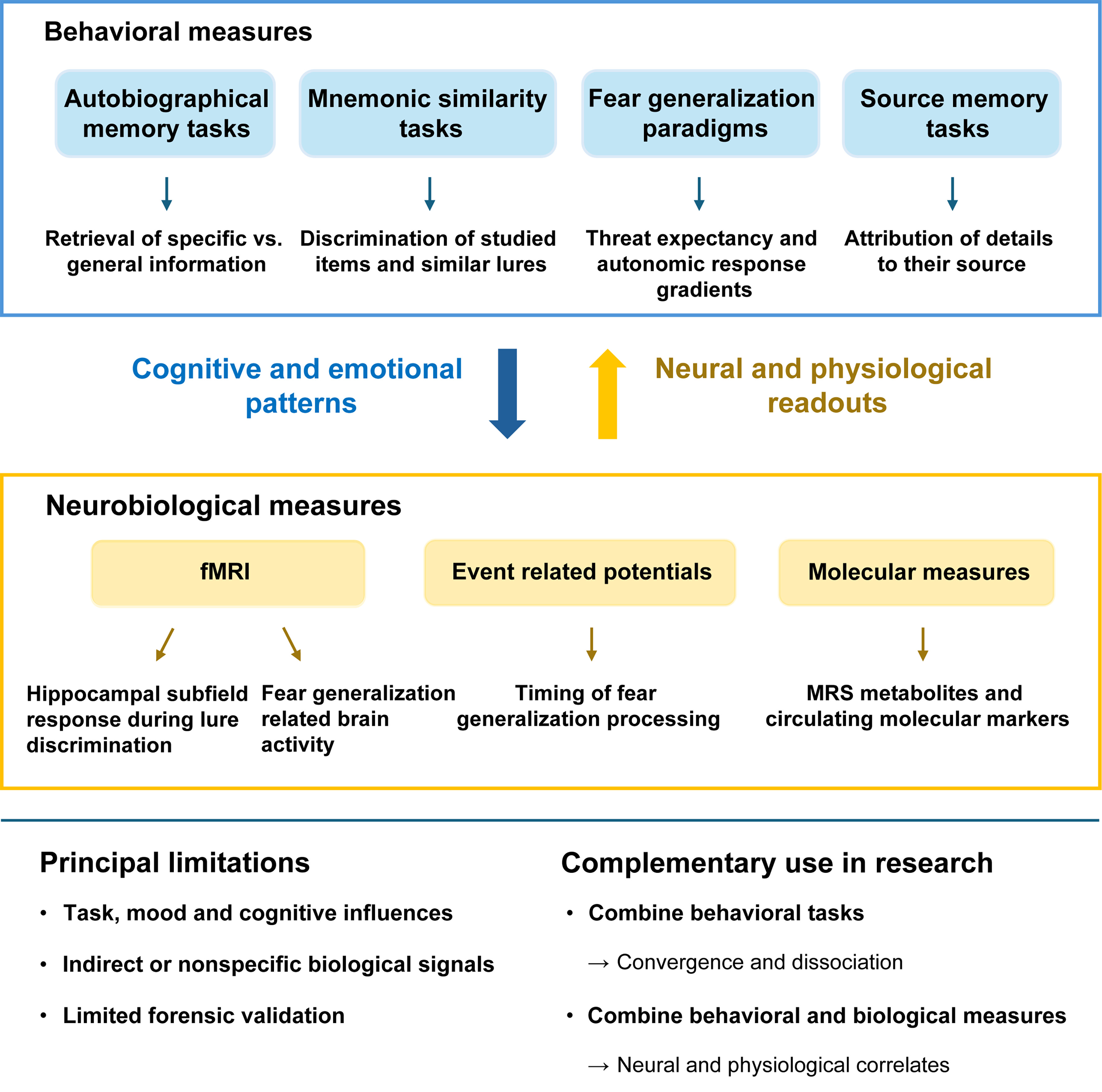
Figure 1. Complementary behavioral and neurobiological approaches to investigating memory generalization. Behavioral paradigms assess autobiographical memory specificity, mnemonic discrimination, fear generalization, and source attribution. Neurobiological measures examine associated hippocampal and distributed brain activity using fMRI, the timing of neural responses using event-related potentials, and molecular correlates using MRS and circulating molecular markers. Combining behavioral tasks can reveal convergence and dissociation among cognitive and emotional processes, whereas integrating behavioral and neurobiological measures can help identify their biological correlates. Interpretation is constrained by task demands, mood and cognitive influences, indirect or nonspecific biological signals, and limited forensic validation. These approaches remain research tools and cannot independently establish the factual accuracy of an individual account. fMRI: Functional magnetic resonance imaging; MRS: magnetic resonance spectroscopy.
CHALLENGES AND OUTLOOK
A central challenge is translating group-level findings into valid interpretations of individual performance. Most available evidence comes from group comparisons between clinical or trauma-exposed populations and healthy controls. Even when group differences are statistically robust, the distributions of individual scores may overlap substantially, limiting their value for individual classification[143]. Furthermore, not all individuals with PTSD, depression, or anxiety disorders exhibit overgeneralized memory[86]. Individual-level interpretation therefore requires appropriate normative data and reliable measures validated for their intended use in relevant forensic populations. Validation studies should account for factors such as cognitive function, sleep, medication, motivation, stress associated with legal proceedings, and the interval since the event.
A related challenge is whether experimental measures capture features of the experiences and retrieval conditions relevant to forensic assessment. Laboratory fear conditioning usually associates an initially neutral cue with a brief aversive outcome, whereas traumatic experiences are often complex, personally meaningful, and embedded within an extended sequence of events. Similarly, standard mnemonic similarity tasks typically use neutral objects or scenes and may not reproduce the emotional salience, self-relevance, or uncertainty about the sources of information recalled during forensic assessment. Although individual paradigms address some of these features, few integrate repeated events, source uncertainty, delay, and repeated retrieval within the same design. Nevertheless, experimental control remains essential for isolating specific mechanisms. The goal is therefore to develop translational tasks that retain experimental precision while incorporating features relevant to forensic cases.
A third challenge is mechanistic specificity: similar behavioral phenotypes can arise through different mechanisms. A broad fear generalization gradient, for example, may reflect altered threat identification, perceptual discrimination, or uncertainty about ambiguous cues[133,144]. Neuroimaging does not remove this ambiguity, because hippocampal, prefrontal, and limbic alterations are not unique to memory generalization[145]. Candidate indicators should consequently be interpreted in light of task demands and plausible alternative mechanisms, rather than as diagnostic signatures. Multimodal evidence may improve mechanistic specificity, but agreement across measures does not by itself establish causality.
This limitation becomes particularly important when neurobiological evidence is introduced into legal proceedings, where brain images and physiological signals may appear more conclusive than the supporting evidence warrants. Supporting individual-level inferences will require standardized data acquisition and analysis, multicenter replication, and independent validation for the intended use. Forensic reports incorporating such measures should specify what has been measured, the reliability and error rates of the method, plausible alternative explanations, and whether the intended interpretation has been validated in comparable populations. At present, these neurobiological findings may inform hypotheses about memory-related processes but should not serve as independent indicators of credibility or deception.
Three research priorities follow from these challenges. First, repeated-event paradigms are needed to examine how overlapping experiences, delay, and repeated retrieval affect the retention and attribution of episode-specific details. Second, cross-level studies should test whether causal mechanisms identified in animal models help explain behavioral and neural findings in humans, with their relevance examined in forensic psychiatric samples. Third, longitudinal studies should test whether multimodal measures predict changes in memory generalization over time and add explanatory value beyond established clinical and cognitive assessment. The overall aim is to identify the conditions under which trauma-related recall becomes generalized. This knowledge could clarify how neuroscience can inform the interpretation of trauma-related accounts in forensic psychiatric assessment.
CONCLUSION
Memory generalization supports adaptive behavior through coordinated circuit, cellular, and molecular processes and may be altered by stress and trauma-related psychopathology. Integrating evidence across these levels provides a framework for examining how memory generalization may shape trauma-related accounts. This framework guides hypotheses about recall but does not establish the accuracy of an individual account. Future research should use ecologically relevant paradigms and validated behavioral and neurobiological measures to determine whether mechanism-informed approaches add explanatory value beyond established forensic psychiatric assessment.
DECLARATIONS
Acknowledgments
We used www.pixabay.com to create the schematic illustration of the brain in the graphical abstract.
Authors’ contributions
Writing - original draft, visualization, funding acquisition: Cheng X
Writing - review & editing, visualization: Song M
Writing - review & editing, supervision: Zhao H
Conceptualization, writing - review & editing, supervision, funding acquisition: Ye X
Availability of data and materials
Not applicable.
AI and AI-assisted tools statement
During the preparation of this manuscript, the AI tool ChatGPT (version GPT-6 Sol light, released 2026-09-22) was used solely for language editing. The tool did not influence the study design, data collection, analysis, interpretation, or the scientific content of the work. All authors take full responsibility for the accuracy, integrity, and final content of the manuscript.
Financial support and sponsorship
This work is supported by grants from Brain Science and Brain-like Intelligence Technology - National Science and Technology Major Project (No. 2021ZD0202000 to Ye X), National Natural Science Foundation of China (No. 32271068 to Ye X), Guangdong Basic and Applied Basic Research Foundation (No. 2024A1515011474 to Ye X), China Postdoctoral Science Foundation (2025M772577 to Cheng X).
Conflicts of interest
Ye X is an Editorial Board Member of Legal Medicine Research. Ye X was not involved in any steps of editorial processing, notably including reviewers’ selection, manuscript handling, and decision-making. The other authors declare that there are no conflicts of interest.
Ethical approval and consent to participate
Not applicable.
Consent for publication
Not applicable.
Copyright
© The Author(s) 2026.
REFERENCES
1. Lacy JW, Stark CEL. The neuroscience of memory: implications for the courtroom. Nat Rev Neurosci. 2013;14:649-58.
2. Rubin DC, Berntsen D, Bohni MK. A memory-based model of posttraumatic stress disorder: Evaluating basic assumptions underlying the PTSD diagnosis. Psychol Rev. 2008;115:985-1011.
3. Faul L, Ford JH, Kensinger EA. Update on “Emotion and autobiographical memory”: 14 years of advances in understanding functions, constructions, and consequences. Phys Life Rev. 2024;51:255-72.
4. Brewin CR. Key concepts, methods, findings, and questions about traumatic memories. J Trauma Stress. 2025;38:771-80.
5. Wixted JT, Wells GL. The relationship between eyewitness confidence and identification accuracy: a new synthesis. Psychol Sci Public Interest. 2017;18:10-65.
7. Shepard RN. Toward a universal law of generalization for psychological science. Science. 1987;237:1317-23.
9. Moore SA, Zoellner LA. Overgeneral autobiographical memory and traumatic events: An evaluative review. Psychol Bull. 2007;133:419-37.
10. McNally RJ, Lasko NB, Macklin ML, Pitman RK. Autobiographical memory disturbance in combat-related posttraumatic stress disorder. Behav Res Ther. 1995;33:619-30.
11. Weiss-Cowie S, Verhaeghen P, Duarte A. An updated account of overgeneral autobiographical memory in depression. Neurosci Biobehav Rev. 2023;149:105157.
12. Dilevski N, Paterson HM, Walker SA, van Golde C. Adult memory for specific instances of a repeated event: a preliminary review. Psychiatr Psychol Law. 2021;28:711-32.
13. Chan JC, Thomas AK, Bulevich JB. Recalling a witnessed event increases eyewitness suggestibility: the reversed testing effect. Psychol Sci. 2009;20:66-73.
14. Loftus EF. Planting misinformation in the human mind: A 30-year investigation of the malleability of memory. Learn Mem. 2005;12:361-6.
16. Oeberst A, Blank H. Undoing suggestive influence on memory: the reversibility of the eyewitness misinformation effect. Cognition. 2012;125:141-59.
17. Dunsmoor JE, Prince SE, Murty VP, Kragel PA, LaBar KS. Neurobehavioral mechanisms of human fear generalization. Neuroimage. 2011;55:1878-88.
18. Schechtman E, Laufer O, Paz R. Negative valence widens generalization of learning. J Neurosci. 2010;30:10460-4.
19. Webler RD, Berg H, Fhong K, et al. The neurobiology of human fear generalization: meta-analysis and working neural model. Neurosci Biobehav Rev. 2021;128:421-36.
20. Wiltgen BJ, Silva AJ. Memory for context becomes less specific with time. Learn Mem. 2007;14:313-7.
21. Rubínová E, Kontogianni F. Sources and destinations of misattributions in recall of instances of repeated events. Mem Cognit. 2023;51:188-202.
22. Yonelinas AP, Ranganath C, Ekstrom AD, Wiltgen BJ. A contextual binding theory of episodic memory: systems consolidation reconsidered. Nat Rev Neurosci. 2019;20:364-75.
23. Eichenbaum H, Yonelinas AP, Ranganath C. The medial temporal lobe and recognition memory. Annu Rev Neurosci. 2007;30:123-52.
25. Rolls ET. The mechanisms for pattern completion and pattern separation in the hippocampus. Front Syst Neurosci. 2013;7:74.
26. Knierim JJ, Neunuebel JP. Tracking the flow of hippocampal computation: pattern separation, pattern completion, and attractor dynamics. Neurobiol Learn Mem. 2016;129:38-49.
27. Neunuebel JP, Knierim JJ. CA3 Retrieves Coherent representations from degraded input: direct evidence for CA3 pattern completion and dentate gyrus pattern separation. Neuron. 2014;81:416-27.
28. Leutgeb JK, Leutgeb S, Moser MB, Moser EI. Pattern separation in the dentate gyrus and CA3 of the hippocampus. Science. 2007;315:961-6.
29. McHugh TJ, Jones MW, Quinn JJ, et al. Dentate Gyrus NMDA receptors mediate rapid pattern separation in the hippocampal network. Science. 2007;317:94-9.
30. Ruediger S, Vittori C, Bednarek E, et al. Learning-related feedforward inhibitory connectivity growth required for memory precision. Nature. 2011;473:514-8.
31. Guo N, Soden ME, Herber C, et al. Dentate granule cell recruitment of feedforward inhibition governs engram maintenance and remote memory generalization. Nat Med. 2018;24:438-49.
32. Bakker A, Kirwan CB, Miller M, Stark CEL. Pattern separation in the human hippocampal CA3 and dentate gyrus. Science. 2008;319:1640-2.
33. Lacy JW, Yassa MA, Stark SM, Muftuler LT, Stark CEL. Distinct pattern separation related transfer functions in human CA3/dentate and CA1 revealed using high-resolution fMRI and variable mnemonic similarity. Learn Mem. 2011;18:15-8.
34. Motley SE, Kirwan CB. A parametric investigation of pattern separation processes in the medial temporal lobe. J Neurosci. 2012;32:13076-84.
35. Molitor RJ, Sherrill KR, Morton NW, Miller AA, Preston AR. Memory reactivation during learning simultaneously promotes dentate gyrus/CA2,3 pattern differentiation and CA1 memory integration. J Neurosci. 2021;41:726-38.
36. Ye X, Kapeller-Libermann D, Travaglia A, Inda MC, Alberini CM. Direct dorsal hippocampal-prelimbic cortex connections strengthen fear memories. Nat Neurosci. 2017;20:52-61.
37. Barker GRI, Banks PJ, Scott H, et al. Separate elements of episodic memory subserved by distinct hippocampal-prefrontal connections. Nat Neurosci. 2017;20:242-50.
38. Vertes RP, Hoover WB, Szigeti-Buck K, Leranth C. Nucleus reuniens of the midline thalamus: Link between the medial prefrontal cortex and the hippocampus. Brain Res Bull. 2007;71:601-9.
39. Xu W, Südhof TC. A Neural circuit for memory specificity and generalization. Science. 2013;339:1290-5.
40. Ramanathan KR, Ressler RL, Jin J, Maren S. Nucleus reuniens is required for encoding and retrieving precise, hippocampal-dependent contextual fear memories in rats. J Neurosci. 2018;38:9925-33.
41. Troyner F, Bicca MA, Bertoglio LJ. Nucleus reuniens of the thalamus controls fear memory intensity, specificity and long-term maintenance during consolidation. Hippocampus. 2018;28:602-16.
42. Rozeske RR, Jercog D, Karalis N, et al. Prefrontal-periaqueductal gray-projecting neurons mediate context fear discrimination. Neuron. 2018;97:898-910.e6.
43. Tovote P, Fadok JP, Lüthi A. Neuronal circuits for fear and anxiety. Nat Rev Neurosci. 2015;16:317-31.
45. Grosso A, Santoni G, Manassero E, Renna A, Sacchetti B. A neuronal basis for fear discrimination in the lateral amygdala. Nat Commun. 2018;9:1214.
46. Marek R, Strobel C, Bredy TW, Sah P. The amygdala and medial prefrontal cortex: partners in the fear circuit. J Physiol. 2013;591:2381-91.
47. Lebow MA, Chen A. Overshadowed by the amygdala: the bed nucleus of the stria terminalis emerges as key to psychiatric disorders. Mol Psychiatry. 2016;21:450-63.
48. Avery SN, Clauss JA, Blackford JU. The human BNST: functional role in anxiety and addiction. Neuropsychopharmacology. 2016;41:126-41.
49. Cheng X, Hu Y, Zhao Y, et al. Generalization of negative memories drives the development of psychological distress-related behaviors. Innovation. 2026;7:101306.
50. Josselyn SA, Tonegawa S. Memory engrams: recalling the past and imagining the future. Science. 2020;367:eaaw4325.
51. Zaki Y, Cai DJ. Memory engram stability and flexibility. Neuropsychopharmacology. 2024;50:285-93.
52. Cai DJ, Aharoni D, Shuman T, et al. A shared neural ensemble links distinct contextual memories encoded close in time. Nature. 2016;534:115-8.
53. Yokoyama M, Matsuo N. Loss of ensemble segregation in dentate gyrus, but not in somatosensory cortex, during contextual fear memory generalization. Front Behav Neurosci. 2016;10:218.
54. Shen Y, Zhou M, Cai D, et al. CCR5 closes the temporal window for memory linking. Nature. 2022;606:146-52.
55. Zaki Y, Pennington ZT, Morales-Rodriguez D, et al. Offline ensemble co-reactivation links memories across days. Nature. 2025;637:145-55.
56. Choucry A, Nomoto M, Inokuchi K. Engram mechanisms of memory linking and identity. Nat Rev Neurosci. 2024;25:375-92.
57. Lesuis SL, Brosens N, Immerzeel N, et al. Glucocorticoids promote fear generalization by increasing the size of a dentate gyrus engram cell population. Biol Psychiatry. 2021;90:494-504.
58. Rashid AJ, Yan C, Mercaldo V, et al. Competition between engrams influences fear memory formation and recall. Science. 2016;353:383-7.
59. Jung JH, Wang Y, Rashid AJ, Zhang T, Frankland PW, Josselyn SA. Examining memory linking and generalization using scFLARE2, a temporally precise neuronal activity tagging system. Cell Rep. 2023;42:113592.
60. Ko SY, Rong Y, Ramsaran AI, et al. Systems consolidation reorganizes hippocampal engram circuitry. Nature. 2025;643:735-43.
61. Lesuis SL, Park S, Hoorn A, et al. Stress disrupts engram ensembles in lateral amygdala to generalize threat memory in mice. Cell. 2025;188:121-40.e20.
62. Stefanelli T, Bertollini C, Lüscher C, Muller D, Mendez P. Hippocampal somatostatin interneurons control the size of neuronal memory ensembles. Neuron. 2016;89:1074-85.
63. Josselyn SA, Frankland PW. Memory allocation: mechanisms and function. Annu Rev Neurosci. 2018;41:389-413.
64. Shaban H, Humeau Y, Herry C, et al. Generalization of amygdala LTP and conditioned fear in the absence of presynaptic inhibition. Nat Neurosci. 2006;9:1028-35.
65. Cullen PK, Dulka BN, Ortiz S, Riccio DC, Jasnow AM. GABA-mediated presynaptic inhibition is required for precision of long-term memory. Learn Mem. 2014;21:180-4.
66. Lynch JF, Winiecki P, Gilman TL, Adkins JM, Jasnow AM. Hippocampal GABAB(1a) receptors constrain generalized contextual fear. Neuropsychopharmacology. 2017;42:914-24.
67. Chiu CQ, Barberis A, Higley MJ. Preserving the balance: diverse forms of long-term GABAergic synaptic plasticity. Nat Rev Neurosci. 2019;20:272-81.
68. Singh S, Topolnik L. Inhibitory circuits in fear memory and fear-related disorders. Front Neural Circuits. 2023;17:1122314.
69. Takeuchi T, Duszkiewicz AJ, Morris RGM. The synaptic plasticity and memory hypothesis: encoding, storage and persistence. Phil Trans R Soc B Biol Sci. 2014;369:20130288.
70. Uytiepo M, Zhu Y, Bushong E, et al. Synaptic architecture of a memory engram in the mouse hippocampus. Science. 2025;387:eado8316.
71. Mayford M, Siegelbaum SA, Kandel ER. Synapses and memory storage. Cold Spring Harb Perspect Biol. 2012;4:a005751.
72. Lüscher C, Malenka RC. NMDA receptor-dependent long-term potentiation and long-term depression (LTP/LTD). Cold Spring Harb Perspect Biol. 2012;4:a005710.
74. Nader K, Schafe GE, Le Doux JE. Fear memories require protein synthesis in the amygdala for reconsolidation after retrieval. Nature. 2000;406:722-6.
76. Lei B, Kang B, Hao Y, et al. Reconstructing a new hippocampal engram for systems reconsolidation and remote memory updating. Neuron. 2025;113:471-85.e6.
77. Morton NW, Zippi EL, Preston AR. Memory reactivation and suppression modulate integration of the semantic features of related memories in hippocampus. Cereb Cortex. 2023;33:9020-37.
78. Bergado-Acosta JR, Sangha S, Narayanan RT, Obata K, Pape HC, Stork O. Critical role of the 65-kDa isoform of glutamic acid decarboxylase in consolidation and generalization of Pavlovian fear memory. Learn Mem. 2008;15:163-71.
79. Cheng X, Zhao Y, Zheng S, et al. Plexin-A1 expression in the inhibitory neurons of infralimbic cortex regulates the specificity of fear memory in male mice. Neuropsychopharmacology. 2022;47:1220-30.
80. Kasai H, Ziv NE, Okazaki H, Yagishita S, Toyoizumi T. Spine dynamics in the brain, mental disorders and artificial neural networks. Nat Rev Neurosci. 2021;22:407-22.
81. Cooper SE, van Dis EAM, Hagenaars MA, et al. A meta-analysis of conditioned fear generalization in anxiety-related disorders. Neuropsychopharmacology. 2022;47:1652-61.
82. Morey RA, Dunsmoor JE, Haswell CC, et al. ; VA Mid-Atlantic MIRECC Workgroup. Fear learning circuitry is biased toward generalization of fear associations in posttraumatic stress disorder. Transl Psychiatry. 2015;5:e700.
83. Lis S, Thome J, Kleindienst N, et al. Generalization of fear in post-traumatic stress disorder. Psychophysiology. 2020;57:e13422.
84. Williams JMG, Barnhofer T, Crane C, et al. Autobiographical memory specificity and emotional disorder. Psychol Bull. 2007;133:122-48.
85. Ono M, Devilly GJ, Shum DHK. A meta-analytic review of overgeneral memory: the role of trauma history, mood, and the presence of posttraumatic stress disorder. Psychol Trauma. 2016;8:157-64.
86. Barry TJ, Hallford DJ, Takano K. Autobiographical memory impairments as a transdiagnostic feature of mental illness: a meta-analytic review of investigations into autobiographical memory specificity and overgenerality among people with psychiatric diagnoses. Psychol Bull. 2021;147:1054-74.
87. Glancy GD, Ash P, Bath EP, et al. AAPL practice guideline for the forensic assessment. J Am Acad Psychiatry Law. 2015;43:S3-53.
88. Anfang SA, Gold LH, Meyer DJ. AAPL practice resource for the forensic evaluation of psychiatric disability. Focus. 2019;17:392-428.
89. American Psychological Association. Specialty guidelines for forensic psychology. Am Psychol. 2013;68:7-19.
90. Roberts KP, Powell MB. Describing individual incidents of sexual abuse: a review of research on the effects of multiple sources of information on children’s reports. Child Abuse Negl. 2001;25:1643-59.
91. Woiwod DM, Fitzgerald RJ, Sheahan CL, Price HL, Connolly DA. A meta-analysis of differences in children’s reports of single and repeated events. Law Hum Behav. 2019;43:99-116.
92. Powell MB, Roberts KP, Ceci SJ, Hembrooke H. The effects of repeated experience on children's suggestibility. Dev Psychol. 1999;35:1462-77.
93. Zaragoza MS, Lane SM. Source misattributions and the suggestibility of eyewitness memory. J Exp Psychol Learn Mem Cogn. 1994;20:934-45.
94. Brubacher SP, Roberts KP, Powell M. Retrieval of episodic versus generic information: Does the order of recall affect the amount and accuracy of details reported by children about repeated events? Dev Psychol. 2012;48:111-22.
95. Lamb ME, Orbach Y, Hershkowitz I, Esplin PW, Horowitz D. A structured forensic interview protocol improves the quality and informativeness of investigative interviews with children: A review of research using the NICHD Investigative Interview Protocol. Child Abuse Negl. 2007;31:1201-31.
96. Lindsay DS, Johnson MK. The eyewitness suggestibility effect and memory for source. Mem Cognit. 1989;17:349-58.
97. Roberts KP, Powell MB. The roles of prior experience and the timing of misinformation presentation on young children’s event memories. Child Dev. 2007;78:1137-52.
98. Poulos AM, Mehta N, Lu B, et al. Conditioning- and time-dependent increases in context fear and generalization. Learn Mem. 2016;23:379-85.
99. Pollack GA, Bezek JL, Lee SH, Scarlata MJ, Weingast LT, Bergstrom HC. Cued fear memory generalization increases over time. Learn Mem. 2018;25:298-308.
100. Dunsmoor JE, Otto AR, Phelps EA. Stress promotes generalization of older but not recent threat memories. Proc Natl Acad Sci U S A. 2017;114:9218-23.
101. Odinot G, Memon A, La Rooy D, Millen A. Are two interviews better than one? Eyewitness memory across repeated cognitive interviews. PLoS One. 2013;8:e76305.
102. Chan JCK, Lapaglia JA. The dark side of testing memory: repeated retrieval can enhance eyewitness suggestibility. J Exp Psychol Appl. 2011;17:418-32.
103. Wilford MM, Chan JCK, Tuhn SJ. Retrieval enhances eyewitness suggestibility to misinformation in free and cued recall. J Exp Psychol Appl. 2014;20:81-93.
104. Keresztes A, Ngo CT, Lindenberger U, Werkle-Bergner M, Newcombe NS. Hippocampal maturation drives memory from generalization to specificity. Trends Cogn Sci. 2018;22:676-86.
105. Yassa MA, Mattfeld AT, Stark SM, Stark CEL. Age-related memory deficits linked to circuit-specific disruptions in the hippocampus. Proc Natl Acad Sci U S A. 2011;108:8873-8.
106. Ramsaran AI, Wang Y, Golbabaei A, et al. A shift in the mechanisms controlling hippocampal engram formation during brain maturation. Science. 2023;380:543-51.
107. Ramsaran AI, Schlichting ML, Frankland PW. The ontogeny of memory persistence and specificity. Dev Cogn Neurosci. 2019;36:100591.
108. Asok A, Hijazi J, Harvey LR, Kosmidis S, Kandel ER, Rayman JB. Sex differences in remote contextual fear generalization in mice. Front Behav Neurosci. 2019;13:56.
109. Day HL, Reed MM, Stevenson CW. Sex differences in discriminating between cues predicting threat and safety. Neurobiol Learn Mem. 2016;133:196-203.
110. Yu K, Beckers T, Tuerlinckx F, Vanpaemel W, Zaman J. The assessment of gender differences in perceptual fear generalization and related processes. Behav Res Ther. 2024;183:104640.
111. Lonsdorf TB, Haaker J, Schümann D, et al. Sex differences in conditioned stimulus discrimination during context-dependent fear learning and its retrieval in humans: the role of biological sex, contraceptives and menstrual cycle phases. J Psychiatry Neurosci. 2015;40:368-75.
113. Dymond S, Dunsmoor JE, Vervliet B, Roche B, Hermans D. Fear generalization in humans: systematic review and implications for anxiety disorder research. Behav Ther. 2015;46:561-82.
114. Hitchcock C, Rodrigues E, Rees C, Gormley S, Dritschel B, Dalgleish T. Misremembrance of things past: depression is associated with difficulties in the recollection of both specific and categoric autobiographical memories. Clin Psychol Sci. 2019;7:693-700.
115. Piltan M, Moradi AR, Choobin MH, Azadfallah P, Eskandari S, Hitchcock C. Impaired autobiographical memory flexibility in Iranian trauma survivors with posttraumatic stress disorder. Clin Psychol Sci. 2021;9:294-301.
116. Kleim B, Ehlers A. Reduced autobiographical memory specificity predicts depression and posttraumatic stress disorder after recent trauma. J Consult Clin Psychol. 2008;76:231-42.
117. Berron D, Schutze H, Maass A, et al. Strong evidence for pattern separation in human dentate gyrus. J Neurosci. 2016;36:7569-79.
118. Stark CEL, Noche JA, Ebersberger JR, Mayer L, Stark SM. Optimizing the Mnemonic Similarity Task for efficient, widespread use. Front Behav Neurosci. 2023;17:1080366.
119. Vanderlip CR, Lee MD, Stark CEL. Cognitive modeling of the Mnemonic Similarity Task as a digital biomarker for Alzheimer’s disease. Alzheimers Dement. 2024;20:6935-47.
120. Ross J, Cuccurazzu B, Delmar D, et al. Impaired mnemonic pattern separation associated with PTSD symptoms paradoxically improves with regular cannabis use. Npj Mental Health Res. 2025;4:13.
121. Dohm-Hansen S, Johansson M. Mnemonic discrimination of object and context is differentially associated with mental health. Neurobiol Learn Mem. 2020;173:107268.
122. Lissek S, Biggs AL, Rabin SJ, et al. Generalization of conditioned fear-potentiated startle in humans: Experimental validation and clinical relevance. Behav Res Ther. 2008;46:678-87.
123. Patterson RR, Lipp OV, Luck CC. The influence of instructions on reversing the generalization of valence, US expectancy, and electrodermal responding in fear conditioning. Psychophysiology. 2024;61:e14429.
124. Kaczkurkin AN, Burton PC, Chazin SM, et al. Neural substrates of overgeneralized conditioned fear in PTSD. Am J Psychiatry. 2017;174:125-34.
125. Lissek S, Kaczkurkin AN, Rabin S, Geraci M, Pine DS, Grillon C. Generalized anxiety disorder is associated with overgeneralization of classically conditioned fear. Biol Psychiatry. 2014;75:909-15.
126. Yassa MA, Lacy JW, Stark SM, Albert MS, Gallagher M, Stark CE. Pattern separation deficits associated with increased hippocampal CA3 and dentate gyrus activity in nondemented older adults. Hippocampus. 2011;21:968-79.
127. Bakker A, Krauss GL, Albert MS, et al. Reduction of hippocampal hyperactivity improves cognition in amnestic mild cognitive impairment. Neuron. 2012;74:467-74.
128. Zadbood A, Tang Y, Su W, et al. Impaired hippocampal circuitry and memory dysfunction in schizophrenia. Nat Ment Health. 2025;3:332-45.
129. Canada KL, Mazloum-Farzaghi N, Rådman G, et al. ; Hippocampal Subfields Group. A (sub)field guide to quality control in hippocampal subfield segmentation on high-resolution T2-weighted MRI. Hum Brain Mapp. 2024;45:e70004.
130. Seiger R, Hammerle FP, Godbersen GM, et al. Comparison and reliability of hippocampal subfield segmentations within freesurfer utilizing T1- and T2-weighted multispectral MRI data. Front Neurosci. 2021;15:666000.
131. Lissek S, Bradford DE, Alvarez RP, et al. Neural substrates of classically conditioned fear-generalization in humans: a parametric fMRI study. Soc Cogn Affect Neurosci. 2014;9:1134-42.
132. Huggins AA, Weis CN, Parisi EA, Bennett KP, Miskovic V, Larson CL. Neural substrates of human fear generalization: a 7T-fMRI investigation. Neuroimage. 2021;239:118308.
133. Onat S, Büchel C. The neuronal basis of fear generalization in humans. Nat Neurosci. 2015;18:1811-8.
134. Lei Y, Wang J, Dou H, Qiu Y, Li H. Influence of typicality in category-based fear generalization: diverging evidence from the P2 and N400 effect. Int J Psychophysiol. 2019;135:12-20.
135. Lei Y, Mei Y, Dai Y, Peng W. Taxonomic relations evoke more fear than thematic relations after fear conditioning: an EEG study. Neurobiol Learn Mem. 2020;167:107099.
136. Wang J, E M, Wu Q, Xie T, Dou H, Lei Y. Influence of perceptual and conceptual information on fear generalization: a behavioral and event-related potential study. Cogn Affect Behav Neurosci. 2021;21:1054-65.
137. Zhou X, Gu Y, Wang J, Huang L, Lei Y. Intolerance of uncertainty enhances generalisation of cued conditioned threat: an event-related potential study. Biol Psychol. 2023;181:108601.
138. Bauer EA, Macnamara A, Sandre A, et al. Intolerance of uncertainty and threat generalization: a replication and extension. Psychophysiology. 2020;57:e13546.
139. Pasanta D, He JL, Ford T, Oeltzschner G, Lythgoe DJ, Puts NA. Functional MRS studies of GABA and glutamate/Glx - a systematic review and meta-analysis. Neurosci Biobehav Rev. 2023;144:104940.
140. Levar N, van Leeuwen JMC, Puts NAJ, Denys D, van Wingen GA. GABA concentrations in the anterior cingulate cortex are associated with fear network function and fear recovery in humans. Front Hum Neurosci. 2017;11:202.
141. Kuring JK, Mathias JL, Ward L, Tachas G. Inflammatory markers in persons with clinically-significant depression, anxiety or PTSD: a systematic review and meta-analysis. J Psychiatr Res. 2023;168:279-92.
142. Zou Y, Zhang Y, Tu M, et al. Brain-derived neurotrophic factor levels across psychiatric disorders: a systemic review and network meta-analysis. Prog Neuropsychopharmacol Biol Psychiatry. 2024;131:110954.
143. Belliart-Guérin G, Planche V. Mnemonic discrimination performance in a memory clinic: a pilot study. J Alzheimers Dis. 2023;94:1527-34.
144. Tuominen L, Boeke E, Decross S, et al. The relationship of perceptual discrimination to neural mechanisms of fear generalization. Neuroimage. 2019;188:445-55.
Cite This Article
 Open Access
How to Cite
Cheng X, Song M, Zhao H, Ye X. Memory generalization: neural mechanisms and implications for trauma-related accounts in forensic psychiatry. Leg Med Res. 2026;1:8. https://dx.doi.org/10.20517/lmr.2026.12
Download Citation
If you have the appropriate software installed, you can download article citation data to the citation manager of your choice. Simply select your manager software from the list below and click on download.
Export Citation File
Type of Import
Tips on Downloading Citation
Citation Manager File Format
Type of Import
Direct Import: When the Direct Import option is selected (the default state), a dialogue box will give you the option to Save or Open the downloaded citation data. Choosing Open will either launch your citation manager or give you a choice of applications with which to use the metadata. The Save option saves the file locally for later use.
Indirect Import: When the Indirect Import option is selected, the metadata is displayed and may be copied and pasted as needed.
About This Article
Copyright

Data & Comments
Data
0








Comments
Comments must be written in English. Spam, offensive content, impersonation, and private information will not be permitted. If any comment is reported and identified as inappropriate content by OAE staff, the comment will be removed without notice. If you have any queries or need any help, please contact us at [email protected].