

fig1
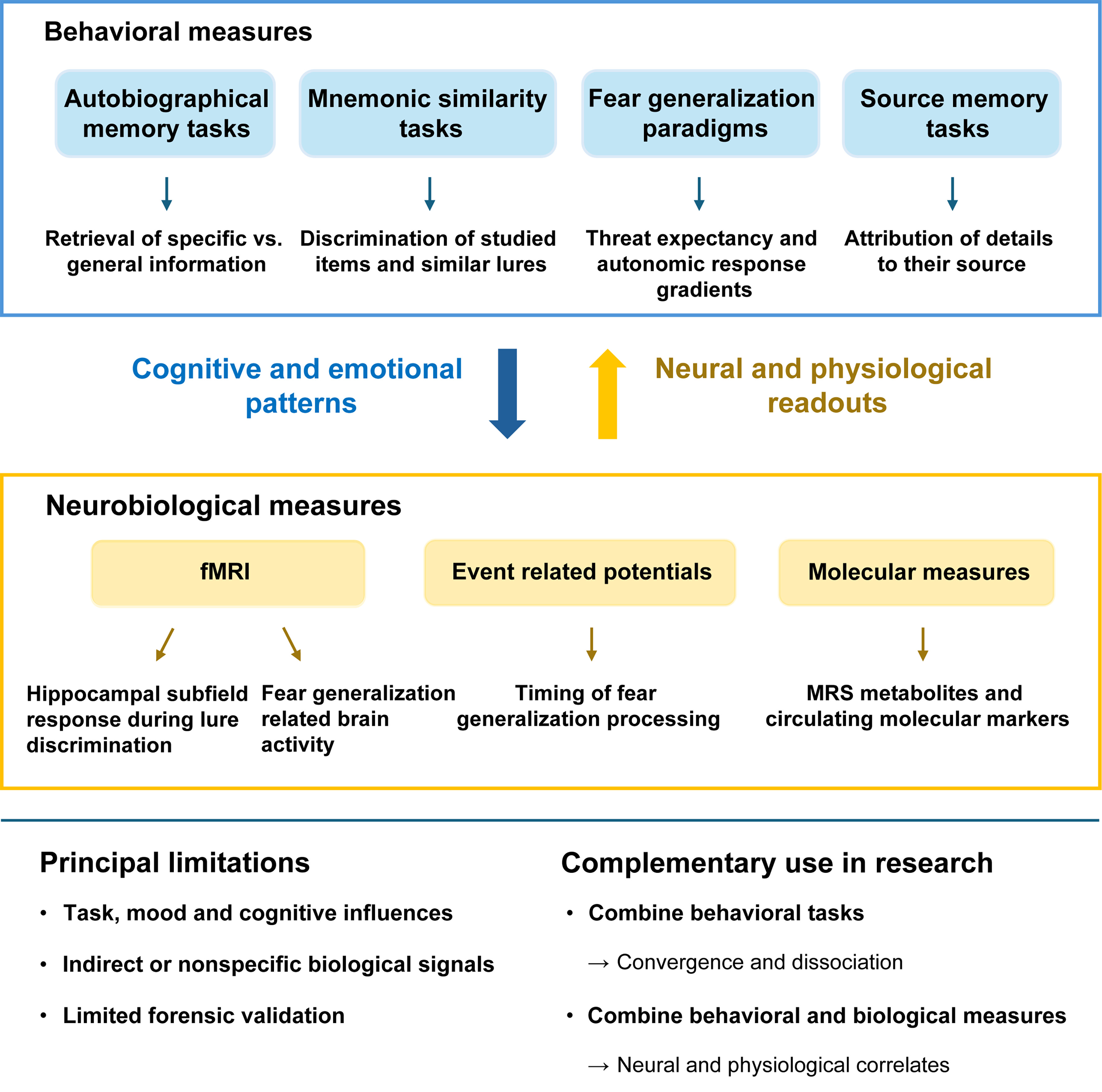
Figure 1. Complementary behavioral and neurobiological approaches to investigating memory generalization. Behavioral paradigms assess autobiographical memory specificity, mnemonic discrimination, fear generalization, and source attribution. Neurobiological measures examine associated hippocampal and distributed brain activity using fMRI, the timing of neural responses using event-related potentials, and molecular correlates using MRS and circulating molecular markers. Combining behavioral tasks can reveal convergence and dissociation among cognitive and emotional processes, whereas integrating behavioral and neurobiological measures can help identify their biological correlates. Interpretation is constrained by task demands, mood and cognitive influences, indirect or nonspecific biological signals, and limited forensic validation. These approaches remain research tools and cannot independently establish the factual accuracy of an individual account. fMRI: Functional magnetic resonance imaging; MRS: magnetic resonance spectroscopy.

