

fig5
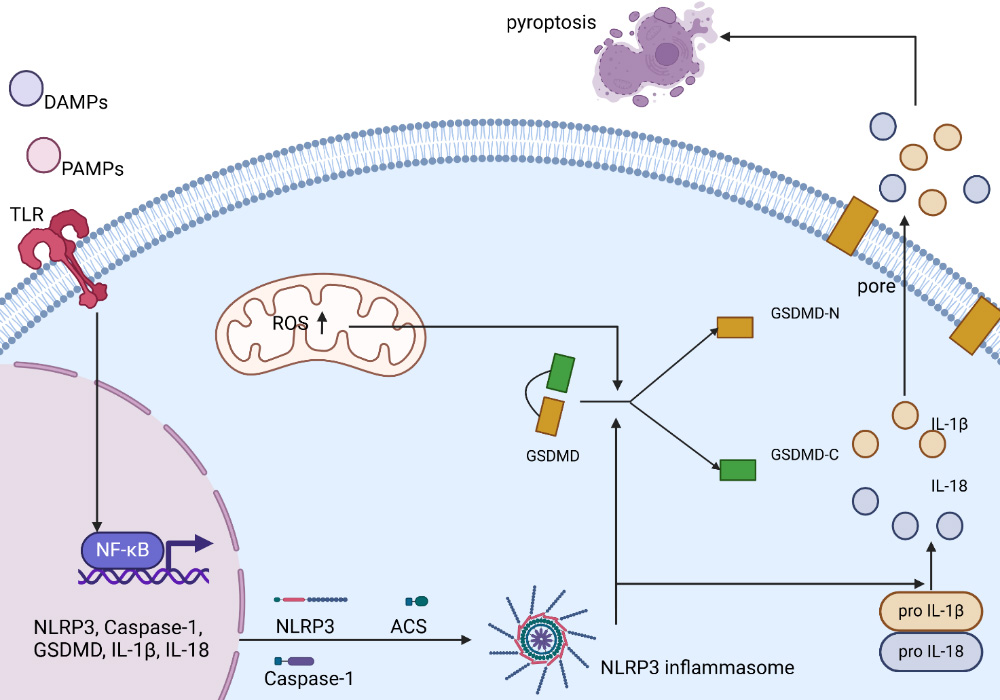
Figure 5. Schematic diagram of NLRP3 inflammasome activation and the cell pyroptosis pathway. The mechanism of activation of the classic NLRP3 inflammasome pathway is shown in the figure. The activation of the NLRP3 inflammasome first depends on TLRs recognizing PAMPs or DAMPs and inducing NF-κB activation. Subsequently, NF-κB mediates the transcription of NLRP3, ASC, pro-Caspase-1, pro-IL-1β, and pro-IL-18. Other signals that trigger NLRP3 inflammasome assembly include increased ROS generation in mitochondria. The activation of inflammasomes promotes the cleavage of caspase-1, thereby promoting the cleavage of GSDMD. The N-terminus of GSDMD forms pores in the cell membrane, promoting the release of mature IL-1β and IL-18. The release of IL-1β and IL-18 can induce various forms of inflammatory responses, which are related to the occurrence and progression of cell apoptosis. The figure created with BioRender.com. DAMP: Damage-associated molecular pattern; PAMP: pathogen-associated molecular pattern; TLR: toll-like receptor; ROS: reactive oxygen species; GSDMD: gasdermin D; GSDMD-N: gasdermin D N-terminal domain; GSDMD-C: gasdermin D C-terminal domain; IL-1β: interleukin-1 beta; IL-18: interleukin-18; NF-κB: nuclear factor kappa-B; pro IL-1β: pro-interleukin-1 beta; pro IL-18: pro-interleukin-18; NLRP3: NOD-like receptor family pyrin domain-containing protein 3; ASC: apoptosis-associated speck-like protein containing a CARD; Caspase-1: cysteine-aspartic acid protease 1.