

Integrating molecular initiating events and machine learning for female reproductive health
 0


 Download PDF
INTRODUCTION
Endocrine-disrupting chemicals (EDCs) originate from a broad range of sources, including industrial processes, agriculture, consumer products, and food-contact materials. Some EDCs can interfere with estrogen signaling and other endocrine pathways, and exposure to these chemicals may affect human health[1]. Women of reproductive age and pregnant individuals represent particularly susceptible populations. Low-dose, long-term, and combined exposure to xenoestrogens may interfere with key physiological processes, including gonadal differentiation, follicular development, gametogenesis, steroid hormone synthesis, and placental endocrine regulation, thereby increasing the risks of infertility, borderline or malignant ovarian lesions, spontaneous abortion, preterm birth, and congenital reproductive abnormalities in offspring[2-4]. Compared with the liver and nervous system, the female reproductive endocrine system is regulated by highly refined hormonal networks with limited tolerance for perturbation. Even persistent exposure at environmentally relevant trace levels may therefore cause irreversible gonadal dysfunction and transgenerational developmental defects, making reproductive endocrine disruption a major challenge in exposomics and reproductive toxicology[5-7].
Current research on the reproductive toxicity of xenoestrogens is constrained by three interrelated limitations that hinder mechanism-oriented chemical risk assessment. First, many studies remain focused on downstream endpoints, such as cell viability, organ phenotypes, and hormone secretion, and lack a standardized analytical framework centered on reproductive-specific molecular initiating events (MIEs)[8-11]. An MIE is the first molecular triggering event in an adverse outcome pathway (AOP) and provides a critical basis for distinguishing direct toxic effects from compensatory stress responses. Current screening approaches rely heavily on competitive binding assays targeting the ligand-binding pockets of estrogen receptors (ERs). Consequently, noncompetitive xenoestrogens acting through allosteric sites such as activation function-2 (AF-2) or binding function-3 (BF3), steroidogenic enzymes, or theca-cell-specific proteins may be overlooked[12,13]. Systematic discovery of gonad- and placenta-specific toxicity targets also remains inadequate, leaving important mechanistic gaps in the causal chain of toxicity[14-17]. Second, conventional quantitative structure–activity relationship (QSAR) models have important predictive limitations. Models trained primarily on structurally restricted datasets and competitive-binding data for classical hormone-like compounds may fail to identify emerging chemicals that act through nonclassical mechanisms, such as allosteric modulation or steroidogenic enzyme inhibition. A key challenge is the limited availability and consistency of experimentally verified reproductive MIE data. Integrating molecular structures, chemical fingerprints, protein features, and MIE activity may improve prediction, but differences in data quality, missing modalities, and the relative contributions of individual features require careful evaluation. Model performance should therefore be assessed using appropriate baseline models, independent validation, and explicit uncertainty estimates. These limitations currently constrain the systematic prioritization of emerging chemicals with potential reproductive hazards[18].
Third, the credibility of epidemiological evidence is limited by the predominance of cross-sectional studies examining associations between xenoestrogen exposure and female reproductive health[12,19,20]. Simultaneous measurement of exposure and outcomes makes temporal ordering difficult to establish, so reverse causation cannot be ruled out. In addition, multiple confounders - including age, body mass index (BMI), gynecological history, preconception medication use, long-term dietary and cosmetic exposures, multi-pollutant co-exposure, and familial susceptibility to reproductive disorders - are often addressed only through simple multivariable regression. These covariates should be selected using an explicit causal model and subject-matter knowledge. Mixture methods such as Bayesian kernel machine regression (BKMR) can characterize joint exposure–response relationships, potential nonlinearity, and interactions; they should not be described as substitutes for confounding control. Confounding adjustment and mixture-effect estimation are related but distinct analytical tasks[21,22]. Cross-sectional studies can reveal associations but cannot demonstrate the temporal causal sequence in which exposure precedes reproductive injury; consequently, their findings provide limited support for chemical regulation and exposure-protection policies during pregnancy. This Perspective proposes an integrated “mechanism–prediction–population” framework. Its novelty lies not in any single component - MIE/AOP analysis, targetomics, machine learning, or cohort epidemiology - but in linking them through a female-reproductive-health focus and a feedback loop: experimentally supported MIEs inform prediction; prediction prioritizes chemicals and targets for biomonitoring; and longitudinal population evidence helps assess whether the proposed mechanisms are consistent with temporally ordered health outcomes. The framework explicitly addresses multiple targets and pathways, matrix-specific exposure assessment, uncertainty in multimodal prediction, and the distinction between mechanistic plausibility and population-level evidence [Figure 1].
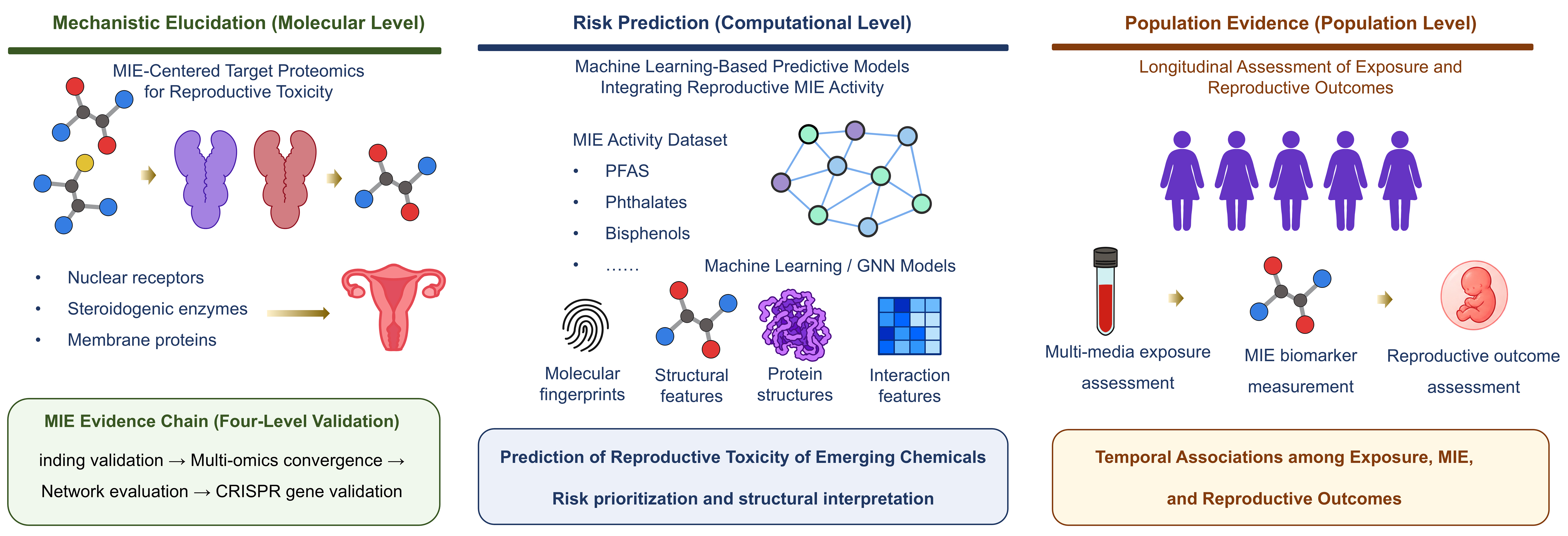
Figure 1. Research framework: an integrated mechanism–prediction–population paradigm. MIE: Molecular initiating event; CRISPR: clustered regularly interspaced short palindromic repeats; PFAS: per- and polyfluoroalkyl substance; GNN: graph neural network.
ESTABLISHING A STANDARDIZED MOLECULAR DETECTION SYSTEM FOR REPRODUCTIVE EDCS CENTERED ON MIES
MIEs can facilitate causal interpretation in reproductive toxicology because they represent the initial, specific interaction between a contaminant and a key reproduction-related protein and constitute the first node of an AOP. Unlike downstream responses such as inflammation and apoptosis, MIEs can provide mechanistic anchors for investigating the initiation of reproductive toxicity[8,20]. However, MIE identification alone is not proof of reproductive harm. A stronger evidence chain should connect chemical–target interaction to downstream key events, pathway perturbation, tissue or organism-level changes, and ultimately an adverse outcome. Evidence should be assessed across these levels, with uncertainty documented at each transition[23,24].
Current research on reproductive MIEs has two major shortcomings. First, target coverage is narrow and remains focused primarily on ligand-pocket binding to ERs, whereas reproductive-specific MIEs involving AF-2/BF3 allosteric sites, steroidogenic enzymes, and theca-cell-specific proteins are often neglected[9]. Many noncompetitively binding xenoestrogens may therefore be classified as negative, resulting in false negatives. Second, analytical approaches remain limited. Conventional chemical analysis provides little information on protein interactions. Targetomics workflows suitable for gonadal cells, amniotic fluid, and follicular fluid are lacking, preventing quantitative assessment of contaminant–MIE binding strength.
These limitations could be addressed by establishing a core target library that includes reproductive-relevant nuclear receptors, such as ERα/β, progesterone receptors (PR), and androgen receptors (AR), as well as steroidogenic enzymes, membrane-associated proteins, and other targets supported by reproductive biology[9,10,13,25]. Label-free chemical proteomics and competitive-probe strategies could then be combined to identify and validate candidate chemical–protein interactions. Candidate targets should be prioritized according to their biological relevance, evidence of chemical engagement, and feasibility of experimental validation. A four-level evidence chain could subsequently be applied to identify biologically meaningful toxicity targets through binding-specificity validation, convergent multi-omics analysis of reproductive pathways, assessment of protein-network hub weights, and clustered regularly interspaced short palindromic repeats (CRISPR)-based gene-knockout validation, thereby excluding nonspecific adsorption noise [Figure 2].
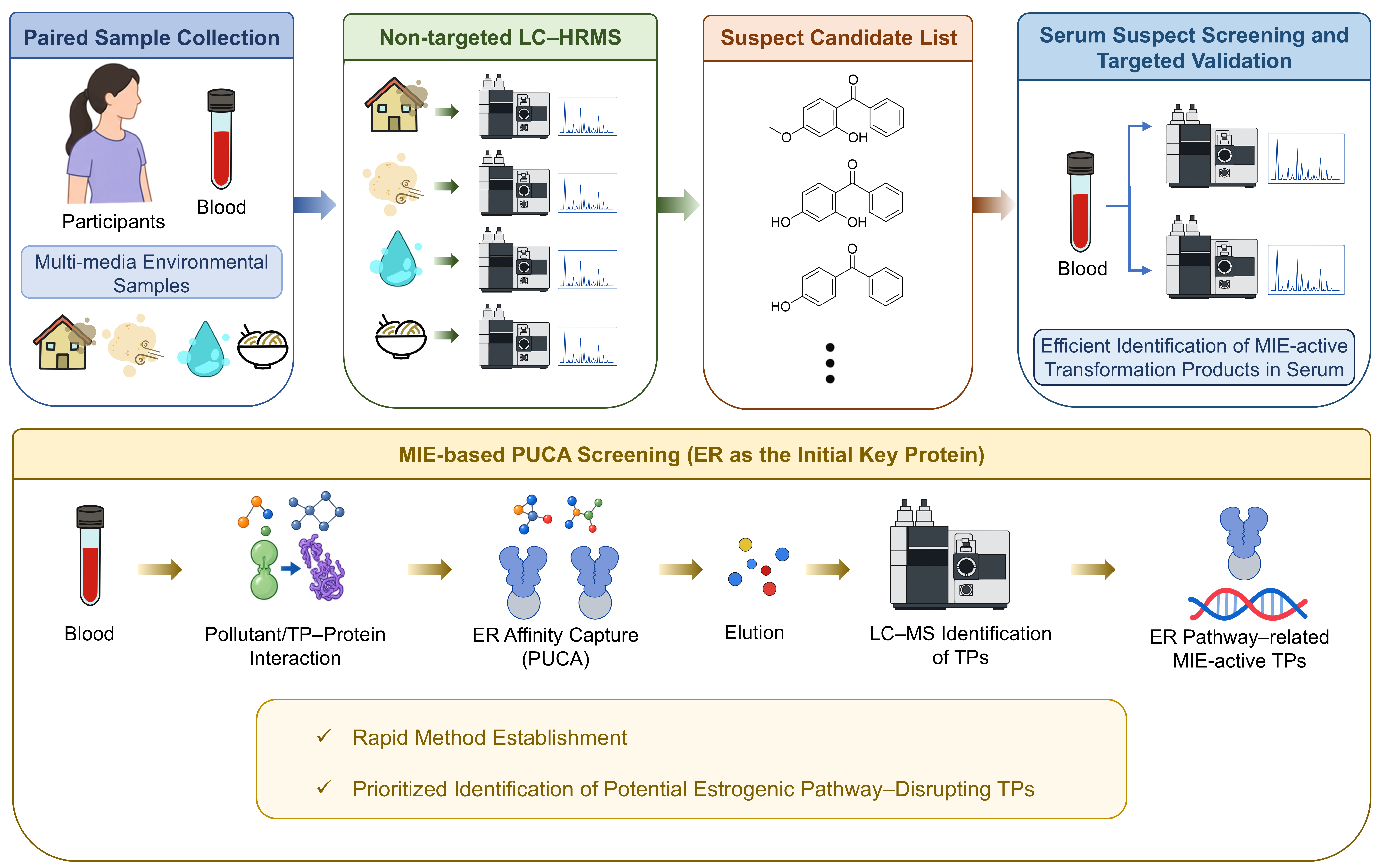
Figure 2. Integrated screening and identification of MIE-active compounds and their TPs. MIE: Molecular initiating event; LC–HRMS: liquid chromatography–high‑resolution mass spectrometry; PUCA: protein-affinity purification coupled with nontargeted mass spectrometry approaches; ER: estrogen receptor; TP: transformation product; LC–MS: liquid chromatography–mass spectrometry.
Existing protein-affinity purification coupled with nontargeted mass spectrometry approaches (PUCA) have mainly been applied to environmental media such as dust to capture exogenous bioactive contaminants and their transformation products (TPs) capable of binding nuclear receptors[26]. Direct transfer of this MIE-oriented high-throughput screening strategy to human blood would face two practical bottlenecks. First, environmentally derived contaminants and their TPs generally occur in blood at low concentrations, resulting in weak mass-spectrometric signals. Second, serum contains abundant endogenous lipids, hormones, and metabolic ligands that can cause severe analytical interference. Unbiased global nontargeted screening may therefore generate numerous false-positive signals and make it difficult to specifically identify exogenous MIE-active TPs in complex biological matrices[27-29].
A matrix-aware hierarchical screening strategy is proposed to connect external exposure with internal dose. Biological matrices should be selected according to the toxicokinetics of the chemical and the biomarker being measured. Blood or serum is the standard matrix for measuring internal exposure; while urine, another non-invasive matrix, is suitable for measuring non-persistent chemicals and their metabolites; saliva covers a narrower set of hormones; and hair integrates exposure over weeks to months, including some metals. No single matrix is optimal for every chemical, and matrix selection should account for contamination, stability, analytical sensitivity, and biological significance. Paired samples may be useful where feasible.
External-exposure assessment could include indoor dust, indoor air, food, and drinking water, alongside personal passive samplers such as silicone wristbands where appropriate. Nontargeted screening across these media can generate a suspect list of parent compounds and putative TPs; subsequent suspect screening and targeted confirmation in selected biological matrices can then reduce the search space. This workflow is a proposed strategy and requires analytical validation, including blank control, recovery assessment, matrix-effect evaluation, limits of detection and quantification, and confirmation using appropriate standards where available.
Within this hierarchical framework, ERs are recommended as the initial targets for MIE-based PUCA affinity-capture analysis, with the aim of identifying exogenous contaminants and TPs that target ER-related pathways. As one of the most representative nuclear receptor targets in environmental endocrine-disruption research, ER signaling is one of the most extensively investigated with respect to the mechanisms of action of environmental contaminants and indoor TPs. Using ERs as initial targets can facilitate establishment of the analytical workflow and prioritize the identification of TPs in serum that may perturb estrogen signaling. However, ER-based screening should be regarded as an initial step rather than a comprehensive assessment of reproductive toxicity. The target panel may be expanded to include other relevant receptors, such as PR and AR, as well as peroxisome proliferator-activated receptor gamma (PPARγ), membrane-associated targets, and steroidogenic enzymes, according to the available mechanistic evidence.
Nevertheless, a single-target strategy has inherent limitations. Large-scale blood exposome prediction studies, including HExpPredict, suggest that the predicted biological activity of some food additives and food-contact chemicals may be concentrated in PPARγ-related metabolic pathways, whereas their ER-disruption signals are comparatively weak[13,30-32]. Therefore, an ER-based screening strategy alone may fail to capture exogenous chemicals and TPs whose potential biological effects are mediated predominantly through other nuclear receptors and membrane receptors.
Accordingly, the use of ERs as the key protein should be regarded as a mechanism-oriented, stage-specific screening strategy. It is intended to establish an internal-exposure fingerprint associated with ER-mediated signaling through hierarchical screening of paired multi-media external-exposure and serum samples. As the methodology matures, the target panel can be progressively expanded to include other proteins involved in reproductive and metabolic regulation, such as PPARγ. This expansion may facilitate the identification of a broader range of MIE-active TPs and strengthen risk assessment under complex chemical exposure scenarios.
DEVELOPING MACHINE LEARNING STRUCTURE–ACTIVITY MODELS CENTERED ON REPRODUCTIVE MIE BINDING ACTIVITY
Traditional QSAR models based on single structural descriptors or known receptor-binding activities have several limitations. These models are often trained using chemically restricted datasets and classical competitive-binding data, limiting their ability to identify reproductive hazards associated with novel plastic additives, pesticides, and other emerging contaminants that act through nonclassical MIEs, including allosteric modulation and enzyme inhibition. Their ability to predict nonlinear interactions and cumulative effects under low-dose, multicomponent exposure conditions also remains limited.
Machine learning offers a promising solution to these challenges. By using different types of reproductive MIE activity as core training labels and integrating multidimensional chemical information - including molecular fingerprints, three-dimensional conformations, functional-group features, and potential interaction sites - predictive models can be developed to recognize reproduction-related protein-binding patterns and allosteric regulatory characteristics[33,34]. A hierarchical modeling strategy could first establish a standardized training dataset containing experimentally validated reproductive endocrine-disrupting compounds and negative controls, with MIE-level binding activity or functional responses serving as classification and regression labels. Representative chemical classes could include per- and polyfluoroalkyl substances (PFAS), phthalates, pesticides, and bisphenols. Random forests, graph neural networks (GNNs), AlphaFold-assisted protein-structure prediction, and molecular docking could then be integrated to incorporate three-dimensional information from reproduction-related proteins while retaining small-molecule structural features. Ultimately, the framework could identify key functional groups, structural scaffolds, and modes of action associated with reproductive MIE activity and potential reproductive hazards, supporting rapid hazard prioritization for industrial chemicals. This machine learning framework may reduce the need for large-scale animal screening, improve the prioritization efficiency of candidate contaminants under complex exposure conditions, and provide targeted screening lists for pollutant detection in population cohorts. Nevertheless, in vitro MIE binding activity and computational predictions may not fully correspond to biological effects at the cellular or organismal level. Model outputs should therefore be validated and calibrated in nested longitudinal cohorts while accounting for exposure levels, metabolic transformation, individual susceptibility, and potential confounding factors.
Candidate pathways should be prioritized using converging evidence rather than computational predictions alone. Validated chemical–target interactions could be integrated with transcriptomic, proteomic, and metabolomic changes, followed by functional validation in relevant reproductive cell or tissue models. The biological relevance of candidate pathways should be considered in relation to reproductive processes, such as follicular development, steroidogenesis, endometrial function, and placental endocrine regulation. Where possible, the findings should be compared with established AOP key events and evaluated alongside longitudinal population evidence. Pathway enrichment or predicted protein interactions alone should not be interpreted as proof of a causal mechanism.
NESTED LONGITUDINAL COHORT DESIGN FOR COMPREHENSIVE CONFOUNDER CONTROL
Cross-sectional studies have inherent and difficult-to-avoid confounding limitations and represent a major weakness in current epidemiological research on reproductive EDCs. Simultaneous measurement of exposure and reproductive health outcomes cannot resolve temporal order, making it unclear whether contaminants cause reproductive injury or whether reproductive disease alters metabolism and the internal contaminant burden; reverse causation is possible. Existing analyses often rely on simple multivariable models to adjust for diet, physical activity, gynecological history, preconception medication use, combined exposure to multiple pollutants, family reproductive history, age, and BMI, with limited use of refined methods such as stratified analyses and propensity-score approaches. In addition, reproductive injury may involve critical windows of susceptibility before conception and during early pregnancy, whereas a single biological sample collected in a cross-sectional study cannot distinguish exposure differences across these stages[35,36].
These limitations could be addressed through a nested longitudinal cohort design. Blood and urine samples would be collected at baseline together with comprehensive questionnaires, and participants would be followed through pregnancy, delivery, and reproductive development in their offspring. Individuals experiencing infertility, ovarian lesions, or adverse pregnancy outcomes could be defined as cases and matched with healthy women of reproductive age enrolled during the same period as controls. The core epidemiological strategy is to improve confounding control and temporal assessment through a prespecified longitudinal design. Potential baseline confounders, including age, BMI, educational attainment, and family history of reproductive disease, should be collected at enrollment. Time-varying covariates, such as diet, use of skincare and cosmetic products, occupational exposures, and medication use, would be reassessed during follow-up. Covariates should be selected according to subject-matter knowledge and an explicit causal model, rather than treating all co-exposures as confounders. Appropriate regression adjustment or propensity-score-based approaches, including mvGPS where suitable, may be used to address measured confounding. Separately, BKMR may be applied to characterize joint associations between chemical mixtures and reproductive outcomes, including potential nonlinear exposure–response relationships and interactions. The suitability of each method will depend on the exposure structure, sample size, covariate availability, and underlying assumptions. Collecting exposure measurements before the occurrence of reproductive outcomes can improve temporal ordering and reduce concerns about reverse causation, but cannot by itself eliminate residual confounding. This design establishes a three-layer evidence framework. First, machine learning identifies chemical features associated with reproductive hazards. Second, corresponding reproductive MIE biomarkers are measured in biological samples from the nested cohort. Finally, their temporal associations with infertility, ovarian injury, and adverse pregnancy outcomes are evaluated. Molecular mechanisms, structure–activity prediction, and epidemiological evidence can thus mutually reinforce one another and improve causal credibility.
INTEGRATED PARADIGM: WORKFLOW COMBINING MIE TARGETOMICS, MACHINE LEARNING, AND NESTED COHORTS
(1) Model training: Collect published reproductive MIE activity data and train GNN models to identify structural features associated with high-risk EDCs.
(2) Sample screening: Analyze baseline biological samples from the nested cohort using machine learning–derived priority lists and quantify reproductive-specific MIE binding levels through targetomics.
(3) Statistical analysis: Use prespecified covariate adjustment, stratified analyses, or propensity-score-based methods, including mvGPS where appropriate, to address measured confounding. Apply BKMR separately, where supported by the data, to evaluate joint exposure–response relationships, potential nonlinearities, and interactions among co-exposures. Assess associations between MIE-related biomarkers and subsequent reproductive outcomes, including infertility, miscarriage, and ovarian lesions, while accounting for the temporal structure of the data and acknowledging the possibility of residual confounding.
(4) Mechanistic back-tracing: For xenoestrogens showing significant differences within the cohort, conduct reverse validation of MIEs in cellular gonadal models to identify the relevant molecular initiating pathways.
(5) Translational output: Derive characteristic chemical scaffolds associated with reproductive risk to provide both mechanistic and population-based evidence for the regulation of consumer chemicals and pesticides.
CONCLUSIONS
The proposed integrated research system still faces several practical limitations. At the MIE-detection level, targetomics sensitivity remains insufficient for reproductive membrane proteins and low-abundance nuclear receptors. In machine learning, available training datasets largely cover individual contaminants and provide limited MIE-related evidence for synergistic effects of contaminant mixtures. At the population level, nested longitudinal cohorts require prolonged follow-up and substantial resources, while MIE detection in low-volume biological matrices such as amniotic fluid and follicular fluid remains technically immature.
Future research can advance along three complementary pathways. Technically, in situ live-cell targetomics should be developed to improve the detection efficiency of membrane-associated reproductive MIEs, while datasets for combined xenoestrogens should be expanded and GNN prediction models further optimized. Epidemiologically, nested cohorts of women of reproductive age and pregnant individuals should be enlarged, with long-term follow-up of reproductive development in offspring extending into adolescence. From a regulatory perspective, reproductive MIE activity testing, machine learning–based structure–activity prediction, and nested longitudinal population evidence could be integrated into standardized systems for assessing chemical reproductive toxicity, progressively reducing reliance on traditional animal toxicology experiments. By establishing an integrated mechanism–prediction–population assessment system, this framework addresses a key weakness in current epidemiological research and provides a comprehensive and implementable pathway for next-generation female reproductive toxicology research.
DECLARATIONS
Authors’ contributions
Contributed to the literature search and writing of the original draft: Zhou, S.
Contributed to the literature analysis and manuscript revision: Lin, Y.
contributed to the conceptualization of the manuscript, overall supervision, and critical review: Gao, W.
All authors reviewed and approved the final version of the manuscript and agreed to be accountable for its content.
Availability of data and materials
Not applicable.
AI and AI-assisted tools statement
Not applicable.
Financial support and sponsorship
This work was supported by the Natural Science Foundation of Shandong Province (ZR2024QB087) and the Qingdao Natural Science Foundation (26-1-5-smjk-23-nsh).
Conflicts of interest
All authors declared that there are no conflicts of interest.
Ethical approval and consent to participate
Not applicable.
Consent for publication
Not applicable.
Copyright
© The Author(s) 2026.
REFERENCES
1. Braun, J. M. Early-life exposure to EDCs: role in childhood obesity and neurodevelopment. Nat. Rev. Endocrinol. 2017, 13, 161-73.
2. Souter, I.; Smith, K. W.; Dimitriadis, I.; et al. The association of bisphenol-A urinary concentrations with antral follicle counts and other measures of ovarian reserve in women undergoing infertility treatments. Reprod. Toxicol. 2013, 42, 224-31.
3. Berghuis, S. A.; Bos, A. F.; Groen, H.; et al. Prenatal environmental exposure to persistent organic pollutants and reproductive hormone profile and pubertal development in Dutch adolescents. Int. J. Environ. Res. Public. Health. 2022, 19, 9423.
4. Lecante, L. L.; Leverrier-Penna, S.; Gicquel, T.; et al. Acetaminophen (APAP, paracetamol) interferes with the first trimester human fetal ovary development in an ex vivo model. J. Clin. Endocrinol. Metab. 2022, 107, 1647-61.
5. Rebuzzini, P.; Fabozzi, G.; Cimadomo, D.; et al. Multi- and transgenerational effects of environmental toxicants on mammalian reproduction. Cells 2022, 11, 3163.
6. Rogers, R. E.; Chai, S.; Pask, A. J.; Mattiske, D. M. Prenatal exposure to diethylstilbestrol has long-lasting, transgenerational impacts on fertility and reproductive development. Toxicol. Sci. 2023, 195, 53-60.
7. Hassan, S.; Thacharodi, A.; Priya, A.; et al. Endocrine disruptors: unravelling the link between chemical exposure and Women’s reproductive health. Environ. Res. 2024, 241, 117385.
8. OECD. Detailed review paper on the state of the science on novel in vitro and in vivo screening and testing methods and endpoints for evaluating endocrine disruptors. 2012. https://www.oecd.org/en/publications/detailed-review-paper-on-the-state-of-the-science-on-novel-in-vitro-and-in-vivo-screening-and-testing-methods-and-endpoints-for-evaluating-endocrine-disruptors_9789264221352-en.html. (accessed 2026-11-09).
9. OECD. Revised guidance document 150 on standardised test guidelines for evaluating chemicals for endocrine disruption. 2018. https://www.oecd.org/en/publications/guidance-document-on-standardised-test-guidelines-for-evaluating-chemicals-for-endocrine-disruption-2nd-edition_9789264304741-en.html. (accessed 2026-11-09).
10. Johansson, H. K. L.; Damdimopoulou, P.; van Duursen, M. B. M.; et al. Putative adverse outcome pathways for female reproductive disorders to improve testing and regulation of chemicals. Arch. Toxicol. 2020, 94, 3359-79.
11. Lorenzetti, S.; Marcoccia, D.; Mantovani, A. Biomarkers of effect in endocrine disruption: how to link a functional assay to an adverse outcome pathway. Ann. Ist. Super. Sanita. 2015, 51, 167-71.
12. Parent, A. S.; Damdimopoulou, P.; Johansson, H. K. L.; et al. Endocrine-disrupting chemicals and female reproductive health: a growing concern. Nat. Rev. Endocrinol. 2025, 21, 593-607.
13. Toporova, L.; Balaguer, P. Nuclear receptors are the major targets of endocrine disrupting chemicals. Mol. Cell. Endocrinol. 2020, 502, 110665.
14. Lallous, N.; Leblanc, E.; Munuganti, R. S.; et al. Targeting binding function-3 of the androgen receptor blocks its co-chaperone interactions, nuclear translocation, and activation. Mol. Cancer. Ther. 2016, 15, 2936-45.
15. Riley, C. M.; Elwood, J. M. L.; Henry, M. C.; et al. Current and emerging approaches to noncompetitive AR inhibition. Med. Res. Rev. 2023, 43, 1701-47.
16. Dusza, H. M.; Janssen, E.; Kanda, R.; Legler, J. Method development for effect-directed analysis of endocrine disrupting compounds in human amniotic fluid. Environ. Sci. Technol. 2019, 53, 14649-59.
17. Plešnik, H.; Rekar, Ž.; Stevanović, S.; et al. Nontargeted urinary profiling strategy for endocrine-disrupting chemicals in women with ovarian malignancies. Environ. Sci. Technol. 2025, 59, 8380-90.
18. Weyrich, A.; Joel, M.; Lewin, G.; Hofmann, T.; Frericks, M. Review of the state of science and evaluation of currently available in silico prediction models for reproductive and developmental toxicity: a case study on pesticides. Birth. Defects. Res. 2022, 114, 812-42.
19. Pan, J.; Liu, P.; Yu, X.; Zhang, Z.; Liu, J. The adverse role of endocrine disrupting chemicals in the reproductive system. Front. Endocrinol. 2023, 14, 1324993.
20. Mínguez-Alarcón, L.; Gaskins, A. J. Female exposure to endocrine disrupting chemicals and fecundity: a review. Curr. Opin. Obstet. Gynecol. 2017, 29, 202-11.
21. Cai, A.; Remy, S.; Lenters, V.; et al. Exposure to a mixture of endocrine-disrupting chemicals and metabolic outcomes in Belgian adolescents. Environ. Sci. Technol. 2023, 57, 19871-80.
22. Tyagi, P.; James-Todd, T.; Mínguez-Alarcón, L.; et al.; EARTH study team. Identifying windows of susceptibility to endocrine disrupting chemicals in relation to gestational weight gain among pregnant women attending a fertility clinic. Environ. Res. 2021, 194, 110638.
23. De Vries, R. B. M.; Angrish, M.; Browne, P.; et al. Applying evidence-based methods to the development and use of adverse outcome pathways. ALTEX 2021, 38, 336-47.
24. Caserta, D.; Costanzi, F.; De Marco, M. P.; et al. Effects of endocrine-disrupting chemicals on endometrial receptivity and embryo implantation: a systematic review of 34 mouse model studies. Int. J. Environ. Res. Public. Health. 2021, 18, 6840.
25. Aldad, T. S.; Rahmani, N.; Leranth, C.; Taylor, H. S. Bisphenol-A exposure alters endometrial progesterone receptor expression in the nonhuman primate. Fertil. Steril. 2011, 96, 175-9.
26. Peng, H.; Sun, J.; Alharbi, H. A.; Jones, P. D.; Giesy, J. P.; Wiseman, S. Peroxisome proliferator-activated receptor γ is a sensitive target for oil sands process-affected water: effects on adipogenesis and identification of ligands. Environ. Sci. Technol. 2016, 50, 7816-24.
27. Eguchi, A.; Sakurai, K.; Yamamoto, M.; Mori, C. Elucidation of endogenous and exogenous chemicals in maternal serum using high-resolution mass spectrometry. Ecotoxicol. Environ. Saf. 2024, 286, 117256.
28. Ismaiel, O. A.; Zhang, T.; Jenkins, R. G.; Karnes, H. T. Investigation of endogenous blood plasma phospholipids, cholesterol and glycerides that contribute to matrix effects in bioanalysis by liquid chromatography/mass spectrometry. J. Chromatogr. B. Analyt. Technol. Biomed. Life. Sci. 2010, 878, 3303-16.
29. Panuwet, P.; Hunter, R. E. Jr.; D’Souza, P. E.; et al. Biological matrix effects in quantitative tandem mass spectrometry-based analytical methods: advancing biomonitoring. Crit. Rev. Anal. Chem. 2016, 46, 93-105.
30. Zhao, F.; Li, L.; Lin, P.; et al. HExpPredict: in vivo exposure prediction of human blood exposome using a random forest model and its application in chemical risk prioritization. Environ. Health. Perspect. 2023, 131, 37009.
31. Muncke, J. Endocrine disrupting chemicals and other substances of concern in food contact materials: an updated review of exposure, effect and risk assessment. J. Steroid. Biochem. Mol. Biol. 2011, 127, 118-27.
32. Groh, K. J.; Geueke, B.; Martin, O.; Maffini, M.; Muncke, J. Overview of intentionally used food contact chemicals and their hazards. Environ. Int. 2021, 150, 106225.
33. Collins, S. P.; Barton-Maclaren, T. S. Novel machine learning models to predict endocrine disruption activity for high-throughput chemical screening. Front. Toxicol. 2022, 4, 981928.
34. Stanojević, M.; Sollner Dolenc, M.; Vračko, M. Predictive models for compound binding to androgen and estrogen receptors based on counter-propagation artificial neural networks. Toxics 2023, 11, 486.
35. Ikeda, A.; Yamaguchi, T.; Ait Bamai, Y.; et al. Phosphate flame retardants and plasticizers and their association with reproductive and steroid hormone levels among peripubertal-aged children: the Hokkaido birth cohort study. Environ. Sci. Technol. 2025, 59, 4820-31.
Cite This Article
 Open Access
How to Cite
Zhou, S.; Lin, Y.; Gao, W. Integrating molecular initiating events and machine learning for female reproductive health. J. Environ. Expo. Assess. 2026, 5, 37. https://dx.doi.org/10.20517/jeea.2026.58
Download Citation
If you have the appropriate software installed, you can download article citation data to the citation manager of your choice. Simply select your manager software from the list below and click on download.
Export Citation File
Type of Import
Tips on Downloading Citation
Citation Manager File Format
Type of Import
Direct Import: When the Direct Import option is selected (the default state), a dialogue box will give you the option to Save or Open the downloaded citation data. Choosing Open will either launch your citation manager or give you a choice of applications with which to use the metadata. The Save option saves the file locally for later use.
Indirect Import: When the Indirect Import option is selected, the metadata is displayed and may be copied and pasted as needed.
About This Article
Special Topic
Copyright

Data & Comments
Data
0










Comments
Comments must be written in English. Spam, offensive content, impersonation, and private information will not be permitted. If any comment is reported and identified as inappropriate content by OAE staff, the comment will be removed without notice. If you have any queries or need any help, please contact us at [email protected].