

fig1
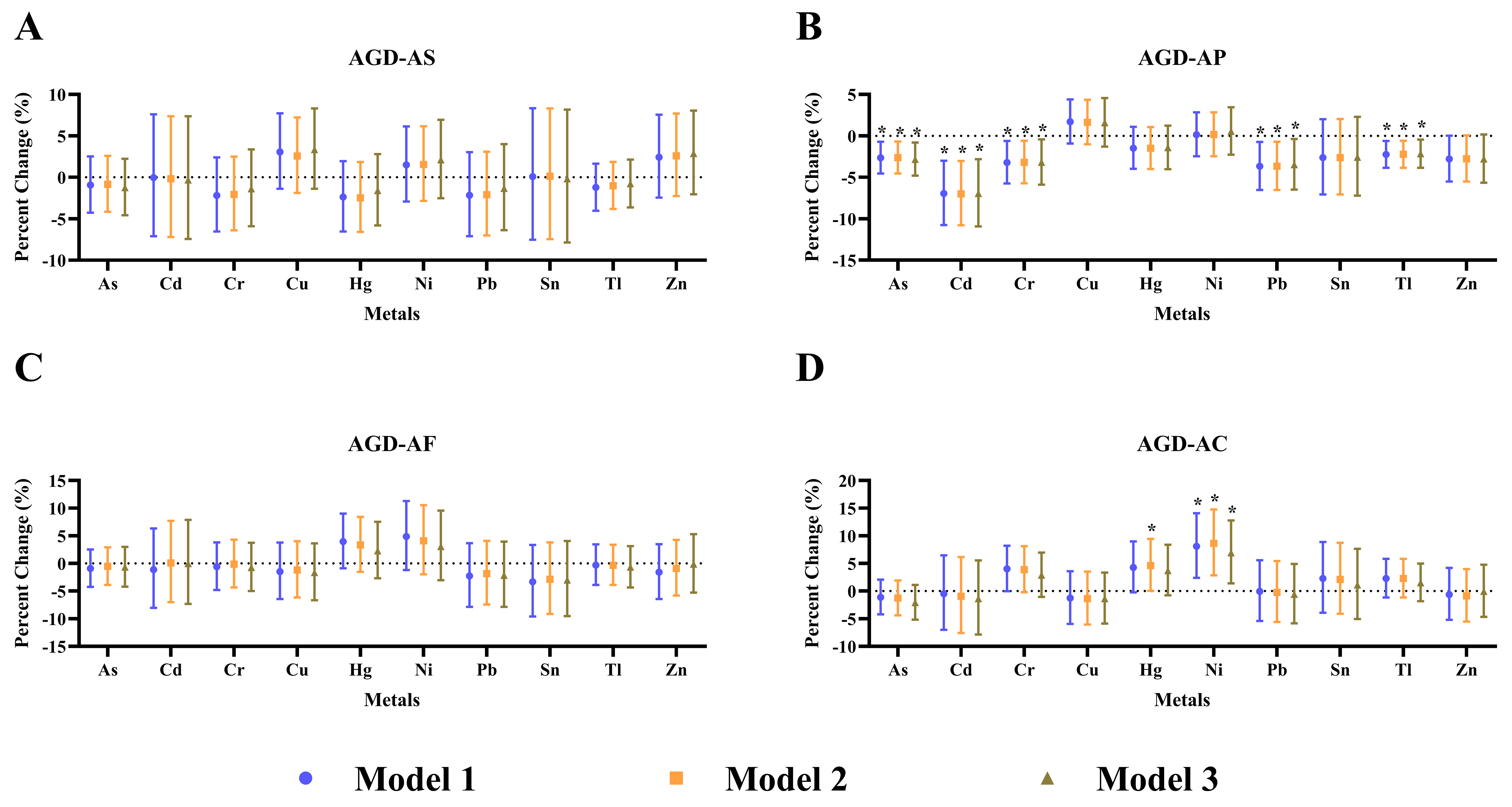
Figure 1. Sex-stratified associations between first-trimester plasma metal concentrations and AGD in 2-year-old children. Panels show percent change (with 95%CI) in AGD-AS/AGD-AF (A and C) and AGD-AP/AGD-AC (B and D) per IQR increase in each metal concentration, estimated using three sequential models: Model 1 (unadjusted), Model 2 (adjusted for children’s age), and Model 3 (fully adjusted for children’s age, maternal age, gestational age, PBMI, parity, maternal education, and family income). Metal concentrations were log2-transformed and Z-standardized; the percent change corresponds to an increase from the 25th to the 75th percentile of the log2-transformed concentration. Outcome variables were natural log-transformed. Statistically significant associations (two-sided unadjusted P < 0.05) are marked with an asterisk (*). Error bars represent 95%CI. Sample sizes: males n = 136; females n = 112. AGD: Anogenital distance; CI: confidence interval; AGD-AS: anogenital distance (anus-scrotum) for males; AGD-AF: anogenital distance (anus-fourchette) for females; AGD-AP: anogenital distance (anus-penis) for males; AGD-AC: anogenital distance (anus-clitoris) for females; IQR: interquartile range; PBMI: pre-pregnancy body mass index.