

Mechanism investigations of EC/EMC electrolyte combustion suppression by phosphorus-iron agents via ReaxFF MD
 0
Graphical Abstract
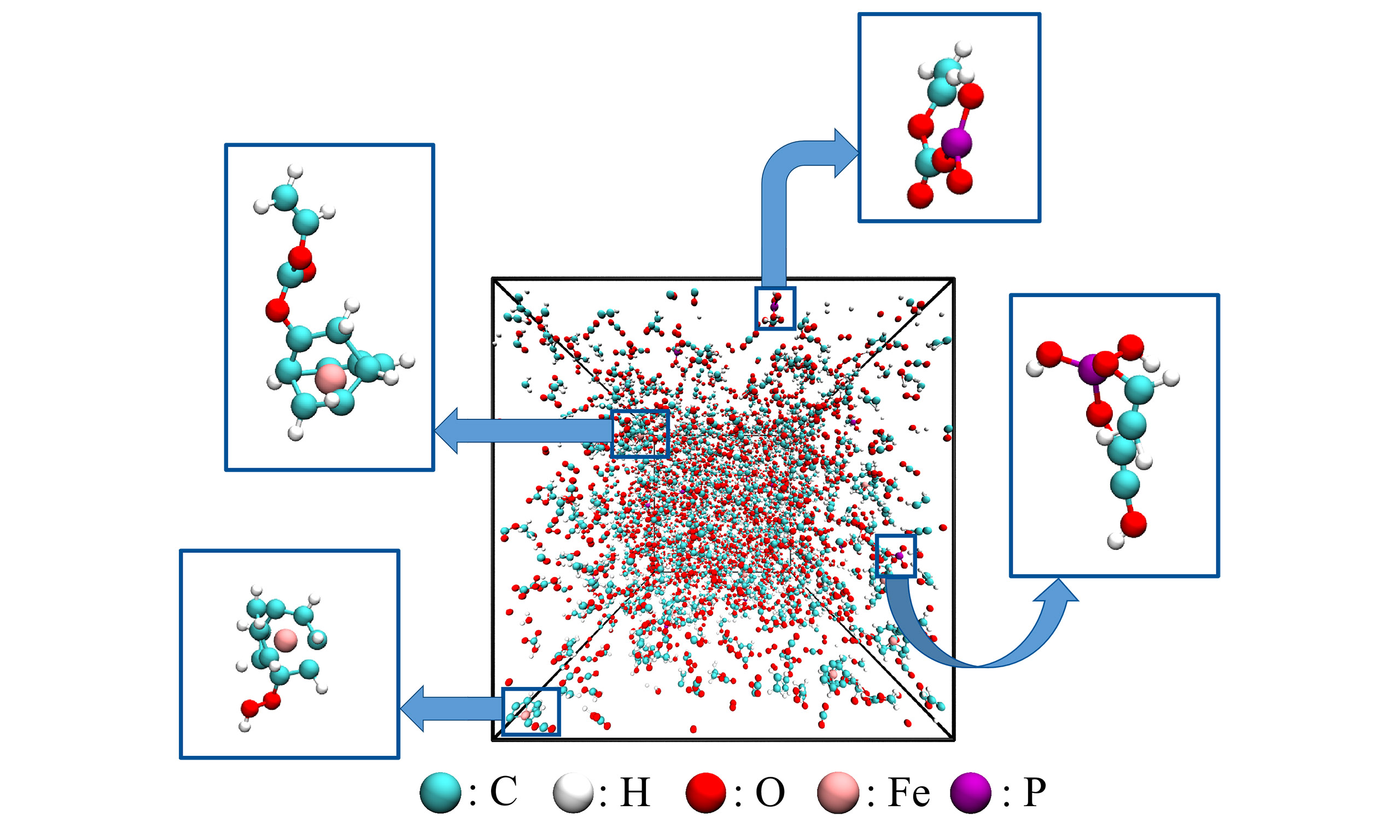
Abstract
To elucidate the influence of the phosphorus-to-iron (P/Fe) ratio on the combustion suppression mechanism of phosphorus-iron-based fire-extinguishing agents during lithium-ion battery thermal runaway, ReaxFF molecular dynamics simulations were performed on ethylene carbonate (EC)/ethyl methyl carbonate (EMC) electrolyte systems with an approximately 1:1 mass ratio, containing additives with different P/Fe molar ratios (1:3 to 3:1) in an oxygen environment. Under identical conditions, the evolution of reactant consumption, gaseous products, reaction pathways, activation energies, and radical species was systematically analyzed. The results showed that the P/Fe ratio did not change the primary decomposition pathways of EC and EMC but significantly affected radical generation and secondary reaction channels. The 1:1 system exhibited the highest EC and EMC residues (28.3% and 28.4%) and the lowest CO2 and H2O formation. It also presented the highest activation energies for EC and EMC decomposition. Radical analysis indicated that H· generation was lowest in the P/Fe = 1:1 system (174) and increased toward both Fe-rich and Fe-poor compositions, reaching its maximum in the P/Fe = 3:1 system (433), whereas systems with high P/Fe ratios generated more phosphorus-containing species such as PHO2· and PH2O3·. In contrast, the P/Fe = 1:1 system exhibited relatively low occurrence frequencies of key radical-generating pathways while maintaining radical-consumption reactions involving extinguishing-agent-derived species, resulting in the strongest inhibition of chain reactions. Mechanistically, phosphorus-containing species participated in the consumption of H·, OH·, and O· radicals, while variation in the P/Fe ratio regulated the decomposition behavior of the extinguishing agent and the resulting radical reaction network. Within the investigated composition range, the P/Fe = 1:1 system exhibited the strongest overall combustion-suppression performance.
Keywords


 Download PDF
INTRODUCTION
With the rapid development of electric vehicles and electrochemical energy-storage systems, lithium-ion batteries (LIBs) have become one of the most widely adopted secondary battery technologies owing to their high energy density, high operating voltage, and long cycle life[1,2]. However, under extreme conditions such as mechanical abuse, electrical abuse, and thermal abuse, LIBs remain susceptible to thermal runaway[3]. Once initiated, thermal runaway involves a series of highly exothermic processes, including decomposition of the solid electrolyte interphase (SEI), separator shrinkage, electrolyte pyrolysis, reactions between the anode and electrolyte, and oxygen release from cathode materials, which may further lead to high-temperature ejection and flame development[4,5]. Meanwhile, electrolyte decomposition can generate substantial amounts of combustible gases, further increasing the fire and explosion hazards[6].
For carbonate-based electrolytes, high-temperature decomposition and oxidation reactions constitute the fundamental microscopic processes governing battery-fire evolution. Previous studies have demonstrated that different carbonate solvents exhibit distinct decomposition onset temperatures, dominant reaction pathways, and product distributions[7], which subsequently influence the generation of combustible gases, flame intensity, and explosion sensitivity. As a typical cyclic carbonate, ethylene carbonate (EC) possesses strong lithium-salt solvating capability and a high dielectric constant, making it prone to ring-opening reactions and the formation of reactive oxygen-containing intermediates under high-temperature oxidative conditions. In contrast, ethyl methyl carbonate (EMC), a linear carbonate solvent, exhibits higher volatility and readily serves as a precursor for gas-phase combustion[8-10]. Investigating reaction pathways and radical evolution in EC/EMC electrolyte systems is therefore essential for understanding the atomistic mechanisms underlying sustained electrolyte combustion during the later stages of thermal runaway.
Existing fire-suppression strategies for lithium-ion battery (LIB) fires mainly include gaseous extinguishing agents, water-based media, water mist, dry powders, and multi-component composite systems. Clean gaseous agents such as heptafluoropropane and perfluorohexanone provide advantages in cleanliness and electrical insulation; however, their ability to suppress continuous heat generation inside battery cells remains limited, and some fluorinated agents may generate hazardous decomposition products under high-temperature conditions[11,12]. Water and water mist exhibited excellent cooling performance and have been widely investigated for suppressing thermal runaway propagation[13-16]. However, their chemical inhibition ability toward internal combustion reactions is relatively limited, and additional safety concerns, including electrical conductivity and hydrogen generation, should also be considered. To further enhance chemical inhibition, modified water-based systems containing chemically active components, such as ferrocene, F-500 additives, and phosphate species, have also been explored[17-19].
In recent years, phosphorus-based and iron-based flame-retardant materials have shown strong potential in combustion suppression through different mechanisms. Phosphazene-based flame-retardant additives have demonstrated effective flame-retardant performance in LIB electrolytes[20]. Meanwhile, ferrocene-containing materials have been reported to exhibit effective fire-extinguishing performance, with iron-containing species contributing to chemical inhibition and catalytic radical-recombination
Reactive molecular dynamics provides an effective approach for dynamically tracking bond breaking and formation during chemical reactions without predefining reaction pathways, making it a powerful tool for investigating complex reactive processes[26-28]. ReaxFF-MD has been applied to investigate the thermal decomposition and combustion reactions of LIB electrolytes, as well as electrolyte-related interfacial reactions[29-31]. Compared with conventional non-reactive force fields, ReaxFF enables dynamic bond formation and dissociation while retaining the computational efficiency of classical molecular dynamics, thereby allowing the simulation of relatively large reactive systems over longer time and length scales than ab initio molecular dynamics. Based on this framework, EC/EMC mixed electrolytes were selected as the model system, and five phosphorus-iron-based fire-extinguishing systems with different P/Fe ratios were constructed. The evolution of reactant consumption, product formation, reaction pathways, activation energies, pyrolysis-derived active species of the extinguishing agents, and key radicals was systematically analyzed. On this basis, a microscopic mechanistic framework for the synergistic flame-suppression effect of phosphorus and iron is proposed.
COMPUTATIONAL METHODS
Molecular design and system construction
Taking ferrocenecarboxylic acid phosphate ester (P-Fc) as the reference structure, five phosphorus-iron-based fire-extinguishing agents with different P/Fe stoichiometric ratios (1:3, 1:2, 1:1, 2:1, and 3:1) were designed. Their molecular structures are shown in Figure 1, and the corresponding molecular compositions used in the simulation models are summarized in Table 1. All molecular structures were first geometrically optimized using Materials Studio and subsequently packed into simulation cells with a base dimension of
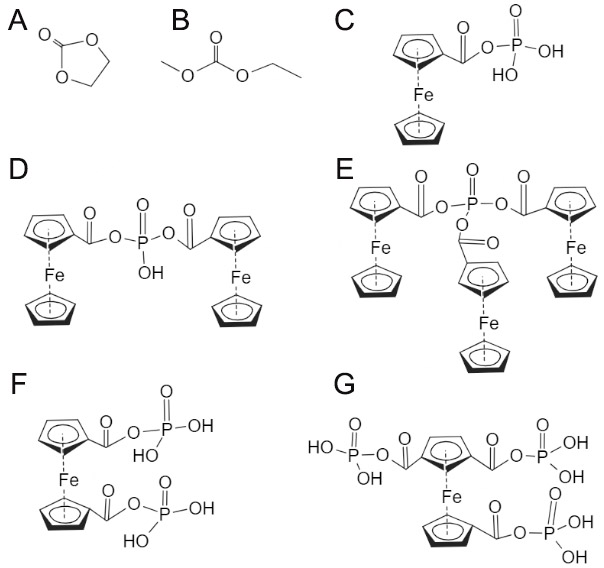
Figure 1. Molecular structures of the species used in the simulations: (A) EC (C3H4O3); (B) EMC (C4H8O3); (C) P-Fc (C11H11O5FeP); (D) P-Fc2 (C22H19O6Fe2P); (E) P-Fc3 (C33H27O7Fe3P); (F) P2-Fc (C12H12O10P2Fe); and (G) P3-Fc (C13H13O15P3Fe).
Numbers of molecules used in the simulation models
| System | EC | EMC | O2 | P-Fc3 | P-Fc2 | P-Fc | P2-Fc | P3-Fc |
| P/Fe = 1:3 | 346 | 292 | 480 | 24 | - | - | - | - |
| P/Fe = 1:2 | 346 | 292 | 480 | - | 24 | - | - | - |
| P/Fe = 1:1 | 346 | 292 | 480 | - | - | 24 | - | - |
| P/Fe = 2:1 | 346 | 292 | 480 | - | - | - | 12 | - |
| P/Fe = 3:1 | 346 | 292 | 480 | - | - | - | - | 8 |
ReaxFF-MD simulations
All reactive molecular dynamics simulations were performed using the LAMMPS package[32], while visualization and post-processing analyses of structural evolution, species formation, and reaction trajectories were conducted using VMD software[33].
After construction, each system was subjected to energy minimization followed by equilibration at 298 K for 80 ps. This procedure allowed sufficient diffusion and collision among electrolyte molecules, oxygen molecules, and fire-extinguishing-agent molecules, thereby establishing a relatively stable initial configuration and minimizing the influence of initial contact conditions on subsequent statistical analyses.
The simulations were carried out under the canonical ensemble with a time step of 0.25 fs. During the 1 ns simulation, the temperature was linearly increased from 298 to 2,500 K to induce thermal decomposition and combustion reactions. The equilibrated initial configurations of the five systems are shown in Figure 2.
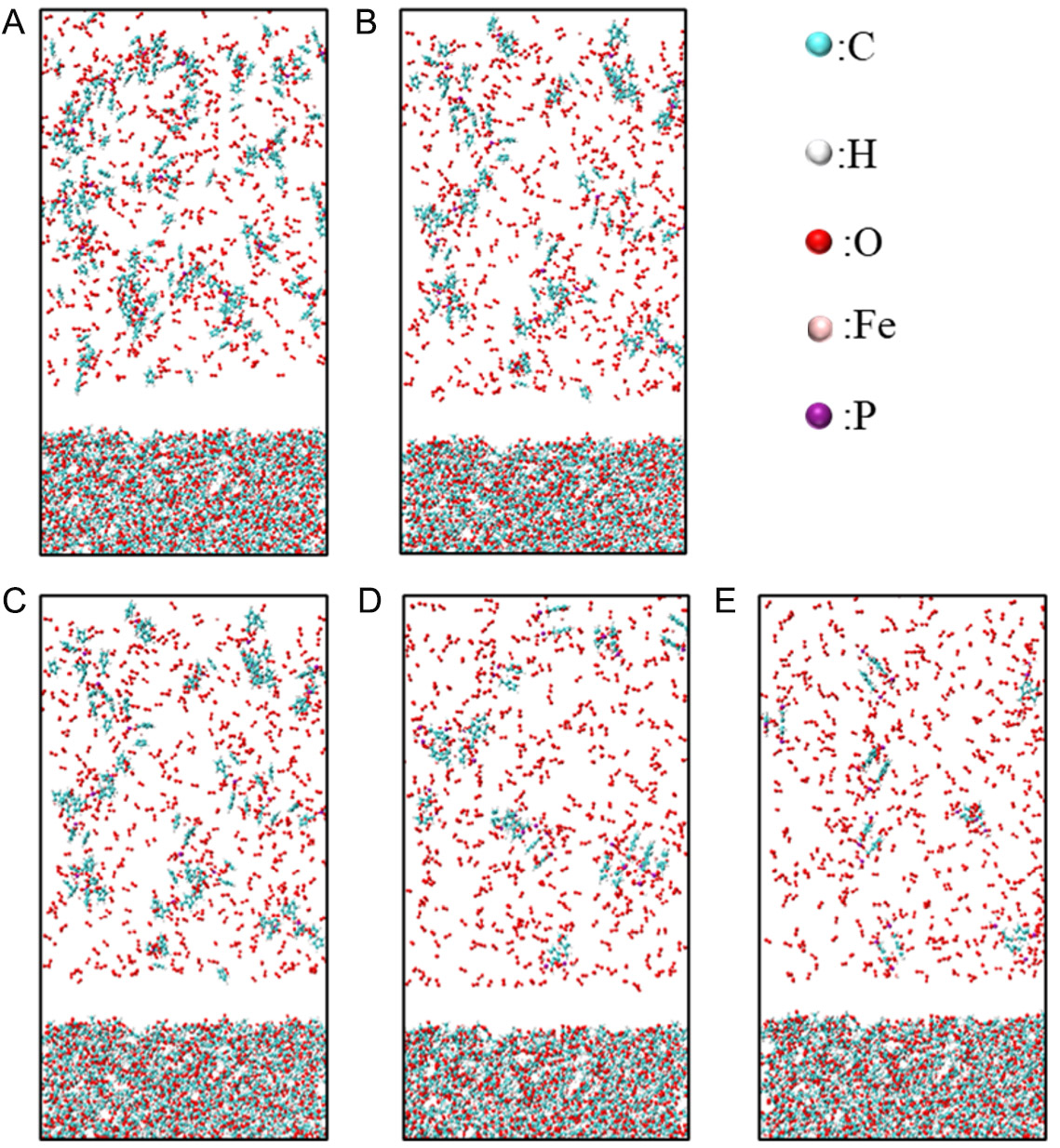
Figure 2. Initial simulation configurations of the systems containing phosphorus-iron-based fire-extinguishing agents with P/Fe ratios of (A) 1:3, (B) 1:2, (C) 1:1, (D) 2:1, and (E) 3:1.
Activation energy calculation
To quantitatively evaluate the combustion inhibition performance of different P/Fe ratios, additional isothermal simulations were conducted over the temperature range of 1,600-2,000 K at intervals of 100 K. Each temperature point was independently repeated three times to reduce statistical uncertainty.
The consumption of EC and EMC molecules was analyzed based on the first-order kinetic model. The first-order dynamic equation is expressed as:
Here, x(t) represents the concentration of EC or EMC molecules at time t, k is the reaction rate constant. Calculate the reaction rate constant corresponding to each temperature by solving formula (Eq. 1). Then, the five rate constants are substituted into the Arrhenius formula (Eq. 2) and the activation energy is obtained by fitting the data. The Arrhenius formula is:
A is the pre-exponential factor (frequency factor); Ea is the apparent activation energy; R is the molar gas constant; T is the temperature.
RESULTS AND DISCUSSION
Analysis of EC/EMC thermal decomposition products
For comparison, simulations of the blank EC/EMC/O2 system and the Fe-only system were conducted under identical conditions, and the corresponding results are provided in the Supplementary Materials. The results [Supplementary Figure 1] showed that the Fe-containing system exhibited a clear inhibitory effect relative to the blank system, while the P/Fe = 1:1 system displayed a further improvement in suppression performance. Therefore, in the present work, a series of P/Fe-containing systems with different molar ratios were constructed to further clarify the effects of composition on electrolyte decomposition, radical evolution, and the microscopic suppression mechanism.
To evaluate the extent of combustion reactions in EC/EMC electrolytes under different P/Fe ratios, the consumption behaviors of O2, EC, and EMC were monitored throughout the simulations. Meanwhile, the formation of major oxidation products, namely CO2 and H2O, was tracked. The remaining reactant concentrations and product yields provided direct insight into the combustion characteristics of each system.
Figure 3 shows the time evolution of O2, EC, and EMC during the simulations. All systems exhibited a broadly similar overall evolution pattern, characterized by relatively slow reactant consumption during the early and intermediate stages, followed by accelerated decomposition and oxidation at the high-temperature stage. Despite this common behavior, clear differences were observed among the different P/Fe ratios. During approximately 150-300 ps, the phosphorus-rich systems (P/Fe = 2:1 and 3:1) showed earlier decreases in EC and EMC, indicating earlier initiation of electrolyte decomposition. Between approximately 300 and 700 ps, reactant consumption proceeded more gradually in all systems. After approximately 700 ps, the numbers of EC, EMC, and O2 decreased rapidly, corresponding to extensive electrolyte decomposition and oxidation.
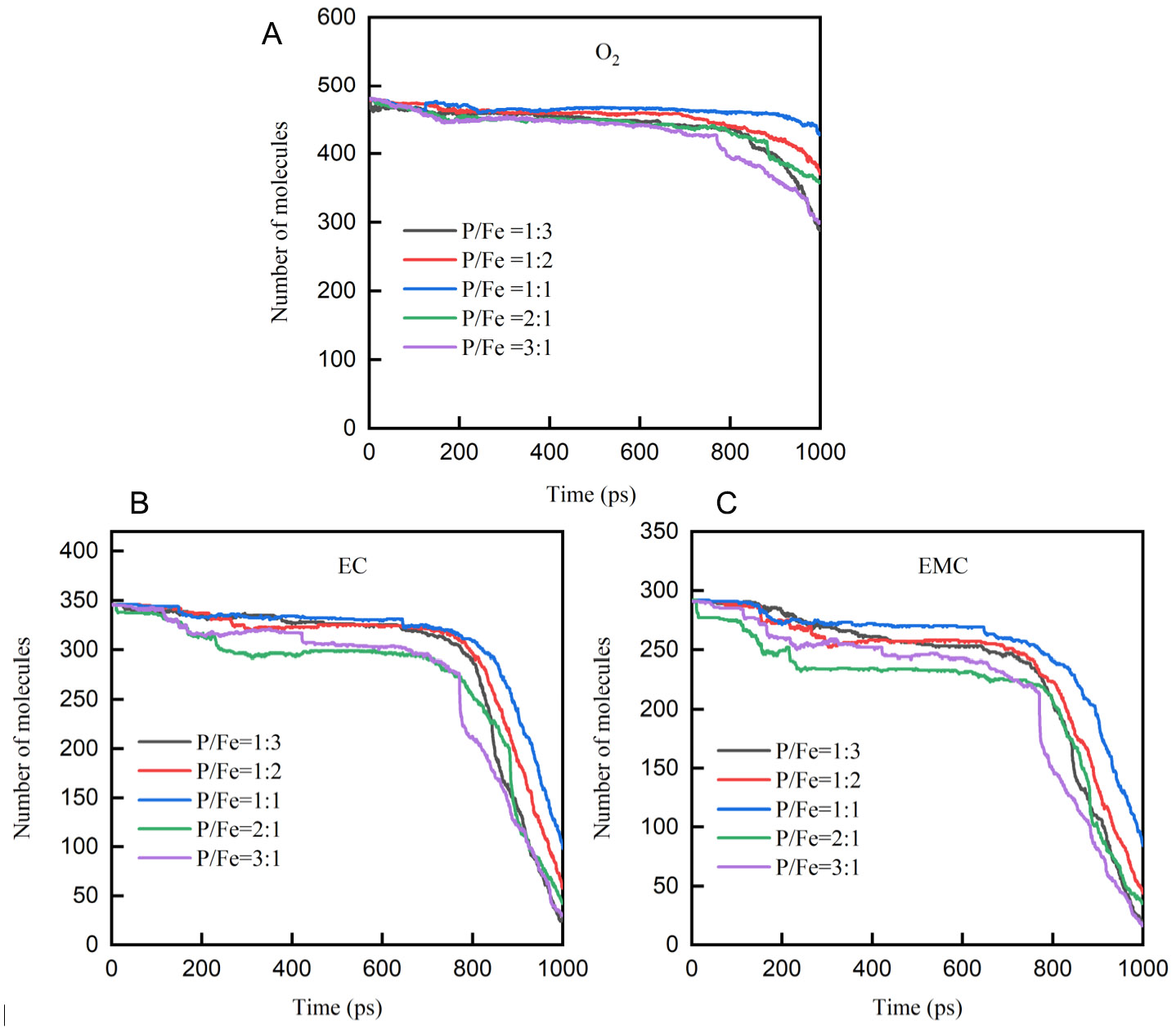
Figure 3. Time evolution of reactant molecules during combustion: (A) O2, (B) EC, and (C) EMC.
The onset and extent of rapid reactant consumption were strongly dependent on the P/Fe ratio. The phosphorus-rich systems entered the rapid-consumption stage earlier, whereas the P/Fe = 1:1 system exhibited the latest onset of pronounced EC and EMC decomposition. The iron-rich systems (P/Fe = 1:2 and 1:3) showed intermediate behavior. Consequently, the P/Fe = 1:1 system retained the largest amounts of both EC and EMC at the end of the simulation.
The evolution of the major oxidation products further supports this trend. As shown in Figure 4, CO2 formation occurred earlier in the iron-rich systems, whereas H2O formation began earlier in the phosphorus-rich systems. In contrast, the P/Fe = 1:1 system showed the latest onset of both CO2 and H2O formation and produced the lowest final amounts of these products. This indicated that the 1:1 composition most effectively delayed sustained oxidation and limited the conversion of electrolyte molecules into final combustion products.
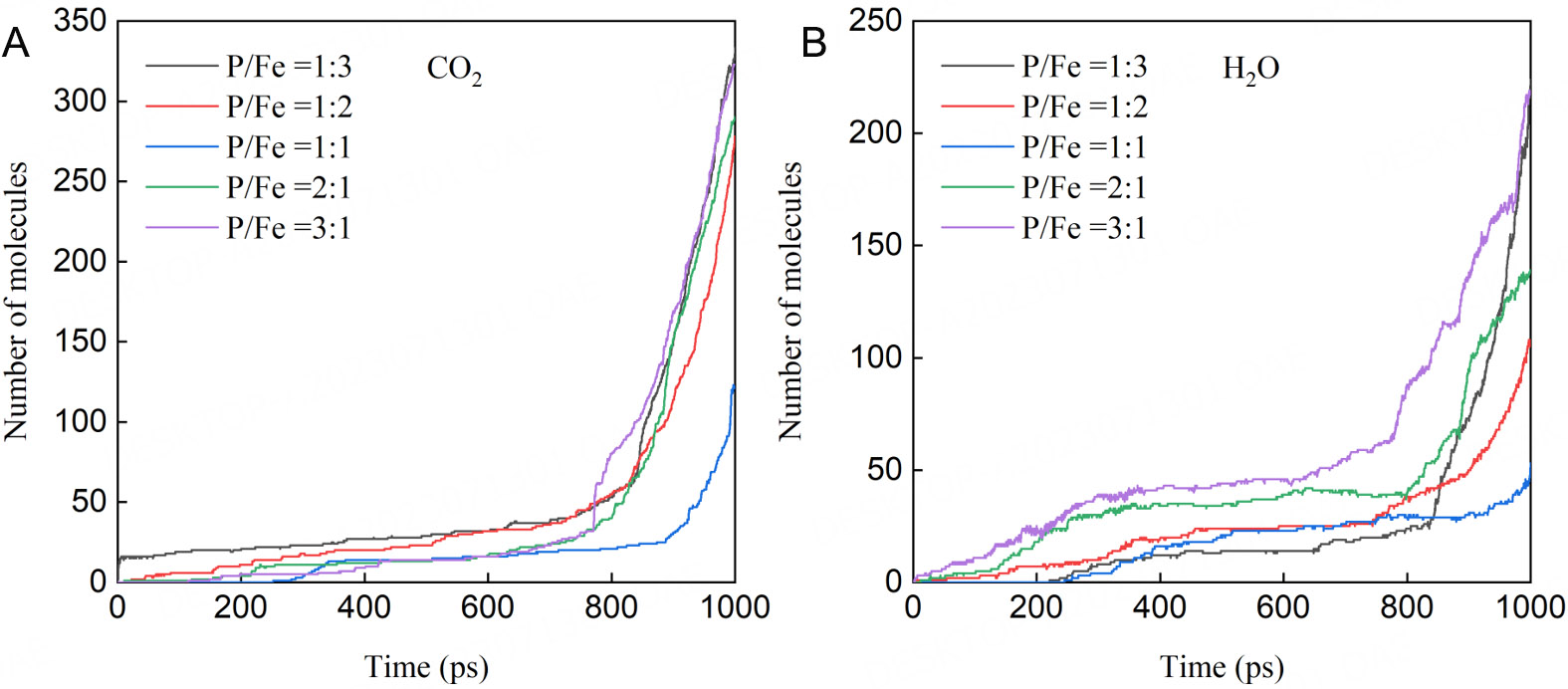
Figure 4. Evolution of total CO2 and H2O molecules during the simulation: (A) CO2 and (B) H2O.
The final residual fractions of EC and EMC are summarized in Table 2. The P/Fe = 1:1 system retained 98 EC molecules and 83 EMC molecules, corresponding to residual fractions of 28.3% and 28.4%, respectively, which were the highest among all investigated systems. In comparison, both Fe-rich and P-rich compositions showed substantially lower residual fractions. Taken together, the delayed reactant consumption, reduced CO2 and H2O formation, and higher final electrolyte retention consistently demonstrate that the P/Fe = 1:1 composition provides the strongest overall suppression of EC/EMC decomposition and oxidation.
Residual fractions of EC and EMC molecules in systems with different P/Fe ratios
| System | Remaining EC molecules | EC residual fraction | Remaining EMC molecules | EMC residual fraction |
| P/Fe = 1:3 | 27 | 7.8% | 17 | 5.8% |
| P/Fe = 1:2 | 57 | 16.5% | 45 | 15.4% |
| P/Fe = 1:1 | 98 | 28.3% | 83 | 28.4% |
| P/Fe = 2:1 | 43 | 12.4% | 36 | 12.3% |
| P/Fe = 3:1 | 30 | 8.7% | 18 | 6.2% |
Reaction pathway analysis of EC and EMC
To further clarify how the P/Fe ratio influences electrolyte decomposition at the molecular level, detailed reaction-pathway analysis was performed. The P/Fe = 1:1 system exhibited the strongest overall suppression performance; its EC and EMC decomposition pathways were selected for representative analysis, while the corresponding pathways of the other P/Fe systems are provided in Supplementary Figures 2-9 for comparison.
Figure 5 shows the main decomposition pathways of EC in the P/Fe = 1:1 system. The dominant initial pathway was identified as EC → C2H4 + CO3, indicating that cleavage of the carbonate framework represents the primary decomposition mode. Secondary pathways included the formation of C2H4O + CO2 and C3H3O3 + H. Compared with these secondary channels, the C2H4 + CO3 pathway retained a relatively stable carbonate-containing fragment, whereas the other pathways underwent further fragmentation and contributed to the formation of smaller products and radical species.
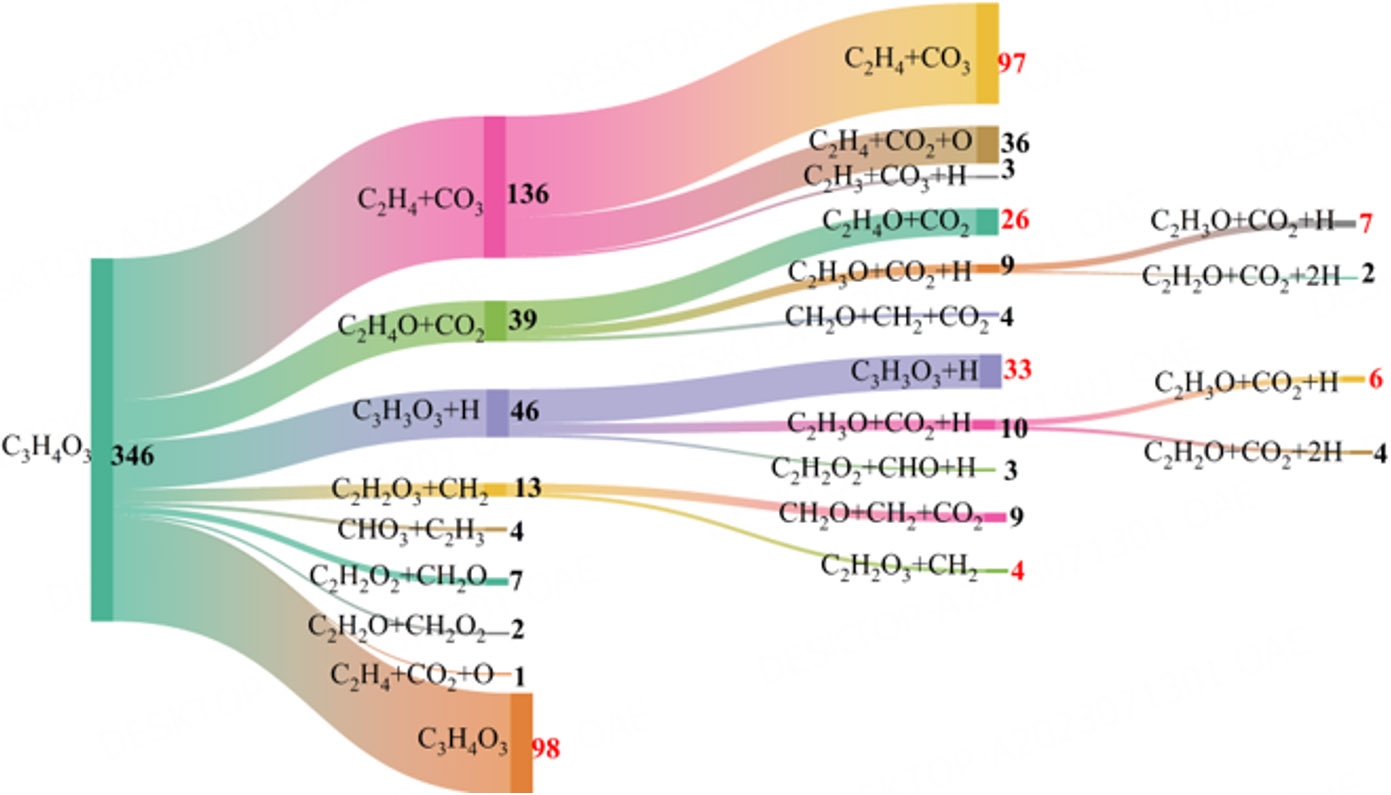
Figure 5. Reaction pathways of EC in the P/Fe = 1:1 system.
Figure 6 presents the decomposition pathways of EMC in the same system. In contrast to EC, EMC decomposition was dominated by side-chain cleavage. Two major reaction channels were identified, producing C2H3O3 + C2H5 and C4H7O3 + H, respectively, while a minor pathway generated C3H5O3 + CH3. The two dominant pathways subsequently converged to form the same intermediate combination, C2H3O3 + C2H4 + H, which underwent further dehydrogenation and fragmentation reactions.
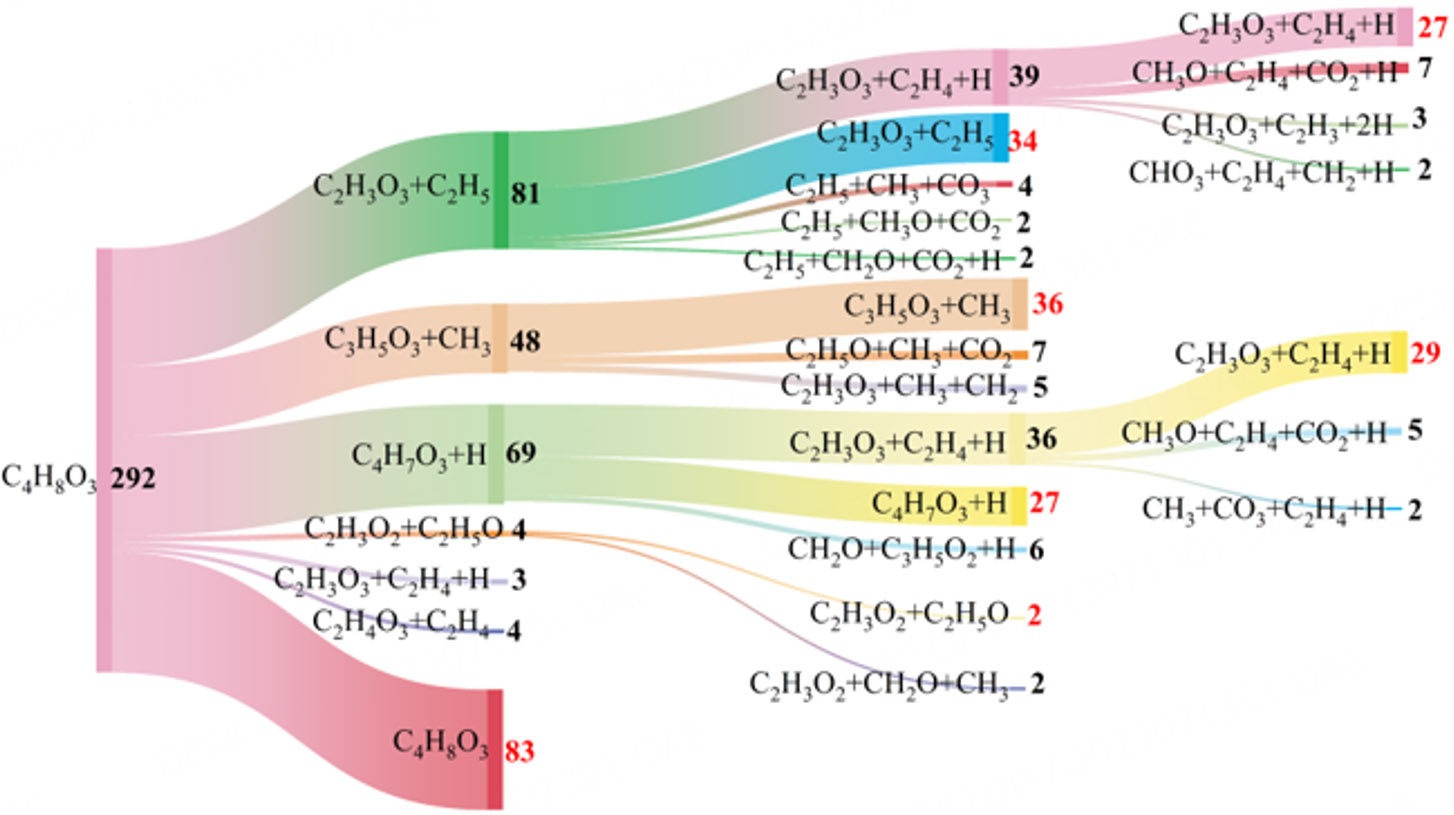
Figure 6. Reaction pathways of EMC in the P/Fe = 1:1 system.
Comparison with the Fe-rich and P-rich systems shows that variation in the P/Fe ratio does not introduce fundamentally different primary decomposition pathways for EC and EMC, but mainly changes the relative contributions of competing reaction channels. As summarized in Figure 7, for the P/Fe = 1:1 system the fractions of EC and EMC that did not enter the first-step reaction were 28.3% and 28.4%. In addition, the contribution of the relatively stable EC pathway producing C2H4 + CO3 was higher, whereas the contributions of several radical-generating EMC pathways were reduced.
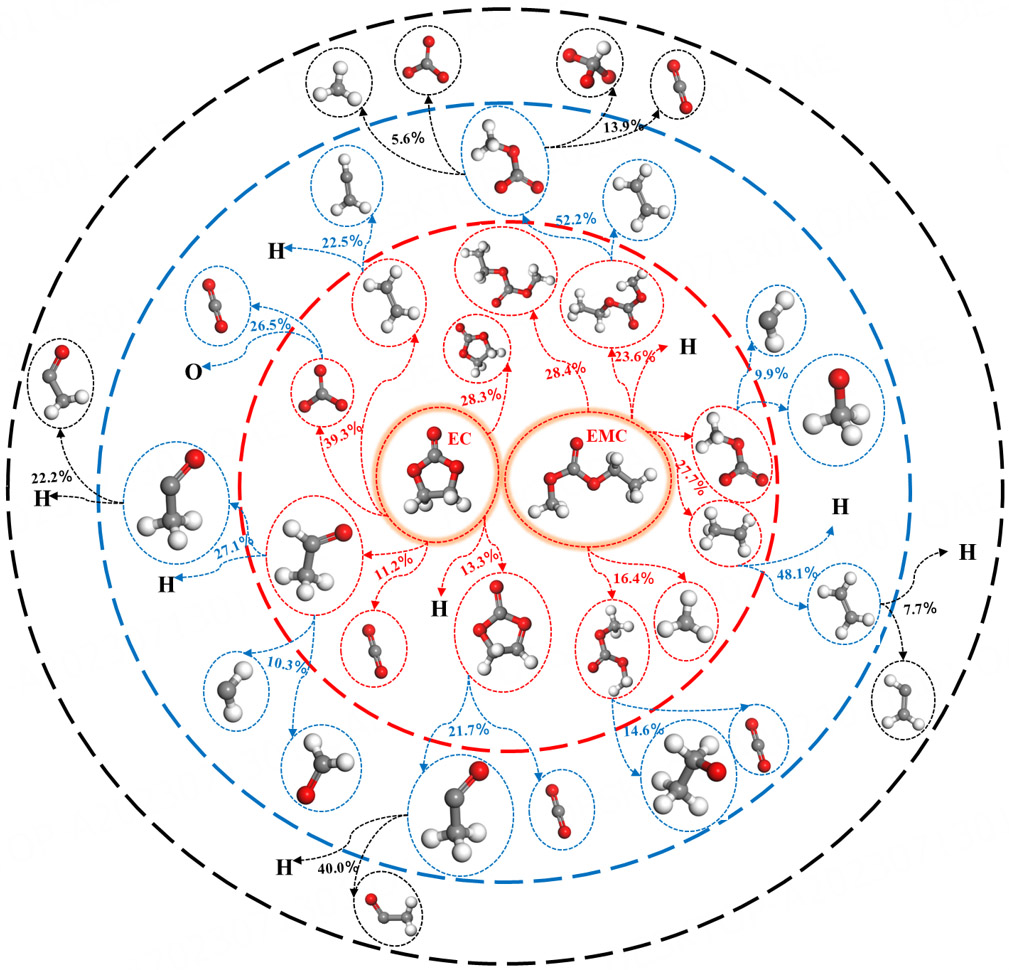
Figure 7. Schematic illustration of EC/EMC reaction pathways in the P/Fe = 1:1 system. (Red, first-step reactions; blue, second-step reactions; black, third-step reactions.)
These results indicated that the influence of the P/Fe ratio was expressed primarily through regulation of pathway branching and secondary decomposition rather than through the emergence of new primary reaction types. The P/Fe = 1:1 composition favored greater retention of parent molecules and intermediate species while reducing the contribution of pathways associated with further fragmentation and radical generation.
Radical generation and evolution characteristics
To further evaluate the influence of the P/Fe ratio on radical-related reactions during EC/EMC decomposition, representative radical species were analyzed based on the reaction-pathway statistics obtained from the ReaxFF-MD simulations. The radical counts reported here represent cumulative occurrence frequencies identified from EC/EMC/O2 reaction pathways. These statistics therefore reflect the relative activity of radical-generating pathways under different P/Fe conditions.
Figure 8 compares the generation frequencies of representative radicals, including O·, H·, CH3·, and C2H3·. A clear non-monotonic dependence on the P/Fe ratio was observed. The occurrence frequencies of O· generation reached its minimum at P/Fe = 1:2, whereas H· generation was lowest at P/Fe = 1:1. Further increasing the P/Fe ratio led to renewed increases in radical generation. The C2H3· generation frequency showed a similar minimum at P/Fe = 1:1, whereas CH3· generation increased markedly under phosphorus-rich conditions. These results indicate that neither increasing nor decreasing the P/Fe ratio leads to a continuous improvement in the suppression of radical-generating pathways.
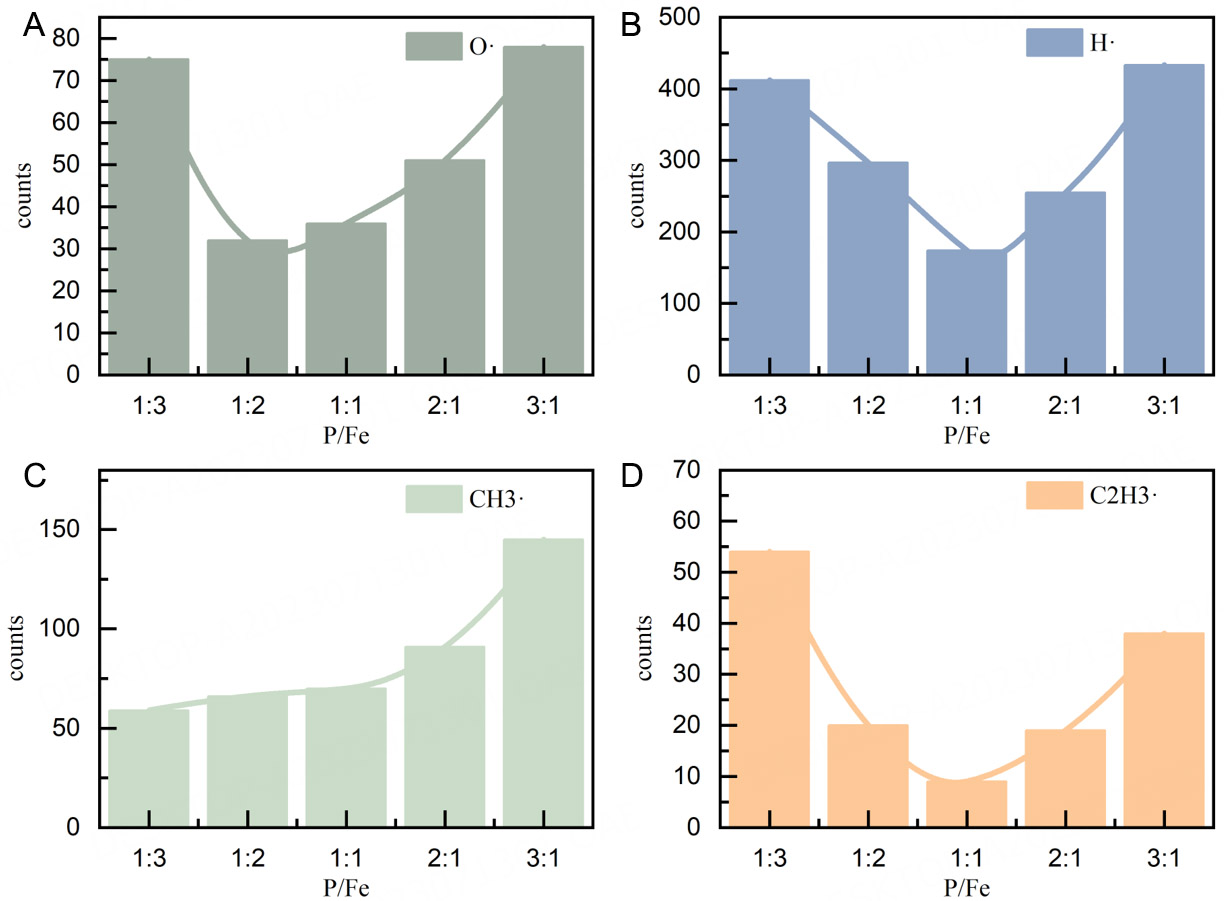
Figure 8. Comparison of key radical generation in different systems: (A) O·; (B) H·; (C) CH3·; and (D) C2H3·.
The oxygen-containing organic radicals shown in Figure 9 exhibited a similar composition-dependent trend. Most of the analyzed species, including CH2O·, CH3O·, and CHO3·, showed their lowest occurrence frequencies in the P/Fe = 1:1 system, whereas CHO· reached its minimum in the P/Fe = 1:3 system. In contrast, the phosphorus-rich systems generated larger numbers of several oxygen-containing radicals, particularly CHO3· and C2H3O·, with the P/Fe = 3:1 system exhibiting the highest values for several of these species.
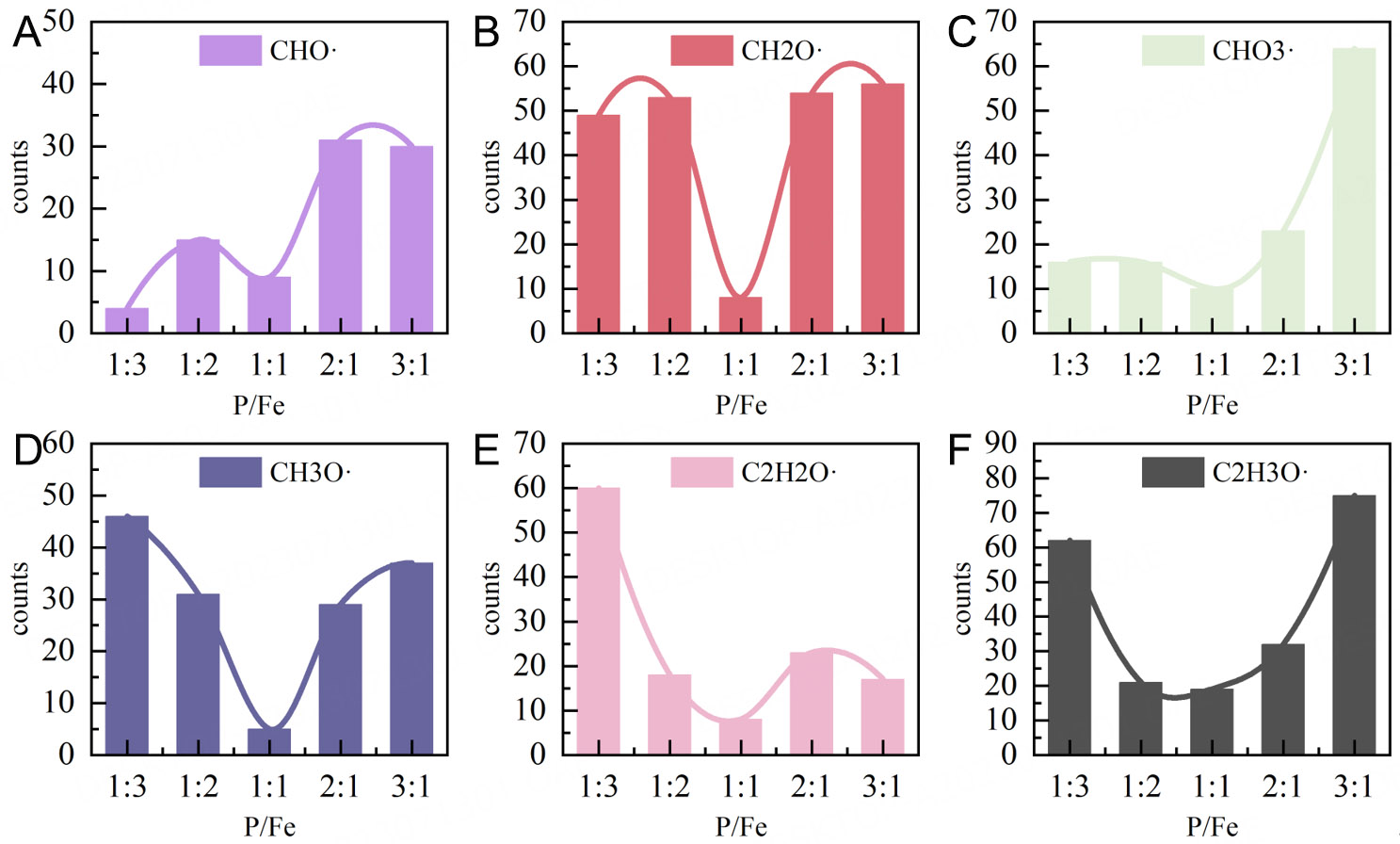
Figure 9. Comparison of oxygen-containing organic radicals in different systems: (A) CHO·; (B) CH2O·; (C) CHO3·; (D) CH3O·; (E) C2H2O·; and (F) C2H3O·.
Overall, the P/Fe = 1:1 system exhibited relatively low occurrence frequencies for most representative radical-generating pathways, whereas both strongly Fe-rich and P-rich compositions showed more extensive radical formation. This non-monotonic behavior highlights the importance of an appropriate P/Fe ratio for suppressing radical generation. Instead, an appropriate P/Fe ratio is required to limit the formation of key atomic, hydrocarbon, and oxygen-containing radicals, which is consistent with the enhanced electrolyte retention and reduced oxidation-product formation observed in the 1:1 system.
Synergistic combustion-suppression mechanism of phosphorus and iron
To quantify the synergistic effect associated with the P/Fe ratio, the reactions between extinguishing-agent-derived species and active radicals were further analyzed based on the reaction-pathway statistics of the extinguishing agents. Figure 10 summarizes representative reaction pathways of phosphorus-containing species in the P/Fe = 1:1 system. Phosphorus-containing species such as PO2· and PHO2· participated in reactions with H· and OH·, while precursor species including PO· and PH2O3 can react with H·, O·, and OH· to form further phosphorus-containing products. These reactions provide multiple pathways for the consumption of key radicals involved in chain propagation.
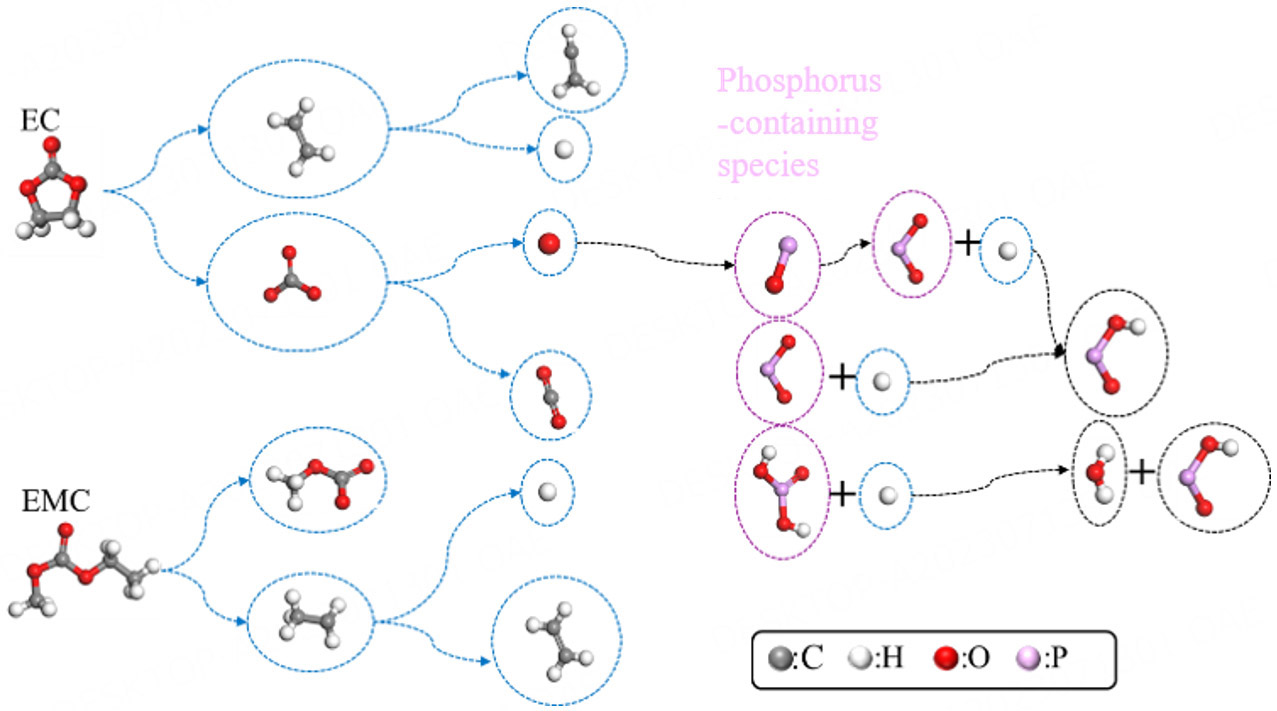
Figure 10. Proposed transformation pathways of phosphorus-containing species and their radical-scavenging mechanisms.
Figure 11 shows representative radical-consumption reactions involving extinguishing agent-derived species in the P/Fe = 1:1 system, while Table 3 summarizes the corresponding consumption counts for different P/Fe ratios. Considerable differences were observed among the systems. For example, the P/Fe = 1:3 system showed a relatively high number of H· consumption events, whereas the P/Fe = 3:1 system exhibited the highest OH· consumption count. In contrast, the P/Fe = 1:1 system did not show the maximum consumption frequency for every radical species.
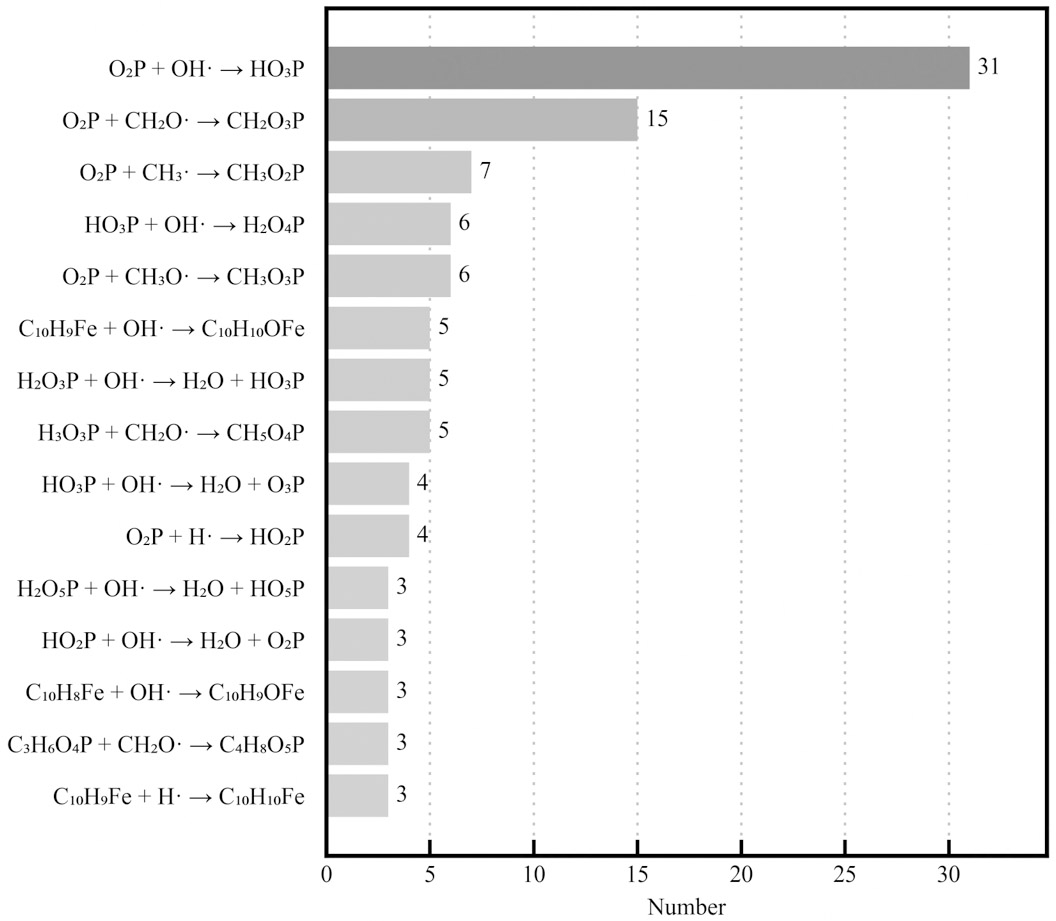
Figure 11. Major radical-consumption reactions involving P- or Fe-containing species in the 1:1 system.
Consumption counts of reactive radicals/fragments by P- or Fe-containing species at different P/Fe ratios
| P/Fe | Number of H· | Number of O· | Number of OH· | Number of CH3· | Number of C2H3· | Number of CH2O· | Number of CH3O· |
| 1:3 system | 95 | 26 | 72 | 36 | 9 | 16 | 82 |
| 1:2 system | 21 | 10 | 35 | 21 | 1 | 0 | 29 |
| 1:1 system | 50 | 28 | 90 | 28 | 1 | 13 | 48 |
| 2:1 system | 11 | 8 | 27 | 17 | 1 | 1 | 44 |
| 3:1 system | 36 | 16 | 209 | 28 | 5 | 16 | 114 |
It should be emphasized that the radical-generation and radical-consumption statistics were obtained from different reaction pathway datasets. Radical-generation counts were derived from EC/EMC/O2 decomposition pathways, whereas the consumption counts represent reactions involving extinguishing-agent-derived species. Therefore, these two quantities cannot be directly subtracted as absolute concentrations.
Nevertheless, comparison of the two sets of pathway statistics provides insight into the overall reaction behavior. The strongly Fe-rich and P-rich systems exhibited relatively high radical-generation frequencies together with frequent radical-consumption events, indicating that a high consumption count does not necessarily correspond to stronger suppression. Instead, it may reflect more intensive formation and subsequent reaction of radicals within the system. In contrast, the P/Fe = 1:1 system maintained effective radical-consumption pathways while exhibiting relatively low generation frequencies for most key radicals.
These results indicate that the superior suppression performance of the P/Fe = 1:1 system is not associated with maximizing the absolute number of radical-consumption reactions. Rather, an appropriate P/Fe ratio limits radical generation during EC/EMC decomposition while preserving the ability of extinguishing-agent-derived species to participate in radical-consumption reactions. This combined effect provides a molecular-level explanation for the optimum combustion-suppression performance observed at P/Fe = 1:1.
Activation energy analysis
To quantitatively evaluate the kinetic inhibition effect of different P/Fe ratios, the apparent activation energies of EC and EMC decomposition were calculated from the isothermal simulations using the Arrhenius relationship. The corresponding kinetic parameters are summarized in Table 4, and the Arrhenius fitting results are shown in Figure 12.
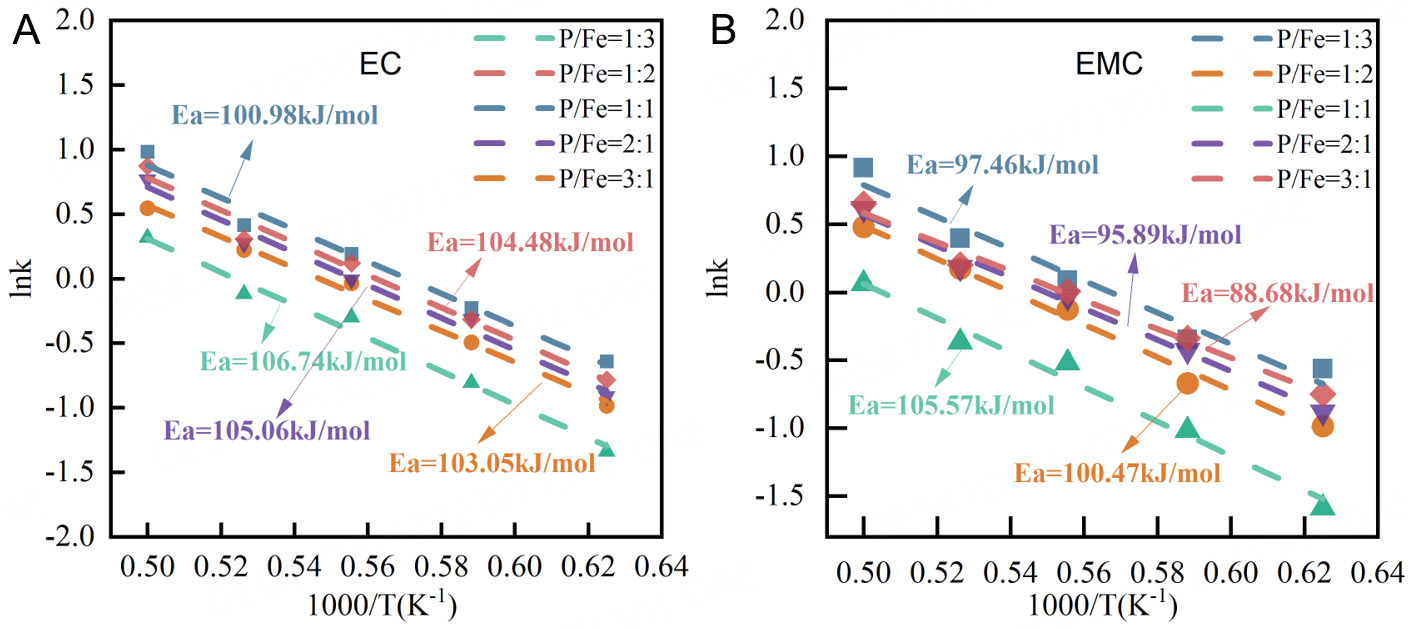
Figure 12. Arrhenius fitting results for apparent activation energies of (A) EC and (B) EMC in systems with different P/Fe ratios.
Combustion-suppression performance and key parameters for systems with different P/Fe ratios
| P/Fe | 1:3 system | 1:2 system | 1:1 system | 2:1 system | 3:1 system |
| Remaining EC Molecules | 27 | 57 | 98 | 43 | 30 |
| Remaining EMC Molecules | 17 | 45 | 83 | 36 | 18 |
| EC apparent activation energy (kJ/mol) | 100.98 | 103.05 | 106.74 | 105.06 | 104.48 |
| EMC apparent activation energy (kJ/mol) | 97.46 | 100.47 | 105.57 | 95.89 | 88.68 |
| Number of O· | 75 | 32 | 36 | 51 | 78 |
| Number of H· | 412 | 297 | 174 | 255 | 433 |
| Number of CH3· | 59 | 66 | 70 | 91 | 145 |
| Number of C2H3· | 54 | 20 | 9 | 19 | 38 |
As summarized in Table 4, the apparent activation energies of EC ranged from 100.98 to 106.74 kJ/mol. The lowest value was obtained for the P/Fe = 1:3 system, whereas the highest value was observed for the
CONCLUSIONS
This study employed ReaxFF molecular dynamics to clarify how the P/Fe ratio in phosphorus-iron-based fire-extinguishing agents influences the combustion behavior of EC/EMC electrolytes. The P/Fe ratio significantly affected pathway branching, radical-generation behavior, and combustion kinetics. Among the investigated compositions, the P/Fe = 1:1 system exhibited the highest residual fractions of EC and EMC, the lowest CO2 and H2O yields, and the highest apparent activation energies for both solvents, demonstrating the strongest overall suppression effect.
Reaction-pathway analysis further showed that the P/Fe = 1:1 system exhibited relatively low occurrence frequencies of key radical-generation pathways while maintaining effective radical-consumption reactions involving extinguishing-agent-derived species. In contrast, strongly Fe-rich and P-rich systems showed more intensive radical generation together with frequent radical-consumption events, indicating that a larger number of radical-consumption reactions does not necessarily correspond to stronger combustion suppression. The main contribution of this work is therefore the identification of an optimum P/Fe-dependent suppression state, rather than a simple monotonic dependence on the P/Fe ratio. These findings established the P/Fe ratio as a key molecular design parameter for regulating radical-generation and radical-consumption behavior and optimizing combustion suppression in LIB electrolytes.
DECLARATIONS
Acknowledgment
The authors are grateful to Dongju Zhang of Shandong University for collaboration on the determination of key ReaxFF force field parameters for Fe/P systems.
Authors’ contributions
Conceptualization, methodology: Guo, G.
Data curation, writing original draft: Hong, C.
Validation, writing review & editing: Zhao, Z.; Wu, S.
Availability of data and materials
Some results supporting the study are presented in the Supplementary Materials. Other raw data that support the findings of this study are available from the corresponding author upon reasonable request.
AI and AI-assisted tools statement
The AI tool (DeepSeek-V4-Flash, released 2026-4-24) was used solely for language editing. The tool did not influence the study design, data collection, analysis, interpretation, or the scientific content of the work. All authors take full responsibility for the accuracy, integrity, and final content of the manuscript.
Financial support and sponsorship
This work was supported by the 111 Project of China (B17034) and the Innovative Research Team Development Program of the Ministry of Education of China (IRT_17R83).
Conflicts of interest
All authors declared that there are no conflicts of interest.
Ethical approval and consent to participate
Not applicable.
Consent for publication
Not applicable.
Copyright
© The Author(s) 2026.
Supplementary Materials
REFERENCES
1. Islam, S.; Weerasinghe, H.; Prado, D. M.; Gonzaga, A. N.; Burda, C. Diversifying the materials and technologies for the future of energy storage. Energy. Fuels. 2025, 39, 8369-90.
2. Dai, Y.; Panahi, A. Thermal runaway process in lithium-ion batteries: a review. Next. Energy. 2025, 6, 100186.
3. Le, P.; Vuong, D. T.; Natsuki, J.; Natsuki, T. Overview of the thermal runaway in lithium-ion batteries with application in electric vehicles: working principles, early warning, and future outlooks. Energy. Fuels. 2023, 37, 17052-74.
4. Mao, Y.; Chen, Y.; Chen, M. Review of flame behavior and its suppression during thermal runaway in lithium-ion batteries. Batteries 2024, 10, 307.
5. Wang, Q.; Jiang, L.; Yu, Y.; Sun, J. Progress of enhancing the safety of lithium ion battery from the electrolyte aspect. Nano. Energy. 2019, 55, 93-114.
6. Liao, Z.; Zhang, S.; Zhao, Y.; et al. Experimental evaluation of thermolysis-driven gas emissions from LiPF6-carbonate electrolyte used in lithium-ion batteries. J. Energy. Chem. 2020, 49, 124-35.
7. Fernandes, Y.; Bry, A.; De Persis, S. Thermal degradation analyses of carbonate solvents used in Li-ion batteries. J. Power. Sources. 2019, 414, 250-61.
8. Zhang, L.; Hu, X.; Wang, Z.; et al. Molecular dynamics simulation of thermal decomposition and combustion of electrolytes in lithium-ion batteries. Fire. Saf. J. 2020, 115, 103166.
9. Liu, Y.; Li, Y.; Zhang, S.; Liu, R.; Cao, W. Thermal decomposition-explosion mechanism in ternary electrolyte solvent for lithium-ion batteries by experiments and MD-ReaxFF. Process. Saf. Environ. Prot. 2025, 204, 108056.
10. Zhang, L.; Jin, K.; Sun, J.; Wang, Q. A review of fire-extinguishing agents and fire suppression strategies for lithium-ion batteries fire. Fire. Technol. 2022, 60, 817-58.
11. Wang, S.; Gong, X.; Shao, R.; et al. Suppression effects of different extinguishing agents on vent gases fires from lithium-ion batteries after thermal runaway: a comprehensive experimental and numerical study. Fire. Saf. J. 2024, 148, 104227.
12. Wang, K.; Ouyang, D.; Yuan, S.; et al. Experimental study on inhibition effect of Novec-1230 on thermal runaway fire of lithium-ion battery packs induced by overcharging. J. Energy. Storage. 2025, 120, 116451.
13. Zhang, Y.; Peng, W.; Liu, X.; et al. Experimental study on suppression of thermal runaway in lithium-ion battery by mixed particle size water mist. Process. Saf. Environ. Prot. 2023, 179, 189-98.
14. Sun, H.; Zhang, L.; Duan, Q.; et al. Experimental study on suppressing thermal runaway propagation of lithium-ion batteries in confined space by various fire extinguishing agents. Process. Saf. Environ. Prot. 2022, 167, 299-307.
15. Ma, Y.; Zhang, Y.; Chen, N.; et al. Thermal runaway propagation behavior and cooling effect of water mist within a 18650-type LiFePO4 battery module under different conditions. Process. Saf. Environ. Prot. 2024, 185, 1362-72.
16. Egelhaaf, M.; Kress, D.; Wolpert, D.; Lange, T.; Justen, R.; Wilstermann, H. Fire fighting of Li-ion traction batteries. SAE. Int. J. Alt. Power. 2013, 2, 37-48.
17. Koshiba, Y.; Okazaki, S.; Ohtani, H. Experimental investigation of the fire extinguishing capability of ferrocene-containing water mist. Fire. Saf. J. 2016, 83, 90-8.
18. Meng, X.; Wang, Z.; Liu, B.; et al. Enhancing extinguishing efficiency for lithium-ion battery fire: investigating the extinguishing mechanism and surface/interfacial activity of F-500 microcapsule extinguishing agent. eTransportation 2024, 22, 100357.
19. Haoyang, L.; Jian, L.; Jianhao, W.; Liping, Y. Study on extinguishing performance and suppression mechanism of thermal runaway combustible gas flame of lithium battery by NH4H2PO4 water mist. Case. Stud. Therm. Eng. 2025, 71, 106208.
20. Li, X.; Li, W.; Chen, L.; et al. Ethoxy (pentafluoro) cyclotriphosphazene (PFPN) as a multi-functional flame retardant electrolyte additive for lithium-ion batteries. J. Power. Sources. 2018, 378, 707-16.
21. Koshiba, Y.; Iida, K.; Ohtani, H. Fire extinguishing properties of novel ferrocene/surfynol 465 dispersions. Fire. Saf. J. 2015, 72, 1-6.
22. Yan, C.; Pan, X.; Hua, M.; Li, S.; Guo, X.; Zhang, C. Study on the fire extinguishing efficiency and mechanism of composite superfine dry powder containing ferrocene. Fire. Saf. J. 2022, 130, 103606.
23. Schartel, B. Phosphorus-based flame retardancy mechanisms—old hat or a starting point for future development? Materials 2010, 3, 4710-45.
24. He, Z.; Guo, Y.; Zhou, X.; Zhang, H. Ammonium phosphate-based dry powder and Na2HPO4·12H2O composite powder for suppressing the thermal runaway of lithium-ion batteries. J. Power. Sources. 2025, 654, 237819.
25. Guo, G.; Hong, C.; Wang, Z.; Zhao, Z.; Wu, S. Mechanistic investigation of combustion suppression in lithium-ion electrolytes by ferrocenecarboxylic acid via ReaxFF MD and TG-FTIR-GC/MS. Int. J. Hydrogen. Energy. 2026, 227, 154517.
26. Van Duin, A. C. T.; Dasgupta, S.; Lorant, F.; Goddard, W. A. ReaxFF: a reactive force field for hydrocarbons. J. Phys. Chem. A. 2001, 105, 9396-409.
27. Chenoweth, K.; Van Duin, A. C. T.; Goddard, W. A. ReaxFF reactive force field for molecular dynamics simulations of hydrocarbon oxidation. J. Phys. Chem. A. 2008, 112, 1040-53.
28. Senftle, T. P.; Hong, S.; Islam, M. M.; et al. The ReaxFF reactive force-field: development, applications and future directions. npj. Comput. Mater. 2016, 2, 15011.
29. Yao, N.; Chen, X.; Fu, Z.; Zhang, Q. Applying classical, ab initio, and machine-learning molecular dynamics simulations to the liquid electrolyte for rechargeable batteries. Chem. Rev. 2022, 122, 10970-1021.
30. Kim, S.; Duin, A. C. V.; Shenoy, V. B. Effect of electrolytes on the structure and evolution of the solid electrolyte interphase (SEI) in Li-ion batteries: a molecular dynamics study. J. Power. Sources. 2011, 196, 8590-7.
31. Fedkin, M. V.; Shin, Y. K.; Dasgupta, N.; et al. Development of the ReaxFF methodology for electrolyte-water systems. J. Phys. Chem. A. 2019, 123, 2125-41.
32. Aktulga, H.; Fogarty, J.; Pandit, S.; Grama, A. Parallel reactive molecular dynamics: numerical methods and algorithmic techniques. Parallel. Comput. 2012, 38, 245-59.
Cite This Article
 Open Access
How to Cite
Guo, G.; Hong, C.; Zhao, Z.; Wu, S. Mechanism investigations of EC/EMC electrolyte combustion suppression by phosphorus-iron agents via ReaxFF MD. Energy Mater. 2026, 6, 600144. https://dx.doi.org/10.20517/energymater.2026.207
Download Citation
If you have the appropriate software installed, you can download article citation data to the citation manager of your choice. Simply select your manager software from the list below and click on download.
Export Citation File
Type of Import
Tips on Downloading Citation
Citation Manager File Format
Type of Import
Direct Import: When the Direct Import option is selected (the default state), a dialogue box will give you the option to Save or Open the downloaded citation data. Choosing Open will either launch your citation manager or give you a choice of applications with which to use the metadata. The Save option saves the file locally for later use.
Indirect Import: When the Indirect Import option is selected, the metadata is displayed and may be copied and pasted as needed.
About This Article
Special Topic
Copyright

Data & Comments
Data
0











Comments
Comments must be written in English. Spam, offensive content, impersonation, and private information will not be permitted. If any comment is reported and identified as inappropriate content by OAE staff, the comment will be removed without notice. If you have any queries or need any help, please contact us at [email protected].