

fig1
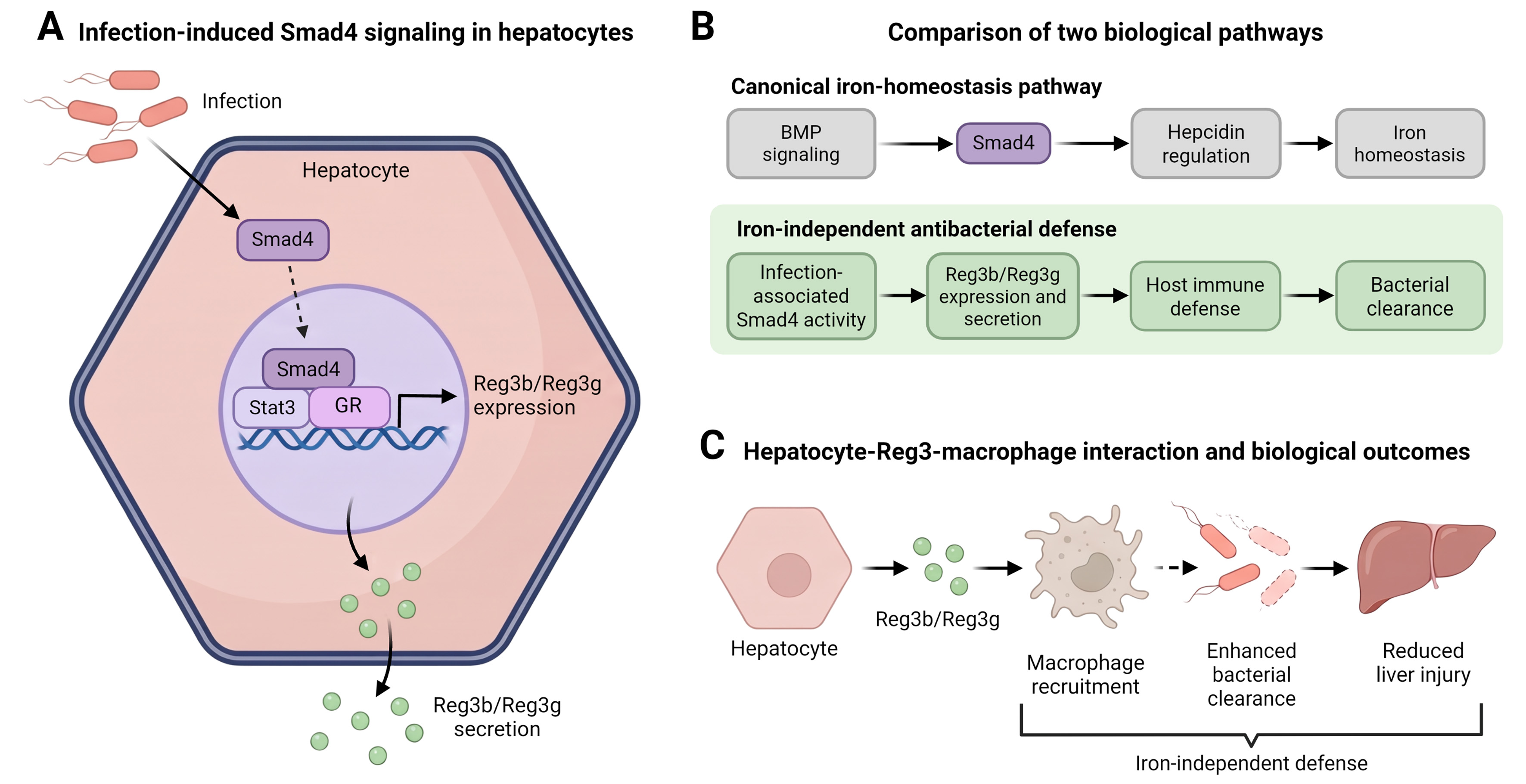
Figure 1. Dual transcriptional programs governed by hepatic Smad4 in iron homeostasis and antibacterial immunity.
(A) Graphic model depicting the iron-independent Smad4-Reg3-macrophage axis mediating hepatic antibacterial host defense. During bacterial infection, hepatocyte-resident Smad4 acts as a transcriptional co-activator together with Stat3 and GR to induce Reg3b and Reg3g expression and secretion. Secreted Reg3 proteins promote macrophage recruitment rather than direct bacterial killing, supporting bacterial clearance and limiting liver tissue injury; (B) Side-by-side comparison of two biologically distinct Smad4-dependent pathways. Upper: canonical BMP-Smad4-hepcidin signaling maintains systemic iron homeostasis. Lower: during bacterial infection, Smad4 cooperates with Stat3-GR complexes to upregulate Reg3b/Reg3g and initiate macrophage-dependent host defense; (C) Working model for the hepatic Smad4-dependent antibacterial response. In the proposed model, infection-associated signals engage hepatocyte Smad4 activity, followed by Reg3b/Reg3g secretion, macrophage recruitment, and bacterial elimination. The upstream signals that redirect Smad4 transcriptional output remain uncharacterized. Under the tested experimental conditions, Reg3-driven host protection is predominantly mediated by immune-cell recruitment, not direct bactericidal effects. Source: Original schematic prepared by the authors for this article. GR: Glucocorticoid receptor; BMP: bone morphogenetic protein.

