

fig2
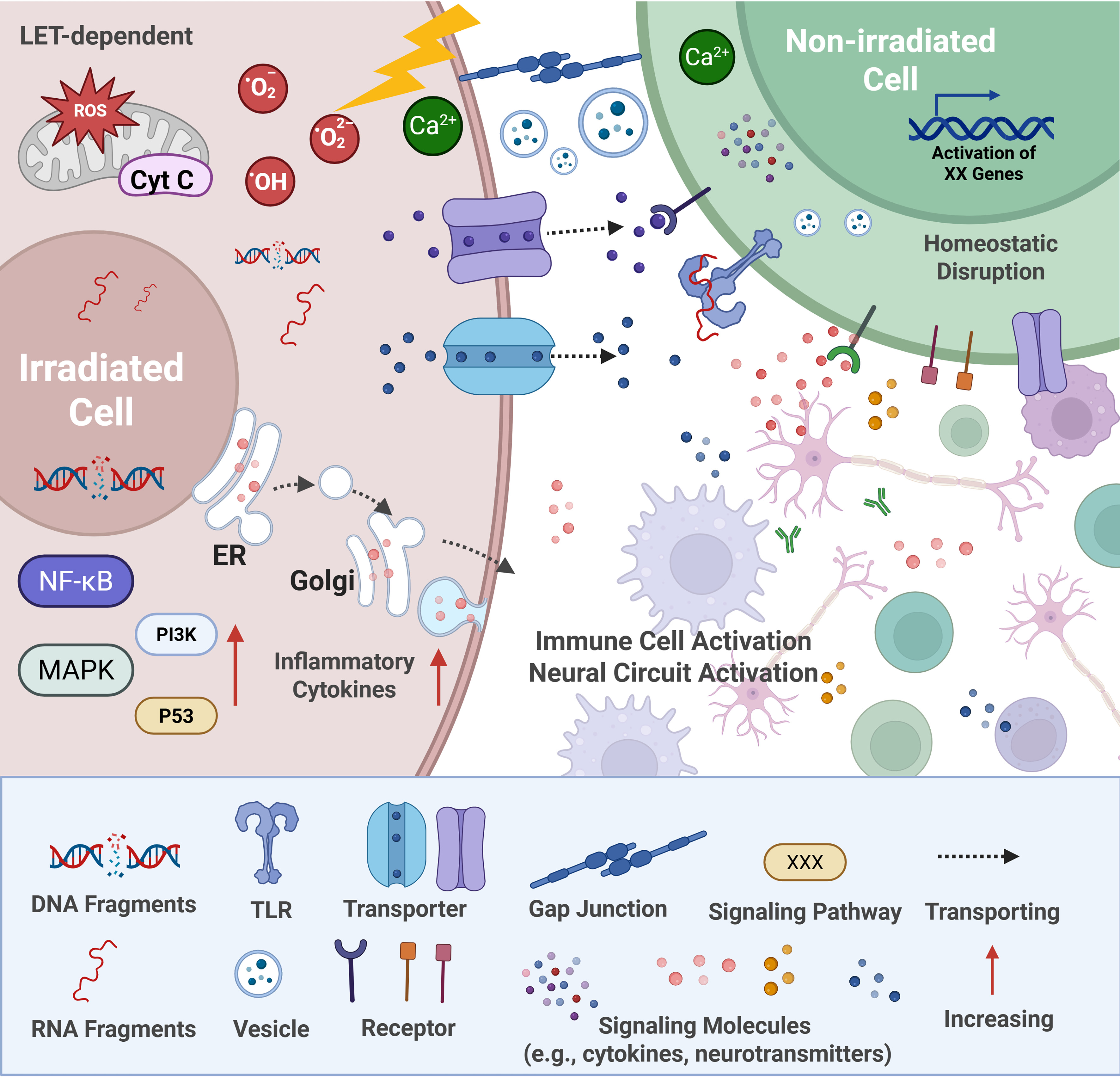
Figure 2. Molecular mediators and routes of radiation-induced intercellular signal transmission.
Ionizing radiation triggers intracellular stress responses in irradiated cells, including DNA damage, ROS accumulation, and activation of signaling pathways, resulting in the release of diverse signaling mediators that transmit damage signals to non-irradiated cells. These mediators are broadly classified into four categories: direct contact-dependent signals, vesicle-mediated cargo, soluble factors, and neurotransmitter-like signals, and are conveyed via gap junctions, ligand-receptor interactions, and vesicle trafficking (endocytosis/exocytosis). Together, these interconnected routes enable radiation-derived signals to propagate locally and systemically while engaging immune and neural circuits to coordinate intercellular communication. This figure was created in BioRender. Zheng, X. (2026) https://BioRender.com/twf4nnj. LET: Linear energy transfer; ROS: reactive oxygen species; Cyt C: cytochrome c; NF-κB: nuclear factor kappa B; PI3K: phosphoinositide 3-kinase; MAPK: mitogen-activated protein kinase; ER: endoplasmic reticulum; TLR: Toll-like receptor.

