

Advancing Canada’s energy future: a systematic-descriptive review of CCUS and blue hydrogen for environmental sustainability
 0
Graphical Abstract
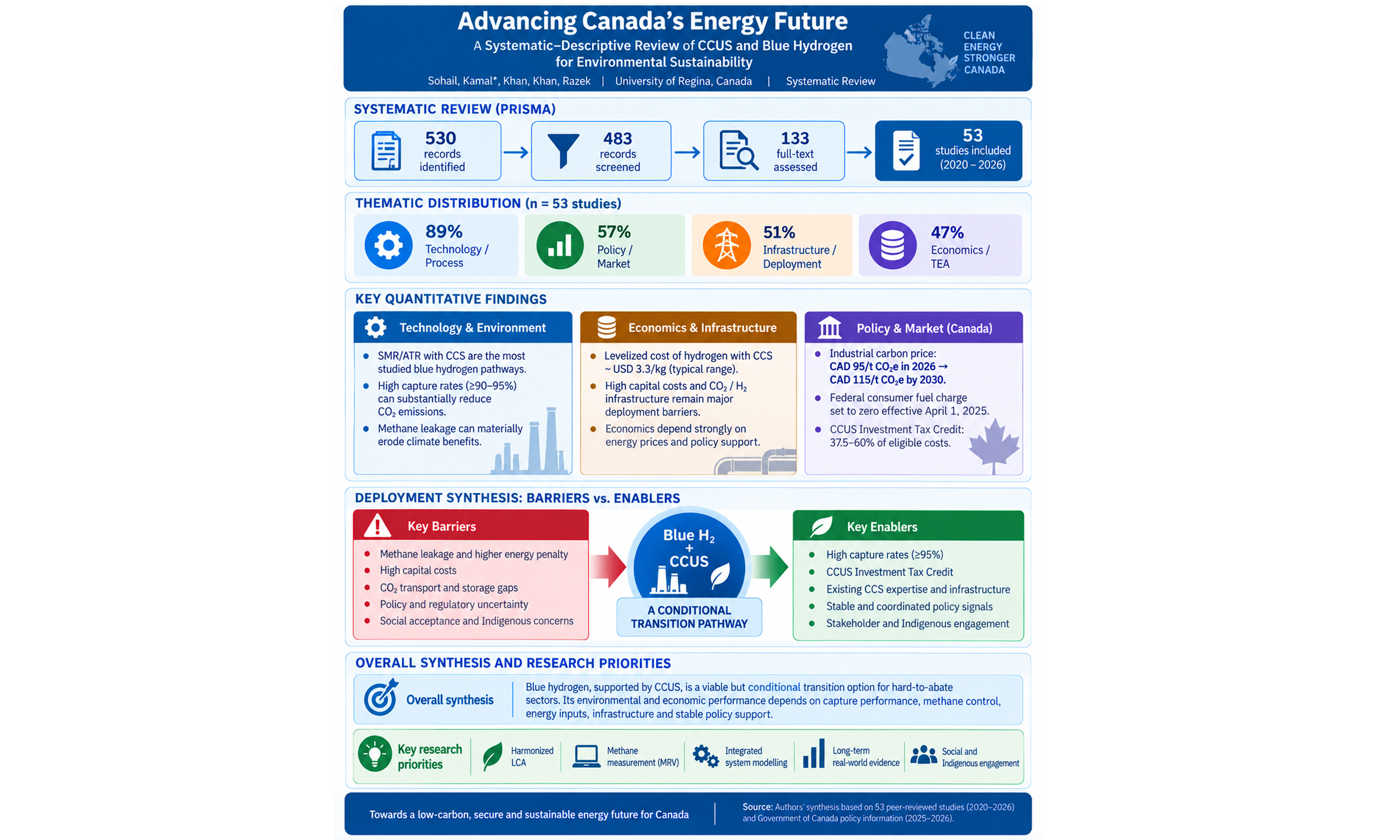
Abstract
Carbon Capture, Utilization, and Storage (CCUS) and blue hydrogen are increasingly considered potential components of industrial decarbonization strategies, yet the associated evidence remains fragmented across technological, environmental, economic, infrastructure, and policy dimensions. This study conducts a systematic descriptive review of journal articles, review articles, and conference papers published between 2015 and 2026, sourced from Web of Science and ScienceDirect, to critically assess the role of CCUS and blue hydrogen in advancing Canada's environmental sustainability and net-zero objectives. The evidence indicates that the environmental performance of blue hydrogen depends heavily on production technology, CO2-capture performance, upstream methane emissions, energy inputs, and lifecycle system boundaries. In one directly comparable steam methane reforming assessment, integrating ≥ 95% CO2 capture reduced lifecycle emissions from 11.99 to
Keywords


 Download PDF
INTRODUCTION
Climate change mitigation has become an urgent global priority, with countries facing increasing pressure to decarbonize energy systems while maintaining economic stability and energy security. Future energy supply involves transformation of fossil fuels to adopt renewable energy sources to reduce greenhouse gas emissions[1]. Canada represents a particularly critical case in this transition. Since 1948, Canada’s average temperature has increased at nearly twice the global rate, with northern regions experiencing even more accelerated warming. The Arctic permafrost alone contains approximately 1.7 trillion metric tons of carbon[2], about 51 times the carbon released as greenhouse gases (GHGs) in 2019, posing significant long-term climate risks if destabilized.
At the same time, Canada is a major fossil fuel producer and exporter. It ranks among the world’s top producers of natural gas and holds the third-largest proven oil reserves, primarily concentrated in Alberta’s oil sands. Natural gas supplies approximately 37% of Canada’s end-use energy demand, supporting heating, industrial processes, and electricity generation[3]. In 2023, Canada’s total GHG emissions reached 694 Mt CO2 equivalent, with emissions from natural gas increasing significantly over the past two decades[4].
Canada has legislated its commitment to net-zero emissions by 2050 under the Canadian Net-Zero Emissions Accountability Act, with interim targets of 40%-50% below 2005 levels by 2030. Industrial carbon pricing in Canada follows an updated headline trajectory of $95/t CO2e in 2026, increasing to
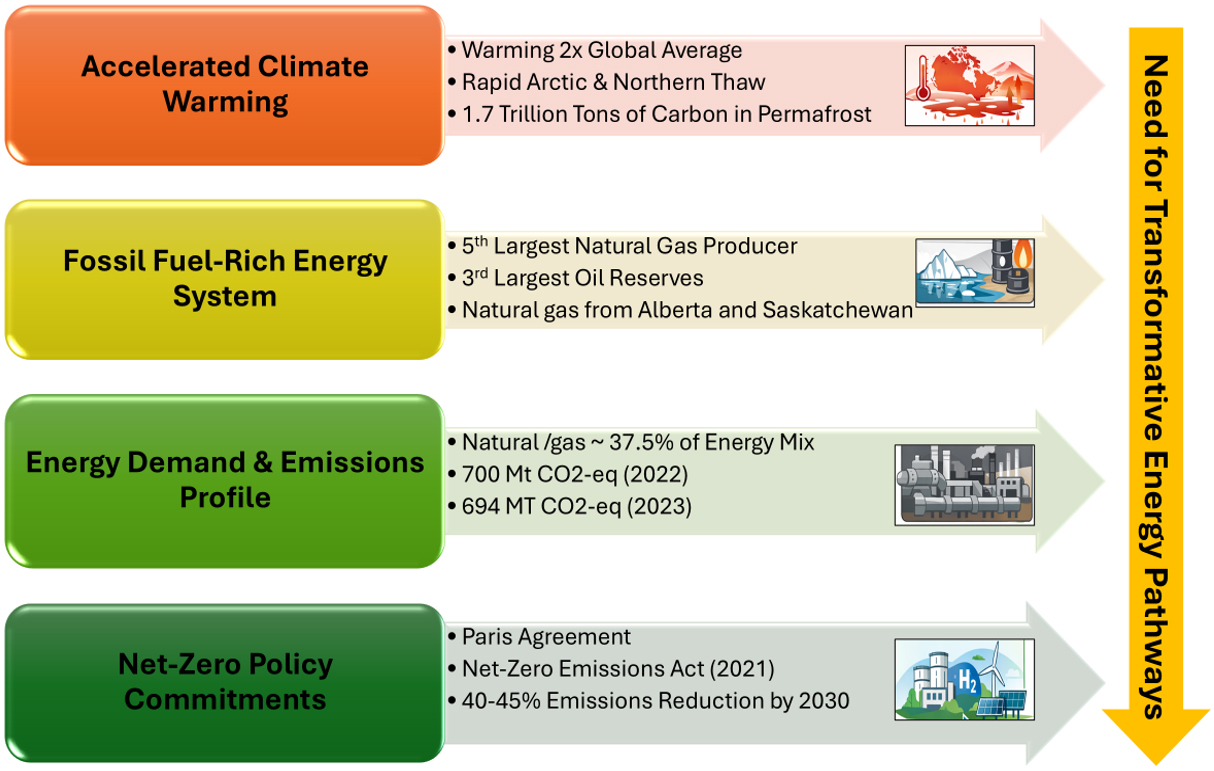
Figure 1. Transformative energy pathways.
CCUS and blue hydrogen as transitional decarbonization instruments
CCUS encompasses technologies designed to capture CO2 at point sources, transport it, and either utilize it in industrial processes or permanently store it in geological formations and has the potential to reduce emissions from the atmosphere[8]. Capture technologies include post-combustion, pre-combustion, and oxy-fuel combustion[9]. CCUS is accepted as a viable option for CO2 mitigation at scale[10].
Geological storage typically occurs in saline aquifers or depleted oil and gas reservoirs, where CO2 is retained through structural, solubility, residual, and mineral trapping mechanisms. Canada possesses significant geological storage capacity, particularly within the Devonian Nisku and Wabamun formations in Alberta[11]. Operational projects such as the Alberta Carbon Trunk Line (ACTL) and Shell’s Quest have capture capacities of about 1 Mt and 1.2 Mt CO2 per year, respectively[11] annually, demonstrating technical feasibility and monitoring capability. However, this volume represents only a small fraction of national emissions, underscoring the scale-up challenge.
Hydrogen has concurrently gained strategic prominence in Canada’s transition strategy. The country produces roughly 3 million tonnes of hydrogen annually, predominantly via natural gas without carbon capture (grey hydrogen). The 2020 Hydrogen Strategy outlines a plan to expand both blue and green hydrogen to support domestic decarbonization and export opportunities. Blue hydrogen, i.e., hydrogen produced from natural gas through steam methane reforming (SMR) or autothermal reforming (ATR), with the resulting CO2 captured and permanently stored, leverages Canada’s natural gas infrastructure and geological storage capacity to reduce environmental impacts[12,13]. SMR is the leading technology for hydrogen production, accounting for 75% of global hydrogen production[13]. The potential environmental impact of blue hydrogen production depends on the efficiency and feasibility of carbon capture and storage (CCS) technology. Capture rates exceeding 90% are increasingly considered necessary to ensure meaningful emissions reductions[14].
Globally, the Global CCS Institute reports 77 operational CCS projects and more than 600 in development as of 2025, reflecting growing international momentum[15]. In Canada, projected capture capacity is estimated at 12-15 Mt annually by 2030 and 40-45 Mt by 2040. Boundary Dam power station has reduced carbon capture costs by employing post-combustion capture technology[16]. However, economic viability remains contingent on carbon pricing levels, capital costs, infrastructure coordination, and market development. Thus, while CCUS and blue hydrogen offer potential transitional pathways, their contribution to sustainable production and climate mitigation depends on the interaction between technological readiness, lifecycle performance, policy incentives, and infrastructure deployment.
Research gap and need for a systematic review
The literature on CCUS and blue hydrogen has rapidly expanded but remains fragmented across technical, economic, and policy domains. Most studies focus on individual technologies, project performance, or isolated cost assessments, leading to limited integration of environmental sustainability, market dynamics, and regulatory design. This fragmentation hinders the understanding of how CCUS and blue hydrogen can aid Canada’s net-zero transition.
Several critical gaps exist. First, research often separates technological feasibility from economic viability and policy effectiveness. While aspects like capture efficiency and storage capacity are well-studied, fewer analyses consider their interactions under real-world carbon pricing, investment incentives, and infrastructure limitations. Second, empirical evidence on lifecycle emissions, cost competitiveness, and scalability is mixed. Uncertainties around methane leakage, CO2 storage integrity, and volatile natural gas prices complicate conclusions about environmental benefits. Most economic analyses use deterministic models with little uncertainty integration. Third, system-level integration is insufficiently addressed, with limited research evaluating CCUS and blue hydrogen within the context of broader energy transitions. Fourth, Canada-specific studies are underdeveloped despite its significant geological storage potential and unique governance context. Lastly, sustainability dimensions like social license and regional equity are often overlooked compared to technical performance metrics. These gaps emphasize the need for a comprehensive synthesis that consolidates evidence from technological, environmental, economic, and policy perspectives to inform sustainable energy transition strategies in Canada. This study conducts a systematic-descriptive literature review to evaluate the role of CCUS and blue hydrogen in advancing Canada’s environmental sustainability and net-zero objectives. This study contributes to the literature by providing an integrated assessment that bridges technology, economics, and governance. Unlike project-specific or technology-isolated analyses, this review adopts a systems-oriented perspective that evaluates scalability, transition alignment, and sustainability trade-offs within Canada’s evolving energy landscape.
Specifically, this review aims to:
• Systematically identify and classify peer-reviewed and policy-relevant studies on CCUS and blue hydrogen in the Canadian context.
• Synthesize evidence on technological performance, lifecycle emissions, and cost structures.
• Examine carbon pricing mechanisms, regulatory frameworks, and financial incentives shaping deployment.
• Identify knowledge gaps and policy-relevant insights for sustainable transition planning.
The remainder of this paper is structured as follows. Section "METHODOLOGY" describes the systematic-descriptive methodology. Section “RESULTS” presents the results organized across technological, environmental, economic, and policy themes. Section "DISCUSSION" discusses implications for Canada’s low-carbon transition. Section "CONCEPTUAL FRAMEWORK" presents a conceptual framework derived from the review and Section "CONCLUSION" concludes with key insights and future research directions.
METHODOLOGY
A systematic-descriptive literature review was selected to map the current state-of-the-art in the literature and identify research gaps. This method was selected due to the broader existing literature on the topic. To ensure a structured review, the Preferred Reporting Items for Systematic Reviews and Meta-Analyses (PRISMA) was used. The Elsevier ScienceDirect (https://www.sciencedirect.com) and Web of Science (https://www.webofscience.com) databases were used as search engines for the Technical, economic, policy, and environmental dimensions, and for the Canadian context with international comparison for the period 2015 to 2026. Web of Science and ScienceDirect were selected as the primary bibliographic databases for this review because they provide broad coverage of peer-reviewed research relevant to the interdisciplinary scope of CCUS and blue hydrogen, including technological, environmental, energy, economic, and applied engineering studies. Web of Science and ScienceDirect index journal articles, review articles, and conference proceedings papers, and the included studies therefore comprise these publication types. Using only these two databases may have excluded relevant studies indexed in other databases. Therefore, the review represents a structured synthesis of the literature retrieved through the defined search strategy rather than an exhaustive review. Future studies could include additional databases to improve coverage and assess the robustness of the evidence base.
Search strategy and reproducibility
To ensure reproducibility, the exact search strings, fields, dates, and filters applied to each database are reported below.
Web of Science (Topic field: title, abstract, keywords; searched 14 January 2026; filters: English language, 2015-2026, document types limited to article, review, and proceedings paper). https://webofscience.clarivate.cn/wos/alldb/smart-search (accessed 2026-01-14):
(“CCUS” or “carbon capture, utilization and storage” or “carbon capture and storage”) and (“blue hydrogen” or “hydrogen production with CCUS”) and (“carbon footprint” or “environmental sustainability” or “life cycle assessment”) and “technology integration” and “process efficiency” and (“Canada” or “Alberta” or “Saskatchewan”) ScienceDirect. https://www.sciencedirect.com/ (accessed 2026-01-14):
(i) “CCUS” or “carbon capture utilization and storage”; (ii) “blue hydrogen” or “hydrogen production” and “carbon capture”; (iii) “life cycle assessment” or “environmental sustainability” or “carbon footprint”; and (iv) “technology integration”; and (v) “process efficiency”; and (vi) “Canada”.
The search process is presented in Figure 2, starting with Step 1, which defines the research questions. Within Step 2, the keyword string was constructed using specific search criteria. This systematic literature review formulated keywords such as “CCUS” or “carbon capture, utilization and storage” and “hydrogen production with CCUS” or “blue hydrogen” and “carbon footprint” or “environmental sustainability” or “life cycle assessment” and “technology integration” and “process efficiency” and “Canada”. In step 3, the inclusion and exclusion criteria are provided. Studies were included when they (i) addressed CCUS, carbon capture, or blue hydrogen; (ii) examined at least one of the technological, environmental, economic, infrastructure, policy, or sustainability dimensions relevant to the review objectives; (iii) provided evidence relevant to Canada or a comparative context applicable to Canadian deployment; and (iv) satisfied the predefined publication and language criteria. Studies were excluded when they did not address the review topic, focused exclusively on unrelated hydrogen or carbon-management pathways, lacked sufficient relevance to the Canadian context, did not provide information relevant to the research questions, or did not satisfy the predefined publication-type or language criteria. The inclusion criteria were applied to filter the search results and to select the most relevant literature for this study. The last step is Step 4, where the articles are screened and categorized based on the research questions. Screening was conducted by two reviewers who independently screened the titles and abstracts and assessed the full texts against the predefined eligibility criteria. Any disagreements between reviewers were resolved through discussion. The total number of articles was 530, and after removing 47 duplicates, 483 articles remained for title and abstract screening. Duplicate records were identified by comparing bibliographic information, using the digital object identifier (DOI) as the primary identifier, followed by exact title matching and comparison of author and publication-year information when DOI information was unavailable. Duplicate records were removed before title and abstract screening, resulting in 483 unique records from the initial 530 records. Based on the predefined eligibility criteria, 350 records were excluded during title and abstract screening because they were outside the scope of the review or did not sufficiently address CCUS, blue hydrogen, their technological, environmental, economic, infrastructural, or policy dimensions, or the Canadian context. The remaining 133 records were assessed at the full-text stage. A further 80 records were excluded following full-text assessment because they were outside the defined review scope (n = 42), lacked sufficient relevance to the Canadian context (n = 18), did not provide sufficient information relevant to the research objectives (n = 12), or did not satisfy the predefined publication/eligibility criteria (n = 8). Finally, 53 studies were included in the qualitative synthesis. The complete identification, screening, eligibility, and inclusion process is presented in Figure 2.
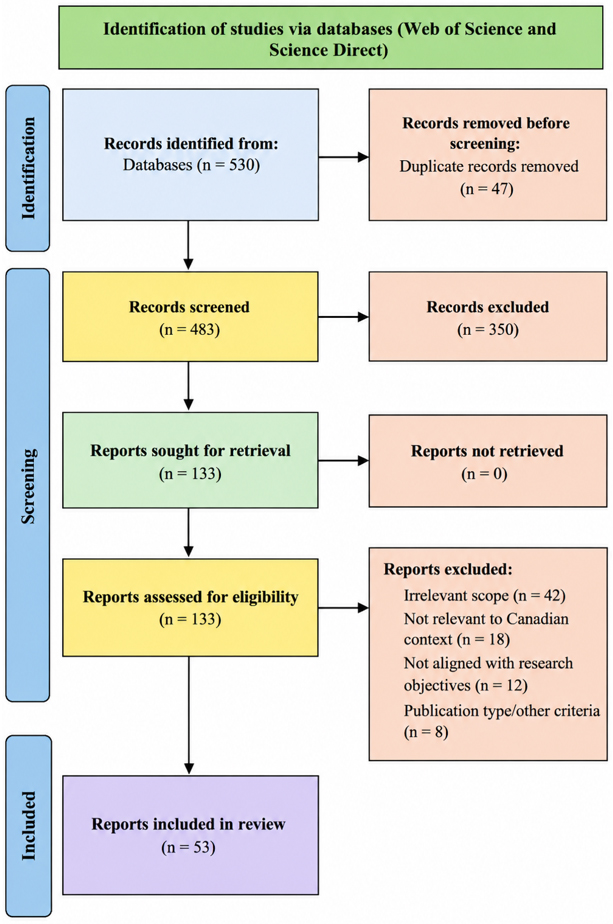
Figure 2. Process flow diagram for the current study.
Data extraction and synthesis procedure
Each of the 53 included studies was coded into a structured data-extraction template capturing technology type (SMR, ATR, post-/pre-combustion, oxy-fuel), geographic scope, reported capture rate, emissions intensity, cost metrics, system/lifecycle assessment (LCA) boundary, and policy context. Studies were assigned to the seven thematic categories in Table 1 using this template rather than title/abstract impression alone. Within each theme, extracted findings were cross-compared for consistency of underlying assumptions; for example, the comparative from Supplementary Tables 1-3, cross-examine the system boundaries, capture-rate assumptions, and methane-leakage assumptions behind the headline quantitative claims reported later in this review. Divergences between studies were reconciled narratively in the discussion rather than averaged or presented as a single consensus figure. This combination of systematic identification and screening (PRISMA-based) with descriptive-narrative synthesis of the extracted data is what we term a “systematic-descriptive” review: systematic in identification and screening, descriptive-narrative in synthesis.
Summary of selected CCUS and blue hydrogen studies by area of focus
| Ref. | Tech/Process | Env/LCA | Economic/TEA | Policy/Market | Infra/Deployment/Systems | Risk/Governance | AI |
| Zhang et al., 2022[17] | ✓ | ✓ | ✓ | ||||
| Ghorbani et al., 2025[18] | ✓ | ✓ | ✓ | ||||
| Hannouf et al., 2025[19] | ✓ | ✓ | ✓ | ||||
| Usas and Ricardez-Sandoval, 2024[20] | ✓ | ✓ | ✓ | ||||
| Ghorbani et al., 2025[7] | ✓ | ✓ | ✓ | ||||
| Bataille et al., 2021[21] | ✓ | ✓ | ✓ | ||||
| Sajjadi and Ibrahim, 2025[22] | ✓ | ✓ | ✓ | ||||
| Dhingra et al., 2023[23] | ✓ | ✓ | ✓ | ||||
| Davis et al., 2023[24] | ✓ | ✓ | ✓ | ||||
| Yu et al., 2021[25] | ✓ | ✓ | ✓ | ||||
| Ameyaw et al., 2025[26] | ✓ | ✓ | ✓ | ||||
| Lee et al., 2023[27] | ✓ | ✓ | ✓ | ||||
| Lee and Jegarl, 2023[28] | ✓ | ✓ | ✓ | ||||
| Masoudi Soltani et al., 2021[29] | ✓ | ✓ | ✓ | ||||
| Khaing et al., 2025[30] | ✓ | ✓ | ✓ | ||||
| Alizadeh et al., 2024[31] | ✓ | ✓ | ✓ | ||||
| Kan et al., 2026[32] | ✓ | ✓ | ✓ | ||||
| Khalili et al., 2025[33] | ✓ | ✓ | ✓ | ||||
| Awais et al., 2026[34] | ✓ | ✓ | ✓ | ||||
| Nath et al., 2024[35] | ✓ | ✓ | ✓ | ||||
| Hanson and Nwakile, 2025[36] | ✓ | ✓ | ✓ | ||||
| Memon et al., 2024[37] | ✓ | ✓ | ✓ | ||||
| Khan et al., 2025[38] | ✓ | ✓ | ✓ | ||||
| Ampomah et al., 2024[39] | ✓ | ✓ | ✓ | ||||
| Liu et al., 2023[40] | ✓ | ✓ | ✓ | ||||
| Hermesmann and Müller, 2022[41] | ✓ | ✓ | ✓ | ||||
| Saha et al., 2023[42] | ✓ | ✓ | ✓ | ||||
| Kabir et al., 2024[43] | ✓ | ✓ | ✓ | ||||
| Curcio, 2025[44] | ✓ | ✓ | ✓ | ||||
| Hao et al., 2022[45] | ✓ | ✓ | ✓ | ||||
| Thiedemann et al., 2025[46] | ✓ | ✓ | ✓ | ||||
| Bhavsar et al., 2023[47] | ✓ | ✓ | ✓ | ||||
| Zhao et al., 2024[11] | ✓ | ✓ | ✓ | ||||
| Maduabuchi et al., 2025[48] | ✓ | ✓ | ✓ | ||||
| Rabie et al., 2024[49] | ✓ | ✓ | ✓ | ||||
| Chen et al., 2022[50] | ✓ | ✓ | ✓ | ||||
| Tetteh and Salehi, 2022[51] | ✓ | ✓ | ✓ | ||||
| Raheem et al., 2025[52] | ✓ | ✓ | ✓ | ||||
| Saxena et al., 2024[53] | ✓ | ✓ | ✓ | ||||
| Nwabueze and Leggett, 2024[54] | ✓ | ✓ | ✓ | ||||
| Pereira et al., 2023[55] | ✓ | ✓ | ✓ | ||||
| Mohammed et al., 2024[56] | ✓ | ✓ | ✓ | ||||
| Hamed et al., 2023[57] | ✓ | ✓ | ✓ | ||||
| Sunaryo et al., 2023[58] | ✓ | ✓ | ✓ | ||||
| Nguyen et al., 2023[59] | ✓ | ✓ | ✓ | ||||
| Nagireddi et al., 2023[60] | ✓ | ✓ | ✓ | ||||
| Breuvart and Zeman, 2022[61] | ✓ | ✓ | ✓ | ||||
| Franco and Giovannini, 2023[62] | ✓ | ✓ | ✓ | ||||
| Nakkeeran and Victor, 2025[63] | ✓ | ✓ | ✓ | ||||
| Zhao et al., 2023[64] | ✓ | ✓ | ✓ | ||||
| AlHumaidan et al., 2023[13] | ✓ | ✓ | ✓ | ||||
| Franco and Rocca, 2024[65] | ✓ | ✓ | ✓ | ||||
| Noussan et al., 2020[66] | ✓ | ✓ | ✓ |
As this review is systematic-descriptive in nature, the objective was to identify and synthesize the relevant published evidence addressing the defined research questions rather than to achieve a statistically representative sample of the broader literature. The 53 included studies provide evidence across the principal dimensions examined in this review, including technological performance, environmental impacts, economic feasibility, infrastructure, policy, and sustainability of CCUS and blue hydrogen in the Canadian context. The relatively focused final evidence base also reflects the specific inclusion criteria and the Canadian orientation of the review. Nevertheless, the number of studies included in the review should not be taken to mean that all available research on CCUS and blue hydrogen has been identified. Given the broad scope of the topic and the reliance on two bibliographic databases (Web of Science and ScienceDirect), some relevant studies may not have been captured. The findings should therefore be viewed as a structured synthesis of studies that met the predefined eligibility criteria, rather than as a comprehensive representation of the entire body of available literature.
RESULTS
53 studies published between 2020 and 2026 as presented in Table 1 (although the database search covered 2015-2026, no eligible study published before 2020 was retained), reflecting growing academic and policy interest in CCUS and hydrogen technologies in recent years. Publication trends indicate a significant increase after 2022, coinciding with strengthened net-zero commitments and expanded policy incentives in Canada and other Organisation for Economic Co-operation and Development (OECD) countries. Most studies addressed technological and process aspects (47 of 53), followed by policy and market frameworks (30) and infrastructure and deployment systems (27), whereas economic (25), environmental (17), risk and governance (10), and digital/AI (3) themes were examined less often.
From a methodological perspective, techno-economic analysis (25 studies) and life cycle assessment (17 studies) were the most common quantitative approaches, alongside policy analyses and scenario-based modeling studies. This distribution highlights a growing shift from technology feasibility to system-level deployment considerations. Figure 3 illustrates the distribution of publications by year and thematic focus.
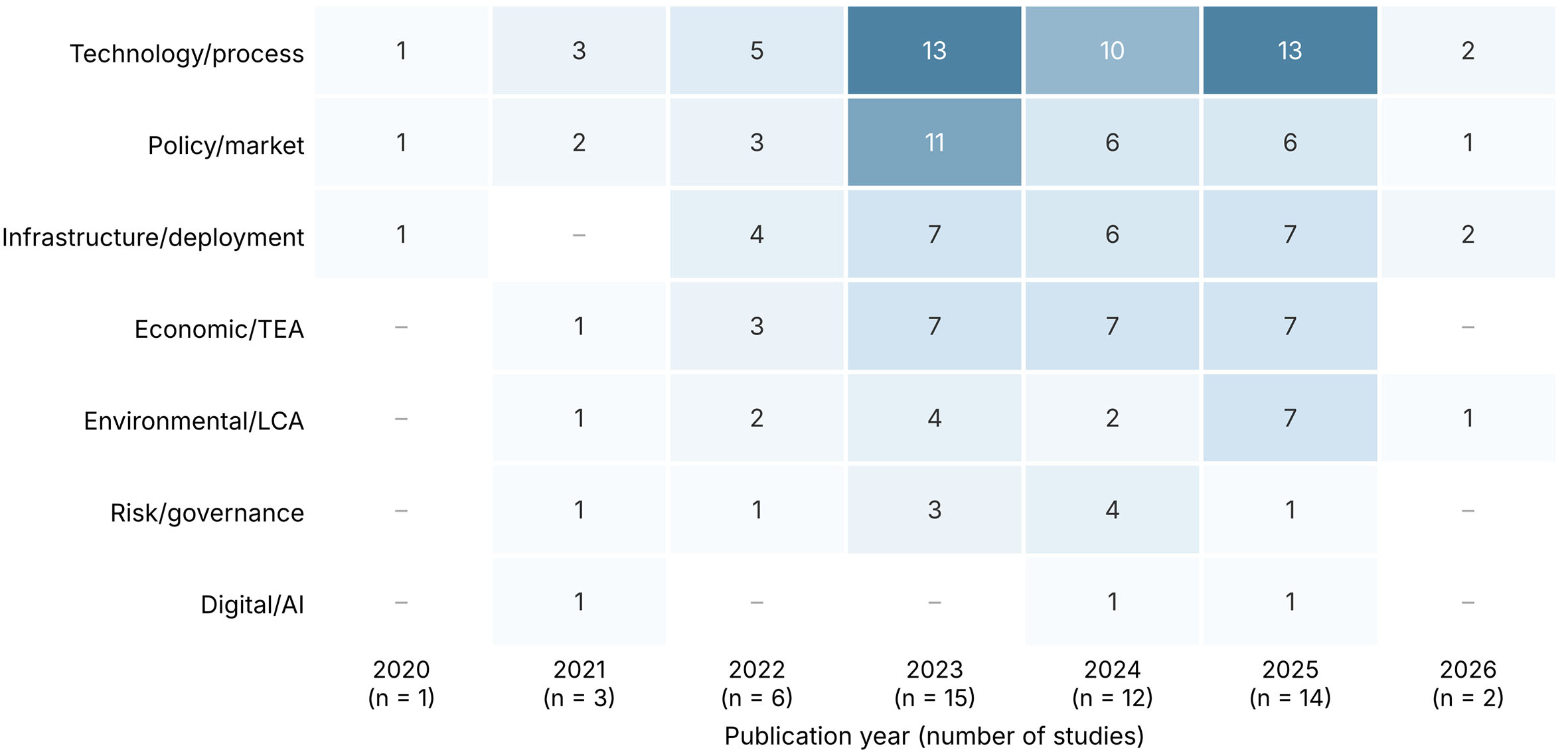
Figure 3. Thematic overview of CCUS & blue hydrogen literature publications over the years.
The thematic classification of the 53 reviewed publications reveals a clear structural pattern in the evolution of CCUS and hydrogen research relevant to Canada’s energy transition. As summarized in Figure 4, the literature is strongly technology-oriented. A total of 47 papers (approximately 89% of the sample) focus primarily on technological pathways, including carbon capture techniques (pre-combustion, post-combustion, oxy-fuel), blue hydrogen production routes (SMR, ATR), CCU processes, and storage mechanisms. This dominance indicates that the field remains largely driven by engineering optimization and process-level innovation, with significant attention to improving capture efficiency, reforming configurations, sorbent materials, and integration strategies.
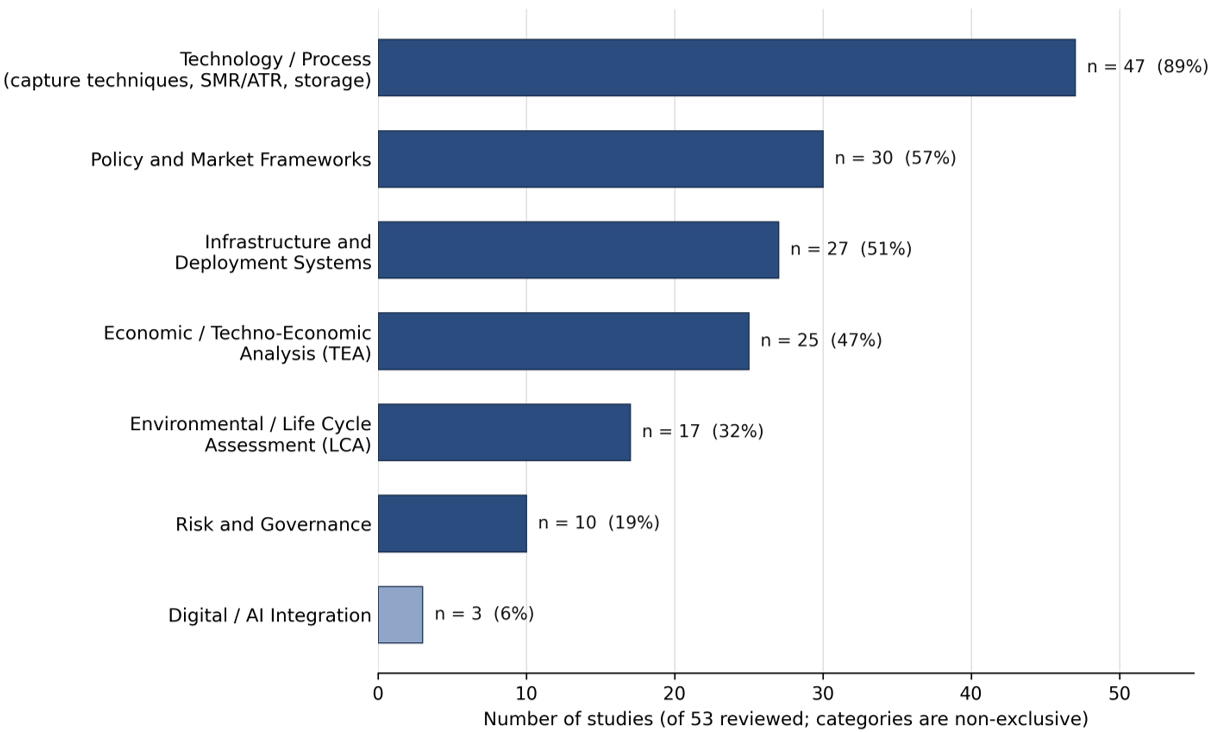
Figure 4. The thematic classification of the CCUS and blue hydrogen reviewed publications (Note: Categories are non-exclusive; individual studies were coded into more than one theme where applicable, so percentages do not sum to 100%. Underlying causes for the observed distribution are discussed in Section “RESULTS”.
The second most prominent theme is policy and market frameworks (30 papers), followed closely by infrastructure and deployment systems (27 papers). The relatively high representation of these themes suggests a growing recognition that technological feasibility alone is insufficient to ensure large-scale implementation. Policy instruments such as carbon pricing, tax credits, regulatory standards, and national hydrogen strategies are increasingly examined as enabling conditions for deployment. Similarly, infrastructure-focused studies emphasize CO2 transport networks, geological storage capacity, hydrogen hubs, and cross-sector integration. This shift indicates that the literature is progressively expanding beyond isolated process design toward systemic transition planning.
Economic and techno-economic analyses appear in 25 papers, reflecting moderate but still incomplete integration of financial feasibility considerations. These studies typically assess the levelized cost of hydrogen (LCOH), carbon price thresholds, investment risk, and sensitivity to natural gas and electricity prices. However, the fact that fewer than half of the reviewed studies conduct comprehensive economic modeling suggests that cost realism remains under-integrated relative to technological optimization. Given the capital-intensive nature of CCUS and blue hydrogen systems, this imbalance highlights an important research gap.
Environmental and LCA perspectives are addressed in 17 papers. While these studies provide critical insights into lifecycle emissions, methane leakage, electricity mix sensitivity, and system boundary assumptions, their relatively limited number indicates that environmental performance is not consistently evaluated across technological studies. This is particularly significant given that the environmental credibility of blue hydrogen depends heavily on upstream methane control and capture rates exceeding 90%. The findings suggest that lifecycle robustness remains unevenly incorporated into the broader literature.
Risk and governance dimensions are comparatively underrepresented, appearing in only 10 publications. These include supply chain risk, storage integrity, regulatory uncertainty, and deployment planning risks. Social license, public acceptance, and long-term liability considerations receive even less explicit treatment. This limited attention is noteworthy because governance stability and societal acceptance are critical determinants of large-scale CCUS infrastructure development.
Finally, digital and AI applications represent only three studies in the final evidence base and should therefore be interpreted as an emerging research frontier rather than an established deployment theme. The limited number of studies precludes strong conclusions regarding the realized contribution of AI to Canadian CCUS or hydrogen systems. Current evidence primarily identifies potential applications in process optimization, monitoring, predictive maintenance, source-sink matching, and system integration, warranting further empirical investigation. Similarly, dedicated CCU utilization pathways appear in only one study as a primary focus, underscoring the limited exploration of carbon circularity beyond storage-centric approaches.
Overall, the thematic distribution indicates that the literature is transitioning from a predominantly technology-centered discourse toward broader system-level and policy-oriented analyses. However, significant imbalances remain, particularly in lifecycle robustness, risk governance, and integrated techno-economic-environmental synthesis. These patterns substantiate the need for comprehensive, system-oriented reviews that bridge technological readiness with economic viability, policy alignment, infrastructure deployment, and measurable emissions outcomes within Canada’s net-zero transition framework.
Technological findings
SMR with carbon capture
The literature extensively examines SMR integrated with carbon capture as the primary pathway for blue hydrogen production in Canada. Zhang et al.[17] proposed a comprehensive approach for decarbonizing Alberta's oil sands operations by replacing natural gas fuel with blue hydrogen produced via SMR with CCS, quantifying that this strategy would require 12.6 million tons per year of blue hydrogen production and
Dhingra et al.[23] developed a comprehensive life cycle assessment model for blue hydrogen production via SMR that incorporates upstream natural gas extraction and transportation emissions, a critical methodological advancement that addresses the full carbon footprint rather than focusing solely on point-source capture. Their model calculates CO2 retention based on reservoir injection parameters and segregates Alberta's geological formations by location, recovery potential, and petrophysical characteristics to identify optimal storage sites for both sequestration and enhanced oil recovery applications. This approach enables sensitivity analysis across multiple variables including natural gas source, carbon capture point, CO2 transportation distance, and storage reservoir characteristics.
Ameyaw et al.[26] integrated process simulation using ChemCAD for SMR with carbon capture coupled with reservoir modeling for CO2 compression, transportation, and injection at the Escalante hydrogen facility. Their methodology combines techno-economic assessment with life cycle carbon accounting to quantify the trade-offs between emission reductions and cost increases associated with CCS integration. The study finds that carbon capture reduces the carbon footprint from 11.99 to 6.59 kgCO2e/kgH2, representing a 45% reduction, while increasing the LCOH from $1.82 to $3.22/kgH2 without policy incentives.
ATR technologies
Sajjadi and Ibrahim[22] conducted a comparative techno-economic and environmental analysis of a greenfield blue hydrogen plant in Saskatchewan, integrating both SMR and ATR technologies with comprehensive utility systems including hydrogen and CO2 compression, air separation units, refrigeration, co-generation, and gas dehydration. Their Aspen HYSYS (AspenTech’s HYprotech System Simulator) simulations reveal that ATR demonstrates 10% lower energy demand than SMR, attributed to more efficient heat integration and the exothermic nature of partial oxidation reactions. The study's methodology accounts for site-specific conditions including ambient temperature, natural gas composition, and utility availability, demonstrating that process selection and integration significantly impact both economic and environmental performance.
The comparative analysis by Sajjadi and Ibrahim[22] also examined the global warming potential of ATR versus SMR configurations, finding that ATR's lower energy consumption and more concentrated CO2 stream (facilitating higher capture rates) result in reduced overall carbon footprint. However, the study notes that ATR requires an air separation unit to produce oxygen, adding capital and operating costs that partially offset the energy efficiency advantages. The LCOH for ATR (USD 3.28/kg) versus SMR (USD 3.33/kg) reflects these competing factors, with the economic advantage varying based on electricity prices, natural gas costs, and carbon pricing levels.
Sorption-enhanced reforming
Masoudi Soltani et al.[29] provided an in-depth technical review of sorption-enhanced steam methane reforming (SE-SMR), a process innovation that integrates CO2 capture directly into the reforming reactor using solid sorbents such as calcium oxide or hydrotalcite-based materials. The methodology involves reviewing 137 indexed research papers to assess advancements in catalyst and adsorbent preparation, process synthesis and optimization approaches, and the application of artificial intelligence for process control. SE-SMR offers theoretical advantages including more compact process units, reduced equipment costs, increased hydrogen yield through favorable reaction equilibrium shifts, and inherently high-purity CO2 streams suitable for sequestration.
The review identifies that SE-SMR can achieve hydrogen yields 15%-20% higher than conventional SMR while operating at lower temperatures (500-700 vs. 800-1,000 °C), reducing energy requirements and potentially lowering costs[29]. However, the technology faces challenges related to sorbent degradation over multiple adsorption-regeneration cycles, reactor design complexity for managing solid circulation, and scale-up from laboratory and pilot demonstrations to commercial deployment. While SE-SMR shows promise for future blue hydrogen production, the current literature indicates that conventional SMR and ATR with post-combustion capture remain the dominant near-term pathways for Canadian applications.
Environmental performance
Life cycle assessment studies demonstrate that the environmental performance of hydrogen production cannot be represented by a single carbon-intensity value for each hydrogen pathway; rather, it depends strongly on production technology, carbon-capture performance, upstream emissions, electricity source, geographical context, and lifecycle system boundary (see Supplementary Table 4). Ameyaw et al.[26] report 11.99 kgCO2e/kgH2 for unabated SMR and 6.59 kgCO2e/kgH2 when at least 95% of the CO2 stream is captured and stored. Within the same analytical framework, CCS therefore reduces the reported carbon footprint by approximately 45%, although substantial residual lifecycle emissions remain. Comparisons with green hydrogen require particular care because the carbon intensity of electrolysis is highly sensitive to the electricity source. Hamed et al.[57] synthesize technology- and electricity-specific estimates, including
The environmental performance of blue hydrogen is highly dependent on capture rate and upstream emissions. Bataille et al.[21] emphasized that achieving carbon intensities below 4 kgCO2e/kgH2 requires capture rates exceeding 90% and methane leakage rates below 1% across the natural gas supply chain. Current commercial CCUS facilities typically achieve capture rates of 80%-90%, with the Quest facility in Alberta demonstrating 80% capture during its first year of operation. Advancing to higher capture rates (95%+) is technically feasible but increases costs due to diminishing returns in capture efficiency and higher energy penalties for CO2 compression and separation.
Hannouf et al.[19] provide Alberta-specific evidence that further demonstrates the importance of pathway configuration. Their life cycle sustainability assessment (LCSA) compares eight hydrogen-production pathways, including SMR and ATR with and without CCS and alkaline electrolysis supplied by Alberta grid electricity or wind electricity. Wind-powered alkaline electrolysis performs best for climate-change and ozone-depletion impacts, whereas ATR with CCS at a 91% capture rate and no grid electricity performs best in seven of nine environmental impact categories. Thus, renewable-powered green hydrogen may provide the lowest climate-change impact, while high-capture blue-hydrogen configurations can perform favorably across several other environmental dimensions under particular regional and process assumptions. The study therefore supports a multi-indicator assessment rather than a single carbon-intensity ranking.
Sajjadi and Ibrahim[22] found that ATR demonstrates lower global warming potential than SMR due to reduced energy consumption and more efficient heat integration, though the magnitude of the advantage depends on the carbon intensity of electricity used for auxiliary systems. Their analysis highlights that process design choices, utility integration, and site-specific conditions significantly influence environmental performance, suggesting that optimization opportunities exist beyond simply maximizing capture rates.
Decarbonization potential in oil sands operations
The literature provides compelling evidence that blue hydrogen can achieve substantial emissions reductions in Canada's oil sands sector, one of the nation's largest and most challenging sources of industrial emissions. Zhang et al.[17] demonstrated that replacing natural gas fuel with blue hydrogen in heavy oil and oil sands operations can achieve a 76% reduction in CO2 emissions while saving 1.5 trillion cubic feet of natural gas between 2021 and 2050. This strategy would require producing 12.6 million tons per year of blue hydrogen through SMR with carbon capture, necessitating CCS infrastructure capable of sequestering 105 million tons of CO2 annually in Central Alberta.
The decarbonization potential extends beyond direct fuel substitution to include hydrogen applications in upgrading processes and steam generation for in-situ extraction methods[20]. Ghorbani et al.[7] identified that hydrogen direct reduced iron electric arc furnace (H2 DRI-EAF) technology, when integrated with an open-access carbon capture hub, offers the highest decarbonization potential for steel production, potentially reducing GHG emissions by 5 million tonnes per year. This finding is particularly relevant for Canada's industrial heartland in Alberta, where steel production, petrochemical manufacturing, and oil sands operations are geographically concentrated, enabling potential synergies through shared CCUS infrastructure.
However, achieving these emission reductions requires high carbon capture rates and stringent control of upstream methane leakage. Bataille et al.[21] emphasized that for blue hydrogen to meaningfully contribute to Canada's net-zero goals, capture rates must exceed 90% and upstream methane emissions from natural gas production and transportation must be minimized. Life cycle analyses indicate that methane leakage rates above 3%-4% can negate the climate benefits of blue hydrogen compared to direct natural gas use, highlighting the critical importance of comprehensive emissions accounting and robust monitoring systems.
Life cycle assessment frameworks
Hannouf et al.[19] employed a comprehensive LCSA framework to evaluate hydrogen production pathways in Alberta across environmental, economic, and social dimensions. This methodology extends beyond traditional LCA by incorporating social impact indicators and economic performance metrics alongside environmental footprints. The LCSA approach quantifies impacts across multiple categories including global warming potential, acidification, eutrophication, resource depletion, human health effects, and ecosystem quality, while also assessing job creation, energy security, and economic value addition.
The LCSA methodology applied by Hannouf et al.[19] enabled comparative evaluation of blue hydrogen routes with varying levels of carbon capture and utilization against alternative production pathways. This multi-dimensional assessment framework is particularly valuable for policy decision-making, as it reveals trade-offs between environmental performance, economic viability, and social outcomes that may not be apparent from single-metric analyses. The study's findings emphasize that blue hydrogen with high capture rates (90%+) can achieve environmental performance approaching that of green hydrogen in jurisdictions with carbon-intensive electricity grids, while offering superior near-term economic viability.
Davis et al.[24] utilized a bottom-up economy-wide energy systems model of Alberta to evaluate 576 long-term scenarios from 2026 to 2050, assessing the greenhouse gas reduction potential and cost-effectiveness of hydrogen-natural gas blending across multiple end-use sectors. This modeling approach integrates twelve hydrogen production technologies, including multiple blue hydrogen configurations with varying capture rates, with detailed representations of energy demand in residential, commercial, industrial, and transportation sectors. The methodology enables calculation of marginal GHG abatement costs and identification of least-cost decarbonization pathways under different carbon price trajectories and technology cost assumptions.
Economic and infrastructure findings
The economic viability of blue hydrogen production with CCUS in Canada is highly sensitive to carbon pricing levels, natural gas costs, and policy incentives. Zhang et al.[17] determined that blue hydrogen for oil sands decarbonization becomes profitable when Canada's carbon tax reaches $99 per tonne, projected to occur in 2027 under current policy trajectories. This threshold reflects the additional costs of hydrogen production and CCS infrastructure compared to continued natural gas use, with profitability emerging when carbon tax payments on unabated emissions exceed the incremental costs of blue hydrogen adoption.
Comparative cost analyses reveal significant variation in levelized hydrogen costs depending on production technology, capture rate, and site-specific factors (as shown in Supplementary Table 3). Sajjadi and Ibrahim[22] reported production costs of USD 3.28/kg for ATR and USD 3.33/kg for SMR at a greenfield facility in Saskatchewan, with indirect costs (engineering, procurement, construction management) representing a substantial component. Ameyaw et al.[26] examined that integrating carbon capture increases the LCOH from $1.82 to $3.22/kgH2 without tax credits, or $2.59/kgH2 when accounting for the 45Q tax credit (a U.S. policy mechanism that provides $85 per tonne for CO2 sequestration). These cost estimates are consistent with international benchmarks and indicate that policy incentives play a critical role in economic feasibility.
Davis et al.[24] provided an economy-wide perspective on cost-effectiveness, finding that hydrogen-natural gas blending using blue hydrogen from ATR with carbon capture can eliminate 1%-2% of Alberta's economy-wide GHG emissions, with marginal abatement costs becoming negative (i.e., cost-saving) at carbon prices exceeding $300 per tonne. This finding suggests that blue hydrogen becomes increasingly attractive as carbon prices rise toward levels consistent with deep decarbonization pathways, though the high threshold price indicates that substantial policy support or technological cost reductions are needed for widespread deployment in the near term.
Comparability of reported economic values
The $99/t and $300/t figures quoted above originate from different analytical contexts and should not be read as a single, directly comparable competitiveness range for blue hydrogen. The $99/t figure is a breakeven/profitability threshold specific to oil-sands fuel substitution[17], derived from a facility-level techno-economic analysis; the $300/t figure is the carbon price at which marginal abatement costs turn negative in an economy-wide hydrogen-blending model[24], a distinct concept from a production-cost or profitability threshold. These are further distinct from the levelized production costs reported by Sajjadi and Ibrahim (USD 3.28-3.33/kgH2[22]) and Ameyaw et al. (USD 1.82-3.22/kgH2 before incentives[26]), which are cost-of-production figures rather than carbon-price thresholds. Supplementary Table 3 outlines the basis, system boundary, technology, geography, and method (techno-economic analysis (TEA), breakeven analysis, or marginal abatement cost (MAC) curve modeling) behind each economic value cited in this review, to assess the comparability directly.
Infrastructure costs represent a major economic consideration for large-scale CCUS deployment.
Infrastructure requirements and CCUS hubs
The literature increasingly emphasizes the importance of integrated CCUS hub infrastructure rather than facility-specific projects for achieving large-scale deployment. Zhao et al.[11] designed a comprehensive CCUS hub for the Alberta oil sands region, including a pipeline network connecting emission sources to storage formations, centralized compression facilities, and shared monitoring infrastructure. Their analysis demonstrates that hub-based approaches offer substantial economic advantages through economies of scale, with per-tonne CO2 transportation and storage costs declining significantly as system capacity increases from 5 to 20 million tonnes per year.
The proposed CCUS hub infrastructure includes trunk pipelines ranging from 200-400 km in length with diameters of 24-36 inches, designed to transport supercritical CO2 at pressures of 10-15 MPa[11]. Lateral pipelines connect individual emission sources to the trunk system, with total network length exceeding
Ghorbani et al.[18] highlight the potential for open-access carbon capture hubs that serve multiple industries, including hydrogen production, steel manufacturing, petrochemical facilities, and power generation. This multi-sector approach maximizes infrastructure utilization and distributes costs across diverse revenue streams, improving economic viability. The concept of open-access hubs also addresses the "chicken-and-egg" problem of CCUS deployment, where individual emitters are reluctant to invest in dedicated infrastructure due to uncertainty about long-term operations, while infrastructure developers require committed CO2 volumes to justify investment. Publicly supported hub infrastructure can break this impasse by providing assured access to transportation and storage capacity.
examines cost-effective pathways for blue hydrogen production in Alberta utilizing the existing Quest CCS facility, demonstrating how established infrastructure can be leveraged to reduce capital requirements for new hydrogen projects. The Quest facility, which captures CO2 from hydrogen production for oil sands upgrading and injects it into the Basal Cambrian Sands formation, provides a proven model for integrated hydrogen-CCUS operations. Expanding this facility or developing similar integrated projects can accelerate blue hydrogen deployment by reducing technical and financial risks associated with first-of-a-kind infrastructure. Canada’s CCUS hub development status and capacity are shown in Supplementary Table 5.
Geological storage capacity in Western Canada
Western Canada possesses substantial geological storage capacity that provides the physical foundation for large-scale CCUS deployment. Layzell et al.[67] report that 4.8 million tonnes of CO2 per year are currently stored in Western Canada: 3.6 Mt through CO2 -enhanced oil recovery, mainly at Weyburn (about 2 Mt per year), and 1.2 Mt in saline aquifers, mainly at Quest (about 1.2 Mt per year) and Aquistore, demonstrating proven technical feasibility. However, this represents a small fraction of the region's total storage potential, which is estimated at multiple gigatons across various geological formations.
Zhao et al.[11] provided the most comprehensive assessment of storage capacity in the Alberta oil sands region, demonstrating that the Devonian Nisku and Wabamun saline aquifers can safely store over 1.9 gigatons of CO2 emissions from ten major oil sands emitters by the end of the century. Their holistic framework integrates reservoir simulation modeling to forecast pressure evolution and CO2 plume migration, geomechanical analysis to assess caprock integrity and induced seismicity risks, and economic evaluation of pipeline network requirements. The study employed a logistic model to forecast oil sands production trajectories and coupled this with detailed characterization of reservoir properties including porosity, permeability, formation thickness, and depth to identify optimal injection sites.
The geological storage assessment by Zhao et al.[11] reveals that the Nisku and Wabamun formations offer favorable characteristics including adequate injectivity (enabling high injection rates without excessive pressure buildup), sufficient storage capacity distributed across multiple structural and stratigraphic traps, and proven sealing capacity demonstrated by millions of years of hydrocarbon retention. Their reservoir simulations indicate that CO2 injection at rates up to 20 million tonnes per year per formation can be sustained without exceeding safe pressure limits or compromising caprock integrity, if injection is distributed across multiple wells and monitoring systems detect any unexpected pressure responses or migration pathways. Lin et al.[68] examined site suitability assessment frameworks for CO2 geological storage projects and categorized them into five scales such as country, basin, regional, local, and sites as presented in Figure 5. This framework integrated geological stability, engineering feasibility, and environmental risk controllability.
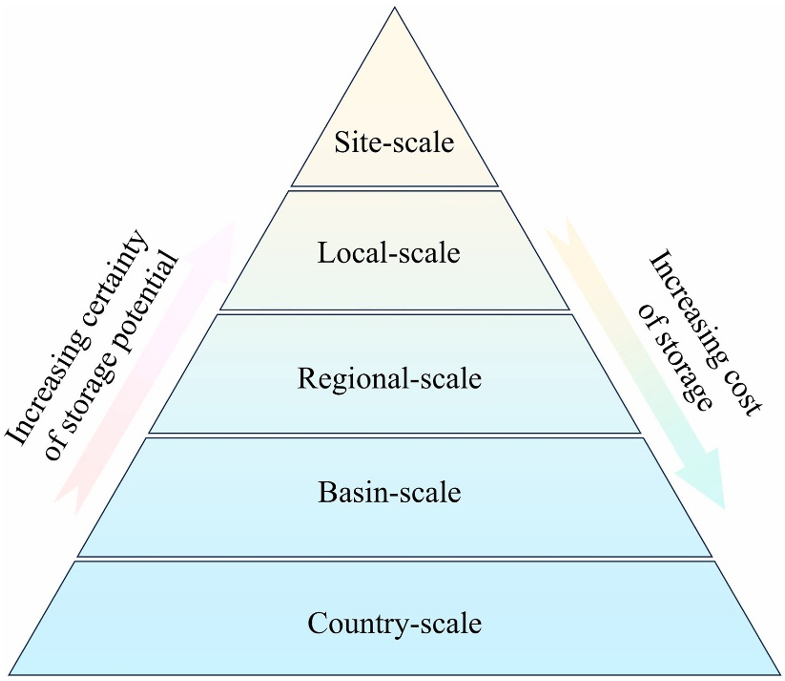
Although Canada has substantial geological potential for CO2 storage, estimated storage capacity should not be interpreted directly as deployable storage capacity. Theoretical or technically estimated capacity represents the amount of CO2 that geological formations may potentially accommodate under defined assumptions, whereas practical deployment depends on whether suitable formations can be accessed, permitted, characterized, monitored, and operated at commercially meaningful injection rates. Regulatory and governance conditions further influence practical storage availability. Site characterization, permitting, monitoring requirements, long-term liability, and regulatory approval can affect the timing, cost, and feasibility of storage development. For Canadian CCUS deployment, future research should therefore move beyond reporting aggregate national storage estimates and develop spatially explicit assessments that integrate storage capacity with injectivity, pressure limitations, leakage risk, monitoring requirements, transportation distance, infrastructure availability, project economics, and regulatory constraints.
Policy and market evidence
Carbon pricing and tax incentives
Carbon pricing emerges as the most critical policy mechanism influencing the economic viability of CCUS and blue hydrogen in Canada. Zhang et al.[17] identify $99 per tonne as the threshold carbon price at which blue hydrogen becomes profitable for oil sands decarbonization, while Davis et al.[24] find that marginal abatement costs for hydrogen-natural gas blending become negative at carbon prices exceeding $300 per tonne. It indicates that the level of carbon pricing needed for blue hydrogen depends on different scales and applications, where lower-cost options emerge at lower prices while advanced applications need higher levels.
Canada's federal carbon pricing system, established under the Greenhouse Gas Pollution Pricing Act, provides an escalating price signal that reaches $115 per tonne by 2030, with potential for further increases in subsequent decades[69]. This trajectory suggests that blue hydrogen will become increasingly competitive during the late 2020s and 2030s, particularly for applications in heavy industry and oil sands operations. However, the literature highlights that carbon pricing alone may be insufficient to drive large-scale deployment, as high upfront capital costs, infrastructure coordination challenges, and technology risks create barriers that price signals cannot fully address[70].
Investment tax credits represent a complementary policy mechanism that directly reduces capital costs for CCUS projects. Ameyaw et al.[26] demonstrate that the 45Q tax credit (providing $85 per tonne for CO2 sequestration) reduces the levelized cost of blue hydrogen from $3.22 to $2.59/kgH2, a 20% cost reduction that significantly improves project economics. Canada has introduced similar mechanisms through the CCUS Investment Tax Credit, which provides a refundable tax credit of 50% for eligible capture equipment in conventional CCUS projects and 37.5% for eligible transportation, storage, and use equipment. A higher rate of 60% applies to eligible capture equipment used in direct-air-capture projects. The full rates apply to eligible expenditures through 2035, while reduced rates apply from 2036 to 2040[69]. These incentives are designed to accelerate deployment by reducing the financial burden on first movers and enabling projects to proceed before carbon prices reach levels that would make them profitable on price signals alone. The overall policy and regulatory framework for CCUS and blue hydrogen in Canada is summarised in
Regulatory requirements and monitoring
Robust regulatory frameworks for CO2 storage, including site characterization requirements, injection permitting, monitoring protocols, and long-term liability provisions, are essential for ensuring environmental safety and building public confidence in CCUS deployment. The Quest CCS facility in Alberta demonstrates the importance of comprehensive monitoring, reporting, and verification systems, having successfully injected over one million tonnes of CO2 annually with extensive subsurface monitoring including seismic surveys, pressure monitoring, groundwater sampling, and soil gas measurements. IRENA reports that the Quest project achieved an approximately 80% capture rate during its first year of operation[71]. Bataille et al.[21] emphasize that regulatory frameworks must ensure high capture rates (90%+) and prevention of upstream methane leakage for blue hydrogen to meaningfully contribute to net-zero goals. This requires integrated regulation across the natural gas supply chain, hydrogen production facilities, and CO2 transportation and storage systems, rather than siloed oversight of individual components. Current Canadian regulations, including Alberta's Carbon Capture and Storage Regulatory Framework and federal regulations under the Canadian Environmental Protection Act, provide foundational requirements but may need strengthening to ensure that blue hydrogen achieves its intended climate benefits[6].
Long-term liability for stored CO2 represents a critical regulatory consideration that affects project economics and investor confidence. Zhao et al.[11] note that their holistic framework for evaluating gigatons-scale CO2 storage considers the policy environment and regulatory requirements, though specific liability provisions are not detailed in the available literature. International experience suggests that clear liability transfer mechanisms, where responsibility for stored CO2 transitions from project operators to government after a defined monitoring period, can reduce long-term financial risks and enable project financing. Canada's regulatory frameworks are evolving to address these issues, but uncertainty remains regarding long-term stewardship obligations and financial assurance requirements.
Investment requirements and funding mechanisms
The scale of investment required for large-scale CCUS and blue hydrogen deployment in Canada is substantial, with infrastructure costs alone estimated at billions of dollars. Zhao et al.[11] estimate approximately $4 billion for a pipeline network serving the Alberta oil sands region, while individual blue hydrogen production facilities require capital investments of hundreds of millions to over a billion dollars depending on scale and technology[26]. These capital requirements exceed the financial capacity of individual companies in many cases, particularly for shared infrastructure that serves multiple emitters, necessitating innovative funding mechanisms and public-private partnerships.
The Quest CCS project received approximately Canadian dollars (CAD) $865 million in public funding from the Canadian and Alberta governments[72], representing a substantial government investment that enabled the project to proceed despite uncertain economics at the time of development. This precedent demonstrates the role of public funding in de-risking first-of-a-kind projects and establishing proof-of-concept for subsequent commercial deployment. However, the literature suggests that ongoing reliance on project-specific government grants is not sustainable for achieving the scale of deployment needed for net-zero goals, requiring transition to policy mechanisms that create market-based incentives for private investment[73].
The Canada Growth Fund, established in 2022 with $15 billion in capital, represents a new funding mechanism designed to attract private investment in clean technologies including CCUS and hydrogen through contracts-for-difference, equity investments, and other financial instruments[6]. This approach aims to bridge the gap between current project economics and commercial viability by providing revenue certainty or risk mitigation that enables private capital deployment. However, the effectiveness of these mechanisms in driving large-scale CCUS and blue hydrogen deployment remains to be demonstrated, as the fund is still in early stages of operation.
Bataille et al.[21] emphasize that government policy and support are needed to establish clean hydrogen industrial clusters and refueling networks for transportation, enabling innovators to thrive and creating the market conditions for sustained private investment. This suggests that public funding should prioritize infrastructure and market development rather than subsidizing individual projects indefinitely, with the goal of creating self-sustaining markets where carbon pricing and other policy mechanisms drive ongoing deployment.
Market development and export opportunities
Canada's natural advantages in clean hydrogen production, including abundant natural gas resources, geological storage capacity, and renewable energy potential, create opportunities for both domestic use and international exports. Bataille et al.[21] identify export opportunities for green iron or steel produced using clean hydrogen, leveraging Canada's iron ore resources and low-carbon energy to serve markets with stringent emissions requirements. Similarly, blue hydrogen or hydrogen-derived products (such as ammonia or synthetic fuels) could be exported to jurisdictions lacking domestic production capacity, though international market development faces challenges related to transportation costs, competing suppliers, and evolving trade policies.
Domestic market development for hydrogen faces the challenge of establishing demand in sectors where hydrogen is not currently used, while simultaneously building production and distribution infrastructure. Davis et al.[24] examine hydrogen-natural gas blending as a near-term market development strategy, finding that blending up to 20% hydrogen by volume in natural gas networks can utilize existing pipeline infrastructure while creating demand for hydrogen production. However, the emissions reduction potential of blending is limited (1%-2% of economy-wide emissions), and higher blend ratios face technical challenges related to pipeline materials, end-use equipment compatibility, and safety considerations.
Bataille et al.[21] emphasize that hydrogen deployment should focus on applications where alternatives are costly or unavailable, such as steel production, chemical manufacturing, long-distance rail, and heavy freight transportation, rather than pursuing hydrogen use in sectors where direct electrification or other solutions are more cost-effective. This targeted approach maximizes the climate benefit per dollar invested and avoids diverting resources to applications where hydrogen faces fundamental economic or technical disadvantages.
Social license and public acceptance
Social acceptance represents an important but comparatively underexamined dimension of CCUS and blue hydrogen deployment in Canada. Beyond technical and economic feasibility, the development of CCUS projects may also depend on public confidence in their environmental performance, the long-term security of CO2 storage, monitoring practices, risk management, and the way project benefits are distributed. These social considerations are especially important for large-scale projects involving CO2 transportation and geological storage, as nearby communities may experience environmental, land-use, and socioeconomic impacts. Experience with natural-resource development in Canada suggests that employment and training opportunities, local procurement, environmental monitoring, and funding arrangements can form important parts of agreements between Indigenous communities and industry. However, the presence of these mechanisms does not necessarily lead to social acceptance. Their effectiveness depends on how they are designed and implemented, as well as on the level of transparency and accountability and their alignment with the priorities and expectations of the communities involved. Further research is therefore needed to better understand how these factors shape perceptions of trust, fairness, and project legitimacy. The limited attention given to social license, Indigenous engagement, and community benefits in the existing literature highlights an important area for further research. Future studies should explore how public acceptance differs across Canadian regions and types of CCUS projects, as well as the factors that shape community trust in CO2 transportation and geological storage. Further investigation is also needed to understand which approaches to Indigenous engagement and participation are most effective. In addition, research should examine how local employment opportunities, procurement, benefit-sharing, and equity participation can affect perceptions of project fairness, legitimacy, and community support.
DISCUSSION
Geographic scope of findings
The evidence base synthesized in this review is concentrated in Alberta and, to a lesser extent, Saskatchewan, because these provinces host the overwhelming majority of Canada’s current CCUS and blue-hydrogen projects and geological storage assessments [Supplementary Tables 5 and 7]. Findings on storage capacity, hub economics, and oil-sands decarbonization pathways should therefore be read as representative of Western Canadian conditions rather than of Canada as a whole. Coverage of British Columbia is limited to a single project, and Ontario, Quebec, Atlantic Canada, and the northern territories are essentially absent from the reviewed literature; this is an explicit geographic gap that is revisited in Section “Future directions and recommendations”.
The current paper reviewed provides substantial evidence that CCUS and blue hydrogen can play significant roles in Canada's transition to net-zero emissions, particularly for decarbonizing hard-to-abate sectors such as oil sands operations, heavy industry, and long-distance transportation. The technical feasibility of blue hydrogen production via SMR or ATR with carbon capture is well-established, with multiple studies demonstrating capture rates of 80%-90%[22,26]. Reported emission reductions are study-specific: Ameyaw et al.[26] report a 45% reduction in cradle-to-gate carbon intensity (from 11.99 to 6.59 kgCO2e/kgH2) when at least 95% of the CO2 from an SMR facility is captured, relative to unabated SMR, whereas Zhang et al.[17] report a 76% reduction in CO2 emissions when blue hydrogen replaces natural gas fuel in Alberta’s heavy oil and oil sands operations, relative to continued natural gas use. Western Canada possesses geological storage capacity exceeding 1.9 gigatons in proven formations, with potential for substantially larger capacity across the sedimentary basin, providing the physical foundation for large-scale deployment[11].
Methodological heterogeneity across TEA/LCA studies
These two reductions are not directly comparable because the underlying techno-economic and life cycle assessments differ substantially in system boundary, functional unit, technology configuration, and baseline assumptions. Ameyaw et al.[26] apply a cradle-to-gate assessment anchored to a specific U.S. SMR facility and report 11.99 kgCO2e/kgH2 without CCS and 6.59 kgCO2e/kgH2 with at least 95% capture; Zhang et al.[17] instead apply a well-to-wheel boundary to Alberta oil-sands fuel substitution; and Sajjadi and Ibrahim[22] benchmark a greenfield Saskatchewan facility under site-specific utility and ambient-temperature conditions. Hamed et al.[57] further show that reported green-hydrogen intensities vary substantially with the electricity and production pathway, while Hannouf et al.[19] demonstrate that the relative environmental ranking of pathways in Alberta changes across impact categories. Consequently, the values summarized in Supplementary Table 4 are reported as study-specific estimates rather than pooled performance benchmarks. Differences in electricity carbon intensity, upstream methane emissions, capture rate, process configuration, geography, and lifecycle boundary must therefore be considered before comparing blue and green hydrogen pathways.
Comparative methane-leakage assumptions
The reviewed studies do not use consistent methane-leakage assumptions, which is an important source of divergence in reported lifecycle carbon intensities. Bataille et al.[21] assume upstream leakage below 1% as the condition for blue hydrogen to meaningfully contribute to net-zero goals; Hannouf et al.[19] apply a sensitivity band of 0.3%-1.5% in their LCSA; and Ameyaw et al.[26] rely on default EPA/GHGRP inventory-based emission factors rather than site-measured leakage rates. These studies are also inconsistent in whether leakage is estimated top-down (atmospheric measurement) or bottom-up (activity-based inventory), which independently affects reported values, as top-down studies in other jurisdictions have generally found higher leakage than bottom-up inventories. Synthesizing across these assumptions, the reviewed evidence indicates that leakage rates below 1% keep lifecycle carbon intensity under approximately 4 kgCO2e/kgH2, whereas leakage rates above 3%-4% are sufficient to negate blue hydrogen’s climate advantage over direct natural-gas use. Supplementary Table 2 summarizes the leakage assumptions and corresponding carbon-intensity implications for every reviewed study reporting a lifecycle figure.
However, economic viability remains contingent on carbon pricing reaching levels of $99-$300 per tonne depending on application, along with policy incentives such as investment tax credits that reduce upfront capital costs. Current carbon prices in Canada ($95 per tonne in 2026, rising to $115 per tonne by 2030[5]) are approaching but have not yet reached the lower end of this range, suggesting that blue hydrogen deployment will accelerate during the late 2020s and 2030s as price signals strengthen. Infrastructure development, particularly integrated CCUS hubs serving multiple emitters, emerges as a critical enabler that can reduce per-unit costs through economies of scale while addressing coordination challenges that impede facility-specific projects[74,75].
The reviewed evidence does not support treating either blue or green hydrogen as having a single representative lifecycle carbon intensity. Ameyaw et al.[26] report a reduction from 11.99 kgCO2e/kgH2 for unabated SMR to 6.59 kgCO2e/kgH2 with at least 95% CO2 capture, whereas the green-hydrogen values synthesized by Hamed et al.[57] vary substantially with electricity source and production pathway, including 2.3-4.3 kgCO2e/kgH2 for solar-PV-powered alkaline electrolysis and 2-7 kgCO2e/kgH2 for another solar-PV electrolysis configuration. Lower values are reported for specific nuclear-, solar-thermochemical-, and wind-based pathways, although differences in lifecycle boundaries prevent direct comparison of all estimates. The Alberta-specific assessment of Hannouf et al.[19] reinforces this conditional interpretation: wind-powered electrolysis performs best for climate-change impacts, while ATR with CCS at a 91% capture rate and no grid electricity performs best across seven of nine environmental impact categories. The relative environmental performance of blue and green hydrogen therefore depends not only on capture efficiency but also on upstream methane emissions, electricity carbon intensity, process configuration, system boundary, geography, and the environmental indicator considered. Blue hydrogen should consequently be interpreted as a conditional transitional pathway rather than as either inherently low-carbon or uniformly environmentally inferior to all green-hydrogen configurations.
Blue hydrogen and CCUS should be evaluated alongside other decarbonization pathways rather than considered universally superior. Green hydrogen may offer lower lifecycle emissions where abundant low-carbon renewable electricity is available, while direct electrification is generally more energy-efficient for processes that can be readily electrified. Renewable natural gas can provide an alternative for selected applications using existing gas infrastructure, although its potential is limited by sustainable feedstock availability. Energy-efficiency improvements should also be prioritized where technically and economically feasible because they reduce energy demand and emissions directly. Therefore, the suitability of blue hydrogen depends on regional resource availability, existing infrastructure, methane emissions, electricity availability, cost, and the specific industrial application.
Critical success factors
Several critical success factors emerge from the literature as essential for large-scale CCUS and blue hydrogen deployment in Canada [Supplementary Table 8]. First, carbon pricing must remain high and stable to make blue hydrogen competitive with uncontrolled alternatives, supported by long-term policies and measures to reduce uncertainty[76]. Second, infrastructure development must proceed through coordinated hub-based approaches rather than fragmented facility-specific projects, necessitating public investment in shared transportation and storage infrastructure or regulatory mechanisms that enable open-access systems.
Third, regulatory frameworks must ensure high environmental performance through stringent capture rate requirements, comprehensive monitoring and verification systems, and integrated oversight of the entire value chain from natural gas production through CO2 storage[75]. Fourth, technology advancement and cost reduction must continue through research, development, and demonstration projects that improve capture efficiency, reduce energy penalties, and optimize process integration. Fifth, market development must focus on applications where hydrogen offers clear advantages over alternatives, avoiding deployment in sectors where it faces fundamental economic or technical disadvantages. Sixth, public acceptance and social license must be built through transparent communication about risks and benefits, meaningful engagement with affected communities, and demonstrated safety and environmental performance of early projects[73]. The literature provides limited discussion of social dimensions, representing a gap in current research, though the importance of public acceptance is implicitly recognized in discussions of regulatory requirements and monitoring systems.
Challenges
Despite the technical feasibility and policy support for CCUS and blue hydrogen, significant barriers and challenges impede large-scale deployment. High upfront capital costs, estimated at billions of dollars for integrated hub infrastructure and hundreds of millions for individual production facilities, create financing challenges particularly for first-of-a-kind projects with uncertain revenues[22]. The "chicken-and-egg" problem of infrastructure development, where emitters require assured access to transportation and storage before investing in capture equipment while infrastructure developers require committed CO2 volumes before building systems, creates coordination failures that delay deployment.
Technical challenges include achieving high capture rates (95%+) at acceptable costs, managing the energy penalty associated with CO2 capture and compression (typically 15%-25% of facility energy consumption), and ensuring long-term integrity of CO2 storage sites over centuries. Upstream methane emissions from natural gas production and transportation, if not rigorously controlled, can significantly destroy the climate benefits of blue hydrogen, requiring integrated management across the supply chain. Competition from declining costs of green hydrogen, driven by falling renewable electricity prices and electrolyzer cost reductions, creates uncertainty about the long-term role of blue hydrogen and may discourage investment in infrastructure with multi-decade lifespans[77].
The large-scale deployment of CCUS can be significantly enhanced by well-designed regulations and strong governmental support. Policy uncertainty, including potential changes in carbon pricing levels, investment incentives, or regulatory requirements, discourages long-term investment and may delay project decisions, demonstrating the need for clear and lasting policy commitments. International competitiveness concerns, particularly for trade-exposed industries such as steel and chemicals, create pressure to limit carbon costs or provide exemptions that undermine the effectiveness of carbon pricing[78]. Public opposition to CO2 storage, driven by concerns about induced seismicity, groundwater contamination, or long-term liability, can delay or prevent project development even when technical risks are low[73].
A further limitation concerns database coverage. The review relied on Web of Science and ScienceDirect, and therefore relevant studies indexed exclusively in other bibliographic databases may not have been identified. This potential database-selection bias should be considered when interpreting the comprehensiveness of the evidence base and provides an opportunity for future research to expand the search across additional databases.
Geographic representativeness is an important limitation of the reviewed evidence. The literature is disproportionately concentrated in Alberta and Western Canada, reflecting the region's established oil and gas sector, CCUS infrastructure, and geological storage potential. Consequently, the findings provide a national-level synthesis but may more strongly represent Western Canadian conditions. Their application to Saskatchewan, British Columbia, Ontario, Quebec, Atlantic Canada, and northern regions should therefore account for regional differences in electricity supply, industrial structure, infrastructure availability, geological storage characteristics, transportation requirements, policy conditions, and local environmental constraints.
Future directions and recommendations
Based on the synthesis of identified gaps, several directions emerge for future research, policy development, and technology deployment. First, comprehensive system-level modeling is required to integrate hydrogen production, CCUS infrastructure, and end-use applications within broader energy system transitions, enabling assessment of optimal technology portfolios, infrastructure development pathways, and policy mechanisms[79]. This modeling should incorporate uncertainty quantification and scenario analysis that accounts for correlated risks and explores a wide range of possible futures.
Second, long-term monitoring and verification programs must be established for CO2 storage sites, generating empirical data on plume migration, pressure evolution, caprock integrity, and potential leakage pathways over multi-decade timescales. These programs should be designed to advance scientific understanding while providing public assurance of safety and environmental protection. Third, social science research is needed to understand public perceptions, concerns, and preferences regarding CCUS and blue hydrogen, informing engagement strategies and policy design that builds social license.
Fourth, comparative life cycle assessment of alternative decarbonization pathways should be conducted for key sectors (steel, chemicals, oil sands, transportation), quantifying costs, emissions, resource requirements, and co-benefits to inform strategic decisions about technology priorities and investment allocation. These assessments should account for temporal dynamics, recognizing that optimal pathways may change as technologies mature and costs evolve.
Fifth, the geographic concentration of the current evidence base is itself a research gap that future work should address directly. As noted in the Discussion (Geographic Scope of Findings), the reviewed literature is concentrated in Alberta and, to a lesser extent, Saskatchewan; British Columbia is represented by a single project, and Ontario, Quebec, Atlantic Canada, and the northern territories are essentially absent from peer-reviewed evidence on CCUS and blue hydrogen. These regions differ substantially in electricity-grid carbon intensity, industrial emissions profiles, geological storage potential, and provincial policy frameworks, so conclusions drawn primarily from Western Canadian conditions may not transfer directly. Future research should systematically assess CCUS and blue-hydrogen potential outside Alberta and Saskatchewan and conduct comparative, multi-province analyses to clarify whether the deployment pathways identified in this review are nationally transferable or whether region-specific pathways and policy instruments are required.
Finally, demonstration projects for advanced technologies such as sorption-enhanced reforming, high-capture-rate systems (95%+), and integrated hydrogen-CCUS-industrial clusters should be supported to validate performance, reduce costs, and build operational experience. These projects should incorporate comprehensive monitoring and data sharing to maximize learning and technology transfer[80]. Carbon pricing should be maintained on a predictable upward trajectory that provides long-term certainty for investment decisions, with mechanisms to manage price volatility and competitiveness concerns. Regulatory frameworks should be strengthened to ensure high capture rates, comprehensive monitoring, and integrated oversight across the value chain.
CONCEPTUAL FRAMEWORK
The conceptual framework developed from the systematic-descriptive review, illustrating the interlinked pathways through which CCUS and blue hydrogen contribute to Canada’s environmental sustainability objectives, is presented in Figure 6. The framework conceptualizes decarbonization as a sequential yet dynamic process beginning with technological readiness (e.g., SMR, ATR, carbon capture systems), progressing through economic viability (cost competitiveness, carbon pricing sensitivity), and reinforced by policy and market support (tax credits, regulatory frameworks, carbon pricing mechanisms). These enabling conditions facilitate infrastructure deployment, including CO2 transport, storage networks, and hydrogen distribution systems, ultimately leading to emission reduction outcomes and broader sustainability impacts. This framework synthesizes the multi-dimensional findings of the review and provides an integrated lens for assessing scalability, policy alignment, and long-term transition viability in the Canadian context.
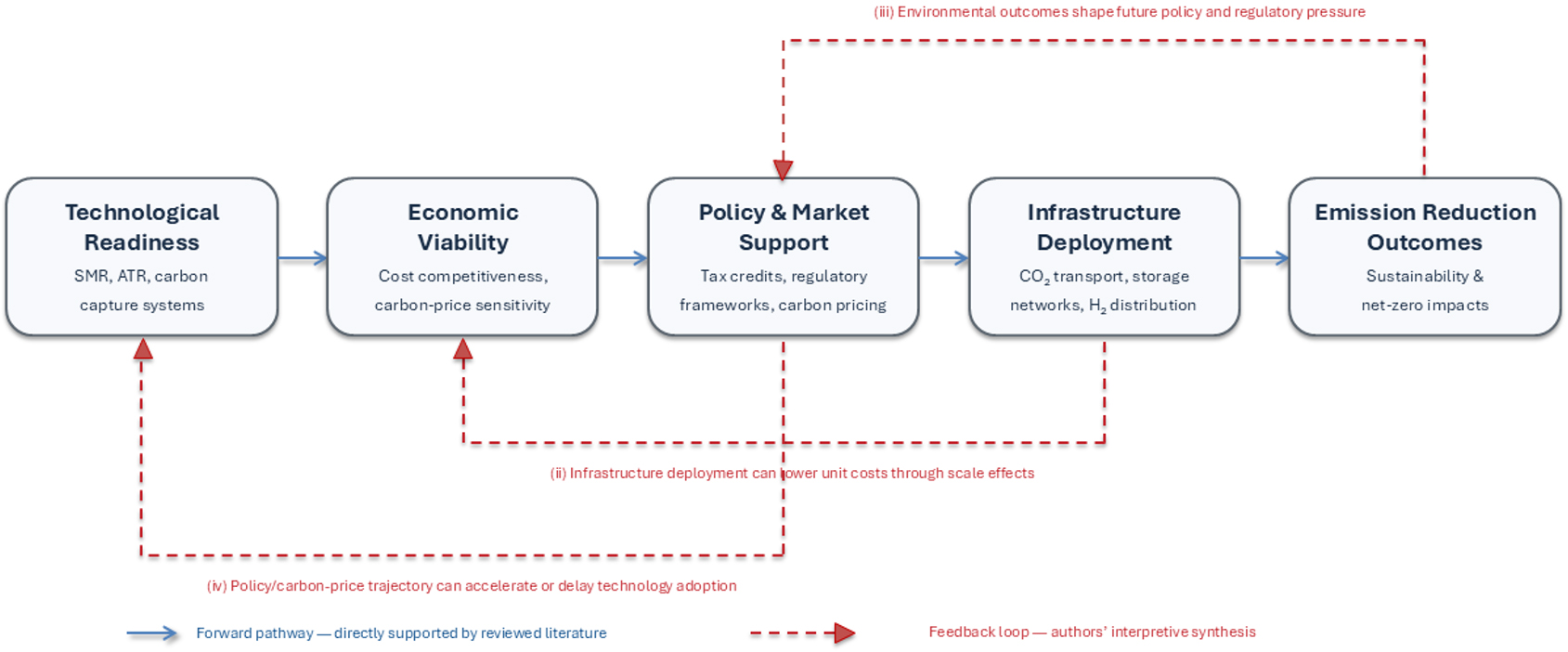
Figure 6. Conceptual framework: CCUS and blue hydrogen deployment pathway.
The forward pathway - technological readiness → economic viability → policy/market support → infrastructure deployment → emission reduction outcomes - is supported by explicit findings from the reviewed studies (e.g., those by Sajjadi and Ibrahim[22] and Ameyaw et al.[26] on the technology-to-economics linkage). Three bidirectional feedback loops: (i) infrastructure deployment feeds back to reduce per-unit costs and improve economic viability through economies of scale, consistent with the hub-based cost declines reported by Zhao et al.[11]; (ii) policy and carbon-price trajectories feed back to accelerate or delay technology-adoption decisions, reflecting the sensitivity of blue-hydrogen profitability to carbon-price levels discussed throughout Section "DISCUSSION"; and (iii) emissions and environmental performance outcomes feed back into public and regulatory pressure that shapes future policy stringency. Unlike the forward pathway, these three feedback relationships are not directly quantified in the reviewed literature; they are presented explicitly as the authors’ interpretive synthesis, intended as a hypothesis for future empirical testing rather than an established, literature-confirmed finding.
CONCLUSION
This literature review synthesizes evidence on the roles of CCUS and blue hydrogen in Canada's energy transition and environmental sustainability. The reviewed studies indicate meaningful decarbonization potential in hard-to-abate sectors, but the magnitude of benefit is highly context-dependent. Study-specific analyses report emissions reductions ranging from approximately 45% for an SMR + CCS configuration to 76% for blue-hydrogen substitution in an oil-sands application; these values arise from different system boundaries and should not be interpreted as a pooled performance estimate. Western Canada also possesses substantial geological storage potential, although theoretical capacity is not equivalent to practically deployable capacity because injectivity, monitoring, pressure management, infrastructure, economics, and regulation constrain deployment.
From an environmental perspective, the reviewed evidence confirms that lifecycle performance is pathway- and context-dependent. In a directly comparable SMR assessment, integrating at least 95% CO2 capture reduced lifecycle emissions from 11.99 to 6.59 kgCO2e/kgH2. Green-hydrogen studies generally demonstrate lower climate impacts when electrolysis is supplied by low-carbon renewable electricity, but reported values vary substantially according to electricity source, electrolysis technology, geography, and lifecycle boundary. The evidence therefore does not support assigning universal carbon-intensity values to either blue or green hydrogen. Rather, the climate benefit of blue hydrogen depends on high capture performance, stringent upstream methane control, low-carbon auxiliary energy, and reliable CO2 storage, while the environmental advantage of green hydrogen depends critically on access to genuinely low-carbon electricity.
Accordingly, blue hydrogen should be regarded as a conditional transitional decarbonization option for Canadian applications where these requirements can be demonstrated, particularly in hard-to-abate sectors and regions with established natural-gas and CO2-storage infrastructure. Its economic role is likewise application-specific: the $99/t profitability threshold and $300/t marginal-abatement-cost threshold reported in the reviewed literature arise from different analytical contexts and should not be interpreted as a single competitiveness range. Its long-term role should therefore be evaluated alongside renewable-powered green hydrogen, direct electrification, energy efficiency, and other decarbonization pathways rather than assumed to be universally sustainable. Key research priorities include harmonized comparative LCAs, social license and Indigenous/community engagement, long-term CO2-storage monitoring, broader provincial representation, and comparative assessment of alternative decarbonization pathways. These priorities are important for informing Canada's pathway toward net-zero emissions by 2050.
DECLARATIONS
Authors’ contributions
Conceptualization, data curation, methodology, writing - original draft: Sohail, M.
Formal analysis, investigation, validation, writing - original draft: Kamal, S.
Supervision, project administration, writing - review and editing: Khan, S. A.; Khan, S.; Razek, N.
All authors reviewed and approved the final manuscript and agree to be accountable for the work.
Availability of data and materials
Not applicable
AI and AI-assisted tools statement
During the preparation of this manuscript, the AI tool ChatGPT (OpenAI, version/model GPT-5.2, released December 11, 2025) was used for language polishing, paraphrasing, and improving readability. AI assistance was also used in the preparation of the graphical abstract to convert and enhance the authors’ editable graphical abstract into a high-resolution, publication-quality image. The tool did not influence the study design, data collection, analysis, interpretation, or the scientific content of the work. All authors take full responsibility for the accuracy, integrity, and final content of the manuscript.
Financial support and sponsorship
This research received financial support from the Petroleum Technology Research Centre (PTRC) and Mitacs IT35348 & IT35351, Canada.
Conflicts of interest
All authors declared that there are no conflicts of interest.
Ethical approval and consent to participate
Not applicable.
Consent for publication
Not applicable.
Copyright
© The Author(s) 2026.
Supplementary Materials
REFERENCES
1. Salas, D. A.; Boero, A. J.; Ramirez, A. D. Life cycle assessment of bioenergy with carbon capture and storage: a review. Renew. Sustain. Energy. Rev. 2024, 199, 114458.
2. Miner, K. R.; Turetsky, M. R.; Malina, E.; et al. Permafrost carbon emissions in a changing Arctic. Nat. Rev. Earth. Environ. 2022, 3, 55-67.
3. Canada Energy Regulator. Government of Canada. 2023. Provincial and territorial energy profiles: Canada. Available from: https://www.cer-rec.gc.ca/en/data-analysis/energy-markets/provincial-territorial-energy-profiles/provincial-territorial-energy-profiles-canada.html [Last accessed on 13 Nov 2026].
4. Environment and Climate Change Canada. Government of Canada. 2025. Greenhouse gas and air pollutant emissions projections - 2025. Available from: https://www.canada.ca/en/environment-climate-change/services/climate-change/greenhouse-gas-emissions/projections/2025-report.html [Last accessed on 13 Nov 2026].
5. International Carbon Action Partnership. Canada publishes new carbon price trajectory. 2026. Available from: https://icapcarbonaction.com/en/news/canada-publishes-new-carbon-price-trajectory [Last accessed on 13 Nov 2026].
6. Alberta. Technology Innovation and emissions reduction regulation. 2024. Available from: https://www.alberta.ca/technology-innovation-and-emissions-reduction-regulation [Last accessed on 12 Nov 2026].
7. Ghorbani, B.; Zendehboudi, S.; Saady, N. M. C.; Naterer, G. F. Hydrogen production and status in Canada: foundations for a low-carbon future. Can. J. Chem. Eng. 2025, 103, 4125-71.
8. Tardin-Coelho, R.; Bharadwaj, B.; Ashworth, P. Carbon capture utilisation and storage (CCUS) and public perceptions: A systematic literature review. Int. J. Greenh. Gas. Control. 2025, 145, 104393.
9. Popielak, P.; Majchrzak-Kucęba, I.; Wawrzyńczak, D. Climate change mitigation with CCUS - A case study with benchmarking for selected countries in adapting the European Union's green deal. Int. J. Greenh. Gas. Control. 2024, 132, 104057.
10. Wei, N.; Li, X.; Liu, S.; Lu, S.; Jiao, Z. A strategic framework for commercialization of carbon capture, geological utilization, and storage technology in China. Int. J. Greenh. Gas. Control. 2021, 110, 103420.
11. Zhao, Y. H.; Shakourifar, N.; Shahsavar, N.; Lei, Y.; Zhao, B. A holistic framework for evaluating gigaton scale geological CO2 storage applied to the Alberta oil sands: physics, policy, and economics. Int. J. Greenh. Gas. Control. 2024, 134, 104129.
12. Natural Resources Canada. Hydrogen Strategy for Canada: Seizing the Opportunities for Hydrogen—A Call to Action. Ottawa; 2020. Available from: https://natural-resources.canada.ca/sites/www.nrcan.gc.ca/files/environment/hydrogen/NRCan_Hydrogen-Strategy-Canada-na-en-v3.pdf [Last accessed on 13 Nov 2026].
13. AlHumaidan, F. S.; Absi Halabi, M.; Rana, M. S.; Vinoba, M. Blue hydrogen: current status and future technologies. Energy. Convers. Manag. 2023, 283, 116840.
14. Elnigoumi, A. Investigating cost effective pathways for blue hydrogen production in Alberta. [Master’s thesis]. Calgary: University of Calgary; 2021. Available from: https://ucalgary.scholaris.ca/items/dbb406cc-8315-4b09-836a-facf36594ca7 [Last accessed on 13 Nov 2026].
15. Global CCS Insitute. Global status of CCS 2026. Available from: https://www.globalccsinstitute.com/global-status-of-ccs/ [Last accessed on 12 Nov 2026].
16. Mantripragada, H. C.; Zhai, H.; Rubin, E. S. Boundary dam or petra nova - which is a better model for CCS energy supply? Int. J. Greenh. Gas. Control. 2019, 82, 59-68.
17. Zhang, K.; Lau, H. C.; Chen, Z. Using blue hydrogen to decarbonize heavy oil and oil sands operations in Canada. ACS. Sustain. Chem. Eng. 2022, 10, 10003-13.
18. Ghorbani, B.; Zendehboudi, S.; Saady, N. M. C.; Naterer, G. F. Canada’s hydrogen future: innovations, policies, and global perspectives. Energy. Fuels. 2025, 39, 7605-48.
19. Hannouf, M. B.; Gates, T.; Assefa, G.; Gates, I. Advancing hydrogen sustainability in Alberta: life cycle sustainability assessment of hydrogen production pathways. J. Clean. Prod. 2025, 530, 146850.
20. Usas, S. A.; Ricardez-Sandoval, L. An optimal sustainable planning strategy for national carbon capture deployment: a review on the state of CO2 capture in Canada. Can. J. Chem. Eng. 2024, 102, 2332-51.
21. Bataille, C.; Neff, J.; Shaffer, B. The Role of hydrogen in Canada’s transition to net-zero emissions. Sch. Public. Policy. Publ. 2021, 14.
22. Sajjadi, M.; Ibrahim, H. Case study of a greenfield blue hydrogen plant: a comparative analysis of production methods. Energies 2025, 18, 3272.
23. Dhingra, S.; Gupta, S.; Trivedi, J. A comprehensive model for life cycle assessment of blue hydrogen production and optimization along with CO2 enhanced oil recovery - reservoirs in Alberta. In SPE Canadian Energy Technology Conference and Exhibition. 2023.
24. Davis, M.; Okunlola, A.; Di Lullo, G.; Giwa, T.; Kumar, A. Greenhouse gas reduction potential and cost-effectiveness of economy-wide hydrogen-natural gas blending for energy end uses. Renew. Sustain. Energy. Rev. 2023, 171, 112962.
25. Yu, M.; Wang, K.; Vredenburg, H. Insights into low-carbon hydrogen production methods: green, blue and aqua hydrogen. Int. J. Hydrogen. Energy. 2021, 46, 21261-73.
26. Ameyaw, A. D.; Ampomah, W.; Morgan, A. Techno-Economic and life cycle assessments of integrated carbon capture and storage in blue hydrogen production. In SPE Western Regional Meeting. 2025.
27. Lee, J.; Cho, H.; Kim, J. Techno-economic analysis of on-site blue hydrogen production based on vacuum pressure adsorption: practical application to real-world hydrogen refueling stations. J. Environ. Chem. Eng. 2023, 11, 109549.
28. Lee, J. H.; Jegarl, S. Selecting optimal CO2-free hydrogen production technology considering market and technology. New. Renew. Energy. 2023, 19, 13-22.
29. Masoudi Soltani, S.; Lahiri, A.; Bahzad, H.; Clough, P.; Gorbounov, M.; Yan, Y. Sorption-enhanced steam methane reforming for combined CO2 capture and hydrogen production: a state-of-the-art review. Carbon. Capture. Sci. Technol. 2021, 1, 100003.
30. Khaing, M. M.; Hookham, C.; Ruwanpura, J.; Yin, S. Towards net-zero: comparative analysis of hydrogen infrastructure development in USA, Canada, Singapore, and Sri Lanka. Fuels 2025, 6, 68.
31. Alizadeh, S. M.; Khalili, Y.; Ahmadi, M. Comprehensive review of carbon capture and storage integration in hydrogen production: opportunities, challenges, and future perspectives. Energies 2024, 17, 5330.
32. Kan, M.; Sleep, S.; MacLean, H. L.; Posen, I. D. Impact of background systems on carbon capture and utilization pathways to produce fuels/chemicals in Canada. Sustain. Energy. Fuels. 2026, 10, 572-86.
33. Khalili, Y.; Yasemi, S.; Abdi, M.; Ghasemi Ertian, M.; Mohammadi, M.; Bagheri, M. A review of integrated carbon capture and hydrogen storage: AI-driven optimization for efficiency and scalability. Sustainability 2025, 17, 5754.
34. Awais, M.; Azevedo, D.; McPherson, M. Decarbonization pathways for Canada’s federated energy system using a subnational integrated assessment model. NPJ. Clim. Action. 2026, 5, 42.
35. Nath, F.; Mahmood, M. N.; Yousuf, N. Recent advances in CCUS: a critical review on technologies, regulatory aspects and economics. Geoenergy. Sci. Eng. 2024, 238, 212726.
36. Hanson, E.; Nwakile, C. Carbon capture and storage (CCS) as a pillar for balancing energy transition and climate goals. Eng. Technol. J. 2025, 10, 6167-84.
37. Memon, S. U. R.; Manzoor, R.; Fatima, A.; et al. A comprehensive review of carbon capture, utilization, and storage (CCUS): technological advances, environmental impact, and economic feasibility. Sch. Acad. J. Biosci. 2024, 12, 184-204.
38. Khan, M. F. H.; Shovon, S. M.; Akash, F. A.; Rahman, M. A.; Salman, M. Advancements toward carbon neutrality for a sustainable tomorrow—a review. Int. J. Low. Carbon. Technol. 2025, 20, 1728-48.
39. Ampomah, W.; Morgan, A.; Koranteng, D. O.; Nyamekye, W. I. CCUS perspectives: assessing historical contexts, current realities, and future prospects. Energies 2024, 17, 4248.
40. Liu, E.; Lu, X.; Wang, D. A systematic review of carbon capture, utilization and storage: status, progress and challenges. Energies 2023, 16, 2865.
41. Hermesmann, M.; Müller, T. E. Green, turquoise, blue, or grey? Environmentally friendly hydrogen production in transforming energy systems. Prog. Energy. Combust. Sci. 2022, 90, 100996.
42. Saha, P.; Akash, F. A.; Shovon, S. M.; et al. Grey, blue, and green hydrogen: a comprehensive review of production methods and prospects for zero-emission energy. Int. J. Green. Energy. 2023, 21, 1383-97.
43. Kabir, M. A.; Khan, S. A.; Kabir, G. Carbon capture, utilization, and storage risks from supply chain perspective: a review of the literature and conceptual framework development. C 2024, 10, 15.
44. Curcio, E. Techno-economic analysis of hydrogen production: costs, policies, and scalability in the transition to net-zero. Int. J. Hydrogen. Energy. 2025, 128, 473-87.
45. Hao, Z.; Barecka, M. H.; Lapkin, A. A. Accelerating net zero from the perspective of optimizing a carbon capture and utilization system. Energy. Environ. Sci. 2022, 15, 2139-53.
46. Thiedemann, T. M.; Wark, M. A compact review of current technologies for carbon capture as well as storing and utilizing the captured CO2. Processes 2025, 13, 283.
47. Bhavsar, A.; Hingar, D.; Ostwal, S.; Thakkar, I.; Jadeja, S.; Shah, M. The current scope and stand of carbon capture storage and utilization ~ A comprehensive review. Case. Stud. Chem. Environ. Eng. 2023, 8, 100368.
48. Maduabuchi, G. I.; Okoh, C. I.; Abah, C. F.; Ogulu-Ishola, T. A.; Adubazi, R. A.; Yougha, P. J. Comparative analysis of different carbon capture technologies for blue hydrogen production. In SPE Nigeria Annual International Conference and Exhibition. 2025.
49. Rabie, A. H.; Alwahedi, Y. F.; Ciotti, B. G.; Anguiano, J. A.; Merryfield, D. L. Novel blue hydrogen and transportation process supporting global carbon footprint reduction. In Abu Dhabi International Petroleum Exhibition and Conference. 2024.
50. Chen, S.; Liu, J.; Zhang, Q.; Teng, F.; McLellan, B. C. A critical review on deployment planning and risk analysis of carbon capture, utilization, and storage (CCUS) toward carbon neutrality. Renew. Sustain. Energy. Rev. 2022, 167, 112537.
51. Tetteh, D. A.; Salehi, S. The blue hydrogen economy: a promising option for the near-to-mid-term energy transition. J. Energy. Resour. Technol. 2022, 145, 042701.
52. Raheem, I.; Tawai, A.; Amornraksa, S.; et al. A comprehensive review of approaches in carbon capture, and utilization to reduce greenhouse gases. Appl. Sci. Eng. Prog. 2025, 18, 7629.
53. Saxena, A.; Prakash Gupta, J.; Tiwary, J. K.; et al. Innovative pathways in carbon capture: advancements and strategic approaches for effective carbon capture, utilization, and storage. Sustainability 2024, 16, 10132.
54. Nwabueze, Q. A.; Leggett, S. Advancements in the application of CO2 capture and utilization technologies—A comprehensive review. Fuels 2024, 5, 508-32.
55. Pereira, E. G.; Fossa, A.; Cerri, C. E. P.; et al. Advancing sustainability through carbon capture, utilization and storage (CCUS) technologies: the hydrogel case study. J. Sustain. Dev. Law. Policy. 2023, 14, 218-50.
56. Mohammed, S.; Eljack, F.; Al-Sobhi, S.; Kazi, M. K. A systematic review: the role of emerging carbon capture and conversion technologies for energy transition to clean hydrogen. J. Clean. Prod. 2024, 447, 141506.
57. Hamed, A. M.; Tuan Kamaruddin, T. N. A.; Ramli, N.; Abdul Wahab, M. F. A review on blue and green hydrogen production process and their life cycle assessments. IOP. Conf. Ser. Earth. Environ. Sci. 2023, 1281, 012034.
58. Sunaryo, T.; Radyati, M. R. N.; Utha, M. A.; Rinanti, A.; Minarti, A. Research development on carbon capture, utilization and storage as a climate change mitigation technology. Environ. Res. Eng. Manag. 2023, 79, 37-55.
59. Nguyen, D. H.; Chapman, A.; Tsuji, T. Assessing the optimal contributions of renewables and carbon capture and storage toward carbon neutrality by 2050. Sustainability 2023, 15, 13447.
60. Nagireddi, S.; Agarwal, J. R.; Vedapuri, D. Carbon dioxide capture, utilization, and sequestration: current status, challenges, and future prospects for global decarbonization. ACS. Eng. Au. 2023, 4, 22-48.
61. Breuvart, E.; Zeman, F. CO2 utilization in eastern Canada: sources, sites, and grid effects. Can. J. Chem. Eng. 2022, 101, 1138-49.
62. Franco, A.; Giovannini, C. Routes for hydrogen introduction in the industrial hard-to-abate sectors for promoting energy transition. Energies 2023, 16, 6098.
63. Nakkeeran, K.; Victor, K. Grey and blue hydrogen: insights into production technologies and outlook on CO2-free alternatives. Sustain. Energy. Technol. Assess. 2025, 75, 104222.
64. Zhao, K.; Jia, C.; Li, Z.; et al. Recent advances and future perspectives in carbon capture, transportation, utilization, and storage (CCTUS) technologies: a comprehensive review. Fuel 2023, 351, 128913.
65. Franco, A.; Rocca, M. Renewable electricity and green hydrogen integration for decarbonization of “hard-to-abate” industrial sectors. Electricity 2024, 5, 471-90.
66. Noussan, M.; Raimondi, P. P.; Scita, R.; Hafner, M. The role of green and blue hydrogen in the energy transition—A technological and geopolitical perspective. Sustainability 2020, 13, 298.
67. Layzell, D. B.; Hares, R.; McCoy, S. Review of carbon-dioxide storage potential in Western Canada: blue hydrogen roadmap to 2050, 2022. Available from: https://transitionaccelerator.ca/reports/review-of-carbon-dioxide-storage-potential-in-western-canada-blue-hydrogen-roadmap-to-2050/ [Last accessed on 12 Nov 2026].
68. Lin, K.; Wei, N.; Jiang, D.; Zhang, Y. Progress and perspectives in source-sink matching for CCUS: a critical review. Renew. Sustain. Energy. Rev. 2026, 226, 116313.
69. Canada Revenue Agency. Carbon capture, utilization, and storage (CCUS) investment tax credit (ITC), 2022. Available from: https://www.canada.ca/en/revenue-agency/services/tax/businesses/topics/corporations/business-tax-credits/clean-economy-itc/carbon-capture-itc.html [Last accessed on 12 Nov 2026].
70. Ihejirika, N. The role of CCUS in accelerating Canada’s transition to net-zero. Oxford Institute for Energy Studies; OIES Paper ET02, 2021. Available from: https://www.oxfordenergy.org/?p=44097 [Last accessed on 13 Nov 2026].
71. Lyons, M.; Durrant, P.; Kochhar, K. Reaching zero with renewables: capturing carbon. Technical Paper, 2021. Available from: https://www.irena.org/-/media/Files/IRENA/Agency/Technical-Papers/IRENA_Capturing_Carbon_2021.pdf [Last accessed on 12 Nov 2026].
72. de Nier, M.; Maas, W.; Gray, L.; Wiwchar, T. Maturing CCS technology through demonstration - quest: learning from CCS implementation in Canada. In Abu Dhabi International Petroleum Exhibition and Conference. 2015.
73. Rui, Z.; Zeng, L.; Dindoruk, B. Challenges in the large-scale deployment of CCUS. Engineering 2025, 44, 17-20.
74. Li, X.; Xu, B.; Tian, H.; Shu, G. Towards a novel holistic design of organic rankine cycle (ORC) systems operating under heat source fluctuations and intermittency. Renew. Sustain. Energy. Rev. 2021, 147, 111207.
75. Eide, L. I.; Batum, M.; Dixon, T.; et al. Enabling large-scale carbon capture, utilisation, and storage (CCUS) using offshore carbon dioxide (CO2) infrastructure developments—A review. Energies 2019, 12, 1945.
76. Fazeli, R.; Longden, T.; Beck, F. J. Dynamics of price-based competition between blue and green hydrogen with net zero emissions targets. Renew. Sustain. Energy. Rev. 2025, 210, 115244.
77. Herdem, M. S.; Mazzeo, D.; Matera, N.; et al. A brief overview of solar and wind-based green hydrogen production systems: trends and standardization. Int. J. Hydrogen. Energy. 2024, 51, 340-53.
78. Clora, F.; Yu, W.; Corong, E. Alternative carbon border adjustment mechanisms in the European Union and international responses: aggregate and within-coalition results. Energy. Policy. 2023, 174, 113454.
79. Dalla Longa, F.; Fragkos, P.; Pupo Nogueira, L.; van der Zwaan, B. System-level effects of increased energy efficiency in global low-carbon scenarios: a model comparison. Comput. Ind. Eng. 2022, 167, 108029.
Cite This Article
 Open Access
How to Cite
Sohail, M.; Kamal, S.; Khan, S. A.; Khan, S.; Razek, N. Advancing Canada’s energy future: a systematic-descriptive review of CCUS and blue hydrogen for environmental sustainability. Carbon Footprints 2026, 5, 62. https://dx.doi.org/10.20517/cf.2026.109
Download Citation
If you have the appropriate software installed, you can download article citation data to the citation manager of your choice. Simply select your manager software from the list below and click on download.
Export Citation File
Type of Import
Tips on Downloading Citation
Citation Manager File Format
Type of Import
Direct Import: When the Direct Import option is selected (the default state), a dialogue box will give you the option to Save or Open the downloaded citation data. Choosing Open will either launch your citation manager or give you a choice of applications with which to use the metadata. The Save option saves the file locally for later use.
Indirect Import: When the Indirect Import option is selected, the metadata is displayed and may be copied and pasted as needed.
About This Article
Copyright

Data & Comments
Data
0












Comments
Comments must be written in English. Spam, offensive content, impersonation, and private information will not be permitted. If any comment is reported and identified as inappropriate content by OAE staff, the comment will be removed without notice. If you have any queries or need any help, please contact us at [email protected].