



Valorization of solid wastes in concrete production: an overview of materials, properties, mechanisms, and emerging technologies toward upcycling
 0
0 Abstract
Valorizing solid wastes in concrete production has the potential to deliver three-fold benefits of minimizing landfill, reducing material costs, and improving concrete properties, therefore adding value to both economic development and environmental management. Despite such significant potential, the practical utilization of solid wastes in concrete has been limited due to various factors. This paper overviews solid wastes utilized in concrete production, aiming to clarify the capabilities and limitations through surveying solid wastes that serve as alternative raw materials of concrete, underlying mechanisms, concrete properties, and emerging technologies toward upcycling. The types of wastes reviewed include industrial, agricultural, municipal, and construction streams, which play roles as binders, aggregates, or fillers, impacting the fresh, mechanical, durability, and multifunctional properties of concrete. The underlying physical and chemical mechanisms that govern concrete properties are discussed. Advancements in nanotechnology, carbon sequestration, artificial intelligence, and advanced manufacturing are examined as emerging techniques. Key challenges and new opportunities are discussed to provide a roadmap for future research and development of green concrete technologies.
Keywords
INTRODUCTION
The construction industry faces two urgent and interconnected challenges: the accumulation of solid wastes, and the high costs and emissions associated with concrete production. Worldwide, billions of tons of industrial, agricultural, municipal, and construction and demolition (C&D) solid wastes are generated annually; however, only a small fraction is reused in high-value applications[1]. At the same time, concrete production, which relies heavily on energy-intensive cement and non-renewable aggregates, contributes substantially to emissions and natural resource depletion[2]. Integrating solid wastes into concrete production presents a viable solution to both problems, enabling waste diversion from landfills while reducing the embodied carbon of concrete. In recent years, sustainable manufacturing, circular economy models, and decarbonization policies have intensified interest in alternative materials[3]. However, despite the increasing number of studies on waste-modified concrete, the industry lacks a unified, mechanistically grounded understanding of how different solid wastes can be transformed into value-added concrete.
Although wastes have been used in concrete, most existing practices fall into the category of downcycling, where wastes are used in low-performance or low-value roles such as low-grade aggregates that reduce concrete strength[4]. Downcycling typically does not enhance concrete performance; instead, it may involve trade-offs that compromise mechanical strength or durability[5-7]. In contrast, upcycling refers to transforming wastes into materials with higher performance[8]. Upcycling enables waste-derived materials to exhibit desired physical or chemical properties that can enhance concrete performance[9]. Despite the promise of upcycling, its mechanisms and boundaries relative to downcycling remain unclear. This paper adopts an upcycling lens, making it distinct from prior reviews that primarily focus on recycling a single type of waste[10-16]. By clarifying what constitutes upcycling and examining how value is added, this study aims to promote further research and development for green concrete technologies.
Upcycling solid wastes in concrete offers unique three-fold benefits: environmental, economic, and technical. Environmentally, upcycling reduces waste accumulation and avoids the emissions associated with incineration and landfilling, while simultaneously lowering the cost and emissions of concrete by reducing cement consumption or by enabling carbon sequestration in waste-derived materials[17]. Economically, upcycling reduces costs associated with raw materials procurement and creates new revenue streams through the sale of engineered waste-derived products. Technically, upcycling often improves concrete properties[18], such as mechanical strength, durability, thermal stability, or resistance to chemical attack, because engineered waste materials can serve as reactive binders, aggregates, fillers, or functional additives[19]. The combined gains across these domains underscore the transformative potential of solid wastes as strategic materials for next-generation concrete technologies in the construction and manufacturing industries.
Despite extensive research on waste-modified concrete, large-scale practical utilization is limited due to several challenges. First, waste streams exhibit highly variable physical, chemical, and mineralogical characteristics[20], making property prediction and quality control difficult. Second, there is a lack of standardized beneficiation processes and mechanistic understanding that reliably convert diverse wastes into high-performance constituents[21]. Third, technical expertise among practitioners remains uneven, particularly in emerging areas such as nanotechnology[22], carbon mineralization[23], and artificial intelligence[24]. Fourth, regulatory and market barriers, such as concerns about long-term durability, leachability, and certification, slow the adoption of upcycled materials[25]. These persistent gaps highlight the need for a comprehensive and cross-disciplinary review that synthesizes the recent advancements in material processing, mechanistic modeling, and performance evaluation.
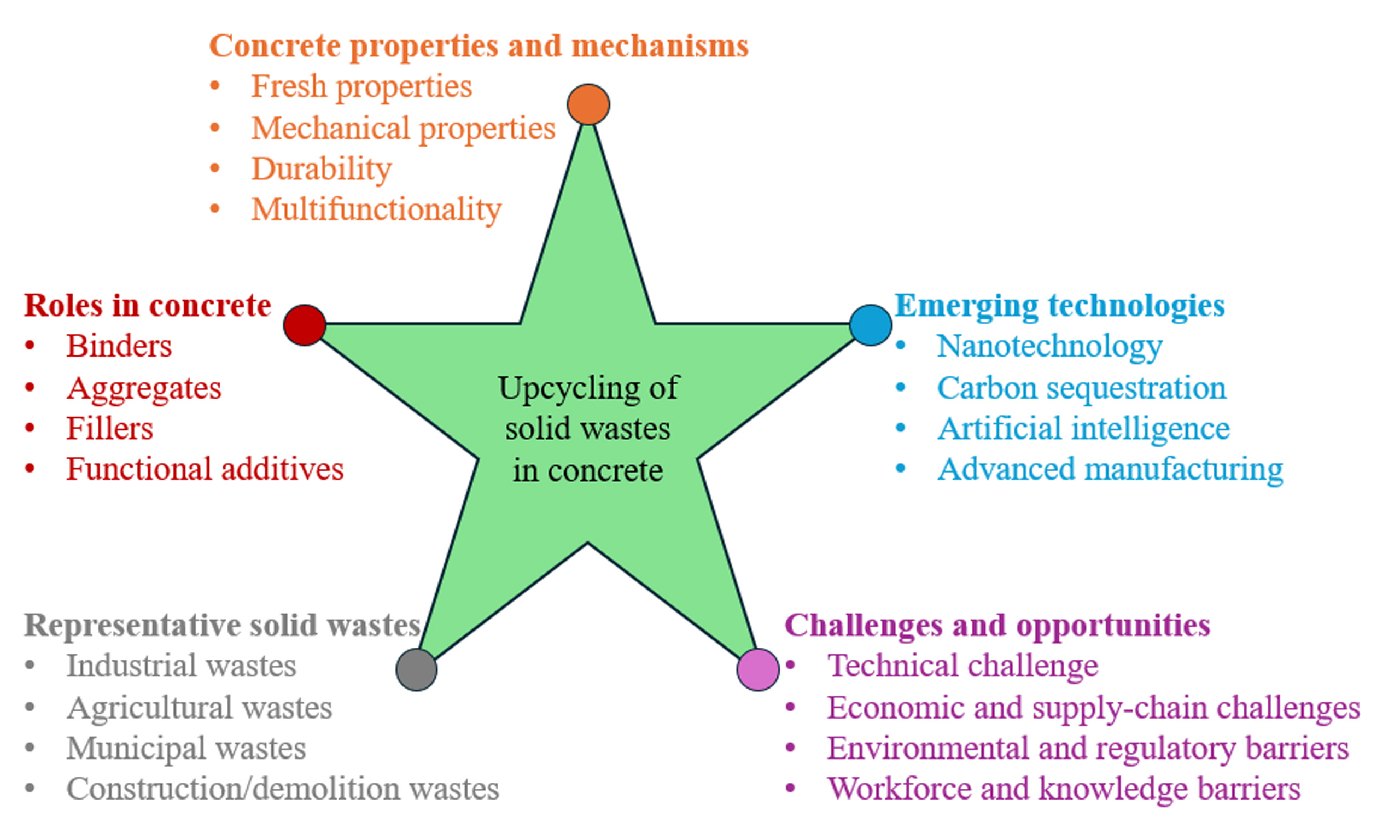
This paper overviews the materials, properties, mechanisms, and emerging technologies in the context of upcycling wastes for concrete production. This paper focuses on value-added pathways and integrates: (1) a systematic classification of solid wastes based on their sources; (2) a critical assessment of fresh, mechanical, durability, and multifunctional properties across waste types; (3) a detailed discussion on mechanisms that influence the microstructure, chemistry, and properties of concrete; and (4) a discussion on emerging technologies (nanotechnology, carbon sequestration, artificial intelligence, and advanced manufacturing) for upcycling solid wastes in concrete. By connecting material science principles with practical engineering considerations and future trends, this paper not only consolidates the state of the art but also identifies fundamental gaps and outlines research and technological opportunities.
CLASSIFICATION OF SOLID WASTES UPCYCLED IN CONCRETE
The upcycling of solid wastes for concrete production requires a systematic understanding of waste streams, their physical and chemical characteristics, and their generation mechanisms. This section presents a classification of industrial, agricultural, municipal, and C&D wastes [Figure 1] that have exhibited strong upcycling potential and have substantial availability. For each type, its origin, composition, typical physical properties, and global production trends are reviewed, aiming to lay the foundation for understanding its suitability as a concrete constituent.
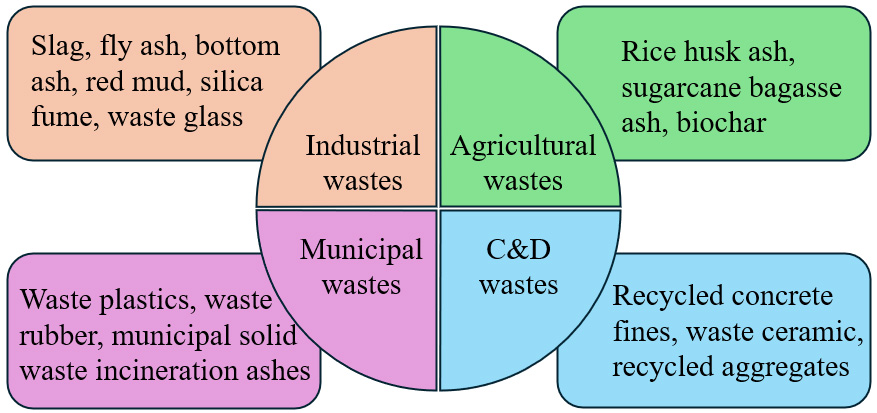
Figure 1. Four types of solid wastes for upcycling in concrete production: industrial, agricultural, municipal, and construction and demolition (C&D) wastes.
Industrial wastes
Industrial wastes originate from large-scale manufacturing processes[26], such as metallurgy, mining, combustion, refining, chemical production, and high-temperature processing. These waste streams often contain mineral-rich residues[27], byproducts of thermal transformations[28], and reactive phases. Many byproducts have amorphous silica, alumina, calcium, or iron compounds[29,30], making them suitable for binders[31], aggregates[32], fillers[33], or functional additives[34]. Steel slag, fly ash, bottom ash, red mud, silica fume, and waste glass are reviewed in this subsection. For each type of alternative ingredient derived from solid wastes, the production process, physical and chemical characteristics, and availability are reviewed to evaluate their suitability for high-value utilization in concrete.
Steel slag is a byproduct of steel production generated during the separation of molten steel from impurities such as basic oxygen furnaces and electric arc furnaces[35,36]. Physically, steel slag is dense and angular, with high abrasion resistance, making it suitable to act as aggregates[37] or as binders or fillers after grinding into powder. Chemically, it is rich in calcium, iron oxides, silicates, and aluminates, often containing free lime and periclase that can hydrate or expand. Steel slag has been utilized to prepare normal concrete and advanced concrete such as ultra-high-performance concrete (UHPC)[38], engineered cementitious composite (ECC)[39], geopolymer concrete[40], and 3D printing concrete[41]. Globally, more than 400 million tons of iron and steel slag is produced annually[42], and this volume continues to rise due to growing steel demand.
Fly ash and bottom ash are produced from coal combustion in power plants. Fly ash consists of fine, spherical particles with glassy morphology. Its chemical composition is dominated by SiO2, Al2O3, Fe2O3, and CaO, making it a widely utilized a supplementary cementitious material (SCM) in binders[43]. Bottom ash, by contrast, is coarser and more porous. Fly ash or bottom ash has been utilized to produce normal concrete and advanced concrete such as UHPC[44], ECC[45], geopolymer concrete[46], and 3D printing concrete[47]. Historically, coal power plants produced several hundred million tons of fly ash annually, though production has begun to decline in regions shifting away from coal. However, legacy landfilled ashes continue to exist, presenting long-term sources for potential upcycling.
Red mud is the highly alkaline residue left after bauxite ore digestion in the Bayer process for alumina production[48]. It is characterized by its fine particle size, high iron-oxide content (giving its distinctive red color), and substantial quantities of alumina, silica, and titania. Red mud can be upcycled into binders, pigments, or functional fillers to produce normal concrete and advanced concrete such as UHPC[49], ECC[50], geopolymer concrete[51], and 3D printing concrete[52]. Red mud typically exhibits pH values above 10 due to caustic soda used in processing. Alumina production generates over 100 million tons of red mud annually[53], with cumulative stockpiles exceeding one billion tons in many regions.
Silica fume is an ultrafine powder collected as a byproduct of silicon and ferrosilicon alloy manufacturing. With particle sizes typically below 1 µm and amorphous silica content exceeding 90%[54], silica fume is a reactive pozzolan that can enhance both the mechanical strength and durability of concrete. Silica fume has been utilized to produce both normal concrete and advanced concrete such as UHPC[55], ECC[56], geopolymer concrete[57], and 3D printing concrete[58]. Although produced in smaller quantities (a few million tons annually[59]) compared with other industrial wastes, growing demand in advanced concrete highlighted opportunities for optimizing its use and combining it with other materials.
Waste glass originates from container glass, flat glass, and various post-consumer products. When crushed and milled, it consists mainly of amorphous silica with minor alkali and alkaline-earth oxides. Due to the presence of amorphous silica, glass powder has pozzolanic potential when glass particles are ground to particle sizes below 50 µm[60]. Waste glass has been used to prepare both normal concrete and advanced concrete such as UHPC[61], ECC[62], geopolymer concrete[63], and 3D printing concrete[64]. Global glass waste exceeds tens of millions of tons annually[65], with only a small fraction being recycled in the glass industry due to color contamination and collection inefficiency.
Agricultural wastes
Agricultural wastes are byproducts derived from the cultivation, processing, and conversion of crops and biomass. Agricultural wastes are typically renewable and seasonally generated, but they vary widely in composition depending on the crop type, combustion or processing conditions, and geographic production practices. These wastes often contain high levels of reactive amorphous silica or porous carbonaceous structures, making them promising candidates for using as SCMs[66], nano-silica precursors[67], internal curing agents[68], lightweight fillers[69], or carbon-sequestering additives[70]. This subsection reviews representative agricultural wastes, including rice husk ash (RHA), sugarcane bagasse ash (SCBA), and biochar, because they exhibit strong potential for upcycling in concrete production. This subsection reviews their physical and chemical properties, production mechanisms, and trends that influence their availability.
RHA is produced by controlled burning of rice husks, which are high-silica residues. When burned under optimized conditions, RHA contains rich amorphous silica with large surface area, making it highly pozzolanic. RHA particles are porous, lightweight, and angular[71,72]. They have been used to produce both normal concrete and advanced concrete such as UHPC[73], ECC[74], geopolymer concrete[75], and 3D printing concrete[76]. The rice industry produces over 100 million tons of rice husks annually[77], and combustion for energy production provides a consistent source. Production has trended upward due to increasing rice cultivation driven by population growth. The high silica content and ease of beneficiation (grinding, acid treatment) make RHA a promising agricultural waste for concrete production.
Bagasse is the fibrous residue remaining after sugarcane crushing, and combustion in boilers yields SCBA[78], which contains silica, alumina, unburnt carbon, and potassium compounds. Its reactivity depends on combustion temperature and milling factors. SCBA has been used to produce both normal concrete and advanced concrete such as UHPC[79], ECC[80], geopolymer concrete[81], and 3D printing concrete[82]. As sugarcane production continues to expand in tropical regions, SCBA production is estimated to be on an order of several million tons per year[83], with an upward trend linked to bioenergy initiatives at sugar mills.
Biochar is produced by pyrolyzing biomass such as crop residues, wood waste, or manure under limited oxygen[84,85]. It consists of carbon, with porous and highly variable physical structures depending on feedstock and pyrolysis conditions. Biochar has been used to produce both normal concrete and advanced concrete such as UHPC[86], ECC[87], geopolymer concrete[88], and 3D printing concrete[89]. Global biochar production has been increasing due to interest in carbon sequestration and regenerative agriculture, with volumes reaching several million tons annually[90]. In concrete, biochar can be upcycled to offer internal curing[91], reduce density[92], or improve thermal insulation[93]. Biochar may also contribute to improved mechanical properties and CO2 sequestration[94].
Municipal and urban wastes
Municipal and urban wastes arise from daily human activities in cities, such as consumer product disposal and packaging waste[95,96]. These streams are diverse and often contaminated, which limited their use in construction materials. However, rapid population growth, urbanization, and rising consumption have resulted in unprecedented volumes of these wastes, prompting new efforts to convert the wastes into high-value products. This subsection reviews waste plastics, waste rubber from end-of-life tires, and municipal solid waste incineration (MSWI) ashes, which have exhibited strong potential of upcycling for concrete production.
Municipal solid waste streams contain various plastics, such as polyethylene, polypropylene, polystyrene, and polyethylene terephthalate, which are non-biodegradable and can convert into microplastics that pollute the environment and cause safety risks[97]. The recycling rates of waste plastics are low because of contamination and sorting challenges. Physically, they are lightweight and produce fibers or pellets for concrete production[98]. Alternatively, waste rubber or plastic has been combined with bituminous materials in asphalt or other bitumen-based products[99-101], demonstrating unique benefits due to better interface bond and compatibility between polymers.
Waste plastics have been used to prepare both normal concrete and advanced concrete such as geopolymer concrete[102] and 3D printing concrete[103]. Global plastic wastes exceed hundreds of millions of tons annually[104], with upward growth driven by packaging use. Upcycling waste plastics in concrete production often requires treatments like surface modification, chemical coupling, or compatibilization to improve interfacial bond with cementitious phases.
Tire rubber waste consists of styrene-butadiene rubber and steel-reinforced composites. After shredding or grinding into crumb rubber or powder, it retains elasticity, hydrophobicity, and high energy absorption capacity. Tire rubber waste has been used to produce both normal concrete and advanced concrete such as UHPC[105], ECC[106], geopolymer concrete[107], and 3D printing concrete[108]. Annual global waste tire generation is estimated to be approximately 1.5 billion tons[109]. Untreated rubber tends to weaken concrete due to hydrophobicity, but upcycling processes such as devulcanization[110], surface treatment[111], and mineral coatings[112] can improve microstructural compatibility, enabling enhanced ductility and impact resistance.
Many cities use incineration to reduce municipal solid waste volume and produce sustainable electrical energy. The incineration process generates bottom ash and fly ash residues. MSWI ashes contain a mixture of glassy phases, metals, minerals, and unburnt residues. They typically require washing, sorting, and stabilization to remove chlorides and heavy metals[113]. MSWI ashes have been used to produce both normal concrete and advanced concrete such as UHPC[114], ECC[115], geopolymer concrete[116], and 3D printing concrete[117]. The production of MSWI ashes has grown as more countries adopt waste-to-energy technologies[118].
Construction and demolition wastes
C&D wastes are generated during the construction, renovation, and demolition of structures. These wastes represent one of the largest waste streams globally, driven by urban development, aging infrastructure, and rebuilding. C&D materials often contain mineral phases, such as hydrated or unhydrated cementitious materials[119], ceramics[120], and aggregates[121], giving them significant potential for upcycling into concrete when properly processed. This subsection reviews recycled concrete fines, waste ceramic materials, and engineered recycled aggregates.
Recycled concrete fines can be produced during the crushing and processing of demolished concrete structures. Recycled concrete fines consist of hydrated cement paste, unhydrated cement grains, and fine aggregates, thereby containing calcium silicate hydrate (C-S-H) and calcium hydroxide[122]. Recycled concrete fines have been used to produce normal concrete and advanced concrete such as UHPC[123], ECC[9], geopolymer concrete[124], and 3D printing concrete[125]. Global C&D waste generation is estimated to be billions of tons annually[126], with an upward trend driven by urban redevelopment and infrastructure renewal. Although often treated as low-grade filler, recycled concrete fines can be upcycled via fine grinding, carbonation curing[127], or thermal activation[128], enabling it to function as a reactive binder with enhanced carbon sequestration capabilities.
Ceramic wastes originate from bricks, tiles, sanitaryware, and other fired clay products, which are physically hard and dense and consist primarily of aluminosilicates. Ceramic wastes have been used to produce both normal concrete and advanced concrete such as UHPC[129], ECC[130], geopolymer concrete[131], and 3D printing concrete[132]. Global ceramic manufacturing continues to grow, resulting in tens of millions of tons of ceramic wastes annually[133]. When crushed and ground into fine powder, ceramic wastes can exhibit pozzolanic activity due to their partially amorphous content. Beneficiation techniques such as controlled grinding or chemical activation can enhance its reactivity[134], making it suitable for use as a SCM or filler.
Recycled aggregates derived from crushed concrete or masonry traditionally suffer from high porosity and low mechanical strength, making them common examples of downcycling. However, upcycling approaches, such as carbonation treatment[135], polymer coating[136], or mineral slurry impregnation[137], can enhance mechanical properties and durability. Recycled aggregates have been used to produce both normal concrete and advanced concrete such as UHPC[138], ECC[139], geopolymer concrete[140], and 3D printing concrete[141]. With the increase of demolished structures, the production of recycled aggregates is projected to grow.
EFFECTS ON CONCRETE PROPERTIES
Solid wastes can serve multiple functional roles in concrete depending on their physical and chemical characteristics. This section reviews the representative solid wastes utilized as binders, aggregates, or fillers [Figure 2]. For each of the roles, the effects of solid wastes on fresh properties, mechanical properties, durability, and multifunctional properties of concrete are discussed.
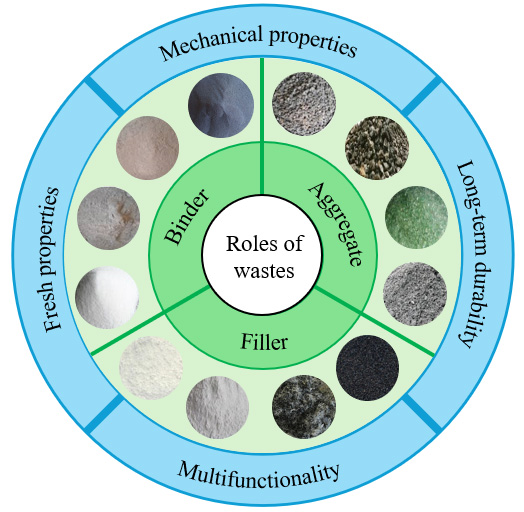
Figure 2. Roles of solid wastes in concrete and their influences on concrete properties.
Solid wastes as binders
Representative solid wastes used as SCMs in binders include fly ash, ground iron or steel slag, fine glass powder, fine ceramic powder, fine MSWI ash, and fine calcined clay or other kaolinitic wastes. These wastes have reactive phases such as amorphous silica, alumina, and calcium, which can cause hydraulic or pozzolanic reactions. They can be utilized to replace cement partially or fully, depending on their reactivity and performance requirements in specific applications.
Most SCMs affect the fresh properties of concrete through particle morphology and fineness. Fly ash, especially Class F fly ash, improves workability due to its spherical particle shape[142]. For example, slump increases of 40-55 mm were reported when 60% cement was replaced by fly ash[143]. In contrast, glass and ceramic powders tend to reduce slump because of their angular shapes and large surface area; reductions of 7% at 60% cement replacement were reported[144]. Slag can slightly increase workability, while MSWI ashes often reduce workability[145]. Fly ash and slag typically delay the setting time, especially at higher percentages[146], due to their lower reactivity compared with Portland cement, while fine glass powder or other activated fine powder may reduce setting time due to high fineness[147].
The incorporation of SCMs generally modifies strength development patterns. Fly ash and slag often reduce early-age mechanical strength but increase long-term strengths. For example, 40% slag replacement reduced 1-day compressive strength by 20%-30% but increased 90-day strength by 10%-20%[148]. Waste glass powder and ceramic powder typically show modest reduction in early-age strength[149], but long-term strengths often converge with or exceed the control mixture, due to improved microstructure refinement. MSWI ash can significantly reduce compressive strength[150], depending on variability and impurities unless combined with other SCMs.
SCM-based solid wastes have the potential to improve durability. Fly ash and slag typically reduce permeability and chloride ion penetration. For example, rapid chloride permeability test (RCPT) values decreased by 40%-50% at 30%-40% cement replacement levels using fly ash[151]. Waste glass powder reduced water absorption by 10%-30% at 15%-25% dosage level[152], enhancing resistance to carbonation and freeze-thaw cycles. However, waste glass may increase the risk of alkali-silica reaction (ASR) unless glass particle size is controlled[153]. Ceramic waste powders decreased water permeability by 5%-15% at 10%-20% dosage[129], due to improved packing density, pore refinement, and pozzolanic reaction[154]. MSWI ashes, even after pretreatment, may require blending with other SCMs to achieve acceptable durability[155]; alone, they can increase chloride penetration and carbonation due to the lower portlandite content[156]. SCMs generally enhance the sulfate resistance of concrete. For example, fly ash and slag enhance sulfate resistance via consuming calcium hydroxide, lowering tricalcium aluminate, and refining pore structures[157,158]; waste glass exhibited higher performance in enhancing sulfate resistance than fly ash[159].
Certain SCM-type solid wastes also enhance specialized functionalities. Waste glass powder contributes to improved thermal insulation due to its low thermal conductivity; concretes with 25% glass powder replacement reduced thermal conductivity by 24%[160]. Ceramic waste exhibited excellent fire resistance, with residual compressive strengths nearly doubled compared with the control concrete without ceramic waste after exposure to 600-800 °C[161]. Electrically conductive SCMs, such as carbon-rich ashes, metallurgical dusts, and fine steelmaking residues, can impart self-sensing properties due to reduced electrical resistivities[162]. In addition, finely ground slag enhanced radiation shielding capacity due to its higher density and iron content[163].
Solid wastes as aggregates
Solid wastes used as aggregates include recycled concrete aggregate (RCA), recycled masonry aggregate, glass aggregate, slag aggregate, lightweight aggregate, and tire rubber aggregate. Their replacement ratios vary. Coarse RCA is used at 20%-100% replacement[164], fine waste glass at 10%-30%[165], crumb rubber at 5%-20%[166], and steel slag aggregates commonly at 20%-60%[167].
Wastes used as aggregates influence workability largely through absorption capacity, shape, and surface texture. RCA and masonry aggregates possess higher water absorption, typically 4%-10%[168,169], higher than 1%-2% for natural aggregates, resulting in reduced slump if not pre-saturated[170]; and slump reductions of 20-50 mm are typical for 50% RCA replacement[171]. Crushed waste glass may either improve workability due to its smooth surface and lower water absorption capacity or decrease workability due to its irregular geometry, angular shape, and rough texture[172]. Slag aggregates, with angularity and rough texture, usually decrease slump[173]. Rubber particles reduce workability due to their hydrophobic surface and irregular shape; reductions of 10-40 mm have been reported at 10%-20% replacement[174].
Mechanical strength is generally more sensitive to aggregate replacement than fresh properties. RCA concrete often exhibits a 10%-30% reduction in compressive strength at 50%-100% replacement due to high porosity and reduced interfacial transition zone (ITZ)[175]. Recycled masonry aggregates cause similar reductions in strength[176]. Slag aggregates, however, may increase compressive strength by over 100% due to their high density and rough surface texture[177]. Waste glass used as fine aggregate usually maintains or slightly improves strength at low replacement levels (up to 20%), but high levels can reduce strength[178]. Rubber-modified concretes show notable strength reduction, depending on replacement level[174], accompanied by improved ductility and impact resistance.
Waste-derived aggregates substantially influence durability, often in a complex manner due to variability in porosity and absorption. RCA and masonry aggregates often increase permeability, chloride diffusion coefficients, and carbonation depth due to their higher pore volumes[179,180]; however, pre-saturation, surface treatment, or combining them with SCMs mitigated drawbacks. Slag aggregates enhance abrasion resistance and improve resistance to impact loading[181]. Waste glass aggregates improve surface hardness and the resistance to chemical attack and abrasion[15], though ASR mitigation strategies remain critical. Rubber aggregates enhance freeze-thaw and impact resistance due to their energy-dissipating elastic properties[182]. However, rubber usually increases water absorption and long-term creep[183]. Lightweight aggregates derived from fly ash improve fire resistance and mitigate spalling at elevated temperature because of their internal moisture reservoirs[184], which moderate pore pressure during heating. Therefore, durability responses of waste aggregates are dependent on processing and mixture design.
Specialized functional properties are particularly prominent when waste aggregates are used due to the substantial sizes. Rubber aggregates impart outstanding acoustic absorption, with sound absorption coefficients largely increased[185]. Rubberized concretes also provide better thermal insulation, lowering conductivity by 69% at a 50% replacement level[186]. Waste glass aggregates can enhance reflectivity and brighten surface[187], reducing heat island effects in pavements[188]. Slag aggregates improve skid resistance and surface friction of pavements[189]. Metallic waste aggregates (e.g., steel chips or turnings) can improve electrical conductivity, enabling self-sensing for structural monitoring[190].
Solid wastes as fillers
Fillers derived from recycled concrete fines, recycled masonry fines, recycled ceramic fines, plastic fines, and rubber fines, when used at low dosages (generally < 10% of binder mass), have been reported to have significant impacts on the fresh properties of concrete[191-194]. Recycled concrete, masonry, ceramic, and plastic fines generally reduce workability[195-199], specific magnitude depending on their particle morphology, particle sizes, and dosages. Despite their low replacement levels, these waste-derived fillers consistently demonstrate the ability to influence fresh properties, highlighting the necessity for dosage optimization and admixture adjustments to achieve target workability in practical applications.
Waste-derived fillers can influence the mechanical properties of concrete, with direction and magnitude depending strongly on filler type, fineness, and dosage. Recycled concrete, masonry, and ceramic fines typically enhance compressive strengths when their dosages are low[200,201], with specific ranges depending on various factors like particle type and concrete mix variables. Waste plastic or rubber fines typically reduce compressive strength[202,203], but they have the potential to improve the tensile strength, flexural strength, and impact resistance of concrete.
Durability-related performance indicators show diverse trends depending on the filler type and dosage. On one hand, waste-derived fillers such as recycled concrete, masonry, and ceramic fines increase sorptivity, water absorption, and chloride penetration[179,204]; on the other hand, these fillers may improve durability due to pore refinement[205,206]. Additionally, waste plastic and rubber fines may enhance freeze-thaw resistance due to their high elasticity and low moduli.
Waste-derived fillers can influence functional properties, such as shrinkage, thermal, acoustic, and electrical characteristics. Recycled concrete, masonry, and ceramic fines decrease autogenous and drying shrinkage due to the high hardness of quartz and their calcite micro-particles[207,208]. Waste plastic fines reduce thermal conductivity and improve acoustic damping[209]. Recycled concrete, masonry, and ceramic fines slightly increase electrical resistivity[210], while plastic and rubber fines can largely increase resistivity due to their insulating nature[211]. Ceramic fines can improve abrasion resistance at low dosages[212], whereas plastic fines reduce abrasion resistance. Overall, small amounts of fillers can be used strategically to tailor concrete’s functional attributes, although performance varies significantly among waste types.
Summary and comparative assessment
Across the three roles, solid wastes influence concrete performance in different ways. SCM-type wastes typically improve mechanical strength and long-term durability while compromising early-age strengths. Aggregate-type wastes produce pronounced effects on both fresh and hardened properties, especially when wastes exhibit high porosity or irregular textures. Filler-type wastes can improve packing density at low dosages but can reduce long-term mechanical properties and durability when used excessively. For each waste stream, its impact on concrete properties varies largely with its dosage. These results highlight the importance of selecting appropriate waste types, processing methods, and replacement rates to achieve targeted concrete performance.
Their impacts on durability vary but provide substantial opportunities to enhance long-term performance. SCM-type wastes generally improve transport properties and chemical resistance, while waste aggregates show either benefits (steel slag, glass, rubber in freeze-thaw environments) or challenges (RCA, masonry aggregates). Filler-type wastes generally improve durability at low dosages due to enhanced packing density but risk dilution-related degradation at higher levels. These results underscore the importance of integrating waste materials with complementary SCMs or admixtures to achieve robust durability suitable for long-life structures or infrastructure.
Specialized functional properties derived from solid wastes present a promising frontier for multifunctional green concrete. Again, different waste streams provide various functionalities (e.g., electrical, thermal, acoustic, and fire)[213-215]. It is essential to tailor the selection and dosage of waste-derived functional additives for specific use cases. The functionalities extend the value of waste-derived materials and waste-modified concrete beyond traditional applications, highlighting the transformative potential of upcycling solid wastes into high-value, next-generation concrete. At the same time, it should be noted that the various fresh and hardened properties of concrete add complexity to concrete design and production as well as the understanding of mechanisms.
PHYSICAL AND CHEMICAL MECHANISMS
Upcycling solid wastes in concrete improves performance through a series of mechanisms fundamentally rooted in physicochemical characteristics. Unlike conventional raw materials that undergo controlled processing, solid wastes inherit complex thermal, mechanical, and chemical histories from industrial, agricultural, or municipal applications, creating diverse morphologies, chemical compositions, microstructures, alkalinity, and amorphous phases that can participate in hydration reactions. As a result, performance changes are not merely additive effects but arise from interdependent microstructural, chemical, and multiphysics interaction. Understanding underlying mechanisms is essential to distinguish upcycling from simple substitution. This section integrates mechanistic insights across fresh, mechanical, durability, and functional properties.
Mechanisms influencing fresh properties
The fresh properties of waste-modified concrete are strongly governed by how solid wastes interact with water upon mixing [Figure 3]. Many solid wastes possess highly porous microstructures created by sintering, calcination, melting, or combustion during their prior use. Interconnected nano- and micro-pores can rapidly absorb water, decreasing the amount of free water available for fluidity[216]. Conversely, hydrophobic surfaces from rubber and plastic particles repel water[217], thereby reducing internal friction and improving flowability.
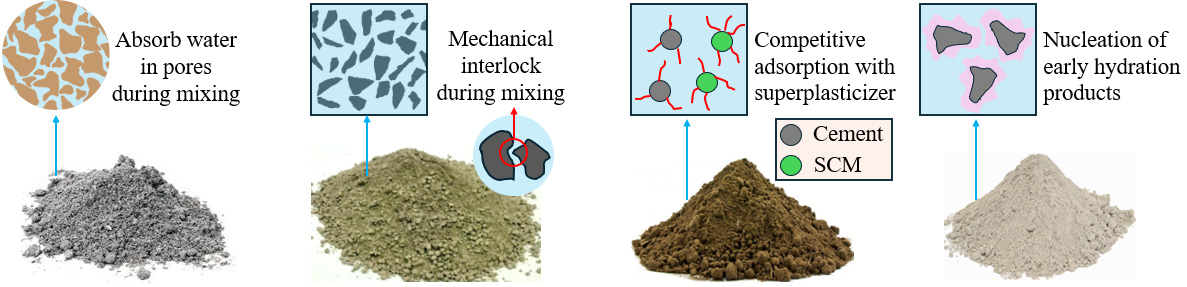
Figure 3. Physical and chemical mechanisms for the workability of waste-modified concrete. SCM: Supplementary cementitious material.
The physical morphology of waste particles also plays a critical role. Finely ground, glassy powders, such as fly ash or milled glass, can act as spherical fillers that pack efficiently and reduce water demand, producing a lubricating effect between solid grains[218]. In contrast, angular and irregularly crushed wastes, such as ceramic fines or metallurgical residues, can disrupt particle packing and create interlocked networks that hinder flow[219]. These shape-induced effects are more pronounced in solid wastes because their morphologies arise from uncontrolled breakage or thermal shocks rather than optimized industrial design.
Fresh properties are impacted by changes in surface charge and pore solution chemistry caused by ion release from reactive wastes[220,221]. The dissolution of alkalis, sulfates, aluminates, or calcium from wastes alters the zeta potential of cement particles and affects particle dispersion[222]. Ion release has two effects. On one hand, some ions can enhance the electrostatic repulsion between cement grains, improving flowability[223]; on the other hand, competitive adsorption with superplasticizer reduces admixture efficiency and causes premature flocculation[224]. These chemical interactions are unique to waste because their compositions are highly variable and often contain reactive oxides that are not present in natural aggregates.
Another influential mechanism is the nucleation of early hydration products on waste particles[225]. Many solid wastes contain amorphous or partially vitrified phases generated during high-temperature processes, which provide abundant nucleation sites for C-S-H precipitation[226]. This may reduce flowability but accelerate early hydration and increase structuration rates[227]. Such nucleation-driven stiffening represents an unintentional outcome of thermal histories being repurposed for concrete performance enhancement.
Mechanisms governing mechanical properties
Mechanical properties are governed largely by how wastes participate in hydration or interact with cementitious matrix. An important upcycling mechanism is the transformation of amorphous silica- or alumina-rich wastes into reactive pozzolanic or latent hydraulic materials that produce secondary C-S-H and provide preferred precipitation sites, refining microstructures [Figure 4][54]. For example, fly ash, slag, glass powder, and clays dissolve partially in the alkaline pore solution, consuming portlandite and producing secondary C-S-H or C-A-S-H phases[228-232]. This helps reduce capillary porosity, increase packing density, and strengthen the matrix. Because these amorphous phases are activated during the waste’s earlier industrial lifecycle, upcycling allows concrete to gain strength benefits from energy already invested in producing reactive wastes.
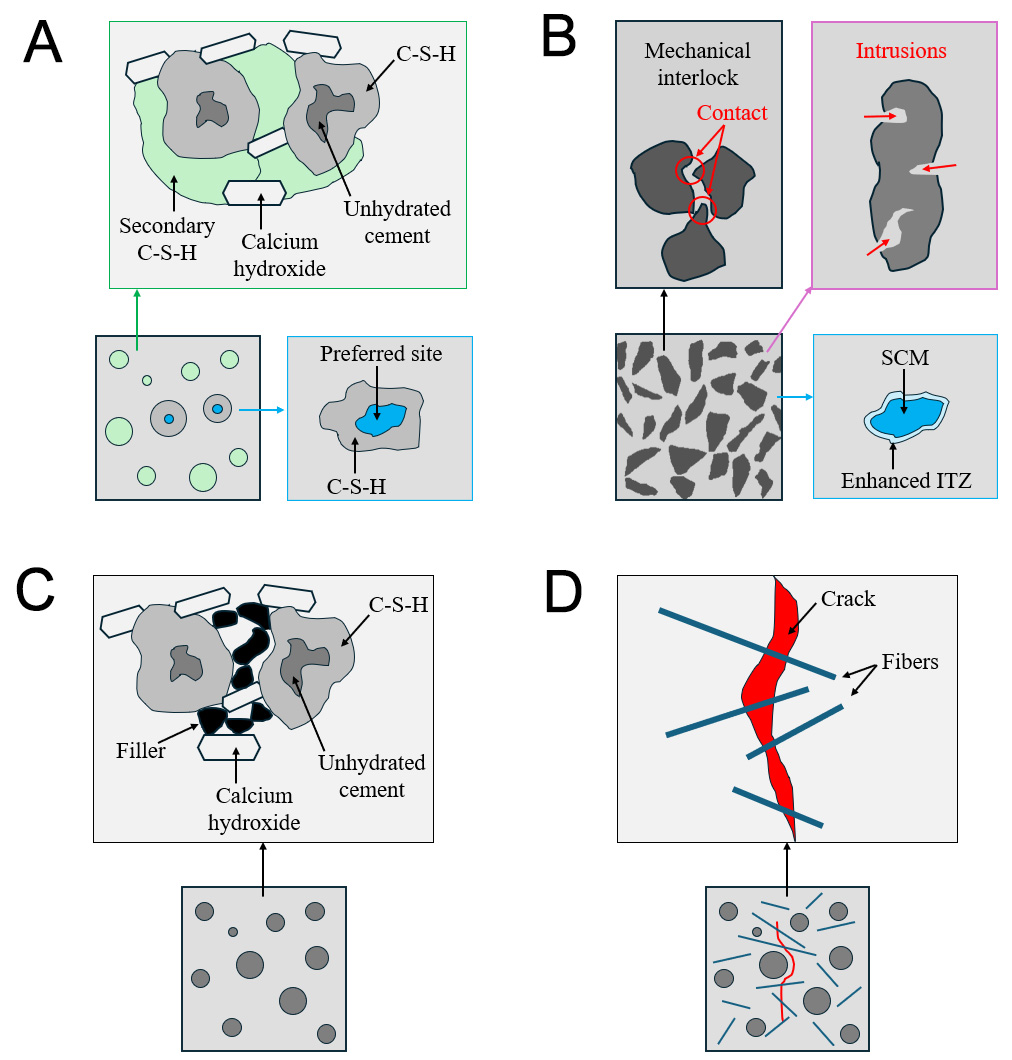
Figure 4. Mechanisms governing mechanical properties: (A) pozzolanic and seeding effects, (B) ITZ enhancement, (C) filler effect, and (D) fiber bridging effect for cracks. ITZ: Interfacial transition zone; SCM: supplementary cementitious material; C-S-H: calcium silicate hydrate.
The ITZ between waste particles and the cement paste is another critical factor for mechanical properties. Angular ceramic wastes create mechanical interlocking at the ITZ[233], improving load transfer. Porous aggregates promote hydration product intrusion that not only causes mechanical interlocking but also densifies the interface[234]. Reactive wastes such as slag or glass release ions that participate in the formation of additional binding gels at the ITZ, further improving adhesion. Conversely, hydrophobic wastes like rubber particles weaken ITZ by preventing proper formation of hydration products[174], unless surface treatments or coupling agents are applied.
Filler effects offer another pathway for strengthening concrete. When solid wastes are finely milled, they fill pores between cement grains and improve packing density[235], redistributing stresses more evenly. The dense filler network forces cracks to propagate around rather than through particles[236], creating more tortuous crack paths and enhancing fracture performance. This crack-deflection mechanism is particularly effective for plate or angular waste fines generated during mechanical processing like crushing.
Mechanical enhancement can also stem from waste-derived fibers. Recycled steel fibers from tire-processing plants, carbon fibers from textile waste, and glass fibers from insulation debris can bridge cracks, increase toughness, and delay crack localization[237]. Unlike manufactured fibers with uniform geometry, waste fibers often exhibit hooked, twisted, or frayed ends that increase fiber-matrix bond and frictional energy dissipation. This irregularity originating from uncontrolled mechanical shredding becomes an advantage in upcycling by enhancing fiber-matrix bonding.
Mechanisms controlling durability
Durability mechanisms in waste-modified concrete are primarily governed by changes in pore refinement, chemical properties, ion mobility, and microcrack evolution. The mechanisms related to pore refinement and microcrack evolution are similar to those in Figure 4. A central mechanism is the densification of the matrix[238], which refines pore size distribution and reduce permeability[239]. When reactive wastes generate secondary C-S-H via pozzolanic reactions or latent hydraulic reactions[240], the microstructure will contain fewer large pores and greater tortuosity, limiting chloride ingress, carbonation, and water transport[241]. The pore refinement mechanism allows many waste-modified concretes to outperform conventional concrete in aggressive environments.
Chemical stabilization and ion-binding processes further enhance durability. Solid wastes containing aluminates or ferrites, such as red mud or metallurgical slags, can bind chloride ions through the formation of Friedel’s salt or other chloraluminate phases[242]. Similarly, heavy metals present in some industrial wastes become immobilized as hydroxides or are encapsulated within hydration products at high pH, reducing leachability[243]. Waste materials rich in CaO or MgO can contribute to long-term carbonation-induced densification[244], provided their reactive lime phases are controlled through particle-size optimization or pre-treatment.
Porous waste aggregates contribute to durability through internal curing mechanisms. Crushed ceramic waste, recycled aggregate fines, and certain mining tailings have high water absorption capacities that allow them to store water and release it gradually as hydration progresses. Such internal curing mitigates autogenous shrinkage[245], reduces early-age cracking, and increases the resistance to crack-induced degradation. Their pore structures, shaped by firing, thermal shock, or mineralogical weathering during their first life, become valuable assets in the upcycling process.
Durability is also influenced by the stability of reactive phases within solid wastes. Fine glass powder reduces ASR by consuming alkalis[246], whereas coarser glass can promote ASR due to higher silica availability. Similarly, steel slag containing CaO or MgO may undergo deleterious expansion unless treated before use[247]; however, when properly conditioned, these same phases contribute to beneficial hydration and densification[248]. Chopped fibers can provide additional durability enhancement by restraining microcracks and allowing the matrix to dissipate mechanical stresses[249-251]. Rubber’s viscoelasticity can improve both freeze-thaw and impact resistance by reducing internal stress concentrations[252].
Mechanisms underlying functional properties
Functional properties, such as electrical, thermal, acoustic, and fire properties, originate from multiphysics mechanisms driven by the composition and morphology of solid wastes. Electrical conductivity and self-sensing behavior emerge when metallic or carbon-rich conductive wastes form a continuous or semi-continuous conductive network within the matrix. At sufficient volume fractions, the waste-derived conductive phases exceed the percolation threshold, allowing electron conduction[253]. This transforms the composite into a self-sensing material capable of structural health monitoring without added sensors [Figure 5][254-256].
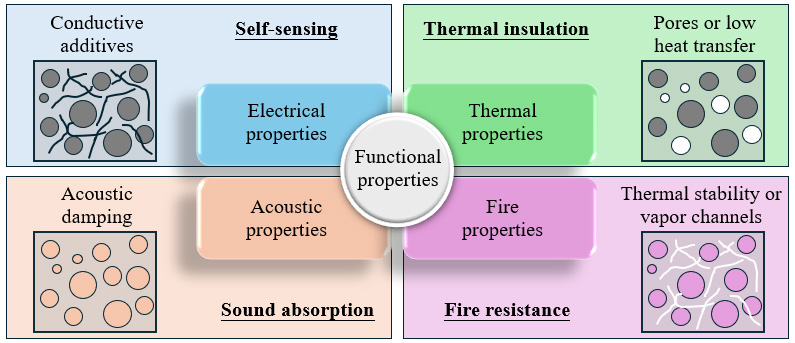
Figure 5. Mechanisms underlying the multifunctional properties of waste-modified concrete.
Thermal insulation mechanisms originate from the high porosity and low thermal conductivity of wastes such as rubber, foamed glass, and expanded ceramics. These materials contain air-filled voids that act as thermal barriers and disrupt heat conduction pathways[257]. Because these wastes often underwent foaming, expansion, or thermomechanical processing during their original life, their pore structures are highly effective for thermal resistance[258].
Acoustic absorption is governed by viscoelastic damping and pore-mediated dissipation[209]. Polymeric wastes such as crumb rubber convert acoustic energy into heat through internal friction, while porous ceramics and foamed glass dissipate sound through viscous losses in interconnected pore networks[259]. The heterogeneous internal geometry of upcycled wastes, often considered a defect in their original application, becomes advantageous for sound absorption.
Fire resistance is often tied to mineralogical stability. Solid wastes rich in silica or alumina, such as glass powders and ceramic fines, maintain structural reliability at elevated temperatures and delay thermal degradation[260,261]. Some solid wastes such as gypsum residues or hydrated mineral fillers release bound water when heated, creating an endothermic reaction that temporarily reduces heat transfer to the matrix[262]. Conversely, polymeric wastes soften or combust unless well-encapsulated[263]; however, when confined within dense matrices or utilized at low volume fractions, their negative effects can be mitigated. Another important phenomenon is that polymeric fibers can melt at elevated temperatures, producing interconnected channels that not only delay temperature increase via reducing thermal conductivity but also mitigate thermal spalling via reducing internal vapor pressure[264-266].
EMERGING TECHNOLOGIES ENABLING UPCYCLING
Emerging technologies are reshaping the landscape of upcycling wastes in concrete. Advances in nanotechnology, carbon mineralization, artificial intelligence, and advanced manufacturing allow wastes to be engineered into high-performance ingredients rather than simply used as low-value additives [Figure 6]. These technologies provide new paths to modify raw wastes, unlocking previously unrealizable gains in mechanical strength, durability, and multifunctionality.
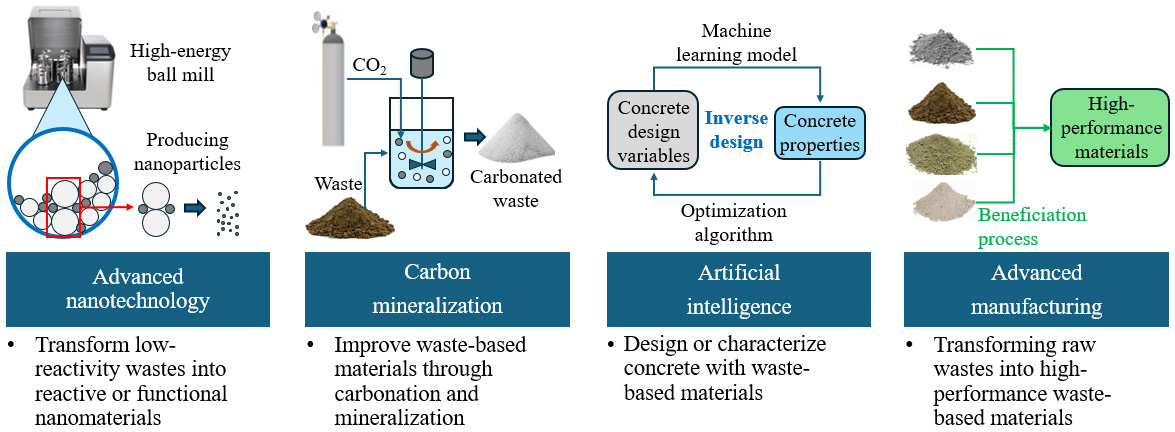
Figure 6. Representative emerging technologies supporting the upcycling of wastes in concrete.
These technologies also improve process robustness for the variability of wastes, addressing one of the major barriers to large-scale implementation. This section reviews four categories of emerging technologies and explains how they mechanistically contribute to upcycling wastes in the concrete ecosystem.
Nanotechnology and engineered nanomaterials
Nanotechnology enables the transformation of low-reactivity wastes into reactive pozzolans or functional nano-additives by tailoring them at the nanoscale. For example, high-energy ball milling can yield nanoparticles[267], using various solid wastes such as recycled concrete, waste glass, and waste ceramic. The nanoparticles promote pozzolanic reactions and generate secondary C-S-H that densifies the matrix. The ultra-fine size increases nucleation site density, accelerating early hydration and refining pore structure. These mechanisms allow waste-derived nanomaterials to outperform commercial fumed silica in compressive strength and permeability reduction.
Nano-silica derived from RHA through controlled combustion and acid leaching exhibits similar benefits[268]. Traditional RHA suffers from unburnt carbon and large agglomerates, but nano-refinement eliminates these drawbacks, yielding amorphous, reactive silica. Mechanistically, these particles bridge microcracks, fill capillary pores, and densify ITZ, allowing upcycled waste to deliver high-value microstructural refinement comparable to engineered SCMs.
Similarly, nano-alumina can be synthesized from industrial bauxite residues[269], and nano-clays can be produced using waste muds or ceramic fines[270] to modify rheological properties. Additionally, nano-alumina can accelerate AFm/AFt formation and enhance early setting, while nano-clays increase thixotropy and minimize segregation, bringing key advantages to rheology control in applications[271,272]. Waste-derived nanomaterials enable upcycling by increasing the functional value per unit waste, transforming heterogeneous or marginal wastes into precision-engineered, high-performance components.
Carbon sequestration and mineralization technologies
Carbon mineralization technologies incorporate CO2 into waste-based materials, enhancing performance while offering a carbon sink. Accelerated carbonation of waste particles induces the formation of CaCO3 polymorphs (calcite, aragonite, vaterite) for enhanced concrete performance[273-276]. This process refines pore structure, increases particle hardness, and stabilizes free lime or periclase, producing carbon-enhanced recycled aggregates that have improved mechanical and durability characteristics.
The application of CO2 curing to concrete incorporating high volumes of industrial byproducts accelerates early strength gain through rapid formation of carbonation products and densification of the matrix[277]. When combined with waste-derived SCMs, the process induces synergistic reactions where carbonates nucleate additional C-S-H or hybrid C-A-S-H gels. Carbonation curing can compensate for the lower reactivity of many waste-derived binders[278], thereby increasing the substitution levels while maintaining or improving concrete properties.
The development of circular CO2 loops, in which flue gas emissions from cement or steel plants are captured and mineralized in waste streams from the same industry[279], represents an emerging closed-loop upcycling paradigm. In such systems, CO2 is no longer an emission burden but a reactant used to stabilize and valorize industrial byproducts. These technologies elevate waste materials from low-value fillers to carbon-negative functional ingredients, fundamentally shifting their environmental and technical role within the concrete value chain.
Artificial intelligence
Artificial intelligence provides a new pathway for upcycling by enabling precise predictions and efficient optimization of waste-modified concrete. The inherent variability of wastes, particle size distribution, mineralogy, and contamination levels, makes it difficult to consider waste using traditional experiment-based mix design frameworks. Data-driven mixture design approaches optimize waste-modified concrete by learning complex interactions among binder composition, admixtures, temperature, particle morphology, curing scheme, and concrete properties. Machine learning (ML) models can characterize and predict concrete properties and generate optimal mix designs that maximize mechanical strength and durability or minimize shrinkage, material costs, and emissions, reducing experimental burden and allowing efficient exploration of high-dimensional design spaces that are difficult to navigate through traditional trial-and-error approaches[280].
Recently, ML-based approaches have been advanced to automatically collect and update data[281], analyze and process datasets[282], derive optimal predictive models[283], and perform multi-objective optimization of concrete mixtures[284]. These advanced techniques have been applied to the discovery of both normal concrete [24, 285, 286] and advanced concrete such as UHPC[287], ECC[288], geopolymer concrete[289], and 3D printing concrete[290].
A leading-edge innovation is the utilization of knowledge-graph-based reasoning[291-294] to capture relationships among waste types, chemical phases, hydration mechanisms, mechanical properties, and durability. Such knowledge graphs integrate experimental data, computational results, literature knowledge, and domain constraints to provide explainable predictions and mechanistic insights. This approach is particularly valuable for heterogeneous solid wastes, where behavior arises from coupled physical-chemical mechanisms. Most recently, the construction of concrete domain-specific knowledge graphs has been automated using an advanced technique based on large language models[295], and the technique has been applied to UHPC[295].
Additionally, ML-based techniques have been developed for real-time assessment of the fresh properties[296] and crack condition[297-300] of concrete. For example, a deep learning-based computer vision system was developed to provide real-time predictions of the plastic viscosity of UHPC[296], and a mobile phone camera was employed to record UHPC mixing videos, which were then analyzed to evaluate the plastic viscosity of fresh UHPC for quality control.
Advanced manufacturing and processing
Advanced manufacturing enables upcycling by overcoming physical and chemical limitations of raw wastes and transforming them into engineered, high-performance materials. For example, 3D printing concrete with waste-derived binders or aggregates requires precise control of rheology, buildability, and setting kinetics. Through mix design optimization and surface modification[301], solid wastes can be tailored to enhance printability. This allows high-volume waste integration in extrusion-based 3D printing while improving density, mechanical properties, and durability.
Engineered beneficiation processes represent a crucial category of technology. For example, thermal activation can convert kaolinitic clays, dredged sediments, and aluminosilicate-rich wastes into reactive metakaolin-like materials[302], unlocking strong pozzolanic reactivity. Similarly, surface modification using silane coupling agents, polymer grafting, or mineral admixtures can improve the compatibility of rubber particles, plastics, and metallic wastes with the cementitious matrix by enhancing interfacial bonding[303,304]. Plasma treatment offers rapid modification of waste surfaces[305,306], increasing surface energy, removing contaminants, and producing nano-textured surfaces that promote hydration product nucleation.
Finally, advanced mechanical processing such as controlled grinding[307], mechanochemical activation[308], and micro-milling[309] enables the production of engineered waste with tailored size distributions and defect structures. Mechanochemically activated SCM powders often exhibit broken Si-O-Si or Al-O-Si bonds, thereby enhancing dissolution kinetics and early-age reactivity[310]. The beneficiation methods convert low-reactivity or dimensionally unsuitable wastes into high-performance constituents for replacing commercial SCMs, aggregates, or functional fillers.
CHALLENGES AND BARRIERS
Despite significant progress in the upcycling of solid wastes for concrete production, major scientific, engineering, and organizational barriers still exist and limit widespread adoption. Unlike conventional SCMs or aggregates with predictable properties, solid wastes originate from highly heterogeneous processes and supply chains[311], which fluctuate seasonally, geographically, and technologically. The resulting variability creates uncertainties in concrete properties, material costs, structural safety, and regulatory compliance. Moreover, the lack of unified standards, scalable beneficiation technologies, and data-driven quality-control frameworks creates friction across the entire value chain, from waste generators and material processors to concrete producers, designers, and regulators. Addressing these challenges is essential for transitioning from isolated laboratory demonstrations to reliable, industrial-scale deployment of upcycled waste-modified concrete.
Technical challenges
A central technical barrier is the high variability and unpredictability of solid wastes. Industrial wastes such as fly ash, slag, red mud, or ceramic powder can vary markedly in fineness, amorphous content, alkalinity, and contaminant levels due to differences in materials, combustion conditions, and production technologies[312]. Municipal wastes, such as plastics and glass, show even larger heterogeneity arising from source mixing, weathering, and inconsistent sorting practices. This variability reduces the reliability of conventional mixture design approaches and may necessitate beneficiation (e.g., controlled grinding, calcination, screening, classification, surface modification) to achieve consistent quality[313-315]. However, beneficiation adds cost, energy demand, and complexity of decisions, especially when material flow rates fluctuate.
Uncertainties about long-term durability represent a significant knowledge gap. Many waste-derived materials, such as recycled aggregates, rubber particles, or waste-derived nanomaterials, show promising early-age or mid-term performance[316], but their behavior under degradation mechanisms (chloride ingress, carbonation, sulfate attack, freeze-thaw cycles, and ASR) remains insufficiently understood. Interactions between multiple durability mechanisms, especially when wastes introduce new chemical species or microstructural features, create emergent behavior that is not captured by existing models. The lack of long-term field data limits industry confidence and slows code acceptance.
Another persistent technical challenge is admixture incompatibility. Waste-derived SCMs and fillers often alter surface charge, ionic composition, pore-fluid chemistry, and dissolution kinetics, leading to inconsistent responses to admixtures such as superplasticizers, retarders, accelerators, or viscosity-modifying agents[317]. High-alumina solid wastes may trigger premature setting or undesirable ettringite formation[318], while glass-rich or fine waste particles may demand higher superplasticizer dosages due to increased surface area of particles[319]. The mechanisms behind the incompatibilities are complex and not yet fully investigated, especially for multi-waste systems. Without deeper mechanistic understanding and predictive capability, admixture incompatibility can cause production delays, poor rheological control, or defects in placed concrete.
Economic and supply-chain challenges
From an economic perspective, logistics and material aggregation represent one of the most severe barriers[320]. Solid wastes are often generated in decentralized facilities, wastewater plants, small manufacturing sites, demolition sites, resulting in low-volume, geographically dispersed supply streams. Efficient aggregation, sorting, and preprocessing require infrastructure that most regions lack. Transporting low-value, high-mass materials over long distances is rarely economical, especially when landfill tipping fees are low. This creates a structural disadvantage for upcycled materials relative to virgin aggregates or imported SCMs.
Moreover, the upcycling ecosystem lacks robust business models that distribute value fairly between waste generators, processing facilities, and concrete producers. In many cases, the costs of beneficiation (thermal activation, grinding, CO2 curing, contamination removal) are borne by processors, while cost savings or performance gains benefit concrete producers downstream[321]. Without shared-risk or shared-benefit arrangements, investment in upcycling technologies remains limited. The absence of long-term contracts and guaranteed supply volumes further inhibits capital investment in advanced beneficiation plants or regional waste hubs.
Economic feasibility is further complicated by uncertainty in market valuation. Waste-derived materials often compete with established SCMs such as slag or high-grade fly ash, which benefit from decades of research, extensive field data, and predictable availability. Upcycled materials, by contrast, face market skepticism and do not yet command premium pricing, despite potential advantages. The lack of standardized performance metrics and transparent life-cycle assessments makes it difficult for stakeholders to quantify benefits and justify higher processing costs[322].
Environmental and regulatory barriers
Environmental concerns, especially leaching heavy metals, toxic organics, or soluble ions, pose regulatory hurdles. Some wastes such as fly ash, steel slag, red mud, and mining tailings can contain heavy metals, and waste plastics may produce microplastics that raise concerns about long-term environmental risks[323]. Potential adverse effects of concrete incorporating solid wastes on the environment should be noted in end-of-life management. For example, concrete with rubber or plastic particles may tend to fragment and release rubber or plastic particles to the environment[324,325]. While cementitious matrices can immobilize many contaminants through sorption, chemical binding, or physical encapsulation, the efficacy of these mechanisms depends on pH, carbonation progression, and microstructural evolution. Regulators require long-term leachability data under field-relevant environmental cycles, but such datasets are scarce.
A second major barrier is the lack of harmonized standards, certifications, and test protocols. Most national building codes are designed around limited types of SCMs and aggregates, leaving little room for novel waste-derived materials. Certification procedures are often expensive, time-consuming, and tailored to traditional materials, creating a high barrier for small-scale or region-specific waste processors[326]. For example, accelerated performance testing may not accurately predict the behavior of waste-modified concretes with unique reaction pathways or microstructural characteristics. The absence of performance-based standards that acknowledge process variability further slows adoption.
Regulatory pathways are also hindered by unclear definitions of waste versus resource[327,328], especially when materials must be transported across jurisdictions. In many regions, once a material is classified as waste, it is subject to strict handling, reporting, and transport regulations, even if its material properties meet those of a construction resource. This regulatory ambiguity increases compliance costs, discourages cross-industry collaborations, and limits the formation of circular-economy supply chains.
Workforce and knowledge barriers
Widespread upcycling requires capabilities that many stakeholders in the concrete industry do not possess. Practitioners such as plant operators, quality-control technicians, and field engineers often have limited exposure to the science and practice related to waste upcycling. This workforce knowledge gap limits confidence and inhibits innovative practice. Even when materials perform well in laboratory settings, lack of expertise in handling, blending, admixture adjustment, or curing protocols can lead to suboptimal field performance[329].
There is also a deficit in practical training, design guidelines, and implementation frameworks. While numerous academic studies exist, few translate into practical design charts, performance envelopes, or decision-support tools that practitioners can readily apply[330]. The industry lacks accessible resources explaining how to adjust mixture proportions when wastes are used, how to diagnose admixture incompatibility, or how to interpret ML-based outputs. Without practical, user-centered frameworks, even well-designed upcycling technologies remain confined to research.
Finally, the integration of emerging technologies, including ML-based mixture design, waste treatment, and advanced characterization, requires competency in data analytics and automation. These skills are not widely available in the traditional construction workforce. The absence of interdisciplinary training programs and cross-sector collaborations limits the speed at which new upcycling technologies can be adopted and scaled.
CONCLUSIONS AND FUTURE DIRECTIONS
The upcycling of solid wastes in concrete production represents a pivotal pathway toward sustainable, circular, and low-carbon construction materials. This review synthesized the state-of-the-art knowledge on the types of solid wastes available for upcycling, their roles as binders, aggregates, fillers, and functional modifiers, and their effects on the fresh, mechanical, durability, and functional properties of concrete. The evidence demonstrated that, when properly processed and integrated, many industrial, agricultural, municipal, and construction wastes can not only replace conventional materials but also introduce unique benefits, such as enhanced mechanical strength, refined microstructures, reduced permeability, and emerging functionalities like electrical conductivity, self-sensing, thermal insulation, and fire resistance. These outcomes underscore the distinction between upcycling, where waste-derived materials enhance performance, and simple downcycling or substitution.
A central theme emerging from the mechanistic review is that performance improvements rely heavily on the interplay between waste microstructure, surface chemistry, intrinsic reactivity, and interactions with cement hydration products. Upcycled wastes can act as nucleation sites, reactive aluminosilicate sources, fillers that enhance packing density, internal curing agents, crack-bridging inclusions, or conductors enabling multifunctional behaviors. However, the beneficial mechanisms are highly material-specific and depend on controlled processing, consistent quality, and careful mixture design. The review emphasizes that upcycling is most successful when waste streams are transformed into engineered materials with predictable particle fineness, amorphous content, ion-release characteristics, or interfacial properties.
Despite the advancements documented, substantial challenges hinder widespread industrial implementation. Technical barriers, including waste variability, admixture incompatibility, and uncertainties in long-term durability under coupled environmental stressors, require further scientific and engineering investigation. Economic and supply-chain challenges highlight the need for cost-effective beneficiation, geographically coordinated material hubs, and new business models that equitably distribute value across the waste-to-concrete supply chain. Environmental and regulatory constraints, particularly concerns regarding leaching, contaminant immobilization, and certification, remain major bottlenecks that must be addressed through rigorous testing, performance-based standards, and long-term field data. Workforce and knowledge barriers also persist, with many practitioners lacking the tools and training necessary to design and produce reliable waste-modified concretes.
Looking forward, future research should prioritize deeper mechanistic understanding using advanced multiscale characterization, in-situ monitoring, and simulation methods to capture the complex interactions between diverse waste materials and evolving cementitious matrices. The development of digital twins, knowledge graphs, and ML models presents a promising path for bridging knowledge gaps and enabling data-driven mixture design tailored to variable wastes. Equally important is scaling up accelerated carbonation, mineralization, and nanotechnology-enabled processing to transform wastes into high-value reactive materials at industrial throughput. Field-scale demonstration projects are critical for validating laboratory findings, establishing long-term durability data, and gaining stakeholder confidence. Finally, interdisciplinary collaborations among material scientists, environmental engineers, computational experts, industry partners, and regulators will be essential to turn scientific advances into widely adopted construction practices.
In conclusion, the upcycling of solid wastes into concrete offers a transformative opportunity to reduce material costs and emissions and improve structural and functional performance while addressing global waste-management challenges. Realizing this potential will require coordinated advances in materials science, process engineering, digital technologies, standard development, and workforce training.
DECLARATIONS
Authors’ contribution
Investigation; data curation; writing - original draft: Li, H.
Investigation; validation; writing - revision: Ghahsareh, F. M.
Validation; writing - revision: Guo, P.; Tan, X.; Teng, L.
Conceptualization; methodology; writing - revision: Meng, W.
Conceptualization; methodology; supervision; resources; writing - revision: Bao, Y.
Availability of data and materials
All data and materials are presented in this paper.
AI and AI-assisted tools statement
Not applicable.
Financial support and sponsorship
This research was funded by the United States National Academies [grant number: SCON-10001241].
Conflicts of interest
Meng, W. and Bao, Y. are the Editorial Board Members of Carbon Footprints journal. They had no involvement in the review or editorial process of this manuscript, including but not limited to reviewer selection, evaluation, or the final decision. The other authors declare that there are no conflicts of interest.
Ethical approval and consent to participate
Not applicable.
Consent for publication
Not applicable.
Copyright
© The Author(s) 2026.
REFERENCES
1. Abdel-shafy, H. I.; Mansour, M. S. Solid waste issue: sources, composition, disposal, recycling, and valorization. Egypt. J. Pet. 2018, 27, 1275-90.
2. Miller, S. A.; Moore, F. C. Climate and health damages from global concrete production. Nat. Clim. Chang. 2020, 10, 439-43.
3. Calle Müller, C.; Pradhananga, P.; Elzomor, M. Pathways to decarbonization, circular construction, and sustainability in the built environment. Int. J. Sustain. High. Educ. 2024, 25, 1315-32.
4. Kou, S.; Poon, C.; Wan, H. Properties of concrete prepared with low-grade recycled aggregates. Constr. Build. Mater. 2012, 36, 881-9.
5. Di Maria, A.; Eyckmans, J.; Van Acker, K. Downcycling versus recycling of construction and demolition waste: combining LCA and LCC to support sustainable policy making. Waste. Manag. 2018, 75, 3-21.
6. Zhang, C.; Hu, M.; Yang, X.; et al. Upgrading construction and demolition waste management from downcycling to recycling in the Netherlands. J. Clean. Prod. 2020, 266, 121718.
7. Ogwu, M. C.; Kosoe, E. A. Innovative approaches to recycling, upcycling, and downcycling for sustainable waste management. CleanMat 2025, 2, 242-61.
8. Fang, X.; Xuan, D.; Zhan, B.; Li, W.; Poon, C. S. A novel upcycling technique of recycled cement paste powder by a two-step carbonation process. J. Clean. Prod. 2021, 290, 125192.
9. Li, X.; Lv, X.; Zhou, X.; Meng, W.; Bao, Y. Upcycling of waste concrete in eco-friendly strain-hardening cementitious composites: Mixture design, structural performance, and life-cycle assessment. J. Clean. Prod. 2022, 330, 129911.
10. Rana, A.; Kalla, P.; Verma, H.; Mohnot, J. Recycling of dimensional stone waste in concrete: a review. J. Clean. Prod. 2016, 135, 312-31.
11. Meng, Y.; Ling, T.; Mo, K. H. Recycling of wastes for value-added applications in concrete blocks: An overview. Resour. Conserv. Recycl. 2018, 138, 298-312.
12. Dong, W.; Li, W.; Tao, Z. A comprehensive review on performance of cementitious and geopolymeric concretes with recycled waste glass as powder, sand or cullet. Resour. Conserv. Recycl. 2021, 172, 105664.
13. Zimbili, O.; Salim, W.; Ndambuki, M. A review on the usage of ceramic wastes in concrete production. Int. J. Civ. Environ. Struct. Constr. Archit. Eng. 2014, 8, 91-5. https://www.academia.edu/download/43552252/A-Review-on-the-Usage-of-Ceramic-Wastes-in-Concrete-Production_2.pdf (accessed 2026-03-11).
14. Joseph, H. S.; Pachiappan, T.; Avudaiappan, S.; et al. A comprehensive review on recycling of construction demolition waste in concrete. Sustainability 2023, 15, 4932.
15. Hamada, H.; Alattar, A.; Tayeh, B.; Yahaya, F.; Thomas, B. Effect of recycled waste glass on the properties of high-performance concrete: a critical review. Case. Stud. Constr. Mater. 2022, 17, e01149.
16. Ahmad, F.; Qureshi, M. I.; Rawat, S.; Alkharisi, M. K.; Alturki, M. E-waste in concrete construction: recycling, applications, and impact on mechanical, durability, and thermal properties - a review. Innov. Infrastruct. Solut. 2025, 10, 246.
17. Infante Gomes, R.; Brazão Farinha, C.; Veiga, R.; De Brito, J.; Faria, P.; Bastos, D. CO2 sequestration by construction and demolition waste aggregates and effect on mortars and concrete performance - an overview. Renew. Sustain. Energy. Rev. 2021, 152, 111668.
18. Messahel, B.; Onyenokporo, N.; Takyie, E.; Beizaee, A.; Oyinlola, M. Upcycling agricultural and plastic waste for sustainable construction: a review. Environ. Technol. Rev. 2023, 12, 37-59.
19. Ghahsareh, F. M.; Guo, P.; Wang, Y.; Meng, W.; Li, V. C.; Bao, Y. Review on material specification, characterization, and quality control of engineered cementitious composite (ECC). Constr. Build. Mater. 2024, 442, 137699.
20. Mpungu, I. L.; Maube, O.; Nziu, P.; Mwasiagi, J. I.; Dulo, B.; Bongomin, O. Optimizing waste for energy: exploring municipal solid waste variations on torrefaction and biochar production. Int. J. Energy. Res. 2024, 2024, 4311062.
21. Manan, A.; Zhang, P.; Majdi, A.; Alattyih, W.; Ahmad, J. Utilizing waste materials in concrete: a review on mechanical and sustainable performance. Green. Mater. 2025, 1-18.
22. Alghrairi, N. N.; Aznieta, F. N.; Ibrahim, A. M.; Hu, J. W.; Najm, H. M.; Anas, S. M. Improvement of concrete characterization using nanomaterials: state‐of‐the‐art. J. Eng. 2025, 2025, 8027667.
23. Mazaheri, A. H.; Muhamad, M. R.; Yusof, F.; et al. Mechanistic insight into the carbon mineralization of alkaline-bearing mine residues and industrial wastes. J. Sustain. Metall. 2025, 11, 3289-321.
24. Mahjoubi, S.; Barhemat, R.; Meng, W.; Bao, Y. Review of AI-assisted design of low-carbon cost-effective concrete toward carbon neutrality. Artif. Intell. Rev. 2025, 58, 225.
25. Luhar, S.; Luhar, I.; Abdullah, M. M. A. B.; Hussin, K. Challenges and prospective trends of various industrial and solid wastes incorporated with sustainable green concrete. In Advances in Organic Farming; Elsevier, 2021; pp 223-40.
26. Geng, D.; Evans, S. A literature review of energy waste in the manufacturing industry. Comput. Ind. Eng. 2022, 173, 108713.
27. Shengo, L. M. Review of practices in the managements of mineral wastes: the case of waste rocks and mine tailings. Water. Air. Soil. Pollut. 2021, 232, 273.
28. Hemati, S.; Udayakumar, S.; Wesley, C.; et al. Thermal transformation of secondary resources of carbon-rich wastes into valuable industrial applications. J. Compos. Sci. 2023, 7, 8.
29. Jin, S.; Zhao, Z.; Jiang, S.; Sun, J.; Pan, H.; Jiang, L. Comparison and summary of relevant standards for comprehensive utilization of fly ash at home and abroad. IOP. Conf. Ser. Earth. Environ. Sci. 2021, 621, 012006.
30. Guo, J.; Bao, Y.; Wang, M. Steel slag in China: treatment, recycling, and management. Waste. Manag. 2018, 78, 318-30.
31. Hefni, Y.; Zaher, Y. A. E.; Wahab, M. A. Influence of activation of fly ash on the mechanical properties of concrete. Constr. Build. Mater. 2018, 172, 728-34.
32. Baikerikar, A.; Mudalgi, S.; Ram, V. V. Utilization of waste glass powder and waste glass sand in the production of eco-friendly concrete. Constr. Build. Mater. 2023, 377, 131078.
33. Tao, G.; Xiao, Y.; Yang, L.; Cui, P.; Kong, D.; Xue, Y. Characteristics of steel slag filler and its influence on rheological properties of asphalt mortar. Constr. Build. Mater. 2019, 201, 439-46.
34. Amran, M.; Onaizi, A. Sustainable admixtures to enhance long-term strength and durability properties of eco-concrete: an innovative use of Saudi agro-industrial by-products. Int. J. Build. Pathol. Adapt. 2024, 43, 591-613.
35. Zhang, N.; Wu, L.; Liu, X.; Zhang, Y. Structural characteristics and cementitious behavior of basic oxygen furnace slag mud and electric arc furnace slag. Constr. Build. Mater. 2019, 219, 11-8.
36. Gan, L.; Wang, H.; Li, X.; Qi, Y.; Zhang, C. Strength activity index of air quenched basic oxygen furnace steel slag. J. Iron. Steel. Res. Int. 2015, 22, 219-25.
37. Wang, H.; Qian, J.; Liu, J.; et al. Wear resistance analysis of steel slag aggregates based on morphology characteristics. Constr. Build. Mater. 2023, 409, 133649.
38. Du, J.; Liu, Z.; Christodoulatos, C.; Conway, M.; Bao, Y.; Meng, W. Utilization of off-specification fly ash in preparing ultra-high-performance concrete (UHPC): Mixture design, characterization, and life-cycle assessment. Resour. Conserv. Recycl. 2022, 180, 106136.
39. Yang, Z.; Xiong, X.; Li, K.; Briseghella, B.; Marano, G. C.; Chen, S. Long-term volume stability of ECC containing high-volume steel slag. Cem. Concr. Compos. 2024, 145, 105352.
40. Nguyễn, H. H.; Nguyễn, P. H.; Lương, Q.; Meng, W.; Lee, B. Y. Mechanical and autogenous healing properties of high-strength and ultra-ductility engineered geopolymer composites reinforced by PE-PVA hybrid fibers. Cem. Concr. Compos. 2023, 142, 105155.
41. Tran, N.; Van Tran, M.; Tran, P.; Nguyen, A. K.; Nguyen, C. Q. Eco-friendly 3D-printed concrete using steel slag aggregate: buildability, printability and mechanical properties. Int. J. Concr. Struct. Mater. 2024, 18, 66.
42. World Steel Association, 2021. Steel industry co-products: Fact sheet. https://worldsteel.org/wp-content/uploads/Fact-sheet-Steel-industry-co-products.pdf. (accessed 2026-03-11).
43. Meng, W.; Valipour, M.; Khayat, K. H. Optimization and performance of cost-effective ultra-high performance concrete. Mater. Struct. 2016, 50, 29.
44. Fan, L.; Meng, W.; Teng, L.; Khayat, K. H. Effect of steel fibers with galvanized coatings on corrosion of steel bars embedded in UHPC. Compos. Part. B. Eng. 2019, 177, 107445.
45. Xu, M.; Clack, H.; Xia, T.; et al. Effect of TiO2 and fly ash on photocatalytic NOx abatement of engineered cementitious composites. Constr. Build. Mater. 2020, 236, 117559.
46. Pavithra, P.; Srinivasula Reddy, M.; Dinakar, P.; Hanumantha Rao, B.; Satpathy, B.; Mohanty, A. A mix design procedure for geopolymer concrete with fly ash. J. Clean. Prod. 2016, 133, 117-25.
47. Bao, Y.; Xu, M.; Soltan, D.; et al. Three-dimensional printing multifunctional engineered cementitious composites (ECC) for structural elements. In First RILEM International Conference on Concrete and Digital Fabrication - Digital Concrete 2018; Wangler, T.; Flatt, R. J.; Eds.; RILEM Bookseries, Vol. 19; Springer International Publishing, 2018; pp 115-28.
48. Wang, Y.; Zhang, T.; Lyu, G.; Guo, F.; Zhang, W.; Zhang, Y. Recovery of alkali and alumina from bauxite residue (red mud) and complete reuse of the treated residue. J. Clean. Prod. 2018, 188, 456-65.
49. Peng, G.; Wang, X.; Ding, H.; Jia, Y. Effect of calcined red mud on the mechanical properties and microstructure of ultra-high performance concrete. Constr. Build. Mater. 2025, 484, 141891.
50. Shi, J.; Liu, Y.; Li, Z.; et al. Upcycling use of red mud-based solid waste in engineered cementitious composites: Properties, activation mechanism, and life-cycle assessment. J. Clean. Prod. 2024, 447, 141504.
51. Bellum, R. R.; Venkatesh, C.; Madduru, S. R. C. Influence of red mud on performance enhancement of fly ash-based geopolymer concrete. Innov. Infrastruct. Solut. 2021, 6, 215.
52. Sun, J.; Wang, Y.; Yang, X.; et al. Red mud utilization in fiber-reinforced 3D-printed concrete: mechanical properties and environmental impact analysis. Constr. Build. Mater. 2025, 462, 139830.
53. Zhou, G.; Wang, Y.; Qi, T.; et al. Toward sustainable green alumina production: a critical review on process discharge reduction from gibbsitic bauxite and large-scale applications of red mud. J. Environ. Chem. Eng. 2023, 11, 109433.
54. Du, J.; Meng, W.; Khayat, K. H.; et al. New development of ultra-high-performance concrete (UHPC). Compos. Part. B. Eng. 2021, 224, 109220.
55. Meng, W.; Khayat, K. H. Effect of hybrid fibers on fresh properties, mechanical properties, and autogenous shrinkage of cost-effective UHPC. J. Mater. Civ. Eng. 2018, 30, 04018030.
56. Fu, C.; Guo, R.; Lin, Z.; Xia, H.; Yang, Y.; Ma, Q. Effect of nanosilica and silica fume on the mechanical properties and microstructure of lightweight engineered cementitious composites. Constr. Build. Mater. 2021, 298, 123788.
57. Bajpai, R.; Choudhary, K.; Srivastava, A.; Sangwan, K. S.; Singh, M. Environmental impact assessment of fly ash and silica fume based geopolymer concrete. J. Clean. Prod. 2020, 254, 120147.
58. Nassrullah, G.; Ali, M. M.; Abu Al-rub, R. K.; et al. Optimizing cement-based material formulation for 3D printing: Integrating carbon nanotubes and silica fume. Case. Stud. Constr. Mater. 2025, 22, e04579.
59. Türköz, M.; Umu, S. U.; Öztürk, O. Effect of silica fume as a waste material for sustainable environment on the stabilization and dynamic behavior of dispersive soil. Sustainability 2021, 13, 4321.
60. Guo, P.; Meng, W.; Nassif, H.; Gou, H.; Bao, Y. New perspectives on recycling waste glass in manufacturing concrete for sustainable civil infrastructure. Constr. Build. Mater. 2020, 257, 119579.
61. Guo, P.; Meng, W.; Du, J.; Stevenson, L.; Han, B.; Bao, Y. Lightweight ultra-high-performance concrete (UHPC) with expanded glass aggregate: development, characterization, and life-cycle assessment. Constr. Build. Mater. 2023, 371, 130441.
62. Guo, P.; Bao, Y.; Meng, W. Review of using glass in high-performance fiber-reinforced cementitious composites. Cem. Concr. Compos. 2021, 120, 104032.
63. Çelik, A. İ.; Tunç, U.; Bahrami, A.; et al. Use of waste glass powder toward more sustainable geopolymer concrete. J. Mater. Res. Technol. 2023, 24, 8533-46.
64. Liu, J.; Li, S.; Gunasekara, C.; Fox, K.; Tran, P. 3D-printed concrete with recycled glass: effect of glass gradation on flexural strength and microstructure. Constr. Build. Mater. 2022, 314, 125561.
65. United States Environmental Protection Agency, 2020. Advancing sustainable materials management: facts and figures report. https://www.epa.gov/facts-and-figures-about-materials-waste-and-recycling/advancing-sustainable-materials-management. (accessed 2026-03-11).
66. Aprianti, E.; Shafigh, P.; Bahri, S.; Farahani, J. N. Supplementary cementitious materials origin from agricultural wastes - a review. Constr. Build. Mater. 2015, 74, 176-87.
67. Wang, Y.; Bao, Y.; Meng, W. Lightweight calcium-silicate-hydrate nacre with high strength and high toughness. ACS. Nano. 2024, 18, 23655-71.
68. Du, J.; Tan, X.; Wang, Y.; Bao, Y.; Meng, W. Reducing the cracking potential of ultra-high-performance concrete (UHPC) with the prewet expansive agent. Constr. Build. Mater. 2024, 431, 136597.
69. Khayat, K. H.; Meng, W.; Valipour, M.; Hopkins, M. Use of Lightweight sand for internal curing to improve performance of concrete infrastructure. Report No. CMR 18-005. Missouri Department of Transportation. Construction and Materials Division. https://rosap.ntl.bts.gov/view/dot/36264. (accessed 2026-03-11).
70. Kushwah, S.; Singh, S.; Agarwal, R.; et al. Mixture of biochar as a green additive in cement-based materials for carbon dioxide sequestration. J. Mater. Sci. Mater. Eng. 2024, 19, 27.
71. Vieira, A. P.; Toledo Filho, R. D.; Tavares, L. M.; Cordeiro, G. C. Effect of particle size, porous structure and content of rice husk ash on the hydration process and compressive strength evolution of concrete. Constr. Build. Mater. 2020, 236, 117553.
72. Souza, M. M.; Anjos, M. A.; Sá, M. V.; Souza, N. S. Developing and classifying lightweight aggregates from sewage sludge and rice husk ash. Case. Stud. Constr. Mater. 2020, 12, e00340.
73. Kang, S.; Hong, S.; Moon, J. The use of rice husk ash as reactive filler in ultra-high performance concrete. Cem. Concr. Res. 2019, 115, 389-400.
74. Zhang, Z.; Yang, F.; Liu, J.; Wang, S. Eco-friendly high strength, high ductility engineered cementitious composites (ECC) with substitution of fly ash by rice husk ash. Cem. Concr. Res. 2020, 137, 106200.
75. Saloni.; Jangra, P.; Yan Lim, Y.; Pham, T. M. Influence of Portland cement on performance of fine rice husk ash geopolymer concrete: Strength and permeability properties. Constr. Build. Mater. 2021, 300, 124321.
76. Muthukrishnan, S.; Kua, H. W.; Yu, L. N.; Chung, J. K. H. Fresh properties of cementitious materials containing rice husk ash for construction 3D printing. J. Mater. Civ. Eng. 2020, 32, 04020195.
77. Kordi, M.; Farrokhi, N.; Pech-canul, M. I.; Ahmadikhah, A. Rice husk at a glance: from agro-industrial to modern applications. Rice. Sci. 2024, 31, 14-32.
78. Arif, E.; Clark, M. W.; Lake, N. Sugar cane bagasse ash from a high efficiency co-generation boiler: applications in cement and mortar production. Constr. Build. Mater. 2016, 128, 287-97.
79. Wu, N.; Ji, T.; Huang, P.; Fu, T.; Zheng, X.; Xu, Q. Use of sugar cane bagasse ash in ultra-high performance concrete (UHPC) as cement replacement. Constr. Build. Mater. 2022, 317, 125881.
80. Subedi, S.; Arce, G. A.; Hassan, M. M.; Barbato, M.; Mohammad, L. N.; Rupnow, T. Feasibility of ECC with high contents of post-processed bagasse ash as partial cement replacement. Constr. Build. Mater. 2022, 319, 126023.
81. Akbar, A.; Farooq, F.; Shafique, M.; Aslam, F.; Alyousef, R.; Alabduljabbar, H. Sugarcane bagasse ash-based engineered geopolymer mortar incorporating propylene fibers. J. Build. Eng. 2021, 33, 101492.
82. Jesus, M.; Teixeira, J.; Alves, J. L.; Pessoa, S.; Guimarães, A. S.; Rangel, B. Potential use of sugarcane bagasse ash in cementitious mortars for 3D printing. In Materials Design and Applications IV; da Silva, L. F. M.; Ed.; Advanced Structured Materials, Vol. 168; Springer International Publishing, 2022; pp 89-103.
83. Xu, Q.; Ji, T.; Gao, S. J.; Yang, Z.; Wu, N. Characteristics and applications of sugar cane bagasse ash waste in cementitious materials. Materials. 2018, 12, 39.
84. Manyà, J. J.; Azuara, M.; Manso, J. A. Biochar production through slow pyrolysis of different biomass materials: seeking the best operating conditions. Biomass. Bioenergy. 2018, 117, 115-23.
85. Muzyka, R.; Misztal, E.; Hrabak, J.; Banks, S. W.; Sajdak, M. Various biomass pyrolysis conditions influence the porosity and pore size distribution of biochar. Energy 2023, 263, 126128.
86. Du, J.; Wang, Y.; Bao, Y.; Sarkar, D.; Meng, W. Valorization of wasted-derived biochar in ultra-high-performance concrete (UHPC): pretreatment, characterization, and environmental benefits. Constr. Build. Mater. 2023, 409, 133839.
87. Liu, Z.; Du, J.; Christodoulatos, C.; Meng, W.; Bao, Y. Recycling off-specification fly ash for producing strain-hardening cementitious composites. J. Mater. Civ. Eng. 2024, 36, 04023531.
88. Piccolo, F.; Andreola, F.; Barbieri, L.; Lancellotti, I. Synthesis and characterization of biochar-based geopolymer materials. Appl. Sci. 2021, 11, 10945.
89. Zhang, C.; Zhu, X.; Li, M.; et al. Enhancing interface adhesion of 3D printable concrete by biochar integration. Cem. Concr. Compos. 2026, 166, 106383.
90. D. Phadtare, P.; R. Kalbande, S. Biochar production technologies from agricultural waste, its utilization in agriculture and current global biochar market: a comprehensive review. Int. J. Environ. Clim. Change. 2022, 12, 1010-31.
91. Dixit, A.; Gupta, S.; Pang, S. D.; Kua, H. W. Waste Valorisation using biochar for cement replacement and internal curing in ultra-high performance concrete. J. Clean. Prod. 2019, 238, 117876.
92. Zhang, Y.; Maierdan, Y.; Guo, T.; Chen, B.; Fang, S.; Zhao, L. Biochar as carbon sequestration material combines with sewage sludge incineration ash to prepare lightweight concrete. Constr. Build. Mater. 2022, 343, 128116.
93. Neve, S.; Du, J.; Barhemat, R.; Meng, W.; Bao, Y.; Sarkar, D. Valorization of vetiver root biochar in eco-friendly reinforced concrete: mechanical, economic, and environmental performance. Material. 2023, 16, 2522.
94. Tang, Y.; Qiu, J. CO2-sequestering ability of lightweight concrete based on reactive magnesia cement and high-dosage biochar aggregate. J. Clean. Prod. 2024, 451, 141922.
95. Dahlbo, H.; Poliakova, V.; Mylläri, V.; Sahimaa, O.; Anderson, R. Recycling potential of post-consumer plastic packaging waste in Finland. Waste. Manag. 2018, 71, 52-61.
96. Noor, T.; Javid, A.; Hussain, A.; et al. Types, sources and management of urban wastes. In Urban Ecology; Elsevier, 2020; pp 239-63.
97. Guo, P.; Wang, Y.; Moghaddamfard, P.; Meng, W.; Wu, S.; Bao, Y. Artificial intelligence-empowered collection and characterization of microplastics: a review. J. Hazard. Mater. 2024, 471, 134405.
98. Oyelere, A.; Wu, S.; Hsiao, K.; et al. Evaluation of cracking susceptibility of asphalt binders modified with recycled high-density polyethylene and polypropylene microplastics. Constr. Build. Mater. 2024, 438, 136811.
99. Tian, N.; Tataranni, P.; Sangiorgi, C. Hydrogen peroxide activation of waste tire crumb rubber for improving compatibility with bitumen: laboratory and molecular dynamics insights. J. Road. Eng. 2025, 5, 244-60.
100. Su, Z.; Zhou, T.; Xie, S.; et al. Enhancing compatibility of crumb rubber in modified asphalt using green desulfurization for sustainable waste tire recycling. Constr. Build. Mater. 2025, 490, 142556.
101. Huang, Y.; Long, K.; Qu, C.; Yan, C.; Ai, C.; Zhou, S. Evaluation of terminal blend rubberized asphalt incorporating high crumb rubber content. Case. Stud. Constr. Mater. 2025, 22, e04285.
102. Panda, S.; Nanda, A.; Panigrahi, S. K. Potential utilization of waste plastic in sustainable geopolymer concrete production: a review. J. Environ. Manage. 2024, 366, 121705.
103. Daniel Oosthuizen, J.; John Babafemi, A.; Shaun Walls, R. 3D-printed recycled plastic eco-aggregate (Resin8) concrete. Constr. Build. Mater. 2023, 408, 133712.
104. Nayanathara Thathsarani Pilapitiya, P.; Ratnayake, A. S. The world of plastic waste: a review. Clean. Mater. 2024, 11, 100220.
105. Lyu, X.; Ahmed, T.; Elchalakani, M.; Yang, B.; Youssf, O. Influence of crumbed rubber inclusion on spalling, microstructure, and mechanical behaviour of UHPC exposed to elevated temperatures. Constr. Build. Mater. 2023, 403, 133174.
106. Chen, Z.; Liang, Y.; Lin, Y.; Cai, J. Recycling of waste tire rubber as aggregate in impact-resistant engineered cementitious composites. Constr. Build. Mater. 2022, 359, 129477.
107. Aly, A. M.; El-feky, M.; Kohail, M.; Nasr, E. A. Performance of geopolymer concrete containing recycled rubber. Constr. Build. Mater. 2019, 207, 136-44.
108. Sambucci, M.; Biblioteca, I.; Valente, M. Life cycle assessment (LCA) of 3D concrete printing and casting processes for cementitious materials incorporating ground waste tire rubber. Recycling 2023, 8, 15.
109. Liu, L.; Cai, G.; Zhang, J.; Liu, X.; Liu, K. Evaluation of engineering properties and environmental effect of recycled waste tire-sand/soil in geotechnical engineering: a compressive review. Renew. Sustain. Energy. Rev. 2020, 126, 109831.
110. Wiśniewska, P.; Wang, S.; Formela, K. Waste tire rubber devulcanization technologies: state-of-the-art, limitations and future perspectives. Waste. Manag. 2022, 150, 174-84.
111. Guo, S.; Dai, Q.; Si, R.; Sun, X.; Lu, C. Evaluation of properties and performance of rubber-modified concrete for recycling of waste scrap tire. J. Clean. Prod. 2017, 148, 681-9.
112. Bakhtiari Ghaleh, M.; Asadi, P.; Eftekhar, M. R. Enhancing mechanical performance of waste tire concrete with surface double pre-coating by resin and micro-silica. J. Build. Eng. 2022, 50, 104084.
113. Shi, H. S.; Kan, L. L. Leaching behavior of heavy metals from municipal solid wastes incineration (MSWI) fly ash used in concrete. J. Hazard. Mater. 2009, 164, 750-4.
114. Lv, Y.; Yang, L.; Wang, J.; et al. Performance of ultra-high-performance concrete incorporating municipal solid waste incineration fly ash. Case. Stud. Constr. Mater. 2022, 17, e01155.
115. Cheng, Y.; Huang, X. Application of municipal solid waste incineration bottom ash into engineered cementitious composites. Int. J. Pavement. Res. Technol. 2021, 15, 1106-17.
116. Niu, M.; Zhang, P.; Guo, J.; Wang, J. Effect of municipal solid waste incineration fly ash on the mechanical properties and microstructure of geopolymer concrete. Gels 2022, 8, 341.
117. Rehman, A. U.; Lee, S.; Kim, J. Use of municipal solid waste incineration ash in 3D printable concrete. Process. Saf. Environ. Prot. 2020, 142, 219-28.
118. Tsui, T.; Wong, J. W. C. A critical review: emerging bioeconomy and waste-to-energy technologies for sustainable municipal solid waste management. Waste. Dispos. Sustain. Energy. 2019, 1, 151-67.
119. Gastaldi, D.; Canonico, F.; Capelli, L.; Buzzi, L.; Boccaleri, E.; Irico, S. An investigation on the recycling of hydrated cement from concrete demolition waste. Cem. Concr. Compos. 2015, 61, 29-35.
120. Asensio, E.; Medina, C.; Frías, M.; De Rojas, M. I. S. Characterization of ceramic‐based construction and demolition waste: use as pozzolan in cements. J. Am. Ceram. Soc. 2016, 99, 4121-7.
121. Mohammed, M. S.; Elkady, H.; Abdel- Gawwad, H. A. Utilization of construction and demolition waste and synthetic aggregates. J. Build. Eng. 2021, 43, 103207.
122. Ouyang, X.; Li, X.; Li, J.; et al. Multiscale microstructure and reactivity evolution of recycled concrete fines under gas-solid carbonation. Cem. Concr. Compos. 2025, 157, 105903.
123. Zhang, H.; Ji, T.; Zeng, X.; Yang, Z.; Lin, X.; Liang, Y. Mechanical behavior of ultra-high performance concrete (UHPC) using recycled fine aggregate cured under different conditions and the mechanism based on integrated microstructural parameters. Constr. Build. Mater. 2018, 192, 489-507.
124. Zhu, P.; Hua, M.; Liu, H.; Wang, X.; Chen, C. Interfacial evaluation of geopolymer mortar prepared with recycled geopolymer fine aggregates. Constr. Build. Mater. 2020, 259, 119849.
125. Zhang, H.; Xiao, J.; Duan, Z.; Zou, S.; Xia, B. Effects of printing paths and recycled fines on drying shrinkage of 3D printed mortar. Constr. Build. Mater. 2022, 342, 128007.
126. Soto-paz, J.; Arroyo, O.; Torres-guevara, L. E.; Parra-orobio, B. A.; Casallas-ojeda, M. The circular economy in the construction and demolition waste management: a comparative analysis in emerging and developed countries. J. Build. Eng. 2023, 78, 107724.
127. Wu, Y.; Mehdizadeh, H.; Mo, K. H.; Ling, T. High-temperature CO2 for accelerating the carbonation of recycled concrete fines. J. Build. Eng. 2022, 52, 104526.
128. Xu, L.; Wang, J.; Li, K.; et al. A systematic review of factors affecting properties of thermal-activated recycled cement. Resour. Conserv. Recycl. 2022, 185, 106432.
129. Korat, A.; Amin, M.; Tahwia, A. M. A comprehensive assessment of ceramic wastes in ultra-high-performance concrete. Innov. Infrastruct. Solut. 2025, 10, 28.
130. Xiong, Y.; Yang, Y.; Fang, S.; Wu, D.; Tang, Y. Experimental research on compressive and shrinkage properties of ECC containing ceramic wastes under different curing conditions. Front. Mater. 2021, 8, 727273.
131. Aly, S. T.; Kanaan, D. M.; El-dieb, A. S.; Abu-eishah, S. I. Properties of Ceramic Waste Powder-Based Geopolymer Concrete. In International Congress on Polymers in Concrete (ICPIC 2018); Taha, M. M. R.; Ed.; Springer International Publishing, 2018; pp 429-35.
132. Ye, C.; Xu, J.; Lacidogna, G. Fracture behavior of 3D printed geopolymer concrete containing waste ceramic. Cem. Concr. Compos. 2025, 163, 106193.
133. Wang, C.; Wang, S.; Li, X.; et al. Phase composition, microstructure, and properties of ceramic tile prepared using ceramic polishing waste as raw material. Int. J. Appl. Ceram. Technol. 2021, 18, 1052-62.
134. Mandal, A.; Rajput, S. P. S. Advances in alkali-activation of ceramic waste-based pozzolana in concrete and mortar: a comprehensive review. Waste. Biomass. Valor. 2025, 16, 3309-30.
135. Shah, H. A.; Meng, W. Enhancement of recycled concrete aggregate through slag-coated carbonation. Cem. Concr. Compos. 2025, 157, 105912.
136. Spaeth, V.; Djerbi Tegguer, A. Improvement of recycled concrete aggregate properties by polymer treatments. Int. J. Sustain. Built. Environ. 2013, 2, 143-52.
137. Zhong, C.; Tian, P.; Long, Y.; Zhou, J.; Peng, K.; Yuan, C. Effect of composite impregnation on properties of recycled coarse aggregate and recycled aggregate concrete. Buildings 2022, 12, 1035.
138. Yu, L.; Wu, R. Using graphene oxide to improve the properties of ultra-high-performance concrete with fine recycled aggregate. Constr. Build. Mater. 2020, 259, 120657.
139. Bai, M.; Xiao, J.; Gao, Y.; Ding, T. Pore structure characteristics and mechanical property of engineered cementitious composites (ECC) incorporating recycled sand. Constr. Build. Mater. 2023, 408, 133721.
140. Skariah Thomas, B.; Yang, J.; Bahurudeen, A.; et al. Geopolymer concrete incorporating recycled aggregates: a comprehensive review. Clean. Mater. 2022, 3, 100056.
141. Wu, Y.; Liu, C.; Liu, H.; et al. Study on the rheology and buildability of 3D printed concrete with recycled coarse aggregates. J. Build. Eng. 2021, 42, 103030.
142. Li, X.; Wang, J.; Bao, Y.; Chen, G. Cyclic behavior of damaged reinforced concrete columns repaired with high-performance fiber-reinforced cementitious composite. Eng. Struct. 2017, 136, 26-35.
143. Shaikuthali, S. A.; Mannan, M. A.; Dawood, E. T.; Teo, D. C. L.; Ahmadi, R.; Ismail, I. Workability and compressive strength properties of normal weight concrete using high dosage of fly ash as cement replacement. J. Build. Rehabil. 2019, 4, 26.
144. Aly, S. T.; El-dieb, A. S.; Taha, M. R. Effect of high-volume ceramic waste powder as partial cement replacement on fresh and compressive strength of self-compacting concrete. J. Mater. Civ. Eng. 2019, 31, 04018374.
145. Bawab, J.; Khatib, J.; Kenai, S.; Sonebi, M. A review on cementitious materials including municipal solid waste incineration bottom ash (MSWI-BA) as aggregates. Buildings 2021, 11, 179.
146. Lemougna, P. N.; Nzeukou, A.; Aziwo, B.; et al. Effect of slag on the improvement of setting time and compressive strength of low reactive volcanic ash geopolymers synthetized at room temperature. Mater. Chem. Phys. 2020, 239, 122077.
147. Barbhuiya, S.; Kanavaris, F.; Ashish, D. K.; Tu, W.; Das, B. B.; Adak, D. Ground waste glass as a supplementary cementitious material for concrete: sustainable utilization, material performance and environmental considerations. J. Sustain. Cem. Based. Mater. 2025, 14, 1221-49.
148. Lee, H. S.; Wang, X. Y.; Zhang, L. N.; Koh, K. T. Analysis of the optimum usage of slag for the compressive strength of concrete. Materials. 2015, 8, 1213-29.
149. Jain, P.; Gupta, R.; Chaudhary, S. A literature review on the effect of using ceramic waste as supplementary cementitious material in cement composites on workability and compressive strength. Mater. Today. Proc. 2022, 65, 871-6.
150. Zhang, T.; Zhao, Z. Optimal use of MSWI bottom ash in concrete. Int. J. Concr. Struct. Mater. 2014, 8, 173-82.
151. Islam, M.; Islam, S. Effect of fly ash on rapid chloride penetration and strength of concrete. In International Conference on Environmental Technology and Construction Engineering for Sustainable Development (ICETCESD-2011), March 10-12, 2011, SUST, Sylhet, Bangladesh. https://www.researchgate.net/profile/Md-Islam-258/publication/360257865_Effect_of_Fly_Ash_on_Rapid_Chloride_Penetration_and_Strength_of_Concrete/links/626bb3fa8e7e1e5d5fa3956c/Effect-of-Fly-Ash-on-Rapid-Chloride-Penetration-and-Strength-of-Concrete.pdf (accessed 2026-03-11).
152. Tong, G.; Pang, J.; Shen, J.; et al. Response tests on the effects of particle size of waste glass sand and glass powder on the mechanical and durability performance of concrete. Sci. Rep. 2024, 14, 25445.
153. Ke, G.; Li, W.; Li, R.; Li, Y.; Wang, G. Mitigation effect of waste glass powders on alkali-silica reaction (ASR) expansion in cementitious composite. Int. J. Concr. Struct. Mater. 2018, 12, 67.
154. Tokareva, A.; Waldmann, D. Durability assessment of cement mortars with recycled ceramic powders. Materials. 2025, 18, 4420.
155. Cho, B. H.; Nam, B. H.; An, J.; Youn, H. Municipal solid waste incineration (MSWI) ashes as construction materials-a review. Materials. 2020, 13, 3143.
156. Carsana, M.; Gastaldi, M.; Lollini, F.; Redaelli, E.; Bertolini, L. Improving durability of reinforced concrete structures by recycling wet‐ground MSWI bottom ash. Mater. Corros. 2016, 67, 573-82.
157. Mangat, P. S.; Khatib, J. M. Influence of fly ash, silica fume, and slag on sulfate resistance of concrete. ACI. Mater. J. 1993, 92, 542-52.
158. Deng, Y.; Wang, X.; Zhao, J.; Liu, H.; Chen, L. Enhancing sulfate resistance of cement-stabilized recycled aggregate with steel slag: Optimized mix design and mechanistic insights. Case. Stud. Constr. Mater. 2025, 23, e04904.
159. Tang, Z.; Li, W.; Ke, G.; Zhou, J. L.; Tam, V. W. Sulfate attack resistance of sustainable concrete incorporating various industrial solid wastes. J. Clean. Prod. 2019, 218, 810-22.
160. Du, Y.; Yang, W.; Ge, Y.; Wang, S.; Liu, P. Thermal conductivity of cement paste containing waste glass powder, metakaolin and limestone filler as supplementary cementitious material. J. Clean. Prod. 2021, 287, 125018.
161. Al-jamaily, N. M. S.; Atiea, H. M.; Jabal, Q. A.; Mahdi, W. H.; Alasadi, L. A. Concrete’s fire resistance improvement with waste glass and ceramic aggregates. Pollack 2024, 19, 95-9.
162. Bekzhanova, Z.; Memon, S. A.; Kim, J. R. Self-Sensing cementitious composites: review and perspective. Nanomaterials. 2021, 11, 2355.
163. Baalamurugan, J.; Kumar, V. G.; Chandrasekaran, S.; et al. Recycling of steel slag aggregates for the development of high density concrete: Alternative & environment-friendly radiation shielding composite. Compos. Part. B. Eng. 2021, 216, 108885.
164. Adessina, A.; Fraj, A. B.; Barthélémy, J. Improvement of the compressive strength of recycled aggregate concretes and relative effects on durability properties. Constr. Build. Mater. 2023, 384, 131447.
165. Harrison, E.; Berenjian, A.; Seifan, M. Recycling of waste glass as aggregate in cement-based materials. Environ. Sci. Ecotechnol. 2020, 4, 100064.
166. Moolchandani, K.; Sharma, A. State-of-the-art review on the influence of crumb rubber on the strength, durability, and morphological properties of concrete. Sci. Eng. Compos. Mater. 2025, 32, 20250060.
167. Meshram, S.; Raut, S.; Ansari, K.; et al. Waste slags as sustainable construction materials: a compressive review on physico mechanical properties. J. Mater. Res. Technol. 2023, 23, 5821-45.
168. Etxeberria, M.; Vázquez, E.; Marí, A.; Barra, M. Influence of amount of recycled coarse aggregates and production process on properties of recycled aggregate concrete. Cem. Concr. Res. 2007, 37, 735-42.
169. Shayan, A.; Xu, A. Performance and properties of Struct. Concr. made with recycled concrete aggregate. ACI. Mater. J. 2003, 100, 371-80.
170. Safiuddin, M.; Salam, M.; Jumaat, M. Effects of recycled concrete aggregate on the fresh properties of self-consolidating concrete. Arch. Civ. Mech. Eng. 2011, 11, 1023-41.
171. Humagain, S.; Bista, A.; Sarker, P. Effect of using recycled returned concrete aggregate on the strength and durability aspects of concrete. In Eighth International Conference on Durability of Concrete Structures; Purdue University, 2025.
172. Bhat, K. R.; Dumre, G.; Gyawali, T. R. Transforming waste into strength: evaluating properties of concrete with waste glass substitution. Clean. Waste. Syst. 2024, 9, 100179.
173. Azhagarsamy, S.; Pannirselvam, N.; Vanjinathan, J.; Premkumar, R.; Vijayakumar, D. Optimizing mechanical and microstructural properties of concrete with steel slag aggregate using response surface methodology. Results. Eng. 2025, 27, 106885.
174. Ahmad, J.; Zhou, Z.; Majdi, A.; Alqurashi, M.; Deifalla, A. F. Overview of concrete performance made with waste rubber tires: a step toward sustainable concrete. Materials. 2022, 15, 5518.
175. Alibeigibeni, A.; Stochino, F.; Zucca, M.; Gayarre, F. L. Enhancing concrete sustainability: a critical review of the performance of recycled concrete aggregates (RCAs) in Struct. Concr. Buildings 2025, 15, 1361.
176. Junior, G. A. F.; Leite, J. C. T.; Mendez, G. D. P.; Haddad, A. N.; Silva, J. A. F.; Da Costa, B. B. F. A Review of the characteristics of recycled aggregates and the mechanical properties of concrete produced by replacing natural coarse aggregates with recycled ones - fostering resilient and sustainable infrastructures. Infrastructures 2025, 10, 213.
177. Ibrahim, I. K.; Rady, M.; Tawfik, N. M.; Kassem, M.; Mahfouz, S. Y. Enhancing strength and sustainability of concrete with steel slag aggregate. Sci. Rep. 2025, 15, 17068.
178. Semmana, O.; Rihan, M. A. M.; Barrie, Z. M.; Daniel, C.; Abdalla, T. A. A systematic review of the strength, durability, and microstructure properties of concrete incorporating glass powder. Eng. Rep. 2025, 7, e70002.
179. Nedeljković, M.; Visser, J.; Šavija, B.; Valcke, S.; Schlangen, E. Use of fine recycled concrete aggregates in concrete: A critical review. J. Build. Eng. 2021, 38, 102196.
180. Cantero, B.; Bravo, M.; De Brito, J.; Sáez Del Bosque, I. F.; Medina, C. Assessment of the permeability to aggressive agents of concrete with recycled cement and mixed recycled aggregate. Appl. Sci. 2021, 11, 3856.
181. Goli, A.; Emadi, H.; Sadeghi, P. Investigating the effect of using steel slag on abrasion resistance of roller-compacted concrete pavement. Innov. Infrastruct. Solut. 2022, 7, 297.
182. Fan, X.; Wang, Q.; Weng, Y.; et al. Effect of nanorubber on the properties of silicate cement paste. Constr. Build. Mater. 2025, 467, 140352.
183. Abdelaleem, A.; Moawad, M.; El-emam, H.; Salim, H.; Sallam, H. Long term behavior of rubberized concrete under static and dynamic loads. Case. Stud. Constr. Mater. 2024, 20, e03087.
184. Křížová, K.; Bubeník, J.; Sedlmajer, M. Use of lightweight sintered fly ash aggregates in concrete at high temperatures. Buildings 2022, 12, 2090.
185. Wang, J.; Du, B. Experimental studies of thermal and acoustic properties of recycled aggregate crumb rubber concrete. J. Build. Eng. 2020, 32, 101836.
186. Wang, Y.; Wang, Y. Experimental study and theoretical modeling of effective thermal conductivity of waste tire rubber composite concrete under different relative humidity. J. Build. Eng. 2025, 111, 113605.
187. Chen, M.; Chen, F.; Meng, S. Research on Light-Reflecting Pavement Performance of Glass-Asphalt Concrete. In 2012 2nd International Conference on Remote Sensing, Environment and Transportation Engineering (RSETE), Nanjing, Jiangsu, China, June 1-3, 2012; IEEE, 2012, pp 1-4.
188. Mammeri, A.; Vaillancourt, M.; Shamsaei, M. Experimental and numerical investigation of using waste glass aggregates in asphalt pavement to mitigate urban heat islands. Clean. Techn. Environ. Policy. 2023, 25, 1935-48.
189. Wang, H.; Qian, J.; Zhang, H.; Nan, X.; Chen, G.; Li, X. Exploring skid resistance over time: steel slag as a pavement aggregate - comparative study and morphological analysis. J. Clean. Prod. 2024, 464, 142779.
190. Norambuena-contreras, J.; Gonzalez, A.; Concha, J.; Gonzalez-torre, I.; Schlangen, E. Effect of metallic waste addition on the electrical, thermophysical and microwave crack-healing properties of asphalt mixtures. Constr. Build. Mater. 2018, 187, 1039-50.
191. Arif, R.; Khitab, A.; Kırgız, M. S.; et al. Experimental analysis on partial replacement of cement with brick powder in concrete. Case. Stud. Constr. Mater. 2021, 15, e00749.
192. Belmouhoub, A.; Abdelouahed, A.; Noui, A. Experimental and factorial design of the mechanical and physical properties of concrete containing waste rubber powder. Res. Eng. Struct. Mat. 2023, 10, 461-80.
193. Alzlfawi, A.; Alattyih, W.; Naqash, M. T.; Ahmad, J. Properties of sustainable concrete containing demolished concrete and tile waste powders. Sci. Rep. 2025, 16, 787.
194. El-dieb, A. S.; Kanaan, D. M. Ceramic waste powder an alternative cement replacement - characterization and evaluation. Sustain. Mater. Technol. 2018, 17, e00063.
195. Singh, A.; Arora, S.; Sharma, V.; Bhardwaj, B. Workability retention and strength development of self-compacting recycled aggregate concrete using ultrafine recycled powders and silica fume. J. Hazard. Toxic. Radioact. Waste. 2019, 23, 04019016.
196. Cong, L.; Jialin, L.; Jing, C.; Hailun, W.; Dong, L. Study on the application of recycled fine powder in ready-mixed concrete. MATEC. Web. Conf. 2019, 278, 01010.
197. Subaşı, S.; Öztürk, H.; Emiroğlu, M. Utilizing of waste ceramic powders as filler material in self-consolidating concrete. Constr. Build. Mater. 2017, 149, 567-74.
198. Paswan, R. Experimental study on design mix concrete using waste plastic bottle fibers. Int. Res. J. Modern. Eng. Technol. Sci. 2023, 5, 1502-10.
199. Zhang, P.; Wang, X.; Wang, J.; Zhang, T. Workability and durability of concrete incorporating waste tire rubber: a review. J. Renew. Mater. 2023, 11, 745-76.
200. Awoyera, P. O.; Adesina, A.; Gobinath, R. Role of recycling fine materials as filler for improving performance of concrete - a review. Aust. J. Civ. Eng. 2019, 17, 85-95.
201. Chandni, T.; Anand, K. Utilization of recycled waste as filler in foam concrete. J. Build. Eng. 2018, 19, 154-60.
202. Gesoglu, M.; Güneyisi, E.; Hansu, O.; Etli, S.; Alhassan, M. Mechanical and fracture characteristics of self-compacting concretes containing different percentage of plastic waste powder. Constr. Build. Mater. 2017, 140, 562-9.
203. Ganjian, E.; Khorami, M.; Maghsoudi, A. A. Scrap-tyre-rubber replacement for aggregate and filler in concrete. Constr. Build. Mater. 2009, 23, 1828-36.
204. Han, T.; Aponte, D.; Valls, S.; Bizinotto, M. B. Impact of recycled concrete and ceramic fillers on the performance of cementitious systems: microstructural, mechanical, and durability aspects. Recycling 2025, 10, 108.
205. Meena, R. V.; Jain, J. K.; Chouhan, H. S.; Beniwal, A. S. Use of waste ceramics to produce sustainable concrete: a review. Clean. Mater. 2022, 4, 100085.
206. Sičáková, A.; Špak, M. The effect of a high amount of micro-fillers on the long-term properties of concrete. Materials. 2019, 12, 3421.
207. Wu, H.; Wang, C.; Ma, Z. Drying shrinkage, mechanical and transport properties of sustainable mortar with both recycled aggregate and powder from concrete waste. J. Build. Eng. 2022, 49, 104048.
208. Holland, R.; Du, J.; Obeidah, A.; Meng, W.; Nassif, H. Early-age crack-free ultra-high-performance concrete under restrained ring test for large-scale production as an overlay. Constr. Build. Mater. 2023, 409, 133949.
209. Wijesinghe, K. A. P.; Lanarolle, G.; Gunasekara, C.; Law, D. W.; Hidallana-gamage, H. D.; Wang, L. Thermal and acoustic performance of solid waste incorporated cement based composites: an analytical review. Arch. Civ. Mech. Eng. 2025, 25, 106.
210. Horsakulthai, V. Effect of recycled concrete powder on strength, electrical resistivity, and water absorption of self-compacting mortars. Case. Stud. Constr. Mater. 2021, 15, e00725.
211. Kaewunruen, S.; Meesit, R. Sensitivity of crumb rubber particle sizes on electrical resistance of rubberised concrete. Cogent. Eng. 2016, 3, 1126937.
212. Binici, H. Effect of crushed ceramic and basaltic pumice as fine aggregates on concrete mortars properties. Constr. Build. Mater. 2007, 21, 1191-7.
213. Boussaq, C.; Samaouali, A.; Belarouf, S.; et al. Experimental analysis of thermal conductivity and volumetric heat capacity in concrete incorporating HDPE waste plastic powder as a function of temperature. Civ. Environ. Eng. 2025, 21, 591-604.
214. Ghorbel, E.; Omary, S.; Karrech, A. Recovered tire-derived aggregates for thermally insulating lightweight mortars. Materials. 2025, 18, 1849.
215. Wu, D.; Mao, Z.; Zhang, J.; Li, S.; Ma, Q. Performance evaluation of concrete with waste glass after elevated temperatures. Constr. Build. Mater. 2023, 368, 130486.
216. Du, J.; Mahjoubi, S.; Bao, Y.; Banthia, N.; Meng, W. Modeling mixing kinetics for large-scale production of ultra-high-performance concrete: effects of temperature, volume, and mixing method. Constr. Build. Mater. 2023, 397, 132439.
217. Tian, L.; Qiu, L.; Liu, Y. Fabrication of integrally hydrophobic self-compacting rubberized mortar with excellent waterproof ability, corrosion resistance and stable mechanical properties. Constr. Build. Mater. 2021, 304, 124684.
218. Meng, W.; Khayat, K. H. Improving flexural performance of ultra-high-performance concrete by rheology control of suspending mortar. Compos. Part. B. Eng. 2017, 117, 26-34.
219. Khayat, K. H.; Meng, W.; Vallurupalli, K.; Teng, L. Rheological properties of ultra-high-performance concrete - an overview. Cem. Concr. Res. 2019, 124, 105828.
220. Rusheng, Q.; Yunsheng, Z.; Yu, Z.; Cheng, L.; Lin, Y.; Deyu, K. Effects of aqueous-phase speciation on Portland cement and supplementary cementitious materials as reflected using zeta potential of powder suspensions. Constr. Build. Mater. 2022, 345, 128258.
221. Meng, W.; Kumar, A.; Khayat, K. H. Effect of silica fume and slump-retaining polycarboxylate-based dispersant on the development of properties of portland cement paste. Cem. Concr. Compos. 2019, 99, 181-90.
222. Meng, W.; Lunkad, P.; Kumar, A.; Khayat, K. Influence of silica fume and polycarboxylate ether dispersant on hydration mechanisms of cement. J. Phys. Chem. C. 2016, 120, 26814-23.
223. Huang, J.; Xu, W.; Chen, H.; Xu, G. Elucidating how ionic adsorption controls the rheological behavior of quartz and cement-quartz paste. Constr. Build. Mater. 2021, 272, 121957.
224. Li, M.; Pan, L.; Li, J.; Xiong, C. Competitive adsorption and interaction between sodium alginate and polycarboxylate superplasticizer in fresh cement paste. Colloids. Surf. A:. Physicochem. Eng. Asp. 2020, 586, 124249.
225. Mehdizadeh, H.; Shao, X.; Mo, K. H.; Ling, T. Enhancement of early age cementitious properties of yellow phosphorus slag via CO2 aqueous carbonation. Cem. Concr. Compos. 2022, 133, 104702.
226. Meng, W.; Khayat, K. H. Effect of graphite nanoplatelets and carbon nanofibers on rheology, hydration, shrinkage, mechanical properties, and microstructure of UHPC. Cem. Concr. Res. 2018, 105, 64-71.
227. Teng, L.; Meng, W.; Khayat, K. H. Rheology control of ultra-high-performance concrete made with different fiber contents. Cem. Concr. Res. 2020, 138, 106222.
228. Jhatial, A. A.; Nováková, I.; Gjerløw, E. A review on emerging cementitious materials, reactivity evaluation and treatment methods. Buildings 2023, 13, 526.
229. Ahmad, M. R.; Fernàndez-jimenez, A.; Chen, B.; Leng, Z.; Dai, J. Low-carbon cementitious materials: Scale-up potential, environmental impact and barriers. Constr. Build. Mater. 2024, 455, 139087.
230. Zhou, Z.; Sofi, M.; Liu, J.; Li, S.; Zhong, A.; Mendis, P. Nano-CSH modified high volume fly ash concrete: Early-age properties and environmental impact analysis. J. Clean. Prod. 2021, 286, 124924.
231. Dong, S.; Meng, W.; Wang, D.; et al. Principle and implementation of incorporating nanomaterials to develop ultrahigh-performance concrete with low content of steel fibers. J. Mater. Civ. Eng. 2023, 35, 04023139.
232. Xu, M.; Bao, Y.; Wu, K.; et al. Influence of TiO2 incorporation methods on NOx abatement in engineered cementitious composites. Constr. Build. Mater. 2019, 221, 375-83.
233. Li, C.; Zhang, X.; Cao, X.; Yu, Y. Sustainable performance and interfacial characteristics of fully recycled concrete with combined recycled concrete, brick, and ceramic aggregates. Sustainability 2025, 17, 10503.
234. Meng, W.; Khayat, K. Effects of saturated lightweight sand content on key characteristics of ultra-high-performance concrete. Cem. Concr. Res. 2017, 101, 46-54.
235. Lyu, Z.; Shen, A.; Meng, W. Properties, mechanism, and optimization of superabsorbent polymers and basalt fibers modified cementitious composite. Constr. Build. Mater. 2021, 276, 122212.
236. Xu, M.; Bao, Y.; Wu, K.; Shi, H.; Guo, X.; Li, V. C. Multiscale investigation of tensile properties of a TiO2-doped engineered cementitious composite. Constr. Build. Mater. 2019, 209, 485-91.
237. Zia, A.; Pu, Z.; Holly, I.; Umar, T.; Tariq, M. A. U. R.; Sufian, M. A comprehensive review of incorporating steel fibers of waste tires in cement composites and its applications. Materials. 2022, 15, 7420.
238. Meng, W.; Khayat, K. H. Mechanical properties of ultra-high-performance concrete enhanced with graphite nanoplatelets and carbon nanofibers. Compos. Part. B. Eng. 2016, 107, 113-22.
239. Vallurupalli, K.; Meng, W.; Liu, J.; Khayat, K. H. Effect of graphene oxide on rheology, hydration and strength development of cement paste. Constr. Build. Mater. 2020, 265, 120311.
240. Wang, Y.; Goodman, S.; Bao, Y.; Meng, W. Morphological, microstructural, and mechanical properties of highly-ordered C-S-H regulated by cellulose nanocrystals (CNCs). Cem. Concr. Compos. 2023, 143, 105276.
241. Lyu, Z.; Shen, A.; Wang, W.; Lin, S.; Guo, Y.; Meng, W. Salt frost resistance and micro characteristics of polynary blended concrete using in frost areas. Cold. Reg. Sci. Technol. 2021, 191, 103374.
242. Matsumoto, H.; Takaoka, M. Formation of Friedel’s salt in simulated municipal solid waste incineration bottom ash. J. Mater. Cycles. Waste. Manag. 2021, 23, 1374-82.
243. Liu, Z.; Shi, Q.; Bao, Y.; Meng, X.; Meng, W. Arsenate removal using titanium dioxide-doped cementitious composites: mixture design, mechanisms, and simulated sewer application. Sci. Total. Environ. 2023, 854, 158754.
244. Liu, Z.; Du, J.; Meng, W. Achieving low-carbon cementitious materials with high mechanical properties using CaCO3 suspension produced by CO2 sequestration. J. Clean. Prod. 2022, 373, 133546.
245. Fan, L.; Meng, W.; Teng, L.; Khayat, K. H. Effects of lightweight sand and steel fiber contents on the corrosion performance of steel rebar embedded in UHPC. Constr. Build. Mater. 2020, 238, 117709.
246. Liu, Z.; Shi, C.; Shi, Q.; Tan, X.; Meng, W. Recycling waste glass aggregate in concrete: mitigation of alkali-silica reaction (ASR) by carbonation curing. J. Clean. Prod. 2022, 370, 133545.
247. Saha, A. K.; Sarker, P. K. Potential alkali silica reaction expansion mitigation of ferronickel slag aggregate by fly ash. Struct. Concr. 2018, 19, 1376-86.
248. Rodrigue, A.; Duchesne, J.; Fournier, B.; Champagne, M.; Bissonnette, B. Alkali-silica reaction in alkali-activated combined slag and fly ash concretes: the tempering effect of fly ash on expansion and cracking. Constr. Build. Mater. 2020, 251, 118968.
249. Meng, W.; Yao, Y.; Mobasher, B.; Khayat, K. H. Effects of loading rate and notch-to-depth ratio of notched beams on flexural performance of ultra-high-performance concrete. Cem. Concr. Compos. 2017, 83, 349-59.
250. Meng, W.; Khayat, K. H.; Bao, Y. Flexural behaviors of fiber-reinforced polymer fabric reinforced ultra-high-performance concrete panels. Cem. Concr. Compos. 2018, 93, 43-53.
251. Meng, W.; Khayat, K. H. Experimental and numerical studies on flexural behavior of ultrahigh-performance concrete panels reinforced with embedded glass fiber-reinforced polymer grids. Transp. Res. Rec. J. Transp. Res. Board. 2016, 2592, 38-44.
252. Gonen, T. Freezing-thawing and impact resistance of concretes containing waste crumb rubbers. Constr. Build. Mater. 2018, 177, 436-42.
253. Ramachandran, K.; Vijayan, P.; Murali, G.; Vatin, N. I. A review on principles, theories and materials for self sensing concrete for structural applications. Materials 2022, 15, 3831.
254. Al-dahawi, A.; Sarwary, M. H.; Öztürk, O.; et al. Electrical percolation threshold of cementitious composites possessing self-sensing functionality incorporating different carbon-based materials. Smart. Mater. Struct. 2016, 25, 105005.
255. Rovnaník, P.; Kusák, I.; Bayer, P.; Schmid, P.; Fiala, L. Electrical and self-sensing properties of alkali-activated slag composite with graphite filler. Materials 2019, 12, 105005.
256. Segura, I.; Faneca, G.; Torrents, J. M.; Aguado, A. Self-sensing concrete made from recycled carbon fibres. Smart. Mater. Struct. 2019, 28, 105045.
257. Wang, Y.; Halton, E.; Bao, Y.; Meng, W. Multifunctional high-performance cement aerogels for CO2 sequestration and thermal insulation. Cem. Concr. Compos. 2025, 163, 106195.
258. Pan, Y.; Chen, G.; Huang, C. Thermodynamic analysis of thermal stability in recycled concrete derived from building solid waste. Int. J. Heat. Technol. 2024, 42, 141-52.
259. Lou, J.; He, C.; Shui, A.; Yu, H. Enhanced sound absorption performance of porous ceramics with closed-pore structure. Ceram. Int. 2023, 49, 38103-14.
260. Pan, Z.; Tao, Z.; Murphy, T.; Wuhrer, R. High temperature performance of mortars containing fine glass powders. J. Clean. Prod. 2017, 162, 16-26.
261. Rajawat, D.; Siddique, S.; Shrivastava, S.; Chaudhary, S.; Gupta, T. Influence of fine ceramic aggregates on the residual properties of concrete subjected to elevated temperature. Fire. Mater. 2018, 42, 834-42.
262. Ciudad, A.; Lacasta, A.; Haurie, L.; Formosa, J.; Chimenos, J. Improvement of passive fire protection in a gypsum panel by adding inorganic fillers: experiment and theory. Appl. Therm. Eng. 2011, 31, 3971-8.
263. Li, X.; Bao, Y.; Wu, L.; et al. Thermal and mechanical properties of high-performance fiber-reinforced cementitious composites after exposure to high temperatures. Constr. Build. Mater. 2017, 157, 829-38.
264. Li, X.; Bao, Y.; Xue, N.; Chen, G. Bond strength of steel bars embedded in high-performance fiber-reinforced cementitious composite before and after exposure to elevated temperatures. Fire. Saf. J. 2017, 92, 98-106.
265. Li, X.; Xu, Z.; Bao, Y.; Cong, Z. Post-fire seismic behavior of two-bay two-story frames with high-performance fiber-reinforced cementitious composite joints. Eng. Struct. 2019, 183, 150-9.
266. Li, X.; Lu, X.; Qi, J.; Bao, Y. Flexural behavior of fire-damaged concrete beams repaired with strain-hardening cementitious composite. Eng. Struct. 2022, 261, 114305.
267. Odaa, S. A.; Al-hadithi, A. I.; Mansoor, Y. A. Preparation and characterization of nano-waste glass powder. Results. Mater. 2023, 20, 100470.
268. Umeda, J.; Kondoh, K. High-purity amorphous silica originated in rice husks via carboxylic acid leaching process. J. Mater. Sci. 2008, 43, 7084-90.
269. Manivasakan, P.; Rajendran, V.; Rauta, P.; Sahu, B.; Panda, B. Direct synthesis of nano alumina from natural bauxite. Adv. Mater. Res. 2009, 67, 143-8.
270. Uddin, M. N.; Hossain, M. T.; Mahmud, N.; et al. Research and applications of nanoclays: a review. SPE. Polym. 2024, 5, 507-35.
271. Du, J.; Guo, P.; Liu, Z.; Meng, W. Highly thixotropic ultra-high-performance concrete (UHPC) as an overlay. Constr. Build. Mater. 2023, 366, 130130.
272. Du, J.; Guo, P.; Meng, W. Effect of water-based nanoclay and ambient temperature on rheological properties of UHPC pastes. Constr. Build. Mater. 2023, 370, 130733.
273. Zingaretti, D.; Costa, G.; Baciocchi, R. Assessment of accelerated carbonation processes for CO2 storage using alkaline industrial residues. Ind. Eng. Chem. Res. 2013, 53, 9311-24.
274. Vanderzee, S.; Zeman, F. Recovery and carbonation of 100% of calcium in waste concrete fines: experimental results. J. Clean. Prod. 2018, 174, 718-27.
275. Liu, Z.; Meng, W. Fundamental understanding of carbonation curing and durability of carbonation-cured cement-based composites: a review. J. CO2. Util. 2021, 44, 101428.
276. Shah, H. A.; Wang, Y.; Banthia, N.; Meng, W. Enhancing nano-CaCO3 dispersion with cellulose nanocrystals for high-strength low-carbon concrete. Cem. Concr. Compos. 2025, 164, 106227.
277. Shah, H. A.; Meng, W. Improving the mechanical properties of cement paste with carbonated blast furnace slag by tailoring CaCO3 polymorphs and increasing carbonation degree. Cem. Concr. Compos. 2026, 165, 106343.
278. Xu, M.; Yu, J.; Zhou, J.; Bao, Y.; Li, V. C. Effect of curing relative humidity on mechanical properties of engineered cementitious composites at multiple scales. Constr. Build. Mater. 2021, 284, 122834.
279. Zajac, M.; Skocek, J.; Ben Haha, M.; Deja, J. CO2 mineralization methods in cement and concrete industry. Energies 2022, 15, 3597.
280. Meng, W.; Samaranayake, V. A.; Khayat, K. H. Factorial design and optimization of ultra-high-performance concrete with lightweight sand. ACI. Mater. J. 2018, 115, 129-38.
281. Guo, P.; Mahjoubi, S.; Liu, K.; Meng, W.; Bao, Y. Self-updatable AI-assisted design of low-carbon cost-effective ultra-high-performance concrete (UHPC). Case. Stud. Constr. Mater. 2023, 19, e02625.
282. Mahjoubi, S.; Meng, W.; Bao, Y. Auto-tune learning framework for prediction of flowability, mechanical properties, and porosity of ultra-high-performance concrete (UHPC). Appl. Soft. Comput. 2022, 115, 108182.
283. Guo, P.; Moghaddas, S. A.; Liu, Y.; Meng, W.; Li, V. C.; Bao, Y. Applications of machine learning methods for design and characterization of high-performance fiber-reinforced cementitious composite (HPFRCC): a review. J. Sustain. Cem. Based. Mater. 2025, 14, 1726-49.
284. Mahjoubi, S.; Barhemat, R.; Guo, P.; Meng, W.; Bao, Y. Prediction and multi-objective optimization of mechanical, economical, and environmental properties for strain-hardening cementitious composites (SHCC) based on automated machine learning and metaheuristic algorithms. J. Clean. Prod. 2021, 329, 129665.
285. Lavercombe, A.; Huang, X.; Kaewunruen, S. Machine learning application to eco-friendly concrete design for decarbonisation. Sustainability 2021, 13, 13663.
286. Mahjoubi, S.; Meng, W.; Bao, Y. Logic-guided neural network for predicting steel-concrete interfacial behaviors. Expert. Syst. Appl. 2022, 198, 116820.
287. Mahjoubi, S.; Barhemat, R.; Meng, W.; Bao, Y. AI-guided auto-discovery of low-carbon cost-effective ultra-high performance concrete (UHPC). Resour. Conserv. Recycl. 2023, 189, 106741.
288. Guo, P.; Meng, W.; Xu, M.; Li, V. C.; Bao, Y. Predicting mechanical properties of high-performance fiber-reinforced cementitious composites by integrating micromechanics and machine learning. Materials 2021, 14, 3143.
289. Huynh, A. T.; Nguyen, Q. D.; Xuan, Q. L.; et al. A machine learning-assisted numerical predictor for compressive strength of geopolymer concrete based on experimental data and sensitivity analysis. Appl. Sci. 2020, 10, 7726.
290. Bagheri, A.; Cremona, C. Formulation of mix design for 3D printing of geopolymers: a machine learning approach. Mater. Adv. 2020, 1, 720-7.
291. Tong, X.; Jiang, Z.; Xu, Z.; Huang, S.; Meng, W.; Bao, Y. Physicochemical-aware ensemble learning and design of sustainable concrete. J. Sustain. Cem. Based. Mater. 2025, 15, 235-53.
292. Guo, P.; Jiang, Z.; Meng, W.; Bao, Y. Multi-agent collaboration for knowledge-guided data-driven design of ultra-high-performance concrete (UHPC) incorporating solid wastes. Cem. Concr. Compos. 2025, 164, 106230.
293. Guo, P.; Meng, W.; Bao, Y. Knowledge-guided data-driven design of ultra-high-performance geopolymer (UHPG). Cem. Concr. Compos. 2024, 153, 105723.
294. Guo, P.; Meng, W.; Bao, Y. Knowledge graph-guided data-driven design of ultra-high-performance concrete (UHPC) with interpretability and physicochemical reaction discovery capability. Constr. Build. Mater. 2024, 430, 136502.
295. Jiang, Z.; Ran, Y.; Xu, Z.; Huang, S.; Meng, W.; Bao, Y. Automated construction of knowledge graphs for accelerated design and understanding of ultra-high-performance concrete. Autom. Constr. 2026, 181, 106667.
296. Guo, P.; Du, J.; Bao, Y.; Meng, W. Real-time video recognition for assessing plastic viscosity of ultra-high-performance concrete (UHPC). Measurement 2022, 191, 110809.
297. Guo, P.; Meng, X.; Meng, W.; Bao, Y. Automatic assessment of concrete cracks in low-light, overexposed, and blurred images restored using a generative AI approach. Autom. Constr. 2024, 168, 105787.
298. Guo, P.; Meng, W.; Bao, Y. Intelligent characterization of complex cracks in strain-hardening cementitious composites based on generative computer vision. Constr. Build. Mater. 2024, 411, 134812.
299. Guo, P.; Meng, X.; Meng, W.; Bao, Y. Monitoring and automatic characterization of cracks in strain-hardening cementitious composite (SHCC) through intelligent interpretation of photos. Compos. Part. B. Eng. 2022, 242, 110096.
300. Guo, P.; Meng, W.; Bao, Y. Automatic identification and quantification of dense microcracks in high-performance fiber-reinforced cementitious composites through deep learning-based computer vision. Cem. Concr. Res. 2021, 148, 106532.
301. Liu, Z.; Meng, W. CaCO3 coating of off-specification fly ash for upcycling in cementitious materials. Constr. Build. Mater. 2024, 454, 139066.
302. Irfan Khan, M.; Khan, H. U.; Azizli, K.; et al. The pyrolysis kinetics of the conversion of Malaysian kaolin to metakaolin. Appl. Clay. Sci. 2017, 146, 152-61.
303. Farzadnia, N.; Khayat, K. H. Modification of nanomaterials for nanostructured cement-based materials. In Nanotechnology for Civil Infrastructure; Elsevier, 2023; pp 5-37.
304. Du, J.; Wang, Y.; Guo, P.; Meng, W. Tailoring of steel fiber surface by coating cellulose nanocrystal for enhanced flexural properties of UHPC. Cem. Concr. Compos. 2024, 154, 105773.
305. Xiaowei, C.; Sheng, H.; Xiaoyang, G.; Wenhui, D. Crumb waste tire rubber surface modification by plasma polymerization of ethanol and its application on oil-well cement. Appl. Surf. Sci. 2017, 409, 325-42.
306. Li, D.; Xiong, M.; Wang, S.; Chen, X.; Wang, S.; Zeng, Q. Effects of low-temperature plasma treatment on wettability of glass surface: Molecular dynamic simulation and experimental study. Appl. Surf. Sci. 2020, 503, 144257.
307. Guo, W.; Guo, K.; Xing, Y.; Gui, X. A comprehensive review on evolution behavior of particle size distribution during fine grinding process for optimized separation purposes. Miner. Process. Extr. Metall. Rev. 2024, 47, 1-20.
308. Guo, X.; Xiang, D.; Duan, G.; Mou, P. A review of mechanochemistry applications in waste management. Waste. Manag. 2010, 30, 4-10.
309. Noel, N.; Gierth, A. Z.; Helmich, S.; et al. Role of ground blast furnace slag (GBFS) as a micro-milling and micro-aggregating agent in reactivated cement fines (RCFs). J. Sustain. Cem. Based. Mater. 2025, 15, 495-516.
310. Őze, C.; Badacsonyi, N. Makó, É. Mechanochemical activation of waste clay brick powder with addition of waste glass powder and its influence on pozzolanic reactivity. Molecules 2024, 29.
311. Komkova, A.; Habert, G. Optimal supply chain networks for waste materials used in alkali-activated concrete fostering circular economy. Resour. Conserv. Recycl. 2023, 193, 106949.
312. Muthuraja, R.; Pombhejara, C. N.; Ganesan, S.; et al. Assessment and classification of different ashes from waste incinerators in Thailand. Results. Eng. 2024, 24, 103325.
313. Mohammed Al-saudi, S. K.; Géber, R. Production of lightweight geopolymer concrete with foam glass aggregate derived from cathode-ray glass waste. Case. Stud. Constr. Mater. 2024, 21, e03888.
314. Chen, X.; Kroell, N.; Dietl, T.; Feil, A.; Greiff, K. Influence of long-term natural degradation processes on near-infrared spectra and sorting of post-consumer plastics. Waste. Manag. 2021, 136, 213-8.
315. Blasenbauer, D.; Lipp, A. M.; Fellner, J.; Tischberger-Aldrian, A.; Stipanović, H.; Lederer, J. Recovery of plastic packaging from mixed municipal solid waste. A case study from Austria. Waste. Manag. 2024, 180, 9-22.
316. Alsharari, F. Utilization of industrial, agricultural, and construction waste in cementitious composites: a comprehensive review of their impact on concrete properties and sustainable construction practices. Mater. Today. Sustain. 2025, 29, 101080.
317. Alonso, M.; Palacios, M.; Puertas, F. Compatibility between polycarboxylate-based admixtures and blended-cement pastes. Cem. Concr. Compos. 2013, 35, 151-62.
318. Ribeiro, I. S.; Fagundes, D. D. F.; Nierwinski, H. P. Effects of ettringite formation on the stability of cement-treated sediments. Resources 2025, 14, 73.
319. Huang, R.; Xu, L.; Xu, Z.; Zhang, Q.; Wang, J. A review on concrete superplasticizers and their potential applications for enhancing the performance of thermally activated recycled cement. Materials 2024, 17, 4170.
320. Islam, N.; Sandanayake, M.; Muthukumaran, S.; Navaratna, D. Review on sustainable construction and demolition waste management - challenges and research prospects. Sustainability 2024, 16, 3289.
321. Driver, J. G.; Bernard, E.; Patrizio, P.; Fennell, P. S.; Scrivener, K.; Myers, R. J. Global decarbonization potential of CO2 mineralization in concrete materials. Proc. Natl. Acad. Sci. U. S. A. 2024, 121, e2313475121.
322. Ghahsareh, F. M.; Zhang, Q.; Poorghasem, S.; et al. Cradle-to-grave life-cycle assessment of ultra-high-performance concrete (UHPC) beams based on real-time monitoring data. J. Clean. Prod. 2025, 495, 145098.
323. Guo, P.; Wang, Y.; Wu, S.; Meng, W.; Bao, Y. Deep learning-powered efficient characterization and quantification of microplastics. J. Hazard. Mater. 2024, 480, 136241.
324. Feng, L.; Chen, A.; Liu, H. Effect of waste tire rubber particles on concrete abrasion resistance under high-speed water flow. Int. J. Concr. Struct. Mater. 2021, 15, 37.
325. Benjak, P.; Radetić, L.; Presečki, I.; Brnardić, I.; Sakač, N.; Grčić, I. Microplastic-related leachate from recycled rubber tiles: the role of TiO2 protective coating. Surfaces 2024, 7, 786-800.
326. Geng, J.; Huang, Y.; Li, X.; Zhang, Y. Overcoming barriers to the adoption of recycled construction materials: a comprehensive PEST analysis and tailored strategies. Sustainability 2023, 15, 14635.
327. Mubarik, M. S.; Kontoleon, A.; Shahbaz, M. Beyond the hurdles: exploring policy obstacles in the path to circular economy adoption. J. Environ. Manage. 2024, 370, 122667.
328. Pettersson, M.; Johansson, O. Waste as a resource in the green transition: legal preconditions for secondary extraction. Resour. Policy. 2025, 103, 105556.
329. Yan, P.; Ma, Z.; Li, H.; Gong, P.; Xu, M.; Chen, T. Laboratory tests, field application and carbon footprint assessment of cement-stabilized pure coal solid wastes as pavement base materials. Constr. Build. Mater. 2023, 366, 130265.
Cite This Article
 Open Access
How to Cite
Download Citation
Export Citation File:
Type of Import
Tips on Downloading Citation
Citation Manager File Format
Type of Import
Direct Import: When the Direct Import option is selected (the default state), a dialogue box will give you the option to Save or Open the downloaded citation data. Choosing Open will either launch your citation manager or give you a choice of applications with which to use the metadata. The Save option saves the file locally for later use.
Indirect Import: When the Indirect Import option is selected, the metadata is displayed and may be copied and pasted as needed.
About This Article
Copyright

Data & Comments
Data
0










Comments
Comments must be written in English. Spam, offensive content, impersonation, and private information will not be permitted. If any comment is reported and identified as inappropriate content by OAE staff, the comment will be removed without notice. If you have any queries or need any help, please contact us at [email protected].