



Carbon footprint in contaminated-site remediation: a systematic review of accounting methodologies, influencing factors, and decarbonization strategies
 0
0 Abstract
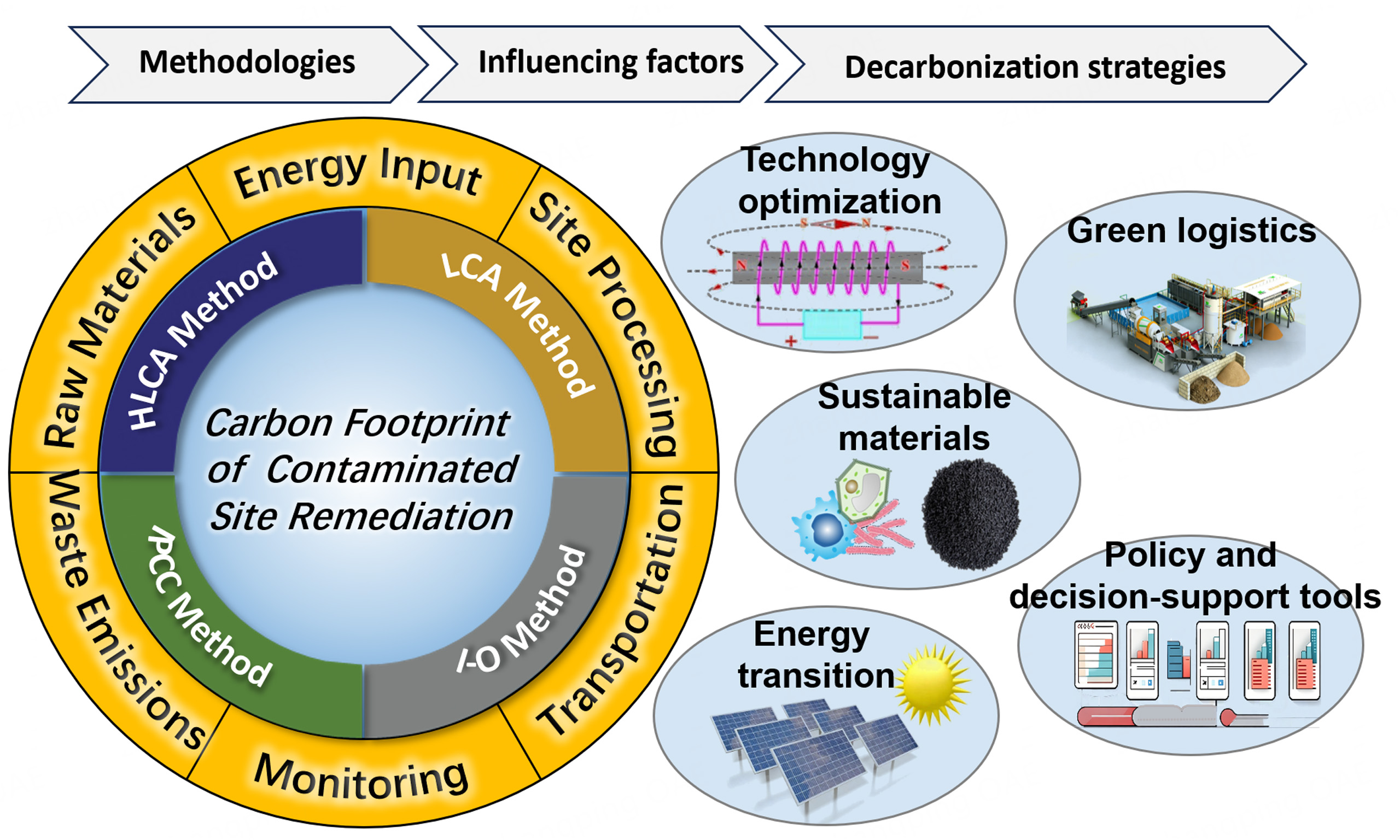
The remediation of contaminated sites is essential for environmental protection but often carries a substantial carbon footprint due to energy‑intensive processes, material consumption, and transportation logistics. This review systematically synthesizes current knowledge on carbon-footprint management in contaminated-site remediation, focusing on accounting methodologies, comparative technology assessment, key influencing factors, and decarbonization strategies. Four accounting approaches are critically evaluated, namely life cycle assessment (LCA), input-output analysis, intergovernmental panel on climate change calculation, and hybrid LCA, and their applications across site‑specific, regional, and macro scales are examined. A comparative analysis reveals a conditional carbon-footprint hierarchy: nature‑based solutions < optimized in situ physical and chemical treatments < energy‑intensive thermal and ex situ methods. However, reported footprints vary widely even within the same technology due to differences in contaminant type, site geology, treatment intensity, local energy mix, and regulatory context. Emerging decarbonization strategies such as precision remediation, on‑site renewable energy, biochar‑based amendments, green logistics, and decision‑support tools are evaluated in terms of their evidence base, implementation constraints, and associated trade‑offs. Coupling multiple decarbonization strategies can yield synergistic benefits; however, project‑specific LCA is essential for robust evaluation. Additionally, key methodological challenges, including emission-scope coverage, embodied-carbon accounting, temporal-boundary definition, and uncertainty reporting are identified as barriers to cross‑study comparability. This review provides a critical, evidence‑based foundation for researchers, practitioners, and policymakers to align contaminated-site remediation with global carbon-neutrality goals.
Keywords
INTRODUCTION
Industrialization and urban redevelopment have left a profound imprint on the global environment in the form of contaminated sites, posing a major challenge to environmental protection and sustainable development[1]. These contaminated sites include decommissioned industrial facilities, abandoned mining operations, and waste disposal areas[2]. They pose continuous threats to the ecosystem and human health via multiple exposure pathways, including the leaching of heavy metals and organic contaminants into groundwater aquifers (which serve as drinking water sources in many countries), and the emission of hazardous vapors that can migrate into buildings[3,4]. The associated social and economic impacts are equally substantial, often manifesting as reduced property values, impediments to urban redevelopment, and the perpetuation of environmental injustices, particularly in socioeconomically disadvantaged communities bearing disproportionate exposure risks[5,6].
Conventional remediation approaches have focused on meeting risk-based cleanup standards, often relying on energy-intensive methods such as extensive excavation and off-site disposal, pump-and-treat systems, and soil incineration[7,8]. Although effective for contamination containment or removal, these approaches carry a heavy environmental footprint, including substantial greenhouse gas (GHG) emissions, high energy consumption, and the generation of secondary waste streams[9-11]. Therefore, sustainable remediation strategies are being investigated to balance the benefits of risk reduction against the environmental, social, and economic impacts of remediation activities throughout their life cycle[12,13]. With increasing climate concerns and more countries committing to carbon neutrality, the carbon footprint of remediation activities has become a key sustainability indicator[14,15]. Consequently, the remediation sector is focusing on decarbonizing operations and minimizing its contribution to global warming[16]. Carbon-footprint accounting offers a quantifiable measure to evaluate the climate impacts of remediation activities and comparing these strategies based on their climate performance[1,17,18]. In this way, carbon management aligns local remediation goals with broader climate mitigation targets.
This review systematically synthesizes current knowledge on carbon-footprint management in contaminated-site remediation and discusses possible decarbonization strategies. First, the main concepts and carbon-footprint accounting methods, including life cycle assessment (LCA), input-output (I-O) analysis, the intergovernmental panel on climate change (IPCC) calculation method, and hybrid LCA, are introduced and their application across site-specific, regional, and macro scales are discussed. Then, carbon footprints across major remediation technologies are comparatively analyzed, highlighting their conditional hierarchy and underlying factors influencing emissions. Subsequently, emerging mitigation and decarbonization strategies, including precision remediation, on-site renewable energy integration, low‑carbon amendments, and decision‑support tools, are analyzed. By adopting this systematic approach, the review aims to offer a robust framework for integrating carbon footprint into remediation decision-making, thereby aligning land restoration practices with global climate action goals.
REVIEW METHODOLOGY
A comprehensive literature search was conducted across four major electronic databases: Web of Science Core Collection, Chinese Science Citation Database, Scopus, and Google Scholar. The search was limited to peer-reviewed journal articles, conference proceedings, and official technical reports issued by authoritative bodies such as U.S. Environmental Protection Agency (USEPA) and IPCC. The search period spanned publications from 2010 to 2026 (March), capturing the modern development of sustainable remediation and carbon-accounting practices. The search strategy combined keywords from three thematic domains using Boolean operators (AND/OR):
(1) Carbon footprint-related terms: carbon footprint; GHG emission; global warming potential; CO2 equivalent; LCA; I-O approaches.
(2) Remediation-related terms: contaminated site; brownfield; soil remediation; groundwater remediation; in situ remediation; ex situ remediation.
(3) Assessment- and strategy-related terms: sustainable remediation; decarbonization; mitigation strategy; carbon accounting.
The retrieved records were exported to a reference manager (NoteExpress 4.2) for duplicate removal and subsequent screening. The selection process followed a two-stage approach comprising title/abstract screening and full-text assessment based on predefined inclusion and exclusion criteria [Table 1]. A total of 102 records were initially identified. After the screening, 79 studies were retained for detailed analysis.
Inclusion and exclusion criteria for study selection
| Criterion | Inclusion | Exclusion |
| Topic | Studies explicitly quantifying carbon footprint or GHG emissions associated with remediation technologies or proposing mitigation strategies | Studies focusing only on contaminant removal efficiency without environmental footprint data |
| Study type | Peer-reviewed original research articles, systematic reviews, meta-analyses, and authoritative technical reports | Editorials, commentaries, news articles, and non-peer-reviewed literature (except official agency reports) |
| Data | Studies providing quantitative LCA results, emission factors, or primary activity data for remediation processes | Studies providing only qualitative discussion of sustainability |
CONCEPT AND CALCULATION METHODS OF CARBON FOORPRINT
The carbon footprint quantifies GHG emissions, including CO2, CH4, and N2O, generated via activities, products, and organizations; it is expressed as carbon dioxide equivalents (CO2eq)[19]. It is an important metric for aligning contaminated-site remediation with climate mitigation goals. Two main categories are recognized: the organizational carbon footprint, which comprises direct, energy-related indirect, and value-chain indirect emissions, and the product carbon footprint, which evaluates emissions across the product or service life cycle[19]. Defining clear system boundaries is essential for accurate carbon-footprint assessment and for identifying major emission sources in remediation projects. The methods used for carbon-footprint calculations mainly include LCA, I-O analysis, IPCC, and hybrid LCA (HLCA). Figure 1 summarizes the advantages, disadvantages, and application scope of these methods.
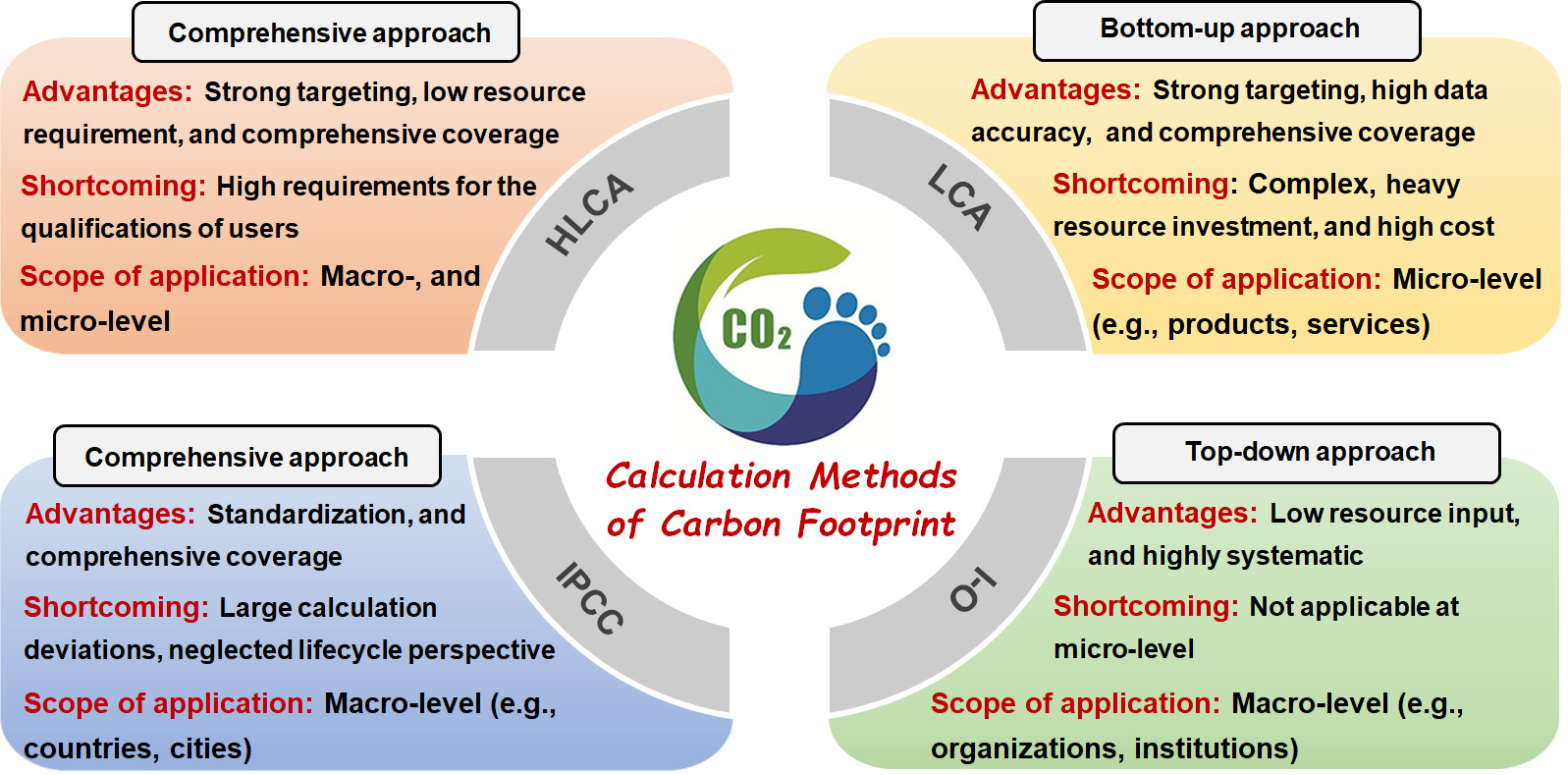
Figure 1. Comparison of carbon-footprint calculation methods for contaminated-site remediation. The figure summarizes the advantages, disadvantages, and application scope of four main approaches: Life Cycle Assessment (LCA), Input-Output (I-O) analysis, Intergovernmental Panel on Climate Change (IPCC), and Hybrid LCA (HLCA).
LCA
LCA is a bottom-up, ISO-standardized methodology that systematically quantifies environmental emissions, resource consumption, and associated impacts across the life cycle of a product or service, ranging from raw material extraction (cradle) to end-of-life disposal or recovery (grave) [Figure 2][20-22]. In environmental remediation, LCA enables a rigorous, detailed comparison of alternative remediation technologies by evaluating their cumulative energy demand, global warming potential, and other environmental impact categories[14]. LCA comprises five interrelated phases, namely goal and scope definition, life cycle inventory analysis, life cycle impact assessment, interpretation, and reporting. This framework promotes a comprehensive and transparent analysis of environmental performance[23]. However, LCA is data-intensive and often requires extensive primary data collection supplemented by high-quality secondary data[24,25]. The results can be sensitive to methodological choices, including system boundaries, allocation procedures, and impact assessment models, thereby necessitating careful interpretation and scenario analysis[26,27].

Figure 2. Life cycle assessment (LCA) framework and system boundaries for contaminated-site remediation. GHG: Greenhouse gas.
I-O analysis
I-O analysis is a top-down macroeconomic approach that quantifies environmental emissions and resource flows across interconnected economic sectors. Its widely adopted hybrid form in environmental assessment is environmentally extended I-O LCA (EIO-LCA), which estimates emissions based on intersectoral monetary transactions[19]. A three‑tier accounting framework is typically employed, encompassing direct emissions, energy‑related indirect emissions, and broader supply-chain emissions. This structure makes I-O analysis particularly effective for evaluating environmental impacts at the economy‑wide or sectoral scales[28]. However, its dependence on aggregated national or regional economic datasets limits the level of detail and technological specificity that can be achieved when assessing individual projects, products, or processes. Consequently, I-O analysis has limited applicability in project-specific decision-making contexts[29].
IPCC calculation method
The IPCC calculation method provides a standardized and globally recognized framework for GHG emission estimations. Total emissions are calculated by multiplying activity data such as the volume of consumed fuel or the quantity of treated waste by the corresponding emission factors. Developed under the auspices of the IPCC, this method ensures consistency and comparability in national GHG inventories and corporate reporting[19]. Its tiered structure offers flexibility, where default emissions factors can be replaced with technology-specific, geographically localized, or higher-tier data to improve estimation accuracy[30]. However, the reliability of the resulting estimates strongly depends on the precision, representativeness, and quality of the selected activity data and emission factors. The use of generic or outdated coefficients can introduce considerable uncertainty into carbon-footprint estimates[19].
HLCA
HLCA integrates process-level, detail-oriented data from conventional LCA with the economy-wide coverage of I-O analysis. By combining the strengths of these two approaches, HLCA aims to balance technological specificity and system completeness. It reduces the truncation errors often arising from process-based LCA due to system boundary cut-offs and offers higher technological resolution than purely I-O-based models[31,32]. These characteristics make HLCA particularly well-suited for evaluating complex, multicomponent systems such as integrated remediation strategies, where significant indirect or supply-chain contributions may otherwise be overlooked[33-35]. Despite these advantages, several methodological challenges remain. These include consistently and accurately defining hybrid integration boundaries between processes and I-O components, reconciling data disparities such as temporal, geographical, and technological resolution, and avoiding the double counting of emissions. Careful methodological harmonization and transparent reporting are required to address these issues[34].
MULTISCALE CARBON ACCOUNTING FOR SITE REMEDIATION
Building on the aforementioned methodological frameworks, the application of carbon-footprint assessments across different spatial and organizational scales is examined herein. Quantifying the carbon footprint of remediation activities has become an important tool for promoting green and sustainable remediation practices. By providing a measurable indicator of environmental impact, carbon-footprint accounting enables remediation activities to move beyond risk-based cleanup objectives toward a more holistic approach that balances ecological restoration with climate-change mitigation. Such assessments can be conducted at three levels, namely site-specific, regional, and macro scales. Each scale provides distinct insights for technology optimization, policy development, and the strategic decarbonization of the remediation sector [Figure 3].
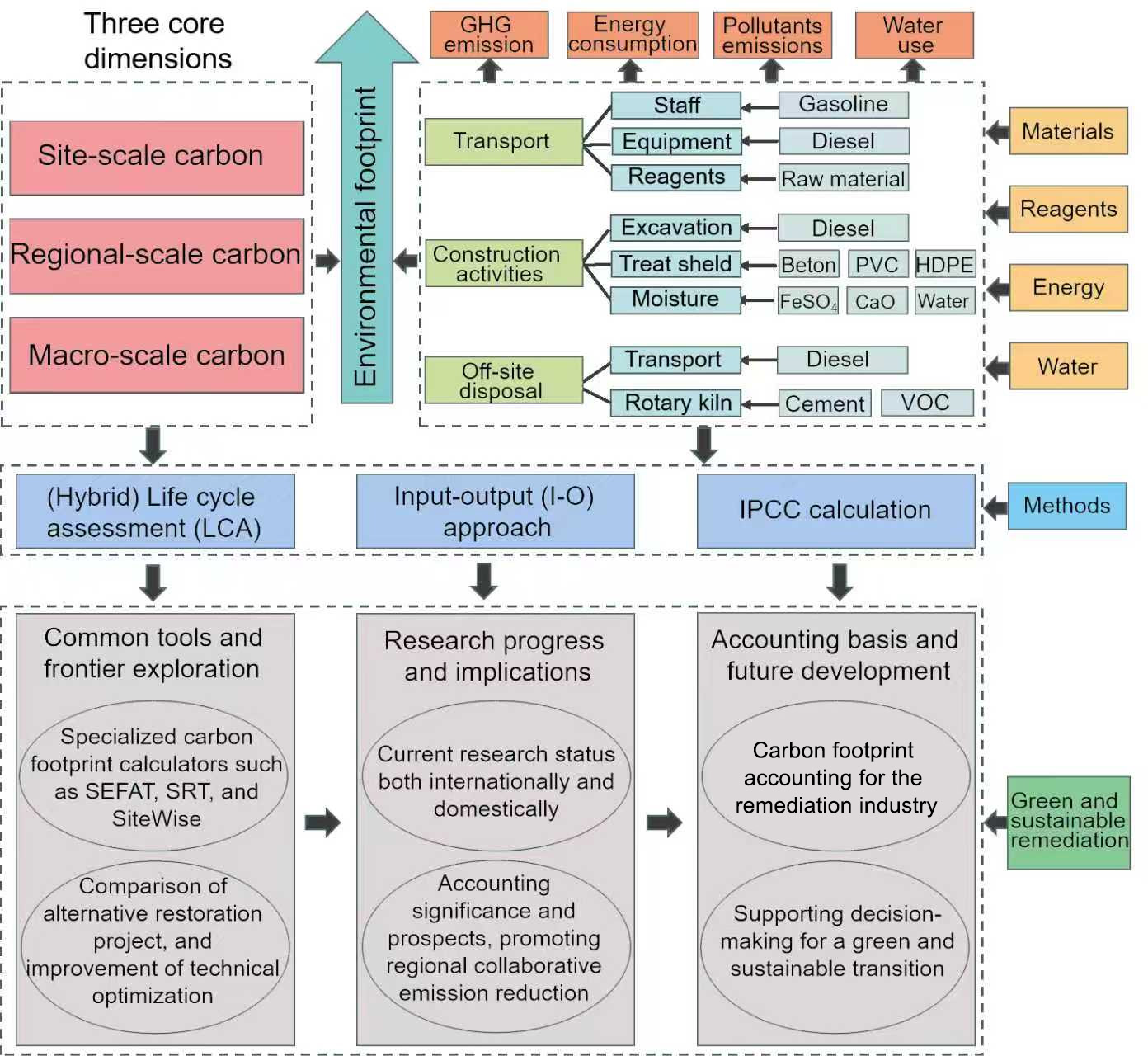
Figure 3. Multiscale carbon-footprint assessment for contaminated-site remediation. The figure compares site-specific, regional, and macro assessment scales in terms of primary analytical methods, data sources, system boundaries, and typical applications. GHG: Greenhouse gas; IPCC: Intergovernmental Panel on Climate Change; PVC: polyvinyl chloride; HDPE: high density polyethylene; VOC: volatile organic compounds.
Site-scale carbon accounting
At the project level, carbon accounting serves two primary purposes. First, it disaggregates remediation project into constituent processes to identify emission hotspots for targeted mitigation measures. Second, it enables the comparison of alternative remediation strategies, supporting the selection of options with greater environmental co-benefits[17]. Several assessment methodologies and decision-support tools have been proposed for support these purposes. Prominent examples include the Spreadsheet for Environmental Footprint Analysis from the USEPA, the LCA framework endorsed by the Sustainable Remediation Forum, and specialized carbon-accounting calculators such as the soil remediation tool, SiteWise, and the Tauw CO2 Calculator[13,36]. These tools estimate emissions (CO2eq) by applying emission factors to activity data such as fuel and electricity consumption.
Real-world case studies showed that these tools can support low-carbon remediation decision-making. For example, a comparative assessment of bioremediation and chemical oxidation at a petroleum-hydrocarbon contaminated site found that bioremediation generated only 15.64 tons of CO2eq compared with 118.4 tons produced via chemical oxidation. In addition to lower emissions, bioremediation improved soil fertility and biological activity, indicating broader sustainability benefits[37]. Another study reported that integrating renewable energy sources into remediation measures reduced the overall environmental footprint by over 68%, highlighting the significant potential of operational decarbonization strategies[38].
Among these methods, LCA is the most comprehensive and widely used framework because it evaluates environmental impacts across all stages of remediation projects[14]. LCA follows a standardized five-phase framework. Site-scale LCA studies have consistently shown that in situ remediation techniques typically have considerably lower carbon footprint than conventional excavation and off-site disposal approaches[18,36,39]. LCA can also identify high-impact activities within remediation systems. For example, long-distance transportation of treatment residues, particularly via shipping, is major contributor to project-level carbon footprint[40,41]. Similarly, thermal desorption of mercury-contaminated soil generates 357 kg of CO2eq per ton of soil, providing a useful benchmark for performance evaluation[42]. LCA also supports process optimization. Studies have shown that small adjustments to standard practices can considerably lower carbon footprint. For example, adding biochar into solidification or stabilization mixtures or operating thermal desorption systems at lower treatment temperatures can reduce emission by more than half. Such analyses provide valuable guidance for fine-tuning remediation processes and minimizing climate impact[43,44]. However, the reliability of LCA heavily depends on data quality and methodological choices[45]. Inconsistent system boundaries, outdated databases, and unrealistic assumptions can yield inaccurate results. To address these challenges, a standardized nine-step LCA protocol has been proposed for remediation projects. This protocol includes goal and scope definition, functional unit definition, system boundary establishment, project metrics selection, project inventory compilation, impact assessment, sensitivity and uncertainty analysis, interpretation of inventory analysis and impact-assessment results, and reporting. This protocol emphasizes transparent data sourcing, consistent functional-unit selection, and thorough sensitivity analysis to enhance the reliability and comparability of studies[14]. Simplified carbon calculators are ideal for rapid screening but often overlook embodied carbon emissions associated with materials and equipment. To address these issues, more advanced life cycle-based tools have been developed. The application of such a tool in a large-scale project comparing soil washing with excavation and landfill showed that soil washing reduced the carbon footprint by 14%. The analysis also identified specific emission mitigation strategies such as local material sourcing and improved fuel efficiency during earthworks[46].
Regional and macroscale carbon accounting
Site-scale carbon-footprint assessments are supported by a growing body of empirical case studies and validated tools; however, scaling up carbon accounting to regional and macro scales is relatively limited. Contrary to project-level analyses, few remediation-specific, data-driven analyses have quantified carbon footprint at such broader spatial scales. Consequently, existing studies rely largely on methodological frameworks, methodological extrapolations, and forward-looking analytical perspectives than on mature evidence bases. IO-LCA is often suggested as a suitable method for regional-scale carbon accounting. This hybrid method combines process-based LCA data with economic I-O tables that capture interdependencies across economic sectors[17]. Its key theoretical advantage is its ability to define comprehensive system boundaries, which can capture upstream supply-chain emissions that may be truncated in process-based LCA[13,47]. However, the application of IO-LCA to contaminated-site remediation remains scarce. A seminal study of brownfield redevelopment in San Francisco employed IO-LCA to estimate the carbon footprint of remediation activities across the city’s sites. The study concluded that brownfield redevelopment combined with sustainable remediation practices could reduce net GHG emissions by 519 t CO2eq over a 70-year period, equivalent to 14% of the city’s emissions in 2010. The results demonstrated clear climate benefits of redeveloping contaminated land relative to pristine greenfield sites[15].
In China, regional-scale carbon-footprint studies related to remediation are even more limited. One inventory of 48 remediation projects in Beijing cataloged the prevalence of in situ and ex situ technologies, providing a foundational dataset that could support future regional carbon-accounting measures. In addition, concepts such as City Carbon Maps and Carbon Networks (CCN) have been proposed as visualization tools for tracking material, energy, and emission flows among contamination sources, remediation sites, and waste disposal facilities[48,49]. However, these concepts remain conceptual and have not been empirically validated via remediation-specific applications. Regional-scale assessments can help identify low-carbon remediation technologies specific to a region. Regions with similar contamination profiles, geological conditions, and socioeconomic settings can benefit from tailored remediation approaches. For instance, bioremediation is preferred for widespread oil contamination in the Niger Delta due to its lower estimated environmental footprint and cost; however, rigorous carbon accounting has to be performed to validate these assumptions[50].
A potential framework for regional carbon accounting involves a multitiered approach. First, standardized emission factors are developed for commonly employed remediation technologies using LCA. Second, a regional inventory of contamination sites is established and remediation pathways are assigned based on-site characteristics. Finally, section-wide emissions are estimated by combining site inventories, soil volumes, technology-specific emission factors, and other relevant parameters. Such a framework can provide a scalable and scientifically grounded model for quantifying the contribution of remediation activities to regional carbon budgets.
At the national and global scales, dedicated carbon-footprint assessments for the remediation sector are currently lacking. However, methodologies from environmental economics such as multiregional I-O (MRIO) modeling have been used to quantify emissions embodied in international trade and national consumption[51-53]. Applying these macro-level tools to contaminated-site remediation can enable top-down estimates of sector-wide emissions and support the integration of remediation activities into net-zero strategies[17].
While these methods provide the analytical backbone for carbon-footprint assessment, their application to contaminated-site remediation introduces several methodological challenges that considerably influence the accuracy of and comparability across studies. Current challenges include inconsistent reporting of emission scopes (with Scope 3 emissions often partially or fully overlooked); inadequate accounting for embodied carbon associated with remediation amendments, reagents, and equipment manufacture; and substantial variability in the handling of transportation activities and off-site disposal processes. Moreover, avoided emissions and substitution benefits are either excluded or credited inconsistently, whereas temporal boundaries for long-term processes are rarely standardized, affecting technology comparisons. Most studies lack uncertainty and sensitivities analyses, hindering robust interpretation and cross-study comparability. To improve methodological consistency, the transparent reporting of life cycle stages, explicit justification of exclusions, sensitivity testing, and separate presentation of gross and net emissions will have to be undertaken.
COMPARATIVE CARBON FOOTPRINT OF REMEDIATION TECHNOLOGIES
The carbon footprint of a remediation technology is quantified as the sum of direct and indirect GHG emissions from its implementation[17,54-57]. LCA provides a robust framework for comparing these emissions, through which a distinct hierarchy among technologies is revealed, driven largely by their fundamental energy and material requirements [Figure 4]. However, reported carbon footprints for the same or similar technologies can vary substantially across studies. Herein, the relative positioning of major remediation technologies is synthesized and the existence and implications of cross-study variability are highlighted. The factors driving this variability are systematically analyzed in the subsequent section.
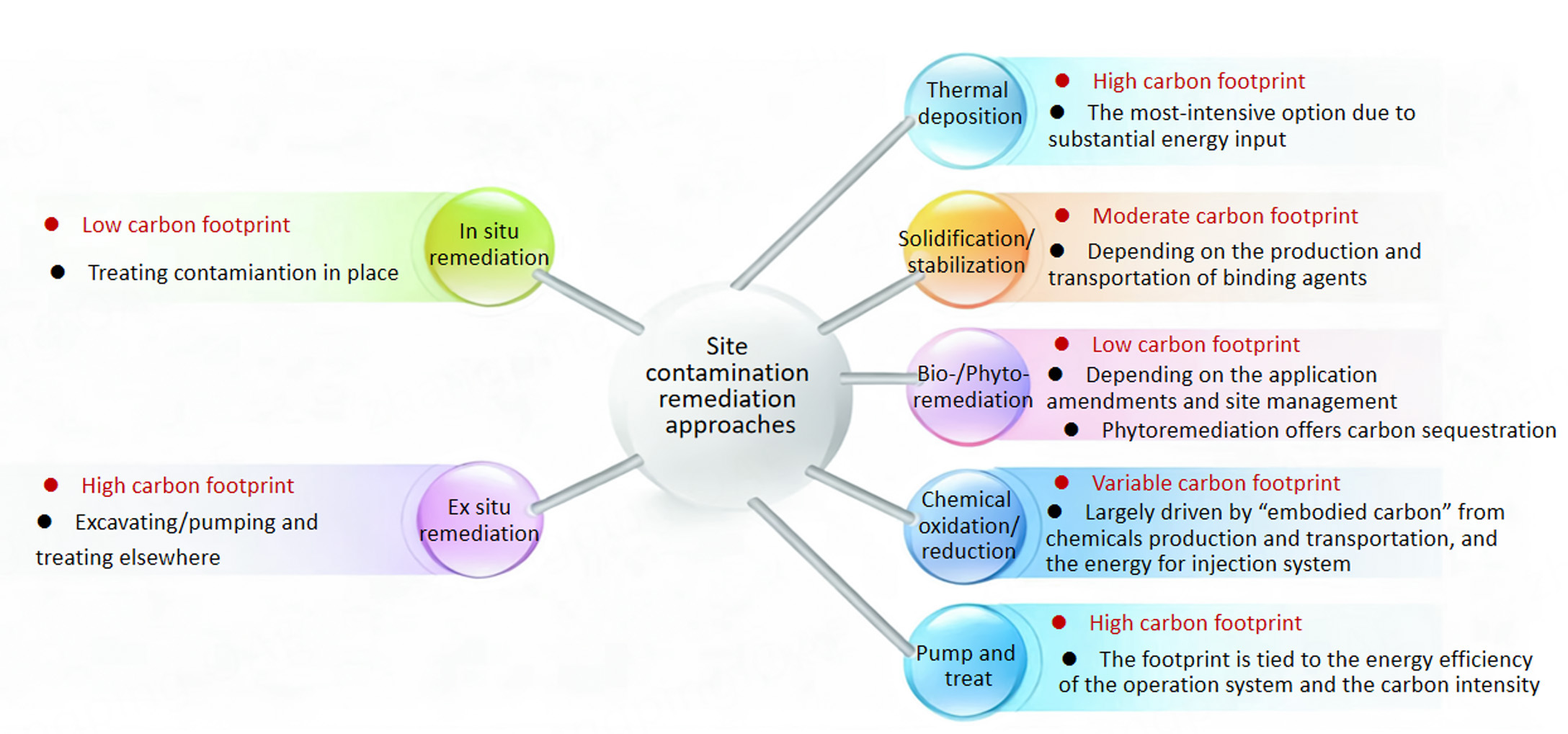
Figure 4. Comparative carbon-footprint ranges and key influencing factors for major remediation technologies.
In situ vs. ex situ technologies: a foundational comparison
The most notable distinction of remediation-related carbon emissions is the choice between in situ (treatment in place) and ex situ (excavation and off-site treatment) strategies. Ex situ technologies, particularly dig-and-dump, have consistently ranked among the most carbon-intensive remediation approaches[58-60]. A substantial carbon burden is created by their heavy reliance on fossil fuels for large-scale earthmoving, long-distance transportation of contaminated materials, and long-term landfill management (including associated methane emissions). In contrast, disruptive logistics are avoided by in situ technologies, resulting in a lower baseline carbon footprint and supporting the transition toward sustainable remediation[1].
Technology-specific carbon footprint: relative positioning and observed variability
Thermal desorption
The process involves heating contaminated soil to temperatures ranging from 90 °C to 560 °C, which are captured and treated using an off-gas treatment system[61,62]. This technology, particularly high-temperature thermal desorption, is one of the most energy-intensive remediation options[63]. The substantial energy required to heat soil to volatilize contaminants results in high direct emissions from fuel combustion[64,65]. Carbon footprints can range from several hundred to more than a thousand kg CO2eq per ton of soil treated, making thermal desorption a carbon-intensive option. However, the use of lower temperatures or renewable energy sources can mitigate its environmental impact.
Solidification/stabilization
A remediation technique in which contaminated soil is mixed with binding agents, either in situ or ex situ[1]. During this process, contaminants are physically encapsulated within a solid matrix (solidification) or chemically immobilized via reactions with stabilizing agents (stabilization)[66,67]. Through this process, contaminants are converted from labile, readily leachable forms into less mobile and environmentally stable states. Cement is the most widely used solidification and stabilization agent. This technology typically exhibits a moderate carbon footprint, with emissions mainly arising from the production and transportation of binding agents (e.g., cement or lime). Cement production considerably contributes to lifecycle emissions[68]. However, innovative approaches can reduce the carbon footprint of solidification/stabilization. For instance, the partial replacement of cement with industrial by-products such as fly ash or the addition of biochar as an amendment can reduce emissions by over 50%, thereby enhancing the sustainability profile of this technique[44].
Bioremediation and phytoremediation
Bioremediation is an environmentally sustainable technology that utilizes microorganisms to decompose and neutralize pollutants[69]. Phytoremediation is a plant-based remediation strategy that utilizes vegetation and associated rhizosphere microorganisms to extract, stabilize, degrade, or volatilize contaminants from contaminated soil[70]. These nature-based solutions typically have a lower carbon footprint than conventional remediation approaches[64,71]. They require minimal energy because remediation is driven by microbial or plant metabolic activity. Most emissions are indirect, stemming from the production and application of amendments such as fertilizers or from routine site management[72]. Phytoremediation can also sequester carbon in plant biomass, potentially turning the process into a net carbon sink. This makes it one of the most sustainable remediation options available[73].
Chemical treatment
Chemical remediation employs oxidizing or reducing agents to treat organic contaminants or hexavalent chromium in soil or groundwater. This method can be applied ex situ, such as by mixing agents with excavated soil, or in situ via injection into the vadose zone or groundwater[74-76]. Typical oxidizing agents include ozone, peroxide, permanganate, and persulfate, whereas reducing agents include zero-valent iron (ZVI), ferrous iron, polysulfides, and sodium dithionite[77]. The production of these reagents often has a high environmental footprint and may generate toxic by-products. The carbon footprint of chemical treatment is variable[78]. It depends largely on the embodied carbon associated with the energy-intensive manufacture of oxidizing agents such as persulfates and permanganates. Additional emissions arise from the transportation of chemicals and the operation of injection systems[79]. Although chemical treatment typically emits less carbon than excavation-based or thermal remediation methods, its footprint can exceed that of biological remediation methods.
Pump-and-treat
This is a groundwater remediation approach that involves extracting contaminated groundwater through wells or trenches, treating it in aboveground systems (either on-site or off-site), and subsequently discharging the treated water[80,81]. Originally developed to remove contaminant mass, this method often requires long operational periods (sometimes lasting decades) because treatment efficiency declines as contaminants back-diffuse from the aquifer matrix[82,83]. Thus, it is more commonly used to control plume migration. This widely used groundwater remediation technique typically exhibits a high and persistent carbon footprint due to its long operational lifespan[84]. Continuous electricity consumption for groundwater extraction and treatment such as air stripping and activated-carbon adsorption over years or decades generates substantial indirect emissions[1]. Therefore, the carbon footprint is influenced by the energy efficiency of the system and the carbon intensity of the local electricity grid.
In summary, the literature provides a clear but conditional hierarchy of carbon footprints among remediation technologies: nature-based solutions (bioremediation/phytoremediation) < optimized in situ physical/chemical approaches < energy-intensive thermal and ex situ methods [Table 2]. However, this hierarchy is not absolute. For example, a poorly designed bioremediation system with excessive aeration and nutrient inputs may generate a higher carbon footprint than a well-optimized in situ chemical oxidation system. In contrast, a thermal desorption project powered by renewable energy may outperform a pump-and-treat system reliant on a coal-intensive power grid. Therefore, sustainable remediation requires project-specific LCA rather than reliance on generic technology[85]. In addition, reported carbon footprints are not intrinsic attributes of remediation technologies but are dependent on project-specific conditions. Numerical results across different publications should therefore be cautiously compared. Differences in system boundaries, functional units, background data, and site-specific conditions often contribute more variability than the remediation technology itself. Where possible, practitioners should prioritize studies that report contextual parameters (e.g., energy mix, transport distances, and reagent quantities) and conduct sensitivity analyses to assess how local conditions influence technology rankings. The future of the field lies not in establishing static technology rankings but in developing robust, context-aware decision frameworks that integrate carbon-footprint assessment with the influencing factors analyzed in the following section.
Carbon-footprint ranking of major remediation technologies and key variability indicators
| Technology | Carbon footprint | Key variability drivers | Typical conditions for lower bound | Typical conditions for upper bound |
| Bioremediation | Low | Nutrient/energy inputs, scale-up effects, and treatment duration | Passive bioventing, organic amendments, and sandy soils | Active aeration, synthetic fertilizers, and clayey soil |
| Phytoremediation | Low carbon footprint | Biomass disposal, fertilization, and sequestration | Anaerobic digestion of biomass and no fertilization | Landfilling of biomass and high fertilizer use |
| Solidification/ Stabilization | Moderate | Binder type (cement vs. alternatives) and transport distance | Biochar or fly ash based, local sourcing, and low dosage | Portland cement only, long-distance transport, and high binder dosage |
| Chemical oxidation | Variable | Reagent embodied carbon, injection energy, dosage | Peroxide, low pressure, and single application | Persulfate, high pressure, and multiple rounds |
| Thermal desorption | High | Operating temperature settings, energy source, and soil moisture | Low-temperature operation (90-200 °C), renewable energy, and dry soil | High-temperature, fossil fuel, and wet soil |
| Excavation/landfill | High | Transport distance, landfill gas management, and equipment efficiency | Local landfill, gas capture, and biodiesel equipment | Distant landfill, no gas capture, and diesel-powered equipment |
| Pump-and-treat | High | Operational lifespan, grid carbon intensity, and system efficiency | Short duration, efficient pumps, and renewable grid | Decades of operation, inefficient pumps, and coal-intensive power grid |
KEY FACTORS INFLUENCING THE CARBON FOOTPRINT
Site-specific factors
The inherent characteristics of a contaminated site establish the fundamental boundary conditions that strongly influence technology selection and the resulting carbon footprint[86]. Contaminant type, concentration, and distribution are primary drivers. For example, dense, deep zones of chlorinated solvent contamination may require energy-intensive in situ thermal treatment, whereas shallow, biodegradable petroleum hydrocarbon contamination may be suitable for low-carbon enhanced aerobic bioremediation[87,88]. Site geology and hydrogeology are equally important. Low-permeability clay layers can considerably increase the energy required for pump-and-treat systems or the quantity of reagents needed for in situ chemical oxidation to achieve effective contact, thereby increasing the carbon footprint[89,90]. In contrast, a permeable and homogeneous aquifer facilitates more efficient treatment. The scale and depth of contamination directly affect material and energy demands, with large and deep plumes inevitably requiring more resources than small and shallow plumes[87,89]. Finally, site location and accessibility influence transportation distances for equipment, materials, excavated soil, and waste, which can considerably affect emissions. Off-site disposal or liquid reagent delivery at remote sites can be disproportionately carbon-intensive[91].
Design and implementation factors
Decisions made during design and implementation provide crucial opportunities for carbon mitigation. Treatment duration is a key factor, particularly for technologies with continuous energy demands. Substantial carbon emissions can be accumulated by a poorly optimized pump-and-treat system operating for decades, even if its hourly energy consumption is modest[80]. Therefore, remediation strategies that achieve cleanup objectives more rapidly, despite higher initial emissions, may result in a lower overall lifecycle carbon footprint. This highlights the importance of system optimization and adaptive management. The use of real-time monitoring data to adjust pumping rates, reagent injection, or heating parameters dynamically can reduce substantial energy and material waste. Technology configuration and operational design are also important factors. For example, electrical resistive heating used for in situ thermal treatment in regions with low-carbon electricity grids may have a different carbon footprint than gas-fired thermal conduction heating[92]. Similarly, the choice of reagents and amendments such as different oxidants or locally sourced versus commercially produced carbon substrates for bioremediation can considerably influence emissions[93].
External factors
Remediation projects operate within broader economic and infrastructural systems that influence their indirect emissions. The carbon intensity of the local electricity grid is a vital external factor affecting electricity-dependent technologies such as pump-and-treat systems. The same electrical load can have markedly different carbon footprint depending on whether electricity is generated from renewable sources or fossil fuels[94]. This factor can alter the comparative carbon ranking of remediation technologies across regions. Supply-chain emissions associated with manufacturing and transport of remediation materials, including steel sheet piles, ZVI, activated carbon, and geosynthetics, contribute considerably to embodied carbon. Although these emissions are often overlooked, they are captured in comprehensive LCAs[95]. In addition, current regulatory frameworks and waste management practices can influence carbon footprint[96]. Regulations that impose overly conservative cleanup standards or prohibit on-site treatment can favor higher carbon pathways such as excavation and off-site disposal[97,98]. In contrast, policies that promote the beneficial reuse of treated soils or provide access to renewable energy directly enable low-carbon remediation solutions.
In summary, although technology selection establishes the initial carbon signature of a remediation project, the final carbon footprint depends on a complex interplay of site characteristics, design efficiency, and external conditions [Figure 5]. Among these, the carbon intensity of the energy supply is the most influential factor. The source of electricity (fossil fuel-based grid power versus low-carbon renewable alternatives) strongly influences the carbon footprint of energy-intensive processes such as pump-and-treat and thermal desorption[17,99]. Transportation logistics are also a major contributor because emissions scale directly with distances between remediation sites, material suppliers, and waste disposal facilities. Therefore, local sourcing of materials and using nearby disposal facilities can help reduce carbon footprint. Project duration further influences the emission profile. Technologies characterized by short periods of high-intensity energy consumption have different temporal carbon distribution than those requiring lower but sustained energy inputs over long operating periods[100]. In addition, the embodied carbon in chemical reagents, binders, and soil amendments represents a significant upstream emission source that must be integrated into comprehensive LCAs[101]. Effective carbon management in remediation thus requires a system-based perspective that evaluates and optimizes across all of these interacting factors.
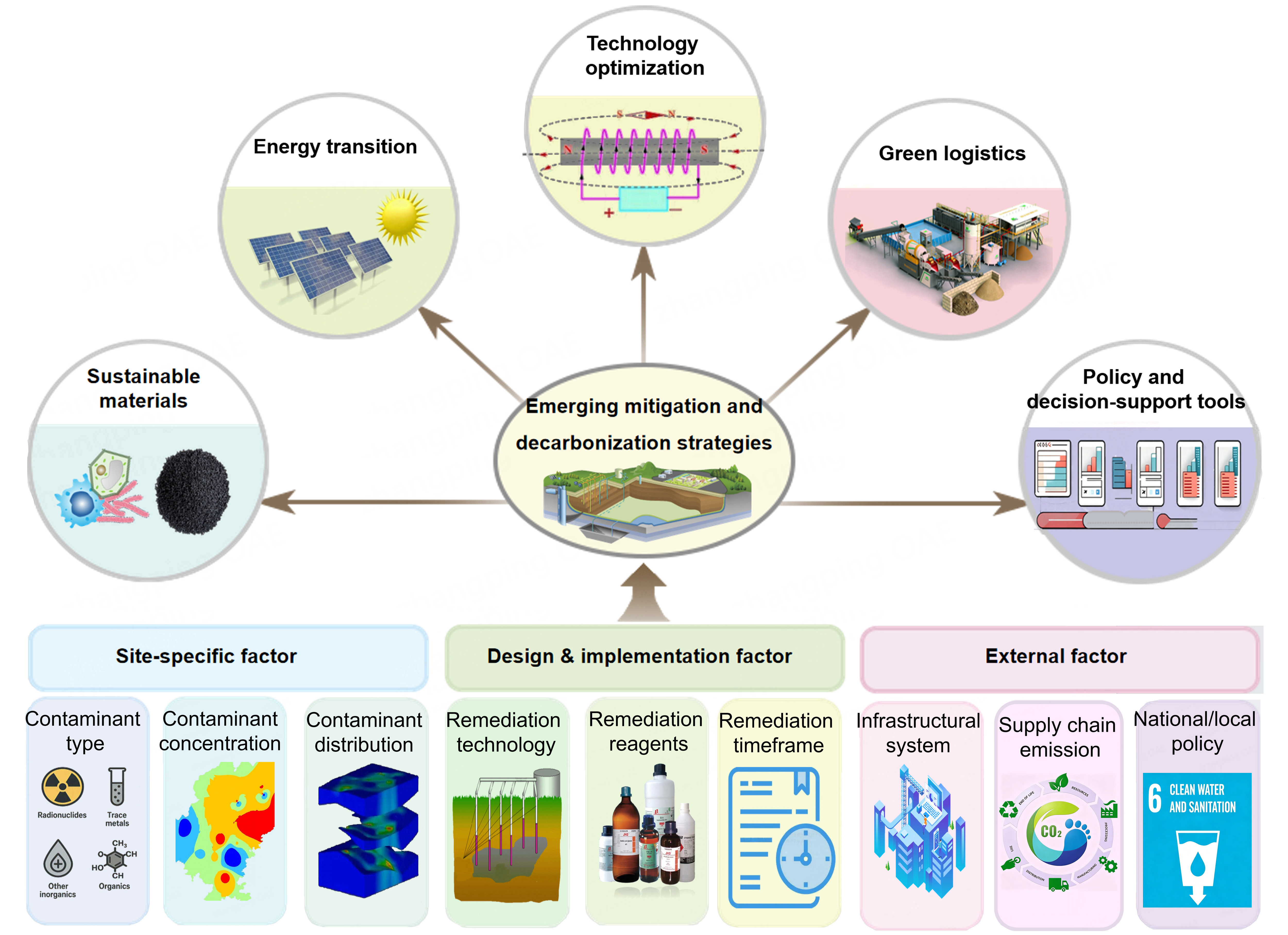
Figure 5. Integrated framework of key influencing factors and emerging decarbonization strategies for carbon-footprint management in contaminated-site remediation. Influencing factors are organized into three hierarchical levels: site‑specific conditions (contaminant type, geology, and scale); design and implementation factors (treatment timeframe, system optimization, and reagent selection); and external factors (grid carbon intensity, supply chain, and regulations).
EMERGING MITIGATION AND DECARBONIZATION STRATEGIES
Various innovative strategies have been proposed to address the primary sources of carbon emissions in remediation projects. These include technological innovation, energy acquisition, material substitution, logistical planning, and decision-making frameworks [Figure 5]. However, they are supported by varying levels of evidence and involve practical constraints and potential trade-offs related to cost, remediation duration, and long-term effectiveness. Moreover, remediation projects often combine multiple strategies simultaneously, and understanding the synergies and trade-offs associated with such combinations is critical for maximizing decarbonization benefits.
Technology optimization: smart, adaptive, and precision remediation
A primary decarbonization strategy is the transition from conventional, often extensive treatment methods toward smarter, more efficient remediation systems. Over-treatment (e.g., excessive use of energy, chemicals, or operational effort) represents a significant yet frequently overlooked source of carbon emissions. Precision remediation addresses this by employing real-time monitoring, machine learning, and adaptive management to dynamically tailor remediation activities to actual contaminant distribution and concentration. For example, energy inputs in thermal remediation systems can be adjusted based on real-time subsurface temperature and contaminant data rather than being operated continuously at high power[102,103]. Similarly, bioremediation can be optimized by monitoring geochemical parameters and supplying nutrients or electron donors only when microbial activity declines[1,63]. This “just enough, just-in-time” approach minimizes energy and resource consumption, directly reducing the carbon footprint without compromising remediation objectives. Although pilot studies have demonstrated energy savings of 20%-40%, independent validation across diverse site conditions remains limited[63]. However, high costs for sensor networks and the need for specialized expertise constrain broader adoption. Aggressive optimization may extend project duration or risk incomplete treatment if safety margins are reduced; however, these trade-offs are rarely quantified in existing research.
Energy transition: on-site renewable energy integration
The carbon intensity of the local electricity grid is a major determinant of remediation-related emissions. Therefore, integrating on-site renewable energy offers a direct pathway for decarbonization. Solar photovoltaic arrays are increasingly deployed on remediated brownfields or containment caps to power remediation activities[104,105]. This approach reduces dependence on grid electricity and lower transmission-related losses. For larger, long-term projects, hybrid systems incorporating solar, wind, or geothermal energy are being explored[106]. Repurposing remediation sites as temporary renewable-energy farms (e.g., solar power) can create revenue streams that can support cleanup activities[1]. This creates a virtuous cycle, simultaneously aligning environmental and economic benefits. However, the extent of carbon reduction strongly depends on local grid carbon intensity and system intermittency, which often requires battery storage or grid backup, and thus adds cost and embodied carbon. For short-duration projects, the carbon payback period associated with manufacturing renewable-energy equipment may exceed the operational benefits achieved. Using remediated land for solar farms may delay or preclude alternative redevelopment options (e.g., housing), representing a land-use trade-off that is seldom discussed in remediation-focused studies[107].
Sustainable materials: low-carbon amendments and circular economy
The production and transportation of remediation amendments and chemicals are carbon-intensive processes. An emerging strategy is to replace these inputs with sustainable alternatives. Biochar, a carbon-rich material produced via biomass pyrolysis, is a premier example[108]. It serves a dual function: it sequesters carbon in soil over extended periods, acting as a direct carbon sink, whereas its high surface area and porosity enable effective immobilization of heavy metals and organic contaminants. This approach reflects circular-economy principles by converting agricultural or forestry waste into valuable remediation materials[1]. However, biochar quality varies considerably with feedstock characteristics and pyrolysis conditions, and the lack of standardization hinders regulatory acceptance and performance predictability. Similarly, the use of waste-derived products such as treated industrial slags or green-synthesized nanoparticles reduces dependence on virgin resources[109]. The development of green chemicals such as life-cycle-assessed chemical oxidants or biodegradable surfactants further minimizes the embodied carbon and environmental toxicity of remediation additives[110,111].
Green logistics: optimizing site operations and transportation
The mobilization of heavy equipment and transportation of materials or contaminated soil account for a substantial portion of a project’s direct emissions, particularly in ex situ remediation. Green logistics strategies aim to reduce these impacts via route optimization for soil hauling to reduce fuel consumption, scheduling equipment to avoid idling, and adopting lower-emission vehicles such as those powered by biodiesel or electricity[1,112]. The shift toward in situ remediation also inherently eliminates most transportation-related emissions by treating contamination directly at the site. When excavation is unavoidable, on-site treatment or local beneficial reuse of treated soil can considerably reduce transportation requirements; this considerably reduces GHG emissions and local air pollutants. However, biodiesel availability and performance under cold weather conditions may be limited in some regions, and electric heavy equipment for earthmoving remains commercially immature. On-site treatment may require additional land area and permitting, which can be challenging at space-constrained urban sites.
Policy and decision-support tools: integrating carbon into remedy selection
The widespread adoption of low-carbon remediation strategies requires their formal integration into remedy-selection processes[17,21]. This can be achieved using policy instruments and sophisticated decision-support tools[113]. LCA is being increasingly required or encouraged to provide quantitative assessments of the environmental impacts of different remediation alternatives, including global warming potential[114]. These data can be incorporated into multicriteria decision analysis (MCDA) frameworks. Traditionally, MCDA frameworks have balanced criteria such as cost, remediation efficiency, and implementation time. Recently, carbon footprint and sustainability metrics have been incorporated as additional decision criteria[115]. This structured approach enables transparent and defensible decision-making by explicitly integrating decarbonization objectives into traditional remediation planning, making them technically feasible and environmentally superior. Despite conceptual progress, mandatory carbon accounting remains rare in actual remedy selection. LCA requires data and expertise that are often unavailable to site managers, whereas the weighting of MCDA criteria remains inherently subjective because stakeholders may assign different levels of importance to carbon reduction, cost, or remediation speed. Regulatory inertia and liability concerns, particularly concerns that a low-carbon remedy will fail to meet cleanup standards, are significant barriers. Furthermore, prioritizing carbon reduction may favor slower‑acting remedies such as monitored natural attenuation, which may conflict with the need for rapid risk reduction. These trade‑offs must be transparently addressed within decision-making frameworks.
Coupling multiple decarbonization strategies
Individual strategies can achieve measurable carbon reductions; however, their combined application may generate synergistic benefits that exceed the sum of their individual contributions. For example, precision remediation coupled with on‑site solar-power scheduling may further reduce carbon footprint compared with solar energy alone. Similarly, biochar‑based stabilization combined with phytoremediation creates a closed‑loop, carbon‑negative system that promotes net carbon sequestration. Integrating green logistics with low‑carbon amendments may yield substantial emission reductions while generating additional synergistic benefits[116,117]. However, not all couplings are beneficial. For example, combining high‑intensity precision control with renewable energy for short‑term projects may increase equipment emissions without delivering proportional benefits. Thus, the effectiveness of coupling decarbonization strategies should be evaluated using project‑specific LCA rather than assuming additive benefits.
CONCLUSION AND OUTLOOK
This review systematically examined the methodologies, assessment frameworks, and effective strategies for managing the carbon footprint of contaminated-site remediation. Integrating carbon accounting into remediation decision-making represents a fundamental shift from traditional risk-based approaches toward more sustainable environmental management. A key finding is that the carbon footprint is not an intrinsic attribute of a remediation technology but a conditional outcome that is strongly influenced by site-specific conditions, process parameters, and external factors. This highlights the limitations of static technology rankings and underscores the need for context-specific remedy selection. Although significant progress has been made in developing low-carbon technologies and carbon-accounting methodologies, the full integration of carbon-footprint considerations into mainstream practice still requires the resolution of several critical challenges across multiple scales.
The transition to low-carbon remediation faces technical and implementation barriers. Technologically, innovative approaches such as sustainable immobilization, enhanced bioremediation, and in situ chemical treatments have shown promise; however, concerns regarding treatment efficiency, remediation timescales, and cost-effectiveness remain. The development of functional materials and monitoring technologies that are both economically viable and environmentally superior remains a research priority. From an implementation perspective, reconciling diverse stakeholder values presents a significant challenge. Many environmental and social benefits associated with sustainable remediation are not captured by conventional financial models. Therefore, quantitative methods that can transparently incorporate tangible and intangible value considerations into decision-making are required. A multiscale approach to carbon management is essential for advancing the remediation field. Furthermore, quantifying the total carbon footprint of the remediation sector at regional and global scales remains an urgent priority. Empirical LCA studies from developing countries are scarce, limiting the generalizability of current knowledge. The standardized reporting of system boundaries, functional units, and uncertainty remains inconsistent across studies, hindering meta-analysis and cross-study comparisons. The long-term monitoring of coupled decarbonization strategies is required to verify their durability and avoid unintended trade-offs.
The alignment of carbon-neutrality goals with sustainable remediation presents challenges and opportunities. Future research must strengthen interdisciplinary collaboration among environmental engineers, urban planners, and social scientists to develop integrated solutions that combine remediation with nature-based solutions and renewable energy systems. By integrating resilience and equity considerations, advancing quantitative assessment methods, and establishing standardized protocols, the remediation sector can evolve from a source of carbon emissions to a contributor to climate solutions, ultimately achieving the dual objectives of environmental protection and climate action.
DECLARATIONS
Author’s contribution
Made substantial contributions to the conception and design of the study and writing: Liu, Z.
Performed data analysis and writing, proof-reading and formal analysis, as well as providing administrative support: Cui, Y.
Performed technical and material support: Ma, Y.
Availability of data and materials
Not applicable
AI and AI-assisted tools statement
During the preparation of this manuscript, the AI tool DeepSeek (version DeepSeek-V3, released 2024-12-26) was used soley for language editing. The tool did not influence the study design, data collection, analysis, interpretation, or the scientific content of the work. All authors take full responsibility for the accuracy, integrity, and final content of the manuscript.
Financial support and sponsorship
This study was supported by the National Natural Science Foundation of China (22506008), the Postdoctoral Fellowship Program of China Postdoctoral Science Foundation (GZB20250320), the Shaanxi Provincial Social Science Foundation “Young Doctor” Project (2025QBR115), and the Northwest A&F University Scientific Research Start-up Project (2452024142).
Conflicts of interest
All authors declared that there are no conflicts of interest.
Ethical approval and consent to participate
Not applicable.
Consent for publication
Not applicable.
Copyright
© The Author(s) 2026.
REFERENCES
1. Hou, D.; Al-tabbaa, A.; O’connor, D.; et al. Sustainable remediation and redevelopment of brownfield sites. Nat. Rev. Earth. Environ. 2023, 4, 271-86.
2. Lee, H.; Sam, K.; Coulon, F.; De Gisi, S.; Notarnicola, M.; Labianca, C. Recent developments and prospects of sustainable remediation treatments for major contaminants in soil: a review. Sci. Total. Environ. 2024, 912, 168769.
3. Sarker, A.; Shin, W. S.; Masud, M. A. A.; Nandi, R.; Islam, T. A critical review of sustainable pesticide remediation in contaminated sites: research challenges and mechanistic insights. Environ. Pollut. 2024, 341, 122940.
4. Unnithan, A.; Bekele, D. N.; Chadalavada, S.; Naidu, R. Insights into vapour intrusion phenomena: current outlook and preferential pathway scenario. Sci. Total. Environ. 2021, 796, 148885.
5. Wu, J.; Chen, X.; Chen, C.; Liu, M.; Wang, S.; Zhao, C. Multi-indices decision-making incorporating environmental capacity for assessing brownfield sites safety. Environ. Geochem. Health. 2025, 47, 250.
6. Pasetto, R.; Mattioli, B.; Marsili, D. Environmental justice in industrially contaminated sites. A review of scientific evidence in the WHO European region. Int. J. Environ. Res. Public. Health. 2019, 16, 998.
7. Azuazu, I. N.; Sam, K.; Campo, P.; Coulon, F. Challenges and opportunities for low-carbon remediation in the Niger Delta: Towards sustainable environmental management. Sci. Total. Environ. 2023, 900, 165739.
8. Ganie, A. S.; Bano, S.; Khan, N.; et al. Nanoremediation technologies for sustainable remediation of contaminated environments: recent advances and challenges. Chemosphere 2021, 275, 130065.
9. Pak, T.; Luz, L. F. D. L.; Tosco, T.; Costa, G. S. R.; Rosa, P. R. R.; Archilha, N. L. Pore-scale investigation of the use of reactive nanoparticles for in situ remediation of contaminated groundwater source. Proc. Natl. Acad. Sci. U.S.A. 2020, 117, 13366-73.
10. Khan, S.; Naushad, M.; Govarthanan, M.; Iqbal, J.; Alfadul, S. M. Emerging contaminants of high concern for the environment: current trends and future research. Environ. Res. 2022, 207, 112609.
11. Bokade, P.; Gaur, V. K.; Tripathi, V.; Bobate, S.; Manickam, N.; Bajaj, A. Bacterial remediation of pesticide polluted soils: exploring the feasibility of site restoration. J. Hazard. Mater. 2023, 441, 129906.
12. Li, Y.; Zhang, Z. Global systematic review of sustainability assessment for contaminated site remediation: a bibliometric visualization approach. J. Environ. Chem. Eng. 2026, 14, 122364.
13. Chen, C.; Zhang, X. Chen. J.; et al. Assessment of site contaminated soil remediation based on an input output life cycle assessment. J. Clean. Prod. 2020, 263, 121422.
14. Favara, P. J.; Krieger, T. M.; Boughton, B.; Fisher, A. S.; Bhargava, M. Guidance for performing footprint analyses and life‐cycle assessments for the remediation industry. Remediat. J. 2011, 21, 39-79.
15. Panzarella, F.; Cappuyns, V.; Abelshausen, B.; Turcanu, C. Sustainable environmental remediation: an application of the community capitals framework. Environ. Dev. Sustain. 2024, 28, 5293-315.
16. Huysegoms, L.; Cappuyns, V. Critical review of decision support tools for sustainability assessment of site remediation options. J. Environ. Manage. 2017, 196, 278-96.
17. Xiao, M.; Liu, P.; Meng, H.; et al. Carbon footprint on remediation of contaminated sites based on concept of green and sustainability: a review. Soil. 2023, 55, 708-17.
18. Cappuyns, V. Carbon footprint calculations in the soil remediation sector: a comparative analysis. Sci. Total. Environ. 2024, 915, 170100.
19. Liu, H.; Ye, P.; Ran, C.; et al. From traditional methods to digital platforms: technological progress and application progress of carbon footprint accounting tools. Chin. J. Environ. Eng. 2025, 19, 1913-33. (in Chinese).
20. Ashraf, A. I.; Mohareb, E.; Vahdati, M.; Abbas, F. Environmental life cycle assessments of decentralized municipal solid waste management: a novel waste-to-compost approach. Discov. Sustain. 2025, 6, 138.
21. Matthews, H. S.; Hendrickson, C. T.; Weber, C. L. The importance of carbon footprint estimation boundaries. Environ. Sci. Technol. 2008, 42, 5839-42.
22. Li, A.; Yu, B.; Zhang, Y.; et al. The emission reduction potential and cost-effectiveness of low-GWP refrigerants in electric vehicle air conditionings. Carbon. Footprints. 2024, 3, 6.
23. Pryshlakivsky, J.; Searcy, C. Life cycle assessment as a decision-making tool: practitioner and managerial considerations. J. Clean. Prod. 2021, 309, 127344.
24. Khan, M.; Nizami, A. S.; Bashir, S.; Yasar, A. A carbon footprint accounting framework for sustainable textile manufacturing: Advancing greenhouse gas mitigation and net‐zero strategies. Environ. Prog. Sustain. Energy. 2025, 45, e70265.
25. Visentin, C.; Trentin, A. W. D. S.; Braun, A. B.; Thomé, A. Life cycle sustainability assessment: a systematic literature review through the application perspective, indicators, and methodologies. J. Clean. Prod. 2020, 270, 122509.
26. Meng, X.; Wu, J.; Zhang, Y.; Ren, J.; Yue, D.; Manzardo, A. Critical review: a standardized blueprint for green certificate integration in life cycle assessment. Carbon. Footprints. 2025, 4, 29.
27. Lueddeckens, S.; Saling, P.; Guenther, E. Temporal issues in life cycle assessment-a systematic review. Int. J. Life. Cycle. Assess. 2020, 25, 1385-401.
28. Han, J.; Tan, Z.; Chen, M.; Zhao, L.; Yang, L.; Chen, S. Carbon footprint research based on input-output model-a global scientometric visualization analysis. Int. J. Environ. Res. Public. Health. 2022, 19, 11343.
29. Zhang, Q.; Fang, K.; Xu, M.; et al. Review of carbon footprint research based on input-output analysis. J. Nat. Resour. 2018, 33, 696-708.
30. Semenov, S. M. Intergovernmental panel on climate change: results, problems, and prospects. Izv. Atmos. Ocean. Phys. 2025, 60 Suppl, S323-30.
31. Chen, X.; Zhen, Y.; Chen, Z. Household carbon footprint characteristics and driving factors: a global comparison based on a dynamic input-output model. Energies 2023, 16, 3884.
32. Šimaitis, J.; Butnar, I.; Sacchi, R.; Lupton, R.; Vagg, C.; Allen, S. Expanding scenario diversity in prospective LCA: coupling the TIAM-UCL integrated assessment model with premise and ecoinvent. Renew. Sustain. Energy. Rev. 2025, 211, 115298.
33. Yang, Y.; Heijungs, R.; Brandão, M. Hybrid life cycle assessment (LCA) does not necessarily yield more accurate results than process-based LCA. J. Clean. Prod. 2017, 150, 237-42.
34. Spreafico, C. How can patent-based prospective life cycle assessment be used for eco-design? Res. Eng. Design. 2025, 36, 5.
35. Briones-hidrovo, A.; Copa Rey, J. R.; Cláudia Dias, A.; Tarelho, L. A.; Beauchet, S. Assessing a bio-energy system with carbon capture and storage (BECCS) through dynamic life cycle assessment and land-water-energy nexus. Energy. Convers. Manag. 2022, 268, 116014.
36. Foerster, F. C.; Döring, J.; Koch, M.; et al. Comparative life cycle assessment of integrated and organic viticulture based on a long-term field trial in Germany. Sustain. Prod. Consum. 2024, 52, 487-97.
37. Huang, W.; Hung, W.; Vu, C. T.; Chen, W.; Lai, J.; Lin, C. Green and sustainable remediation (GSR) evaluation: framework, standards, and tool. A case study in Taiwan. Environ. Sci. Pollut. Res. 2016, 23, 21712-25.
38. Khan, M. A. A.; Qadir, Z.; Asad, M.; Kouzani, A. Z.; Parvez Mahmud, M. A. Environmental footprint assessment of a cleanup at hypothetical contaminated Site. Appl. Sci. 2021, 11, 4907.
39. Harbottle, M.; Al-tabbaa, A.; Evans, C. A comparison of the technical sustainability of in situ stabilisation/solidification with disposal to landfill. J. Hazard. Mater. 2007, 141, 430-40.
40. Sparrevik, M.; Saloranta, T.; Cornelissen, G.; et al. Use of life cycle assessments to evaluate the environmental footprint of contaminated sediment remediation. Environ. Sci. Technol. 2011, 45, 4235-41.
41. Ferdos, F.; Rosén, L. Quantitative environmental footprints and sustainability evaluation of contaminated land remediation alternatives for two case studies. Remediat. J. 2013, 24, 77-98.
42. Hou, D.; Gu, Q.; Ma, F.; O’connell, S. Life cycle assessment comparison of thermal desorption and stabilization/solidification of mercury contaminated soil on agricultural land. J. Clean. Prod. 2016, 139, 949-56.
43. Muñoz-morales, M.; Sanchez-ramos, D.; Medina-díaz, H. L.; et al. Are abandoned mine tailings a valuable resource for recovering Rare Earth Elements? Life cycle assessment and cost analysis. J. Clean. Prod. 2025, 518, 145828.
44. Hou, D.; Guthrie, P.; Rigby, M. Assessing the trend in sustainable remediation: a questionnaire survey of remediation professionals in various countries. J. Environ. Manage. 2016, 184, 18-26.
45. Favaretto, L.; Rugani, B.; Calfapietra, C.; Labra, M.; Guidi Nissim, W. Modelling the environmental implications of phytoremediation in urban settings: a review of the integration of life cycle assessment and ecosystem services approaches. Urban. For. Urban. Green. 2025, 107, 128788.
46. Sampson, J.; Biesta, M.; Crapper, M.; Hall, I.; Shepherd, A. Carbon dioxide accounting: 2014 Commonwealth Games Athletes’ Village. Proc. Inst. Civ. Eng. Eng. Sustain. 2013, 166, 150-60.
47. Guo, X.; Luo, H.; Liu, L.; Liu, K.; Ge, J.; Nishida, K. Towards green marine engines: a review of methanol fueled internal combustion engine. Green. Energy. Res. 2026, 4, 100168.
48. Wiedmann, T. O.; Chen, G.; Barrett, J. The concept of city carbon maps: a case study of Melbourne, Australia. J. Ind. Ecol. 2015, 20, 676-91.
49. Chen, G.; Wiedmann, T.; Wang, Y.; Hadjikakou, M. Transnational city carbon footprint networks - exploring carbon links between Australian and Chinese cities. Appl. Energy. 2016, 184, 1082-92.
50. Zabbey, N.; Sam, K.; Onyebuchi, A. T. Remediation of contaminated lands in the Niger Delta, Nigeria: prospects and challenges. Sci. Total. Environ. 2017, 586, 952-65.
51. Alshehri, K.; Gao, Z.; Harbottle, M.; Sapsford, D.; Cleall, P. Life cycle assessment and cost-benefit analysis of nature-based solutions for contaminated land remediation: A mini-review. Heliyon 2023, 9, e20632.
52. Ivanova, D.; Vita, G.; Steen-olsen, K.; et al. Mapping the carbon footprint of EU regions. Environ. Res. Lett. 2017, 12, 054013.
53. Yang, Y.; Qu, S.; Cai, B.; et al. Mapping global carbon footprint in China. Nat. Commun. 2020, 11, 2237.
54. Harclerode, M.; Ridsdale, D. R.; Darmendrail, D.; et al. Integrating the social dimension in remediation decision‐making: state of the practice and way forward. Remediat. J. 2015, 26, 11-42.
55. World Urbanization Prospects, The 2018 Revision, ST/ESA/SER.A/420 (UN Department of Economic and Social Affairs, 2019). https://population.un.org/wup/assets/WUP2018-Report.pdf (accessed 2026-06-23).
56. Office of land and emergency management program benefits. USEPA. https://www.epa.gov/aboutepa/office-land-and-emergency-management-program-benefits (accessed 2026-06-23).
57. Shi, P.; Ma, Y.; Peng, Z.; et al. Developing an institutional control framework for contaminated sites in China: an analytical case study. Sci. Total. Environ. 2024, 951, 175563.
58. Hou, D.; Al-tabbaa, A.; Guthrie, P. The adoption of sustainable remediation behaviour in the US and UK: a cross country comparison and determinant analysis. Sci. Total. Environ. 2014, 490, 905-13.
59. O’connor, D.; Hou, D.; Ok, Y. S.; et al. Sustainable in situ remediation of recalcitrant organic pollutants in groundwater with controlled release materials: a review. J. Controlled. Release. 2018, 283, 200-13.
60. Amponsah, N. Y.; Wang, J.; Zhao, L. A review of life cycle greenhouse gas (GHG) emissions of commonly used ex-situ soil treatment technologies. J. Clean. Prod. 2018, 186, 514-25.
61. Zhao, C.; Dong, Y.; Feng, Y.; Li, Y.; Dong, Y. Thermal desorption for remediation of contaminated soil: a review. Chemosphere 2019, 221, 841-55.
62. Deng, B.; Carter, R. A.; Cheng, Y.; et al. High-temperature electrothermal remediation of multi-pollutants in soil. Nat. Commun. 2023, 14, 6371.
63. Ni, Z.; Wang, Y.; Wang, Y.; et al. Comparative life-cycle assessment of aquifer thermal energy storage integrated with in situ bioremediation of chlorinated volatile organic compounds. Environ. Sci. Technol. 2020, 54, 3039-49.
64. Ni, Z.; Van Gaans, P.; Rijnaarts, H.; Grotenhuis, T. Combination of aquifer thermal energy storage and enhanced bioremediation: biological and chemical clogging. Sci. Total. Environ. 2018, 613-614, 707-13.
65. Schüppler, S.; Fleuchaus, P.; Blum, P. Techno-economic and environmental analysis of an aquifer thermal energy storage (ATES) in Germany. Geotherm. Energy. 2019, 7, 11.
66. Li, X.; Sun, Y.; Li, W.; et al. Solidification/stabilization pre-treatment coupled with landfill disposal of heavy metals in MSWI fly ash in China: a systematic review. J. Hazard. Mater. 2024, 478, 135479.
67. Jiang, Q.; He, Y.; Wu, Y.; et al. Solidification/stabilization of soil heavy metals by alkaline industrial wastes: a critical review. Environ. Pollut. 2022, 312, 120094.
68. Zhang, R.; Zhao, H.; Lv, G.; Ma, X.; Jiang, X. Advanced ex-situ carbon stabilization technology using municipal solid waste incineration fly ash: a review. Renew. Sustain. Energy. Rev. 2025, 218, 115763.
69. Kuppan, N.; Padman, M.; Mahadeva, M.; Srinivasan, S.; Devarajan, R. A comprehensive review of sustainable bioremediation techniques: eco friendly solutions for waste and pollution management. Waste. Manag. Bull. 2024, 2, 154-71.
70. Liu, Z.; Liang, Y.; Zhu, P.; et al. Uranium contamination in groundwater: sources, speciation, transformations, migration, and remediation strategies. ACS. EST. Water. 2025, 5, 4301-21.
71. O’connor, D.; Zheng, X.; Hou, D.; et al. Phytoremediation: climate change resilience and sustainability assessment at a coastal brownfield redevelopment. Environ. Int. 2019, 130, 104945.
72. Hou, D.; O’connor, D.; Igalavithana, A. D.; et al. Metal contamination and bioremediation of agricultural soils for food safety and sustainability. Nat. Rev. Earth. Environ. 2020, 1, 366-81.
73. Vocciante, M.; Caretta, A.; Bua, L.; et al. Enhancements in phytoremediation technology: environmental assessment including different options of biomass disposal and comparison with a consolidated approach. J. Environ. Manage. 2019, 237, 560-8.
74. Wang, Z.; Shi, Y.; Wu, L. A Decision-making model for green and sustainable remediation of contaminated sites based on CRITIC-entropy-TOPSIS. Appl. Sci. 2026, 16, 3247.
75. Yu, J.; Wang, P.; Yuan, B.; Wang, M.; Shi, P.; Li, F. Remediation technologies of contaminated sites in china: application and spatial clustering characteristics. Sustainability 2024, 16, 1703.
76. Mcgachy, L.; Sedlak, D. L. From theory to practice: leveraging chemical principles to improve the performance of peroxydisulfate-based in situ chemical oxidation of organic contaminants. Environ. Sci. Technol. 2023, 58, 17-32.
77. Pradhan, B.; Chand, S.; Chand, S.; Rout, P. R.; Naik, S. K. Emerging groundwater contaminants: a comprehensive review on their health hazards and remediation technologies. Groundw. Sustain. Dev. 2023, 20, 100868.
78. Rayaroth, M. P.; Oh, D.; Lee, C.; Kang, Y.; Chang, Y. In situ chemical oxidation of contaminated groundwater using a sulfidized nanoscale zerovalent iron-persulfate system: Insights from a box-type study. Chemosphere 2020, 257, 127117.
79. Xiao, M.; Zhang, H.; Li, X.; et al. Coupling life cycle assessment with social media-based matrices for multidimensional sustainability assessment of site remediation. Resour. Conserv. Recycl. 2026, 228, 108789.
80. Carroll, K. C.; Brusseau, M. L.; Tick, G. R.; Soltanian, M. R. Rethinking pump-and-treat remediation as maximizing contaminated groundwater. Sci. Total. Environ. 2024, 918, 170600.
81. Federal Remediation Technologies Roundtable. Groundwater pump and treat. https://frtr.gov/matrix/Groundwater-Pump-and-Treat/ (accessed 2026-06-23).
82. Zeynali, M. J.; Pourreza-bilondi, M.; Akbarpour, A.; Yazdi, J.; Zekri, S. Optimizing pump-and-treat method by considering important remediation objectives. Appl. Water. Sci. 2022, 12, 268.
83. Bortone, I.; Erto, A.; Nardo, A. D.; Santonastaso, G. F.; Chianese, S.; Musmarra, D. Pump-and-treat configurations with vertical and horizontal wells to remediate an aquifer contaminated by hexavalent chromium. J. Contam. Hydrol. 2020, 235, 103725.
84. Visentin, C.; Braun, A. B.; Thomé, A. Environmental, economic, and social viability of nanoscale zero-valent iron for soil and groundwater remediation: a sustainability analysis from a Brazilian perspective. Water. Air. Soil. Pollut. 2026, 237, 551.
85. Owsianiak, M.; Lemming, G.; Hauschild, M. Z.; Bjerg, P. L. Assessing environmental sustainability of remediation technologies in a life cycle perspective is not so easy. Environ. Sci. Technol. 2013, 47, 1182-3.
86. Cai, Y.; Chen, H.; Zhao, W.; et al. Investigation of greenhouse gas emissions in soil remediation activities based on the integration of machine learning models and life cycle assessment. J. Clean. Prod. 2025, 487, 144630.
87. Grösbacher, M.; Eckert, D.; Cirpka, O. A.; Griebler, C. Contaminant concentration versus flow velocity: drivers of biodegradation and microbial growth in groundwater model systems. Biodegradation 2018, 29, 211-32.
88. You, X.; Liu, S.; Dai, C.; Guo, Y.; Zhong, G.; Duan, Y. Contaminant occurrence and migration between high- and low-permeability zones in groundwater systems: a review. Sci. Total. Environ. 2020, 743, 140703.
89. Tatti, F.; Papini, M. P.; Sappa, G.; Raboni, M.; Arjmand, F.; Viotti, P. Contaminant back-diffusion from low-permeability layers as affected by groundwater velocity: a laboratory investigation by box model and image analysis. Sci. Total. Environ. 2018, 622-623, 164-71.
90. Community guide to in situ chemical reduction (USEPA, 2021). https://semspub.epa.gov/work/HQ/401603.pdf (accessed 2026-06-23).
91. Wang, Q.; Guo, S.; Ali, M.; et al. Thermally enhanced bioremediation: a review of the fundamentals and applications in soil and groundwater remediation. J. Hazard. Mater. 2022, 433, 128749.
92. Cheng, Y.; Deng, B.; Scotland, P.; et al. Electrothermal mineralization of per- and polyfluoroalkyl substances for soil remediation. Nat. Commun. 2024, 15, 6117.
93. Xia, Q.; Tian, G.; Wu, Z. Examining embodied carbon emission flow relationships among different industrial sectors in China. Sustain. Prod. Consum. 2022, 29, 100-14.
94. Wethasinghe, C.; Yuen, S.; Kaluarachchi, J.; Hughes, R. Uncertainty in biokinetic parameters on bioremediation: health risks and economic implications. Environ. Int. 2006, 32, 312-23.
95. Chang, Y.; Liu, D.; Chang, F.; et al. Marine lifecycle carbon footprint toward carbon neutrality: recent progress and prospects. Processes 2025, 13, 3997.
96. Chen, G.; Shan, Y.; Hu, Y.; et al. Review on city-level carbon accounting. Environ. Sci. Technol. 2019, 53, 5545-58.
97. Liang, T.; Huo, M.; Yu, L.; et al. Life cycle assessment-based decision-making for thermal remediation of contaminated soil in a regional perspective. J. Clean. Prod. 2023, 392, 136260.
98. Xia, X.; Li, P.; Xia, Z.; Wu, R.; Cheng, Y. Life cycle carbon footprint of electric vehicles in different countries: a review. Sep. Purif. Technol. 2022, 301, 122063.
99. Marinovich, M. J.; Funk, W. A.; Kelly, S.; Elliott, C.; Hansen, V. G. Sustainable remediation and decision analysis practices at an onshore gas well site: sustainable remediation and decision analysis practices. Remediation 2016, 26, 95-115.
100. Niblick, B.; Landis, A. E. Assessing renewable energy potential on United States marginal and contaminated sites. Renew. Sustain. Energy. Rev. 2016, 60, 489-97.
101. Wang, L.; Deng, J.; Yang, X.; Hou, R.; Hou, D. Role of biochar toward carbon neutrality. Carbon. Res. 2023, 2, 2.
102. Lu, H.; Tian, P.; He, L. Evaluating the global potential of aquifer thermal energy storage and determining the potential worldwide hotspots driven by socio-economic, geo-hydrologic and climatic conditions. Renew. Sustain. Energy. Rev. 2019, 112, 788-96.
103. Barns, D. G.; Taylor, P. G.; E Bale, C. S.; Owen, A. Important social and technical factors shaping the prospects for thermal energy storage. J. Energy. Storage. 2021, 41, 102877.
104. Xiao, M.; Li, X.; Seuntjens, P.; et al. Qualitative and quantitative simulation of best management practices (BMPs) for contaminated megasite remediation using the SiteWiseTM tool. J. Environ. Manage. 2024, 360, 121098.
105. Xu, H.; Hou, D. Unlocking nature-based solution potential: Life cycle assessment of groundwater remediation at operating industrial sites. J. Clean. Prod. 2025, 528, 146697.
106. Yang, Z.; Wei, C.; Song, X.; et al. Thermal conductive heating coupled with in situ chemical oxidation for soil and groundwater remediation: a quantitative assessment for sustainability. J. Clean. Prod. 2023, 423, 138732.
107. Van De Ven, D.; Capellan-peréz, I.; Arto, I.; et al. The potential land requirements and related land use change emissions of solar energy. Sci. Rep. 2021, 11, 2907.
108. Wang, L.; Ok, Y. S.; Tsang, D. C. W.; et al. Biochar composites: emerging trends, field successes and sustainability implications. Soil. Use. Manag. 2021, 38, 14-38.
109. Han, Y.; Yan, W. Reductive dechlorination of trichloroethene by zero-valent iron nanoparticles: reactivity enhancement through sulfidation treatment. Environ. Sci. Technol. 2016, 50, 12992-3001.
110. O’connor, D.; Hou, D.; Liu, Q.; Palmer, M. R.; Varma, R. S. Nature-inspired and sustainable synthesis of sulfur-bearing Fe-rich nanoparticles. ACS. Sustainable. Chem. Eng. 2020, 8, 15791-808.
111. Hong, J.; Wang, L.; Lu, X.; Deng, D. Peroxide stabilizers remarkably increase the longevity of thermally activated peroxydisulfate for enhanced ISCO remediation. Water. Res. 2022, 224, 119046.
112. Loures, L.; Vaz, E. Exploring expert perception towards brownfield redevelopment benefits according to their typology. Habitat. Int. 2018, 72, 66-76.
113. Prior, J. The norms, rules and motivational values driving sustainable remediation of contaminated environments: a study of implementation. Sci. Total. Environ. 2016, 544, 824-36.
114. Yang, Z.; Wang, Q.; Wei, C.; et al. Quantitative sustainability assessment of in situ thermally enhanced bioremediation for carbon efficient groundwater remediation. Sustain. Prod. Consum. 2026, 63, 19-33.
115. Singh, A.; Shraogi, N.; Verma, R.; et al. Challenges in current pest management practices: navigating problems and a way forward by integrating controlled release system approach. Chem. Eng. J. 2024, 498, 154989.
116. Wang, H.; Zhou, Y.; Peng, H.; Li, S.; Gu, G. Carbon accounting and decarbonization pathways in road construction: a systematic review and research agenda. Results. Eng. 2026, 30, 110711.
Cite This Article
 Open Access
How to Cite
Download Citation
Export Citation File:
Type of Import
Tips on Downloading Citation
Citation Manager File Format
Type of Import
Direct Import: When the Direct Import option is selected (the default state), a dialogue box will give you the option to Save or Open the downloaded citation data. Choosing Open will either launch your citation manager or give you a choice of applications with which to use the metadata. The Save option saves the file locally for later use.
Indirect Import: When the Indirect Import option is selected, the metadata is displayed and may be copied and pasted as needed.
About This Article
Copyright

Data & Comments
Data
0











Comments
Comments must be written in English. Spam, offensive content, impersonation, and private information will not be permitted. If any comment is reported and identified as inappropriate content by OAE staff, the comment will be removed without notice. If you have any queries or need any help, please contact us at [email protected].