


Robotic teleoperation in hazardous environments: a review of feedback architectures, stability, and learning-based adaptation
 0
0 Abstract
Teleoperation is fundamental to robotic manipulation in hazardous environments where direct human presence is unsafe or impractical. However, existing research addressing these challenges is fragmented across multiple domains, hindering a coherent system-level understanding. Although robotic autonomy has progressed substantially, fully autonomous execution in unstructured and safety-critical settings remains challenging due to perception uncertainty, complex contact dynamics, and the requirement for human contextual judgment. As a result, hazardous environment teleoperation effectiveness is constrained by feedback architecture design, communication latency, stability¨Ctransparency trade-offs, and limited observability of remote interaction states. This review addresses three questions: how architectures influence stability and transparency, how delay and sensing limitations affect interaction quality, and how learning-based methods support authority allocation and adaptation. Unilateral, bilateral, and multilateral feedback architectures are analysed to elucidate their implications for stability, transparency, communication burden, and cooperative task execution. Latency compensation and passivity-based stabilisation strategies are reviewed to clarify how delayed communication influences energetic coupling and closed-loop stability. Recent advances in learning-based approaches to authority allocation, model mediation, and link-aware adaptation are analysed as emerging mechanisms for enhancing interaction quality. The synthesis indicates that teleoperation performance emerges from tightly coupled interactions among communication dynamics, stability constraints, perception fidelity, and human authority allocation, indicating that reliable operation requires integrated system-level co-design.
Keywords
INTRODUCTION
Teleoperation is widely used to control robots in environments that are inaccessible or hazardous to humans[1]. Originating in the mid-1940s with the first master–slave teleoperator developed by Goertz, teleoperation has evolved from investigations of human–robot interaction into a discipline that is largely based on control theory[2]. Teleoperation supports a wide range of safety-critical applications, such as nuclear decommissioning, space exploration, deep-sea intervention, and heavy industrial applications[3,4,5,6]. In a teleoperated system, a human operator and a remote robot form a closed interaction loop in which motion commands are transmitted to the robot while sensory information is returned to support perception and decision-making. The effectiveness of this loop critically depends on the control and feedback architecture that governs how motion and interaction signals are exchanged. Teleoperation architectures are commonly categorised as unilateral, bilateral, and multilateral, reflecting increasing levels of interaction coupling, which range from purely perceptual supervision to force-reflective control and coordinated multi-agent cooperation[1]. These architectural choices influence the achievable stability, transparency, and operator workload. They also shape how accurately the remote environment can be perceived and how intuitively the system can be controlled.
Although autonomy has expanded robotic capabilities, fully autonomous operation remains challenging in demanding real-world tasks, motivating teleoperation as a practical solution in several application domains[7,8]. Effective teleoperation can also be constrained by communication latency. Time delays introduce a well-established stability–transparency trade-off, whereby control strategies that guarantee passivity and stability typically add damping or impedance, thereby reducing the fidelity of force reflection and degrading the operator's perception of contact[7,9]. In practice, these delays are rarely constant. Instead, teleoperation links may involve time-varying latency, jitter, and packet loss, further complicating stability and limiting the achievable interaction quality[9]. Beyond control effects, network limitations can also degrade perception, as delayed or intermittent video streams may no longer accurately reflect the robot's current state, reducing situational awareness and increasing the risk of operational errors or task failure[8]. Human-subject studies further demonstrate that latency can degrade teleoperation performance, increasing tracking errors, workload, and perceived stress, with round-trip delays of approximately 300 ms already causing measurable deterioration in task execution[10], while delays exceeding 700 ms may render remote operation nearly infeasible[11]. Thus, teleoperation performance depends not only on control-design constraints but also on network reliability and human cognitive factors. The overall structure of a typical teleoperation system, comprising the operator (master) side, the communication channel, and the remote slave robot with multimodal sensory feedback, is illustrated in Figure 1, highlighting the principal research themes reviewed in this paper.
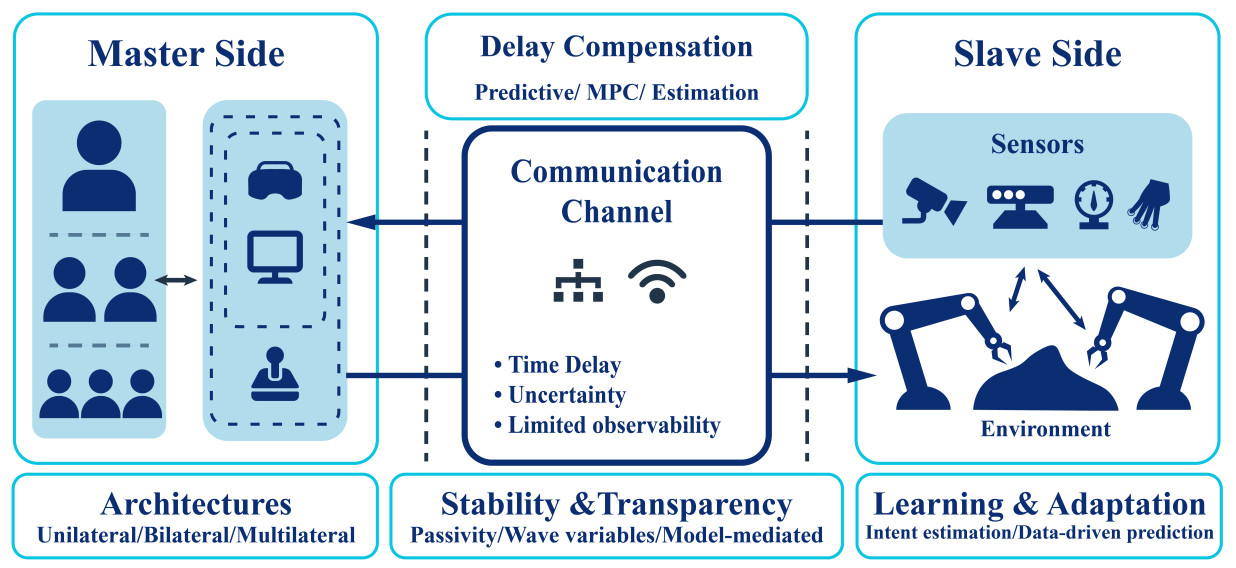
Figure 1. Overview of teleoperation systems and research themes addressed in this review.
Several solution directions have been explored, including interface design, communication-aware control, perceptual reconstruction, and learning-based adaptation. On the operator side, shared-control and constraint-mediated frameworks use haptic guidance, virtual fixtures, and task-space constraints to support safer and more manageable operation[12,13,14]. From a perceptual perspective, virtual-reality and digital-twin interfaces can reconstruct remote workspaces using real-time 3D sensing and streaming, providing immersive representations that can improve spatial awareness when direct video feedback is delayed or incomplete[6,15,16]. At the control level, stabilisation strategies, including passivity-based and wave-variable formulations, predictive compensation, impedance shaping, and model-mediated teleoperation, regulate the energy exchanged through the communication channel or locally render environment dynamics to support closed-loop stability while seeking to preserve transparency[7,9,17,18,19]. More recently, learning-based approaches have been explored as a complementary strategy to address uncertainties that are difficult to capture through analytical models alone. Data-driven estimation techniques have been used to infer human motion intent and interaction states from noisy sensory cues, enabling adaptive assistance, context-dependent feedback modulation, and shared task execution[20]. Nevertheless, these strategies are often investigated separately, making it difficult to analyse their combined effects and to establish a coherent system-level understanding of reliable and high-quality interaction.
Despite substantial progress, the teleoperation literature remains distributed across control theory, human–robot interaction, perception, communication, and machine learning. Many studies optimise individual components, while fewer examine their interactions from an integrated, system-level perspective. Consequently, stability, transparency, perceptual fidelity, and operator workload are often analysed independently, limiting understanding of their interdependencies in safety-critical and communication-constrained environments. This paper provides a structured review of teleoperation control and interaction design for hazardous environments. The survey synthesises feedback architectures, delay-robust control strategies, perceptual interfaces, and emerging learning-based adaptation from an integrated human–robot–environment system perspective. This clarifies how these components collectively influence stability, transparency, and operator performance. By consolidating findings across disciplines, the review offers a comparative understanding of existing approaches, highlights key trade-offs, and identifies open challenges and future research directions. Compared with existing teleoperation surveys, which often focus on specific control methods, feedback modalities, autonomy levels, or application domains, this review emphasises the relationships between these elements. In particular, it connects feedback architectures, interaction-quality challenges under delayed communication, and learning-enabled adaptation within a common hazardous-environment teleoperation context. This positioning helps clarify how architectural design, stability-preserving control, perceptual feedback, and adaptive autonomy collectively influence teleoperation performance in safety-critical settings. This paper is an extended version of[21], incorporating expanded analysis, additional literature coverage, and a broader system-level synthesis.
TELEOPERATION FEEDBACK ARCHITECTURES
Teleoperation systems can be classified according to how command and interaction information are exchanged between the operator and the remote robot[1]. The feedback architecture influences stability, interaction fidelity, communication burden, and operator workload. In the reviewed literature, architectures are grouped into unilateral, bilateral, and multilateral paradigms, reflecting different levels of feedback richness and coordination complexity.
Unilateral teleoperation
Unilateral teleoperation refers to human-robot interaction architectures in which control commands flow exclusively from the operator to the remote robot, without transmitting robot-environment interaction forces back to the human. Unilateral architectures, therefore, implement one-way command transmission, and the operator closes the loop primarily through perceptual feedback rather than force reflection[22]. This approach can reduce the risk of delay-induced energetic instabilities associated with force feedback, but it reduces contact observability and increases the operator's reliance on visual interpretation during manipulation. However, unilateral teleoperation may be sensitive to communication latency because control relies predominantly on delayed visual feedback. When feedback is delayed, the operator must act on outdated information without kinaesthetic cues. In controlled driving experiments, round-trip latencies of approximately 300 ms have been reported to degrade closed-loop human control, increasing steering oscillations, out-of-lane events, and subjective workload[10]. In the reported unmanned ground vehicle setup, higher latencies approaching 900 ms were associated with severe overcorrection-induced oscillations, increasing task completion time[23]. Similar effects are observed in outdoor agricultural environments, where low-bandwidth wireless links result in delayed and inconsistent video feeds that misrepresent the robot's actual viewpoint and can lead to task failure[24]. Collectively, these findings indicate that perceptual latency is a major constraint in unilateral teleoperation, degrading controllability and elevating operator workload. The corresponding unilateral architecture and information flow are illustrated in Figure 2.
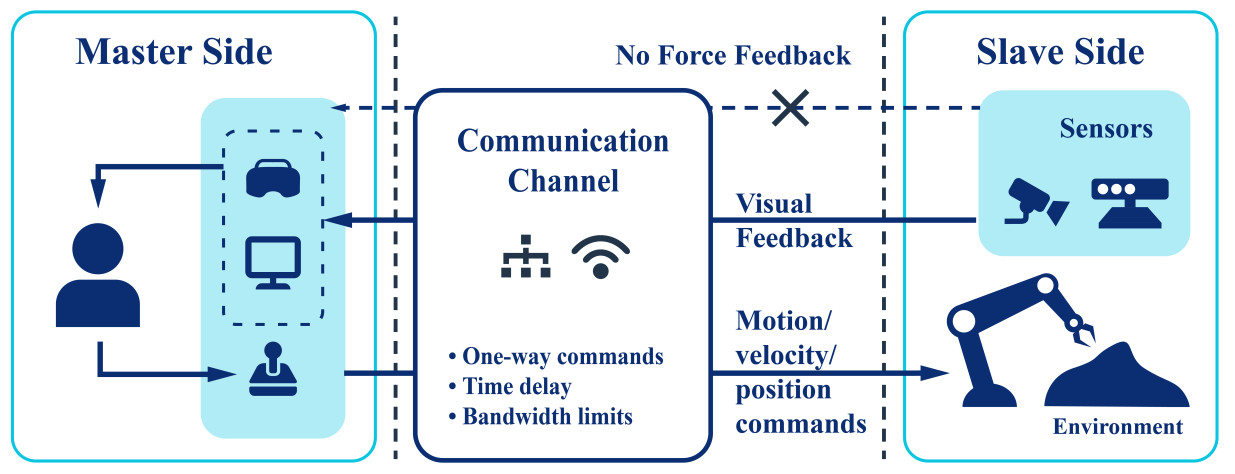
Figure 2. Conceptual unilateral teleoperation architecture.
To mitigate perceptual closure under delay while preserving unilateral interaction, predictive and augmented visual feedback has emerged as a prominent strategy. Predictive video transformation interfaces overlay estimated future states onto delayed camera streams, suppressing oscillatory control and reducing task completion time by up to 26% under high latency[23]. Learning-based generative pipelines further reconstruct delay-compensated camera frames through monocular depth estimation and point-cloud rendering, enabling predictive displays under 250-500 ms network delay[8]. Similarly, XR-based predictive overlays visualise intended task outcomes ahead of delayed physical execution, reducing execution errors in irreversible manipulation tasks by more than 50%[25]. Beyond temporal compensation, unilateral systems also address perceptual limitations through enhanced spatial reconstruction. Conventional camera-based interfaces may provide limited depth perception and are sensitive to occlusion, vibration, and adverse weather. During the dismantling of a nuclear cooling tower, camera-based teleoperation suffers from visibility loss under fog, wind-induced vibration, and high video-stream latency, motivating the replacement of video streaming with LiDAR-based 3D scene reconstruction and digital-twin visualisation[16]. Similarly, mobile manipulators in mining environments employ real-time digital twins reconstructed from RGB-D sensing and joint encoders to provide immersive VR-based teleoperation with enhanced depth perception[6]. Related VR frameworks fuse point clouds and camera streams into dynamic meshes to improve operator spatial understanding under hazardous conditions[15]. Collectively, these approaches can improve temporal and spatial perception, yet interaction forces and contact states remain unobservable to the operator.
To compensate for missing force feedback without introducing energetic coupling, several unilateral teleoperation systems embed local contact intelligence on the robot side. For example, gripper-integrated touch and slip detection modules locally regulate grasping force during delicate fibre-handling tasks, reported to achieve high success rates in the evaluated setup while the operator continues to rely purely on vision-based control[26]. In construction robotics, unilateral teleoperation is similarly used to collect expert demonstrations, after which learned policies reduce dependence on continuous operator intervention[27]. These strategies show that unilateral systems can partially compensate for missing haptic feedback by placing contact monitoring and low-level regulation on the robot side. Overall, unilateral teleoperation remains a robust and widely adopted interaction medium, particularly where force-reflective coupling is impractical or undesirable. Predictive displays, digital-twin reconstruction, XR interfaces, and robot-side contact intelligence partially alleviate its limitations, yet they do not provide direct force reflection to the operator. This motivates the exploration of bidirectional feedback architectures that enhance contact observability while maintaining stability. To synthesise the discussion above, Table 1 summarises the key constraints of unilateral teleoperation.
Summary of unilateral teleoperation: structural properties, dominant limitations, and representative mitigation strategies
| Topic | Core problem | Representative mitigation approaches | Key references |
| Perceptual closure under delay | Operator acts on outdated visual feedback; no mechanical cues; increased oscillations, reduced controllability, increased cognitive load | Predictive video transformation; learning-based future-frame synthesis; XR predictive overlays | [8,10,23,25] |
| Limited spatial awareness | Camera-based interfaces provide incomplete depth perception; occlusion and vibration degrade situational awareness in unstructured environments | LiDAR and RGB-D-based digital twins; VR/Unity-based immersive visualisation; fused point-cloud and video rendering | [6,15,16] |
| Lack of contact observability | Interaction forces and contact states are not directly reflected to the operator; contact is often being inferred from visual or task cues | Robot-side contact and slip detection; autonomous force regulation modules; shared autonomy | [26] |
| Hazardous environment deployment | Safety constraints limit force-reflective coupling; reliance on unilateral visual feedback; high training burden and occasional task failures | Robust visual teleoperation frameworks; collision monitoring; remote scene reconstruction | [5] |
Bilateral teleoperation
In contrast to the use of pure perceptual feedback in unilateral teleoperation[22], bilateral teleoperation adds mechanical force feedback that can improve interaction awareness and support contact detection, safer manipulation, and more stable force regulation[28]. However, it also introduces stability and transparency challenges under communication delay and uncertain contact dynamics. Across reported studies, the reviewed literature identifies some recurring challenges. First, degraded force transparency due to communication imperfections can disrupt synchronisation between master and slave and may disturb closed-loop stability. This is explicitly reported in space-based and underwater teleoperation studies[3,14,29]. Second, complex and uncertain interaction dynamics introduce modelling errors that compromise system stability and operator perception. These include free-floating base coupling in spacecraft manipulators, hydrodynamic disturbances in underwater arms, flexible support structures in nuclear manipulators, and variable cutting or impact forces in industrial and mining tasks[3,13,30]. Third, limited operator situational awareness and cognitive burden emerge consistently as performance bottlenecks due to visual feedback delay, poor depth perception, and dense task constraints[13,31,32]. These studies demonstrate that bilateral teleoperation requires not only reliable force feedback, but also careful maintenance of stability, transparency, and human interpretability. The corresponding bilateral master–slave architecture and bidirectional information flow are illustrated in Figure 3.
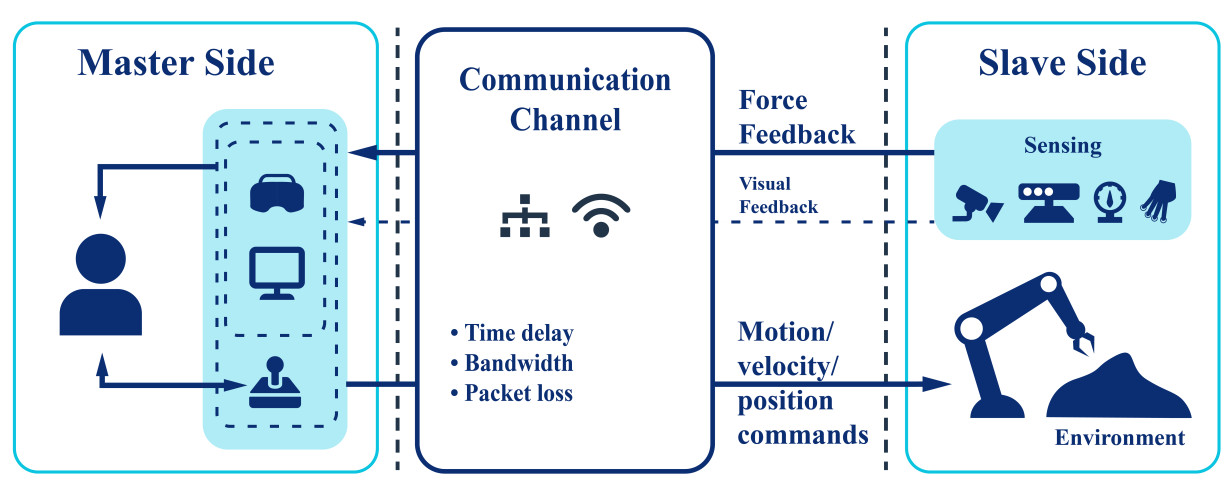
Figure 3. Conceptual bilateral teleoperation architecture showing bidirectional coupling between operator and robot.
Bilateral systems are typically formulated as a coupled master–slave loop in which the slave executes the operator's motion commands and the master reflects processed interaction forces. Within this structure, three recurring solution families are observed, each associated with specific channel and task constraints. Passivity-based bilateral architectures regulate energy exchange through time-domain passivity observers/controllers or wave-variable transformations that can support stability under communication delay and are frequently considered in long-delay environments such as space and underwater teleoperation[3,14]. Shared-control and constraint-mediated schemes embed local autonomy or virtual fixtures into the bilateral loop, modifying operator commands only when safety or feasibility limits are approached, which can reduce cognitive burden and is particularly suited to manipulation under dense physical or safety constraints, often implemented using online planners or nonlinear model predictive control (NMPC) supervisors[13,31,32]. Model-mediated bilateral frameworks avoid direct transmission of raw force signals by estimating environment or task models locally and transmitting structured parameters for force reconstruction, improving stability and interpretability when contact dynamics are uncertain or switching, as demonstrated in satellite servicing and unknown-environment manipulation scenarios[29,33]. This relationship between operational constraints and architectural choice explains why similar control families recur across disparate domains and motivates evaluating bilateral teleoperation in terms of stability–transparency trade-offs.
Among these approaches, passivity-based control has received the most extensive theoretical development and therefore serves as a representative example. The first passivity-based method for a bilateral teleoperation system was proposed by Anderson and Spong[34] in 1988. This addressed time-delay-induced instability in bilateral teleoperation. While early bilateral teleoperation relied on analytically passive controller designs, current approaches enforce passivity in the time domain through energy monitoring and regulation. Passivity remains a central stability principle, but modern methods reduce conservatism by allowing controlled energy injection via energy tanks and passivity observers/controllers. In[35], the authors propose a bilateral teleoperation architecture with variable impedance control for orientational contact tasks. The approach integrates a scattering transformation to preserve passivity under delayed communication. The authors also introduced Passivity-Based Packet Modulation (PBPM) for packet-loss compensation under passivity constraints. Unlike[35], the authors in[36] proposed handling of unpredictable delay variations by introducing time-dependent gains into both the feedforward and feedback position control paths. The authors show that the system can maintain passivity and stability even with arbitrary intermediate configurations and without relying on velocity measurements. Piccinelli et al.[37] proposed a method that replaces traditional nonlinear energy-tank-based Model Predictive Control (MPC) with a computationally lighter linear MPC formulation, achieved through a carefully designed linearised virtual energy tank and a new energy-sharing protocol between local and remote manipulators. The authors demonstrate that by enforcing a set of linear under-approximation constraints on the tank dynamics, the controller can guarantee passivity and stability of the nonlinear closed-loop system, even under unknown and time-varying communication delays. These studies illustrate the continued development of computationally efficient passivity-based architectures. In a related approach, the authors in[38] categorised passivity-based methods based on the passivity property of teleoperators and used a unified Lyapunov-like function for stability analysis. Their classification includes three types of controllers: (1) Scattering-Based Controllers[39,40], (2) Damping Injection Controllers[41,42], and (3) Adaptive Schemes[43,44]. These methods can stabilise interaction by constraining energy exchange, often with trade-offs in transparency and control complexity. Practical adoption depends on computational budget, delay variability, and how conservatism is managed.
Beyond domain-specific implementations, the reviewed studies suggest three recurring design axes in bilateral teleoperation: stability preservation under delayed energy exchange, interpretability of interaction information at the human interface, and regulation of operator authority under physical and environmental constraints. Passivity-based and wave-variable formulations primarily address the first axis by guaranteeing energetic boundedness of the communication channel, but this can degrade transparency as delay increases[3,14]. Shared-control and virtual-fixture strategies address the second and third axes by transforming raw interaction into structured guidance, reducing workload, and limiting unsafe commands[13,32]. Model-mediated and parameter-transmission frameworks abstract contact dynamics to maintain stability under switching interactions but rely on simplified contact models and accurate online identification[29,33]. This suggests that some limitations are not merely implementation-level, but reflect recurring trade-offs between stability guarantees, interaction transparency, and autonomy intervention. These recurring problems and dominant solution families in bilateral teleoperation are summarised in Table 2.
Recurring problems and dominant solution families in bilateral teleoperation
| Recurring problem | Dominant solution family | Persistent open gap | Key references |
| Delay/jitter affecting instability and transparency | Passivity-based regulation (TDPA; wave variables; energy bounding) | Transparency-stability trade-offs under large delays; limited operator performance statistics under realistic links | [3,14] |
| Operator workload and command feasibility under dense constraints | Shared control/virtual fixtures/constraint mediation | Generalisation to dynamic scenes; balancing autonomy intervention with teleoperation transparency | [13,14,31,32] |
| Uncertain contact and switching interaction modes | Model-mediated interaction (transmit structured parameters instead of raw forces) | Multi-contact modelling; robustness to fast-changing contact and parameter-identification errors | [29,33] |
| Poor situational awareness (delayed/limited vision) | Predictive cues and engineered haptic guidance (risk/proximity encoding) | Field validation under operational communications; scalable perception in cluttered, unstructured environments | [13,31] |
| Task-/environment-specific uncertainties (compliance, registration, cutting variability) | Task-model estimation and compensation (registration; compliance-aware correction; model-based compensation) | Ill-conditioning under limited excitation; need broader validation across tasks and materials | [30,33] |
Multilateral teleoperation
Multilateral teleoperation extends the bilateral master–slave paradigm to systems involving multiple human operators, multiple robotic agents, or both. These configurations are motivated by applications in large-scale tasks where workload, spatial coverage, or task complexity exceeds the capability of a single operator–robot pair. In these settings, effective performance requires not only force reflection between two devices but also coordination of intent, authority, and interaction among multiple agents. Early multilateral formalisation by Nichols and Okamura[45] established abstractions for task decomposition, role assignment, and inter-agent communication. Shahbazi et al.[46] further provided a classification of multilateral teleoperation into multi-master/single-slave, single-master/multi-slave, and multi-master/multi-slave topologies. Representative interconnection topologies are shown in Figure 4. This taxonomy highlighted that the stability and coordination are architecture-dependent and cannot be directly inferred from their bilateral counterparts. However, scaling from bilateral to multilateral architectures introduces more challenges in stability, transparency, and communication that do not arise in single-master single-slave systems. Shahbazi et al.[46] identified closed-loop instability induced by communication delays as a central limitation across multilateral architectures, noting that stability properties become strongly dependent on the chosen interconnection topology. From a passivity and energy-flow perspective, Chen et al.[47] demonstrated that direct extension of wave-variable-based bilateral control to multi-master–multi-slave networks may create internal wave reflections, delay-induced energy injection, and progressive degradation of force transparency. These studies indicate that multilateral teleoperation can benefit from dedicated authority-sharing mechanisms, cooperative interaction models, and communication-aware control architectures to preserve synchronisation and transparency in multi-agent teleoperation networks.
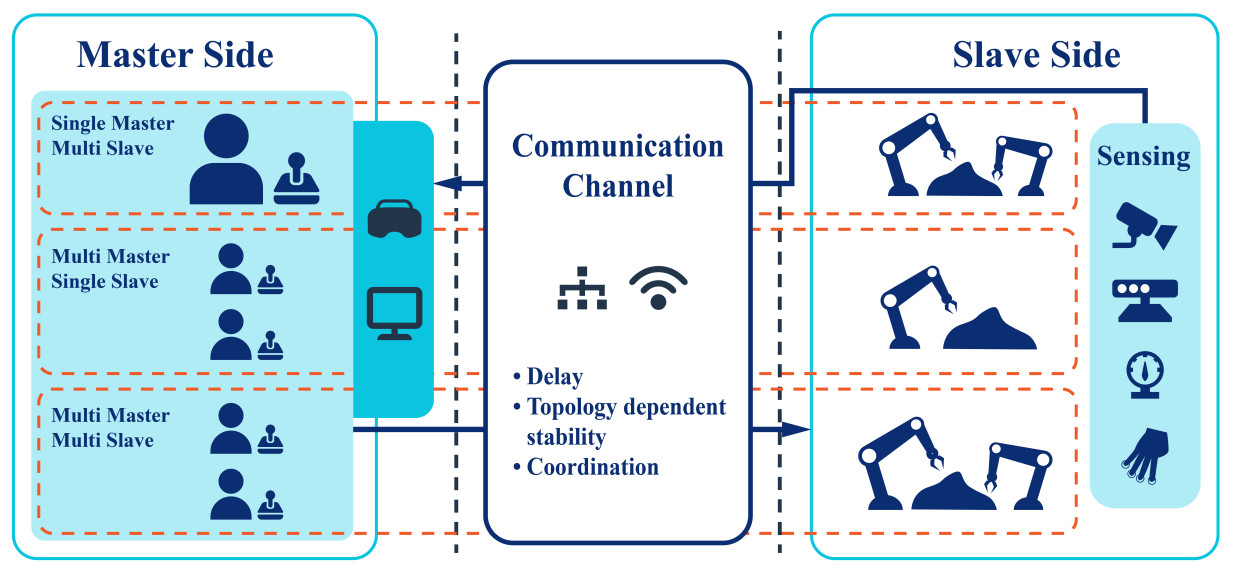
Figure 4. Representative multilateral teleoperation architectures showing common interconnection topologies.
To address these limitations, several control-theoretic solution frameworks have been proposed. Chen et al.[47] introduced a multilateral wave-variable control architecture in which force and velocity information are exchanged through weighted communication channels to reduce internal wave reflections while preserving passivity of the delayed network. Jiang et al.[48] proposed a cooperative multi-leader multi-follower architecture based on virtual leader–virtual follower aggregation, which transforms the multi-agent system into an equivalent single-leader single-follower structure to reduce redundant network communication. Their prescribed-time cooperative controller, combined with composite learning-enhanced fuzzy estimation, is developed to guarantee synchronisation within user-defined time bounds. These studies suggest that stability in multilateral teleoperation requires integrated passivity-based communication design, cooperative aggregation architectures, and robustness-oriented control synthesis. In addition to stability-oriented control designs, several works address coordination and authority allocation at the human–robot level. Sun et al.[24] proposed a dual-leader multilateral teleoperation architecture in which a large-scale leader provides rapid gross motion while a small-scale leader performs fine corrective adjustments. This addresses the workspace mismatch and precision trade-off present in conventional single-leader teleoperation. Within this framework, environmental interaction forces are allocated between the two leaders using fuzzy logic-based force feedback distribution, and Lyapunov-based analysis is used to assess convergence and transparency properties. Pérez-Alvarado et al.[49] proposed a convolutional long short-term memory (ConvLSTM) predictor for trajectory tracking in a leader–follower formation of collaborative remotely operated vehicles under communication and sensor latency. Their simulations considered a leader ROV and a follower ROV, a 200 ms sensor sampling period, communication delay, and changing ocean-current conditions. The ConvLSTM predictor was compared with recursive least squares, Kalman filtering, multilayer perceptron, and LSTM predictors. The reported results showed that ConvLSTM achieved lower mean-square error and lower RMS control output than the non-predictor case and most comparison methods, with the authors reporting a 13.9% improvement in trajectory tracking when communication latency was included. These studies suggest that authority-sharing and data-driven prediction can enhance coordination under communication limitations, although performance remains task and model dependent.
Recent multilateral teleoperation systems further demonstrate the practical potential of cooperative multi-robot architectures in complex and hazardous environments while exposing persistent scalability and robustness limitations. Patel et al.[50] presented a multi-robot teleoperation framework for shallow-water pipeline inspection in which multiple underwater robots and a surface relay vehicle cooperate under human supervision to execute coordinated inspection and intervention tasks. Their teleoperation strategy enables coordinated task allocation and real-world field deployment under strong currents and limited visibility. However, as highlighted by Shahbazi et al.[46], existing multilateral teleoperation studies remain predominantly limited to small numbers of agents, relying on assumptions such as bounded communication delays, rigid contact coupling, or passive operator and environment dynamics, and lack a general stability theory for large-scale multi-agent teleoperation networks.
Overall, the literature indicates three persistent limitations: robust handling of heterogeneous and non-stationary communication conditions, scalable role and authority assignment among multiple operators, and adaptive coordination under complex multi-contact environmental interaction. Addressing these limitations may require integrating communication-aware control and learning-based coordination to achieve reliable large-team cooperative manipulation.
To clarify how architecture selection depends on the operational environment, Table 3 compares representative hazardous teleoperation scenarios in terms of reported disturbances, communication-delay profiles, stability and transparency challenges, reported or commonly adopted teleoperation architectures, and mitigation strategies. This comparison highlights that hazardous environments are not treated here as a homogeneous category, since each domain imposes different constraints on feedback design, control stability, perception, and operator support. While the architectural taxonomy above clarifies how unilateral, bilateral, and multilateral systems structure information flow and control authority, these classifications alone do not explain why certain systems succeed or fail in practice. In hazardous environments, performance is ultimately determined not only by topology but by the quality of interaction perceived by the operator under delay, uncertainty, and constrained sensing. The next section therefore analyses teleoperation from an interaction-quality perspective that cuts across architectural boundaries.
Comparison of teleoperation environments, communication challenges, architectures, and mitigation strategies
| Environment | Reported disturbances & failure modes | Communication delay profile | Stability/transparency challenge | Recommended/adopted architecture | Adaptive control/mitigation strategy |
| On-road vehicle driving | Steering oscillations; out-of-lane events; elevated subjective workload under round-trip delay (Neumeier et al.[10]) | Terrestrial network delay | Perceptual closure degraded under delayed visual feedback; oscillatory closed-loop response | Unilateral with predictive visual overlay; shared-control authority layer | Predictive video transformation; bandwidth-limited steering filter; XR predictive overlay |
| UGV (Unmanned Ground Vehicles) | Severe overcorrection-induced oscillations; increased task completion time under latency (Moniruzzaman et al.[23]) | Medium–high latency network link | Delayed visual loop and lack of kinaesthetic feedback cause operator overcorrection cascade | Unilateral with supervisory layer; predictive display; onboard collision avoidance | Predictive video transformation; latency-tolerant supervisory control |
| Outdoor agricultural teleoperation | Low-bandwidth communication, intermittent transmission failures, variable-frame-rate video, and viewpoint deviation may lead to task failure (Chakraborty et al.[8]) | Bandwidth-constrained wireless communication with emulated 250-500 ms delay | Delayed or inconsistent visual feedback reduces correspondence between the displayed scene and the robot state | Unilateral supervisory teleoperation with delay-compensated visual feedback | Monocular depth estimation; future-pose prediction; point-cloud rendering; inpainting-based frame completion |
| Nuclear decommissioning | Fog-induced visibility loss; wind-driven vibration; high video-stream latency; camera-only teleoperation becomes less reliable (Shakoorianfard et al.[16]) | Environmentally variable high-latency communication | Visual closure collapses under obscuration and vibration; video-only feedback unreliable | Unilateral with LiDAR-based digital twin; VR immersive visualisation | LiDAR 3D scene reconstruction; vibration-compensated rendering; RGB-D + encoder fusion |
| Space-based manipulation | Degraded force transparency disrupts master–slave synchronisation; free-floating base coupling destabilises system (Artigas et al.[3]) | Very high long-distance communication delay | Passivity violation due to delay-induced energy injection; severe transparency–stability trade-off | Passivity-based bilateral control; model-mediated interaction; supervisory autonomy | Wave-variable transformation; energy-tank passivity observer/controller; base-coupling compensation |
| Underwater/subsea teleoperation | Hydrodynamic disturbances; modelling errors; strong currents; limited visibility; acoustic-link instability (Patel et al.[50]) | Acoustic communication with delay, jitter, and packet loss | Hydrodynamic uncertainty and acoustic jitter degrade force transparency and coordination stability | Multilateral cooperative inspection | Adaptive hydrodynamic disturbance observer; online model update; wave-variable transmission; coordinated task allocation |
INTERACTION QUALITY AND TRANSPARENCY
Building on the architectural taxonomy in Section 2, this section synthesises interaction-quality determinants that recur across unilateral, bilateral, and multilateral teleoperation. Across the reviewed literature, interaction quality is commonly evaluated through transparency and stability. Transparency refers to the extent to which the operator perceives the remote environment accurately, rather than artefacts introduced by communication delay, control design, or local device dynamics[3,7,9,17]. Interaction quality is further shaped by perceptual asynchrony due to latency and jitter, situational awareness under limited sensing, and the extent to which shared autonomy can reduce workload without obscuring task intent[10,11,13,14,15]. The following subsections consolidate these themes into three complementary perspectives: transparency and force–motion fidelity, communication delay and telepresence, and operator–robot cooperation. Figure 5 summarises how control, communication, perception, and human factors jointly influence overall interaction quality.
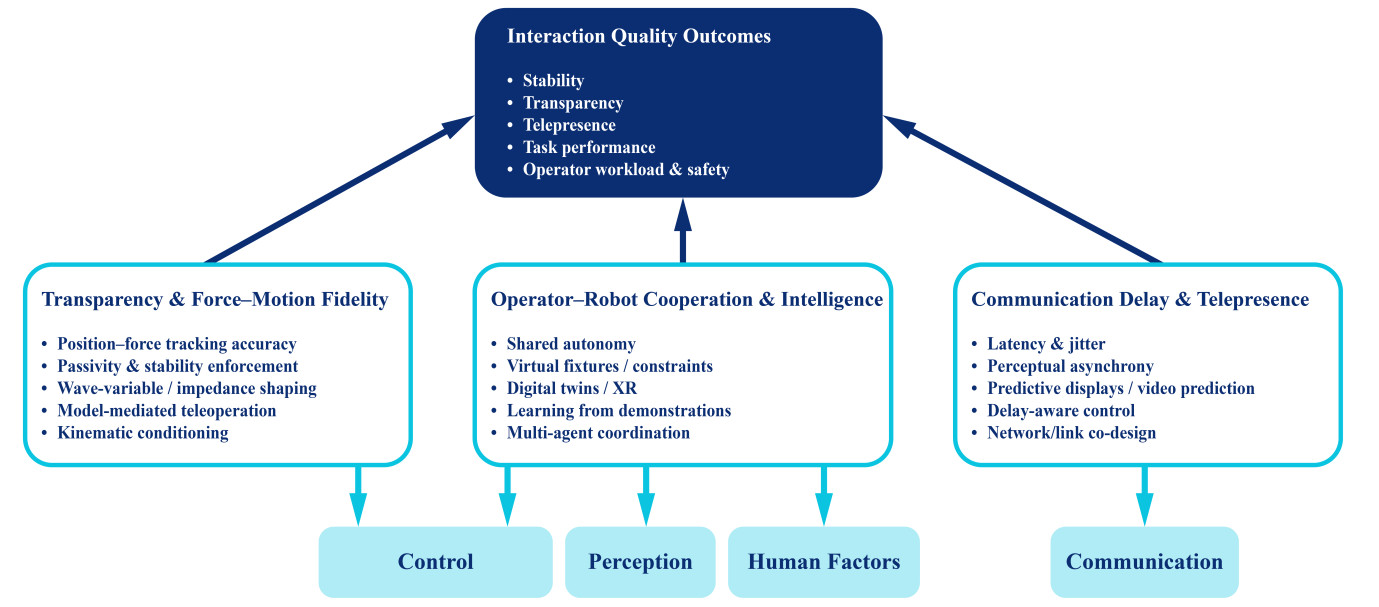
Figure 5. Conceptual summary of interaction quality determinants. Transparency (control layer), communication delay (network layer), and operator–robot cooperation (perception and human-factor layers) jointly influence stability, telepresence, and task performance.
Transparency and force-motion interaction fidelity
Across bilateral and multilateral teleoperation studies, transparency is commonly discussed in terms of position/force tracking and perceived force–motion correspondence[7,9,17,51]. A consistent conclusion is that transparency loss arises from the compounded effects of communication delay, conservative stability enforcement, and non-ideal local dynamics that distort force and motion cues[3,9,14]. Passivity-based delay compensation is reported as essential for stability, yet it can introduce damping, bias, or wave-like distortions that reduce haptic fidelity and the operator's ability to discriminate between free-space and contact phases[3,7,17]. These observations reinforce the recurrent stability-transparency tension that transparency requires high-gain bidirectional coupling, whereas delay and uncertainty necessitate energy-bounding mechanisms that typically reshape the transmitted interaction signals[3,9,17].
The reviewed literature concentrates on transparency-oriented mechanisms that explicitly target the human-perceived force loop rather than transmitting measured slave forces. Balachandran et al.[7] showed that closing an explicit master-side force control loop can reduce artificial inertia perceived during free motion and improve contact perception under large delays, while maintaining passivity through time-domain passivity control. In addition, Wang et al.[9] showed that local mechanical impedance can influence the operator experience. They combined disturbance-observer-based force feedback with energy-based active damping to reduce local impedance under time-varying delay. At the communication-structure level, Sun et al.[17] examined transparency loss in wave-variable teleoperation due to wave reflections and drift terms. Their modified wave-variable transformation was designed to suppress reflections while preserving passivity under time-varying delays, with reported improvements in force tracking during contact tasks. These contributions show that improving interaction fidelity requires controlling energy regulation mechanisms that can shape the perceptual content of force feedback[7,9,17].
Another source of transparency degradation is internal signal amplification associated with robot kinematics. Srikar et al.[51] showed that ill-conditioned Jacobians can magnify uncertainties and motor-torque fluctuations into oscillatory or exaggerated reflected forces, thus degrading transparency even when delay compensation is nominally stable. Their results motivate a co-design view in which mechanical isotropy and kinematic conditioning are considered important contributors to transparency[51]. Wang et al.[30] presented a teleoperated machining framework in which interaction forces are used by both the operator and the controller, enabling quantified regulation and logarithmic feedback that reduces operator burden while preserving operational awareness. In multi-leader settings, fixed force-sharing may limit contact perception across different operating phases. Sun et al.[24] proposed adaptive fuzzy allocation of environmental forces between leaders to improve force perception during large-range and fine-operation phases, with experiments showing reduced collisions in narrow-passage tasks.
When direct force transmission becomes unreliable under uncertain contact, model-mediated formulations present an alternative path to transparency. Huang et al.[29] frame passivity-induced distortion as a consequence of bidirectional power exchange between forward position and backward force channels. By transmitting estimated environment parameters and locally reconstructing dynamics, they report improved interaction quality under time-varying delays while avoiding oscillatory force artefacts. In a different human-in-the-loop context, Black and Salcudean[18] show that when the slave includes a human novice with intrinsic reaction delays and tracking variability, direct bilateral force feedback becomes impractical beyond moderate delays, and model-mediated approaches can improve robustness. Across these works, a consistent limitation remains: under large and time-varying delays, reducing residual bias or conservative stabilisation effects without compromising stability remains difficult, particularly in rapidly changing environments[9,17,18,29].
Communication delay, perceptual asynchrony, and telepresence
While transparency concerns the fidelity of force-motion cues, many systems are primarily limited by perceptual asynchrony introduced by end-to-end latency and jitter in the sensing-decision-actuation loop[10,11,23]. Neumeier et al.[10] demonstrated that round-trip latency degrades lane keeping, increases steering oscillations, and raises subjective workload and frustration in teleoperated driving, thereby reducing telepresence and operator confidence. In a broader synthesis, Kamtam et al.[11] decomposed teleoperation latency into sensing, encoding/decoding, network transport, display, operator reaction, and actuation components. The authors argued that jitter can be particularly disruptive because it destabilises the operator's internal prediction and timing. These findings position communication quality as a key determinant of interaction quality and safety[10,11]. To mitigate delay-driven operability loss, several studies propose replacing direct feedback with predictive or intention-reflective interfaces that close perceptual loops locally. Moniruzzaman et al.[23] demonstrated that simple predictive transformations of delayed video can reduce task time under high latency, indicating that low-complexity perceptual prediction can improve operator performance when haptic cues are absent. Chakraborty et al.[8] formulated latency compensation as future-frame synthesis conditioned on past images and robot pose. Their modular pipeline aims to deliver delay-compensated visual feedback under sizeable delays. Zhu et al.[25] extended prediction from geometry to task outcome by using an intention-reflected predictive display in XR, combined with shared control to execute the intended outcome remotely under constant and time-varying delays. Wu et al.[52] addressed delay-induced position asynchrony in space teleoperation using data-driven prediction, reporting improved synchronisation under complex delay patterns. Together, these approaches suggest that when communication delay disrupts synchronous perception, interaction quality may be partially improved by predicting either the remote state or the consequence task outcome to re-align the operator's perception with control intent[23,25,52].
Delay compensation has also been addressed through predictive, optimisation-based, and learning-based frameworks operating at both the control and operator-interface levels. Zhang et al.[32], proposed an NMPC-based shared controller for fusion maintenance tasks, aiming to improve safety and reduce operator workload during human-robot interaction. Chen et al.[53] addressed time-delay modelling for relay communication-based space telerobot systems by decomposing the total loop delay into three components: ground communication delay, ground–space communication delay, and processing delay. The processing and ground communication delays were modelled using probability-distribution-based methods, while the ground–space communication delay was modelled using an optimal communication link identification and minimum time-delay realisation (OCLIMTDR) method. Within this method, a point–vector–sphere (PVS) algorithm was used to judge communication-link connectivity in the relay network. The three delay components were then integrated into a loop time-delay model and implemented as a simulation system for generating relay communication-based space teleoperation delays. The authors showed that the generated delay profiles include irregular jitters and periodic jumps, and argued that evaluating control methods under this generated delay environment may be more convincing than using sinusoidal or other simple time-delay environments[53]. Yoon et al.[54] proposed a Generative Adversarial Network (GAN)-based prediction architecture that synthesises the current visual frame from a delayed camera image. Similarly, Qu et al.[55] proposed an Occlusion-Aware Trajectory Prediction (OATP) framework for time-delayed teleoperation of space manipulators. Their method combines a Time Occlusion-Aware Graph Encoder (TOGE), which uses a temporal graph structure to aggregate neighbouring joint information and update node features, with a Future Random Information Fused Long Short-Term Memory (FRIF-LSTM) module, which incorporates latent variables representing stochastic future-frame information. The predicted manipulator trajectory is then fused with downstream video to support operator perception under communication delay and occlusion. Experiments using real and simulated space-station videos showed improved trajectory-prediction accuracy compared with several baseline methods.
Another line of work addresses communication constraints at the link and network layers, particularly in underwater systems where acoustic propagation imposes high latency and low bandwidth[56,57,58,59,60]. Farr et al.[56] demonstrated an integrated optical-acoustic system that enables high-data-rate, low-latency optical transmission for video and interaction, while retaining acoustic links for robustness and range. Durugwar and Kasturiwala[57] similarly argue that underwater optical wireless communication can support higher data rates than acoustics, but remains sensitive to turbidity and alignment constraints. For multi-robot settings, Zhang et al.[58] proposed an omnidirectional optical communication design to reduce alignment requirements and maintain bidirectional links under relative motion over tank-scale distances. At the channel-modelling level, Wang et al.[59] analysed how turbidity, receiver field-of-view, aperture, and solar noise affect delay spread and bit-error performance, highlighting constraints on real-time feedback quality in shallow waters. Beyond optical links, Narmeen et al.[60] addressed delay-induced collision dynamics in underwater acoustic sensor networks, showing that relay-selection and collision avoidance can influence latency and reliability. These studies collectively show that interaction quality in harsh conditions depends not only on perception-side compensation, but also on communication co-design that improves bandwidth, reliability, and delay predictability[56,58,59,60].
Despite these advances, severe delay variability, packet loss, and environmental channel non-stationarity can still degrade operator experience even when stability is retained, motivating adaptive strategies that remain effective under adverse network conditions[9,11,25]. Moreover, many reported evaluations are constrained by laboratory settings or scenario-specific sensing and modelling assumptions, leaving realistic operational communications an open research challenge[15,31,61].
Operator-robot cooperation mechanisms for interaction enhancement
A prominent trend across the reviewed literature is to enhance interaction quality through structured operator-robot cooperation, particularly in hazardous environments. In this section, cooperation is considered at the classical interaction and control level, including constraint mediation, virtual fixtures, haptic guidance, digital twins, and planning assistance. Data-driven intent inference, learned arbitration, and dynamic authority allocation are treated separately in Section 4 as learning-enabled and adaptive teleoperation mechanisms.
Rather than relying on raw interaction feedback alone, cooperative teleoperation can use constraint mediation, task-space guidance, and perception-assisted interfaces to make remote operation more interpretable and less workload-intensive[13,14,61]. In underwater manipulation, Huang et al.[14] integrated constraint-aware trajectory optimisation with virtual guiding force feedback and passivity-preserving wave-variable communication. Experiments indicate that constraint proximity-derived guidance can reduce unsafe operator inputs and reduce workload when contact-force sensing is limited. In nuclear maintenance, Ju and Son[13] showed that combining egocentric task-space constraints, virtual fixtures, vibration suppression for flexible masts, and passivity-based bilateral control can reduce completion time and workload, while also revealing coupling effects between assistance modules that can introduce noise amplification and guidance inaccuracies. These results suggest that when direct haptic transparency is limited, interaction quality can be improved by converting complex physical constraints and uncertainties into actionable haptic cues and structured assistance that preserve operator command interpretability[13,14].
Perceptual cooperation also appears through digital twins and immersive interfaces that improve situational awareness and safety in cluttered or hazardous settings. Bavelos et al.[15] reconstructed dynamic virtual environments by combining robot sensing with a Unity-based scene representation, supporting collision-aware motion planning while quantifying how network latency slows mesh updates and degrades teleoperation efficiency. In underground mining, Correa et al.[31] combined 3D reconstruction with haptic counter-forces that encode proximity risk, reducing collisions and improving task performance relative to conventional camera-based joystick control. In nuclear decommissioning, Hashimoto et al.[61] coupled global and local motion planning with a GUI for registration and collision monitoring, supporting narrow space operation while identifying usability and sensing limitations for field deployment. At a larger operational scale, Kennedy et al.[4] report telepresence-enabled deep-sea ROV missions in which live video and sensor streaming allowed geographically distributed experts to participate remotely. Although their work does not address teleoperation control directly, it illustrates how situational awareness and remote collaboration support decision-making in inaccessible environments. Together, these studies show that immersive perception and planning assistance can support interaction quality when direct feedback is delayed, incomplete, or unreliable[15,31,61].
Across the reviewed studies, persistent open challenges exist. Classical assistance mechanisms can improve operability, but they introduce questions of assistance transparency, operator interpretability, and robustness, especially when feedback is delayed or reconstructed[13,14,15]. Many approaches remain scenario-specific, relying on task-specific constraints, environment models, or sensing assumptions that may not hold in unstructured conditions[25,29,62]. Robust validation under realistic communications and environments remains limited, motivating broader experimental evidence and evaluation protocols that jointly capture stability, transparency, task performance, and human workload[3,11,31,61]. These gaps motivate the need for teleoperation frameworks that treat interaction quality as a combination of control, communication, perception, and human factors.
Overall, classical cooperation mechanisms improve interaction quality by structuring what the operator perceives and how commands are constrained. However, they often rely on predefined models, manually designed assistance rules, or task-specific constraints. When communication delay, uncertain intent, or changing task conditions require the assistance policy to adapt, learning-enabled methods become relevant. Section 4 therefore reviews data-driven intent inference, adaptive feedback rendering, and dynamic authority allocation.
LEARNING-ENABLED AND ADAPTIVE TELEOPERATION
The preceding sections show that hazardous-environment teleoperation is limited not only by controller stability, but also by delayed feedback, incomplete sensing, uncertain contact, and operator-dependent behaviour. Learning-enabled methods address these limitations by estimating latent user intent or interaction state, while adaptive methods update models, feedback, or authority as operating conditions change. From a function-allocation perspective, such methods can support both information processing and action execution[63], thereby influencing what the operator perceives or what command reaches the remote robot.
This section organises learning and adaptation by their role in the teleoperation loop. Table 4 summarises the main practices, learning paradigms, and deployment gaps. Section 4.1 reviews authority allocation through intent inference and arbitration, Section 4.2 reviews adaptive feedback rendering and model-mediated interaction, and Section 4.3 reviews shared autonomy under degraded communication. Safety supervision is a constraint on these learned or adaptive components, because passivity, command filtering, uncertainty gating, and fallback control determine safe execution.
Learning-based teleoperation practices, learning paradigms and deployment gaps
| Practice | Learning-enabled approach | Learning & adaptation paradigms | Deployment-critical gap |
| Authority allocation | Intent inference + arbitration | POMDP inference; maximum-entropy IOC; recursive Bayesian filtering; gaze-augmented inference; recurrent or residual arbitration learning | Limited hazardous-task validation; miscalibrated confidence can cause unexpected intervention; needs bounded, safety-filtered, legible arbitration |
| Model-mediated feedback | Adaptive rendering | Supervised force/contact estimation; neural observers; contact-state classification; adaptive virtual fixtures; OOD detection | Limited hazardous-task validation; model mismatch and update transients distort cues; needs smooth/passive updates with conservative fallback |
| Link degradation | Prediction + link-conditioned assistance | Delay-aware intent inference; LfD; GMM/TP-HSMM task models; network-quality-conditioned autonomy allocation; confidence-aware blending | Few end-to-end trials; stale-state assistance may conflict with the operator; needs uncertainty-aware degradation and conservative switching |
| Safety supervision | Constrained execution | Passivity control; TDPA; command filtering; control barrier functions; predictive safety filters; uncertainty-gated fallback | Learned or adaptive assistance can become unsafe when confidence, passivity, or model validity degrade; needs runtime checks before commands reach the robot |
Authority allocation: intent inference and arbitration
A key design variable in hazardous teleoperation is authority allocation: how robot motion is determined when operator commands, autonomous assistance, and safety constraints conflict. This subsection reviews learning-enabled authority allocation through intent-estimation, arbitration, and residual correction policies, including probabilistic goal inference, Bayesian belief updates, learned arbitration functions, and residual policies. Following Chiou et al.[64], authority allocation can be treated as a variable-autonomy problem, where assistance changes with task context and uncertainty rather than remaining fixed. The review follows Losey et al.'s decomposition[65] of shared autonomy into intent inference, arbitration, and feedback. Such mechanisms should remain bounded and predictable under intent uncertainty, requiring explicit safety enforcement[66].
Pappas et al.[67] presented a non-learning baseline for authority allocation through fixed blending. Their controller executes a convex combination of operator command and obstacle-avoidance command, and they evaluate this structure under impaired teleoperation conditions. Their results show that fixed blending can reduce collisions and operator burden relative to pure manual teleoperation, but remains manually tuned and weakly adaptive to changes in task context or link quality. Javdani et al.[68] moved beyond fixed-gain blending by using goal uncertainty to drive assistance. They modelled shared autonomy as a Partially Observable Markov Decision Process (POMDP) with an unknown user goal and estimated intent from user inputs, allowing assistance to account for a distribution over possible goals rather than a single prediction. Their user study reported faster completion with less user input than a predict-then-blend baseline, but also showed that some users preferred clearer control authority. Oh et al.[69] addressed a limitation of blended shared autonomy, where fixed or heuristic blending can steer the executed command away from the operator's intended correction. They learn the arbitration signal
Residual policy learning treats assistance as a corrective action added to, or constrained around, the operator command. Schaff and Walter[70] formulate shared autonomy as a learned residual policy that minimally modifies human actions while satisfying task constraints, thereby retaining the operator as the primary command source. This shift learning from goal prediction to command-level correction. However, delay and low-rate feedback can make autonomous intervention harder to anticipate, so learned arbitration or residual correction should be paired with explicit safety filtering rather than deployed as unconstrained learned policies[65,66].
These modes can be viewed as direct teleoperation, traded control, shared control, shared autonomy, and variable autonomy as points on a control-allocation continuum that differ in when authority shifts and which functions are automated[63,64,71]. In these architectures, arbitration determines the executed action and is safety-critical. Assistance is typically gated by an intent estimate; errors in either directly alter authority allocation[65]. In hazardous teleoperation, where delay and degraded feedback already reduce predictability (Section 3), poorly calibrated arbitration can increase workload, command conflict, and loss of operator confidence. Authority-allocation methods therefore need validation not only for task performance, but also for bounded intervention, legibility, and safe handover between human and autonomous control.
Adaptive feedback rendering and model-mediated interaction
Delay and stabilisation can distort force feedback and reduce the interpretability of contact cues[19]. Model-mediated teleoperation has therefore been developed as an alternative to direct transmission of interaction forces by communicating a parameterised representation of the remote environment, where learning/adaptation mainly support perceptual mediation. Interaction properties are estimated at the slave side, transmitted as model updates, and rendered locally against a proxy model, helping preserve perceptual coherence despite latency[19,72]. This aligns with human-oriented perspectives that frame transparency in terms of reliable decision support rather than signal fidelity, motivating adaptive methods to maintain cue validity under uncertainty[73].
A large body of work renders bounded haptic cues that encode task constraints, preferred directions, or safe regions at the interface, extending the virtual-fixture concept from early perceptual overlays[74] and later haptic fixture designs for manipulation[75]. A main limitation of these approaches is that fixtures are typically hand-specified for a particular geometry, tolerance, and task phase. Recent learning-oriented work targets this bottleneck by learning guidance structure from data. Ewerton et al.[76] move from discrete fixtures to continuous, learned guidance fields, learning a mixture of virtual guides and rendering the gradient as haptic assistance. Force guidance reduced collisions and improved completion time in their changing-environment task without a corresponding significant drop in perceived control. Abi-Farraj et al.[12] integrate perception and learning for multi-target grasping, using depth reconstruction and grasp-candidate generation to drive guidance. They report reductions in completion time and path length, with higher perceived effectiveness. These suggest a trajectory from bespoke constraint cues to data-driven, perception-conditioned guidance with measurable gains in efficiency and safety proxies, but the evidence remains dominated by small-N laboratory tasks and hinges on the reliability of scene reconstruction and intent alignment, which are common failure modes under delay and sensing degradation.
As noted, hazardous deployments often make tool-side force sensing impractical, so feedback rendering becomes an interaction-state inference problem rather than a direct force-transmission problem. Recent hazardous-domain evidence supports this framing. Li et al.[77] show that isomorphic haptic telemanipulation for radioactive material handling can meet an application-level force-estimation requirement after compensation, but the quasi-static validation under-characterises rapid contact switching and frictional transitions that often corrupt rendered cues. Learning-based approaches target this gap by estimating contact force or interaction state from incomplete sensor channels. Dong et al.[78] demonstrate an online sparse Gaussian-process force estimator in bilateral teleoperation and report substantially improved fit and reduced error relative to model-based baselines under intermittent contact in soft and stiff environments. Chua and Okamura[79] further show that neural force estimates can be rendered as real-time haptic feedback during teleoperation, while also demonstrating that transparency and stability depend on the sensing modality and generalisation behaviour of the estimator. Ji et al.[80] extend learned feedback beyond force magnitude estimation by using contact state as the feedback variable. A temporal convolutional network fuses force/torque and velocity time-series signals to classify noncontact, contact, stick, and slip states, which then drive state-dependent haptic rendering designed to make physical interaction events and effects more distinguishable and interpretable to the operator. Together, these studies position online probabilistic estimation, supervised neural force estimation, and contact-state classification as feedback-layer paradigms rather than generic learning add-ons. Where internal sensing is degraded, external perception can partially restore observability but remains fragile under occlusion and calibration drift typical of hazardous scenes, despite low reported kinematic errors in controlled conditions[81]. The reviewed literature therefore positions adaptive interaction-state inference as a dependency for model-mediated rendering because it maintains model validity across contact-mode changes. However, miscalibration and out-of-distribution conditions can produce incorrect high-confidence cues, motivating uncertainty monitoring and conservative fallback mechanisms[82].
The model-mediated teleoperation literature shows that the dominant failure mode in delay-tolerant local rendering becomes model mismatch and update transients rather than raw delay. Mitra and Niemeyer[1,72] demonstrate stable model-mediated telemanipulation under long round-trip delays, but their analysis makes clear that environment learning and model update timing must be bounded to avoid perceptually disruptive force changes and instability. Xu et al.[19] formalise this as the model jump effect, where discrete updates to local stiffness or geometry can produce discontinuous haptic cues and destabilise rendering if updates inject energy, motivating passivity-consistent update laws and energy-aware model management. Moving beyond 1 DoF proxy contact, extensions show that richer local models can improve perceptual structure. Willaert et al.[83] use vision to augment multi-DoF model updates by estimating surface position and normal, yet they explicitly note that unmodelled friction can drive large normal estimation deviations, which would directly corrupt rendered constraint cues under realistic contact. More recent adaptive schemes make model-update governance itself the design target. Kim and Lee[84] report that adaptive model-mediated teleoperation in uncertain environments can reduce force model updates and improve force-related error, and their user results indicate improved stiffness discrimination, suggesting that properly governed updates can provide measurable perceptual gains. For hazardous telemanipulation, where contact switches and sensing degrades, stability may depend more on managing learned or estimated model updates than on transmitting forces directly, with the safety-critical risk shifting to confidence failures and update-induced discontinuities[85].
As discussed in Sections 2.1 and 3.2, predictive visualisation can complement haptic rendering, so the focus here is the reliability of learned and model-mediated cues under uncertainty. The literature highlights a deployment failure mode that is easy to miss in laboratory demonstrations. Interface cues can remain perceptually smooth while being systematically wrong due to registration drift and distribution shift. As an early baseline, Holloway's registration-error analysis breaks down overlay error into tracking, calibration, and latency terms and shows how small pose errors lead to task-space misregistration that scales with depth and viewing geometry[86]. Jungo et al.[82] operationalise this risk in robotically guided retinal microsurgery by placing unsupervised out-of-distribution detection ahead of a learned distance estimator. Using eye recordings, they evaluate synthetic corruptions over perturbation ratios and report that Mahalanobis-based detection improves separability over reconstruction baselines while keeping downstream distance error close to its in-distribution level. For hazardous teleoperation, this positions OOD detection as a feedback-validity supervision mechanism: adaptive rendering is more reliable when runtime monitoring prevents confident but wrong cues, not only when nominal estimator accuracy improves.
Human-factor perspectives frame the consequence of validity failures as misuse, mode confusion, and out-of-the-loop loss of manual performance[87,88,89,90]. The teleoperation safety literature therefore treats rendered guidance and learned mediation outputs as safety-relevant actions that should sit inside explicit supervisory envelopes. One class of envelope enforces hard constraints online, for example through control-barrier-function quadratic programs that minimally modify a nominal command to keep the system within a forward-invariant safe set[66], or predictive safety filters that shield learning-based controllers with receding-horizon feasibility checks and a backup policy[91]. Runtime assurance adds a system-level version of the same logic by monitoring an uncertified module and switching to a certified fallback when envelope violations are imminent, with recent work emphasising formal verification of the monitor and switching logic[92,93,94].
For hazardous teleoperation, the relevant uncertainty set also includes adversarial and communication effects. Bonaci et al.[95] show on the RAVEN Ⅱ surgical platform that delay and packet manipulation can induce tool motion, motivating secure communication as part of the safety case rather than an implementation detail. Brunke et al.[96] synthesise these directions in the safe-learning literature, arguing that deployable learning in robotics requires explicit constraints, uncertainty monitoring, and fail-safe fallback behaviours. These methods are safety-supervision mechanisms for learned or adaptive teleoperation, not standalone learning paradigms.
Shared autonomy and network-aware adaptation
Shared autonomy becomes most consequential when communication prevents reliable operator feedback. Time delay and packet loss reduce transparency, can force conservative stabilisation, and make bilateral teleoperation difficult to sustain in practice[2]. The problem is when authority should shift under asynchronous and partially observed interaction. Following shared-control decomposition[65], link-aware adaptation treats communication quality, intent confidence, and operator feedback reliability as inputs to arbitration. The risk is stale-state assistance: autonomy may act on a model of the task that no longer matches what the operator sees, feels, or intends.
Network-aware shared autonomy operationalises link degradation as an authority-allocation signal. Chen et al.[97] compute a network-quality index from round-trip delay and jitter and map this index to an autonomy level that increases as communication quality degrades. Their autonomous agent relies on a learned skill model encoded using Gaussian Mixture Models (GMM) and Gaussian Mixture Regression, while their bilateral teleoperation architecture combines this link-conditioned autonomy allocation with a time-domain passivity approach. This establishes a simple but important architectural role for adaptation, where the communication monitor directly modulates how much authority is assigned to the autonomous agent. Güleçyüz et al.[98] extend this logic from network-conditioned assistance to delay-aware, learning-enabled arbitration. Their framework accounts for the delayed state perceived by the operator during intent inference, progressively learns autonomy from teleoperated demonstrations using a task-parameterised hidden semi-Markov model (TP-HSMM) with an attractor-based formulation, and blends human and autonomous commands using both teleoperation transparency and autonomy confidence. They also extend passivity control to handle dynamic arbitration under delay. Link-aware shared autonomy may use network-quality metrics to scale assistance, while learning-enabled versions additionally adapt intent inference, learned task models, and confidence-aware arbitration under delayed feedback.
Confidence-gated assistance must be conservative when communication degradation makes operator intent harder to interpret. Dragan and Srinivasa[99] show that aggressive assistance improves completion time only when wrong-goal predictions are rare, whereas incorrect assistance can impose large time penalties and shift user preference. Under degraded links, one practical implication is that arbitration needs richer or earlier evidence before increasing autonomy. Uncertainty taxonomies further clarify why this confidence signal should distinguish reducible model uncertainty from irreducible variability in delayed, noisy, or contact-rich interaction[100]. Admoni and Srinivasa[101] address this by treating eye gaze as an additional observation for belief updates, using implicit gaze behaviour to improve goal prediction in shared autonomy. Jain and Argall[102] similarly frame intent recognition as recursive Bayesian filtering over candidate goals, fusing multiple non-verbal observations and explicitly representing uncertainty because assistance toward the wrong goal can be worse than no assistance. In link-aware teleoperation, these approaches position confidence as an authority signal: miscalibrated confidence can prolong incorrect assistance when feedback is delayed.
Across shared-autonomy teleoperation, arbitration is expressed as a mapping from operator input
CHALLENGES AND FUTURE TRENDS
Despite substantial advances in feedback architectures, delay-robust control, perceptual interfaces, and learning-based adaptation, reliable teleoperation in hazardous environments remains constrained by coupled effects across communication, control, perception, and human decision-making. These limitations rarely arise from a single subsystem. Instead, they emerge from interactions between delayed communication, stabilising control design, incomplete sensing, and operator workload. The following subsections consolidate recurring gaps from Sections 2-4 from a system-level perspective. The section concludes by discussing how digital twins, embodied intelligence, and supervised autonomy relate to remote-state representation, physically grounded assistance, and safe execution.
Communication-control coupling and stability-transparency trade-offs
Across bilateral and multilateral teleoperation, maintaining closed-loop stability under delayed communication remains a central requirement. Passivity-based and energy-aware control strategies can provide formal stability guarantees under specified assumptions by regulating energy exchange through the communication channel[7,9,14,17]. However, as discussed in Sections 2.2 and 3.1, these mechanisms typically reshape the transmitted force and motion signals through added damping, impedance, or wave transformations. While such modifications are intended to preserve energetic boundedness, they can reduce interaction fidelity and affect the operator's perception of contact, leading to the well-documented stability-transparency trade-off.
A further limitation is that many evaluations consider simplified or bounded delay models, whereas operational deployments may involve stochastic latency, jitter, packet loss, and bandwidth variability[10,11]. These effects can influence control stability, perceptual synchronisation, and cognitive workload, making communication reliability a system-level determinant of teleoperation performance. Building on the network-latency analysis presented in Sections 2 and 3, Table 5 summarises representative communication conditions, indicative latency ranges, link-quality characteristics, and mitigation strategies discussed in teleoperation studies. The comparison highlights the gap between simplified delay assumptions and operational networks with time-varying latency, jitter, and packet loss.
Representative Network conditions, latency profiles, and representative mitigation strategies considered in teleoperation studies
| Network technology/standard | Typical round-trip latency (RTT) | Key characteristics (jitter/packet loss/bandwidth) | Representative mitigation strategies/algorithms | Key references |
| 1G/Early cellular | ≥ 500 ms | High jitter, frequent packet loss, very low bandwidth | Basic predictive display, simple position control | [107] |
| 3G | 121-217 ms | Moderate jitter, packet loss ~1%-5%, low bandwidth | Wave-variable transformation, early passivity-based control | [108] |
| 4G/LTE | 50-100 ms | Moderate jitter, occasional packet loss, medium bandwidth | Time-domain passivity control (TDPA), energy tanks | [101] |
| WiFi (802.11) | 20-80 ms (highly variable) | High jitter, packet loss up to 10%-20% in congested environments | Shared control + virtual fixtures, predictive video transformation | [8,23] |
| 5G (URLLC/mmWave) | 11-13 ms (ideal); up to 50 ms | Low jitter (< 1 ms), packet loss < 0.1%, high bandwidth | Learning-based intent inference, link-quality-conditioned shared autonomy | [11] |
| Variable/Stochastic Delay | 0-500+ ms (time-varying) | High jitter, bursty packet loss, network-dependent | Model-mediated teleoperation, GAN-based frame prediction, adaptive authority allocation | [17,25,54] |
| Packet Loss + Jitter (general) | Variable | 1%-20% loss + jitter >10 ms | Passivity-Based Packet Modulation (PBPM), robust filtering | [35] |
Beyond communication conditions alone, system-level teleoperation benchmarks should combine network, control, perception, task-performance, and human-factor measures. Representative indicators include round-trip delay, uplink/downlink asymmetry, jitter, packet loss, bandwidth, position and force tracking error, oscillation occurrence, passivity or energy-exchange indicators, video latency, frame rate, task completion time, success rate, collision rate, recovery time, workload, situational awareness, perceived controllability, and trust. Such combined metrics are necessary because teleoperation performance under hazardous conditions is shaped by the coupled effects of network degradation, control stability, perceptual feedback quality, and operator response[3,11,15,31,61].
Validation under realistic hazardous-environment conditions
The environment-specific comparison in Table 3 indicates that validation conditions can differ across hazardous teleoperation domains. Although laboratory studies are valuable for isolating control, perception, and human-factor variables, they may rely on simplified delay profiles, controlled sensing conditions, or task-specific assumptions that do not fully capture the complexity of operational deployment. Therefore, future validation would benefit from considering the combined communication, environmental, sensing, and human-in-the-loop constraints associated with the target domain. In nuclear decommissioning, relevant factors may include limited visibility, vibration, radiation, sensing degradation, and safety-critical contact interaction. In underwater and subsea teleoperation, relevant factors include acoustic communication delay, jitter, packet loss, low bandwidth, turbidity, hydrodynamic disturbances, and limited visual feedback. In space teleoperation, validation may need to consider long-distance communication delay, intermittent connectivity, free-floating base dynamics, limited direct supervision, and strict stability constraints. These examples suggest that realistic validation should not be limited to controller performance alone, but should also examine how communication quality, sensing reliability, environmental disturbances, and operator workload jointly influence task execution. Accordingly, future studies would benefit from domain-representative test conditions and integrated metrics, including stability, transparency, task accuracy, situational awareness, workload, intervention behaviour, and recovery from degraded communication or sensing conditions.
Scalability and coordination in multilateral teleoperation
While bilateral teleoperation focuses on a single master-slave pair, multilateral configurations introduce additional complexity arising from multiple operators, robots, and communication paths. As reviewed in Section 2.3, stability properties in such systems depend strongly on the chosen interconnection topology, and direct extensions of bilateral control methods may introduce internal wave reflections, delay-induced energy accumulation, and degraded force transparency[46,47]. Moreover, increasing the number of agents amplifies the communication burden, coordination requirements, and potential authority conflicts among operators. Existing implementations often remain limited to small teams and commonly rely on assumptions such as bounded delay, rigid coupling, or simplified interaction dynamics[46]. Cooperative aggregation and virtual leader–follower formulations reduce communication overhead and improve synchronisation[48], while task-specific deployments demonstrate the feasibility of coordinated inspection and manipulation[50]. Nevertheless, scalability remains constrained by heterogeneous delays, partial information, and the need to allocate control authority consistently across multiple humans and robots. These observations indicate that reliable large-scale teleoperation requires integrated treatment of communication-aware stability, cooperative control design, and structured authority assignment, rather than simple replication of bilateral architectures.
Perception, interaction-state observability, and feedback reliability
Hazardous environments usually impose sensing limitations that directly reduce interaction observability. Radiation, turbidity, occlusion, vibration, and hardware constraints can degrade visual feedback or restrict the use of force and joint sensors[56,59,60,61]. As a result, contact forces, compliance, and robot configuration may only be partially measurable, forcing operators to infer interaction states from incomplete or delayed information. Such perceptual gaps reduce situational awareness and increase cognitive workload, particularly in contact-rich tasks. To mitigate these constraints, the reviewed literature employs predictive displays, digital twins, and model-mediated rendering to reconstruct remote states locally and reduce perceived latency[15,19,23]. In this context, digital twins should be understood as synchronised remote-state representations that support preview, collision checking, uncertainty communication, and operator decision-making under delayed or incomplete feedback. Learning-based estimators further infer contact forces or interaction variables from indirect sensory cues when direct instrumentation is impractical[109,110]. This links feedback reliability to embodied intelligence: useful autonomy should remain grounded in robot morphology, sensor limits, end-effector capability, contact dynamics, and local control constraints, rather than relying only on visual interpretation. The contact-force, contact-state, and task-model examples reviewed in Section 4 illustrate this point, because learned estimates become operationally useful when coupled to physically valid feedback, guidance, or command generation. While these approaches enhance perceptual coherence, they introduce sensitivity to model mismatch and distribution shift. Incorrect or abruptly updated models can generate misleading cues or discontinuities in rendered feedback[19,72]. Consequently, reliable deployment depends not only on estimation accuracy but also on mechanisms for uncertainty awareness, conservative fallback behaviour, and bounded feedback rendering[66,82,91]. Across studies, interpretable, task-relevant feedback is repeatedly preferred over high-fidelity signal reproduction, reflecting the practical need for robust rather than idealised perception.
Human-robot authority allocation and safe integration of learning
Shared autonomy and learning-based adaptation are increasingly used to reduce operator workload, infer intent, and compensate for communication or sensing limitations. As described in Section 4, intent inference, arbitration, and model-mediated feedback allow the robot to provide assistance or guidance while retaining human oversight[65,68,69]. These mechanisms can improve safety and efficiency, particularly in cluttered or hazardous environments. However, they also introduce risks related to miscalibrated confidence, inappropriate authority shifts, and reduced situational awareness. Reported failure modes include over-assistance, unexpected intervention, and mode confusion, where operators struggle to predict the system's current level of autonomy[87,88,89]. Moreover, learned models may drift or behave unpredictably under out-of-distribution conditions[82,100]. For this reason, the reviewed works mostly position learning as an adaptive supervisory layer operating within explicit safety constraints rather than as a replacement for classical control. Techniques such as passivity enforcement, command filtering, control barrier functions, and runtime assurance provide bounded intervention and certified fallback behaviour[66,91,96]. A defensible architecture separates autonomous proposal generation from execution authority: learned intent models, digital twins, or task policies propose assistance, but the robot command should remain subject to passivity, constraint, uncertainty, communication-state, and human-override checks. In addition, evaluation metrics that include workload, trust calibration, and takeover performance are increasingly recognised as necessary complements to task completion measures[90,111]. Overall, these findings indicate that effective authority allocation requires transparency, bounded assistance, and explicit communication of autonomy state to maintain predictable human-robot interaction.
Taken together, the reviewed literature suggests that future progress in hazardous-environment teleoperation depends on coordinating communication infrastructure, digital-twin state representation, embodied robot assistance, and safety-supervised autonomy. Treating these elements as interdependent layers rather than independent components supports more reliable and interpretable interaction, facilitating safer deployment of teleoperated robotic systems in complex and uncertain environments.
CONCLUSION
This review presented a system-level synthesis of robotic teleoperation for hazardous environments, motivated by the central question of how stable, transparent, and reliable human–robot interaction can be achieved under communication delay, limited sensing, and operational uncertainty, where full autonomy remains impractical. By analysing unilateral, bilateral, and multilateral feedback architectures alongside interaction quality, latency-robust control, perceptual mediation, and learning-based adaptation, the surveyed literature consistently indicates that teleoperation performance is not determined by any single controller, sensing modality, or autonomy mechanism in isolation, but instead emerges from the coupled behaviour of communication dynamics, energetic stability constraints, perceptual coherence, and human authority allocation within a tightly integrated closed loop. Across domains including nuclear, underwater, space, and industrial manipulation, reported results show that architectural choices fundamentally shape achievable transparency and stability, delay reshapes both control behaviour and operator cognition, and adaptive assistance improves robustness only when bounded by explicit safety and interpretability constraints. By consolidating and critically synthesising these findings across control theory, human–robot interaction, perception, and machine learning, this review clarifies the fundamental trade-offs that govern teleoperation design, organises the state of the art from a coherent system-level perspective, and provides a structured reference to support informed comparison and future trends for teleoperated robotic systems in hazardous environments.
DECLARATIONS
Acknowledgments
We would like to thank other Robotics and Autonomous Systems group members at the University of Strathclyde for their kind support.
Authors' contributions
Conceived and designed the study, and wrote the manuscript: Khedr, M.
Performed the literature collection, analysis, and contributed to the writing and revision of the manuscript: Dan Le, Q.; Cameron-Robson, T.; Morsi, N.
Supervised the research, provided overall guidance, and revised the manuscript: Yang, E.; Luo, C.
All authors have read and agreed to this version of the manuscript.
Availability of data and materials
Not applicable.
AI and AI-assisted tools statement
During the preparation of this manuscript, ChatGPT (OpenAI GPT-5.2, released 2025-12-11) was used solely for language editing. The tool did not influence the study design, data collection, analysis, interpretation, or the scientific content of the work. All authors take full responsibility for the accuracy, integrity, and final content of the manuscript.
Financial support and sponsorship
None.
Conflicts of interest
All authors declared that there are no conflicts of interest.
Ethical approval and consent to participate
Not applicable.
Consent for publication
Not applicable.
Copyright
© The Author(s) 2026.
REFERENCES
1. Niemeyer, G.; Preusche, C.; Stramigioli, S.; Lee, D. Telerobotics. In: Springer handbook of robotics; 2016, pp. 1085-108.
2. Hokayem, P. F.; Spong, M. W. Bilateral teleoperation: an historical survey. Automatica 2006, 42, 2035-57.
3. Artigas, J.; Balachandran, R.; De Stefano, M.; et al. Teleoperation for on-orbit servicing missions through the astra geostationary satellite. In 2016 IEEE aerospace conference. Big Sky, MT, USA; 5-12 March 2016, pp. 1-12.
4. Kennedy, B. R. C.; Cantwell, K.; Malik, M.; et al. The unknown and the unexplored: insights into the Pacific deep-sea following NOAA CAPSTONE expeditions. Front. Mar. Sci. 2019, 6, 480.
5. Nagatani, K.; Kiribayashi, S.; Okada, Y.; et al. Emergency response to the nuclear accident at the fukushima daiichi nuclear power plants using mobile rescue robots. J. Field. Rob. 2013, 30, 44-63.
6. Le, D. T.; Sutjipto, S.; Nguyen, D. D. K.; Paul, G. Design, integration, and field testing of a digital twin-based teleoperated rock scaling robot. IEEE. Trans. Field. Robot. 2025, 2, 188-207.
7. Balachandran, R.; Ryu, J.; Jorda, M.; Ott, C.; Albu-Schaeffer, A. Closing the force loop to enhance transparency in time-delayed teleoperation. In 2020 IEEE International Conference on Robotics and Automation (ICRA). Paris, France; May 31-August 31 2020, pp. 10198-204.
8. Chakraborty, N.; Fang, Y.; Schreiber, A.; et al. Towards real-time generation of delay-compensated video feeds for outdoor mobile robot teleoperation. In 2025 IEEE International Conference on Robotics and Automation (ICRA). Atlanta, GA, USA; May 19-23, 2025, pp. 1097-104.
9. Wang, C.; Luo, R.; Whitney, J. P.; Padir, T. Practical approaches towards transparent and stable bilateral teleoperation under time-varying network delay. Int. J. Soc. Robot. 2024, 17, 409-26.
10. Neumeier, S.; Wintersberger, P.; Frison, A.; Becher, A.; Facchi, C.; Riener, A. Teleoperation: the holy grail to solve problems of automated driving? Sure, but latency matters. In Proceedings of the 11th International Conference on Automotive User Interfaces and Interactive Vehicular Applications. Utrecht, Netherlands; 21-25 September 2019, pp. 186-97.
11. Kamtam, S. B.; Lu, Q.; Bouali, F.; Haas, O. C. L.; Birrell, S. Network latency in teleoperation of connected and autonomous vehicles: a review of trends, challenges, and mitigation strategies. Sensors 2024, 24, 3957.
12. Abi-Farraj, F.; Pacchierotti, C.; Arenz, O.; Neumann, G.; Giordano, P. R. A Haptic shared-control architecture for guided multi-target robotic grasping. IEEE. Trans. Haptics. 2020, 13, 270-85.
13. Ju, C.; Son, H. I. Human-centered evaluation of shared teleoperation system for maintenance and repair tasks in nuclear power plants. Int. J. Control. Autom. Syst. 2022, 20, 3418-32.
14. Huang, F.; Li, W.; Wang, Y.; Mei, D.; Chen, Z. A shared control framework with constrained optimization and guiding force feedback for teleoperation of underwater electric manipulator. IEEE. J. Ocean. Eng. 2025, 50, 1030-44.
15. Bavelos, A. C.; Anastasiou, E.; Dimitropoulos, N.; Michalos, G.; Makris, S. Virtual reality-based dynamic scene recreation and robot teleoperation for hazardous environments. Comput. Aided. Civ. Infrastruct. Eng. 2025, 40, 392-408.
16. Shakoorianfard, M.; Waurich, V.; Richter, C.; Will, F. A digitalization-based approach for dismantling a cooling tower using a remotely controlled demolition excavator. Constr. Robot. 2025, 9, 9.
17. Sun, D.; Naghdy, F.; Du, H. A novel approach for stability and transparency control of nonlinear bilateral teleoperation system with time delays. Control. Eng. Pract. 2016, 47, 15-27.
18. Black, D. G.; Salcudean, S. E. Stability and transparency in mixed-reality bilateral human teleoperation. IEEE. Trans. Robot. 2025, 41, 5800-15.
19. Xu, X.; Cizmeci, B.; Schuwerk, C.; Steinbach, E. Model-mediated teleoperation: toward stable and transparent teleoperation systems. IEEE. Access. 2016, 4, 425-49.
20. Li, Y.; Sena, A.; Wang, Z.; et al. A review on interaction control for contact robots through intent detection. Prog. Biomed. Eng. 2022, 4, 032004.
21. Khedr, M.; Le, Q. D.; Yang, E. Teleoperation control for robotic systems in hazardous environments: overview and challenges. In 2025 30th International Conference on Automation and Computing (ICAC). Loughborough, United Kingdom; 27-29 August 2025, pp. 1-6.
22. Tsunoori, T.; Kobayashi, M.; Uranishi, Y. Bi-AQUA: bilateral control-based imitation learning for underwater robot arms via lighting-aware action chunking with transformers. arXiv 2025, arXiv:251116050.
23. Moniruzzaman, M.; Rassau, A.; Chai, D.; Islam, S. M. S. High latency unmanned ground vehicle teleoperation enhancement by presentation of estimated future through video transformation. J. Intell. Robot. Syst. 2022, 106, 48.
24. Sun, P.; Li, W.; Li, J.; et al. More precise and faster: dual-scale teleoperation for manipulator in large workspace. IEEE. Trans. Fuzzy. Syst. 2026, 34, 27-40.
25. Zhu, Y.; Fusano, K.; Aoyama, T.; Hasegawa, Y. Intention-reflected predictive display for operability improvement of time-delayed teleoperation system. Robomech. J. 2023, 10, 17.
26. Gentile, C.; Lunghi, G.; Buonocore, L. R.; et al. Manipulation tasks in hazardous environments using a teleoperated robot: a case study at cern. Sensors 2023, 23, 1979.
27. Li, Y.; Liu, S.; Wang, M.; Li, S.; Tan, J. Teleoperation-driven and keyframe-based generalizable imitation learning for construction robots. J. Comput. Civ. Eng. 2024, 38, 04024031.
28. Khedr, M.; Yang, E. A modular teleoperation system for reliable and safer robotic manipulation with integrated force and visual feedback. In 2025 30th International Conference on Automation and Computing (ICAC). Loughborough, United Kingdom; 27-29 August 2025, pp. 1-6.
29. Huang, F.; Yang, X.; Mei, D.; Chen, Z. Unified contact model and hybrid motion/force control for teleoperated manipulation in unknown environments. IEEE/ASME. Trans. Mechatron. 2025, 30, 921-32.
30. Wang, M.; Chen, K.; Wang, P.; Song, Y.; Sun, T. Teleoperation mode and control strategy for the machining of large casting parts. Robot. Comput. Integr. Manuf. 2024, 86, 102690.
31. Correa, M.; Cardenas, D.; Carvajal, D.; Ruiz-Del-Solar, J. Haptic teleoperation of impact hammers in underground mining. Appl. Sci. 2022, 12, 1428.
32. Zhang, J.; Zhang, X.; Cheng, Y.; Cheng, Y.; Zhang, Q.; Lu, K. Nonlinear model predictive control (NMPC) based shared autonomy for bilateral teleoperation in CFETR remote handling. Nucl. Eng. Technol. 2024, 56, 4437-45.
33. Li, X.; Kazanzides, P. Task frame estimation during model-based teleoperation for satellite servicing. In 2016 IEEE International Conference on Robotics and Automation (ICRA). Stockholm, Sweden; 16-21 May 2016, pp. 2834-39.
34. Anderson, R.; Spong, M. Bilateral control of teleoperators with time delay. In Proceedings of the 1988 IEEE International Conference on Systems, Man, and Cybernetics. Beijing, China; 8-12 August 1988, pp. 131-38.
35. Hu, H.; Liu, Y. Passivity-based control framework for task-space bilateral teleoperation with parametric uncertainty over unreliable networks. ISA. Trans. 2017, 70, 187-99.
36. Kostyukova, O.; Vista, F. P.; Chong, K. T. Design of feedforward and feedback position control for passive bilateral teleoperation with delays. ISA. Trans. 2019, 85, 200-13.
37. Piccinelli, N.; Muradore, R. Linearized virtual energy tank for passivity-based bilateral teleoperation using linear MPC. IEEE. Trans. Robot. 2025, 41, 2589-604.
38. Nuño, E.; Basañez, L.; Ortega, R. Passivity-based control for bilateral teleoperation: a tutorial. Automatica 2011, 47, 485-95.
39. Nuño, E.; Basañez, L.; Ortega, R.; Spong, M. W. Position tracking for non-linear teleoperators with variable time delay. Int. J. Robot. Res. 2009, 28, 895-910.
40. Namerikawa, T.; Kawada, H. Symmetric impedance matched teleoperation with position tracking. In Proceedings of the 45th IEEE Conference on Decision and Control. San Diego, CA, USA; 13-15 December 2006, pp. 4496-501.
41. Hashtrudi-Zaad, K.; Salcudean, S. E. Analysis of control architectures for teleoperation systems with impedance/admittance master and slave manipulators. Int. J. Robot. Res. 2001, 20, 419-45.
42. Lee, D.; Spong, M. Passive bilateral teleoperation with constant time delay. IEEE. Trans. Robot. 2006, 22, 269-81.
43. Ortega, R.; Spong, M. W. Adaptive motion control of rigid robots: a tutorial. Automatica 1989, 25, 877-88.
44. Nuño, E.; Ortega, R.; Basañez, L. An adaptive controller for nonlinear teleoperators. Automatica 2010, 46, 155-9.
45. Nichols, K. A.; Okamura, A. M. A framework for multilateral manipulation in surgical tasks. IEEE. Trans. Autom. Sci. Eng. 2016, 13, 68-77.
46. Shahbazi, M.; Atashzar, S. F.; Patel, R. V. A systematic review of multilateral teleoperation systems. IEEE. Trans. Haptics. 2018, 11, 338-56.
47. Chen, Z.; Huang, F.; Song, W.; Zhu, S. A novel wave-variable based time-delay compensated four-channel control design for multilateral teleoperation system. IEEE. Access. 2018, 6, 25506-16.
48. Jiang, H.; Yang, Y.; Feng, X.; Hua, C.; Li, J. Prescribed-time cooperative control of multilateral teleoperation systems: a novel composite fuzzy learning-based approach. IEEE. Trans. Fuzzy. Syst. 2025, 33, 3695-706.
49. Pérez-Alvarado, M. E.; Gómez-Espinosa, A.; González-García, J.; García-Valdovinos, L. G.; Salgado-Jiménez, T. Convolutional long short-term memory predictor for collaborative remotely operated vehicle trajectory tracking in a leader-follower formation subject to communication and sensor latency in the presence of external disturbances. Machines 2024, 12, 691.
50. Patel, S.; Abdellatif, F.; Alsheikh, M.; et al. Multi-robot system for inspection of underwater pipelines in shallow waters. Int. J. Intell. Robot. Appl. 2024, 8, 14-38.
51. Srikar, A.; Vijay Kumar, P.; Thondiyath, A. Enhancement of stability and transparency in teleoperated robots through isotropy-based design. IEEE. Access. 2020, 8, 17273-86.
52. Wu, K.; Chen, H.; Li, L.; Liu, Z.; Chang, H. Position prediction for space teleoperation with SAO-CNN-BiGRU-attention algorithm. IEEE. Robot. Autom. Lett. 2024, 9, 11674-81.
53. Chen, H.; Liu, Z.; Huang, P.; Kuang, Z. Time-delay modeling and simulation for relay communication-based space telerobot system. IEEE. Trans. Syst. Man. Cybern. Syst. 2022, 52, 4211-22.
54. Yoon, K.; Ko, D.; Lim, S. Real-time video prediction using gans with guidance information for time-delayed robot teleoperation. Int. J. Control. Autom. Syst. 2023, 21, 2387-97.
55. Qu, X.; Su, J.; Liu, C.; Hu, J.; Chen, G.; Han, F. Occlusion-aware trajectory prediction for time-delayed teleoperation of space manipulators. Acta. Astronaut. 2025, 237, 188-95.
56. Farr, N.; Bowen, A.; Ware, J.; Pontbriand, C.; Tivey, M. An integrated, underwater optical/acoustic communications system. In OCEANS'10 IEEE SYDNEY. Sydney, NSW, Australia; 24-27 May 2010. pp. 1-6.
57. Durugwar, R.; Kasturiwala, S. Peer to peer (P2P) IR optical communication used for underwater or open-air medium. Nanotechnol. Percept. 2024, 643-55.
58. Zhang, H.; Gao, Y.; Tong, Z.; et al. Omnidirectional optical communication system designed for underwater swarm robotics. Opt. Express. 2023, 31, 18630-44.
59. Wang, X.; Zhang, M.; Zhou, H.; Ren, X. Performance analysis and design considerations of the shallow underwater optical wireless communication system with solar noises utilizing a photon tracing-based simulation platform. Electronics 2021, 10, 632.
60. Narmeen, R.; Ahmad, I.; Kaleem, Z.; Mughal, U. A.; Da Costa, D. B.; Muhaidat, S. Shortest propagation delay-based relay selection for underwater acoustic sensor networks. IEEE. Access. 2021, 9, 37923-35.
61. Hashimoto, T.; Tazaki, Y.; Matsuda, F.; et al. Experimental evaluation of manipulator teleoperation system based on trajectory planning for obstacle removal task in nuclear plant decommissioning. J. Robot. Mechatron. 2024, 36, 49-62.
62. Han, A.; Yang, Q.; Chen, Y.; Li, J. Failure-distribution-dependent
63. Parasuraman, R.; Sheridan, T.; Wickens, C. A model for types and levels of human interaction with automation. IEEE. Trans. Syst. Man. Cybern. A. Syst. Hum. 2000, 30, 286-97.
64. Chiou, M.; Hawes, N.; Stolkin, R.; Shapiro, K. L.; Kerlin, J. R.; Clouter, A. Towards the principled study of variable autonomy in mobile robots. In 2015 IEEE International Conference on Systems, Man, and Cybernetics. Hong Kong, China; 9-12 October 2015, pp. 1053-59.
65. Losey, D. P.; Mcdonald, C. G.; Battaglia, E.; O'malley, M. K. A review of intent detection, arbitration, and communication aspects of shared control for physical human-robot interaction. Appl. Mech. Rev. 2018, 70, 010804.
66. Ames, A. D.; Xu, X.; Grizzle, J. W.; Tabuada, P. Control barrier function based quadratic programs for safety critical systems. IEEE. Trans. Autom. Control. 2017, 62, 3861-76.
67. Pappas, P.; Chiou, M.; Epsimos, G.; Nikolaou, G.; Stolkin, R. VFH+ based shared control for remotely operated mobile robots. In 2020 IEEE International Symposium on Safety, Security, and Rescue Robotics (SSRR). Abu Dhabi, UAE; 4-6 November 2020, pp. 366-73.
68. Javdani, S.; Srinivasa, S.; Bagnell, A. Shared autonomy via hindsight optimization. Robot. Sci. Syst. 2015, 10-15607.
69. Oh, Y.; Toussaint, M.; Mainprice, J. Learning arbitration for shared autonomy by hindsight data aggregation. arXiv 2019, arXiv:190612280.
70. Schaff, C.; Walter, M. Residual policy learning for shared autonomy. In Robotics: science and systems XVI. Corvalis, Oregon, USA; 12-16 July 2020.
71. Beer, J. M.; Fisk, A. D.; Rogers, W. A. Toward a framework for levels of robot autonomy in human-robot interaction. J. Hum. Robot. Interact. 2014, 3, 74.
73. Hirche, S.; Buss, M. Human-oriented control for haptic teleoperation. Proc. IEEE. 2012, 100, 623-47.
74. Rosenberg, L. B. Virtual fixtures: perceptual tools for telerobotic manipulation. In Proceedings of IEEE Virtual Reality Annual International Symposium. Seattle, WA, USA; 18-22 September 1993, pp. 76-82.
75. Abbott, J. J.; Marayong, P.; Okamura, A. M. Haptic virtual fixtures for robot-assisted manipulation. In Robotics research. Heidelberg: Springer; 2007. pp. 49-64.
76. Ewerton, M.; Arenz, O.; Peters, J. Assisted teleoperation in changing environments with a mixture of virtual guides. Adv. Robot. 2020, 34, 1157-70.
77. Li, L.; Jin, D.; Yang, H.; et al. Application of isomorphic remote manipulators with haptic feedback in the development of automatic analysis equipment for spent fuel reprocessing samples. Int. J. Adv. Nucl. Reactor. Des. Technol. 2025, 7, 331-40.
78. Dong, A.; Du, Z.; Yan, Z. A sensorless interaction forces estimator for bilateral teleoperation system based on online sparse Gaussian process regression. Mech. Mach. Theory. 2020, 143, 103620.
79. Chua, Z.; Okamura, A. M. Characterization of real-time haptic feedback from multimodal neural network-based force estimates during teleoperation. In 2022 IEEE/RSJ International Conference on Intelligent Robots and Systems (IROS). Kyoto, Japan; 23-27 October 2022, pp. 1471-78.
80. Ji, H.; Li, S.; Wang, J.; Ruan, Z. Improving teleoperation through human-aware haptic feedback: a distinguishable and interpretable physical interaction based on the contact state. IEEE. Trans. Hum. Mach. Syst. 2023, 53, 24-34.
81. Ortenzi, V.; Marturi, N.; Stolkin, R.; Kuo, J. A.; Mistry, M. Vision-guided state estimation and control of robotic manipulators which lack proprioceptive sensors. In 2016 IEEE/RSJ international conference on intelligent robots and systems (IROS). Daejeon, South Korea; 9-14 October 2016, pp. 3567-74.
82. Jungo, A.; Doorenbos, L.; Da Col, T.; et al. Unsupervised out-of-distribution detection for safer robotically guided retinal microsurgery. Int. J. Comput. Assist. Radiol. Surg. 2023, 18, 1085-91.
83. Willaert, B.; Bohg, J.; Van Brussel, H.; Niemeyer, G. Towards multi-DOF model mediated teleoperation: using vision to augment feedback. In 2012 IEEE International Workshop on Haptic Audio Visual Environments and Games (HAVE 2012). Munich, Germany; 8-9 October 2012, pp. 25-31.
84. Kim, C.; Lee, D. Y. Adaptive model-mediated teleoperation for tasks interacting with uncertain environment. IEEE. Access. 2021, 9, 128188-201.
85. Hulin, T.; Panzirsch, M.; Singh, H.; et al. Model-augmented haptic telemanipulation: concept, retrospective overview, and current use cases. Front. Robot. AI. 2021, 8, 611251.
87. Parasuraman, R.; Riley, V. Humans and automation: use, misuse, disuse, abuse. Hum. Factors. 1997, 39, 230-53.
88. Sarter, N. B.; Woods, D. D. How in the world did we ever get into that mode? Mode error and awareness in supervisory control. Hum. Factors. 1995, 37, 5-19.
89. Endsley, M. R.; Kiris, E. O. The out-of-the-loop performance problem and level of control in automation. Hum. Factors. 1995, 37, 381-94.
90. De Visser, E. J.; Peeters, M. M. M.; Jung, M. F.; et al. Towards a theory of longitudinal trust calibration in human-robot teams. Int. J. Soc. Robot. 2019, 12, 459-78.
91. Wabersich, K. P.; Zeilinger, M. N. A predictive safety filter for learning-based control of constrained nonlinear dynamical systems. Automatica 2021, 129, 109597.
92. Desai, A.; Ghosh, S.; Seshia, S. A.; Shankar, N.; Tiwari, A. SOTER: a runtime assurance framework for programming safe robotics systems. In 2019 49th Annual IEEE/IFIP International Conference on Dependable Systems and Networks (DSN). Portland, OR, USA; 24-27 June 2019, pp. 138-50.
93. Seto, D.; Sha, L. An engineering method for safety region development. Fort Belvoir, VA: Defense Technical Information Center; 1999. Available from: https://apps.dtic.mil/sti/html/tr/ADA367624/ [Last accessed on 23 Jul 2026].
94. Slagel, J. T.; White, L. M.; Dutle, A.; Muñoz, C. A.; Crespo, N. A formal verification framework for runtime assurance. In NASA Formal Methods Symposium. Moffett Field, CA, USA; 4–6 June 2024, pp. 322-28.
95. Bonaci, T.; Herron, J.; Yusuf, T.; Yan, J.; Kohno, T.; Chizeck, H. J. To make a robot secure: an experimental analysis of cyber security threats against teleoperated surgical robots. arXiv 2015, arXiv:150404339.
96. Brunke, L.; Greeff, M.; Hall, A. W.; et al. Safe learning in robotics: from learning-based control to safe reinforcement learning. Annu. Rev. Control. Robot. Auton. Syst. 2022, 5, 411-44.
97. Chen, X.; Michel, Y.; Sadeghian, H.; Haddadin, S. Network-aware shared autonomy in bilateral teleoperation. In 2024 IEEE-RAS 23rd International Conference on Humanoid Robots (Humanoids). Nancy, France; 22-24 November 2024, pp. 888-94.
98. Güleçyüz, B.; Balachandran, R.; Panzirsch, M.; et al. Enhancing shared autonomy in teleoperation under network delay: transparency- and confidence-aware arbitration. IEEE. Robot. Autom. Lett. 2025, 10, 9654-61.
99. Dragan, A. D.; Srinivasa, S. S. Formalizing assistive teleoperation. In Robotics: science and systems; 2012, pp. 73-80.
100. Hüllermeier, E.; Waegeman, W. Aleatoric and epistemic uncertainty in machine learning: an introduction to concepts and methods. Mach. Learn. 2021, 110, 457-506.
101. Admoni, H.; Srinivasa, S. S. Predicting user intent through eye gaze for shared autonomy. In The 2016 AAAI Fall Symposium Series: Shared Autonomy in Research and Practice; 2016, pp. 298-303. Available from: https://aaai.org/papers/14137-14137-predicting-user-intent-through-eye-gaze-for-shared-autonomy/ [Last accessed on 23 Jul 2026].
102. Jain, S.; Argall, B. Recursive bayesian human intent recognition in shared-control robotics. In 2018 IEEE/RSJ International Conference on Intelligent Robots and Systems (IROS). Madrid, Spain; 1-5 October 2018, pp. 3905-12.
103. Abbink, D. A.; Mulder, M.; Boer, E. R. Haptic shared control: smoothly shifting control authority? Cogn. Technol. Work. 2011, 14, 19-28.
104. Panzirsch, M.; Balachandran, R.; Weber, B.; Ferre, M.; Artigas, J. Haptic augmentation for teleoperation through virtual grasping points. IEEE. Trans. Haptics. 2018, 11, 400-16.
105. Zhou, S.; Papatheodorou, S.; Leutenegger, S.; Schoellig, A. P. Control-barrier-aided teleoperation with visual-inertial SLAM for safe MAV navigation in complex environments. In 2024 IEEE International Conference on Robotics and Automation (ICRA). Yokohama, Japan; 13-17 May 2024, pp. 17836-42.
106. Flemisch, F.; Heesen, M.; Hesse, T.; Kelsch, J.; Schieben, A.; Beller, J. Towards a dynamic balance between humans and automation: authority, ability, responsibility and control in shared and cooperative control situations. Cogn. Technol. Work. 2011, 14, 3-18.
107. Alsabah, M.; Naser, M. A.; Mahmmod, B. M.; et al. 6G wireless communications networks: a comprehensive survey. IEEE. Access. 2021, 9, 148191-243.
108. Opiyo, S.; Zhou, J.; Mwangi, E.; Kai, W.; Sunusi, I. A review on teleoperation of mobile ground robots: Architecture and situation awareness. Int. J. Control. Autom. Syst. 2020, 19, 1384-407.
109. Tran, N.; Wu, J. Y.; Deguet, A.; Kazanzides, P. A Deep learning approach to intrinsic force sensing on the da vinci surgical robot. In: 2020 Fourth IEEE International Conference on Robotic Computing (IRC). Taichung, Taiwan; 9-11 November 2020, pp. 25-32.
110. Chua, Z.; Jarc, A. M.; Okamura, A. M. Toward force estimation in robot-assisted surgery using deep learning with vision and robot state. In 2021 IEEE International Conference on Robotics and Automation (ICRA). Xi'an, China; May 30-June 5, 2021, pp. 12335-41.
Cite This Article
 Open Access
How to Cite
Download Citation
Export Citation File:
Type of Import
Tips on Downloading Citation
Citation Manager File Format
Type of Import
Direct Import: When the Direct Import option is selected (the default state), a dialogue box will give you the option to Save or Open the downloaded citation data. Choosing Open will either launch your citation manager or give you a choice of applications with which to use the metadata. The Save option saves the file locally for later use.
Indirect Import: When the Indirect Import option is selected, the metadata is displayed and may be copied and pasted as needed.
About This Article
Copyright

Data & Comments
Data
0










Comments
Comments must be written in English. Spam, offensive content, impersonation, and private information will not be permitted. If any comment is reported and identified as inappropriate content by OAE staff, the comment will be removed without notice. If you have any queries or need any help, please contact us at [email protected].