

Rare-earth-cation effects in CuO/Ln2Ce2O7 catalysts for methanol steam reforming
 0
Graphical Abstract
Abstract
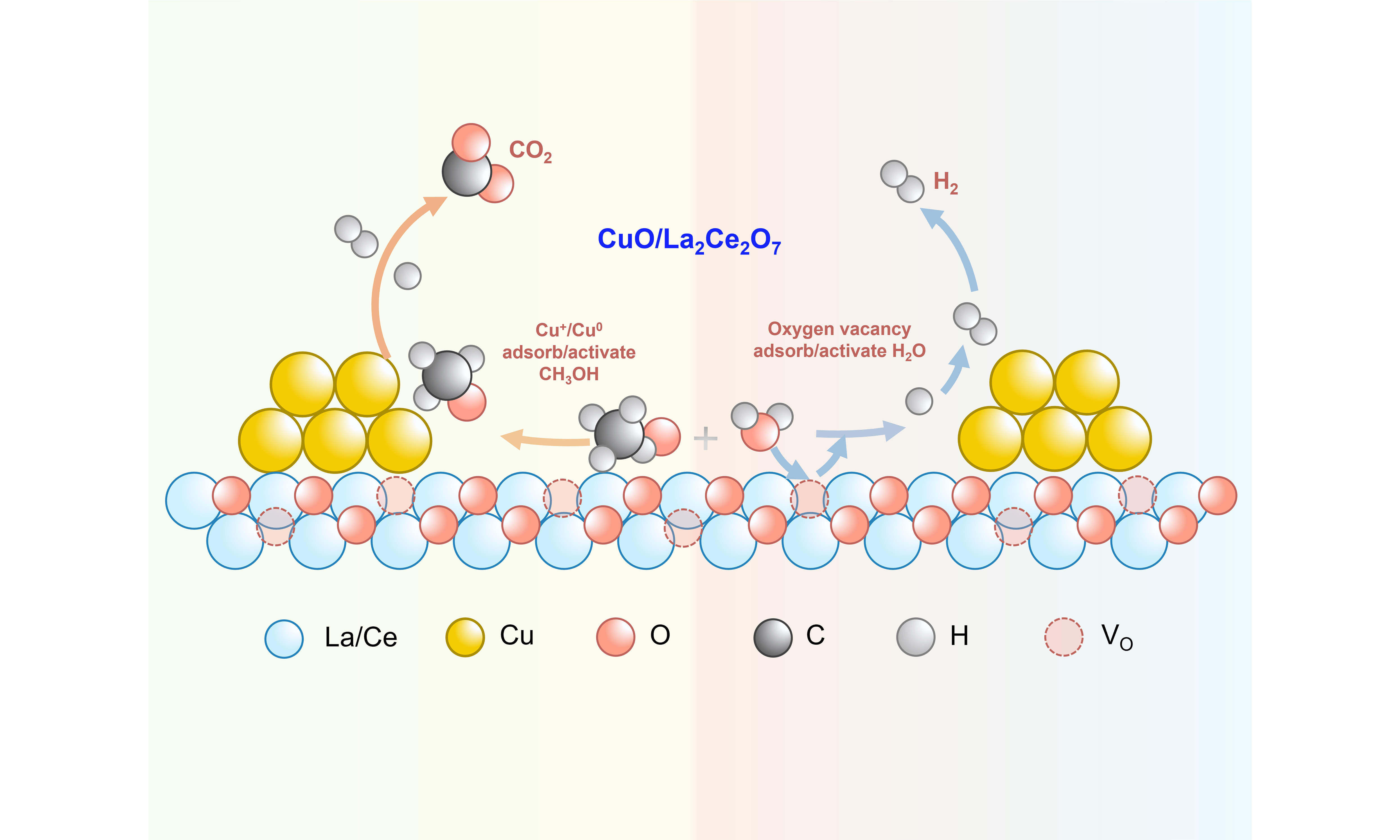
Developing efficient Cu-based catalysts with high hydrogen production rates and low CO selectivity is essential for methanol steam reforming (MSR) in on-board hydrogen supply systems. Herein, a series of CuO/Ln2Ce2O7 (Ln = La, Nd, Sm, and Y) catalysts supported on defective fluorite-type oxides were prepared and evaluated for MSR. Among the catalysts, CuO/La2Ce2O7 exhibited the highest activity, achieving 741 mmol H2·gcat·h-1 and a relatively low CO selectivity of 1.7% at 360 °C. X-ray diffraction (XRD) and Raman results revealed the highest proportion of surface-adsorbed oxygen species on CuO/La2Ce2O7. Furthermore, 18O2 isotope-exchange experiments showed that this catalyst had the lowest oxygen-exchange onset temperature (145 °C) and the fastest oxygen-exchange rate. CO2-TPD further revealed its largest population of weak basic sites. XPS and Cu Auger analysis also highlighted the importance of the Cu++Cu0 amount in determining catalytic activity. In situ diffuse reflectance infrared Fourier transform spectroscopy (DRIFTS) detected methoxy and formate species on all four catalysts, consistent with a possible formate-mediated pathway. These findings establish a correlation between rare-earth cation selection, surface oxygen mobility, basic sites, Cu redox properties, and MSR performance, providing insights into the design of efficient Cu-based catalysts for MSR.
Keywords


 Download PDF
INTRODUCTION
The growing demand for clean and efficient energy has stimulated the development of hydrogen production technologies. Hydrogen is a promising energy carrier because of its high energy density and zero carbon emissions at the point of use. However, its storage and transportation remain challenging because of safety concerns, high costs, and limited infrastructure[1-3]. Methanol is an attractive liquid hydrogen carrier because it is easy to store and transport and is compatible with existing fuel distribution infrastructure. Methanol steam reforming (MSR) therefore offers a practical route for on-board hydrogen production, particularly for proton exchange membrane fuel cells (PEMFCs)[4,5].
The development of efficient MSR catalysts remains essential for achieving high hydrogen production rates while minimizing CO formation. Ni-based catalysts generally exhibit good reforming activity, but their tendency to produce CO can compromise PEMFC performance[6-10]. Noble-metal catalysts often provide high activity and durability, although their high cost limits large-scale application[11,12]. Cu-based catalysts are attractive because of their relatively low cost and favorable selectivity toward hydrogen-rich products under suitable reaction conditions[13-15]. However, Cu species can undergo sintering during prolonged operation, leading to the loss of accessible active sites and reduced catalytic stability[15-19]. Previous studies have demonstrated that interfacial engineering can improve the performance of Cu-based catalysts. For example, interface-hydroxyl engineering on an inverse ZrO2/Cu catalyst enabled CO-free hydrogen production with stable operation over 200 h[20]. Jiang et al. optimized the Cu+/Cu0 ratio through CrOx modification, reducing the CO selectivity to 0.16%, achieving methanol conversion as high as 93.2%, and inhibiting Cu sintering[21]. These findings highlight the importance of controlling both the Cu active sites and their interactions with the surrounding oxide support.
The physicochemical properties of oxide supports play a crucial role in determining the dispersion, redox behavior, and catalytic performance of supported Cu species. In particular, strong metal-support interactions can stabilize dispersed Cu species and regulate interfacial charge transfer and oxygen exchange[15,19,22]. Our previous studies have shown that Cu+ and Cu0 sites contribute differently to reactant activation during MSR. Cu+ sites favor CH3OH adsorption and activation, whereas Cu0 sites contribute to H2O adsorption and activation. A suitable balance between these two types of sites is therefore important for achieving high catalytic activity. For example, Jiang et al. reported enhanced hydrogen production over Cu supported on α-MoC, which was attributed to strong interfacial bonding between Cu and the support[23]. These results suggest that tailoring the support properties and Cu-support interface is a promising strategy for improving MSR performance.
Ce-based oxides are promising supports because their Ce3+/Ce4+ redox couple and oxygen-defect structures can facilitate oxygen storage and exchange[24-26]. Introducing rare-earth cations at the A sites of Ln2Ce2O7 (Ln = rare-earth element) provides an additional means of tuning the crystal structure, oxygen-defect concentration, and surface basicity. Previous work has shown that changing the A-site cation can alter the structural characteristics of Ln2Ce2O7 and influence its catalytic properties[27,28]. In particular, variations in the rare-earth cation can affect the balance between ordered pyrochlore and disordered defective-fluorite structures. These structural changes may influence oxygen mobility and the surface properties relevant to catalytic reactions. However, the effects of different rare-earth cations on the physicochemical properties and MSR performance of CuO/Ln2Ce2O7 catalysts have not been systematically clarified. In particular, the relationships among surface oxygen species, oxygen-exchange behavior, surface basicity, Cu redox properties, and catalytic performance remain to be established for this catalyst series.
In this work, a series of CuO/Ln2Ce2O7 catalysts (Ln = La, Nd, Sm, and Y) were prepared and evaluated for MSR. To the best of our knowledge, this is the first application of this defective-fluorite Ln2Ce2O7 support family in MSR. Building on our previous studies of rare-earth-oxide-supported Cu catalysts and Cu+/Cu0 regulation, the present work focuses on how A-site rare-earth-cation selection within the Ln2Ce2O7 series influences catalytic activity and stability. A combination of X-ray diffraction (XRD), Raman spectroscopy, X-ray photoelectron spectroscopy (XPS), H2 temperature-programmed reduction (H2-TPR), CO2 temperature-programmed desorption (CO2-TPD), transmission electron microscopy (TEM), in situ diffuse reflectance infrared Fourier transform spectroscopy (DRIFTS), and 18O2 isotope-exchange experiments was used to examine the relationships among structural properties, surface oxygen species, oxygen-exchange behavior, surface basicity, Cu dispersion, Cu redox properties, and MSR performance. This comparative study aims to clarify the role of the rare-earth cation in regulating these interconnected properties and to provide guidance for designing Cu-based MSR catalysts with improved hydrogen production performance and low CO selectivity.
EXPERIMENTAL
Catalyst preparation
Ln2Ce2O7 defective fluorite-type oxide supports with different A-site rare-earth cations were synthesized by coprecipitation. Stoichiometric amounts of analytical-grade Ce(NO3)4·6H2O and Ln(NO3)3·xH2O were dissolved in deionized water under continuous stirring to form a clear mixed solution. Aqueous ammonia was added dropwise to adjust the pH to 9, ensuring complete precipitation of the metal cations. The suspension was stirred at room temperature for 2 h at 500 rpm. The precipitate was collected by vacuum filtration and washed repeatedly with deionized water until the total dissolved solids in the filtrate were below 20 ppm. The filter cake was dried at 110 °C for 12 h, ground into a fine powder, and calcined at 600 °C for 4 h at a heating rate of 2 °C·min-1 to obtain the Ln2Ce2O7 supports.
CuO/Ln2Ce2O7 (Ln = La, Nd, Sm, and Y) catalysts were prepared by wet impregnation. In a typical synthesis, 1.86 g of Ln2Ce2O7 support and a calculated amount of analytical-grade Cu(NO3)2 (corresponding to a CuO loading of 7 wt.%) were dispersed in deionized water. The total mass of CuO and Ln2Ce2O7 was fixed at 2 g. The suspension was stirred at room temperature and then evaporated to dryness in a water bath at 90 °C. The obtained solid was ground and calcined at 400 °C for 4 h at a heating rate of 2 °C·min-1. After cooling and regrinding, the CuO/Ln2Ce2O7 catalysts were obtained. The Cu contents of all the catalysts were validated by ICP-OES [Supplementary Table 1] and agreed with the calculated amounts within experimental error.
Catalyst characterization
The physicochemical properties of the catalysts were examined by XRD, Raman spectroscopy, XPS, ICP-OES, N2 adsorption-desorption, N2O titration, TEM, high-resolution transmission electron microscopy (HRTEM), scanning transmission electron microscopy (STEM)-mapping, H2-TPR, CO2-TPD, and in situ DRIFTS. Detailed instrument models, experimental procedures, reaction conditions, and operating parameters are provided in the Supplementary Materials.
Catalytic performance evaluation
The catalytic performance of the catalysts for the MSR was evaluated in a fixed-bed quartz tubular microreactor (i.d. = 6 mm) at 1 atm. Typically, 100 mg of sample was first reduced in situ in a 10 vol% H2/Ar flow of 30 mL·min-1 at 300 °C for 40 min. Then, the reaction feedstock with a CH3OH/H2O molar ratio of 1/1.5 at a flow rate of 0.05 mL·min-1 was brought into a pre-heated chamber using a micro pump, in which the temperature was controlled at 200 °C to completely evaporate the liquids into steam and then mix with an Ar flow. The weight hourly space velocity (WHSV) of the reaction based on the liquid flow is 27 h-1. After the reaction, the product gas mixture flow was condensed by a cold-water trap first, and then analyzed online on a GC9310 gas chromatograph equipped with a TDX-01 column and a thermal conductivity detector using a 99.99% Ar flow as the carrier gas to monitor the concentrations of H2, CO2, and CO.
The CH3OH conversion (XMeOH), H2 production rate (
CH3OH conversion:
CO2 selectivity:
CO selectivity:
In Equation 1, Fout is the flow rate of reforming gas under standard conditions (mL·min-1); Fin represents the inlet flow rate (mL·min-1) of the CH3OH and H2O solution mixture, whose density (ρ = 0.9, g·mL-1) was measured with a density meter; in Equations 2 and 3, ФCO and
Here, 0.05 mL·min-1 is the volumetric flow rate of the liquid feed, and 0.9 g·mL-1 is the density of the liquid methanol-water mixture.
The Arrhenius plots are obtained for all the catalysts with CH3OH conversions below ~ 10% to obtain the differential reaction rates (Rw and RS) in the kinetic regime. By adjusting the catalyst amount, the methanol conversions were collected over the temperature range of 180-210 °C. The turnover frequencies (TOFs) were calculated based on the exposed surface Cu active sites using metallic Cu dispersion determined by N2O titration of the reduced catalysts. The equations to calculate Rw and TOF are listed here:
Rw is the CH3OH conversion rate normalized by catalyst mass. RF is the reaction feed flow rate (mL·min-1), ρ is the density of the reaction feed (g·mL-1) measured with a density analyzer,
MCu (63.5 g/mol) is the atomic molar mass of Cu, XCu is the metal content (gCu/gcat), DCu is the Cu dispersion. The total Cu content used for TOF calculation was 7 wt.% as CuO, as determined by ICP-OES [Supplementary Table 1]. All surface Cu atoms were assumed to be active sites for the MSR reaction.
RESULTS AND DISCUSSION
Structural and textural properties of the catalysts
XRD was used to examine the crystalline phases and structural properties of the prepared catalysts. As shown in Figure 1A and B, the diffraction patterns were consistent with the standard powder diffraction file (PDF) reference patterns of Ln2Ce2O7 (Ln = La, Nd, Sm, and Y), confirming the formation of the defective fluorite structure. After CuO loading, all catalysts retained the crystal structure of their respective supports. Weak characteristic CuO diffraction peaks were observed for all four catalysts, suggesting slight aggregation of CuO species. The XRD patterns of the reduced and spent catalysts are presented in Supplementary Figure 1A and B. The defective fluorite framework was retained after reduction and MSR, while CuO was reduced to metallic Cu under reducing conditions. These results indicate that the support framework exhibits good structural stability under the investigated conditions.
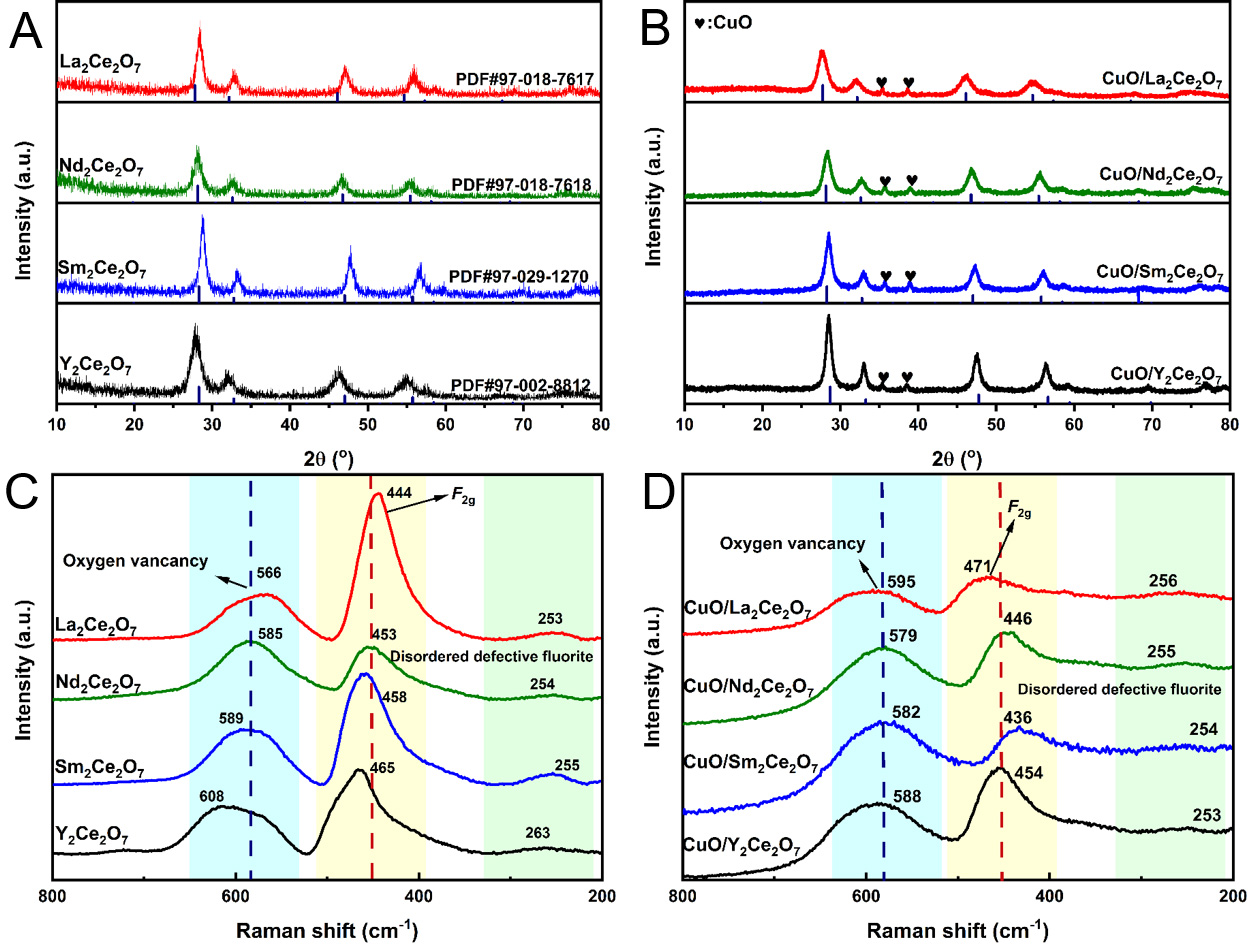
Figure 1. (A) XRD patterns of the supports; (B) XRD patterns of the fresh catalysts; (C) Raman spectra of the supports; (D) Raman spectra of the fresh catalysts. XRD: X-ray diffraction.
Raman spectra provided further insight into the structural features of the supports and catalysts. As shown in Figure 1C, the band at approximately 460 cm-1 was assigned to the F2g vibrational mode of the defective fluorite framework[29,30]. Additional bands at approximately 256 and 580 cm-1 were associated with oxygen-anion disorder and surface oxygen vacancies, respectively, arising from the disordered arrangement of A3+ and Ce4+ cations[31,32]. No sharp peak splitting characteristic of an ordered structure was observed, supporting the assignment of a defective fluorite structure. After CuO impregnation, these characteristic Raman features remained unchanged [Figure 1D], indicating that CuO loading did not significantly alter the support structure. As shown in Supplementary Figure 2A and B, broad bands at approximately 460 and 580 cm-1 were also observed for all catalysts, while sharp peak splitting associated with a well-ordered structure was absent. These observations further support the preservation of the defective fluorite framework under reducing and MSR conditions.
The textural properties of the catalysts were investigated by N2 adsorption-desorption measurements. As shown in Figure 2A, all four catalysts exhibited type IV adsorption isotherms with H3-type hysteresis loops. The corresponding pore size distributions [Figure 2B] indicated that the catalysts were predominantly mesoporous, with mesopores likely arising from particle aggregation. As summarized in Supplementary Table 1, the specific surface areas of the fresh catalysts were slightly lower than those of the corresponding supports. This decrease may be attributed to the additional calcination step or partial blockage of the pore channels by CuO species.
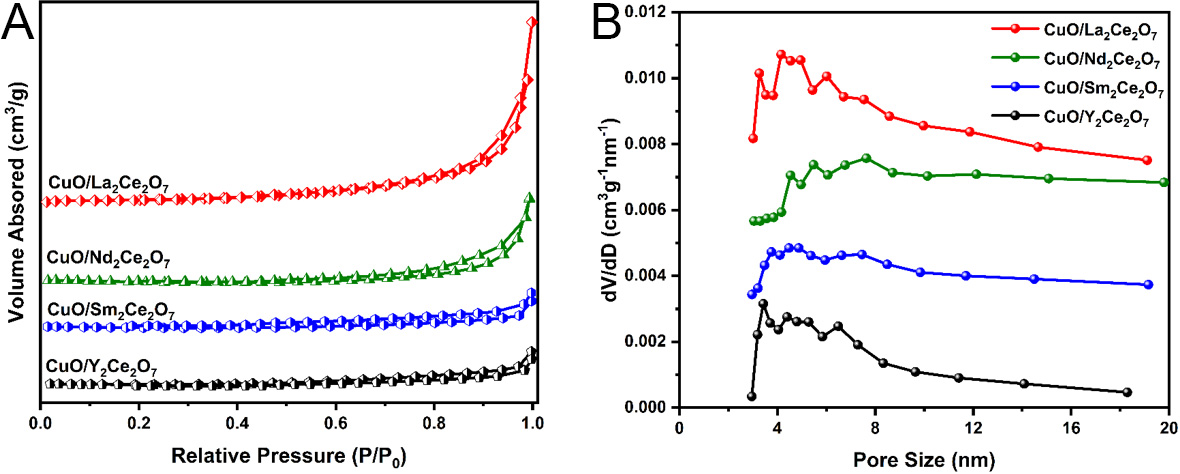
Figure 2. N2 sorption measurements of the fresh catalysts: (A) isotherms and (B) pore size distribution profiles.
HRTEM and STEM elemental mapping were used to examine the microstructure and elemental distribution of the catalysts. As shown in Figure 3A-D, lattice spacings of 0.327 and 0.312 nm were observed in the HRTEM images. These spacings were assigned to the (222) plane of La2Ce2O7 and the (111) planes of Nd2Ce2O7, Sm2Ce2O7, and Y2Ce2O7, respectively, in agreement with the XRD results. STEM elemental mapping [Figure 3E-H] revealed a relatively homogeneous distribution of the constituent elements throughout the catalysts. Cu-containing species were also distributed across the support surfaces, although some local particle agglomeration was observed.
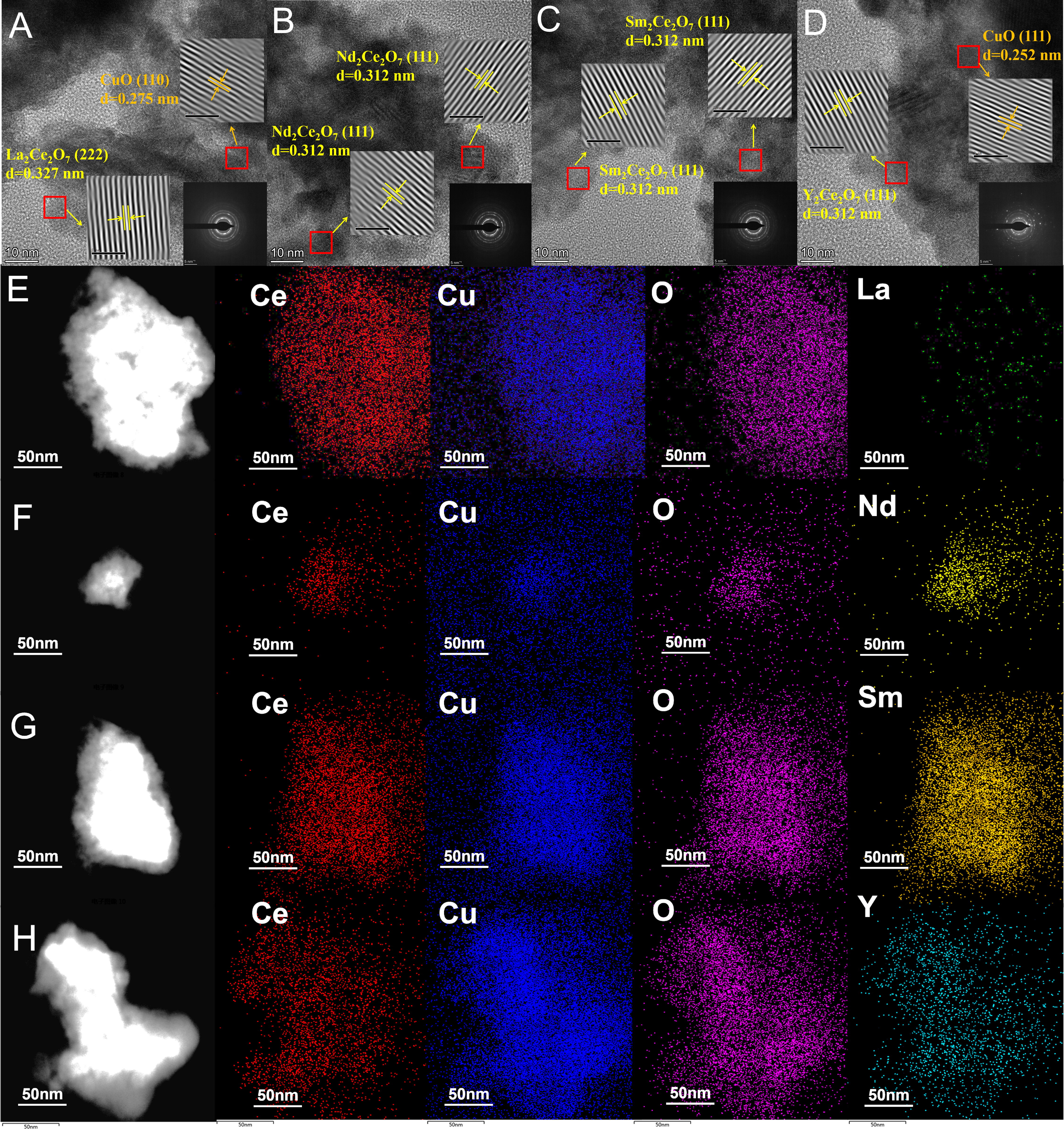
Figure 3. HRTEM images of all the catalysts: (A) CuO/La2Ce2O7; (B) CuO/Nd2Ce2O7; (C) CuO/Sm2Ce2O7; (D) CuO/Y2Ce2O7; STEM-mapping results of all the catalysts: (E) CuO/La2Ce2O7; (F) CuO/Nd2Ce2O7; (G) CuO/Sm2Ce2O7; (H) CuO/Y2Ce2O7. HRTEM: High-resolution transmission electron microscopy; STEM: scanning transmission electron microscopy。
MSR performance and kinetic analysis
The catalytic performance of the catalysts for MSR was evaluated under atmospheric pressure. Before the reaction, each catalyst was reduced in a 10 vol% H2/Ar flow at 300 °C for 40 min. To determine the optimal CuO loading, a series of CuO/La2Ce2O7 catalysts with nominal CuO loadings of 1, 3, 5, 7, 9, 11, and 13 wt.% were prepared and evaluated. As shown in Supplementary Figure 3A, the characteristic CuO diffraction peaks became more pronounced with increasing CuO loading, indicating an increase in the amount of crystalline CuO. The H2 production rate increased with Cu loading from 1 to 7 wt.% and then decreased at higher loadings [Supplementary Figure 3B]. The maximum H2 production rate was approximately 741 mmol H2·gcat·h-1 at a Cu loading of 7 wt.%, identifying this loading as optimal within the investigated range. Accordingly, the 7 wt.% CuO/La2Ce2O7 catalyst was selected for further comparison with the other catalysts.
As shown in Figure 4A, the catalytic activity increased with reaction temperature for all four catalysts. Among them, CuO/La2Ce2O7 exhibited the highest activity, achieving 54% CH3OH conversion at 360 °C, whereas CuO/Sm2Ce2O7 showed the lowest conversion. CuO/La2Ce2O7 also delivered the highest H2 production rate, reaching 741 mmol H2·gcat·h-1 [Figure 4B]. In addition, CuO/La2Ce2O7 and CuO/Y2Ce2O7 exhibited high CO2 selectivity and relatively low CO selectivity [Figure 4C].
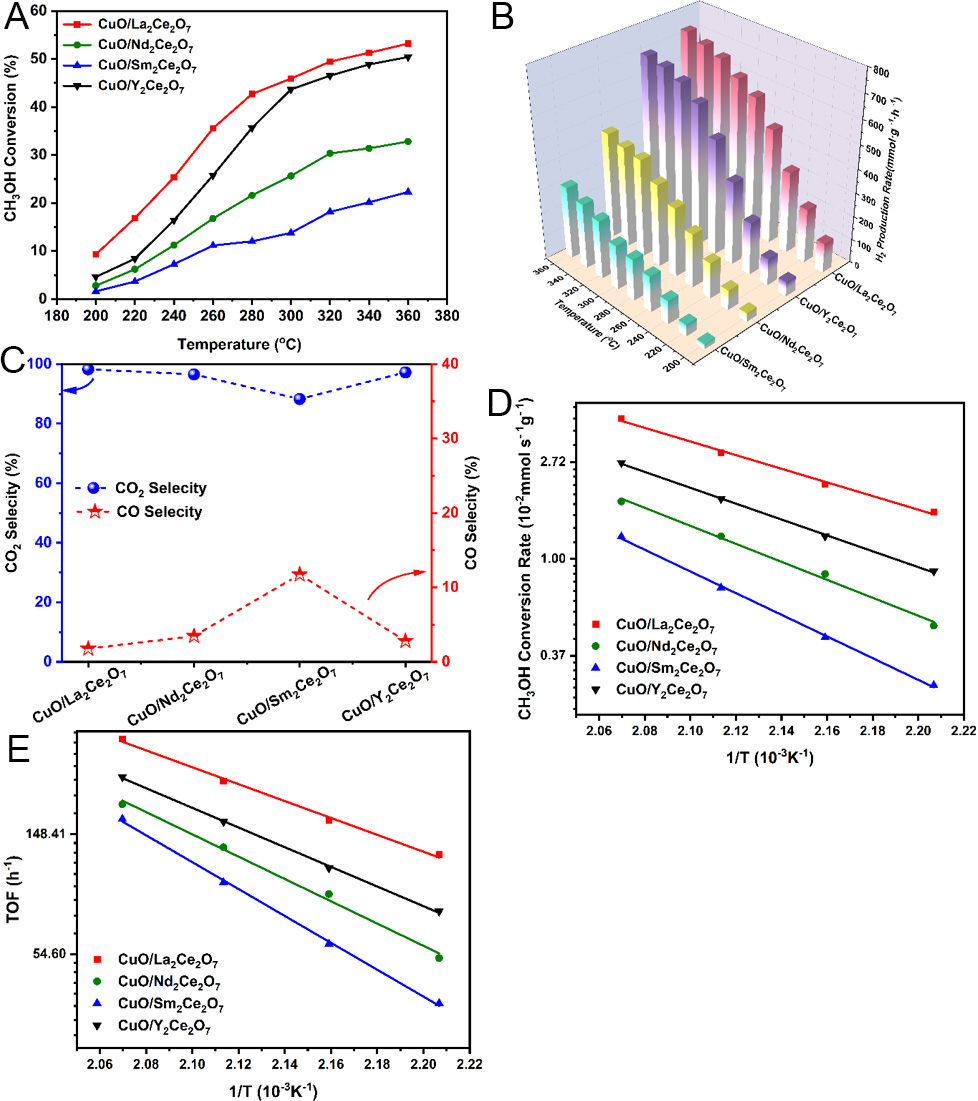
Figure 4. MSR reaction performance of CuO/Ln2Ce2O7 (Ln = La, Nd, Sm, and Y) catalysts. (A) CH3OH conversion; (B) H2 production rate; (C) CO2 and CO selectivities at 360 °C; (D) Rw-based Arrhenius plots; (E) TOF-based Arrhenius plots. MSR: Methanol steam reforming; TOF: turnover frequency.
The stability of the four catalysts was further evaluated by monitoring their H2 production rates at 180 °C following pretreatment in a 10 vol% H2/Ar flow at 300 °C for 40 min. As shown in Supplementary Figure 4A-D, CuO/La2Ce2O7 and CuO/Y2Ce2O7 maintained measurable H2 production over 50 h, although their H2 production rates decreased by approximately 44% and 48%, respectively. In contrast, the H2 production rate of CuO/Nd2Ce2O7 decreased from approximately 195 to 77 mmol H2·gcat·h-1 within 30 h. CuO/Sm2Ce2O7 exhibited a more rapid decline, with its H2 production rate decreasing from approximately 150 to 60 mmol H2·gcat·h-1 within 10 h. These results reveal differences in the sustained catalytic performance of the four catalysts, with CuO/La2Ce2O7 and CuO/Y2Ce2O7 maintaining H2 production for longer periods under the tested conditions. The MSR performance of the CuO/La2Ce2O7 catalyst in this work is also compared in Supplementary Figure 5 with those typical catalysts reported previously by other researchers.
To compare the intrinsic catalytic properties of the four catalysts, kinetic measurements were conducted under differential reaction conditions. CH3OH conversion was maintained below 10% by adjusting the catalyst amount and reactant flow rate. Although these conditions were intended to minimize mass- and heat-transfer effects, internal and external diffusion limitations could not be completely ruled out. The kinetic measurements of Rw and TOF were performed over the temperature range of 180-210 °C for Arrhenius fitting. For a direct comparison of intrinsic activity, the specific Rw and TOF values obtained at 210 °C are presented in Table 1. The Arrhenius plots based on Rw and TOF are presented in Figure 4D and E, respectively. As summarized in Table 1 and Supplementary Table 2, the Rw values followed the order CuO/La2Ce2O7 (4.3 × 10⁻² mmol s-1·gcat-1) > CuO/Y2Ce2O7 (2.7 × 10⁻² mmol s-1·gcat-1) > CuO/Nd2Ce2O7 (1.8 × 10⁻² mmol s-1·gcat-1) > CuO/Sm2Ce2O7 (1.3 × 10⁻² mmol s-1·gcat-1). The TOF values exhibited the same trend, reaching 329, 239, 191, and 168 h-1, respectively. These results demonstrate that CuO/La2Ce2O7 exhibited the highest mass-normalized reaction rate and the highest turnover frequency among the four catalysts.
Catalytic kinetics and Cu dispersion of the prepared catalysts
| Catalysts | Rw (10-2 mmol ·s-1 ·g-1)a | Ea (kJ ·mol-1)b | TOF (h-1)c | N2O titration resultsd | ||
| Cu active surface area (m2·gCu-1) | Cu grain size (nm) | DCu (%) | ||||
| CuO/La2Ce2O7 | 4.3 | 59 | 329 | 295.0 | 2.4 | 43.6 |
| CuO/Nd2Ce2O7 | 1.8 | 77 | 191 | 216.1 | 3.3 | 31.9 |
| CuO/Sm2Ce2O7 | 1.3 | 93 | 168 | 170.1 | 4.1 | 25.1 |
| CuO/Y2Ce2O7 | 2.7 | 68 | 239 | 252.9 | 2.8 | 37.4 |
The Ea derived from the Arrhenius plots were 59, 68, 77, and 93 kJ mol-1 for CuO/La2Ce2O7, CuO/Y2Ce2O7, CuO/Nd2Ce2O7, and CuO/Sm2Ce2O7, respectively. The lower apparent activation energy of CuO/La2Ce2O7 was consistent with its higher reaction rate and TOF, whereas CuO/Sm2Ce2O7 exhibited the highest apparent activation energy and the lowest catalytic activity. This trend suggests that the rare-earth cation influences the kinetic behavior of the catalysts.
The N2O titration results in Table 1 further revealed differences in the accessible Cu surface area, Cu grain size, and Cu dispersion among the catalysts. CuO/La2Ce2O7 exhibited the largest Cu active surface area (295.0 m2·gCu-1), the smallest Cu grain size (2.4 nm), and the highest Cu dispersion (43.6%). In contrast, CuO/Sm2Ce2O7 showed the smallest Cu active surface area (170.1 m2·gCu-1), the largest Cu grain size (4.1 nm), and the lowest Cu dispersion (25.1%). CuO/Nd2Ce2O7 and CuO/Y2Ce2O7 exhibited intermediate values. The Cu dispersion followed the order CuO/La2Ce2O7 (43.6%) > CuO/Y2Ce2O7 (37.4%) > CuO/Nd2Ce2O7 (31.9%) > CuO/Sm2Ce2O7 (25.1%), consistent with the trends in Rw and TOF. The correlation between Cu dispersion and catalytic activity suggests that the greater accessibility of Cu surface sites contributes to the superior performance of CuO/La2Ce2O7. However, the differences in apparent activation energy also indicate that variations in the intrinsic reactivity of the accessible sites may contribute to the observed activity differences. Overall, these results establish a clear relationship between Cu dispersion, apparent kinetic parameters, and MSR performance across the catalyst series.
Surface chemical states and oxygen-exchange behavior
XPS was used to investigate the surface chemical states of the catalysts. The Ce 3d spectra [Figure 5A] were deconvoluted into ten peaks (v0-v‴ and u0-u‴) following a previously reported procedure. The v and u series correspond to the Ce 3d5/2 and 3d3/2 components, respectively. The v′ and u′ peaks were assigned to Ce3+, whereas the remaining peaks were attributed to Ce4+[33]. The surface Ce3+ fraction followed the order CuO/La2Ce2O7 > CuO/Y2Ce2O7 > CuO/Nd2Ce2O7 > CuO/Sm2Ce2O7. The corresponding Ce3+/ (Ce3+ + Ce4+) ratios are summarized in Table 2 and provide further insight into the surface defect chemistry of the catalysts.
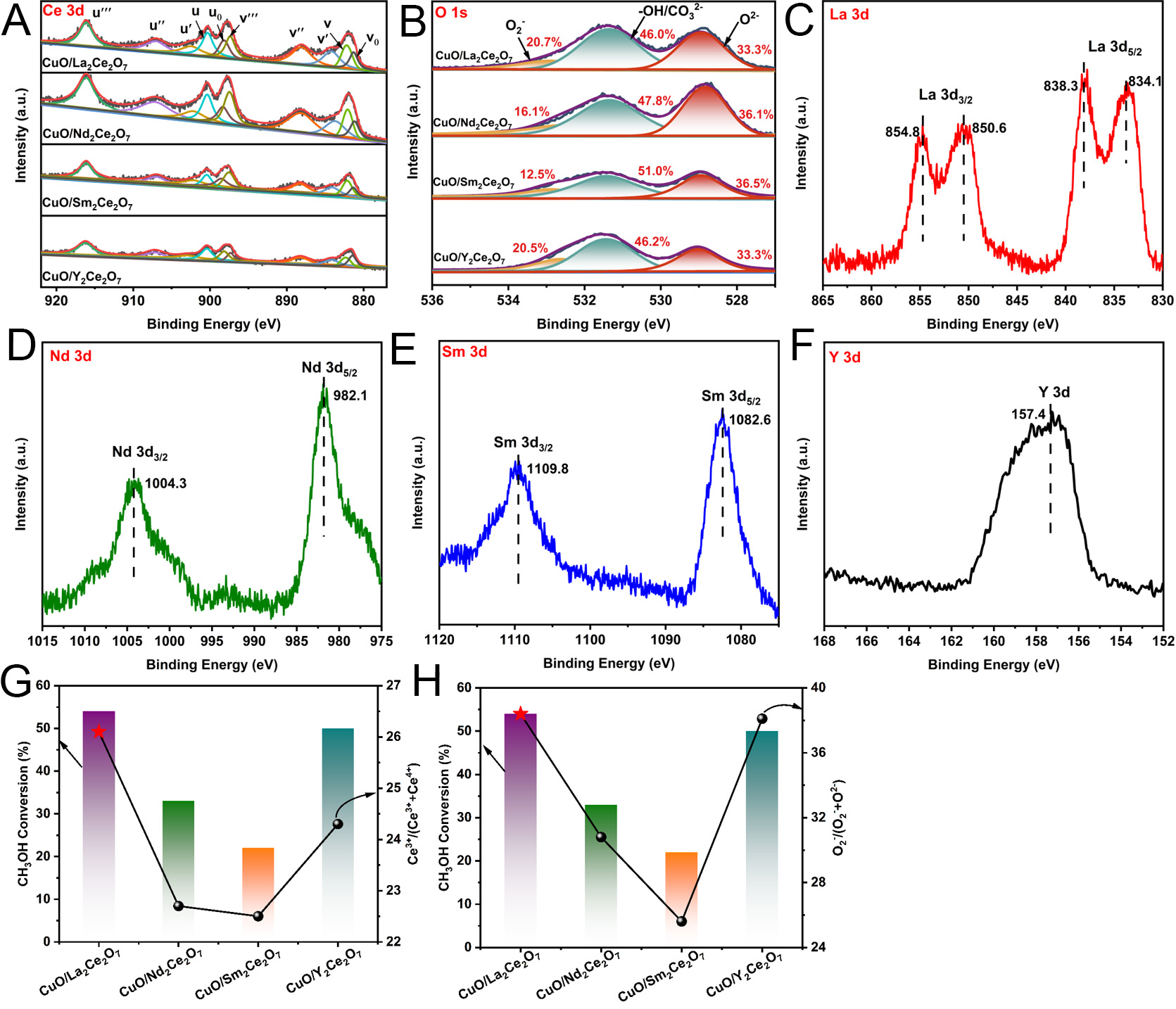
Figure 5. XPS spectra of reduced catalysts: (A) Ce 3d; (B) O 1s. In (A), the black lines represent experimental data, colored lines represent fitted peaks, and the red line represents the cumulative fit. In (B), the black lines represent experimental data, colored lines represent fitted peaks, and the purple line represents the cumulative fit. (C) La 3d; (D) Nd 3d; (E) Sm 3d; (F) Y 3d. (G) Relationship between CH3OH conversion and Ce3+/(Ce3++Ce4+); (H) Relationship between CH3OH conversion and O2-/ (O2-+O2-). XPS: X-ray photoelectron spectroscopy.
Quantified XPS Cu 2p, O 1s, and Ce 3d results of the catalysts
| Catalyst | Fraction of low-valence Cu (Cu0+Cu+)/ (Cu0+Cu++ Cu2+) (%) (reduced/spent)a | Cu+/ Cu0 ratio(reduced/spent)b | O1s B.E (eV) / relative amountc | Ce 3d B.E (eV) / relative amountd | |||
| O2- (adsorbed oxygen) | -OH/CO32- | O2- (lattice oxygen) | O2-/ (O2-+O2-) (%) | Ce3+/(Ce3++Ce4+) (%) | |||
| CuO/La2Ce2O7 | 77.8/74.7 | 1.02/1.00 | 532.9/20.7 | 531.4/46.0 | 528.9/33.3 | 38.4 | 26.1 |
| CuO/Nd2Ce2O7 | 63.5/59.2 | 0.79/0.72 | 532.7/16.1 | 531.4/47.8 | 528.8/36.1 | 30.8 | 22.7 |
| CuO/Sm2Ce2O7 | 52.4/48.8 | 0.67/0.46 | 532.9/12.5 | 531.4/51.0 | 528.9/36.5 | 25.5 | 22.5 |
| CuO/Y2Ce2O7 | 71.7/65.2 | 0.87/0.82 | 532.6/20.5 | 531.4/46.2 | 529.0/33.3 | 38.1 | 24.3 |
The O 1s spectra were further analyzed to investigate the distribution of surface oxygen species and its relationship with catalytic performance [Figure 5B]. Peak fitting allowed the categorization of the O1s spectra into 3 types of oxygen species. The peak around 529.0 eV is attributable to surface lattice O2-, the peak around 531.5 eV corresponds mainly to -OH groups, and the peak near 533.0 eV is assignable to active superoxide O2- anions[34]. To quantitatively evaluate the evolution of these oxygen species, it is essential to distinguish their chemical notations. The lattice oxygen is denoted as O2- (where each oxygen atom has a valence of -2), whereas the surface-adsorbed superoxide is denoted as O2- (where two oxygen atoms share one electron, averaging a valence of
The La 3d, Nd 3d, Sm 3d, and Y 3d spectra [Figure 5C-F] were also examined to determine the oxidation states of the rare-earth elements. The observed binding energies were consistent with the predominantly trivalent states of La, Nd, Sm, and Y in the respective catalysts. To further examine the relationships between surface chemical properties and catalytic performance, the Ce3+/ (Ce3+ + Ce4+) and O2-/ (O2- + O2-) ratios were plotted against CH3OH conversion in Figure 5G and H, respectively. CuO/La2Ce2O7 and CuO/Y2Ce2O7 exhibited relatively high Ce3+ fractions and O2-/ (O2- + O2-) ratios, consistent with their higher catalytic activities. These correlations suggest that the surface redox properties and adsorbed oxygen species are associated with MSR performance. The differences in Ce3+ content may also reflect variations in the defect chemistry of the supports, which could influence oxygen-related surface processes during MSR.
The XPS O 1s results suggested a potential relationship between surface oxygen species and catalytic performance. Therefore, 18O2 isotope-exchange experiments were conducted to compare the oxygen-exchange behavior of the CuO/Ln2Ce2O7 (Ln = La, Nd, Sm, and Y) catalysts [Figure 6A-D]. Oxygen isotope exchange on metal oxides can proceed through two pathways. In the R1 pathway, known as simple hetero-exchange, gaseous 18O2 exchanges with lattice 16O to form 16O18O. In the R2 pathway, known as multiple hetero-exchange, gaseous 18O2 reacts with lattice oxygen to form 16O2, while 18O is incorporated into the catalyst lattice[36,37]. The formation of 16O18O and 16O2 was monitored by mass spectrometry to evaluate the oxygen-exchange behavior of the catalysts.
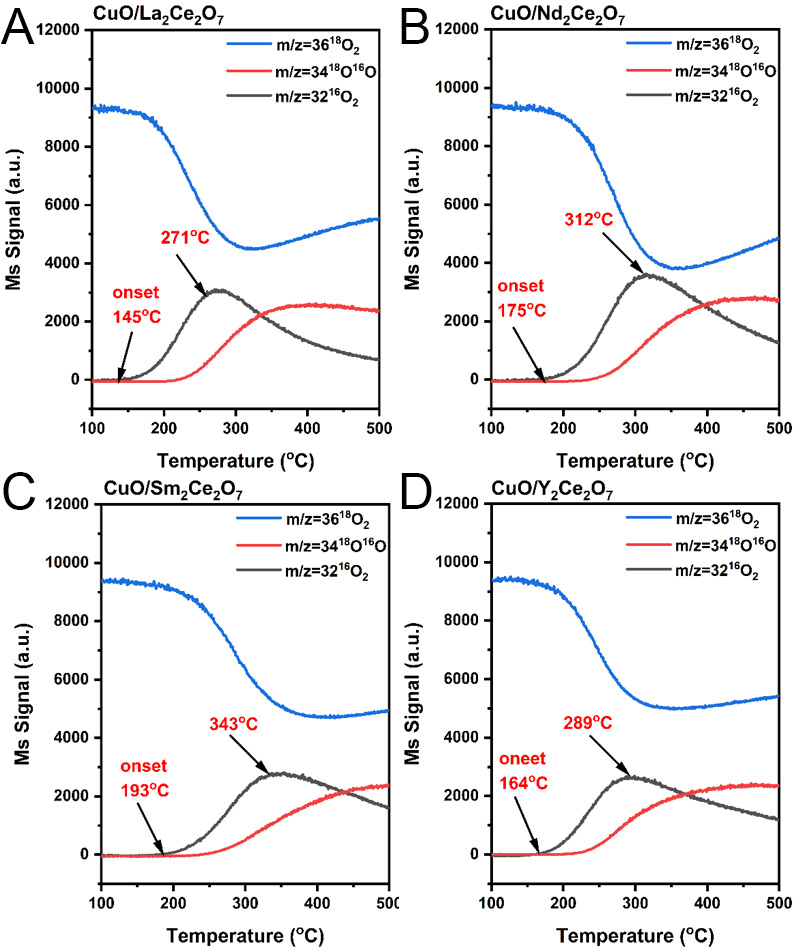
Figure 6. 18O2 isotope-exchange experiments over the catalysts, (A) CuO/La2Ce2O7; (B) CuO/Nd2Ce2O7; (C) CuO/Sm2Ce2O7, and (D) CuO/Y2Ce2O7.
As the temperature increased, the mass signals associated with 16O18O and 16O2 increased, indicating enhanced oxygen isotope exchange. Among the four catalysts, CuO/La2Ce2O7 exhibited the lowest oxygen-exchange onset temperature, approximately 145 °C, and the lowest temperature for the maximum 16O2 signal, approximately 271 °C [Figure 6A]. The corresponding onset and peak temperatures were approximately 175 and 312 °C for CuO/Nd2Ce2O7, 193 and 343 °C for CuO/Sm2Ce2O7, and 164 and 289 °C for CuO/Y2Ce2O7, respectively [Figure 6B-D]. These results indicate that oxygen isotope exchange occurred more readily on CuO/La2Ce2O7 than on the other catalysts. CuO/Y2Ce2O7 exhibited the second-lowest onset and peak temperatures, whereas CuO/Sm2Ce2O7 showed the highest temperatures for both features.
The oxygen-exchange trends are consistent with the relatively high catalytic activities of CuO/La2Ce2O7 and CuO/Y2Ce2O7. The lower onset and peak temperatures suggest that oxygen exchange is facilitated on these catalysts, potentially reflecting differences in oxygen mobility and surface redox properties. Such properties may contribute to the activation of oxygen-containing reactants and the overall MSR performance. However, the isotope-exchange results alone do not establish a direct causal relationship between oxygen mobility and catalytic activity.
Copper speciation and redox stability under MSR conditions
The Cu oxidation state is an important factor influencing MSR performance[38]. Therefore, Cu 2p XPS and Cu LMM Auger spectra were collected to characterize the copper species in the reduced and spent catalysts. The Cu 2p spectra of the reduced catalysts [Figure 7A] revealed the coexistence of Cu2+ and low-valence copper species (Cu+ and Cu0) on all four catalysts[39]. However, Cu+ and Cu0 cannot be reliably distinguished by Cu 2p XPS alone. Cu LMM Auger spectra were therefore analyzed to distinguish these species and determine the Cu+/Cu0 ratios [Figure 7B-E].
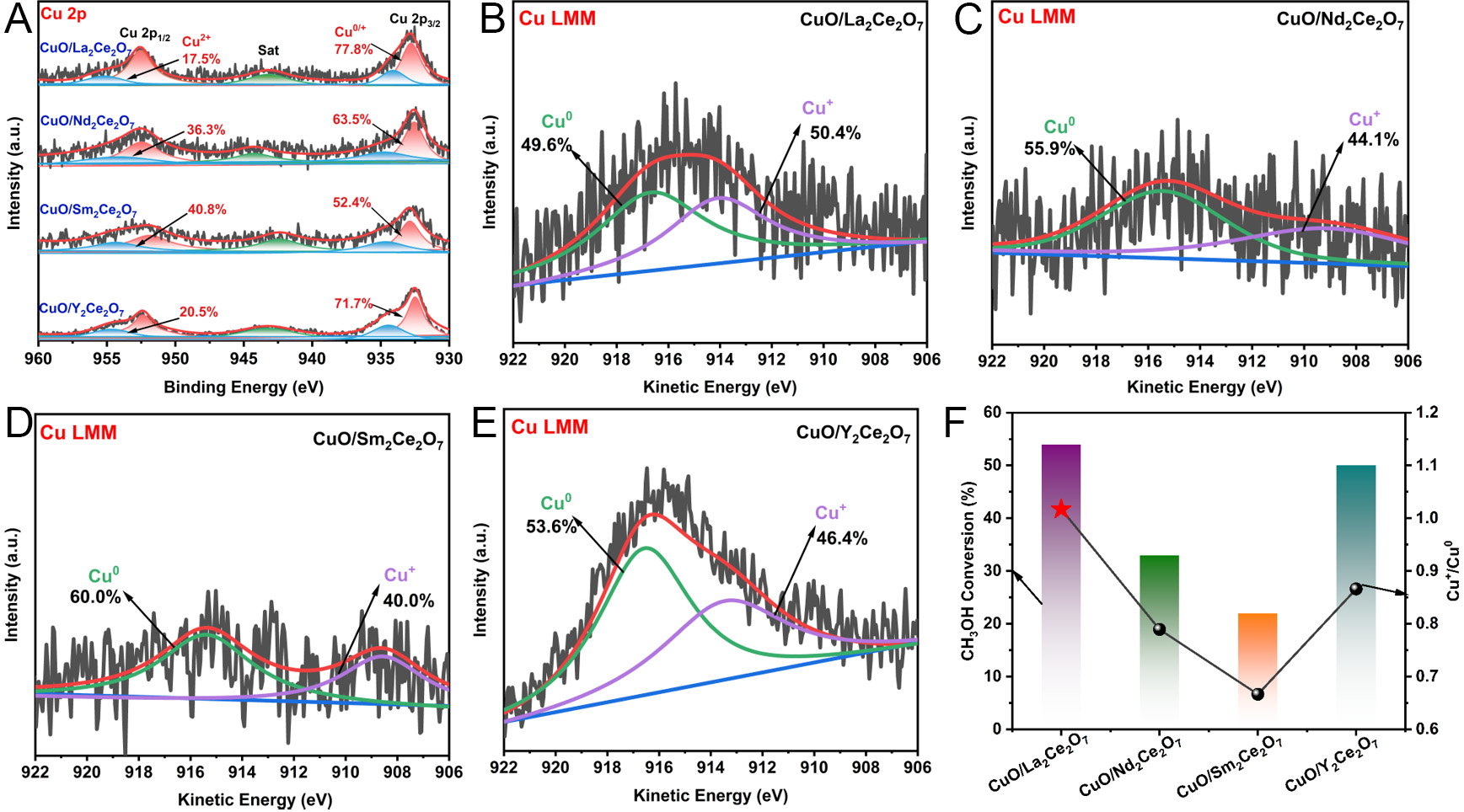
Figure 7. (A) XPS Cu 2p spectra of the reduced catalysts; Auger spectra of the reduced catalysts: (B) CuO/La2Ce2O7; (C) CuO/Nd2Ce2O7; (D) CuO/Sm2Ce2O7; (E) CuO/Y2Ce2O7; [In (A-E), the black lines represent experimental data, the colored lines represent fitted peaks, the red lines represent the cumulative fit, and the blue lines represent the background]; (F) CH3OH conversion at 360 °C versus Cu+/Cu0 ratio. XPS: X-ray photoelectron spectroscopy.
As summarized in Figure 7F and Table 2, the Cu+/Cu0 ratio of the reduced catalysts followed the order CuO/La2Ce2O7 (1.02) > CuO/Y2Ce2O7 (0.87) > CuO/Nd2Ce2O7 (0.79) > CuO/Sm2Ce2O7 (0.67). CuO/La2Ce2O7 exhibited the highest CH3OH conversion and the highest Cu+/Cu0 ratio among the four catalysts. This result is consistent with previous studies showing that the balance between Cu+ and Cu0 sites can influence MSR activity[40]. Nevertheless, the activity differences cannot be attributed solely to the Cu+/Cu0 ratio, as the catalysts also differ in Cu dispersion, surface oxygen species, and other physicochemical properties.
The Cu species were further examined after MSR to evaluate changes in their oxidation states under reaction conditions. The Cu 2p spectra of the spent catalysts are presented in Figure 8A, while the corresponding Cu LMM Auger spectra are shown in Figure 8B-E. As summarized in Figure 8F and Table 2, the Cu+/Cu0 ratio decreased after reaction for CuO/Nd2Ce2O7, CuO/Sm2Ce2O7, and CuO/Y2Ce2O7, from 0.79 to 0.72, from 0.67 to 0.46, and from 0.87 to 0.82, respectively. In contrast, the ratio for CuO/La2Ce2O7 remained nearly unchanged, decreasing only slightly from 1.02 to 1.00. The particularly pronounced decrease for CuO/Sm2Ce2O7 suggests a greater change in its surface copper speciation during MSR, whereas CuO/La2Ce2O7 largely retained its initial Cu+/Cu0 balance. These findings indicate that the evolution of copper oxidation states depends on the rare-earth cation in the support. The relatively stable Cu+/Cu0 ratio of CuO/La2Ce2O7, together with its high catalytic activity, suggests that maintaining an appropriate balance of Cu species may contribute to sustained MSR performance.
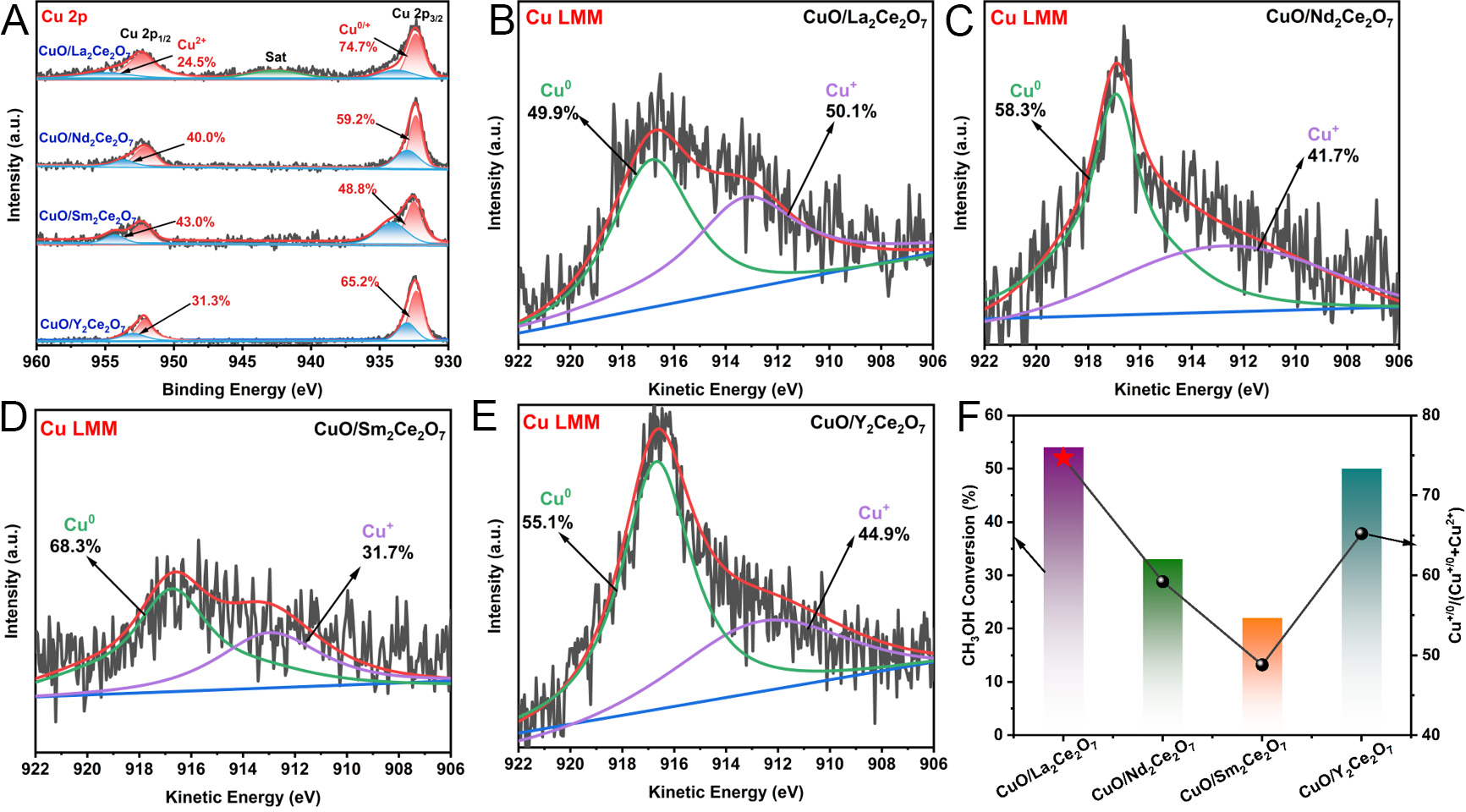
Figure 8. (A) XPS Cu 2p spectra of spent catalysts; Auger spectra of spent catalysts: (B) CuO/La2Ce2O7; (C) CuO/Nd2Ce2O7; (D) CuO/Sm2Ce2O7; (E) CuO/Y2Ce2O7. [In (A-E), the black lines represent experimental data, the colored lines represent fitted peaks, the red lines represent the cumulative fit, and the blue lines represent the background]; (F) methanol conversion at 360 °C versus Cu+/0/(Cu+/0+Cu2+) ratio of spent catalysts. XPS: X-ray photoelectron spectroscopy.
Reducibility and surface basicity
H2-TPR was used to investigate the reduction behavior of the copper species. As shown in Figure 9A, the bare supports exhibited reduction signals at higher temperatures. For the supported catalysts, the main reduction peaks below 300 °C were primarily attributed to the reduction of CuO species. The peak maxima were observed at 252, 207, 197, and 217 °C for CuO/La2Ce2O7, CuO/Nd2Ce2O7, CuO/Sm2Ce2O7, and CuO/Y2Ce2O7, respectively. Notably, the reduction peaks of CuO/Nd2Ce2O7 and CuO/Sm2Ce2O7 associated with the higher-temperature region were less pronounced than those of the other catalysts.
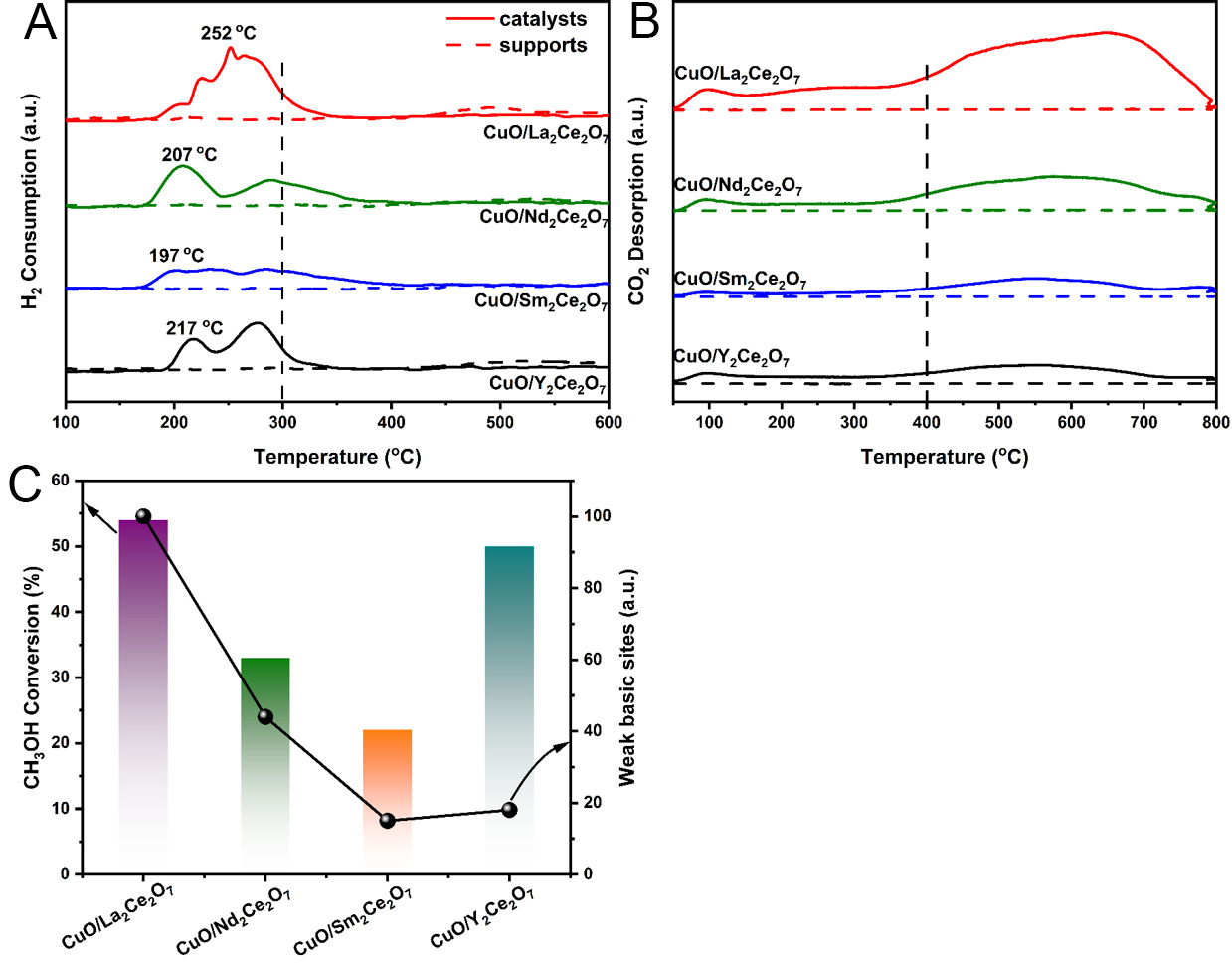
Figure 9. (A) H2-TPR profiles of the catalysts; (B) CO2-TPD patterns of the catalysts; (C) The relationship between CH3OH conversion and the number of weak basic sites. TPR: Temperature-programmed reduction; TPD: temperature-programmed desorption.
After subtracting the H2 consumption of the corresponding bare supports, the H/Cu atomic ratios were calculated and are summarized in Supplementary Table 3[21]. The ratios were close to the theoretical stoichiometric value for the reduction of Cu2+ to metallic Cu0, suggesting that most copper species were reduced under the applied conditions. Deviations from the theoretical value may indicate that a fraction of the copper species remained partially reduced. These results provide further insight into the reduction behavior of the supported copper species.
The reduction peak temperatures also varied with the rare-earth cation in the support. CuO/La2Ce2O7 exhibited the highest reduction temperature (252 °C), followed by CuO/Y2Ce2O7 (217 oC), CuO/Nd2Ce2O7 (207 °C), and CuO/Sm2Ce2O7 (197 °C). The relatively high reduction temperatures of CuO/La2Ce2O7 and CuO/Y2Ce2O7 may indicate stronger interactions between the copper species and the supports. Such interactions may influence copper reducibility and the evolution of active copper species under reaction conditions.
Surface basicity is another property that may influence MSR performance by affecting reactant adsorption and activation[41]. CO2-TPD was therefore used to characterize the surface basic sites of the catalysts. As shown in Figure 9B, the CO2 desorption profiles contained features below and above 400 °C, which were assigned to weak and strong basic sites, respectively. Because MSR was performed below 400 °C in this study, weak basic sites may be particularly relevant to reactant adsorption under the investigated conditions. The quantitative results in Supplementary Table 3 show that CuO/La2Ce2O7 possessed the largest number of weak basic sites among the four catalysts.
Figure 9C compares the CH3OH conversion with the number of weak basic sites. CuO/La2Ce2O7 exhibited both the highest CH3OH conversion and the largest population of weak basic sites. However, CuO/Y2Ce2O7 also showed high CH3OH conversion despite having substantially fewer weak basic sites. This comparison indicates that weak basic sites alone cannot account for the differences in catalytic activity. Instead, their contribution should be considered together with other catalyst properties, including copper dispersion, surface oxygen species, oxygen-exchange behavior, and the Cu+/Cu0 balance.
Surface species and possible reaction pathway probed by in situ DRIFTS
The in situ DRIFTS experiments were conducted on the four catalysts under the same MSR conditions as those used in steady-state reaction tests. The catalysts were pre-reduced at 300 °C in an H2/Ar flow for 40 min. After purging with Ar for 40 min, a methanol and steam gas mixture with a CH3OH/H2O molar ratio of 1:1.5 was introduced, and the infrared signals were collected at 300 °C.
Specifically, the bands at 3,700 and 3,100 cm-1 correspond to the stretching vibrations of the O-H bonds. The bands at 2,830 and 1,057 cm-1 are attributable to C-H and C-O stretching of adsorbed methoxy (OCH3), respectively. The features between 1,370 and 1,600 cm-1 correspond to the asymmetric and symmetric O-C-O stretching modes of formate, with the peaks at 1,585 and 1,330 cm-1 assigned to monodentate (m-HCOO*) and bidentate (bi-HCOO*) formate, respectively. In addition, the band at 1,427 cm-1 is ascribed to carbonate (CO32-)[7,16,19,21,22,42].
As shown in Figure 10A-D, the four catalysts exhibited similar characteristic bands associated with hydroxyl, methoxy, formate, and carbonate species, indicating the presence of similar adsorbed species under the investigated MSR conditions. The evolution of the spectra indicated changes in the surface populations of methoxy and formate species during the reaction. These observations are consistent with a possible formate-mediated pathway over CuO/Ln2Ce2O7 (Ln = La, Nd, Sm, and Y). Among the four catalysts, CuO/La2Ce2O7 exhibited more pronounced bands associated with these surface species [Figure 10A], which may reflect differences in adsorption and surface coverage[22].
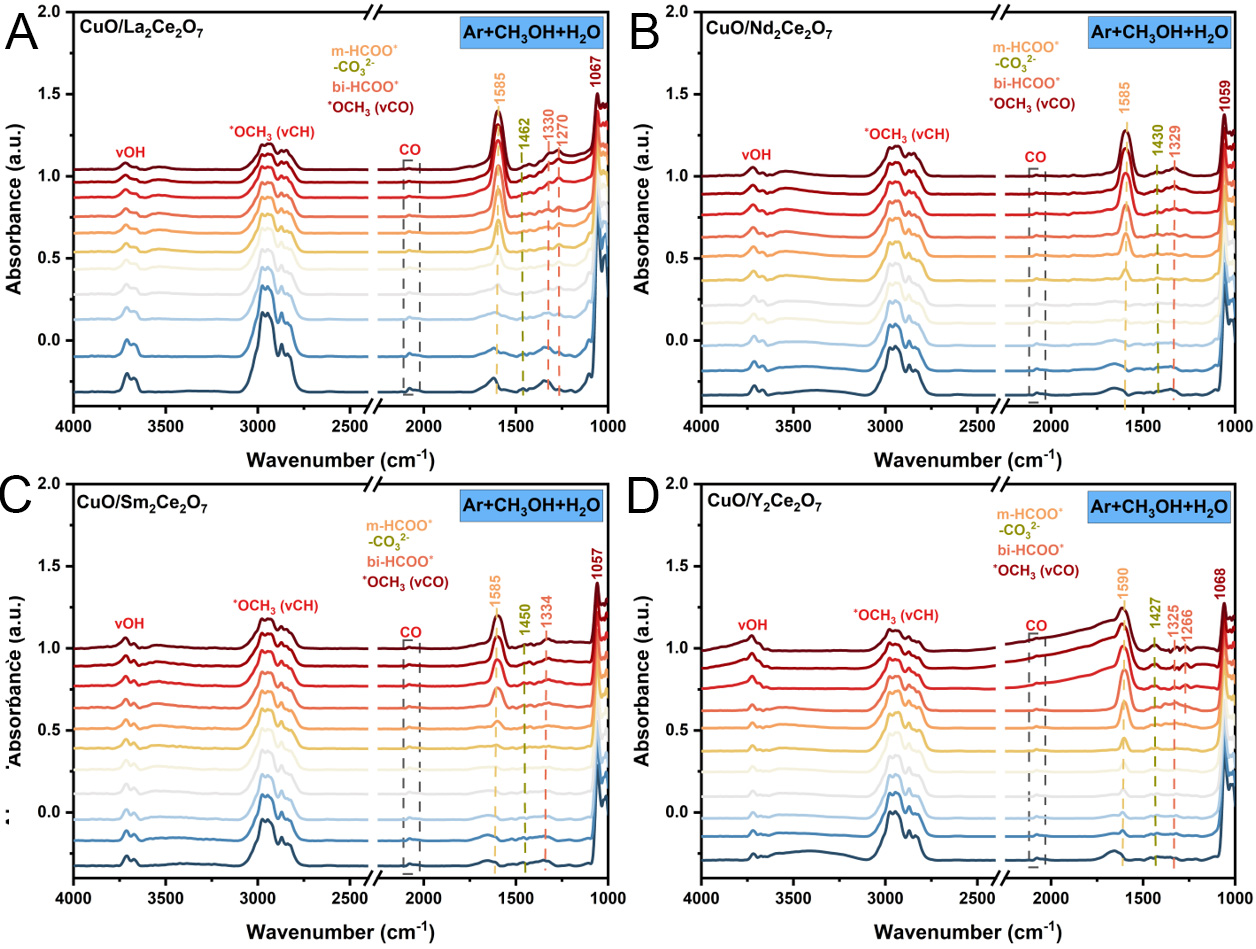
Figure 10. In situ DRIFTS experiments of methanol steam reforming on pre-reduced catalysts: (A) CuO/La2Ce2O7; (B) CuO/Nd2Ce2O7; (C) CuO/Sm2Ce2O7; (D) CuO/Y2Ce2O7. DRIFTS: Diffuse reflectance infrared Fourier transform spectroscopy。
CONCLUSIONS
A series of CuO/Ln2Ce2O7 (Ln = La, Nd, Sm, and Y) catalysts supported on defective fluorite-type oxides were prepared and evaluated for MSR. The main findings are as follows:
(1) CuO/La2Ce2O7 exhibited the best MSR performance among the four catalysts, achieving 54% CH3OH conversion and an H2 production rate of 741 mmol H2·gcat.·h-1 at 360 oC, with a CO selectivity of 1.7%. It also showed the highest reaction rate and turnover frequency (329 h-1), together with the lowest apparent activation energy (59 kJ·mol-1).
(2) The optimal performance of CuO/La2Ce2O7 was associated with several physicochemical properties: a high proportion of surface-adsorbed oxygen species, a relatively high Ce3+ fraction, the lowest oxygen-exchange onset temperature (145 oC), and the largest population of weak basic sites. It also exhibited the highest Cu dispersion (43.6%) and smallest Cu grain size (2.4 nm). Its Cu+/Cu0 ratio remained nearly unchanged, decreasing from 1.02 after reduction to 1.00 after MSR.
(3) In situ DRIFTS identified adsorbed methoxy and formate species on all four catalysts, consistent with a possible formate-mediated pathway.
DECLARATIONS
Authors’ contributions
Writing-original draft: Zhang, T.
Visualization: Zhang, T.; Liu, X.; Ma, J.; Wang, X.
Methodology: Zhang, T.
Investigation: Zhang, T.
Formal analysis: Zhang, T.; Liu, X.; Pang, X.; Ke, Y.; Ma, J.; Wang, X.
Data curation: Zhang, T.; Liu, X.; Pang, X.; Ke, Y.; Ma, J.
Conceptualization: Liu, X.; Ma, J.; Wang, X.
Software: Pang, X.; Xu, J.
Funding acquisition: Xu, J.; Wang, X.; Wang, X.
Resources: Xu, J.
Writing- review & editing: Wang, X.
Supervision: Wang, X.
Project administration: Wang, X.
Availability of data and materials
The data supporting the findings of this study are available within this article and its Supplementary Materials. Further data are available from the corresponding authors upon request.
AI and AI-assisted tools statement
Not applicable.
Financial support and sponsorship.
This work was financially supported by the National Natural Science Foundation of China (22572082, 22462011, 22566022, 22262021), the Natural Science Foundation of Jiangxi Province (20242BAB26029, 20232ACB213002, 20252BAC240720), the Interdisciplinary Innovation Fund of Natural Science, Nanchang University (XX202505300004), and the Key Laboratory Foundation of Jiangxi Province for Environment and Energy Catalysis (20242BCC32041).
Conflicts of interest
All authors declare that there are no conflicts of interest.
Ethical approval and consent to participate
Not applicable.
Consent for publication
Not applicable.
Copyright
© The Author(s) 2026.
Supplementary Materials
REFERENCES
1. Zong, K.; Guan, B.; Zhu, L.; et al. Research progress on methanol steam reforming for hydrogen production: from catalyst design to reactor engineering. Fuel 2027, 427, 139653.
2. Ishaq, H.; Dincer, I.; Crawford, C. A review on hydrogen production and utilization: Challenges and opportunities. Int. J. Hydrogen. Energy. 2022, 47, 26238-64.
3. Hassan, A. Controversial mechanisms of methanol steam reforming: a review. Int. J. Hydrogen. Energy. 2024, 93, 1487-501.
4. Gordon, J. A.; Balta-ozkan, N.; Nabavi, S. A. Hopes and fears for a sustainable energy future: Enter the hydrogen acceptance matrix. Int. J. Hydrogen. Energy. 2024, 60, 1170-91.
5. Agyekum, E. B.; Nutakor, C.; Khan, T.; Adegboye, O. R.; Odoi-Yorke, F.; Okonkwo, P. C. Analyzing the research trends in the direction of hydrogen storage - a look into the past, present and future for the various technologies. Int. J. Hydrogen. Energy. 2024, 74, 259-75.
6. Tang, X.; Li, J.; Fang, Z.; et al. Single Ni-inserted Cu (1 1 1) surface: a DFT study of adsorption and reaction mechanisms of methanol steam reforming. Appl. Surf. Sci. 2022, 596, 153635.
7. Jin, Q.; Chen, S.; Meng, X.; et al. Methanol steam reforming for hydrogen production over Ni/ZrO2 catalyst: comparison of thermal and non-thermal plasma catalysis. Catal. Today. 2024, 425, 114360.
8. Reyna-Alvarado, J.; López-Galán, O. A.; Ramos, M.; Rodríguez, J.; Pérez-Hernández, R. A theoretical catalytic mechanism for methanol reforming in CeO2 vs Ni/CeO2 by energy transition states profiles. Catal. Today. 2022, 392-393, 146-53.
9. Hu, B.; Shu, R.; Tian, Z.; Wang, C.; Chen, Y.; Xu, Y. Enhancement of hydrogen production via methanol steam reforming using a Ni-based catalyst supported by spongy mesoporous alumina. Green. Chem. 2024, 26, 5485-98.
10. Lu, J.; Xu, M.; Yang, M.; et al. Methanol steam reforming for hydrogen production over NiO/NaOH catalyst: Relationship between crystal facet and sodium ions. Int. J. Hydrogen. Energy. 2025, 101, 403-18.
11. Lian, H.; Geng, S.; Wang, Y.; et al. Plasma-enhanced methanol steam reforming over Pt/In2O3-ZnO/Al2O3 catalyst with ultralow Pt-loading for in-situ H2 production. Chem. Eng. J. 2025, 503, 158479.
12. Wang, X.; Li, D.; Gao, Z.; Guo, Y.; Zhang, H.; Ma, D. The nature of interfacial catalysis over Pt/NiAl2O4 for hydrogen production from methanol reforming reaction. J. Am. Chem. Soc. 2023, 145, 905-18.
13. Pang, S.; Dou, X.; Zhao, W.; et al. A review on the design strategies of copper-based catalysts for enhanced activity and stability in methanol reforming to hydrogen. Nanomaterials. (Basel). 2025, 15, 1118.
14. Chen, X.; Li, X.; Yang, Q.; Li, C. Methanol steam reforming for hydrogen production over CuZnZrOx: promotion effect of Cu. ACS. Appl. Energy. Mater. 2023, 6, 10061-9.
15. Sun, Z.; Yu, S.; Toan, S.; Abiev, R.; Fan, M.; Sun, Z. Enabling low-temperature methanol activation via lattice oxygen induced Cu-O-Cr catalysis. ACS. Catal. 2023, 13, 13704-16.
16. Meng, H.; Shen, T.; Yin, Z.; et al. Embedded-type Cu nanoparticle with largely enhanced catalytic activity and stability toward methanol steam reforming. Angew. Chem. Int. Ed. Engl. 2025, 64, e202506458.
17. Mao, Q.; Gao, Z.; Liu, X.; Guo, Y.; Wang, Y.; Ma, D. The Cu-Al2O3 interface: an unignorable active site for methanol steam reforming hydrogen production. Catal. Sci. Technol. 2024, 14, 3448-58.
18. Tuo, Y.; Zhao, H.; Chen, X.; et al. Advances in Cu-based catalysts for methanol steam reforming: mechanistic insights and atomic-level design. J. Energy. Chem. 2026, 112, 64-89.
19. Li, D.; Xu, F.; Tang, X.; et al. Induced activation of the commercial Cu/ZnO/Al2O3 catalyst for the steam reforming of methanol. Nat. Catal. 2022, 5, 99-108.
20. Xu, X.; Lan, T.; Zhao, G.; Nie, Q.; Jiang, F.; Lu, Y. Interface-hydroxyl enabling methanol steam reforming toward CO-free hydrogen production over inverse ZrO2/Cu catalyst. Appl. Catal. B. Environ. 2023, 334, 122839.
21. Jiang, L.; Yuan, S.; Ma, J.; et al. Enhancing the reactivity of Cu/Al2O3 for methanol steam reforming through adding CrOx: unraveling reaction pathways and the mechanism for improvement. ACS. Catal. 2025, 15, 7138-52.
22. Meng, H.; Yang, Y.; Shen, T.; et al. Designing Cu0-Cu+ dual sites for improved C-H bond fracture towards methanol steam reforming. Nat. Commun. 2023, 14, 7980.
23. Jiang, W.; Liu, A.; Yao, M.; Zhang, Y.; Fu, P. Achieving efficient almost CO-free hydrogen production from methanol steam reforming on Cu modified α-MoC. RSC. Adv. 2024, 14, 2036-47.
24. Yin, X.; Tang, L.; Zhan, Z.; et al. Highly efficient hydrogen production via photothermal-catalytic methanol steam reforming over high-entropy metal oxides. Sci. Bull. (Beijing). 2026, 71, 2542-51.
25. Montini, T.; Melchionna, M.; Monai, M.; Fornasiero, P. Fundamentals and catalytic applications of CeO2-based materials. Chem. Rev. 2016, 116, 5987-6041.
26. Ahn, S.; Jang, W.; Shim, J.; Jeon, B.; Roh, H. CeO2-based oxygen storage capacity materials in environmental and energy catalysis for carbon neutrality: extended application and key catalytic properties. Catal. Rev. 2024, 66, 1316-99.
27. Vilela, V. B.; Thyssen, V. V.; Rodrigues, L. N.; Fonsca, C. Enhancing the catalytic activity of lanthanum-ceria fluorite for methane conversion in SOFC. Meet. Abstr. 2021, MA2021-03, 246-246.
28. Singh, Pal. R.; Rana, S.; Kumar, Sharma. S.; et al. Enhancement of oxygen vacancy sites of La2-xMxCe2O7-δ (M = Ca, Ba, Sr) catalyst for the low temperature oxidative coupling of Methane: a combined DFT and experimental study. Chem. Eng. J. 2023, 458, 141379.
29. Mukherjee, D.; Rao, B. G.; Reddy, B. M. Characterization of ceria-based nano-oxide catalysts by Raman spectroscopy. Top. Catal. 2017, 60, 1673-81.
30. Wang, C.; Huang, W.; Wang, Y.; et al. Synthesis of monodispersed La2Ce2O7 nanocrystals via hydrothermal method: A study of crystal growth and sintering behavior. Int. J. Refract. Met. H. 2012, 31, 242-6.
31. Xu, Y.; Wang, F.; Liu, X.; et al. Resolving a decade-long question of oxygen defects in raman spectra of ceria-based catalysts at atomic level. J. Phys. Chem. C. 2019, 123, 18889-94.
32. Bhaskaran, A.; Kothoori, N. P. S.; Samanta, P. K.; et al. La2-xSrxCe2-yNiyO7 catalysts with interstitial nickel for enhanced dry reforming of methane. ACS. Appl. Mater. Interfaces. 2025, 17, 61941-54.
33. Ning, H.; Li, L.; Ding, C.; et al. Oxygen vacancy engineering in template-synthesized cu Ce catalysts for enhanced low-temperature preferential CO oxidation. Sep. Purif. Technol. 2026, 390, 136982.
34. Wu, T.; Zhang, P.; Wei, Y.; et al. Surface oxygen vacancies induced by calcium substitution in macroporous La2Ce2– xCaxO7-δ catalysts for boosting low-temperature oxidative coupling of methane. ACS. Catal. 2024, 14, 1882-902.
35. Cheng, Z.; Li, Y.; Wang, M.; et al. Construction of porous Cu/CeO2 catalyst with abundant interfacial sites for effective methanol steam reforming. J. Colloid. Interface. Sci. 2025, 677, 55-67.
36. Li, D.; Qiu, R.; Moskowitz, B. M.; et al. Nature of the active sites and reaction mechanism during methanol steam reforming over Cu/ZnO: an isotopic modulated excitation diffuse reflectance infrared Fourier transform spectroscopy study. J. Am. Chem. Soc. 2025, 147, 24040-9.
37. Köwitsch, N.; Thoni, L.; Klemmed, B.; et al. Proving a paradigm in methanol steam reforming: catalytically highly selective InxPdy/In2O3 interfaces. ACS. Catal. 2021, 11, 304-12.
38. Liu, D.; Zhang, M.; Zhao, L.; Guo, X.; Xu, G.; He, H. Mechanistic insights into methanol steam reforming on copper catalysts: dynamics of active sites and reaction pathway. J. Catal. 2025, 442, 115922.
39. Ma, F.; Zhang, P.; Zheng, X.; et al. Steering the site distance of atomic Cu-Cu pairs by first-shell halogen coordination boosts CO2-to-C2 selectivity. Angew. Chem. Int. Ed. Engl. 2024, 63, e202412785.
40. Liu, X.; Wang, K.; Ran, Q.; et al. Synergetic Cu0 and Cu+ on the surface of Al2O3 support enhancing methanol steam reforming reaction. Surf. Interfaces. 2024, 51, 104633.
41. Xu, X.; Shuai, K.; Xu, B. Review on copper and palladium based catalysts for methanol steam reforming to produce hydrogen. Catalysts 2017, 7, 183.
Cite This Article
 Open Access
How to Cite
Zhang, T.; Liu, X.; Pang, X.; Ke, Y.; Xu, J.; Ma, J.; Wang, X. Rare-earth-cation effects in CuO/Ln2Ce2O7 catalysts for methanol steam reforming. Catal. Energy Environ. 2026, 1, 10. https://dx.doi.org/10.20517/cee.2026.21
Download Citation
If you have the appropriate software installed, you can download article citation data to the citation manager of your choice. Simply select your manager software from the list below and click on download.
Export Citation File
Type of Import
Tips on Downloading Citation
Citation Manager File Format
Type of Import
Direct Import: When the Direct Import option is selected (the default state), a dialogue box will give you the option to Save or Open the downloaded citation data. Choosing Open will either launch your citation manager or give you a choice of applications with which to use the metadata. The Save option saves the file locally for later use.
Indirect Import: When the Indirect Import option is selected, the metadata is displayed and may be copied and pasted as needed.
About This Article
Special Topic
Copyright

Data & Comments
Data
0








Comments
Comments must be written in English. Spam, offensive content, impersonation, and private information will not be permitted. If any comment is reported and identified as inappropriate content by OAE staff, the comment will be removed without notice. If you have any queries or need any help, please contact us at [email protected].