fig4
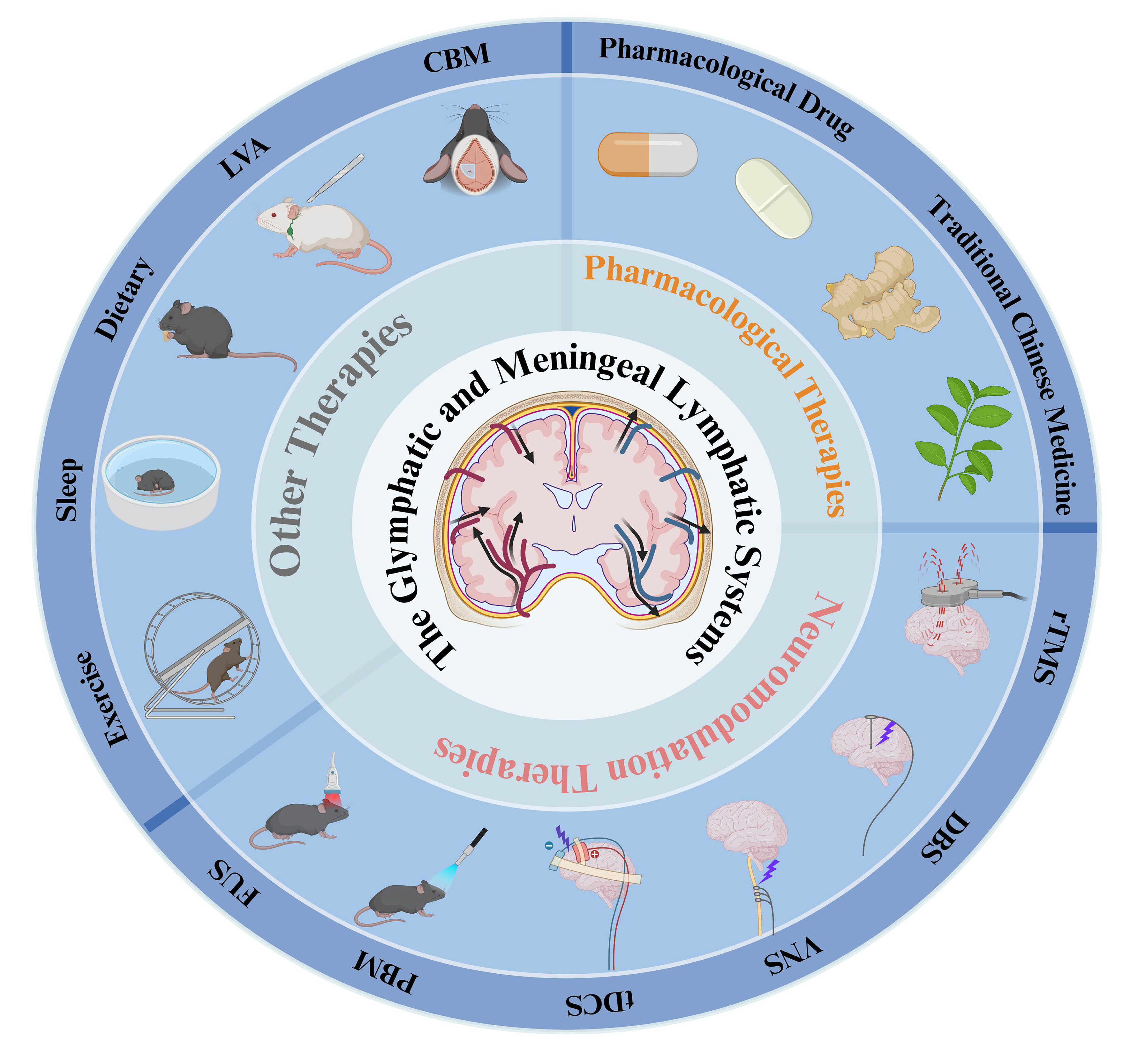
Figure 4. Multimodal therapeutic strategies targeting glymphatic and meningeal lymphatic function in AD. This schematic summarizes multiple therapeutic approaches designed to enhance brain clearance through modulation of the glymphatic and meningeal lymphatic systems. The central illustration depicts fluid dynamics (CSF/ISF flow) within these clearance pathways, whereas the surrounding concentric rings classify the interventions into pharmacological therapies, neuromodulation-based approaches, and other therapeutic strategies. These approaches augment key clearance processes, such as AQP4 polarization, CSF influx, and interstitial fluid drainage. In AD models,improved glymphatic and meningeal lymphatic function has been associated with attenuated Aβ deposition and improved cognitive impairment, highlighting the therapeutic potential of targeting brain clearance pathways in AD. This figure was designed by the authors using BioRender. https://BioRender.com/u5q9as0. AD: Alzheimer’s Disease; Aβ: amyloid-beta; AQP4: aquaporin-4; CBM: cranial bone maneuver; CSF: cerebrospinal fluid; DBS: deep brain stimulation; ISF: interstitial fluid; LVA: lymphovenous anastomosis; FUS: focused ultrasound; PBM: photobiomodulation therapy; rTMS: repetitive transcranial magnetic stimulation; tDCS: transcranial direct current stimulation; VNS: vagus nerve stimulation.