
fig1
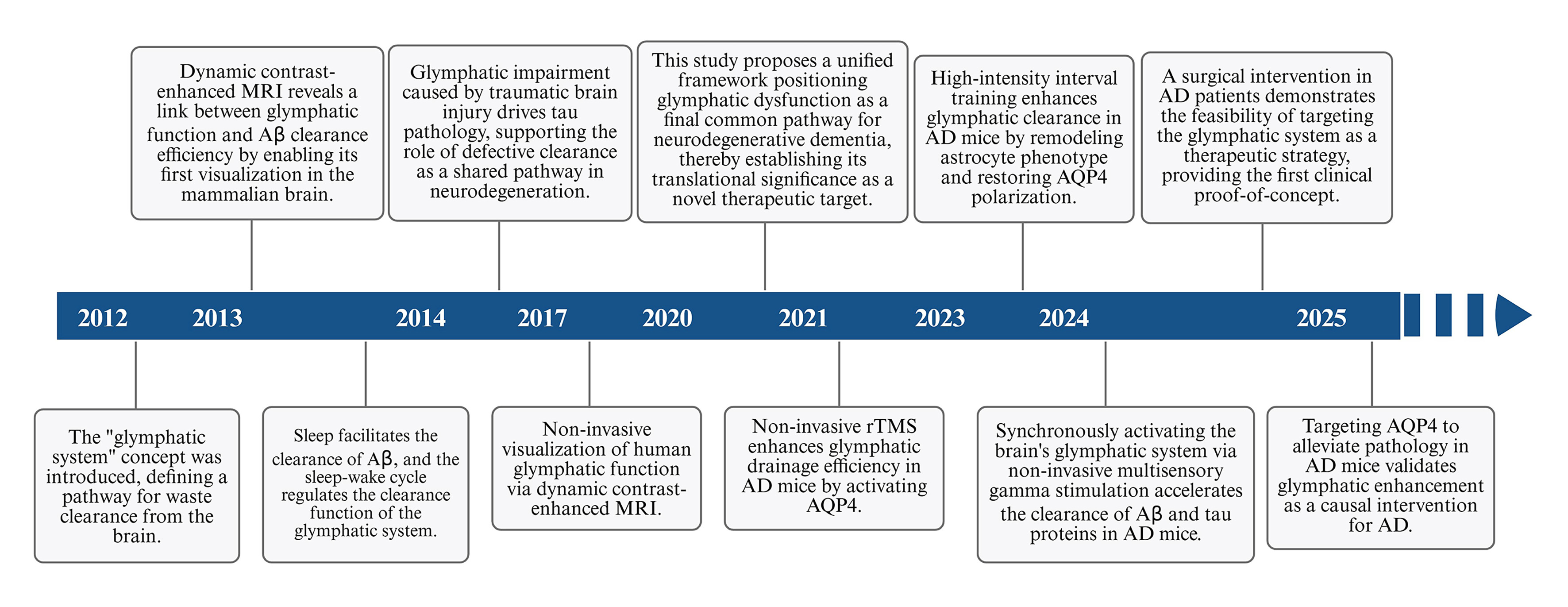
Figure 1. A timeline outlines key milestones in the research of the GS in AD. The discovery of the brain waste clearance system represented a major breakthrough in understanding the pathophysiology of AD. Since its identification, accumulating evidence has increasingly implicated glymphatic dysfunction as a critical contributor to AD development and progression. The timeline presented in Figure 1 illustrates key advances in this field and highlights the emerging importance of the glymphatic system in both the pathogenesis and theraputic targeting of AD. This figure was designed by the authors using BioRender. https://BioRender.com/ex09cg6. AD: Alzheimer’s Disease; GS: glymphatic system; MRI: magnetic resonance imaging; Aβ: amyloid-beta; AQP4: aquaporin-4; rTMS: repetitive transcranial magnetic stimulation.