fig2
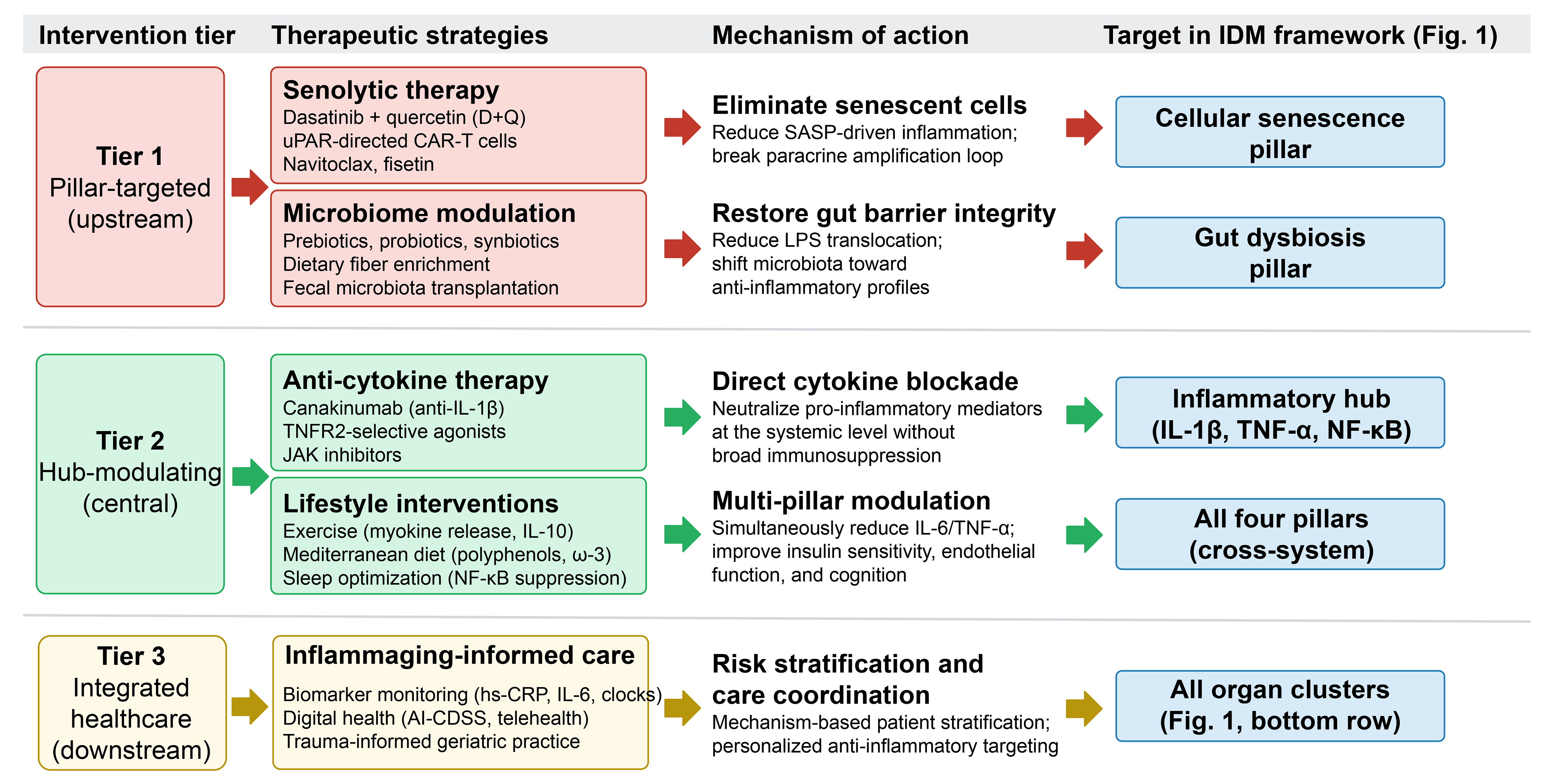
Figure 2. Representative stratified therapeutic strategies mapped to the IDM framework. Interventions are organized into three tiers: Tier 1. Pillar-targeted therapies, targeting upstream pillars, such as cellular senescence and gut dysbiosis. Tier 2. Hub-modulating strategies, including anti-cytokine therapy and lifestyle interventions regulating shared inflammatory mechanisms and thus modulating all four pillars. Tier 3. Integrated healthcare, mechanism-based patient stratification and individualized care by monitoring inflammatory biomarkers and measures of biological aging with digital healthcare strategies. IDM: Inflammaging-driven multimorbidity; D+Q: dasatinib plus quercetin; uPAR: urokinase-type plasminogen activator receptor; CAR-T: chimeric antigen receptor T cells; SASP: senescence-associated secretory phenotype; LPS: lipopolysaccharide; IL-1β: interleukin-1β; TNFR2: tumor necrosis factor receptor 2; JAK: Janus kinase; IL-10: interleukin-10; ω-3: omega-3 fatty acids; NF-κB: nuclear factor κB; IL-6: interleukin-6; TNF-α: tumor necrosis factor-alpha; hs-CRP: high-sensitivity C-reactive protein; AI-CDSS: artificial intelligence–based clinical decision support system.