

Inflammaging and age-related multimorbidity: from shared biological mechanisms to therapeutic opportunities
 0
Graphical Abstract
Abstract
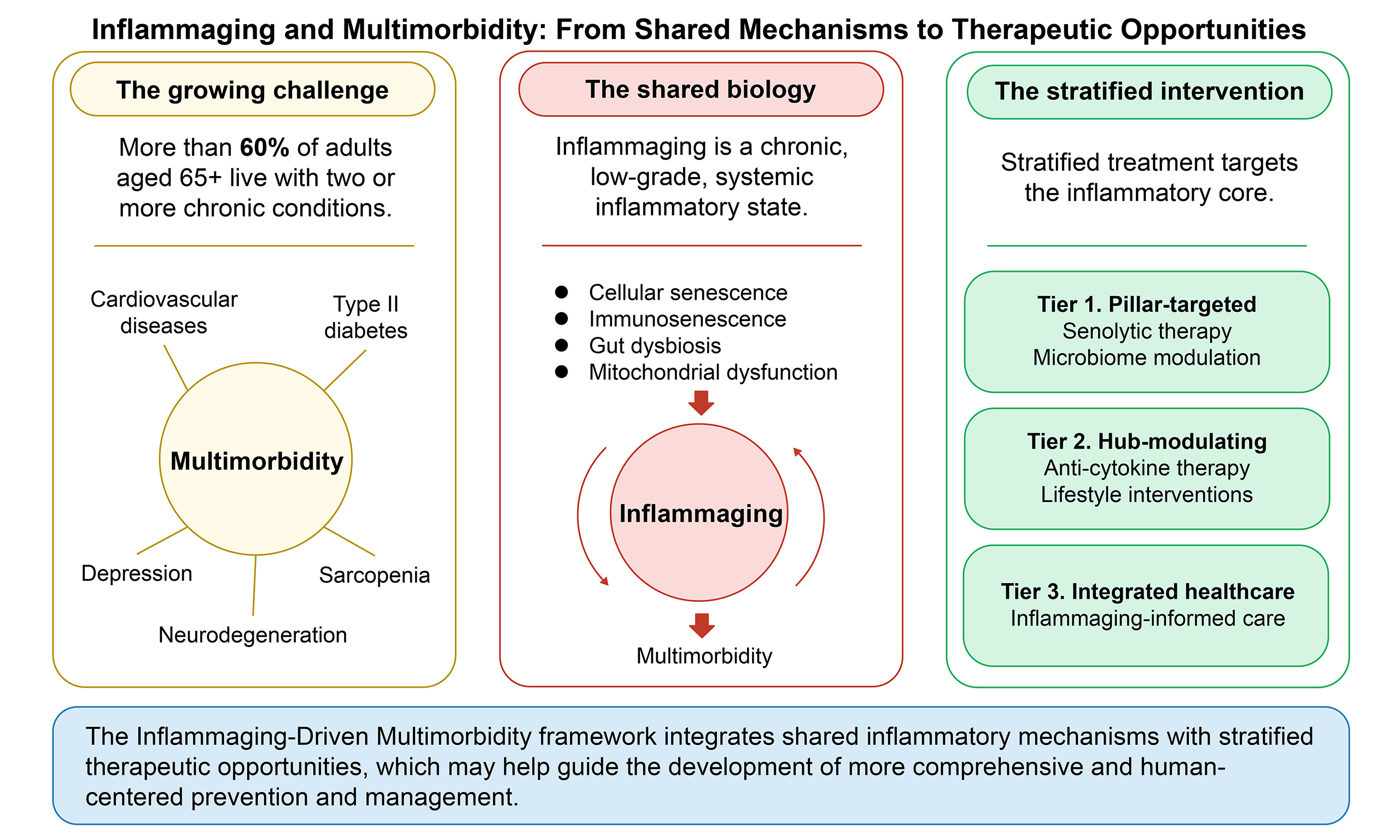
More than 60% of adults aged 65 years and older live with two or more chronic conditions, yet current healthcare systems remain largely organized around individual diseases. This mismatch between the biological complexity of aging and disease-specific clinical practice raises the core question of whether there are shared mechanisms underlying multimorbidity. Emerging evidence indicates that inflammaging, characterized by chronic low-grade inflammation associated with biological aging, may represent an important common biological context linking cardiovascular disease, type 2 diabetes, neurodegenerative disorders, depression, sarcopenia, and other age-related conditions. In this narrative review, we synthesize current evidence on four interconnected processes associated with inflammaging - cellular senescence, immunosenescence, gut dysbiosis, and mitochondrial dysfunction - and examine their potential contributions to distinct patterns of organ-specific multimorbidity. We further discuss how life-course exposures, including adverse childhood experiences and cumulative socioeconomic disadvantage, may shape inflammatory and biological aging trajectories long before the clinical manifestation of disease. Based on these findings, we propose an inflammaging-driven multimorbidity framework that integrates shared inflammatory mechanisms with stratified therapeutic opportunities, including senolytic and anti-cytokine strategies, lifestyle interventions, and digitally enabled integrated care. This framework provides a mechanism-informed perspective for understanding multimorbidity and may help guide the development of more comprehensive and human-centered prevention and management.
Keywords


 Download PDF
BACKGROUND
Multimorbidity - the simultaneous presence of two or more chronic health conditions - has become one of the most pressing challenges in geriatric medicine and public health globally. Epidemiological data indicate that the prevalence of multimorbidity among adults aged 65 years and older ranges approximately from 50% to 70%, depending on the population studied and the number and types of conditions assessed[1-3]. In high-income countries, approximately three-quarters of older adults live with at least two chronic conditions, while in rapidly aging low- and middle-income countries such as China and India, multimorbidity prevalence has risen sharply over the past two decades, now affecting around half of community-dwelling adults aged 60 years and older[4,5]. The clinical consequences are far-reaching: multimorbidity is independently associated with accelerated functional decline, polypharmacy, increased healthcare utilization and expenditures, diminished quality of life, and elevated mortality risk[6,7].
Despite the scale and complexity of this challenge, the dominant paradigm for managing chronic diseases remains disease-specific[8,9]. Clinical practice guidelines are typically developed for single conditions, drawing on evidence from randomized controlled trials that systematically exclude patients with multiple comorbidities[10]. This generates fragmented care pathways in which older adults navigate between multiple specialists, receive contradictory treatment recommendations, and bear an overwhelming medication burden that contributes to adverse drug events, drug-drug interactions, and poor therapeutic adherence[11]. The growing recognition that the single-disease model is fundamentally misaligned with the complexity of aging has prompted increasing efforts to reconceptualize the understanding, prevention, and management of multimorbidity. Rather than viewing multimorbidity simply as the coexistence of multiple individual diseases, this perspective emphasizes the shared biological mechanisms that underlie and connect age-related conditions[9].
Central to this reconceptualization is the concept of inflammaging, first articulated by Franceschi and colleagues more than two decades ago, which describes a chronic, low-grade, systemic inflammatory state that accompanies aging in the absence of overt infection[12]. Inflammaging is characterized by persistent elevation of circulating pro-inflammatory mediators - including interleukin-6 (IL-6), tumor necrosis factor-alpha (TNF-α), C-reactive protein (CRP), and interleukin-1β (IL-1β) - and is increasingly recognized as a fundamental biological driver linking multiple age-related diseases across organ systems[13,14]. Rather than viewing cardiovascular disease, diabetes, neurodegeneration, depression, and sarcopenia, among other conditions, as independent entities that coincidentally cluster in older adults, the inflammaging concept positions them as diverse phenotypic manifestations of a shared, underlying inflammatory pathology that permeates the aging organism.
The purpose of this narrative review is threefold. First, we synthesize evidence on the molecular and cellular mechanisms through which inflammaging drives multimorbidity across organ systems. Second, we examine how life-course exposures - particularly cumulative psychosocial stress and socioeconomic adversity - prime the inflammatory milieu and shape multimorbidity trajectories in later life. Third, we evaluate how translating this mechanistic understanding into clinical practice could fundamentally transform multimorbidity management, from emerging anti-inflammatory therapeutics to redesigned models of integrated, person-centered care. Throughout, we highlight the clinical relevance, research gaps, and translational potential of the inflammaging paradigm for geriatric medicine. Importantly, while existing reviews have examined inflammaging or multimorbidity separately, we will, in the current review, establish a unified, operational framework that explicitly links the convergent biological pillars of inflammaging to specific multimorbidity clusters and stratified, mechanism-matched interventions.
Given the narrative nature of this review, relevant literature was identified primarily through searches of PubMed and Web of Science using combinations of terms related to inflammaging, multimorbidity, cellular senescence, immunosenescence, gut dysbiosis, mitochondrial dysfunction, life-course determinants, and therapeutic or care interventions, supplemented by reference-list screening of relevant reviews and key studies. The literature was narratively synthesized with emphasis on evidence linking chronic low-grade inflammation to age-related diseases across organ systems, life-course determinants of inflammatory and multimorbidity trajectories, and emerging therapeutic and care strategies.
THE BIOLOGICAL ARCHITECTURE OF INFLAMMAGING
Although aging encompasses a broad spectrum of interconnected hallmarks as described by López-Otín and colleagues previously[15], this review does not aim to comprehensively cover all 12 hallmarks of aging. Instead, we focus on four closely interconnected and potentially modifiable processes - cellular senescence, immunosenescence, gut dysbiosis, and mitochondrial dysfunction - that have emerged as major contributors to inflammaging. These processes were selected based on their recurrent mechanistic links to chronic low-grade inflammation and their potential amenability to therapeutic intervention. Inflammaging arises from the convergence of multiple age-related biological processes, each contributing to a self-reinforcing cycle of chronic inflammation that progressively compromises tissue homeostasis across the body[12]. Cellular senescence - the state of irreversible proliferative arrest triggered by telomere attrition, DNA damage, oncogenic stress, or metabolic insults - is widely regarded as a principal driver[12]. Senescent cells accumulate with age in virtually all tissues, including the vasculature, adipose tissue, brain, liver, kidneys, and skeletal muscle[16]. Although senescent cells constitute a small fraction of total tissue cellularity, they exert disproportionate biological influence through the senescence-associated secretory phenotype (SASP) - a complex milieu of pro-inflammatory cytokines (IL-6, IL-8, TNF-α), chemokines, matrix metalloproteinases, and growth factors that they constitutively secrete[17]. The SASP creates a paracrine inflammatory microenvironment that not only disrupts normal tissue function but also promotes senescence in neighboring healthy cells through bystander effects, establishing a feed-forward amplification loop that progressively expands the senescent cell burden and intensifies tissue inflammation[18].
Immunosenescence, the age-related remodeling and functional decline of both innate and adaptive immunity, represents a second critical contributor to inflammaging[19]. Thymic involution - which begins after puberty and accelerates in later decades - dramatically reduces naïve T cell output, while the expanded clonal populations of terminally differentiated memory and senescent T cells impair pathogen clearance and, crucially, undermine immune surveillance of senescent cells[20]. On the innate side, tissue-resident macrophages and brain microglia adopt chronically activated, pro-inflammatory phenotypes that perpetuate local and systemic inflammation even in the absence of infection[21,22]. The nuclear factor κB (NF-κB) signaling pathway, a master transcriptional regulator of inflammatory gene expression, is constitutively activated in multiple aged tissues[23]. Preclinical studies demonstrate that genetic or pharmacological inhibition of NF-κB reduces oxidative DNA damage, delays cellular senescence, and ameliorates age-related pathologies, confirming its central role in the inflammaging cascade[23].
The gut microbiota undergoes significant compositional and functional shifts during aging, with progressive reduction of anti-inflammatory commensal bacteria (such as Faecalibacterium prausnitzii and Bifidobacterium species) and concomitant expansion of pro-inflammatory pathobionts[24]. This age-related dysbiosis compromises intestinal epithelial barrier integrity, facilitating the translocation of microbial products - most notably lipopolysaccharide (LPS) - into the systemic circulation, a phenomenon referred to as “inflammatory leakage” or metabolic endotoxemia[25]. Circulating LPS activates Toll-like receptor 4 (TLR4) on innate immune cells, potentiating systemic inflammatory responses that reach distant organs including the brain, heart, liver, and pancreatic islets[26]. Emerging evidence from both animal models and human cohort studies suggests that gut-derived inflammation may represent one of the most tractable upstream targets for systemic inflammaging modulation, given its accessibility to dietary and microbial interventions[27].
Mitochondrial dysfunction constitutes a fourth axis of the inflammaging architecture. Aging is accompanied by declining mitochondrial membrane potential, impaired oxidative phosphorylation, increased reactive oxygen species (ROS) generation, and the release of mitochondrial DNA (mtDNA) into the cytoplasm and extracellular space[28]. Cytoplasmic mtDNA is recognized as a damage-associated molecular pattern (DAMP) that activates the cyclic GMP–AMP synthase (cGAS)-stimulator of interferon genes (STING) innate immune sensing pathway, triggering a type I interferon response and further amplifying SASP-associated inflammation[29]. Landmark work by Desdin-Micó and colleagues demonstrated that mice with T cell-specific mitochondrial dysfunction develop accelerated multi-organ aging, systemic inflammation, and multimorbidity - including cardiovascular disease, metabolic syndrome, and neurodegeneration - providing direct mechanistic evidence that mitochondrial failure in a single cell type can drive system-wide disease[30]. These findings underscore the convergent nature of inflammaging: multiple upstream insults funnel into shared inflammatory signaling cascades that amplify across organs.
INFLAMMAGING AS A SHARED PATHOPHYSIOLOGICAL SUBSTRATE FOR MULTIMORBIDITY
The conceptual power of the inflammaging framework lies in its ability to explain why diverse chronic conditions cluster non-randomly in older individuals[12]. Rather than representing independent random events, the patterns of multimorbidity observed epidemiologically may reflect the differential organ-level impact of a shared systemic inflammatory process, modulated by individual genetic susceptibility, environmental exposures, and tissue-specific vulnerability[31].
In the cardiovascular system, chronic low-grade inflammation promotes endothelial dysfunction, accelerates atherosclerotic plaque formation and instability, and contributes to myocardial fibrosis, left ventricular stiffening, and diastolic dysfunction[32]. Elevated IL-6 and CRP are well-established independent predictors of incident heart failure, atrial fibrillation, and major adverse cardiovascular events in older adults[33]. In metabolic tissues, TNF-α and IL-1β impair insulin receptor substrate phosphorylation, driving peripheral insulin resistance in skeletal muscle and adipose tissue, while simultaneously promoting pancreatic β-cell apoptosis and functional failure[34]. The recognition that cardiometabolic multimorbidity shares a common inflammatory underpinning has catalyzed the development of the cardiovascular–kidney–metabolic (CKM) syndrome framework by the American Heart Association, which explicitly acknowledges cross-organ inflammatory crosstalk as a pathogenic principle rather than treating each organ system in isolation[35].
Hypertension is a major modifiable risk factor for cardiovascular diseases and diseases affecting other systems, such as Alzheimer’s disease[36,37]. It is well-recognized that chronic low-grade inflammation contributes to the pathogenesis of hypertension: inflammation can promote endothelial dysfunction, oxidative stress, vascular remodeling, and dysregulation of renal sodium and water balance thereby contributing to hypertension[38,39]. Meanwhile, activated immune cells migrate to target organs such as arteries, kidneys, and brain, causing end-organ damage and raising blood pressure[39]. Epidemiological data also indicated that higher IL-6 may be associated with the development of hypertension[36].
In the central nervous system, peripheral inflammatory mediators cross the blood-brain barrier - either through circumventricular organs or via barrier disruption itself - and activate microglia, the brain’s resident immune cells, into chronically reactive, neurotoxic phenotypes[40]. This process, termed neuroinflammaging, contributes to synaptic pruning, impaired hippocampal neurogenesis, white matter damage, and the accelerated accumulation of amyloid-β plaques and hyperphosphorylated tau - the hallmark pathologies of Alzheimer’s disease[41]. The 2024 Lancet Commission on Dementia has positioned several conditions associated with inflammaging - including hypertension, diabetes, depression, and hearing loss - as modifiable risk factors for dementia within a life-course framework, implicitly supporting the inflammatory convergence hypothesis[37]. Critically, the relationship between peripheral inflammation and neurodegeneration is bidirectional: neurodegenerative pathology itself amplifies systemic inflammation via hypothalamic dysregulation, autonomic nervous system imbalance, and disrupted cortisol signaling, creating a vicious cycle that accelerates both cognitive and physical decline[40].
Depression, which affects approximately 15%-20% of older adults with multimorbidity, is increasingly understood as having a substantial inflammatory component[42]. Meta-analytic evidence consistently demonstrates elevated IL-6, TNF-α, and CRP in older adults with major depressive disorder[43], and anti-inflammatory interventions - including cytokine inhibitors and non-steroidal anti-inflammatory drugs - have shown antidepressant efficacy in treatment-resistant cases[44]. The frequent coexistence of depression with cardiovascular disease, diabetes, and chronic pain in older adults likely reflects shared inflammatory pathophysiology rather than merely psychosocial comorbidity, and this recognition has important treatment implications: managing the inflammatory substrate may simultaneously improve mood, metabolic control, and cardiovascular risk[45].
Sarcopenia - the progressive, age-related loss of skeletal muscle mass, strength, and function - represents a further prominent manifestation of inflammaging-driven multimorbidity (IDM)[46]. TNF-α directly promotes muscle protein degradation through activation of the ubiquitin-proteasome and autophagy-lysosome pathways and simultaneously inhibits satellite cell-mediated muscle regeneration[46]. IL-6, when chronically elevated (as distinct from the transient elevations induced by exercise), similarly drives muscle wasting through Janus kinase (JAK)-signal transducers and activators of transcription (STAT)-mediated catabolic signaling[46]. Preclinical evidence demonstrates that pharmacological TNF-α blockade using etanercept can prevent sarcopenia, preserve muscle fiber type composition, and extend survival in aging mice, providing proof of principle that targeting the shared inflammatory substrate of multimorbidity can yield benefits across multiple organ systems simultaneously[47].
LIFE-COURSE DETERMINANTS: HOW STRESS AND ADVERSITY PRIME THE INFLAMMAGING MILIEU
Inflammaging does not emerge de novo in old age, but develops under the influence of multiple life-course determinants, including nutritional exposures, educational attainment, health behaviors (physical activity, smoking), occupational hazards, and psychosocial adversity[48]. Among these, cumulative psychosocial stress occupies a distinctive position because of its capacity to produce lasting, often irreversible, biological embedding through epigenetic reprogramming of the stress-immune axis[49]. A substantial and growing body of evidence supports the life-course origins of chronic inflammation and, consequently, of multimorbidity vulnerability. Adverse childhood experiences (ACEs) - encompassing physical, emotional, and sexual abuse, neglect, household dysfunction, parental psychopathology, and socioeconomic deprivation - have been consistently and dose-dependently associated with elevated inflammatory biomarkers in adulthood and increased risk of multimorbidity in later life[50,51]. A recent systematic review and meta-analysis reported that individuals with four or more ACEs had significantly elevated odds of developing multimorbidity compared with those without ACEs, with the association remaining robust after adjustment for behavioral risk factors[50].
The biological embedding of early adversity operates through several interconnected mechanisms. Chronic stress exposure during developmental sensitive periods produces lasting epigenetic modifications - particularly DNA methylation changes at glucocorticoid receptor gene (NR3C1) promoters and pro-inflammatory gene loci - that result in sustained hypothalamic-pituitary-adrenal (HPA) axis dysregulation[52]. The resulting glucocorticoid resistance, a hallmark feature of stress-related immune dysfunction, diminishes the anti-inflammatory actions of endogenous cortisol, permitting unchecked NF-κB-mediated pro-inflammatory signaling in peripheral tissues and the central nervous system[53]. These epigenetic alterations can persist for decades, effectively establishing a “molecular memory” of early adversity that manifests as heightened inflammatory reactivity throughout the life course[53].
Longitudinal cohort studies have provided compelling population-level evidence for these life-course pathways. A landmark multicohort study harmonizing data from the Health and Retirement Study (HRS), the English Longitudinal Study of Ageing (ELSA), and the China Health and Retirement Longitudinal Study (CHARLS) demonstrated that stressful life events experienced in both childhood and adulthood were significantly associated with physical, psychological, and cognitive multimorbidity in later life, with evidence of dose-response relationships and cumulative risk amplification[54]. Similarly, a Finnish birth cohort study found that early growth restriction and wartime parental separation predicted faster rates of multimorbidity accumulation across adulthood, with effects persisting over three decades of follow-up[55].
Cumulative disadvantage theory provides a complementary sociological perspective. According to this framework, adversities do not operate in isolation but accumulate across the life course through interlocking chains of risk - for example, childhood poverty leading to limited educational attainment, precarious employment, health-damaging behavioral patterns, chronic psychosocial stress, and restricted access to preventive healthcare - that progressively amplify the biological inflammatory burden and narrow the window for healthy aging[56]. Recent evidence from Chinese longitudinal cohorts demonstrates that individuals who accumulated five or more types of early-life adversity exhibited the most severe multimorbidity trajectories, characterized by early disease onset and rapid accumulation of conditions through older adulthood[57].
The social gradient in multimorbidity - whereby lower socioeconomic status is consistently associated with earlier onset, greater severity, and more complex disease combinations across populations - can thus be substantially explained by differential exposure to chronic psychosocial stress and its inflammatory consequences[58]. A UK Biobank analysis recently identified environmental deprivation as a causal contributor to a general disease factor (d factor) capturing shared liability across physical and mental disorders, with mediation through structural brain changes associated with chronic inflammation[59]. These findings carry profound implications for multimorbidity prevention: addressing upstream social determinants of health across the life course may be as impactful as - and complementary to - targeting downstream biological inflammatory pathways.
Based on the above-mentioned life-course determinants and the shared inflammation-related mechanisms of multimorbidity in aging, we introduce a conceptual model - the IDM framework [Figure 1] - that provides a structured, clinically actionable roadmap for translating the inflammaging concept into geriatric multimorbidity management. The IDM framework addresses the gap between the biological complexity of aging and disease-specific clinical practice by integrating life-course determinants, interconnected inflammaging processes, organ-specific multimorbidity patterns, and stratified therapeutic and care strategies within a single mechanism-informed framework.
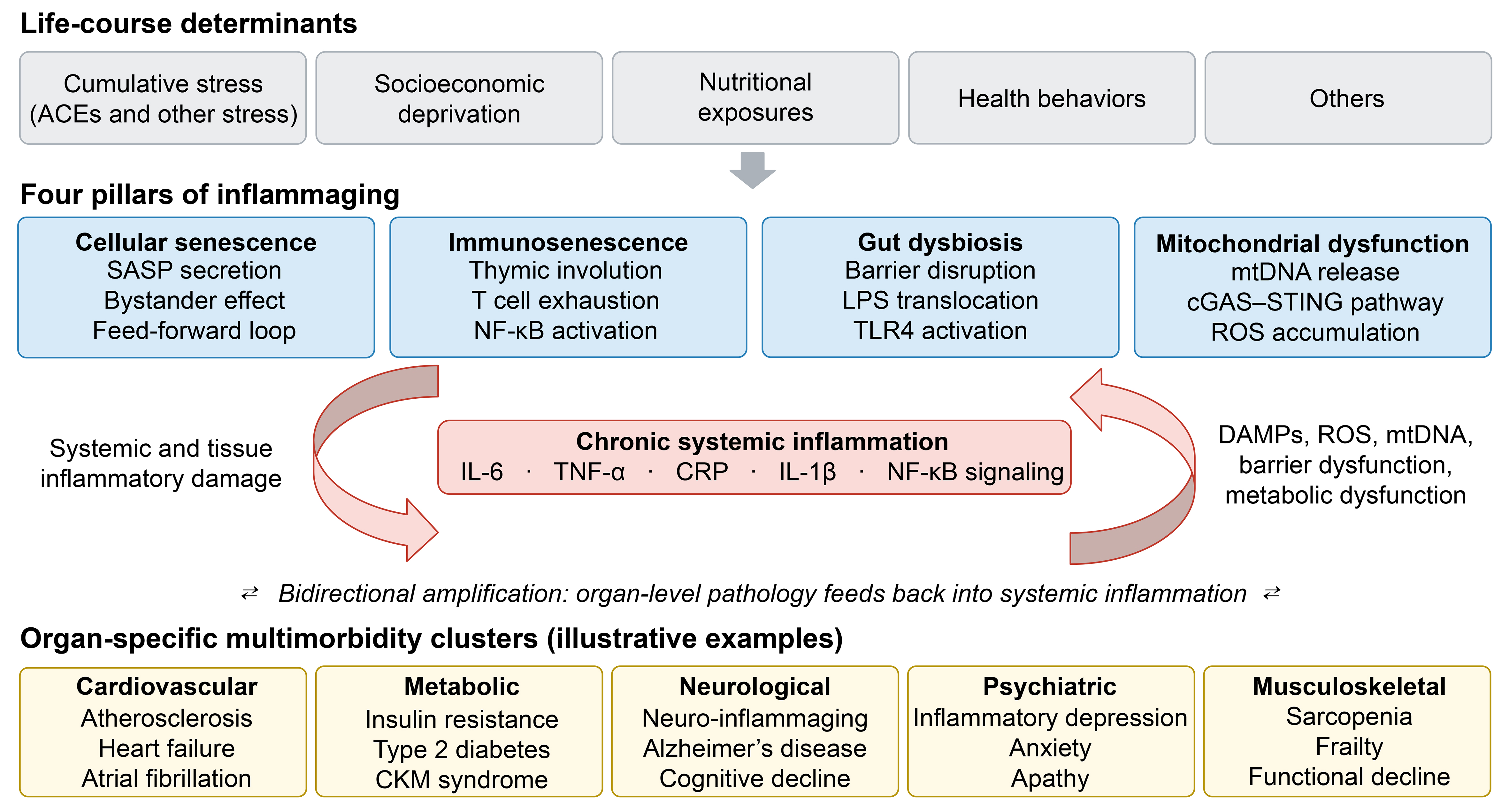
Figure 1. IDM conceptual framework. Life-course determinants drive four core pillars of inflammaging (cellular senescence, immunosenescence, gut dysbiosis, and mitochondrial dysfunction), leading to chronic systemic inflammation and organ-specific multimorbidity clusters, with organ-level pathology feeding back to further amplify systemic inflammation, forming a self-reinforcing feedback loop. IDM: Inflammaging-driven multimorbidity; ACEs: adverse childhood experiences; SASP: senescence-associated secretory phenotype; NF-κB: nuclear factor κB; LPS: lipopolysaccharide; TLR4: Toll-like receptor 4; mtDNA: mitochondrial DNA; cGAS: cyclic GMP–AMP synthase; STING: stimulator of interferon genes; ROS: reactive oxygen species; IL-6: interleukin-6; TNF-α: tumor necrosis factor-alpha; CRP: C-reactive protein; IL-1β: interleukin-1β; DAMPs: damage-associated molecular patterns; CKM: cardiovascular–kidney–metabolic.
Therapeutic opportunities targeting inflammaging in multimorbidity
The recognition that inflammaging constitutes a shared pathophysiological substrate for multimorbidity opens a fundamentally new therapeutic landscape - one in which interventions targeting the inflammatory core could simultaneously attenuate disease progression across multiple organ systems[9,12]. Importantly, targeting inflammaging should not be equated with rejuvenation or reversal of aging. These interventions aim to attenuate chronic inflammation and related biological processes that contribute to age-related diseases and multimorbidity, with the broader aim of preserving function and healthspan. Within the IDM framework, these strategies can be organized into three intervention tiers: upstream pillar-targeted therapies (addressing cellular senescence and gut dysbiosis), central hub modulation (targeting inflammatory mediators and lifestyle factors), and downstream integrated care delivery (redesigning health systems for coordinated, biomarker-informed management) [Figure 2].
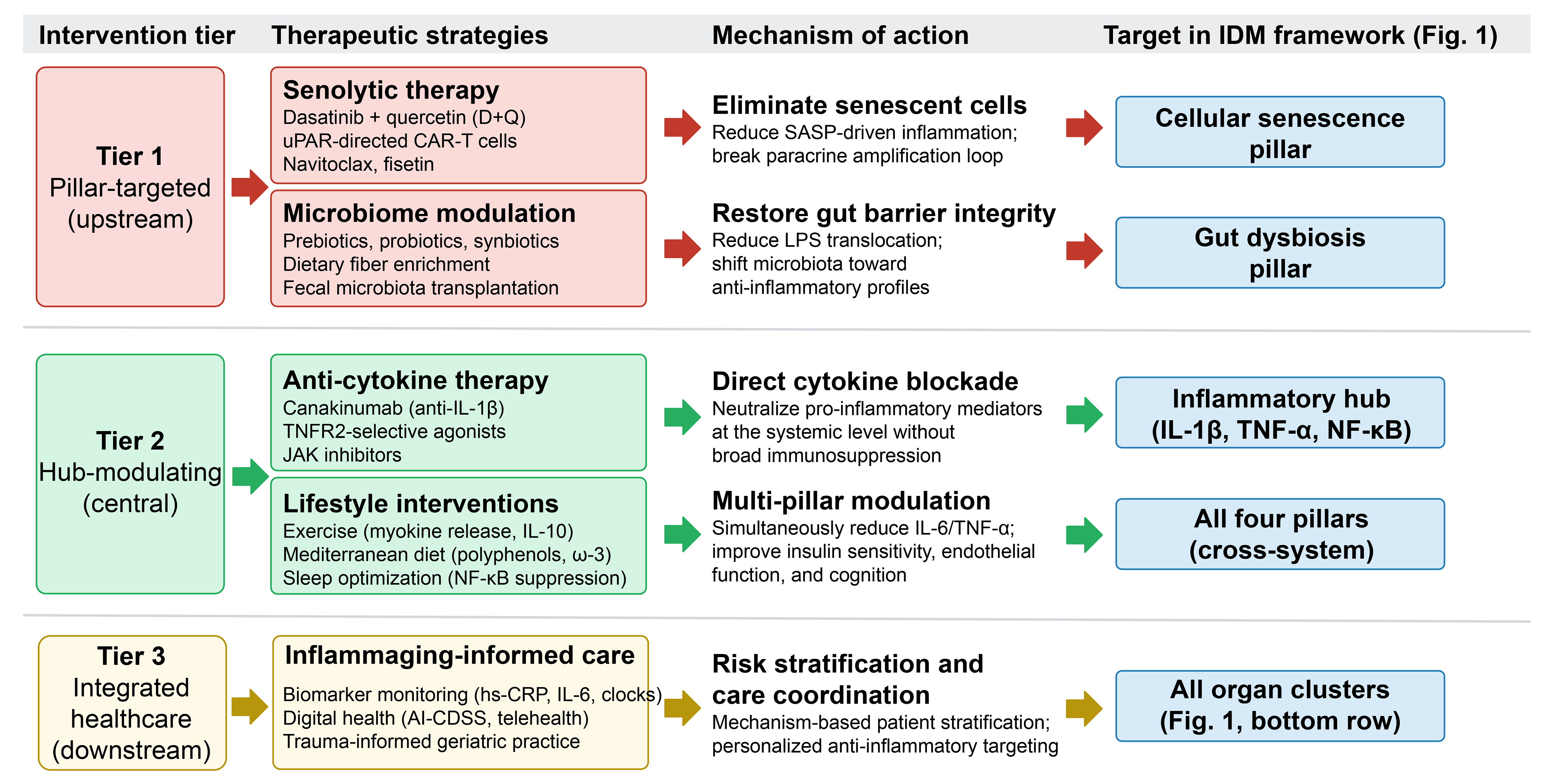
Figure 2. Representative stratified therapeutic strategies mapped to the IDM framework. Interventions are organized into three tiers: Tier 1. Pillar-targeted therapies, targeting upstream pillars, such as cellular senescence and gut dysbiosis. Tier 2. Hub-modulating strategies, including anti-cytokine therapy and lifestyle interventions regulating shared inflammatory mechanisms and thus modulating all four pillars. Tier 3. Integrated healthcare, mechanism-based patient stratification and individualized care by monitoring inflammatory biomarkers and measures of biological aging with digital healthcare strategies. IDM: Inflammaging-driven multimorbidity; D+Q: dasatinib plus quercetin; uPAR: urokinase-type plasminogen activator receptor; CAR-T: chimeric antigen receptor T cells; SASP: senescence-associated secretory phenotype; LPS: lipopolysaccharide; IL-1β: interleukin-1β; TNFR2: tumor necrosis factor receptor 2; JAK: Janus kinase; IL-10: interleukin-10; ω-3: omega-3 fatty acids; NF-κB: nuclear factor κB; IL-6: interleukin-6; TNF-α: tumor necrosis factor-alpha; hs-CRP: high-sensitivity C-reactive protein; AI-CDSS: artificial intelligence–based clinical decision support system.
Senolytic therapies, which selectively eliminate senescent cells and thereby reduce SASP-driven inflammation, represent the most direct translation of inflammaging biology into clinical practice[60]. First-generation senolytic combinations - particularly dasatinib plus quercetin (D+Q) - have demonstrated remarkable preclinical efficacy, reducing tissue inflammation, restoring organ function, and extending healthspan in aged mice[60]. In recent years, senolytics have moved from animal studies to clinical trials, but so far, clinical evidence remains primarily limited to phase I/II, small sample sizes, and disease-specific trials. A phase I/II trial in metabolic dysfunction-associated steatohepatitis (MASH) showed that D+Q treatment was associated with substantial improvement in fibrosis without worsening MASH, indicating that targeting cellular senescence can potentially attenuate chronic tissue inflammation and fibrosis in humans[61]. Other trials in bone metabolism[62], idiopathic pulmonary fibrosis[63], and Alzheimer’s disease[64] show a good safety profile of senolytics. For other senolytics, fisetin is currently being evaluated in randomized clinical trials, including studies targeting inflammatory and functional outcomes in older adults[65], whereas navitoclax remains largely supported by preclinical and translational evidence[66]. The conceptual appeal for multimorbidity management is clear: by targeting the upstream cellular source of inflammation rather than individual downstream disease manifestations, senolytics could in principle address multiple conditions simultaneously[67]. However, several barriers to clinical translation remain, including tissue-specific heterogeneity in senescent cell populations, potential immunosuppressive consequences of depleting cells with residual immune functions, and the absence of validated biomarkers for patient selection and treatment monitoring[67]. Next-generation senolytics - including urokinase-type plasminogen activator receptor (uPAR)-directed chimeric antigen receptor (CAR) T cells and more selective small molecules - are in preclinical development and may overcome some of these limitations[68].
Anti-cytokine therapies offer a complementary pharmacological approach. The landmark CANTOS trial demonstrated that canakinumab, a monoclonal antibody targeting IL-1β, significantly reduced recurrent cardiovascular events in patients with prior myocardial infarction and elevated CRP, independently of lipid lowering[69]. This provided definitive proof of concept that directly targeting a single inflammatory mediator can prevent clinical disease. Emerging data suggest that TNF signaling modulation may yield cross-system benefits relevant to multimorbidity, from sarcopenia prevention to neuroprotection[70]. Selective modulation of tumor necrosis factor receptor 2 (TNFR2) - which mediates tissue-protective, regenerative, and immunomodulatory signaling rather than the pro-inflammatory and pro-apoptotic effects of TNF receptor 1 - represents a particularly promising avenue for achieving anti-inflammatory benefits in aged tissues without the broad immunosuppression associated with pan-TNF blockade[71]. This approach is especially relevant for neurodegeneration, where TNFR2 signaling supports neuronal survival and myelin repair[71].
Lifestyle-based anti-inflammatory interventions carry distinct advantages of broad accessibility, low cost, established safety, and multi-system benefits without the risks of pharmacological immunomodulation[29,72,73]. Regular moderate-intensity physical exercise reduces circulating IL-6 and TNF-α, promotes the release of anti-inflammatory myokines (notably IL-10 and irisin), and improves insulin sensitivity, endothelial function, and cognitive performance in older adults[74]. Mediterranean-style dietary patterns, rich in polyphenols, ω-3 fatty acids, and dietary fiber, have demonstrated consistent anti-inflammatory effects across multiple trials and are associated with reduced multimorbidity incidence in large prospective cohort studies[75]. Sleep optimization is gaining recognition as a critical but frequently overlooked anti-inflammatory intervention; chronic sleep disturbance activates NF-κB signaling, accelerates telomere shortening, and promotes microglial activation[76]. Notably, sleep quality has been identified as a key mediating pathway through which ACEs influence multimorbidity risk in later life, suggesting that sleep-targeted interventions may be particularly valuable in individuals with high life-course stress exposure[77].
Gut microbiota-targeted interventions - including prebiotics, probiotics, synbiotics, dietary fiber enrichment, and fecal microbiota transplantation - constitute an emerging frontier for inflammaging modulation[78]. By restoring intestinal barrier integrity, enhancing short-chain fatty acid production, and shifting microbial community composition toward anti-inflammatory profiles, these approaches could attenuate the gut-derived inflammatory signaling that contributes to systemic inflammaging[79]. While large-scale clinical evidence in multimorbid older adults remains limited, early trials in frail elderly populations have shown reductions in inflammatory markers and improvements in metabolic parameters[80]. The theoretical appeal for multimorbidity management is strong, given the gut’s established role as a nexus connecting inflammatory, metabolic, neuroendocrine, and immune pathways[78].
Besides the above-mentioned therapeutics, some treatments of organ-specific diseases may offer anti-inflammatory effects. For example, some anti-hypertensive drugs, particularly renin-angiotensin system inhibitors, may have anti-inflammatory effects in addition to blood pressure reduction[81,82], although these effects appear to vary by drug class and require further validation.
Redesigning healthcare: from disease-specific silos to inflammaging-informed integrated models
Translating the inflammaging framework into clinical practice demands not only novel therapeutics but a fundamental redesign of healthcare delivery models for older adults with multimorbidity. Current healthcare systems, organized around disease-specific specialist consultations and condition-specific guidelines, are structurally misaligned with the biological reality that multiple conditions share common pathophysiology and require coordinated, person-centered management rather than parallel, uncoordinated treatment streams[83].
Integrated care models - featuring multidisciplinary teams, dedicated care coordinators, individualized care planning, holistic needs assessment, and self-management support - have shown promise in improving clinical and patient-reported outcomes for older adults with multimorbidity[84]. Systematic reviews and meta-analyses indicate that such models can reduce emergency department visits by 10%-30%, decrease hospital readmissions, and improve perceived health status and patient satisfaction, although the evidence base remains heterogeneous in terms of populations, interventions, and outcomes measured[85,86]. A key limitation of existing integrated care interventions, however, is their biologically agnostic stance: most treat co-occurring conditions as additive management problems without engaging with the shared mechanisms that link them[87]. An inflammaging-informed approach would enrich these models by integrating systematic assessment of inflammatory biomarkers, such as high-sensitivity CRP and IL-6, with emerging measures of biological aging, including epigenetic aging clocks, into routine comprehensive geriatric assessment. This integrated approach could facilitate mechanism-based risk stratification and inform more personalized anti-inflammatory interventions[29].
Information and communication technology (ICT) offers powerful tools for operationalizing this vision at scale. Digital health platforms can facilitate continuous physiological and symptomatic monitoring, integrate multi-source data from wearable sensors and electronic health records, and deploy clinical decision support algorithms that account for disease interactions and shared inflammatory pathways[88,89]. Artificial intelligence-enabled clinical decision support systems show particular promise for identifying patients at highest inflammatory and multimorbidity risk, predicting disease trajectory inflection points, and coordinating care responses across multiple providers and care settings[90]. A recent randomized controlled trial of an intelligent, integrated older adult care model demonstrated significant improvements in quality of life among home-dwelling older adults, providing early evidence that technology-mediated integrated care can deliver meaningful clinical benefit[89].
Critically, an inflammaging-informed care model must also incorporate upstream, preventive interventions that address the life-course determinants of chronic inflammation. Trauma-informed care approaches - which recognize the lasting health impacts of ACEs and chronic psychosocial stress and seek to create safe, supportive clinical environments - should be systematically integrated into geriatric practice rather than confined to mental health or social work settings[91]. At the population level, policies that reduce socioeconomic deprivation, improve access to healthy nutrition and safe physical activity environments, address housing insecurity, and mitigate chronic environmental stressors represent the most scalable anti-inflammatory interventions available - yet they remain largely disconnected from clinical multimorbidity management frameworks[92]. Bridging this gap between upstream social determinants and downstream clinical care represents one of the most important challenges - and opportunities - for the next generation of multimorbidity research and practice.
Research gaps and future directions
Despite the evidence base reviewed above, several critical knowledge gaps remain. First, while the association between inflammaging and individual chronic conditions is well recognized, rigorously designed longitudinal studies that simultaneously track inflammatory biomarker trajectories alongside prospective multimorbidity development across multiple organ systems are remarkably scarce[48]. Understanding the temporal dynamics of inflammatory escalation - including the identification of potential biological tipping points and time-sensitive windows of intervention - is essential for designing effective preventive strategies.
Second, the substantial heterogeneity of senescent cell populations across tissues and individuals suggests that senolytic therapies will likely need to be personalized, yet the biomarkers, imaging modalities, and clinical algorithms required to guide such personalization remain underdeveloped[93]. The development of minimally invasive senescence burden assays - potentially based on circulating SASP factors, extracellular vesicle signatures, or soluble urokinase plasminogen activator receptor (suPAR) - would represent a major advance for clinical translation[94,95].
Third, randomized controlled trials of anti-inflammatory interventions specifically designed for older adults with established multimorbidity - rather than disease-specific populations from which multimorbid individuals are excluded - are urgently needed. Such trials should employ composite, patient-centered endpoints (including functional independence, quality of life, and treatment burden) rather than single-disease outcomes, and should be adequately powered to detect differential treatment effects across multimorbidity patterns.
Fourth, sex and gender differences in inflammaging and multimorbidity warrant systematic investigation. Women consistently exhibit higher multimorbidity prevalence, more complex disease combinations, and distinct inflammatory profiles compared with men, partly attributable to sex-differential immune regulation, hormonal influences on inflammatory signaling, and gendered patterns of stress exposure[96]. Incorporating sex-stratified analyses into inflammaging research and clinical trial design is essential for ensuring equitable therapeutic benefit.
Fifth, the cross-cultural applicability of the inflammaging framework for multimorbidity management warrants careful examination. Most inflammaging research has been conducted in high-income Western populations, yet multimorbidity patterns, inflammatory profiles, dietary exposures, gut microbiome compositions, and healthcare system structures differ substantially across global regions[48]. Evidence from low- and middle-income countries, where multimorbidity is increasingly prevalent but health system capacity for integrated chronic disease management remains limited, is urgently needed to ensure that inflammaging-informed interventions are contextually appropriate, culturally sensitive, and implementable across diverse healthcare settings[97].
Finally, the implementation science of translating inflammaging-informed care into routine clinical practice - including health professional workforce development, health system financing models, electronic health record integration, and patient engagement strategies - represents a frontier that requires sustained collaborative effort across basic science, clinical medicine, health services research, and health policy[98].
CONCLUSIONS
Multimorbidity in older adults reflects the complex interplay of multiple age-related biological processes rather than the simple coexistence of independent diseases. Inflammaging provides a clinically relevant framework for understanding this complexity, as cellular senescence, immunosenescence, gut dysbiosis, and mitochondrial dysfunction can interact to sustain chronic low-grade inflammation and may contribute to the development and progression of cardiovascular, metabolic, neurodegenerative, musculoskeletal, and psychiatric disorders. Importantly, the strength of evidence for these relationships varies across diseases, and inflammaging should therefore be regarded as a potential shared biological contributor and amplifier of multimorbidity rather than a universal causal mechanism. Life-course exposures, including ACEs, cumulative psychosocial stress, and socioeconomic deprivation, may further shape these inflammatory and biological aging trajectories, contributing to heterogeneity in multimorbidity and health disparities.
The IDM framework proposed in this review provides a mechanism-informed basis for translating these biological insights into therapeutic strategies. Rather than applying a single anti-inflammatory intervention across multimorbid populations, treatment should be stratified according to the dominant biological processes and clinical phenotypes. Potential upstream strategies include senolytic therapy to reduce the burden of senescent cells and microbiome modulation to restore intestinal barrier and microbial homeostasis. At the inflammatory hub, selective modulation of cytokine and innate immune pathways, including IL-1β, TNFR2, JAK, and related inflammatory signaling, may be relevant for appropriately selected patients, although clinical evidence for many of these approaches in multimorbidity remains limited. Lifestyle interventions, including exercise, the Mediterranean diet, and sleep optimization, can reduce inflammatory cytokines and improve insulin sensitivity and endothelial function. Downstream management should address established modifiable risk factors and redesign healthcare, including biomarker monitoring, digital health, and trauma-informed geriatric practice. These strategies should be complemented by mechanism-based patient stratification and digitally enabled longitudinal monitoring to facilitate individualized and coordinated care.
Importantly, most emerging anti-inflammaging interventions remain investigational, and evidence from large, long-term trials specifically enrolling older adults with multimorbidity is still insufficient. Future studies should therefore prioritize longitudinal validation of inflammaging biomarkers, identification of patients most likely to benefit from targeted interventions, and clinical trials that evaluate multimodal strategies across multiple disease outcomes rather than single-disease endpoints. Implementation research will also be essential to determine how mechanism-informed interventions can be integrated into routine geriatric and primary care. Thus, the clinical value of the inflammaging framework lies not in replacing disease-specific management, but in complementing it with a biologically informed strategy that identifies shared and modifiable pathways across conditions. By integrating upstream biological targeting, central inflammatory modulation, downstream risk-factor control, and coordinated longitudinal care, the IDM framework may provide a more rational approach to preventing disease progression and improving health and quality of life among older adults living with multimorbidity.
DECLARATIONS
Authors’ contributions
Contributed to conceptualization, literature review, and manuscript drafting: Li J, Zhang F
Contributed to critical revision of the manuscript: Zhong R, Zhang F
Contributed to study supervision and overall conceptual guidance: Zhong R, Guo Y
All authors read and approved the final manuscript.
Availability of data and materials
Not applicable.
AI and AI-assisted tools statement
Not applicable.
Financial support and sponsorship
This work was supported by the National Natural Science Foundation of China [grant number NSFC 82602334] and the Natural Science Foundation of Zhejiang Province [grant number ZCLQN25H0901].
Conflicts of interest
Zhang F is a Youth Editorial Board Member of the journal Ageing and Neurodegenerative Diseases. Zhang F was not involved in any steps of editorial processing, notably including reviewers’ selection, manuscript handling, and decision-making. The other authors declare that there are no conflicts of interest.
Ethics approval and consent to participate
Not applicable.
Consent for publication
Not applicable.
Copyright
© The Author(s) 2026.
REFERENCES
1. Barnett K, Mercer SW, Norbury M, Watt G, Wyke S, Guthrie B. Epidemiology of multimorbidity and implications for health care, research, and medical education: a cross-sectional study. Lancet. 2012;380:37-43.
2. Nguyen H, Manolova G, Daskalopoulou C, Vitoratou S, Prince M, Prina AM. Prevalence of multimorbidity in community settings: a systematic review and meta-analysis of observational studies. J Comorb. 2019;9:2235042X19870934.
3. Chowdhury SR, Chandra Das D, Sunna TC, Beyene J, Hossain A. Global and regional prevalence of multimorbidity in the adult population in community settings: a systematic review and meta-analysis. EClinicalMedicine. 2023;57:101860.
4. Zhang X, Padhi A, Wei T, et al. Community prevalence and dyad disease pattern of multimorbidity in China and India: a systematic review. BMJ Glob Health. 2022;7:e008880.
5. Hajat C, Stein E. The global burden of multiple chronic conditions: a narrative review. Prev Med Rep. 2018;12:284-93.
6. Marengoni A, Angleman S, Melis R, et al. Aging with multimorbidity: a systematic review of the literature. Ageing Res Rev. 2011;10:430-9.
7. Nunes BP, Flores TR, Mielke GI, Thumé E, Facchini LA. Multimorbidity and mortality in older adults: a systematic review and meta-analysis. Arch Gerontol Geriatr. 2016;67:130-8.
8. Upshur REG, Tracy S. Chronicity and complexity: is what’s good for the diseases always good for the patients? Can Fam Physician. 2008;54:1655-8.
10. Fortin M, Dionne J, Pinho G, Gignac J, Almirall J, Lapointe L. Randomized controlled trials: do they have external validity for patients with multiple comorbidities? Ann Fam Med. 2006;4:104-8.
11. Muth C, van den Akker M, Blom JW, et al. The Ariadne principles: how to handle multimorbidity in primary care consultations. BMC Med. 2014;12:223.
12. Franceschi C, Bonafè M, Valensin S, et al. Inflamm-aging. An evolutionary perspective on immunosenescence. Ann N Y Acad Sci. 2000;908:244-54.
13. Franceschi C, Campisi J. Chronic inflammation (inflammaging) and its potential contribution to age-associated diseases. J Gerontol A Biol Sci Med Sci. 2014;69 Suppl 1:S4-9.
14. Ferrucci L, Fabbri E. Inflammageing: chronic inflammation in ageing, cardiovascular disease, and frailty. Nat Rev Cardiol. 2018;15:505-22.
15. López-Otín C, Blasco MA, Partridge L, Serrano M, Kroemer G. Hallmarks of aging: an expanding universe. Cell. 2023;186:243-78.
17. Wang B, Han J, Elisseeff JH, Demaria M. The senescence-associated secretory phenotype and its physiological and pathological implications. Nat Rev Mol Cell Biol. 2024;25:958-78.
18. Di Micco R, Krizhanovsky V, Baker D, d’Adda di Fagagna F. Cellular senescence in ageing: from mechanisms to therapeutic opportunities. Nat Rev Mol Cell Biol. 2021;22:75-95.
19. Ajoolabady A, Pratico D, Tang D, Zhou S, Franceschi C, Ren J. Immunosenescence and inflammaging: mechanisms and role in diseases. Ageing Res Rev. 2024;101:102540.
20. Liu Z, Liang Q, Ren Y, et al. Immunosenescence: molecular mechanisms and diseases. Signal Transduct Target Ther. 2023;8:200.
21. Rodríguez-Morales P, Franklin RA. Macrophage phenotypes and functions: resolving inflammation and restoring homeostasis. Trends Immunol. 2023;44:986-98.
22. Timmerman R, Burm SM, Bajramovic JJ. Tissue-specific features of microglial innate immune responses. Neurochem Int. 2021;142:104924.
23. Tilstra JS, Robinson AR, Wang J, et al. NF-κB inhibition delays DNA damage-induced senescence and aging in mice. J Clin Invest. 2012;122:2601-12.
24. Bosco N, Noti M. The aging gut microbiome and its impact on host immunity. Genes Immun. 2021;22:289-303.
25. Thevaranjan N, Puchta A, Schulz C, et al. Age-associated microbial dysbiosis promotes intestinal permeability, systemic inflammation, and macrophage dysfunction. Cell Host Microbe. 2017;21:455-66.e4.
26. Luo R, Yao Y, Chen Z, Sun X. An examination of the LPS-TLR4 immune response through the analysis of molecular structures and protein-protein interactions. Cell Commun Signal. 2025;23:142.
27. Ghosh TS, Shanahan F, O’Toole PW. The gut microbiome as a modulator of healthy ageing. Nat Rev Gastroenterol Hepatol. 2022;19:565-84.
29. Li X, Li C, Zhang W, Wang Y, Qian P, Huang H. Inflammation and aging: signaling pathways and intervention therapies. Signal Transduct Target Ther. 2023;8:239.
30. Desdín-Micó G, Soto-Heredero G, Aranda JF, et al. T cells with dysfunctional mitochondria induce multimorbidity and premature senescence. Science. 2020;368:1371-6.
31. Banzato E, Roverato A, Buja A, Boccuzzo G. Understanding multimorbidity: insights with graphical models. BMC Med Res Methodol. 2025;25:84.
32. Henein MY, Vancheri S, Longo G, Vancheri F. The role of inflammation in cardiovascular disease. Int J Mol Sci. 2022;23:12906.
33. Ridker PM, Rane M. Interleukin-6 signaling and anti-interleukin-6 therapeutics in cardiovascular disease. Circ Res. 2021;128:1728-46.
34. Dobre MZ, Virgolici B, Dunca-Stefan DCA, Doicin IC, Stanescu-Spinu II. Inflammation-insulin resistance crosstalk and the central role of myokines. Int J Mol Sci. 2025;27:60.
35. Ndumele CE, Neeland IJ, Tuttle KR, et al.; American Heart Association. A synopsis of the evidence for the science and clinical management of cardiovascular-kidney-metabolic (CKM) syndrome: a scientific statement from the American Heart Association. Circulation. 2023;148:1636-64.
36. Caiazzo E, Sharma M, Rezig AOM, et al. Circulating cytokines and risk of developing hypertension: a systematic review and meta-analysis. Pharmacol Res. 2024;200:107050.
37. Livingston G, Huntley J, Liu KY, et al. Dementia prevention, intervention, and care: 2024 report of the Lancet standing Commission. Lancet. 2024;404:572-628.
38. Aboukhater D, Morad B, Nasrallah N, et al. Inflammation and hypertension: underlying mechanisms and emerging understandings. J Cell Physiol. 2023;238:1148-59.
39. Guzik TJ, Nosalski R, Maffia P, Drummond GR. Immune and inflammatory mechanisms in hypertension. Nat Rev Cardiol. 2024;21:396-416.
40. Huang X, Hussain B, Chang J. Peripheral inflammation and blood-brain barrier disruption: effects and mechanisms. CNS Neurosci Ther. 2021;27:36-47.
41. Leng F, Edison P. Neuroinflammation and microglial activation in Alzheimer disease: where do we go from here? Nat Rev Neurol. 2021;17:157-72.
42. Du Q, Yao M, Wang W, et al. Association between multimorbidity and depression in older adults: evidence from six large longitudinal cohorts. Am J Geriatr Psychiatry. 2025;33:702-15.
43. Ng A, Tam WW, Zhang MW, et al. IL-1β, IL-6, TNF-α and CRP in elderly patients with depression or Alzheimer’s disease: systematic review and meta-analysis. Sci Rep. 2018;8:12050.
44. Berk M, Williams LJ, Jacka FN, et al. So depression is an inflammatory disease, but where does the inflammation come from? BMC Med. 2013;11:200.
45. Herrera PA, Campos-Romero S, Szabo W, Martínez P, Guajardo V, Rojas G. Understanding the relationship between depression and chronic diseases such as diabetes and hypertension: a grounded theory study. Int J Environ Res Public Health. 2021;18:12130.
47. Sciorati C, Gamberale R, Monno A, et al. Pharmacological blockade of TNFα prevents sarcopenia and prolongs survival in aging mice. Aging. 2020;12:23497-508.
48. Andonian BJ, Hippensteel JA, Abuabara K, et al. Inflammation and aging-related disease: a transdisciplinary inflammaging framework. Geroscience. 2025;47:515-42.
49. Li J, Ortí-Casañ N, Bayraktaroglu I, et al. Psychosocial stressors and cognitive function: an analysis using data from the English longitudinal study of ageing. J Prev Alzheimers Dis. 2025;12:100232.
50. Senaratne DNS, Thakkar B, Smith BH, Hales TG, Marryat L, Colvin LA. The impact of adverse childhood experiences on multimorbidity: a systematic review and meta-analysis. BMC Med. 2024;22:315.
51. Lin L, Wang HH, Lu C, Chen W, Guo VY. Adverse childhood experiences and subsequent chronic diseases among middle-aged or older adults in China and associations with demographic and socioeconomic characteristics. JAMA Netw Open. 2021;4:e2130143.
52. Arzate-Mejia RG, Carullo NVN, Mansuy IM. The epigenome under pressure: on regulatory adaptation to chronic stress in the brain. Curr Opin Neurobiol. 2024;84:102832.
53. Miller GE, Chen E, Parker KJ. Psychological stress in childhood and susceptibility to the chronic diseases of aging: moving toward a model of behavioral and biological mechanisms. Psychol Bull. 2011;137:959-97.
54. Zhou Y, Kivimäki M, Holt-Lunstad J, et al. Stressful life events in childhood and adulthood and risk of physical, psychological and cognitive multimorbidities: a multicohort study. EClinicalMedicine. 2025;83:103225.
55. Haapanen MJ, Vetrano DL, Mikkola TM, et al. Early growth, stress, and socioeconomic factors as predictors of the rate of multimorbidity accumulation across the life course: a longitudinal birth cohort study. Lancet Healthy Longev. 2024;5:e56-65.
56. Dannefer D. Cumulative advantage/disadvantage and the life course: cross-fertilizing age and social science theory. J Gerontol B Psychol Sci Soc Sci. 2003;58:S327-37.
57. Liu H, Zhang M, Zhang X, Zhao X. Exposure to early-life adversity and long-term trajectories of multimorbidity among older adults in China: analysis of longitudinal data from the China Health and Retirement Longitudinal Study. BMJ Open. 2024;14:e075834.
58. Bonaccio M, Di Castelnuovo A, de Gaetano G, Iacoviello L. Socioeconomic gradient in health: mind the gap in 'invisible' disparities. Ann Transl Med. 2020;8:1200.
59. Chen J, Zhang Y, Liu S, et al. Neural-genetic-environmental evidence for a disease factor in mental and physical health multimorbidity. Nat Commun. 2025;16:10088.
60. Zhu Y, Tchkonia T, Pirtskhalava T, et al. The Achilles’ heel of senescent cells: from transcriptome to senolytic drugs. Aging Cell. 2015;14:644-58.
61. Koning M, Kovynev A, Fondevila MF, et al. Senolytics dasatinib and quercetin in metabolic dysfunction-associated steatohepatitis: a proof-of-principle randomized, controlled trial. Nat Metab. 2026.
62. Farr JN, Atkinson EJ, Achenbach SJ, et al. Effects of intermittent senolytic therapy on bone metabolism in postmenopausal women: a phase 2 randomized controlled trial. Nat Med. 2024;30:2605-12.
63. Nambiar A, Kellogg D 3rd, Justice J, et al. Senolytics dasatinib and quercetin in idiopathic pulmonary fibrosis: results of a phase I, single-blind, single-center, randomized, placebo-controlled pilot trial on feasibility and tolerability. EBioMedicine. 2023;90:104481.
64. Garbarino VR, Palavicini JP, Melendez J, et al. Evaluation of exploratory fluid biomarkers from a phase 1 senolytic trial in mild Alzheimer’s disease. Neurotherapeutics. 2025;22:e00591.
65. Silva M, Wacker DA, Driver BE, et al.; STOP-Sepsis Investigators. Senolytics To slOw Progression of Sepsis (STOP-Sepsis) in elderly patients: study protocol for a multicenter, randomized, adaptive allocation clinical trial. Trials. 2024;25:698.
66. Greenberg EF, Voorbach MJ, Smith A, et al. Navitoclax safety, tolerability, and effect on biomarkers of senescence and neurodegeneration in aged nonhuman primates. Heliyon. 2024;10:e36483.
67. Langenberg C, Hingorani AD, Whitty CJM. Biological and functional multimorbidity-from mechanisms to management. Nat Med. 2023;29:1649-57.
68. Amor C, Feucht J, Leibold J, et al. Senolytic CAR T cells reverse senescence-associated pathologies. Nature. 2020;583:127-32.
69. Ridker PM, Everett BM, Thuren T, et al.; CANTOS Trial Group. Antiinflammatory therapy with Canakinumab for atherosclerotic disease. N Engl J Med. 2017;377:1119-31.
70. Fischer R, Kontermann RE, Pfizenmaier K. Selective targeting of TNF receptors as a novel therapeutic approach. Front Cell Dev Biol. 2020;8:401.
71. Dong Y, Fischer R, Naudé PJ, et al. Essential protective role of tumor necrosis factor receptor 2 in neurodegeneration. Proc Natl Acad Sci U S A. 2016;113:12304-9.
72. Woods JA, Wilund KR, Martin SA, Kistler BM. Exercise, inflammation and aging. Aging Dis. 2012;3:130-40.
73. Pikula A, Gulati M, Bonnet JP, et al. Promise of lifestyle medicine for heart disease, diabetes mellitus, and cerebrovascular diseases. Mayo Clin Proc Innov Qual Outcomes. 2024;8:151-65.
74. Gleeson M, Bishop NC, Stensel DJ, Lindley MR, Mastana SS, Nimmo MA. The anti-inflammatory effects of exercise: mechanisms and implications for the prevention and treatment of disease. Nat Rev Immunol. 2011;11:607-15.
75. Bonaccio M, Pounis G, Cerletti C, Donati MB, Iacoviello L, de Gaetano G; MOLI-SANI Study Investigators. Mediterranean diet, dietary polyphenols and low grade inflammation: results from the MOLI-SANI study. Br J Clin Pharmacol. 2017;83:107-13.
76. Garbarino S, Lanteri P, Bragazzi NL, Magnavita N, Scoditti E. Role of sleep deprivation in immune-related disease risk and outcomes. Commun Biol. 2021;4:1304.
77. Sheffler JL, Meng Z, Sachs-Ericsson N, Caimary VG, Patel J, Pickett S. Sleep quality as a critical pathway between adverse childhood experiences and multimorbidity and the impact of lifestyle. J Aging Health. 2025;37:167-81.
78. Paudel D, Nair DVT, Joseph G, Castro R, Tiwari AK, Singh V. Gastrointestinal microbiota-directed nutritional and therapeutic interventions for inflammatory bowel disease: opportunities and challenges. Gastroenterol Rep. 2024;12:goae033.
79. Ghosh TS, Das M, Jeffery IB, O’Toole PW. Adjusting for age improves identification of gut microbiome alterations in multiple diseases. Elife. 2020;9:e50240.
80. Wang XM, Fan L, Meng CC, et al. Gut microbiota influence frailty syndrome in older adults: mechanisms and therapeutic strategies. Biogerontology. 2024;25:107-29.
81. Awad K, Zaki MM, Mohammed M, Lewek J, Lavie CJ, Banach M; Lipid and Blood Pressure Meta-analysis Collaboration Group. Effect of the renin-angiotensin system inhibitors on inflammatory markers: a systematic review and meta-analysis of randomized controlled trials. Mayo Clin Proc. 2022;97:1808-23.
82. Gomaz SB, Charan J, Mohandas A, et al. Anti-inflammatory potential of telmisartan compared to other antihypertensives: secondary outcomes from a randomized trial. Inflammopharmacology. 2025;33:6983-91.
83. Rijken M, Struckmann V, van der Heide I, et al; on behalf of ICARE4EU consortium. How to improve care for people with multimorbidity in Europe? Copenhagen (Denmark): European Observatory on Health Systems and Policies © NIVEL and TU Berlin; 2017. Available from: https://www.ncbi.nlm.nih.gov/books/NBK464548/. [Last accessed on 29 Oct 2026].
84. van der Feltz-Cornelis C, Attree E, Heightman M, Gabbay M, Allsopp G. Integrated care pathways: a new approach for integrated care systems. Br J Gen Pract. 2023;73:422.
85. Tian Y, Wang S, Zhang Y, Meng L, Li X. Effectiveness of information and communication technology-based integrated care for older adults: a systematic review and meta-analysis. Front Public Health. 2023;11:1276574.
86. Hayes C, Manning M, Fitzgerald C, et al. Effectiveness of community‐based multidisciplinary integrated care for older adults with general practitioner involvement: a systematic review and meta‐analysis. Health Soc Care Community. 2024.
87. Zhang Y, Stokes J, Anselmi L, Bower P, Xu J. Can integrated care interventions strengthen primary care and improve outcomes for patients with chronic diseases? A systematic review and meta-analysis. Health Res Policy Syst. 2025;23:5.
88. Endalamaw A, Zewdie A, Wolka E, Assefa Y. A scoping review of digital health technologies in multimorbidity management: mechanisms, outcomes, challenges, and strategies. BMC Health Serv Res. 2025;25:382.
89. Guo R, Zhang J, Yang F, Wu Y. Efficacy of an intelligent and integrated older adult care model on quality of life among home-dwelling older adults: randomized controlled trial. J Med Internet Res. 2025;27:e67950.
90. Oei SP, Bakkes THGF, Mischi M, Bouwman RA, van Sloun RJG, Turco S. Artificial intelligence in clinical decision support and the prediction of adverse events. Front Digit Health. 2025;7:1403047.
91. Sheffler JL, Piazza JR, Quinn JM, Sachs-Ericsson NJ, Stanley IH. Adverse childhood experiences and coping strategies: identifying pathways to resiliency in adulthood. Anxiety Stress Coping. 2019;32:594-609.
92. Brown AF, Ma GX, Miranda J, et al. Structural interventions to reduce and eliminate health disparities. Am J Public Health. 2019;109:S72-8.
93. Sun Y. An updated landscape of cellular senescence heterogeneity: mechanisms, technologies and senotherapies. Transl Med Aging. 2023;7:46-51.
94. Karras A, Lioulios G, Kantartzi K, Fylaktou A, Panagoutsos S, Stangou M. Measuring the senescence-associated secretory phenotype. Biomedicines. 2025;13:2062.
95. Chew-Harris J, Appleby S, Richards AM, Troughton RW, Pemberton CJ. Analytical, biochemical and clearance considerations of soluble urokinase plasminogen activator receptor (suPAR) in healthy individuals. Clin Biochem. 2019;69:36-44.
96. Vetrano DL, Calderón-Larrañaga A, Marengoni A, et al. An international perspective on chronic multimorbidity: approaching the elephant in the room. J Gerontol A Biol Sci Med Sci. 2018;73:1350-6.
97. Berner K, Nizeyimana E, Bedada DT, Louw QA. Multimorbidity patterns and function among adults in low- and middle-income countries: a scoping review. BMJ Open. 2025;15:e096522.
Cite This Article
 Open Access
How to Cite
Li J, Zhang F, Guo Y, Zhong R. Inflammaging and age-related multimorbidity: from shared biological mechanisms to therapeutic opportunities. Ageing Neur Dis. 2026;6:9. https://dx.doi.org/10.20517/and.2026.14
Download Citation
If you have the appropriate software installed, you can download article citation data to the citation manager of your choice. Simply select your manager software from the list below and click on download.
Export Citation File
Type of Import
Tips on Downloading Citation
Citation Manager File Format
Type of Import
Direct Import: When the Direct Import option is selected (the default state), a dialogue box will give you the option to Save or Open the downloaded citation data. Choosing Open will either launch your citation manager or give you a choice of applications with which to use the metadata. The Save option saves the file locally for later use.
Indirect Import: When the Indirect Import option is selected, the metadata is displayed and may be copied and pasted as needed.
About This Article
Copyright

Data & Comments
Data
0










Comments
Comments must be written in English. Spam, offensive content, impersonation, and private information will not be permitted. If any comment is reported and identified as inappropriate content by OAE staff, the comment will be removed without notice. If you have any queries or need any help, please contact us at [email protected].