
fig4
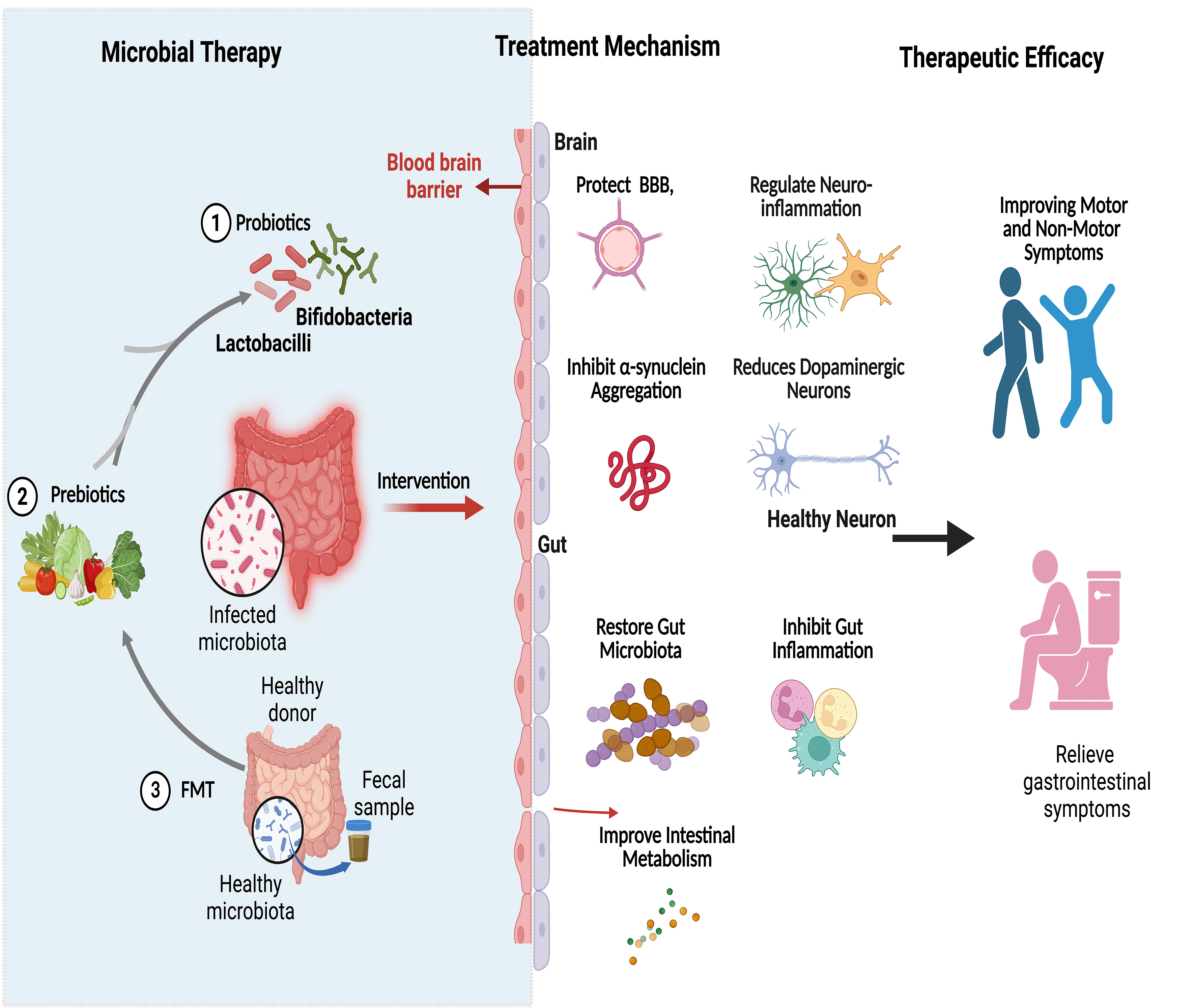
Figure 4. Microbiota-targeted therapeutic strategies. Microbial therapies, including probiotics, prebiotics, and FMT, modulate gut microbial composition and restore intestinal homeostasis. Proposed therapeutic mechanisms through the microbiota-gut-brain axis include restoration of intestinal physiology, suppression of gut inflammation, preservation of blood-brain barrier integrity, inhibition of α-synuclein aggregation, regulation of neuroinflammation, and reduction of dopaminergic neuronal loss. Potential clinical outcomes of microbiota-directed interventions, including improvement of gastrointestinal dysfunction, motor symptoms, and depression-associated non-motor manifestations in PD. The figure was created with BioRender.com. PD: Parkinson’s disease; FMT: faecal microbiota transplantation.