

fig3
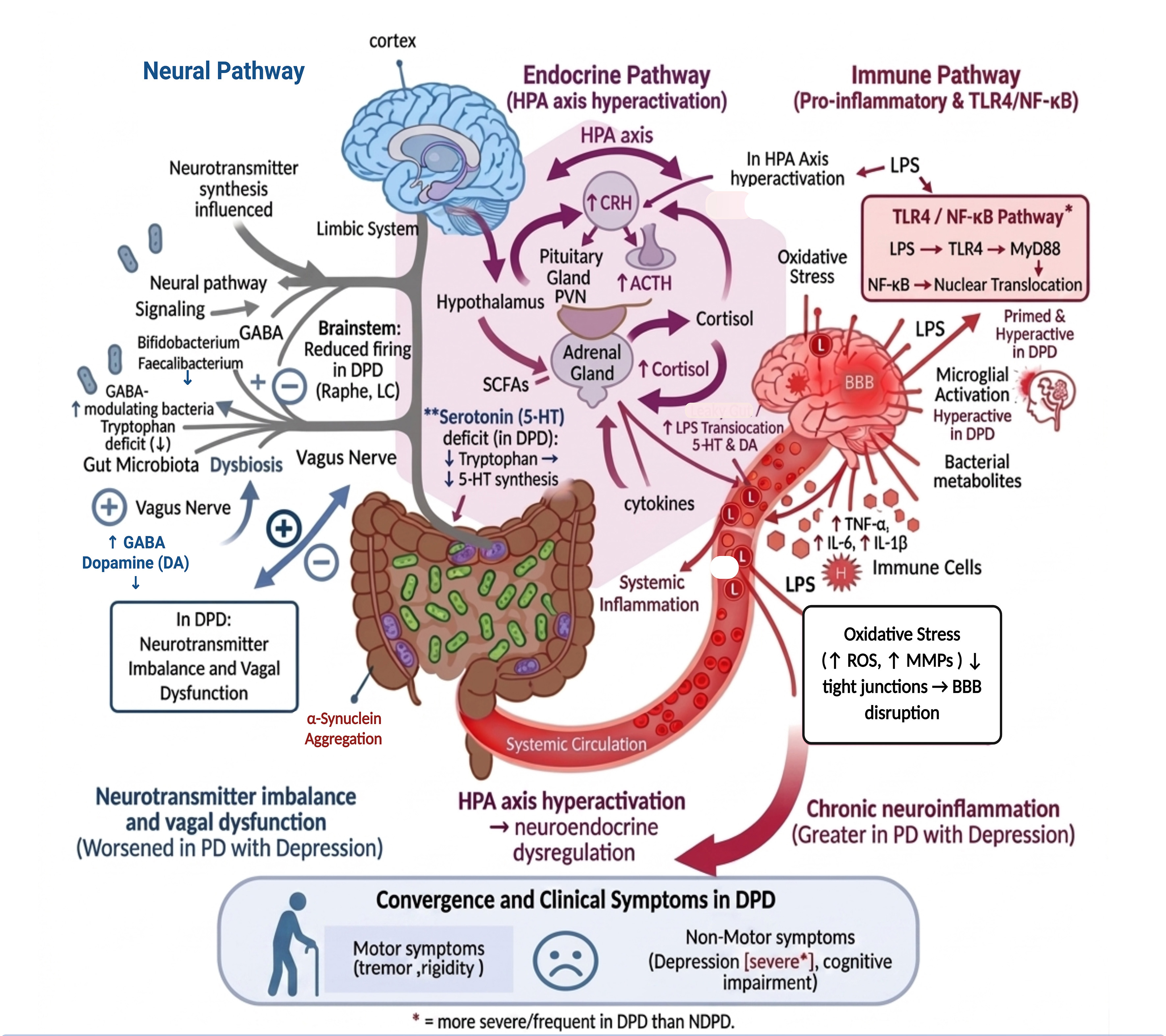
Figure 3. MGBA mechanisms underlying depressive and non-depressive Parkinson’s disease. Gut dysbiosis contributes to PD pathogenesis through interconnected neural, neuroendocrine, and immune pathways. In the neural pathway, microbiota-derived neurotransmitters and metabolites modulate vagal signaling, neurotransmitter synthesis, and brainstem-limbic system communication, contributing to neurotransmitter imbalance and vagal dysfunction in DPD. In the endocrine pathway, dysbiosis-associated cytokines and microbial metabolites disrupt HPA axis regulation, promoting cortisol hypersecretion and serotonergic dysfunction. In the immune pathway, increased intestinal permeability permits systemic translocation of LPS and bacterial metabolites, triggering systemic inflammation, blood-brain barrier disruption, microglial activation, oxidative stress, and α-synuclein aggregation. These convergent mechanisms collectively contribute to motor dysfunction and non-motor manifestations, including depression and cognitive impairment, in PD. *Denotes items more severe or frequent in DPD than NDPD. ↑Indicate an increase or up regulation; ↓Indicate a decrease or deficit; →Trace biological pathway cascades. The figure was created with BioRender.com. 5-HT: 5-hydroxytryptamine (serotonin); ACTH: adrenocorticotropic hormone; BBB: blood-brain barrier; CRH: corticotropin-releasing hormone; DA: dopamine; DPD: depressive Parkinson’s disease; GABA: gamma-aminobutyric acid; HPA: hypothalamic-pituitary-adrenal; IL-1β: interleukin-1 beta; IL-6: interleukin-6; LPS: lipopolysaccharide; MMPs: matrix metalloproteinases; MyD88: myeloid differentiation primary response 88; NDPD: non-depressive Parkinson’s disease; NF-κB: nuclear factor kappa-B; PVN: paraventricular nucleus of the hypothalamus; SCFAs: short-chain fatty acids; TLR4: Toll-like receptor 4; TNF-α: tumour necrosis factor-alpha.