

fig2
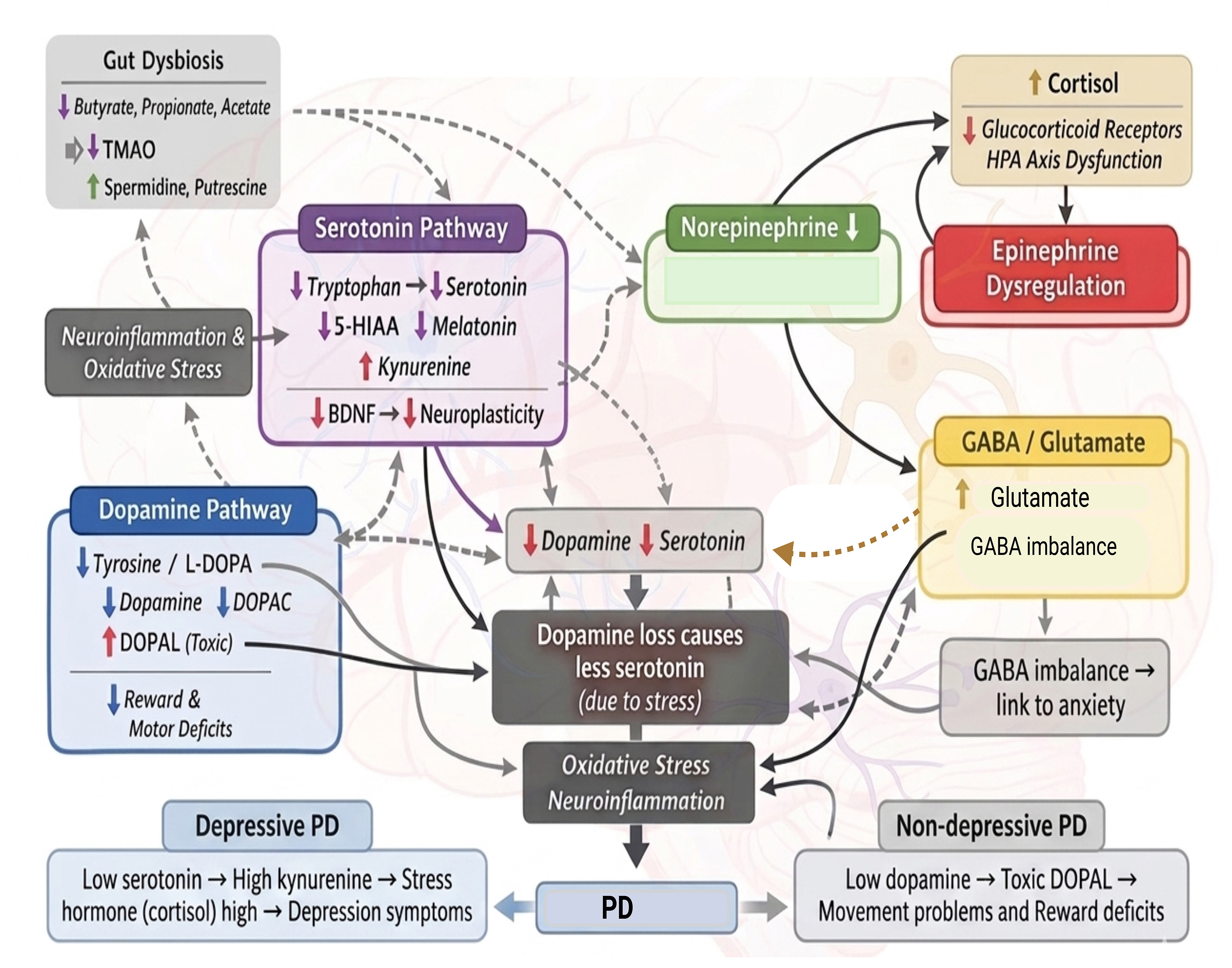
Figure 2. Proposed microbiota-metabolite-neurotransmitter framework underlying depressive and non-depressive Parkinson’s disease. The illustration summarizes how gut dysbiosis and altered microbial metabolites may contribute to the pathophysiology of DPD and NDPD through interconnected neuroinflammatory and neurotransmitter-associated pathways. Gut dysbiosis is characterized by reduced SCFAs (butyrate, propionate, and acetate), increased TMAO, and altered polyamine metabolism, promoting oxidative stress and neuroinflammation. These alterations disrupt multiple neurotransmitter pathways, including serotonin, dopamine, norepinephrine, epinephrine, and GABA/glutamate signaling. Dysregulation of the tryptophan-serotonin pathway is associated with reduced serotonin, 5-HIAA, melatonin, BDNF, and neuroplasticity, alongside increased kynurenine pathway activity. Concurrent impairment of dopaminergic metabolism, characterized by reduced tyrosine/L-DOPA availability, decreased dopamine and DOPAC levels, and accumulation of toxic DOPAL, contributes to motor dysfunction and altered reward processing. HPA axis dysfunction, increased cortisol signaling, and GABA/glutamate imbalance further promote excitotoxicity, anxiety, cognitive dysfunction, and depressive symptomatology. Collectively, these interconnected microbiota-metabolite and neurochemical disturbances converge on oxidative stress and neuroinflammatory pathways, contributing to the divergent neuropsychiatric manifestations of DPD and NDPD. Colored arrows in the figure represent distinct mechanistic associations: purple arrows indicate alterations involving serotonin-related pathways and gut microbiota-mediated serotonergic regulation; yellow arrows denote glutamatergic/GABAergic neurotransmitter imbalance and related signaling interactions; red arrows indicate pathological changes, including increased or decreased expression/activity of key molecules or neurotransmitters. Solid arrows represent established mechanistic links, while dashed arrows indicate indirect or emerging associations. The figure was created with BioRender.com. 5-HIAA: 5-hydroxyindoleacetic acid; BDNF: brain-derived neurotrophic factor; DOPAC: 3,4-dihydroxyphenylacetic acid; DHBA: 3,4-dihydroxyphenylacetaldehyde; GABA: gamma-aminobutyric acid; HPA: hypothalamic-pituitary-adrenal; SCFAs: short-chain fatty acids; TMAO: trimethylamine N-oxide.