
fig1
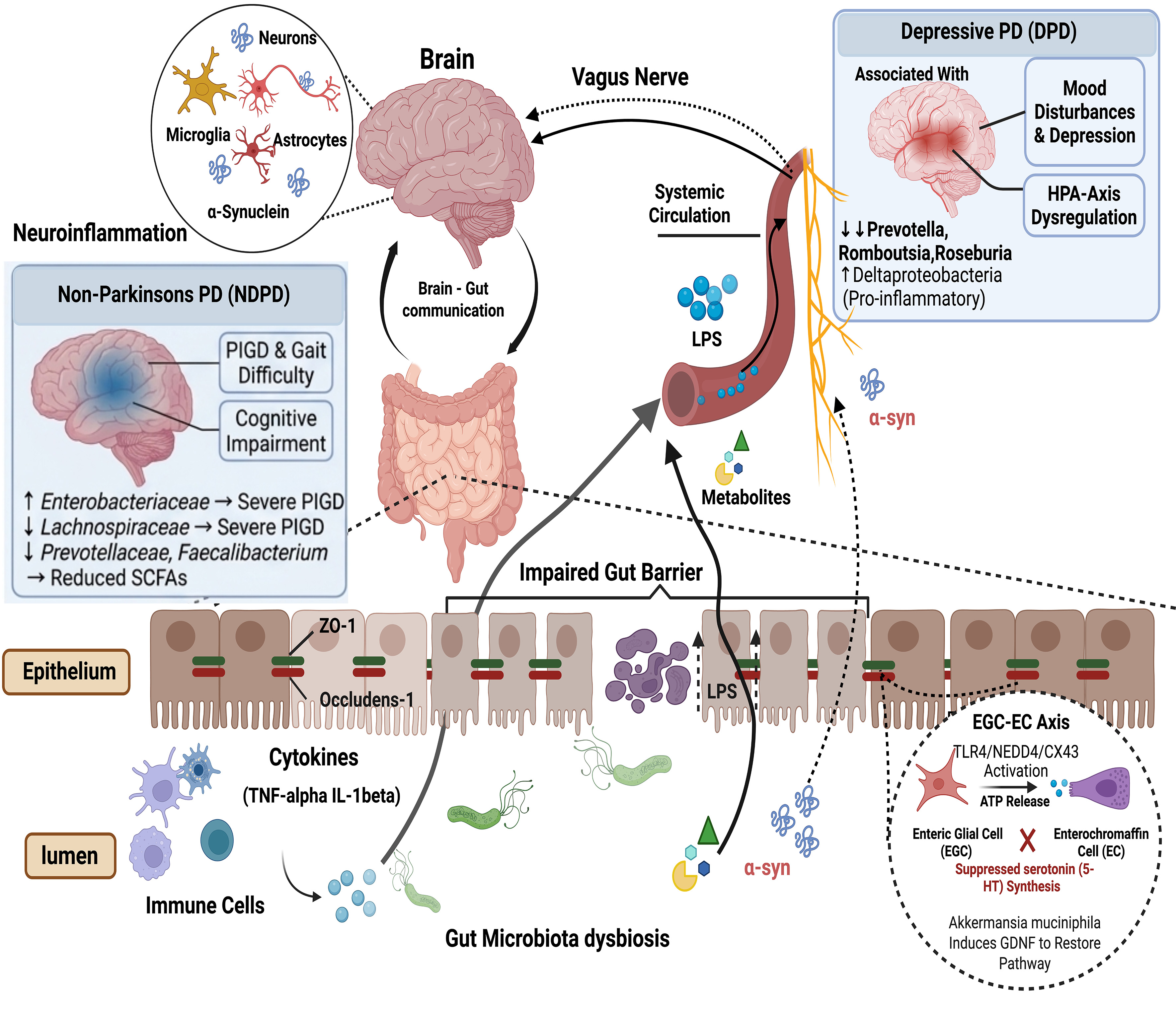
Figure 1. Gut microbial signatures associated with depressive and non-depressive PD. Schematic overview of gut microbiota alterations reported in DPD and NDPD. DPD is characterized by reduced abundances of Roseburia, Romboutsia, Butyricicoccus, Prevotella, Faecalibacterium, Bifidobacterium, Coprococcus, Blautia, and Lactobacilli, together with enrichment of Bacteroides, Escherichia-Shigella, unclassified Deltaproteobacteria, and members of Ruminococcaceae. In contrast, NDPD exhibits microbial alterations involving increased Akkermansia, Lactobacillus, Enterococcus, Bifidobacterium, Coprococcus, and Ruminococcaceae, alongside reduced Prevotella. Variability in the reported abundance of Faecalibacterium and Roseburia across NDPD studies likely reflects differences in cohort characteristics, disease stage, medication exposure, and analytical methodologies. Arrows indicate relative increases (↑) or decreases (↓) in microbial abundance compared with healthy controls. The figure was created with BioRender.com. PD: Parkinson’s disease; DPD: depressive Parkinson’s disease; NDPD: non-depressive Parkinson’s disease; TNF-α: tumour necrosis factor-alpha; IL-1β: interleukin-1 beta; EGC: enteric glial cell; EC: enterochromaffin cell; LPS: lipopolysaccharide; HPA: hypothalamic-pituitary-adrenal.