

fig1
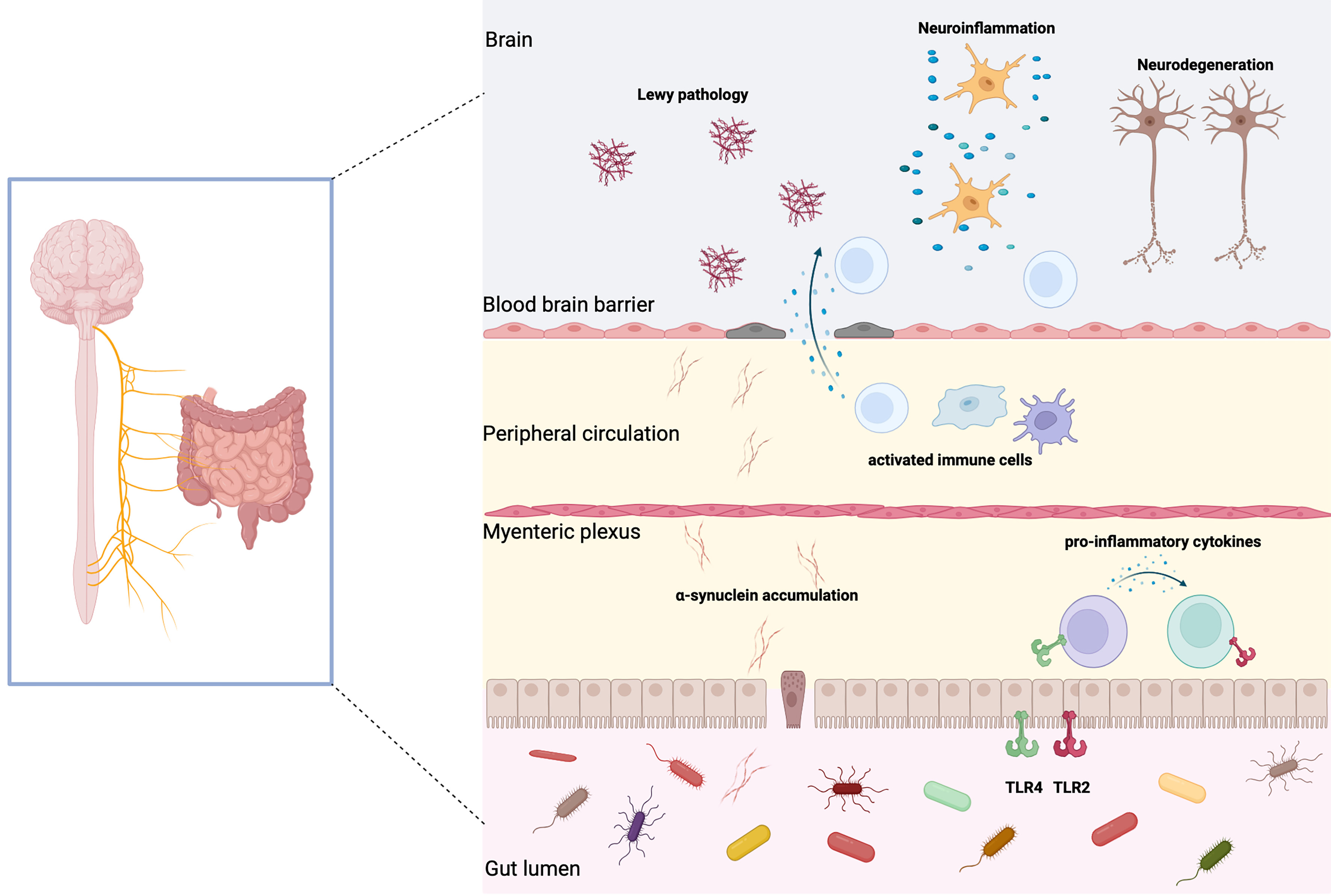
Figure 1. Schematic diagram illustrating changes in the intestinal microenvironment of PD and their impact on the pathophysiology. In PD, observable manifestations include intestinal α synaptic nuclear protein deposits, gastrointestinal inflammation, and impaired intestinal epithelial barrier function. Pathological α synaptic nuclear proteins are found in intestinal EECs and neurons, which transmit to the brainstem via the vagus nerve, leading to Lewy body pathology in the central nervous system. These proteins also trigger inflammatory responses that compromise intestinal barrier integrity. Concurrently, alterations in the gut microbiota composition may accelerate α synaptic nuclear protein aggregation. Dysbiosis of gut microbiota can induce intestinal inflammation, increase gut permeability, and allow systemic infiltration of microbial toxins and metabolites. This process activates immune responses while enhancing blood-brain barrier permeability, ultimately contributing to neuroinflammation and dopaminergic neuron degeneration. Created in BioRender. xin, Z. (2026) https://biorender.com/i7lju4w. PD: Parkinson’s disease; α-synuclein: alpha-synuclein; EECs: endocrine cells; CNS: central nervous system; BBB: blood-brain barrier; TLR2: Toll-like receptor 2; TLR4: Toll-like receptor 4.