

The future of surgical simulation training in the era of artificial intelligence: multidisciplinary perspectives from NASCE, DSSH, and SESAM
 0
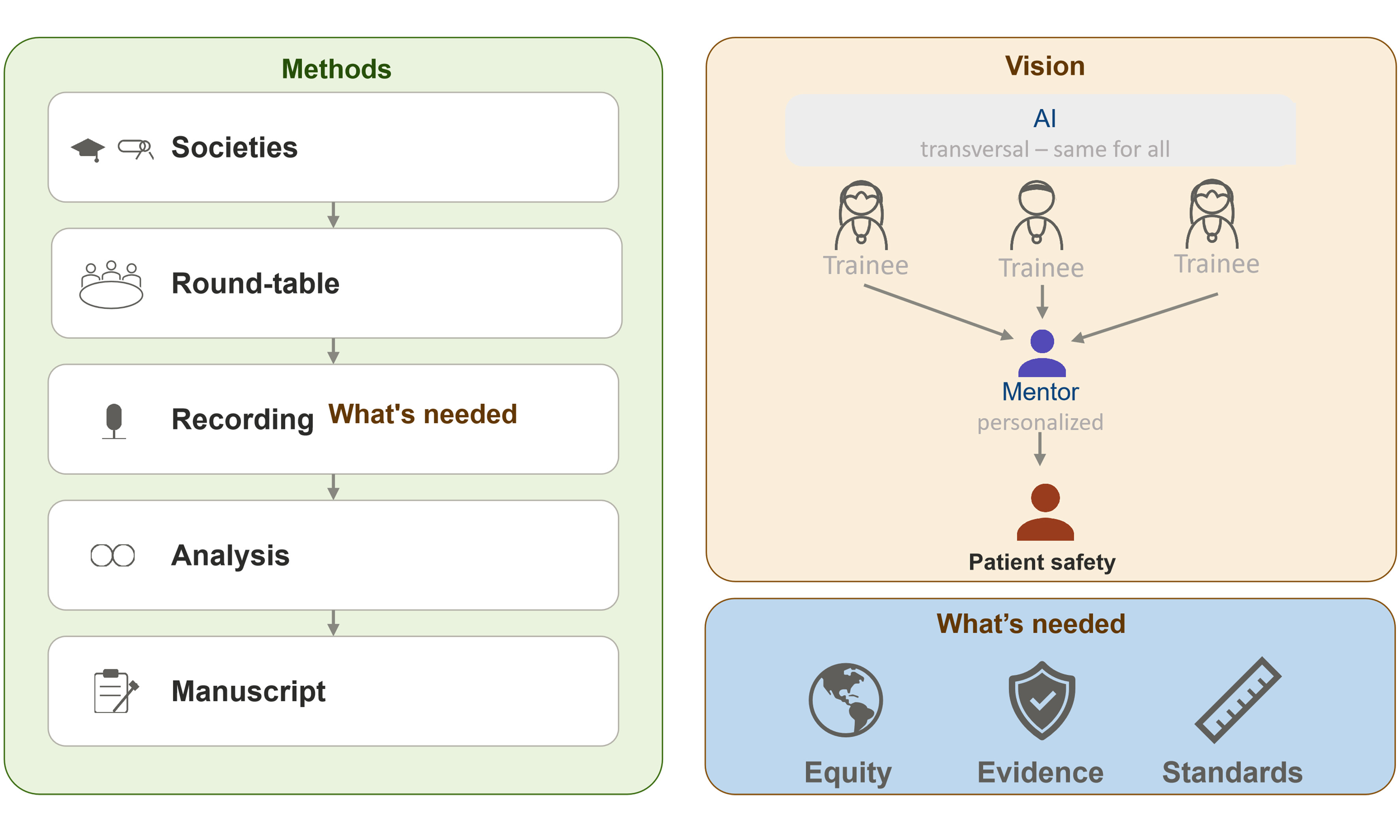
0 Graphical Abstract
Abstract
Background: Healthcare simulation is evolving rapidly, yet its role in surgical education remains uneven. During the 9th NASCE (Network of Accredited Clinical Skills Centers of Europe) conference at Orsi Academy (Ghent, Belgium), SESAM (Society in Europe for Simulation Applied to Medicine), DSSH (Dutch Society for Simulation in Healthcare), and NASCE convened a multidisciplinary roundtable, “Healthcare Simulation 2050: Building a Better Future Together”, to explore future directions, challenges, and opportunities in surgical simulation.
Methods: Conference faculty submitted reflections in advance to inform the discussion. The session was audio-recorded (with consent), transcribed verbatim, and analyzed by two reviewers using rapid qualitative thematic analysis with inductive coding. Themes were derived from both pre-meeting inputs and live discussions, aiming to synthesize perspectives rather than reach formal consensus.
Results: Twenty-four multidisciplinary participants contributed, including surgeons, trainees, engineers, and industry and society representatives. Many participants expressed the view that simulation should precede clinical exposure, ideally through proficiency-based progression, to enhance patient safety and standardize training. Participants identified inequities in access, limited curricular integration, and insufficient validation linking simulation to clinical outcomes. Artificial intelligence (AI)-driven coaching, adaptive learning, and global collaboration were viewed as promising but requiring stronger evidence. Human factors, mentorship, empathy, and equity, were emphasized as essential for sustainable, patient-centered implementation.
Conclusions: The discussion highlights a shared vision for surgical simulation: balancing innovation with inclusivity, and technology with human mentorship. While AI and personalized learning are expected to transform training within the next decade, simulation must remain grounded in patient safety, validation, and equitable access. These perspectives reflect emerging expert opinions from a structured multidisciplinary discussion, and do not constitute a formally validated guideline or consensus statement.
Keywords


 Download PDF
INTRODUCTION
Healthcare simulation has evolved from a supplementary teaching tool into an essential pillar of surgical and clinical education[1]. The 9th NASCE (Network of Accredited Clinical Skills Centers of Europe) Congress was organized by two accredited NASCE centers, Institute for Training and Clinical Innovative Technology (ITCIT) and Orsi Academy. This scientific meeting, held at Orsi Academy, Belgium, in October 2025, offered a timely and excellent opportunity to reflect on the future trajectory of simulation and its expanding role in healthcare training under the overarching theme “Artificial intelligence (AI) and Training - Friend or Foe?”[2].
In parallel, AI has increasingly been applied to surgical education, supporting adaptive feedback, objective performance assessment, and personalized skill acquisition across simulation-based training platforms. Recent systematic and scoping reviews have highlighted its growing role in enhancing training efficiency, though questions around validation and clinical translation remain open[3,4].
The round-table discussion, “Healthcare simulation 2050: building a better future together” brought together leading voices from simulation societies, academia, clinical practice, industry, and trainee communities. The session aimed to explore how technological innovation, particularly the rise of AI, will redefine simulation-based education, professional development, and patient safety over the coming decades.
The purpose of this report is not to present a unanimous position, but to synthesize the key themes, aspirations, and challenges that emerged from the round-table discussion; therefore, this manuscript should not be interpreted as a formally validated consensus statement, but rather as a report of emerging expert perspectives derived from a single, structured round-table discussion. Specifically, the report captures multidisciplinary perspectives on the future of surgical and healthcare simulation, examining the enablers and barriers to its effective integration within medical education. It further explores how AI, digital technologies, and global collaboration may reshape the simulation landscape by 2050, while underscoring emerging priorities related to validation, equity, ethics, and human factors in the age of intelligent training systems.
METHODS
Design and participants
A multidisciplinary 90-min round-table took place in person on 8 October 2025 during the 9th NASCE Congress at Orsi Academy. Participants represented a broad international spectrum of the simulation ecosystem, including senior surgeons with different backgrounds, surgical trainees, medical students, biomedical engineers, industry developers, simulation center directors, and leaders of European and national simulation societies. Participants were selected by invitation, with the aim of ensuring a representative sample of all key stakeholders involved in surgical training and simulation.
Pre-meeting input
In preparation for the event, invited congress faculty were asked to share their perspectives on the question: “How do you envision the future of healthcare simulation by 2050?” Their reflections were consolidated into a PowerPoint presentation and showcased as discussion prompts during the session, setting the stage for a rich and engaging dialogue. Contributors were selected to ensure broad representation across the simulation community. Invitations were extended to the presidents of related professional societies as well as representatives from surgical trainee organizations and key industry partners advancing simulation technologies and practices.
Data collection and analysis
The round-table was audio-recorded and transcribed verbatim using Microsoft Teams (Microsoft Corporation, Redmond, WA, USA). Rapid qualitative analysis was performed using inductive coding to identify recurring ideas and tensions. Two reviewers independently coded the material and integrated it with the pre-meeting statements. Discrepancies between reviewers were resolved through discussion and the final coding was reviewed and validated by all authors, all of whom were present at the meeting. The synthesis highlights the most representative and divergent opinions, maintaining the spirit of an open, forward-looking dialogue rather than enforcing consensus.
Derivation of statements
The action items and recommendations presented were initially outlined during the closing phase of the round-table session, where key emerging themes were collectively summarized. Following the meeting, a structured draft of the recommendations was developed by the two lead authors and subsequently reviewed and approved by all co-authors, all of whom had participated in the round-table discussion. It should be noted that the recommendations were not formally validated by all round-table participants, and should therefore be interpreted as author-synthesized reflections of the discussion rather than formally endorsed conclusions.
Ethical considerations
This scholarly activity constitutes expert consultation and did not involve patient data. Participants provided verbal consent to the use of anonymized excerpts and that, on a voluntary basis, some shared their contact details to review and approve the summarized document after drafting.
RESULTS
A total of 24 participants contributed to the session, representing a diverse cross-section of the simulation community. A detailed summary of the multidisciplinary group composition is provided in Table 1. Thematic analysis of the transcript identified several overarching themes that captured both areas of consensus and divergence across professional backgrounds.
Composition of the multidisciplinary group participated in the round-table discussion
| Participant category | Description/Representation | Number (n) |
| Professional societies representatives | NASCE, SESAM, DSSH, RBSS, RCSI | 4 |
| Simulation centers representatives | Orsi Academy, Belgium ITCIT, Ghent University Hospital, Belgium CASE, Acibadem University, Turkey Lorraine Virtual Hospital Nancy, France CAMST, Karolinska University Hospital, Sweden The Griffin Institute Robotic Surgery Training Center, UK Cadaveric Microanatomy Laboratory - ASU, Jordan | 7 |
| Surgeons representatives | Gastrointestinal, Hepato-Pancreato-Biliary, colorectal, cardiovascular, pediatric | 5 |
| Surgical trainees and medical student representatives | BAST, Junior Orsi | 3 |
| Industry representative | VR/AR platform developers; robotics companies; simulation technology firms | 5 |
The role of simulation in future training
Many participants expressed the view that simulation should precede clinical exposure, emphasizing structured proficiency-based progression (PBP) with performance validated against expert benchmarks. This approach minimizes patient risk and standardizes surgical education by fostering skill acquisition through deliberate practice in a controlled environment, rather than relying on variable clinical exposure[5,6]. Repetitive achievement and benchmarking, rather than fixed score thresholds, were viewed as essential indicators of readiness.
The dialogue also acknowledged that current evidence in simulation research emphasizes efficiency, procedure time, and technical performance, while relatively few studies directly link simulation to patient outcomes[7]. Participants underscored that the ultimate goal of simulation is not training per se, but to increase patient safety and improve healthcare system efficiency. In essence, simulation-based education is justified only when improvements in trainee performance translate into safer, more efficient, and higher-quality patient care.
Integration, access, and sustainability
Access to high-quality simulation remains uneven across institutions and countries[8]. Funding responsibilities - whether borne by governments, hospitals, or industry - were actively debated. While several participants argued that making simulation a mandatory credentialing requirement could naturally drive the creation of financial and regulatory frameworks, others felt that this step remains premature, as decision-makers have not yet endorsed it. Overall, many participants converged on the direction but acknowledged some uncertainty about the timeline and feasibility of implementation.
Participants also criticized the “drop-and-forget” approach to simulator acquisition, in which technology is introduced without systematic curricular integration, defined learning objectives, or mentorship support. They emphasized that such isolated implementation fails to deliver meaningful educational or clinical impact.
Technology horizons: AI, cognitive load, and validation
AI-based coaching, digital learning records, and cognitive-load-based personalization were recognized as transformative opportunities. Participants envisioned “virtual coaches” and adaptive learning systems within five years. Simulation environments represent the ideal setting for deploying AI-driven coaching and adaptive learning, as they allow safe, repeatable data collection, real-time feedback, and standardized skill progression before such tools are translated into the operating room. However, caution was expressed about the lack of validation of several emerging tools. Participants emphasized the need for evidence linking simulation outcomes to clinical performance and patient safety. Haptic feedback was viewed as optional for experts in robotics and minimally invasive surgery but valuable for novices and selected specialties. The conceptual framework itself is not new: Kirkpatrick’s model of training evaluation was first published in 1959 and has remained the standard reference for over sixty years. The gap has therefore never been theoretical; it has been practical. What differentiates the current opportunity is the technical feasibility of achieving Level 4 evidence at scale, enabled by the convergence of robotic platforms, advanced recording hardware, and AI-driven analytics, which now allow systematic, granular capture of intraoperative metrics, including instrument motion economy, tremor, coagulation time, and phase-specific timing, that were previously difficult or impossible to obtain in open or conventional laparoscopic settings.
Global access and equity
Equity was identified as both a moral and practical imperative. Resource-constrained and conflict settings face severe infrastructure limitations, demanding low-cost, low-power, or offline alternatives. Participants emphasized that simulation technology should not deepen global inequities. Partnerships, open-source curricula, and regional hubs were proposed to ensure inclusivity. Several advocated combining high-tech with low-fidelity and cadaveric models to preserve tactile learning in diverse contexts.
Personalized learning pathways
While many participants expressed the view that standardized curricula are needed to ensure equity and comparability across institutions, training cannot be one-size-fits-all. Needs may vary by country, hospital, and individual profiles. Some trainees require refinement of psychomotor (“hard”) skills, others require improvement in decision-making or communication (“soft”) skills. AI can support adaptive scoring, feedback, and longitudinal tracking to standardize benchmarks, but training pathways should be integrated with human mentorship to interpret outcomes and tailor learning plans.
The human dimension: mentorship, empathy, and cultural change
While AI can streamline quantitative assessment, human mentorship remains indispensable for qualitative feedback, debriefing, and emotional intelligence. Participants discussed the risk of “training empathy out of healthcare” through over-digitalization. Simulation, they argued, should also cultivate empathy, teamwork, and communication. The narrative should shift from “training surgeons” to “enhancing patient safety and professional humanity”. This reflects a division of roles rather than a contradiction: AI is best suited to repeatable, quantitative tasks such as error detection, data tracking, and standardized scoring, while human mentors remain uniquely positioned to address the emotional and motivational dimensions of learning, including frustration and setbacks that arise during skill acquisition.
DISCUSSION
This round-table study synthesized multidisciplinary perspectives from key stakeholders, including clinicians, trainees, industry representatives, and simulation experts, to identify current evidence, unmet needs, and gaps in robotic and simulation-based surgical training in Europe. By integrating these viewpoints, the discussion outlines key priorities across the training continuum, translating them into actionable recommendations and framing them within short-, mid-, and long-term perspectives.
Overall, the discussion reflects a cautious optimism toward technology-enabled, patient-centered simulation, while emphasizing the need for realistic and structured implementation in clinical practice. Participants envisioned an educational ecosystem integrating validated simulation, AI-enhanced analytics, and personalized learning pathways within equitable systems. A recurring theme was that the next decade will be critical in determining whether simulation evolves from an innovation to an established component of healthcare infrastructure.
The key themes emerging from the discussion are summarized below and organized according to the pre-training, peri-training, and post-training phases of surgical training; Table 2 provides a detailed, point-by-point overview of these findings and their corresponding recommendations.
Translating simulation findings into training-phase recommendations
| Results | Training-phase | Recommendation |
| Simulation should precede clinical exposure, using proficiency-based progression with validated benchmarks | Pre-training | Training bodies should implement simulation-based proficiency training as a prerequisite before clinical exposure[5,9] |
| Need for structured curricular integration and avoidance of “drop-and-forget” implementation | Pre-training | Healthcare institutions, training bodies, and policymakers should integrate simulation into structured curricula and consider its inclusion in credentialing and accreditation frameworks[10,11] |
| Simulation as a potential requirement for credentialing and standardization of training | Pre-training | |
| Unequal access to simulation and uncertainty in funding and regulatory frameworks | Pre-training | Policymakers should ensure equitable access to simulation through dedicated funding and regulatory support[12-14] |
| Lack of validation and need for robust evidence for emerging technologies (especially AI) | Pre-training Peri-training Post-training | Industry and academic stakeholders should promote AI-driven simulation technologies - with AI supporting repeatable quantitative tasks (automated scoring, adaptive sequencing, longitudinal performance tracking) and human mentors retaining responsibility for interpretation, debriefing, and the emotional and motivational dimension of learning - while ensuring rigorous validation, transparency, and evidence-based implementation[15] |
| AI-driven coaching, adaptive learning, and cognitive load-based personalization as emerging tools in surgical simulation | Pre-training Peri-training Post-training | |
| Central role of human mentorship alongside AI for interpretation, feedback, and learning | Pre-training Peri-training Post-training | |
| Importance of scalable solutions (low-cost, hybrid models) to ensure international equity | Pre-training Peri-training Post-training | Industry and international health stakeholders should develop scalable, low-cost, and hybrid simulation solutions[16,17] |
| Shift in paradigm from technical training to patient-centered, human-focused care | Pre-training Peri-training Post-training | Training bodies should implement personalized curricula integrating technical and non-technical skills, including human factors, communication, empathy, and ethical aspects[18,19] |
| Need for personalized training pathways combining technical and non-technical skills | Pre-training Peri-training | |
| Digital learning records and longitudinal performance tracking to support continuous learning | Pre-training Peri-training Post-training | Institutions and training bodies should implement digital learning records for continuous performance tracking and feedback[11,20,21] |
| Risk of losing empathy with over-digitalization and need to preserve human factors (teamwork, communication) | Pre-training Peri-training Post-training | Educators should incorporate simulation-based training for teamwork, communication, and empathy to balance technological integration[22] |
| Simulation aims to improve patient safety and healthcare efficiency, but requires stronger evidence linking training to clinical outcomes | Post-training | Academic institutions and researchers should define minimum evidence requirements for AI simulator deployment, including mandatory Kirkpatrick Level 4 studies linking AI training metrics to patient-safety and clinical outcomes[23,24] |
Pre-training
Under the pre-training stage, the need for structured curricular integration and avoidance of “drop-and-forget” implementation is essential. Simulation may become a requirement for credentialing and standardizing training, using structured and reproducible approaches such as PBP.
Unequal access to simulation and uncertainty in funding and regulatory frameworks remain significant challenges. International collaboration and regulatory support are needed to bridge this gap, while emerging technologies such as AI-driven solutions and low-cost or hybrid models may help improve accessibility in the future.
Peri-training
In the peri-training stage, evaluation should be an integral part of surgical training. It is essential to have scalable, low-cost solutions that combine human mentorship with AI to monitor training progress during peri-training phases. Digital learning records and longitudinal performance tracking will be key to supporting continuous learning throughout the operative process. This ensures that peri-training is monitored, structured, and continuously refined.
Post-training
Under the post-training stage, the narrative around simulation must center on patient outcomes and healthcare efficiency, not just skill acquisition. Therefore, it is essential to track training impact on clinical outcomes, following principles like Kirkpatrick Level 4. In addition, post-training monitoring, feedback loops, and continuous learning systems ensure that training programs are refined based on real clinical performance, ultimately improving patient care.
Transversal
Simulation is indispensable but must be validated, standardized, and sustainably funded. AI, including coaching, adaptive learning, and cognitive personalization, can support training, but human mentorship remains essential. Mentors are needed to interpret data, personalize learning, and foster empathy, communication, and other non-technical skills. Additionally, scalable solutions like low-cost or hybrid models could help achieve global equity, but these technologies must first be validated before widespread adoption. Digital learning records and performance tracking will also support continuous learning across stages.
Recommendations
The recommendations derived from this NASCE meeting are summarized in Table 2, providing clear, actionable guidance tailored to different stakeholders, with a focus on integrating simulation, ensuring equity, and fostering validated, human-centered approaches.
Future roadmap
In the short term, there is an urgent need to recognize the importance of simulation-based training throughout the entire clinical career, from medical students to residents, surgeons, and subspecialists, with professional societies playing a central role in driving this recognition. In the mid-term, validation of these tools should be solidified, along with integration of AI, distinguishing what remains human-driven versus AI-supported. Personalized ecosystems will start to develop. In the long term, reducing costs and fostering global collaboration between institutions will be essential, with fully personalized ecosystems ultimately approved and adopted on an international scale. Figure 1 provides a schematic overview of this roadmap across the three time horizons.
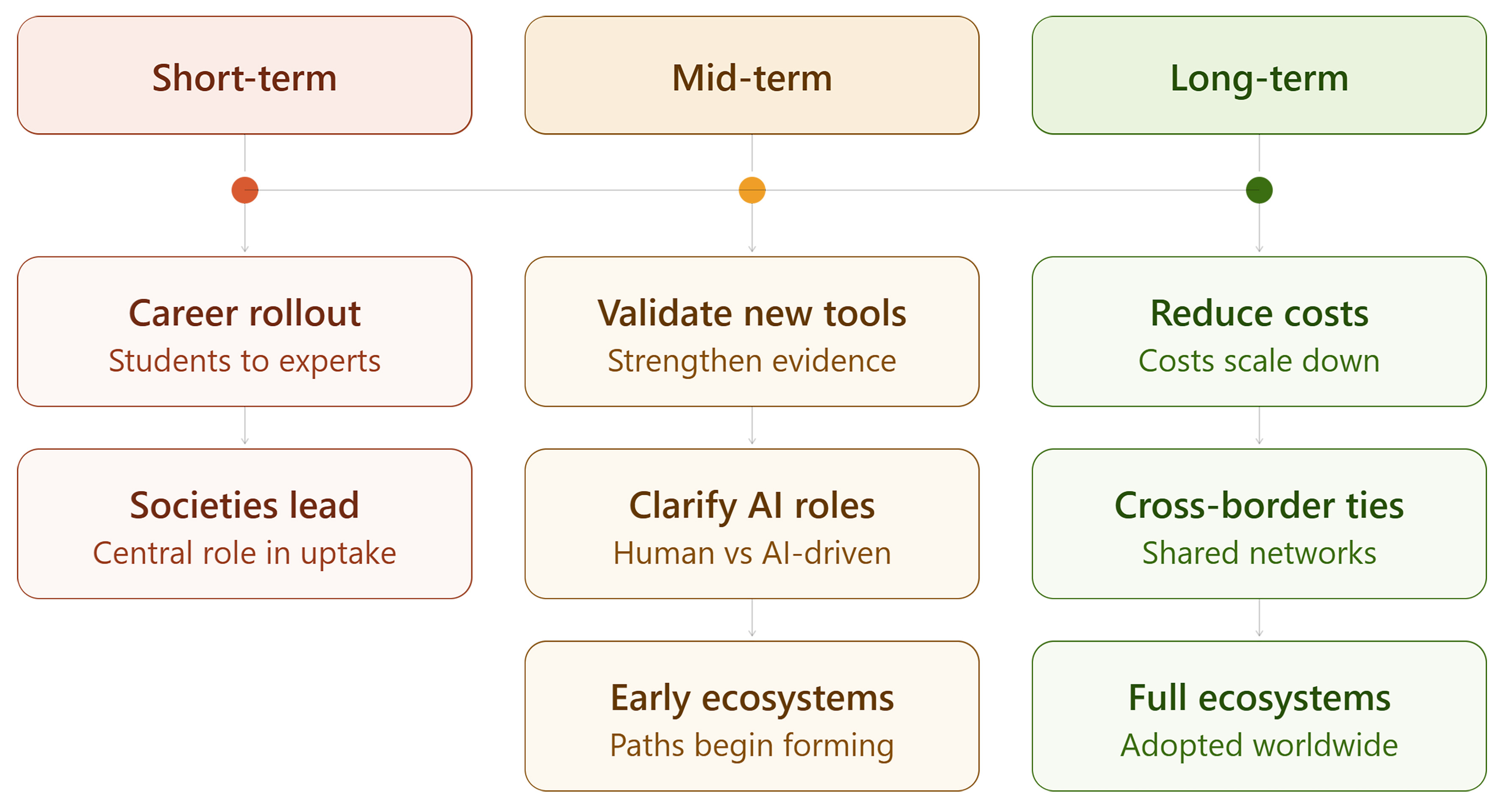
Figure 1. Schematic overview of the future roadmap, organized by short-term, mid-term, and long-term priorities for the integration of simulation-based and AI-supported surgical training.
Author perspectives on emerging priorities
The themes emerging from this discussion also prompted the authors to identify a number of related considerations that, while not derived from the roundtable itself, merit attention in future work. These should not be interpreted as recommendations of the roundtable, but rather as author reflections stimulated by the discussion. Future roundtables and consensus efforts should include patients or patient advocacy representatives, involved from the design phase of the discussion, to ensure that the patient perspective informs future research priorities and recommendations. Similarly, defining minimum evidence standards and validation trial requirements for AI-based simulation tools, including Kirkpatrick Level 4 outcomes, would benefit from a dedicated, formally structured consensus process such as a Delphi study. Future consensus efforts should also define the operational aspects of digital learning records, including data content, provenance, storage, and governance. The credentialing and legal implications of integrating AI-driven simulation into surgical training likewise warrant dedicated discussion in future consensus initiatives. Finally, the development of illustrative training scenarios and standardized debriefing frameworks, combining quantitative AI metrics with qualitative emotional and behavioral feedback, remains an important direction for future dedicated work.
Strengths and limitations
This study presents several strengths. The multidisciplinary composition of the round-table, encompassing senior surgeons, surgical trainees, simulation center directors, industry representatives, and leaders of European and national simulation societies, ensured a broad range of perspectives across different professional backgrounds and levels of experience. The methodological approach, combining pre-meeting written inputs with a live audio-recorded and verbatim-transcribed discussion analyzed by two independent reviewers, adds rigor to the qualitative synthesis. Furthermore, while several themes addressed in this paper have been previously discussed in the international literature, this work offers a distinctive contribution by revisiting them through a multidisciplinary lens and within a specifically European context, while also introducing emerging perspectives not yet widely explored.
Nonetheless, several limitations should be acknowledged. The heterogeneous composition of the group, while a source of breadth, also introduces the potential for divergent or competing interests: industry representatives, for instance, may have commercial incentives that could influence their perspectives on technology adoption or certification requirements. The total number of participants remains limited (n = 24), and despite the international representation, the group was predominantly European, which may limit the transferability of the findings to other regional and cultural contexts. Future work should aim to overcome these regional barriers, for example through cross-continental working groups and larger participant groups, and extend the discussion to include limited-resource settings. Additionally, the rapid qualitative thematic analysis employed, while appropriate for this type of scholarly activity, is inherently interpretive and does not constitute formal consensus; the recommendations should therefore be understood as emerging expert opinions rather than validated guidelines. Finally, the absence of patient or patient advocate representation is a notable gap, particularly given the paper’s emphasis on patient safety and patient-centered care.
Taken together, this white paper should be interpreted as a synthesis of multidisciplinary perspectives emerging from a structured roundtable discussion, and does not represent a formal guideline or consensus statement. The recommendations presented herein reflect emerging expert opinions intended to inform and stimulate further debate rather than to prescribe standardized practice.
CONCLUSION
The 9th NASCE Congress round-table provided a rich exchange of ideas about where simulation in healthcare in 2050 is heading. Participants envisioned a future defined by intelligent, inclusive, and ethically grounded simulation ecosystems that enhance both competence and compassion. The path forward requires collaboration among societies, educators, clinicians, industry, and policymakers to ensure that the promise of simulation translates into international improvements in patient care.
DECLARATIONS
Authors’ contributions
Organized and coordinated the NASCE Congress and the round-table session: Van Herzeele I, Mottrie A, Rashidian N, Vanderstraeten E
Conceptualized the study and designed the methodological approach: Rashidian N, Willaert W
Drafted the manuscript in equal contribution: Rashidian N, Pasquini P
Collected and organized the data: Pasquini P
All authors critically revised the manuscript and approved the final version for submission.
Availability of data and materials
The data supporting the findings of this study are available within the article. Additional data are available from the corresponding author upon reasonable request.
AI and AI-assisted tools statement
During the preparation of this manuscript, the AI tools ChatGPT (GPT-5, released 2025-08-07) and Claude (Opus 4.5, released 2025-11-24) were used solely for language editing. The tools did not influence the study design, data collection, analysis, interpretation, or the scientific content of the work. All authors take full responsibility for the accuracy, integrity, and final content of the manuscript.
Financial support and sponsorship
Van Herzeele I is funded by a Senior Clinical Fellowship (1802324N) by the Fund for Scientific Research, Flanders, Belgium.
Conflicts of interest
Rashidian N (Nikdokht Rashidian) is a Junior Editorial Board Member of the journal Artificial Intelligence Surgery. Rashidian N was not involved in any aspect of the editorial process, including reviewer selection, manuscript handling, or decision-making. The other authors declare that there are no conflicts of interest.
Ethical approval and consent to participate
Not applicable.
Consent for publication
Not applicable.
Copyright
© The Author(s) 2026.
REFERENCES
1. Elendu C, Amaechi DC, Okatta AU, et al. The impact of simulation-based training in medical education: a review. Medicine. 2024;103:e38813.
2. 9th NASCE Scientific Meeting 8-9 October 2025. Available from https://www.uemsnasce.eu/blog/nasce-news-7/9th-nasce-scientific-meeting-8-9-october-2025-98. [accessed 14 August 2026].
3. Tene T, Valverde Aguirre PE, Parreño Urquizo ÁF, Vique López DF. Artificial intelligence applications in surgical education and training: a systematic review. Front Artif Intell. 2026;9:1815315.
4. Escobar-Castillejos D, Barrera-Animas AY, Noguez J, Magana AJ, Benes B. Transforming surgical training with AI techniques for training, assessment, and evaluation: scoping review. J Med Internet Res. 2025;27:e58966.
5. Mazzone E, Puliatti S, Amato M, et al. A systematic review and meta-analysis on the impact of proficiency-based progression simulation training on performance outcomes. Ann Surg. 2021;274:281-9.
6. Gallagher AG, De Groote R, Paciotti M, Mottrie A. Proficiency-based progression training: a scientific approach to learning surgical skills. Eur Urol. 2022;81:394-5.
7. Howard KK, Makki H, Mi M, Novotny NM, Nguyen N. The value of simulation for training general surgery novices in robotic surgery: a systematic review. J Robotic Surg. 2025;19:763.
8. Malhotra K, Balakrishnan H, Warmington E, et al. Global disparities in simulation-based learning performance: serial cross-sectional mixed methods study. JMIR Med Educ. 2025;11:e52332.
9. Mascheroni J, Stockburger M, Patwala A, et al. Effect of metrics-based simulation training to proficiency on procedure quality and errors among novice cardiac device implanters: the IMPROF randomized trial. JAMA Netw Open. 2023;6:e2322750.
10. Fransen AF, van de Ven J, Banga FR, Mol BWJ, Oei SG. Multi-professional simulation-based team training in obstetric emergencies for improving patient outcomes and trainees’ performance. 2026.
11. Nasca TJ, Philibert I, Brigham T, Flynn TC. The next GME accreditation system - rationale and benefits. N Engl J Med. 2012;366:1051-6.
12. Abahuje E, Tuyishime E, Alayande BT. Global surgical simulation education, current practices, and future directions. Surgery. 2025;180:109050.
13. Siraj S, Momand B, Brunton G, Dubrowski A. Identification of a partnership model between a university and not-for-profit organization to address health professions education and health inequality gaps through simulation-based education: a scoping review. PLoS One. 2024;19:e0311349.
14. Lin Y, Cheng A, Hecker K, Grant V, Currie GR. Implementing economic evaluation in simulation-based medical education: challenges and opportunities. Med Educ. 2018;52:150-60.
15. Ji F, Xiao W, Li X. AI-driven intelligent training enhances clinical competence in oncology residency: a randomized controlled trial. Front Med. 2026;13:1768388.
16. Motola I, Devine LA, Chung HS, Sullivan JE, Issenberg SB. Simulation in healthcare education: a best evidence practical guide. AMEE Guide No. 82. Med Teach. 2013;35:e1511-30.
17. Persson J. A review of the design and development processes of simulation for training in healthcare - a technology-centered versus a human-centered perspective. Appl Ergon. 2017;58:314-26.
18. Peña RP, Weber W. A taste of our own medicine: fostering empathy in medical learners through patient simulation. West J Emerg Med. 2025;26:1526-9.
19. Lee J, Huang CH, Wang HW, Hung SW, Chang JT. A novel approach to patient safety education: integrating the human factors analysis and classification system (HFACS) to build a culture of safety in medical training. BMC Med Educ. 2025;25:1296.
20. Tochel C, Haig A, Hesketh A, et al. The effectiveness of portfolios for post-graduate assessment and education: BEME Guide No 12. Med Teach. 2009;31:299-318.
21. Lees AF, Beni C, Lee A, et al. Uses of electronic health record data to measure the clinical learning environment of graduate medical education trainees: a systematic review. Acad Med. 2023;98:1326-36.
22. Sarıköse S, Sengul T, Lopez V, Kirkland-Kyhn H. Fostering healthy work environments through interprofessional simulation: teamwork, communication, psychological safety - systematic review of randomised controlled and quasi-experimental studies. J Adv Nurs. 2026, Epub ahead of print.
23. Lavoie P, Lapierre A, Maheu-Cadotte MA, Fontaine G, Khetir I, Bélisle M. Transfer of clinical decision-making-related learning outcomes following simulation-based education in nursing and medicine: a scoping review. Acad Med. 2022;97:738-46.
Cite This Article
 Open Access
How to Cite
Rashidian N, Pasquini P, Vanderstraeten E, Mottrie A, Willaert W, Van Herzeele I; The NASCE 2025 Simulation Future Working Group. The NASCE 2025 Simulation Future Working Group: Dili A, Descheemacker B, Bomans E, Clerck ED, Peperstaete H, Voortmans J, Ikram K, Vandenbroucke K, Testaguzza M, Francis N, Berte N, Traynor O, Pattyn P, Sergeant P, Ingrassia PL, Hermans PJ, Ricci S, Strauch U, Talib WH. The future of surgical simulation training in the era of artificial intelligence: multidisciplinary perspectives from NASCE, DSSH, and SESAM. Art Int Surg. 2026;6:483-93. https://dx.doi.org/10.20517/ais.2026.34
Download Citation
If you have the appropriate software installed, you can download article citation data to the citation manager of your choice. Simply select your manager software from the list below and click on download.
Export Citation File
Type of Import
Tips on Downloading Citation
Citation Manager File Format
Type of Import
Direct Import: When the Direct Import option is selected (the default state), a dialogue box will give you the option to Save or Open the downloaded citation data. Choosing Open will either launch your citation manager or give you a choice of applications with which to use the metadata. The Save option saves the file locally for later use.
Indirect Import: When the Indirect Import option is selected, the metadata is displayed and may be copied and pasted as needed.
About This Article
Copyright

Data & Comments
Data
0









Comments
Comments must be written in English. Spam, offensive content, impersonation, and private information will not be permitted. If any comment is reported and identified as inappropriate content by OAE staff, the comment will be removed without notice. If you have any queries or need any help, please contact us at [email protected].