
fig2
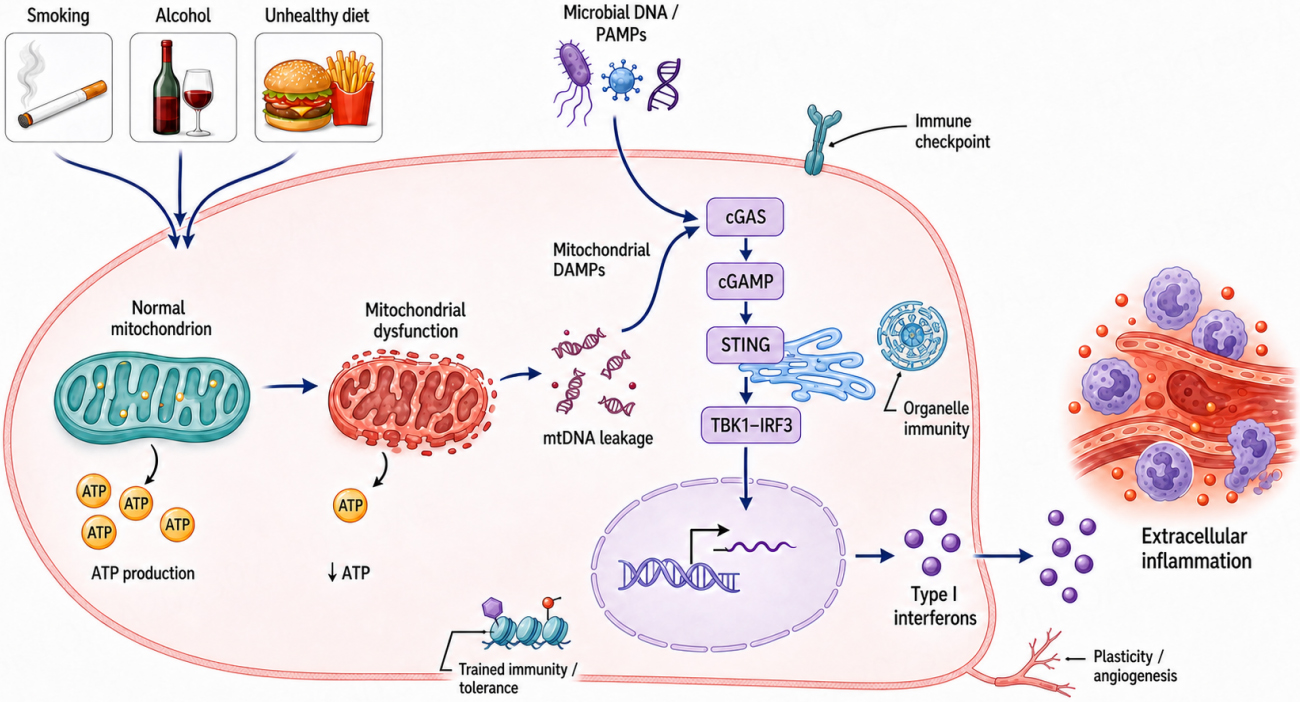
Figure 2. Mitochondrial dysfunction and innate immune signaling in endothelial inflammation. Lifestyle exposures, including smoking, alcohol consumption, and an unhealthy diet, together with microbial DNA and pathogen-associated molecular patterns (PAMPs), can activate endothelial stress responses. Mitochondrial dysfunction reduces adenosine triphosphate (ATP) production and promotes mitochondrial DNA (mtDNA) leakage into the cytosol. Cytosolic DNA activates the cyclic GMP-AMP synthase (cGAS)-stimulator of interferon genes (STING) pathway through cyclic GMP-AMP (cGAMP), engaging TANK binding kinase 1 (TBK1) and interferon regulatory factor 3 (IRF3) to induce type 1 interferons and inflammatory responses. The schematic also illustrates immune checkpoint signaling, organelle-associated immune responses, trained immunity or tolerance, and changes in endothelial plasticity and angiogenesis as context-dependent components of endothelial immune regulation.