
fig3
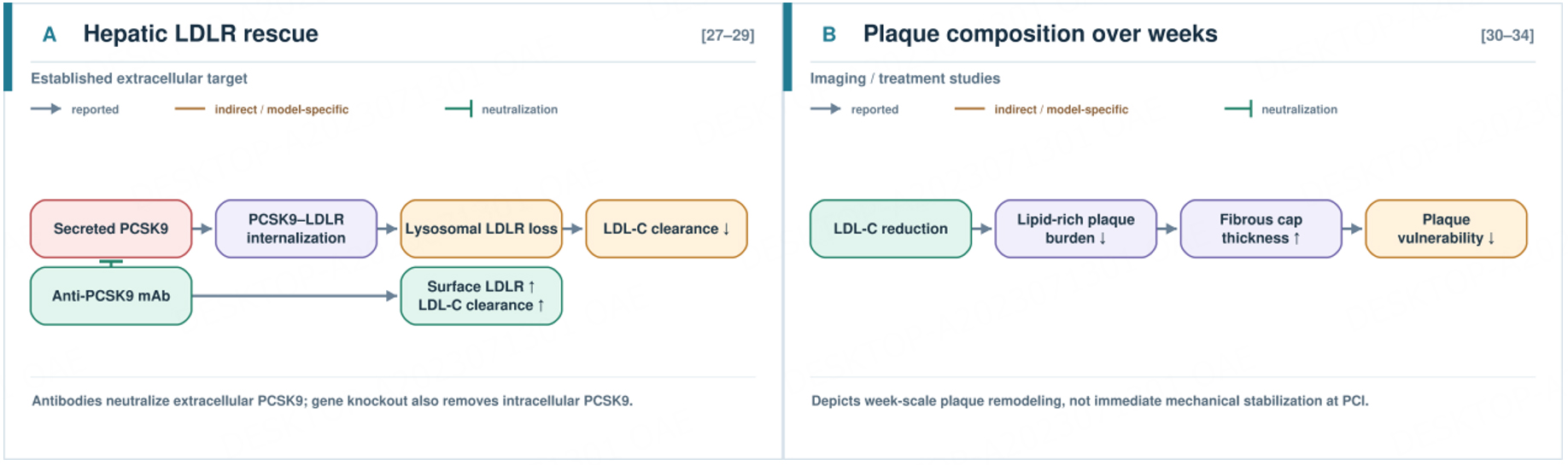
Figure 3. Lipid-dependent effects of extracellular PCSK9 neutralization. (A) Secreted PCSK9 promotes lysosomal degradation of the hepatic LDL receptor (LDLR), reducing LDL-C clearance. Anti-PCSK9 monoclonal antibodies neutralize extracellular PCSK9, preserve cell-surface LDLR, and enhance LDL-C clearance[27-29]. (B) Over subsequent weeks, LDL-C lowering is associated with reduced plaque lipid burden and increased fibrous cap thickness[30-34]. The plaque changes depicted in (B) should not be interpreted as immediate mechanical stabilization during percutaneous coronary intervention. The green T-bar indicates PCSK9 neutralization. LDL-C: Low-density lipoprotein cholesterol; LDLR: low-density lipoprotein receptor; PCSK9: proprotein convertase subtilisin/kexin type 9.