
fig2
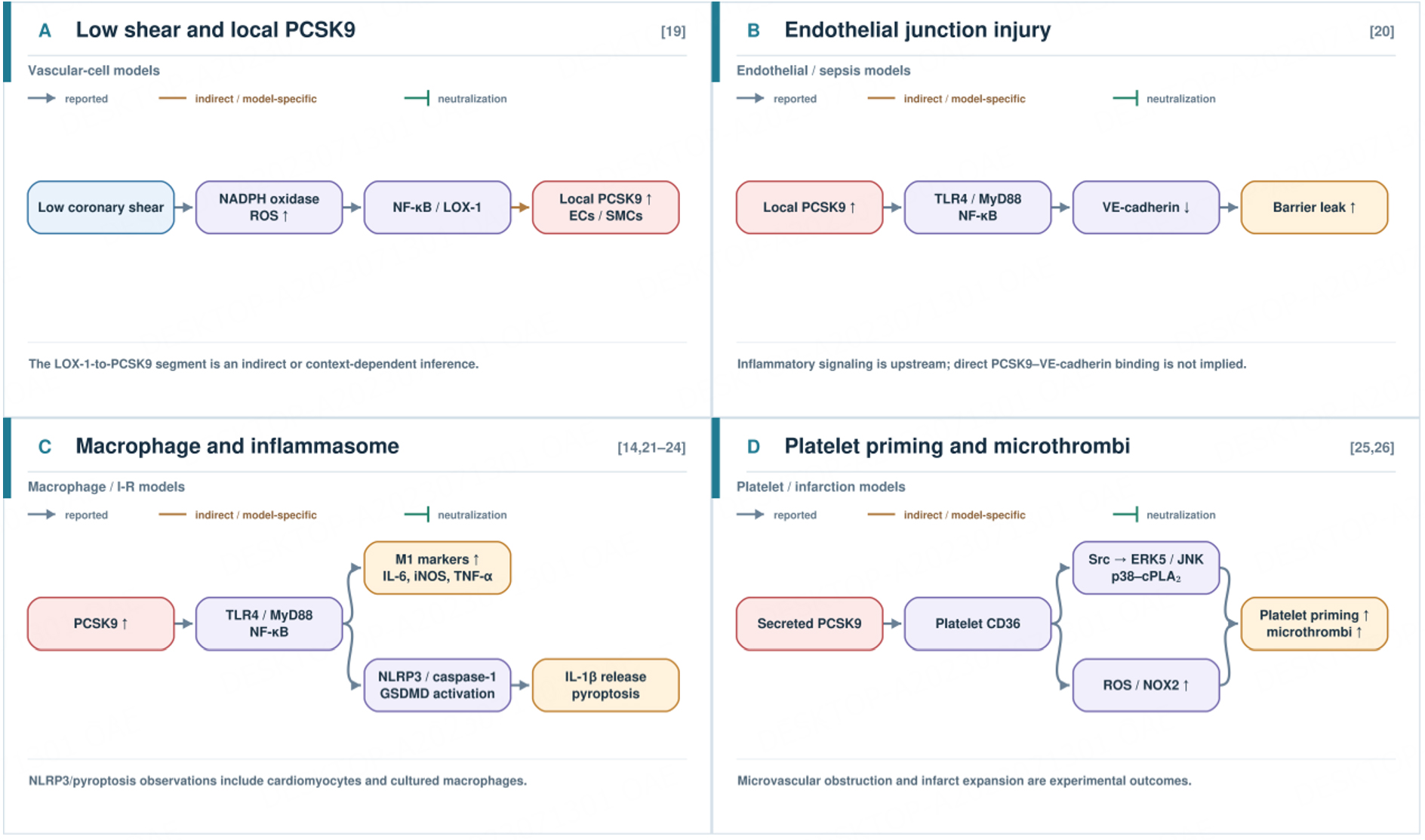
Figure 2. Local vascular and lipid-independent injury mechanisms associated with PCSK9. (A) Low shear stress promotes oxidant signaling and is associated with increased local PCSK9 expression in vascular cells; the LOX-1-to-PCSK9 link is indirect or context-dependent[19]. (B) In endothelial cell and sepsis models, PCSK9-associated TLR4/MyD88/NF-κB signaling reduces VE-cadherin expression and impairs endothelial junction integrity[20]. (C) Experimental studies link PCSK9 to pro-inflammatory macrophage polarization and NLRP3-associated inflammatory responses[14,21-24]. (D) PCSK9 binding to platelet CD36 activates kinase and oxidant signaling, increasing platelet reactivity and promoting microthrombus formation in experimental models[25,26]. These panels summarize findings from distinct experimental settings. Orange connections indicate indirect or model-specific links. LOX-1: Lectin-like oxidized low-density lipoprotein receptor 1; MyD88: myeloid differentiation primary response 88; NF-κB: nuclear factor κB; NLRP3: NOD-like receptor family pyrin domain-containing 3; PCSK9: proprotein convertase subtilisin/kexin type 9; TLR4: Toll-like receptor 4.