

fig1
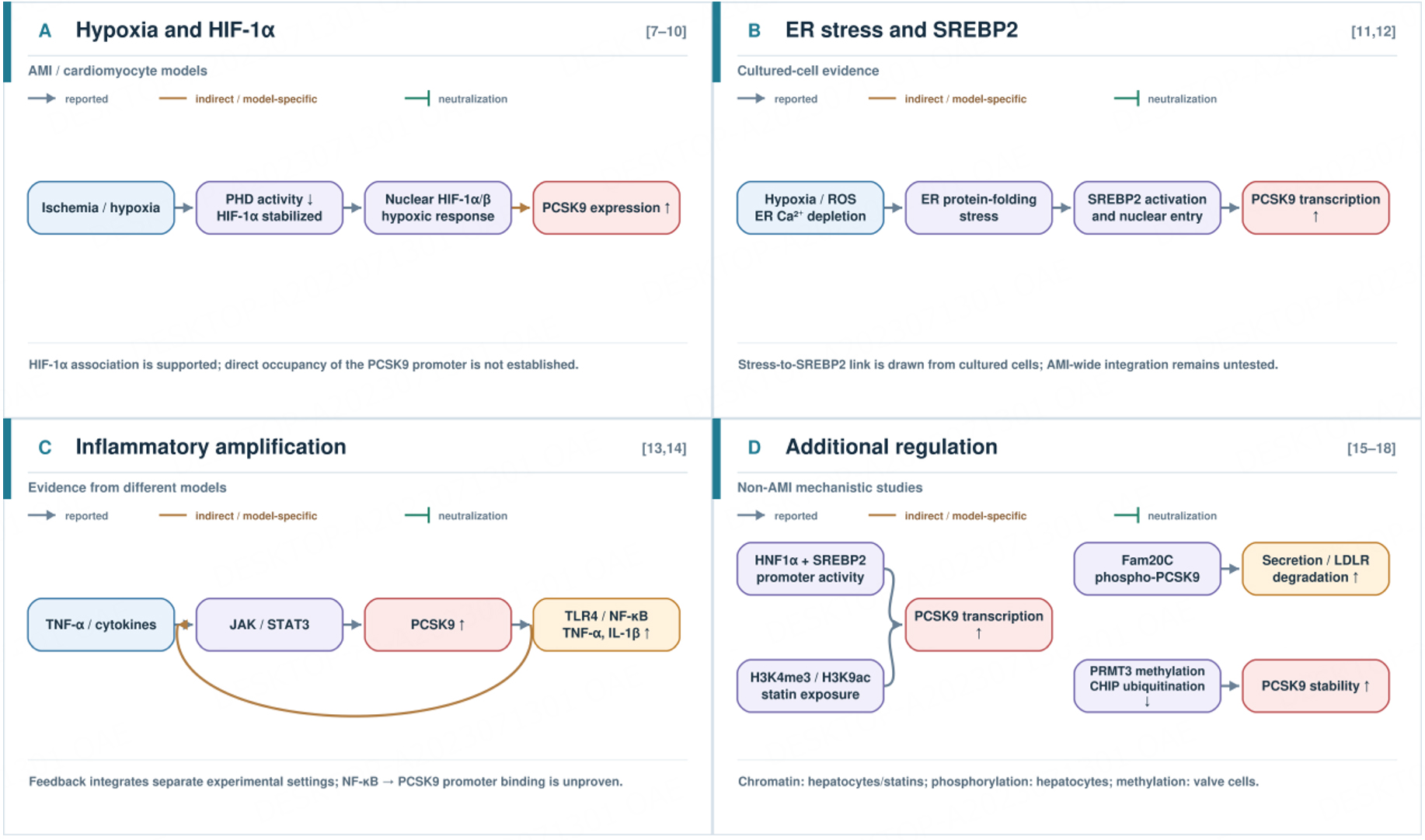
Figure 1. Stress-associated regulation of PCSK9 in acute myocardial infarction. (A) Hypoxia stabilizes HIF-1α and is associated with increased PCSK9 expression; direct binding of HIF-1α to the PCSK9 promoter has not been established[7-10]. (B) Endoplasmic reticulum stress and calcium depletion promote SREBP2-mediated PCSK9 transcription in cultured cells[11,12]. (C) Cytokine-associated JAK/STAT3 signaling and PCSK9-associated TLR4/NF-κB signaling may contribute to inflammatory amplification, although these pathways were studied in different models[13,14]. (D) Additional transcriptional and post-translational mechanisms include HNF1α/SREBP2 promoter regulation, histone modifications, Fam20C-mediated phosphorylation, and PRMT3-mediated methylation that reduces CHIP-dependent ubiquitination[15-18]. The mechanisms in panel D were investigated outside the acute myocardial infarction setting. Orange connections indicate indirect or model-specific links. AMI: Acute myocardial infarction; ER: endoplasmic reticulum; HIF-1α: hypoxia-inducible factor 1α; PCSK9: proprotein convertase subtilisin/kexin type 9; SREBP2: sterol regulatory element-binding protein 2; TLR4: Toll-like receptor 4; NF-κB: nuclear factor κB.